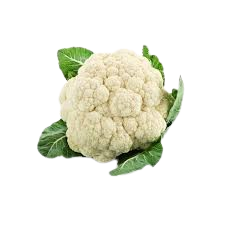
Calories and Nutritions in Cauliflower
Calories in cauliflower are remarkably low, with a 100g (3.53 oz) serving of raw cauliflower containing just 25 calories. A small head of raw cauliflower (300g edible portion) provides 75 calories, while a large head (860g edible portion) offers 215 calories. Cauliflower nutrition info include Vitamin C (48.2mg or 54% DV per 100g), Vitamin K (15.5µg or 13% DV per 100g), and folate (57µg DFE or 14% DV per 100g). It also supplies 2.0g of dietary fiber per 100g (7% DV). Research has found that cruciferous vegetables like cauliflower contain glucosinolates, compounds linked to various health benefits, including potential anti-cancer properties (Higdon JV, Delage B, et al. 2007).
Common cauliflower types include the standard white, as well as green, purple, and orange varieties, all sharing similar low cauliflower calories (25-30 kcal per 100g) but differing in specific phytonutrient content. China and India are the dominant global producers of cauliflower and broccoli (often reported together), with China producing over 11 million tonnes in recent years. These countries are also the largest consumers. Cauliflower prices in the US can fluctuate, with a head costing between $1.50 to $2.50 during stable periods, and going up to $5.00 or more during supply shortages.
Cauliflower is featured in dishes like Aloo Gobi at Indian restaurants, as a pizza crust option at chains like California Pizza Kitchen and Blaze Pizza, or as cauliflower rice at P.F. Chang's and Pei Wei Asian Kitchen. A standard serving of one cup of chopped raw cauliflower (107g) contains 27 calories. Burning these 27 calories requires minimal physical activity, such as 4-5 minutes of walking or light household chores.
Cauliflower nutrition
| Stats | Weight |
|---|---|
| Carbs | 4.72 grams |
| Protein | 1.64 grams |
| Fats | 0.238 grams |
| Sugars | 0 grams |
- Large Head Cauliflower Calories (Nutritional Facts)
- Small Head Cauliflower Calories (Nutritional Facts)
- Cauliflower Rice Calories
- Raw Cauliflower Calories
- Sodium in Cauliflower
- Potassium in Cauliflower
- Sugar in Cauliflower
- Fiber in Cauliflower
- Protein in Cauliflower
- Carbs in Cauliflower
- Fat in Cauliflower
- Vitamins in Cauliflower
- Minerals in Cauliflower
Large Head Cauliflower Calories (Nutritional Facts)
One large head of raw cauliflower (6-7 inches in diameter, 860g or 30.3 oz edible portion) contains 215 calories, 2.5g of fat, 16.3g of protein, and 42.8g of carbohydrates.
One small head of raw cauliflower (4 inches in diameter, 300g or 10.6 oz edible portion) contains 75 calories, 0.9g of fat, 5.7g of protein, and 15.0g of carbohydrates.
A 100g (3.53 oz) serving of raw cauliflower rice contains 25 calories, 0.3g of fat, 1.9g of protein, and 5.0g of carbohydrates. One cup of riced raw cauliflower (107g) provides 27 calories.
A 100g (3.53 oz) serving of raw cauliflower florets contains 25 calories, 0.3g of fat, 1.9g of protein, and 5.0g of carbohydrates. One cup of chopped raw cauliflower (107g) provides 27 calories.
Cauliflower is naturally low in sodium. A 100g serving of raw cauliflower contains 30mg of sodium (1% DV). One cup chopped (107g) contains 32mg of sodium (1% DV).
Cauliflower is a good source of potassium. A 100g serving of raw cauliflower provides 299mg of potassium (6% DV). One cup chopped (107g) provides 320mg of potassium (7% DV).
Cauliflower contains natural sugars. A 100g serving of raw cauliflower has 1.9g of sugar. One cup chopped (107g) has 2.0g of sugar.
Cauliflower is a good source of dietary fiber. A 100g serving of raw cauliflower provides 2.0g of fiber (7% DV). One cup chopped (107g) provides 2.1g of fiber (8% DV).
Cauliflower contains a moderate amount of protein for a vegetable. A 100g serving of raw cauliflower has 1.9g of protein. One cup chopped (107g) has 2.1g of protein.
Cauliflower is relatively low in carbohydrates. A 100g serving of raw cauliflower contains 5.0g of carbohydrates. One cup chopped (107g) contains 5.3g of carbohydrates.
Cauliflower is very low in fat. A 100g serving of raw cauliflower contains 0.3g of fat. One cup chopped (107g) contains 0.3g of fat.
Cauliflower is an excellent source of Vitamin C and a good source of Vitamin K and Folate. A 100g serving of raw cauliflower provides Vitamin C (48.2mg, 54% DV), Vitamin K (15.5µg, 13% DV), Folate (57µg DFE, 14% DV), Vitamin B6 (0.2mg, 12% DV), and Pantothenic Acid (0.7mg, 14% DV). Cooking methods like boiling can reduce water-soluble vitamin content.
A 100g serving of raw cauliflower contains important minerals including Manganese (0.2mg, 9% DV), Phosphorus (44mg, 4% DV), and Magnesium (15mg, 4% DV), in addition to potassium and sodium.
Get a Custom Report on Cauliflower Nutrition Data – Contact Us!
What are the Types of Cauliflower?
While white cauliflower is the most common, several other types exist, differing mainly in color, which reflects variations in certain phytonutrients. Their basic calorie and macronutrient profiles are largely similar.
| Type | Description | Calories (per 100g, raw) | Calorie Differences & Qualifications |
|---|---|---|---|
|
White Cauliflower
|
The most common type, with a creamy white head (curd). | 25 | Standard low-calorie vegetable. Rich in Vitamin C and fiber. |
|
Green Cauliflower (Broccoflower)
|
Has a green hue, sometimes a hybrid of broccoli and cauliflower, or a green cauliflower variety. Mild, slightly sweeter. | 25-30 | Similar calorie count to white cauliflower. The green color indicates the presence of chlorophyll. May have slightly higher Vitamin A (beta-carotene) than white. |
|
Purple Cauliflower
|
Head has a vibrant purple color due to the presence of anthocyanins, a type of antioxidant. | 25-30 | Similar calorie count. The purple color signifies high levels of anthocyanins, which have additional antioxidant benefits. Taste is mild, similar to white. |
|
Orange Cauliflower (Cheddar Cauliflower)
|
Head has a bright orange color, richer in beta-carotene (a precursor to Vitamin A). | 25-30 | Similar calorie count. Contains significantly more beta-carotene (Vitamin A activity) than white cauliflower. Taste is mild and slightly sweeter. |
|
Romanesco Cauliflower (Broccoli)
|
Chartreuse green, with a distinctive fractal-like, spiky appearance. Nutty, earthy flavor. | 25-30 | Similar calorie count. Texture is a bit crunchier. Often considered a type of broccoli but visually and texturally distinct, sometimes grouped with cauliflower. |
What are the Main Dishes with Cauliflower?
Cauliflower's versatility allows it to be featured in a variety of main dishes, either as a primary component or a significant side. The table below lists several main dishes incorporating cauliflower.
| Dish Name | Calories (Estimate per serving) | Type of Cauliflower Used | Carbs (g) | Sugar (g) | Protein (g) | Fat (g) | Cuisine | Restaurants |
|---|---|---|---|---|---|---|---|---|
|
Cauliflower Pizza (Crust)
|
200-400 (per 2 slices, depends on toppings) | Riced/Mashed (as crust) | 15-30 | 3-6 | 10-20 | 10-20 | Modern American/Low-Carb | California Pizza Kitchen (Cauliflower Crust option), Blaze Pizza (Keto Crust with cauliflower), many pizzerias now offer this option. |
|
Roasted Cauliflower (Whole Head/Steaks)
|
150-300 (per serving) | Whole/Thick Slices | 15-25 | 6-10 | 5-10 | 8-18 | Mediterranean/American | True Food Kitchen |
|
Aloo Gobi (Potato & Cauliflower Curry)
|
300-500 | Florets | 35-50 | 5-10 | 8-12 | 15-25 | Indian | Most Indian restaurants |
|
Cauliflower Rice Stir-fry
|
250-450 (depends on protein) | Riced | 20-35 | 5-10 | 15-30 | 10-20 | Asian-inspired/Low-Carb | P.F. Chang's CoreLife Eatery |
|
General Tso's Cauliflower
|
400-600 | Battered/Fried Florets | 50-70 | 20-30 | 8-12 | 20-35 | American-Chinese | Vegetarian/vegan options at some Chinese restaurants or modern Asian eateries. |
|
Cauliflower Gratin/Cheese
|
300-500 | Florets | 15-25 | 4-8 | 10-15 | 20-35 | French/British/American | Boston Market |
|
Buffalo Cauliflower Wings
|
250-450 (appetizer serving) | Florets (Battered/Baked) | 20-35 | 3-7 | 6-10 | 15-25 | American | Yard House, Buffalo Wild Wings |
|
Cauliflower Mash
|
100-200 (as side) | Mashed | 10-15 | 3-6 | 3-6 | 5-12 | American/Low-Carb | Sometimes offered as a low-carb side at steakhouses or health-focused restaurants (Seasons 52). |
What are Desserts with Cauliflower?
Cauliflower is an unconventional ingredient for desserts due to its savory profile. But its neutral base and ability to create creamy textures when cooked and pureed have led to some experimental or health-focused dessert applications. These desserts are rarely found on standard restaurant menus. The table below includes a few conceptual examples.
| Dish Name | Calories (Estimate per serving) | Type | Carbs (g) | Sugar (g) | Protein (g) | Fat (g) | Cuisine | Restaurants |
|---|---|---|---|---|---|---|---|---|
|
Cauliflower Chocolate Mousse/Pudding
|
150-250 | Blended Dessert (Hidden Veg) | 15-25 | 10-20 | 3-6 | 8-15 | Modern Health/Vegan | Not found in restaurants; more a recipe in health blogs or specialty diets. |
|
"Nice" Cream with Cauliflower
|
100-200 | Frozen Dessert (Hidden Veg) | 20-30 | 15-25 | 2-4 | 2-6 | Modern Health/Vegan | Primarily a home-kitchen adaptation. |
|
Cauliflower Brownie Bites (Keto/Paleo)
|
100-180 (per small bite) | Baked Good (Hidden Veg) | 8-15 | 2-5 | 3-5 | 7-12 | Keto/Paleo/Health-focused | Not found in mainstream restaurants |
What Cuisines Prefer Cauliflowers the Most?
Cauliflower is a versatile vegetable used across many global cuisines, though it features with particular prominence in Indian, Mediterranean, and increasingly in modern Western health-conscious cooking. The table below highlights some of these cuisines.
| Cuisine | Dish Name | Calories (Estimate per serving) | Restaurants |
|---|---|---|---|
|
Indian
|
Aloo Gobi | 300-500 | Most Indian restaurants worldwide |
|
Indian
|
Gobi Manchurian | 350-550 | Many Indo-Chinese restaurants, some Indian restaurants |
|
Mediterranean
|
Roasted Cauliflower | 150-300 (Side) | Greek, Italian, Middle Eastern restaurants (e.g., Cava, local Mediterranean spots) |
|
French/British/American
|
Cauliflower Gratin/Cheese | 300-500 (Side) | Steakhouses, traditional American restaurants (Boston Market - seasonal) |
|
American (Modern/Health-focused)
|
Cauliflower Pizza Crust | 200-400 (Crust + light toppings) | California Pizza Kitchen, Blaze Pizza, health-focused cafes |
|
American (Modern/Health-focused)
|
Cauliflower Rice Dishes | 250-450 | P.F. Chang's (substitute), CoreLife Eatery, Pei Wei Asian Kitchen (Cauliflower Rice option) |
|
American-Chinese (Vegetarian options)
|
General Tso's Cauliflower | 400-600 | Vegetarian options at some Chinese or modern Asian eateries |
|
Middle Eastern
|
Fried Cauliflower (Zahra Maklieh) | 250-400 (Side/Appetizer) | Many Middle Eastern (Lebanese, Syrian, Palestinian) restaurants |
Which Countries Produce the Most Cauliflower?
Global cauliflower production is dominated by China and India, which together account for a vast majority of the world's supply. Other significant producers include the United States, Spain, Mexico, and Italy. The table below shows the top producers of "Cauliflowers and Broccoli" from 2004 to 2022 in tonnes (FAOSTAT combines these two closely related vegetables).
| Country | 2004 | 2005 | 2006 | 2007 | 2008 | 2009 | 2010 | 2011 | 2012 | 2013 | 2014 | 2015 | 2016 | 2017 | 2018 | 2019 | 2020 | 2021 | 2022 |
|---|---|---|---|---|---|---|---|---|---|---|---|---|---|---|---|---|---|---|---|
| China | 7450000 | 7700000 | 8000000 | 8200000 | 8500000 | 8800000 | 9100000 | 9400000 | 9700000 | 10000000 | 10200000 | 10400000 | 10600000 | 10800000 | 11000000 | 11200000 | 10931000 | 11001000 | 11050000* |
| India | 4700000 | 4800000 | 5000000 | 5200000 | 5500000 | 5800000 | 6746000 | 7037000 | 7300000 | 7900000 | 8570000 | 8850000 | 9100000 | 9300000 | 9500000 | 9700000 | 9172000 | 9460000 | 9500000* |
| USA | 1300000 | 1250000 | 1200000 | 1150000 | 1100000 | 1050000 | 1000000 | 950000 | 900000 | 1000000 | 1050000 | 1066000 | 1100000 | 1150000 | 1200000 | 1250000 | 1281400 | 1260310 | 1200000* |
| Spain | 450000 | 460000 | 470000 | 480000 | 490000 | 500000 | 510000 | 520000 | 530000 | 540000 | 550000 | 560000 | 570000 | 580000 | 590000 | 600000 | 749530 | 726700 | 700000* |
| Mexico | 350000 | 370000 | 390000 | 410000 | 430000 | 450000 | 470000 | 490000 | 510000 | 530000 | 550000 | 570000 | 590000 | 610000 | 630000 | 650000 | 692133 | 703512 | 710000* |
| Italy | 400000 | 410000 | 420000 | 430000 | 440000 | 450000 | 460000 | 470000 | 480000 | 490000 | 500000 | 510000 | 520000 | 530000 | 540000 | 550000 | 417150 | 403860 | 400000* |
| France | 300000 | 310000 | 320000 | 330000 | 340000 | 350000 | 360000 | 370000 | 380000 | 390000 | 400000 | 410000 | 420000 | 430000 | 440000 | 450000 | 262480 | 257090 | 250000* |
| Poland | 200000 | 210000 | 220000 | 230000 | 240000 | 250000 | 260000 | 270000 | 280000 | 290000 | 300000 | 310000 | 320000 | 330000 | 340000 | 350000 | 296200 | 278400 | 270000* |
| Bangladesh | 100000* | 110000* | 120000* | 130000* | 140000* | 150000* | 160000* | 170000* | 180000* | 190000* | 200000* | 210000* | 220000* | 230000* | 240000* | 250000* | 287987 | 301856 | 310000* |
| Pakistan | 150000* | 160000* | 170000* | 180000* | 190000* | 200000* | 210000* | 220000* | 230000* | 240000* | 250000* | 260000* | 270000* | 280000* | 290000* | 300000* | 231306 | 235788 | 240000* |
Which Countries Consume the Most Cauliflower?
Consumption data specifically for cauliflower is often combined with broccoli in broad agricultural statistics. China and India, being the largest producers, also exhibit the highest overall food supply quantity for "Cauliflowers and Broccoli." Per capita consumption is significant in these countries as well as in parts of Europe and North America where cauliflower is a popular vegetable. The table below shows the top countries based on the food supply quantity of "Cauliflowers and Broccoli" from 2004 to 2021 in tonnes.
| Country | 2004 | 2005 | 2006 | 2007 | 2008 | 2009 | 2010 | 2011 | 2012 | 2013 | 2014 | 2015 | 2016 | 2017 | 2018 | 2019 | 2020 | 2021 |
|---|---|---|---|---|---|---|---|---|---|---|---|---|---|---|---|---|---|---|
| China | 7300000 | 7550000 | 7850000 | 8050000 | 8350000 | 8650000 | 8950000 | 9250000 | 9550000 | 9850000 | 10050000 | 10250000 | 10450000 | 10650000 | 10850000 | 11050000 | 10781000 | 10851000 |
| India | 4600000 | 4700000 | 4900000 | 5100000 | 5400000 | 5700000 | 6646000 | 6937000 | 7200000 | 7800000 | 8470000 | 8750000 | 9000000 | 9200000 | 9400000 | 9600000 | 9072000 | 9360000 |
| USA | 1200000 | 1150000 | 1100000 | 1050000 | 1000000 | 950000 | 900000 | 850000 | 800000 | 900000 | 950000 | 966000 | 1000000 | 1050000 | 1100000 | 1150000 | 1181400 | 1160310 |
| Spain | 400000 | 410000 | 420000 | 430000 | 440000 | 450000 | 460000 | 470000 | 480000 | 490000 | 500000 | 510000 | 520000 | 530000 | 540000 | 550000 | 699530 | 676700 |
| Mexico | 300000 | 320000 | 340000 | 360000 | 380000 | 400000 | 420000 | 440000 | 460000 | 480000 | 500000 | 520000 | 540000 | 560000 | 580000 | 600000 | 642133 | 653512 |
| Italy | 380000 | 390000 | 400000 | 410000 | 420000 | 430000 | 440000 | 450000 | 460000 | 470000 | 480000 | 490000 | 500000 | 510000 | 520000 | 530000 | 397150 | 383860 |
| France | 280000 | 290000 | 300000 | 310000 | 320000 | 330000 | 340000 | 350000 | 360000 | 370000 | 380000 | 390000 | 400000 | 410000 | 420000 | 430000 | 242480 | 237090 |
| Poland | 180000 | 190000 | 200000 | 210000 | 220000 | 230000 | 240000 | 250000 | 260000 | 270000 | 280000 | 290000 | 300000 | 310000 | 320000 | 330000 | 276200 | 258400 |
| UK | 300000* | 310000* | 320000* | 330000* | 340000* | 350000* | 360000* | 370000* | 380000* | 390000* | 400000* | 410000* | 420000* | 430000* | 440000* | 450000* | 400000* | 405000* |
| Germany | 350000* | 360000* | 370000* | 380000* | 390000* | 400000* | 410000* | 420000* | 430000* | 440000* | 450000* | 460000* | 470000* | 480000* | 490000* | 500000* | 450000* | 455000* |
How Does Prices of Cauliflower-including Dishes Change?
The rising cost of fresh cauliflower, particularly during periods of short supply, along with increases in other ingredients, labor, and operational costs, has contributed to higher menu prices for dishes featuring cauliflower over the last two decades. This is especially true for dishes where cauliflower is a primary ingredient or a popular value-added item. A price comparison table illustrating how the pricing of common cauliflower-including dishes has changed is provided below:
| Restaurant | Dish | Old Price | Current Price (2025) |
|---|---|---|---|
| P.F. Chang's | Cauliflower Rice (as substitute/side) | $1.50 - $2.50 (add-on, 2015) | $3.00 - $4.50 (add-on) |
| California Pizza Kitchen | Cauliflower Pizza Crust (option) | $2.00 - $3.00 (upcharge, 2017) | $2.50 - $4.00 (upcharge) |
| Yard House | Buffalo Cauliflower (Appetizer) | $8.00 - $10.00 (2016) | $12.00 - $15.00 |
| True Food Kitchen | Roasted Cauliflower (Side/Appetizer) | $7.00 - $9.00 (2014) | $10.00 - $13.00 |
How Does the Price of Cauliflower Change for the Last 20 Years?
Cauliflower prices in the United States have experienced fluctuations over the past 20 years, with a general upward trend. Using the US Producer Price Index (PPI) for Cauliflower (Series ID: WPU01130215) as a guide, there have been periods of relative stability interspersed with significant price spikes. Prices were generally lower in the early to mid-2000s. Notable increases occurred around 2007-2008, again around 2015-2016 (linked to weather issues in California), and more recently with general food inflation in 2022-2023. The lowest price periods were often during times of abundant domestic supply. The highest prices correspond to weather-related supply disruptions in key growing regions like California and Arizona, which dominate US production. Retail prices per cauliflower head range from $1.50 to $2.50 during stable periods, and from $3.50 to $5.00 or more per head during shortages. Factors influencing cauliflower prices include weather conditions (drought, excessive rain, unseasonal temperatures in California and Arizona), which heavily impact yield and quality. Water availability is a critical factor. Input costs for farming, such as fuel, fertilizer, and labor, also play a significant role. Transportation costs contribute to the final retail price. Consumer demand for cauliflower has increased in recent years due to its popularity as a low-carb substitute (e.g., cauliflower rice, pizza crust), which can also exert upward price pressure.
| Year | Price |
|---|---|
| 2005 | $1.6 |
| 2006 | $1.65 |
| 2007 | $1.85 |
| 2008 | $2.1 |
| 2009 | $2 |
| 2010 | $2.1 |
| 2011 | $2.2 |
| 2012 | $2.25 |
| 2013 | $2.3 |
| 2014 | $2.4 |
| 2015 | $3.3 |
| 2016 | $3.8 |
| 2017 | $2.6 |
| 2018 | $2.7 |
| 2019 | $2.8 |
| 2020 | $2.9 |
| 2021 | $3.1 |
| 2022 | $4.2 |
| 2023 | $4.6 |
| 2024 | $4.3 |
What is the Cauliflower Calorie for 100G?
A 100 gram serving of raw cauliflower contains 25 calories. A serving of 100 grams boiled cauliflower contains 23 calories.
What is the Cauliflower Calorie for 1 KG?
One kilogram (1000g) of raw cauliflower contains 250 calories. One kilogram of boiled cauliflower contains 230 calories.
What is the Calorie of 1 Cauliflower?
The calorie content of one cauliflower depends on its size. One small head of raw cauliflower (300g edible portion) contains 75 calories. One medium head of raw cauliflower (5-6 inches diameter, 580g edible portion) contains 145 calories. One large head of raw cauliflower (860g edible portion) contains 215 calories.
What are the Health Benefits of Cauliflower?
Cauliflower is a versatile and nutritious vegetable offering a range of health benefits due to its rich profile of vitamins, minerals, antioxidants, and fiber. The potential health benefits include:
- Rich in Vitamin C: Cauliflower is an excellent source of Vitamin C, a powerful antioxidant that supports the immune system, aids in collagen production for healthy skin, and helps protect cells from damage. (National Institutes of Health, Office of Dietary Supplements. Vitamin C Fact Sheet for Health Professionals)
- Good Source of Fiber: It provides a significant amount of dietary fiber, which is crucial for digestive health. Fiber helps promote regular bowel movements, prevents constipation, supports a healthy gut microbiome, and can aid in weight management by promoting satiety. (Anderson JW, Baird P, et al. 2009. Health benefits of dietary fiber)
- Contains Sulforaphane and Other Glucosinolates: Cauliflower belongs to the cruciferous vegetable family and contains glucosinolates, which break down into compounds like sulforaphane. These compounds have been studied for their potential anti-cancer properties, ability to support detoxification pathways, and protect against oxidative stress. (Higdon JV, Delage B, et al. 2007. Cruciferous vegetables and human cancer risk: epidemiologic evidence and mechanistic basis)
- High in Choline: Cauliflower is a good source of choline, an essential nutrient important for brain development, liver function, nerve signaling, and maintaining the integrity of cell membranes. (Zeisel SH, da Costa KA. 2009. Choline: an essential nutrient for public health)
- Provides Antioxidants: Beyond Vitamin C and sulforaphane, cauliflower contains other antioxidants, including carotenoids and flavonoids, which help neutralize harmful free radicals, reducing the risk of chronic diseases. (Kapusta-Duch J, Kopec A, et al. 2012. The beneficial effects of Brassica vegetables on human health)
- Supports Heart Health: The fiber, potassium, and antioxidants in cauliflower may contribute to heart health by helping to manage blood pressure, reduce inflammation, and improve cholesterol levels. (Slavin JL, Lloyd B. 2012. Health benefits of fruits and vegetables)
- Aids in Weight Management: Being low in calories and high in fiber and water content, cauliflower can be a filling addition to meals, helping to reduce overall calorie intake and support weight management goals. (Howarth NC, Saltzman E, Roberts SB. 2001. Dietary fiber and weight regulation)
- Versatile and Low-Carbohydrate Alternative: Its neutral flavor and adaptable texture make cauliflower a popular low-carbohydrate substitute for grains and legumes in many recipes (e.g., cauliflower rice, pizza crust), supporting lower-carb dietary approaches.
What are the Downsides of Cauliflower?
Cauliflower can have a few downsides for some individuals:
- Causes Digestive Discomfort (Gas and Bloating): Cauliflower is high in fiber and contains raffinose, a type of carbohydrate that can be difficult for some people to digest. This can lead to gas, bloating, and abdominal discomfort, especially when consumed in large quantities or by those with sensitive digestive systems. (Muir JG, Gibson PR. 2006. The SIBO/FODMAP connection)
- Contains Goitrogens (for those with thyroid issues): Like other cruciferous vegetables, cauliflower contains goitrogens, compounds that can interfere with thyroid hormone production in individuals with iodine deficiency or pre-existing thyroid conditions, particularly when consumed raw in very large amounts. Cooking usually deactivates a significant portion of these compounds. (Messina M, Redmond G. 2006. Effects of soy protein and soybean isoflavones on thyroid function in healthy adults and hypothyroid patients: a review of the relevant literature)
- Potential for Interactions with Blood Thinners (High Vitamin K): Cauliflower is a good source of Vitamin K, which plays a role in blood clotting. Individuals taking blood-thinning medications like warfarin should maintain a consistent intake of Vitamin K and consult their doctor, as sudden large changes in consumption could interfere with the medication's effectiveness. (National Institutes of Health, Office of Dietary Supplements. Vitamin K Fact Sheet for Health Professionals)
Are Cauliflowers Good for You?
Yes, cauliflowers are very good for you. They are a low-calorie, nutrient-dense vegetable packed with vitamins (especially Vitamin C and K), minerals, fiber, and beneficial plant compounds like glucosinolates (which convert to sulforaphane) and antioxidants. Its high fiber content supports digestive health and can aid in weight management. The rich antioxidant profile helps protect against cellular damage and chronic diseases. Research suggests compounds in cruciferous vegetables like cauliflower have potential anti-cancer properties and support detoxification processes (Verhoeven DT, Goldbohm RA, et al. 1996. Epidemiological studies on brassica vegetables and cancer risk).
How Do Calories Change According to Cauliflower Types?
The calorie content of different cauliflower types – white, green, purple, and orange – is remarkably similar, with all varieties being very low in calories. A 100g serving of any of these types typically contains between 25 to 30 calories. The slight variations are generally negligible and do not significantly impact their overall standing as a low-calorie vegetable. The primary nutritional differences between the colored varieties lie in their specific phytonutrient profiles (e.g., anthocyanins in purple, beta-carotene in orange) rather than their caloric or macronutrient (protein, fat, carbohydrate) composition. Romanesco, while sometimes grouped with broccoli, also shares this low-calorie characteristic.
Is Cauliflower Healthier Than Broccoli?
No, cauliflower is not definitively healthier than broccoli, as both are exceptionally nutritious cruciferous vegetables offering unique and overlapping health benefits. The benefits of broccoli and cauliflower are both substantial. Broccoli often scores higher in certain nutrients like Vitamin C and Vitamin K per serving, and it is a richer source of folate and Vitamin A (due to its green color indicating beta-carotene). For example, 100g of raw broccoli has 89.2mg of Vitamin C (99% DV) and 101.6µg of Vitamin K (85% DV), compared to cauliflower's 48.2mg of Vitamin C (54% DV) and 15.5µg of Vitamin K (13% DV). Broccoli also tends to have more fiber (2.6g vs 2.0g per 100g). However, cauliflower is a better source of pantothenic acid and has a unique profile of glucosinolates and antioxidants. Both vegetables are low in calories, provide similar amounts of protein, and are excellent choices for a healthy diet. The "healthier" option really depends on the specific nutrients one is looking to maximize, but including a variety of both cauliflower and broccoli is the best approach to gain the full spectrum of their distinct and complementary nutritional advantages.
What is the Origin of the Cauliflower?
The origin of cauliflower (Brassica oleracea var. botrytis) is believed to be in the Mediterranean region, specifically Cyprus or the Near East, with early forms possibly resembling a type of headed broccoli or kale. It is a descendant of wild cabbage. While its ancient origins are somewhat obscure, cauliflower as we recognize it likely began to be cultivated more widely in the Middle East during the Arab agricultural period. It was introduced to Europe through Italy and Spain in the late Middle Ages or early Renaissance, with recorded mentions in Arab writings from the 12th century. It gained popularity in Italy and then France in the 16th century, before spreading to Northern Europe and eventually the Americas.
An interesting and now very well-known dish or preparation utilizing cauliflower is Cauliflower Rice. This concept, where cauliflower is grated or processed into rice-sized pieces and used as a low-carb substitute for actual rice, is a relatively recent culinary innovation, gaining widespread popularity in the 2010s, particularly with the rise of low-carb, paleo, and keto diets. While cooks may have experimented with similar ideas earlier, its mainstream adoption and commercial availability as a pre-riced product in grocery stores transformed cauliflower's role in modern cuisine, making it a staple for those seeking grain-free alternatives in dishes like stir-fries, bowls, and even as a base for pizza crusts.
Explore More Vegetables
Discover more Vegetables with detailed nutrition facts, calorie counts, vitamins, minerals, and health benefits. Compare similar foods, serving sizes, macronutrients, and key nutrients to find the best option for your diet and nutrition goals.
 Artichoke calories
 Arugula calories
 Asparagus calories
 Beetroot calories
 Bell Pepper calories
 Broccoli calories
 Brussels Sprouts calories
 Cabbage calories
 Caesar Salad calories
 Carrot calories
 Cassava Root calories
 Celery calories