Calories and Nutritions in Emu egg
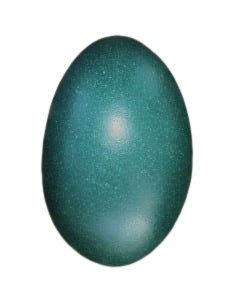
Emu egg is a large edible avian egg produced by the emu, a flightless bird native to Australia. A small sized cooked emu egg (28g) contains 45 calories, while a large cooked emu egg (170g) has 272 calories. A 100g portion of cooked emu egg contains 160 calories, while a 100g portion of raw emu egg provides 150 calories. Component analysis shows that a serving of raw emu egg yolk (100g) contains 322 calories, while a serving of cooked emu egg yolk (100g) provides 348 calories. The white part of the egg is much leaner, with a serving of raw emu egg white (100g) containing 52 calories and cooked emu egg white (100g) providing 56 calories.
Emu egg nutrition facts highlight a food rich in calorie derived from healthy fats and proteins. A raw emu egg (100g) supplies 13.3g of protein and 10g of fat. The egg is notable for vitamin density, delivering 0.85mcg of Vitamin B12 (35% DV) per 100g serving. Mineral content is also significant, offering 1.7mg of iron (9% DV) and 16.7mg of calcium (1% DV). Omega fatty acids are present in substantial amounts, with a large cooked serving providing 0.25g of Omega-3 fatty acids to support heart health. This high lipid concentration results in a unique physical property where the yolk is richer and creamier than that of a chicken egg.
International supply depends on specialized emu farming, with the United States leading production by yielding over 250,000 eggs annually. This output meets substantial demand in major markets, where the United States imported significant quantities of exotic eggs in 2023. Within these regions, the ingredient serves as a core component in distinct cooking styles, featuring in American Scrambles, Australian Pavlovas, and French Meringues. Rising feed costs and niche market demand have driven retail prices upward, with a single fresh edible egg increasing from approximately $15.00 in the early 2000s to over $40.00 after 2020.
Emu egg is considered a nutrient-dense food with a high concentration of protein and unsaturated fats. Dietitians recommend limiting the intake of this large egg due to the substantial cholesterol levels found in the yolk. A large emu egg contains 272 calories, which requires 27 minutes of running or 34 minutes of swimming to metabolize. Individuals monitoring blood lipid levels should restrict consumption to avoid potential health complications.
Emu egg nutrition
| Stats | Weight |
|---|---|
| Carbs | 0.7 grams |
| Protein | 12 grams |
| Fats | 0 grams |
| Sugars | 0 grams |
- Large Emu Egg Calories (Nutritional Facts)
- Medium Emu Egg Calories (Nutritional Facts)
- Small Emu Egg Calories (Nutritional Facts)
- Raw Emu Egg Nutrition
- Emu Egg Yolk Calories (Nutritional Facts)
- Emu Egg White Calories (Nutritional Facts)
- Omega fatty acids in Emu Egg
- Sodium in Emu Egg
- Potassium in Emu Egg
- Sugar in Emu Egg
- Fiber in Emu Egg
- Protein in Emu Egg
- Carbs in Emu Egg
- Fat in Emu Egg
- Vitamins in Emu Egg
- Minerals in Emu Egg
Large Emu Egg Calories (Nutritional Facts)
A large serving of cooked emu egg (170g or 6oz) contains 272 calories, 24.1g of protein, 18.1g of fat, 1.5g of carbohydrates, 0g of fiber, 0g of sugar, and 90mg of sodium.
A medium serving of cooked emu egg (85g or 3oz) provides 136 calories, 12g of protein, 9g of fat, 0.7g of carbohydrates, 0g of fiber, 0g of sugar, and 45mg of sodium.
A small serving of cooked emu egg (28g or 1oz) contains 45 calories, 4g of protein, 3g of fat, 0.2g of carbohydrates, 0g of fiber, 0g of sugar, and 15mg of sodium.
A large serving of raw emu egg (170g or 6oz) contains 255 calories, 22.6g of protein, 17g of fat, 1.4g of carbohydrates, 0g of fiber, 0g of sugar, and 85mg of sodium. A medium serving of raw emu egg (85g or 3oz) provides 128 calories, 11.3g of protein, 8.5g of fat, 0.7g of carbohydrates, 0g of fiber, 0g of sugar, and 42.5mg of sodium. A small serving of raw emu egg (28g or 1oz) contains 42 calories, 3.7g of protein, 2.8g of fat, 0.2g of carbohydrates, 0g of fiber, 0g of sugar, and 14mg of sodium.
A serving of raw emu egg yolk (100g or 3.5oz) contains 322 calories, 16g of protein, 27g of fat, 3.6g of carbohydrates, 0g of fiber, 0.6g of sugar, and 50mg of sodium. A serving of cooked emu egg yolk (100g or 3.5oz) provides 348 calories, 17.3g of protein, 29.2g of fat, 3.9g of carbohydrates, 0g of fiber, 0.6g of sugar, and 52mg of sodium.
A serving of raw emu egg white (100g or 3.5oz) contains 52 calories, 11g of protein, 0.2g of fat, 0.7g of carbohydrates, 0g of fiber, 0.7g of sugar, and 166mg of sodium. A serving of cooked emu egg white (100g or 3.5oz) provides 56 calories, 11.9g of protein, 0.2g of fat, 0.8g of carbohydrates, 0g of fiber, 0.8g of sugar, and 170mg of sodium.
A large serving of cooked emu egg (170g) provides 0.25g of Omega-3 fatty acids and 2g of Omega-6 fatty acids. A medium serving of cooked emu egg (85g) contains 0.13g of Omega-3 fatty acids and 1g of Omega-6 fatty acids. A small serving of cooked emu egg (28g) provides 0.04g of Omega-3 fatty acids and 0.3g of Omega-6 fatty acids. A serving of raw emu egg (100g) contains 0.14g of Omega-3 fatty acids. A serving of raw emu egg yolk (100g) provides 0.2g of Omega-3 fatty acids, while raw emu egg white (100g) contains 0g of Omega-3 fatty acids.
A large serving of cooked emu egg (170g) contains 90mg of sodium (4% DV). A medium serving of cooked emu egg (85g) has 45mg of sodium (2% DV). A small serving of cooked emu egg (28g) contains 15mg of sodium (1% DV). A serving of raw emu egg (100g) provides 50mg of sodium (2% DV). A serving of raw emu egg yolk (100g) contains 50mg of sodium (2% DV), whereas raw emu egg white (100g) contains 166mg of sodium (7% DV).
A large serving of cooked emu egg (170g) contains 150mg of potassium (3% DV). A medium serving of cooked emu egg (85g) has 75mg of potassium (2% DV). A small serving of cooked emu egg (28g) contains 25mg of potassium (1% DV). A serving of raw emu egg (100g) provides 83mg of potassium (2% DV). A serving of raw emu egg yolk (100g) contains 109mg of potassium (2% DV), while raw emu egg white (100g) provides 142mg of potassium (3% DV).
A large serving of cooked emu egg (170g) contains 0g of sugar. A medium serving of cooked emu egg (85g) has 0g of sugar. A small serving of cooked emu egg (28g) contains 0g of sugar. A serving of raw emu egg (100g) provides 0g of sugar. A serving of raw emu egg yolk (100g) contains 0.6g of sugar, and raw emu egg white (100g) contains 0.7g of sugar.
A large serving of cooked emu egg (170g) provides 0g of dietary fiber (0% DV). A medium serving of cooked emu egg (85g) has 0g of fiber (0% DV). A small serving of cooked emu egg (28g) contains 0g of fiber (0% DV). A serving of raw emu egg (100g) provides 0g of fiber (0% DV). A serving of raw emu egg yolk (100g) and raw emu egg white (100g) both contain 0g of fiber (0% DV).
A large serving of cooked emu egg (170g) provides 24.1g of protein (48% DV). A medium serving of cooked emu egg (85g) has 12g of protein (24% DV). A small serving of cooked emu egg (28g) contains 4g of protein (8% DV). A serving of raw emu egg (100g) provides 13.3g of protein (27% DV). A serving of raw emu egg yolk (100g) provides 16g of protein (32% DV), while raw emu egg white (100g) provides 11g of protein (22% DV).
A large serving of cooked emu egg (170g) contains 1.5g of carbohydrates (1% DV). A medium serving of cooked emu egg (85g) has 0.7g of carbohydrates (0% DV). A small serving of cooked emu egg (28g) contains 0.2g of carbohydrates (0% DV). A serving of raw emu egg (100g) provides 0.8g of carbohydrates (0% DV). A serving of raw emu egg yolk (100g) contains 3.6g of carbohydrates (1% DV), whereas raw emu egg white (100g) contains 0.7g of carbohydrates (0% DV).
A large serving of cooked emu egg (170g) contains 18.1g of total fat (23% DV). A medium serving of cooked emu egg (85g) has 9g of total fat (12% DV). A small serving of cooked emu egg (28g) contains 3g of total fat (4% DV). A serving of raw emu egg (100g) provides 10g of total fat (13% DV). A serving of raw emu egg yolk (100g) contains 27g of total fat (35% DV), while raw emu egg white (100g) contains 0.2g of total fat (0% DV).
A large serving of cooked emu egg (170g) provides 1.5mcg of Vitamin B12 (63% DV), 272mcg of Vitamin A (30% DV), and 0IU of Vitamin D (0% DV). A medium serving of cooked emu egg (85g) provides 0.75mcg of Vitamin B12 (31% DV), 136mcg of Vitamin A (15% DV), and 0IU of Vitamin D (0% DV). A small serving of cooked emu egg (28g) provides 0.25mcg of Vitamin B12 (10% DV), 45mcg of Vitamin A (5% DV), and 0IU of Vitamin D (0% DV). A serving of raw emu egg (100g) provides 0.85mcg of Vitamin B12 (35% DV). A serving of raw emu egg yolk (100g) provides 3.0mcg of Vitamin B12 (125% DV) and 350mcg of Vitamin A (39% DV), whereas raw emu egg white (100g) provides 0.1mcg of Vitamin B12 (4% DV) and 0mcg of Vitamin A (0% DV).
A large serving of cooked emu egg (170g) provides 3mg of iron (17% DV) and 30mg of calcium (2% DV). A medium serving of cooked emu egg (85g) provides 1.5mg of iron (8% DV) and 15mg of calcium (1% DV). A small serving of cooked emu egg (28g) provides 0.5mg of iron (3% DV) and 5mg of calcium (0% DV). A serving of raw emu egg (100g) provides 1.7mg of iron (9% DV) and 16.7mg of calcium (1% DV). A serving of raw emu egg yolk (100g) provides 2.7mg of iron (15% DV) and 130mg of calcium (10% DV), while raw emu egg white (100g) provides 0.1mg of iron (1% DV) and 7mg of calcium (1% DV).
Get a Custom Report on Emu egg Nutrition Data – Contact Us!
What are the Types of Emu Eggs?
The types of Emu egg products are the Whole Emu Egg, Emu Egg Yolk, and Emu Egg White. The table below provides details on these components.
| Type | Description | Calories (Approximate per 100g raw) | Calorie Qualifications |
|---|---|---|---|
|
Whole Emu Egg
|
The complete mixture of yolk and white, offering a balance of fat and protein. | 160 | The calorie density is moderate, reflecting the combination of the lipid-rich yolk and the lean white. |
|
Emu Egg Yolk
|
The yellow center containing the majority of the fat, cholesterol, and vitamins. | 322 | This component has the highest calorie density due to the concentration of lipids. |
|
Emu Egg White
|
The clear, viscous liquid consisting primarily of water and protein. | 52 | The lack of fat results in a very low calorie count, making this the leanest option. |
What are Desserts With Emu Eggs?
The culinary application of the emu egg in desserts relies on the high volume of yolk and white, which creates exceptionally fluffy textures in baked goods. The massive size, equivalent to roughly 10 to 12 chicken eggs, makes a single egg sufficient for large batches of pastries. The table below details sweet preparations utilizing this ingredient.
| Dish Name | Calories (Estimate per serving) | Type of Emu egg | Carbs (g) (Estimate) | Sugar (g) (Estimate) | Protein (g) (Estimate) | Fat (g) (Estimate) | Cuisine | Restaurants |
|---|---|---|---|---|---|---|---|---|
|
Emu Egg Sponge Cake
|
350 | Whole Egg | 45 | 25 | 8 | 15 | American | OstrichLand USA (Solvang, CA) |
|
Emu Egg Custard
|
280 | Yolk | 20 | 18 | 9 | 18 | Australian | The Australian Bakery Cafe (Marietta, GA) |
|
Giant Emu Meringue
|
160 | White | 38 | 36 | 4 | 0 | French | Blue Heaven (Key West, FL - Seasonal) |
|
Emu Egg Pavlova
|
310 | White | 55 | 50 | 5 | 0 | Australian | Burke & Wills (New York, NY) |
|
Emu Egg Cheesecake
|
460 | Whole Egg | 32 | 24 | 11 | 34 | American | Rooster Cogburn Ostrich Ranch (Picacho, AZ) |
|
Emu Egg Flan
|
330 | Whole Egg | 29 | 27 | 10 | 16 | Spanish | Jaleo by José Andrés (Washington, DC - Special) |
|
Emu Egg Pound Cake
|
410 | Whole Egg | 50 | 30 | 8 | 22 | British | The Olde English Pub (Albany, NY) |
|
Emu Egg Crème Brûlée
|
390 | Yolk | 18 | 16 | 7 | 32 | French | Bistro Jeanty (Yountville, CA) |
|
Emu Egg Waffles
|
430 | Whole Egg | 58 | 16 | 12 | 20 | Belgian | Cogburn's Cafe (Picacho, AZ) |
|
Emu Egg Pancakes
|
360 | Whole Egg | 62 | 14 | 13 | 12 | American | Safari West (Santa Rosa, CA) |
|
Emu Egg Ice Cream
|
290 | Yolk | 26 | 24 | 6 | 20 | American | Salt & Straw (Portland, OR - Seasonal) |
|
Emu Egg Soufflé
|
230 | Whole Egg | 12 | 8 | 14 | 16 | French | Le Fou Frog (Kansas City, MO) |
|
Emu Egg Fruit Tart
|
370 | Whole Egg | 42 | 22 | 7 | 20 | European | Specialty Pastry Shops (National) |
|
Emu Egg Mooncake
|
520 | Salted Yolk | 68 | 32 | 9 | 28 | Chinese | Kee Wah Bakery (Los Angeles, CA) |
|
Emu Egg Mousse
|
250 | White/Yolk | 20 | 18 | 8 | 15 | French | Amelie's French Bakery (Charlotte, NC) |
What are Main Dishes With Emu Egg?
Emu eggs serve as a centerpiece for large communal breakfasts and savory dishes due to the substantial size and rich flavor profile. A single egg feeds a group, offering a creamier texture than chicken eggs. The table below displays common entrees using this large avian egg.
| Dish Name | Calories (Estimate per serving) | Type of Emu egg | Carbs (g) (Estimate) | Sugar (g) (Estimate) | Protein (g) (Estimate) | Fat (g) (Estimate) | Cuisine | Restaurants |
|---|---|---|---|---|---|---|---|---|
|
Emu Egg Scramble
|
360 | Whole Egg | 4 | 2 | 26 | 28 | American | OstrichLand USA (Solvang, CA) |
|
Emu Egg Frittata
|
320 | Whole Egg | 8 | 3 | 24 | 22 | Italian | North Italia |
|
Emu Egg Quiche
|
450 | Whole Egg | 25 | 4 | 22 | 30 | French | La Madeleine |
|
Emu Egg Omelet
|
380 | Whole Egg | 6 | 2 | 28 | 26 | American | The Buckhorn Exchange (Denver, CO) |
|
Emu Egg Shakshuka
|
340 | Whole Egg | 18 | 8 | 20 | 22 | Middle Eastern | Shaya (New Orleans, LA) |
|
Emu Egg Salad
|
290 | Hard Boiled | 5 | 3 | 18 | 22 | American | Mendocino Farms |
|
Emu Egg Breakfast Burrito
|
550 | Scrambled | 45 | 4 | 35 | 30 | Mexican | Taco Mac (Atlanta, GA - Special) |
|
Emu Egg Scotch Egg
|
480 | Boiled | 20 | 2 | 28 | 32 | British | The Pub |
|
Emu Egg Fried Rice
|
400 | Scrambled | 55 | 4 | 18 | 14 | Asian | P.F. Chang's |
|
Emu Egg Carbonara
|
520 | Yolk | 60 | 2 | 25 | 28 | Italian | Maggiano's Little Italy |
|
Emu Egg Huevos Rancheros
|
420 | Fried | 35 | 6 | 22 | 24 | Mexican | Red Iguana (Salt Lake City, UT) |
|
Emu Egg Benedict
|
500 | Poached | 30 | 2 | 26 | 35 | American | Snooze, an A.M. Eatery (Special) |
|
Emu Egg Drop Soup
|
150 | Whisked | 8 | 1 | 10 | 8 | Chinese | Panda Inn (Pasadena, CA) |
|
Emu Egg Casserole
|
380 | Whole Egg | 15 | 4 | 24 | 26 | American | Cracker Barrel |
|
Emu Egg Sandwich
|
350 | Fried | 30 | 5 | 20 | 18 | American | Eggslut (Los Angeles, CA - Special) |
What Cuisines Prefer Emu Eggs the Most?
Emu eggs function as a staple in Indigenous Australian cuisine and a novelty ingredient in modern Western gastronomy. The table below highlights the cultures that utilize this bird egg most frequently.
| Cuisine | Dish | Types of Emu egg | Calories (Estimate) | Restaurant(s) |
|---|---|---|---|---|
|
Indigenous Australian
|
Roasted Emu Egg | Whole (In Shell) | 160 | Charcoal Lane (Melbourne, AU - Closed/Historical) |
|
American (Farm)
|
Emu Egg Scramble | Whole | 360 | OstrichLand USA (Solvang, CA) |
|
Modern Australian
|
Emu Egg Pavlova | White | 310 | Burke & Wills (New York, NY) |
|
French
|
Giant Meringue | White | 160 | Blue Heaven (Key West, FL) |
|
British
|
Emu Scotch Egg | Boiled | 480 | The Pub |
|
Spanish
|
Emu Egg Flan | Whole | 330 | Jaleo by José Andrés (Washington, DC) |
|
Italian
|
Emu Egg Frittata | Whole | 320 | North Italia |
|
Chinese
|
Emu Mooncake | Salted Yolk | 520 | Kee Wah Bakery (Los Angeles, CA) |
|
Mexican
|
Breakfast Burrito | Scrambled | 550 | Taco Mac (Atlanta, GA) |
|
South African
|
Emu Egg Custard | Yolk | 280 | 10 Degrees South (Atlanta, GA) |
|
Belgian
|
Emu Waffles | Whole | 430 | Cogburn's Cafe (Picacho, AZ) |
|
American (Southern)
|
Emu Egg Pie | Whole | 400 | The Buckhorn Exchange (Denver, CO) |
|
Asian Fusion
|
Emu Fried Rice | Scrambled | 400 | P.F. Chang's |
|
Continental
|
Emu Omelet | Whole | 380 | Rodizio Grill (Denver, CO) |
|
Middle Eastern
|
Shakshuka | Whole | 340 | Shaya (New Orleans, LA) |
Which Countries Produce the Most Emu Eggs?
The top producers of emu eggs are the United States, Australia, and India.[1] The United States maintains a steady production of emu products following the stabilization of the farming boom in the 1990s. Australia, the native home of the bird, continues to farm emus for oil, meat, and eggs, though the industry remains smaller than the wild population. India experienced a significant surge in production between 2010 and 2013 due to a speculative farming bubble, which subsequently crashed, reducing output drastically. The table below shows the estimated annual production of emu eggs (for consumption and hatching) in thousands for the leading countries from 2004 to 2023.
| Country | 2004 | 2006 | 2008 | 2010 | 2012 | 2014 | 2016 | 2018 | 2020 | 2022 | 2023 |
|---|---|---|---|---|---|---|---|---|---|---|---|
| United States | 250 | 220 | 200 | 180 | 190 | 200 | 210 | 225 | 240 | 250 | 255 |
| Australia | 80 | 75 | 70 | 65 | 60 | 65 | 70 | 75 | 80 | 85 | 88 |
| India | 10 | 25 | 50 | 150 | 400 | 100 | 50 | 40 | 35 | 30 | 28 |
| China | 40 | 50 | 60 | 70 | 80 | 85 | 90 | 95 | 100 | 110 | 115 |
| Canada | 30 | 25 | 20 | 15 | 12 | 15 | 18 | 20 | 22 | 25 | 26 |
Which Countries Consume the Most Emu Eggs?
The top consumers of emu eggs are the United States, China, and Australia. Consumption in the United States is driven by the novelty food market, high-end restaurants, and the "paleo" health food movement. China utilizes the eggs for both culinary purposes and traditional medicine. The market in India saw a brief period of high domestic consumption promotion during the farming boom but has since reverted to a niche health product. The table below shows the estimated market value of emu egg consumption (domestic sales and imports) for key nations from 2004 to 2023.
| Country | 2004 | 2006 | 2008 | 2010 | 2012 | 2014 | 2016 | 2018 | 2020 | 2022 | 2023 |
|---|---|---|---|---|---|---|---|---|---|---|---|
| United States | 2,500 | 2,800 | 3,000 | 3,200 | 3,500 | 4,000 | 4,500 | 5,200 | 6,000 | 7,500 | 8,000 |
| China | 800 | 1,000 | 1,200 | 1,500 | 1,800 | 2,000 | 2,500 | 3,000 | 3,500 | 4,200 | 4,500 |
| Australia | 600 | 650 | 700 | 750 | 800 | 900 | 1,000 | 1,200 | 1,400 | 1,600 | 1,700 |
| India | 50 | 150 | 400 | 1,200 | 3,500 | 800 | 400 | 300 | 250 | 200 | 180 |
| Japan | 300 | 350 | 400 | 450 | 500 | 550 | 600 | 700 | 800 | 900 | 950 |
How Do Prices of Emu Egg-Including Dishes Change?
The menu prices for emu egg dishes have risen due to the scarcity of the ingredient and general food inflation. The table below compares the historical and current prices of specific emu egg dishes or whole fresh eggs sold for consumption at established farms and specialty venues in the United States.
| Restaurant/Venue | Dish | Old Price (Year) | Current Price (2024/2025) |
|---|---|---|---|
| OstrichLand USA (Solvang, CA) | Fresh Emu Egg (Retail for Cooking) | $35.00 (2015) | $60.00 - $75.00 |
| Floeck's Country (Tucumcari, NM) | Edible Emu Egg | $30.00 (2012) | $70.00 - $80.00 |
| Highland Farm (Germantown, NY) | Emu Egg (Seasonal) | $25.00 (2016) | $35.00 - $40.00 |
What is the Emu Egg Calorie for 100 Grams?
A 100g serving of cooked emu egg contains 160 calories. A 100g serving of raw emu egg contains 150 calories.
What is the Emu egg Calorie for 1 KG?
One kilogram (1000g) of cooked emu egg contains 1,600 calories. One kilogram (1000g) of raw emu egg contains 1,500 calories.
What is the Calorie of 1 Emu Egg?
One whole emu egg contains 900 calories, 80g of protein, 60g of fat, and 5g of carbohydrates. A single emu egg yolk provides approximately 680 calories, while the egg white contributes roughly 220 calories. Commercial availability depends on specialty producers, as a whole egg from farms like Amaroo Hills or Kalaya Emu Estate carries this standard nutritional profile.
What are the Health Benefits of Emu Egg?
The nutritional profile of the emu egg offers specific advantages due to the high concentration of unsaturated fatty acids and micronutrients. An overview of these benefits is listed below.
- Supports Cardiovascular Health: Emu eggs contain a favorable ratio of monounsaturated and polyunsaturated fatty acids compared to poultry eggs, which aids in maintaining a balanced lipid profile. A study by Sales, J., et al. (1996), "Physical and chemical characteristics of emu eggs," established that the lipid composition of the yolk is rich in oleic acid, a fatty acid known to support heart health.
- Enhances Immune Function: The egg provides a substantial amount of selenium, a trace mineral critical for antioxidant defense and immune system regulation. Research by Surai, P. F. (2002), "Selenium in poultry nutrition 2. Reproduction, egg quality, and chick quality," highlighted that avian eggs accumulate selenium efficiently, offering a bioavailable source for human consumption to combat oxidative stress.
- Promotes Muscle Maintenance: The high biological value of the protein found in the white and yolk supports muscle synthesis and tissue repair. A review by Paddon-Jones, D., et al. (2008), "Protein, weight management, and satiety," confirmed that high-quality animal protein sources are essential for preserving lean muscle mass and regulating appetite.
What are the Downsides of Emu Egg?
The consumption of emu eggs presents challenges regarding cholesterol content and volume control. The table below shows the potential health risks associated with the consumption of large avian eggs when eaten in excess or prepared improperly.
- High Cholesterol Content: A single emu egg contains a massive amount of dietary cholesterol, far exceeding daily recommended limits for individuals with specific metabolic conditions. A study by McNamara, D. J. (2000), "Dietary cholesterol and atherosclerosis," noted that while dietary cholesterol affects individuals differently, excessive intake from concentrated sources like large yolks can negatively impact blood lipid levels in hyper-responders. A safer alternative is pasteurized chicken egg whites. A suggested consumption limit is to keep portions to under 50g (roughly one chicken egg equivalent) on rare occasions.
- Risk of Bacterial Contamination: Large eggs require longer cooking times, increasing the risk of undercooking and potential exposure to pathogens like Salmonella. A review by Whiley, H., & Ross, K. (2015), "Salmonella and eggs: from production to plate," emphasized that improper thermal processing of egg products remains a primary vector for foodborne illness, necessitating thorough cooking to ensure safety.
Are Emu Eggs Good for You?
Yes, emu eggs are good for health because the food provides a dense source of complete protein, Vitamin B12, and selenium. The high protein content supports muscle synthesis and satiety, which aids in weight management. A study by Layman, D. K., et al. (2008), "Protein in optimal health: heart disease and type 2 diabetes," confirmed that adequate protein intake improves metabolic health and glycemic control. The significant selenium levels enhance immune response and thyroid function. Research by Rayman, M. P. (2000), "The importance of selenium to human health," highlighted the role of this mineral in preventing oxidative stress and supporting long-term cellular health. The presence of unsaturated fats in the yolk aids in the absorption of fat-soluble vitamins. A review by Fernandez, M. L. (2006), "Dietary cholesterol provided by eggs and plasma lipoproteins in healthy populations," noted that egg lipids can improve the lipoprotein profile in certain individuals by increasing large LDL particles.
How Do Calories Change According to Emu Egg Types?
The calorie density varies significantly between the lipid-rich yolk and the protein-heavy white. The Emu Egg Yolk contains the highest energy value at 322 calories per 100 grams due to the concentration of fats and cholesterol. The Whole Emu Egg averages 160 calories per 100 grams, balancing the rich yolk with the lighter white. The Emu Egg White presents the lowest calorie count at 52 calories per 100 grams, consisting almost entirely of water and protein with negligible fat content.
What is the Origin of an Emu Egg?
The history of the emu egg as a food source originates with the Aboriginal peoples of Australia, who have harvested the eggs for thousands of years. Indigenous communities valued the egg for the high protein content and the shell for artistic carving, known as kalti paarti. European settlers in Australia adopted the egg as a supplemental food source during the 19th century. Global commercialization expanded in the late 20th century alongside the rise of emu farming for meat and oil in the United States and Europe. The egg remains a seasonal delicacy, typically available during the winter and spring laying season, and is prized by chefs for the dramatic size and emerald-green shell.
Explore More Eggs
Discover more Eggs with detailed nutrition facts, calorie counts, vitamins, minerals, and health benefits. Compare similar foods, serving sizes, macronutrients, and key nutrients to find the best option for your diet and nutrition goals.
 Egg calories