Calories and Nutritions in Tzatziki Sauce
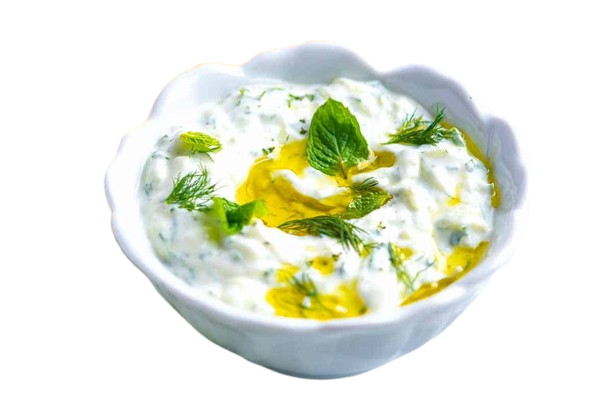
Tzatziki calories are considered moderate, with a 100g (3.5 oz) serving of tzatziki sauce from full-fat Greek yogurt containing 90-130 calories. A standard serving of two-tablespoon of tzatziki (30g) provides 27-39 calories. Tzatziki sauce nutrition facts highlight its protein content from Greek yogurt, with 3-5g of protein per 100g (6-10% Daily Value/DV), alongside 4-7g of carbohydrates (1-3% DV) and 6-10g of fat (8-13% DV). It also provides calcium (10-15% DV per 100g) and probiotics from the yogurt. Regular consumption of yogurt, which is the main ingredient in tzatziki, has been associated with various health benefits, including improved gut health (Guarner, F. & Malagelada, J.R., 2003, "Gut flora in health and disease").
Variations in tzatziki sauce calories depend on the yogurt's fat content, and non-fat versions contain 50-70 calories per 100g. Originating in the Eastern Mediterranean/Middle East, with strong ties to Greek and Turkish cuisine, tzatziki is produced and consumed widely, especially in these regions and in countries with strong Mediterranean culinary influence like the USA. The price of a retail container (8-12 oz or 227-340g) in the U.S. has risen from $2.50 to $4.00 in 2003/2004 to $3.50 to $5.50 in 2023/2024.
Tzatziki is famously served with gyros at establishments like The Halal Guys, with souvlaki at Daphne's California Greek, and as a dip with pita at CAVA. A serving of 2-4 tablespoons (30-60g, providing 27-78 calories for full-fat versions) can be a flavorful part of a meal. Burning the 30-40 calories from a two-tablespoon serving of tzatziki requires minimal physical activity, such as 3-5 minutes of walking or very light chores.
Tzatziki Sauce nutrition
| Stats | Weight |
|---|---|
| Carbs | 3 grams |
| Protein | 3 grams |
| Fats | 0 grams |
| Sugars | 2 grams |
- Tzatziki Dip Calories (Nutritional Facts)
- Sodium in Tzatziki Sauce
- Potassium in Tzatziki Sauce
- Sugar in Tzatziki Sauce
- Fiber in Tzatziki Sauce
- Protein in Tzatziki Sauce
- Carbs in Tzatziki Sauce
- Fat in Tzatziki Sauce
- Vitamins in Tzatziki Sauce
- Minerals in Tzatziki Sauce
Tzatziki Dip Calories (Nutritional Facts)
A 100g (3.5 oz) serving of tzatziki dip or sauce, made with full-fat Greek yogurt, contains 90-130 calories. A two-tablespoon (30g, 1.06 oz) serving of tzatziki provides 27-39 calories. One cup (240g, 8.47 oz) of tzatziki dip can contain 216-312 calories. Tzatziki dip (100g, full-fat yogurt base) also contains 3-5g of protein, 4-7g of carbohydrates, and 6-10g of total fat. If made with non-fat Greek yogurt, the calorie and fat content will be lower.
Tzatziki sauce made with full-fat Greek yogurt contains 300-450mg of sodium per 100g (13-20% DV), depending on the amount of salt added. A two-tablespoon (30g, 1.06 oz) serving provides 90-135mg of sodium (4-6% DV). Commercial brands can vary; for example, CAVA Tzatziki (100g) contains 321mg of sodium (14% DV).
Tzatziki sauce made with full-fat Greek yogurt provides 150-200mg of potassium per 100g (3-4% DV). A two-tablespoon (30g, 1.06 oz) serving contains 45-60mg of potassium (1-1.5% DV). The potassium primarily comes from the yogurt and cucumber.
Tzatziki sauce made with full-fat Greek yogurt contains 2-4g of total sugars per 100g. A two-tablespoon (30g, 1.06 oz) serving has 0.6-1.2g of sugar. These sugars are primarily naturally occurring lactose from the Greek yogurt and small amounts from cucumber and garlic; added sugar is not a typical ingredient in traditional tzatziki.
Tzatziki sauce made with full-fat Greek yogurt provides 0.5-1g of dietary fiber per 100g (2-4% DV). A two-tablespoon (30g, 1.06 oz) serving offers 0.15-0.3g of dietary fiber (1% DV). The fiber comes mainly from the cucumber.
Tzatziki sauce made with full-fat Greek yogurt contains 3-5g of protein per 100g (6-10% DV). A two-tablespoon (30g, 1.06 oz) serving has 0.9-1.5g of protein (2-3% DV). If made with non-fat Greek yogurt, the protein content per 100g can be higher, around 8-10g.
Tzatziki sauce made with full-fat Greek yogurt has 4-7g of total carbohydrates per 100g (1-3% DV). A two-tablespoon (30g, 1.06 oz) serving contains 1.2-2.1g of total carbohydrates (0-1% DV). These carbohydrates come from yogurt, cucumber, and garlic.
Tzatziki sauce made with full-fat Greek yogurt contains 6-10g of total fat per 100g (8-13% DV), which includes 3-6g of saturated fat. A two-tablespoon (30g, 1.06 oz) serving has 1.8-3g of total fat (2-4% DV). Tzatziki made with non-fat Greek yogurt will have 0g of fat.
A 100g (3.5 oz) serving of tzatziki sauce made with full-fat Greek yogurt provides Vitamin B12 at 0.3-0.5µg (13-21% DV) and Riboflavin (Vitamin B2) at 0.1-0.2mg (8-15% DV) from the yogurt. It also contains small amounts of Vitamin C from the cucumber and lemon juice.
A 100g (3.5 oz) serving of tzatziki sauce made with full-fat Greek yogurt is a good source of Calcium, providing 100-150mg (10-15% DV), and Phosphorus at 80-120mg (11-17% DV), primarily from the Greek yogurt. It also contains smaller amounts of zinc and selenium.
Get a Custom Report on Tzatziki Sauce Nutrition Data – Contact Us!
What are the Types of Tzatziki Sauce?
There are not many distinctly different "types" of tzatziki sauce in the way there are for cheeses or other more varied food products. The core ingredients (yogurt, cucumber, garlic, dill/mint, lemon juice/vinegar, olive oil, salt) are fairly standard. Variations primarily arise from the type of yogurt used (fat content), the specific herbs, and the ratio of ingredients, which can affect its thickness, tanginess, and nutritional profile, including calories. The table below shows variations based on yogurt type.
| Type (Based on Yogurt Fat Content) | Description | Calories (per 100g) | Calorie Qualifications |
|---|---|---|---|
|
Traditional Tzatziki (Full-Fat Greek Yogurt)
|
Made with full-fat (often 5% or 10% milkfat) Greek yogurt. Rich, creamy texture. | 90-130 | Higher in calories and fat, particularly saturated fat. |
|
Low-Fat Tzatziki (Low-Fat Greek Yogurt)
|
Made with low-fat (often 2% milkfat) Greek yogurt. Still creamy but less rich. | 70-100 | Moderate in calories and fat. |
|
Non-Fat Tzatziki (Non-Fat Greek Yogurt)
|
Made with non-fat (0% milkfat) Greek yogurt. Lighter texture, tangier flavor. | 50-70 | Lowest in calories and fat-free. Higher in protein per calorie. Flavor might be less rich. |
|
Vegan Tzatziki
|
Made with plant-based yogurt (e.g., coconut, almond, soy) instead of dairy yogurt. Texture and flavor can vary. | Varies (70-150+) | Calorie and fat content depends heavily on the type of plant-based yogurt and whether extra oil is added for richness. |
What are the Main Dishes with Tzatziki Sauce?
Tzatziki sauce is a beloved accompaniment and component in many main dishes, particularly within Greek and broader Mediterranean cuisines. Some of the most widespread main dishes that feature tzatziki are Gyros, Souvlaki, and various grilled meats and vegetables. It is often served as a dip, sauce, or spread. The table below lists diverse main dishes where tzatziki sauce is a characteristic element:
| Dish Name | Calories (per serving of dish) | Type of Tzatziki Used | Carbs (g) (of dish) | Sugar (g) (of dish) | Protein (g) (of dish) | Fat (g) (of dish) | Cuisine | Restaurants |
|---|---|---|---|---|---|---|---|---|
|
Gyro Sandwich (Beef/Lamb or Chicken)
|
500-800 | As a sauce within the pita | 40-60 | 3-7 | 20-35 | 20-40 | Greek, Mediterranean | The Halal Guys (white sauce is similar), Naf Naf Grill, CAVA, local Greek eateries |
|
Chicken Souvlaki Platter (with pita & tzatziki)
|
450-700 | Dipping sauce | 40-60 | 4-8 | 30-45 | 15-25 | Greek | Daphne's California Greek, Zoe's Kitchen, The Great Greek Mediterranean Grill |
|
Lamb Souvlaki Skewers with Tzatziki
|
400-650 | Dipping sauce | 5-15 (meat & sauce only) | 1-3 | 25-40 | 20-35 | Greek | Local Greek restaurants |
|
Falafel Platter or Wrap with Tzatziki
|
400-600 | Dipping sauce or in wrap | 50-70 | 3-6 | 10-18 | 15-25 | Middle Eastern | The Halal Guys (white sauce), local Middle Eastern and Mediterranean fast-casual spots |
|
Grilled Halloumi with Tzatziki
|
300-450 (appetizer/light main) | Dipping sauce | 5-10 | 2-4 | 15-25 | 20-30 | Mediterranean, Cypriot | Restaurants with extensive Mediterranean appetizer selections |
|
Greek Salad (sometimes with tzatziki as a dressing option)
|
300-500 (entrée size) | Dressing or side dollop | 10-20 | 5-10 | 8-15 | 20-35 | Greek | Panera Bread (Greek Salad, dressing on side), many restaurants offering Greek salads |
|
Dolmades (Stuffed Grape Leaves) with Tzatziki
|
200-350 (appetizer) | Dipping sauce | 20-30 | 2-5 | 4-8 | 8-15 | Greek, Turkish | Trader Joe's (retail dolmades), Mediterranean delis |
|
Keftedes (Greek Meatballs) with Tzatziki
|
350-550 | Dipping sauce | 10-20 | 2-4 | 20-30 | 18-28 | Greek | Local Greek tavernas |
|
Grilled Fish (e.g., Branzino, Cod) with Tzatziki
|
300-500 | Side sauce | 2-8 | <1-2 | 30-45 | 10-20 | Mediterranean | Milos (Estiatorio Milos), various upscale seafood or Mediterranean restaurants |
|
Roasted Vegetables (Zucchini, Bell Peppers) with Tzatziki Dip
|
150-250 (side dish) | Dipping sauce | 15-25 | 5-10 | 3-6 | 5-12 | Mediterranean | Tender Greens, health-focused cafes |
|
Pita Bread with Tzatziki Dip
|
200-350 (appetizer) | Dip | 30-45 | 1-3 | 5-8 | 5-10 | Greek, Middle Eastern | Most Greek and Middle Eastern restaurants as a starter, e.g., Opa! of Greece |
|
Spanakopita (Spinach Pie) with Tzatziki
|
250-400 (slice) | Side sauce | 15-25 | 1-3 | 6-10 | 15-25 | Greek | Greek bakeries and restaurants |
|
Lamb Chops with Tzatziki
|
500-700 | Side sauce | 5-10 | 1-3 | 30-45 | 30-45 | Greek, Mediterranean | Upscale Greek or Mediterranean steakhouses |
What Cuisines Prefer Tzatziki Sauce the Most?
Tzatziki sauce is featured and deeply cherished in Greek cuisine, where it is a dip, sauce, and accompaniment to a wide array of dishes. Its refreshing qualities are also appreciated throughout the broader Mediterranean and Middle Eastern regions, often with slight variations in name or ingredients (like cacık in Turkey). The table below highlights cuisines that frequently utilize tzatziki or very similar yogurt-cucumber-garlic preparations.
| Cuisine | Dish Name | Calories (per serving of dish) | Restaurants |
|---|---|---|---|
|
Greek
|
Gyro Sandwich | 500-800 | The Halal Guys (white sauce is tzatziki-like), Naf Naf Grill, CAVA, local Greek spots |
|
Greek
|
Chicken or Lamb Souvlaki | 400-700 | Daphne's California Greek, Zoe's Kitchen, The Great Greek Mediterranean Grill |
|
Greek
|
Keftedes (Meatballs) with Tzatziki | 350-550 | Local Greek tavernas |
|
Turkish
|
Cacık (similar to tzatziki, sometimes thinner) | 80-150 (as a side/soup) | Turkish restaurants, e.g., The DönerG Company (may offer similar yogurt sauces) |
|
Middle Eastern (Levantine)
|
Laban Immo (Cucumber Yogurt Salad/Dip - similar) | 100-200 | Many Middle Eastern restaurants like Mamoun's Falafel (yogurt sauces) |
|
Cypriot
|
Served with grilled meats and meze platters | Varies | Restaurants specializing in Cypriot cuisine |
|
Balkan
|
Tarator (cold cucumber yogurt soup - a variation) | 100-200 (bowl) | Restaurants offering Bulgarian or other Balkan cuisines |
|
American (Mediterranean-inspired)
|
Veggie Platters with Tzatziki Dip | Varies | Tender Greens, various cafes with healthy dip options |
Which Countries Produce the Most Tzatziki Sauce?
Tzatziki is primarily made from Greek yogurt, cucumbers, garlic, and olive oil. Countries with high production and consumption of Greek yogurt and a strong culinary tradition of making tzatziki are the main producers. Greece is the cultural origin and a significant producer for domestic consumption and export. Turkey produces large quantities of "cacık," a very similar yogurt-cucumber dip. In recent decades, with the global popularity of Greek and Mediterranean food, commercial production of tzatziki has become widespread in many countries, including the United States, Canada, the United Kingdom, Germany, and Australia, by dairy companies and specialty food manufacturers. The table below provides production data for "Yogurt" for some key countries known for tzatziki consumption/production, as a proxy for the availability of its main ingredient.
| Country | 2004 | 2005 | 2006 | 2007 | 2008 | 2009 | 2010 | 2011 | 2012 | 2013 | 2014 | 2015 | 2016 | 2017 | 2018 | 2019 | 2020 | 2021 | 2022 | 2023 (Est.) |
|---|---|---|---|---|---|---|---|---|---|---|---|---|---|---|---|---|---|---|---|---|
| USA (All Yogurt) | 2,800 | 2,900 | 3,000 | 3,150 | 3,300 | 3,400 | 3,550 | 3,700 | 3,850 | 4,000 | 4,100 | 4,150 | 4,200 | 4,250 | 4,280 | 4,300 | 4,320 | 4,330 | 4,340 | 4,350 |
| Germany (All Yogurt) | 1,500 | 1,550 | 1,600 | 1,650 | 1,700 | 1,720 | 1,750 | 1,780 | 1,800 | 1,820 | 1,830 | 1,840 | 1,850 | 1,860 | 1,870 | 1,880 | 1,850 | 1,860 | 1,870 | 1,875 |
| France (All Yogurt) | 1,300 | 1,320 | 1,340 | 1,360 | 1,380 | 1,390 | 1,400 | 1,410 | 1,420 | 1,430 | 1,440 | 1,450 | 1,460 | 1,470 | 1,480 | 1,490 | 1,470 | 1,480 | 1,485 | 1,490 |
| Turkey (All Yogurt/Ayran) | 900 | 950 | 1,000 | 1,050 | 1,100 | 1,150 | 1,200 | 1,250 | 1,300 | 1,350 | 1,400 | 1,450 | 1,500 | 1,550 | 1,600 | 1,650 | 1,700 | 1,750 | 1,780 | 1,800 |
| Greece (All Yogurt) | 200 | 210 | 220 | 230 | 240 | 230 | 220 | 210 | 200 | 190 | 180 | 170 | 175 | 180 | 185 | 190 | 180 | 182 | 185 | 186 |
Which Countries Consume the Most Tzatziki Sauce?
Based on culinary traditions and market data for Greek yogurt and Mediterranean foods, Greece has the highest per capita consumption of tzatziki sauce. Turkey also has very high consumption of its similar counterpart, cacık. Significant consumption occurs in countries with large Greek or Middle Eastern diaspora communities and where Mediterranean cuisine is popular. These include the United States, Germany, the United Kingdom, Canada, and Australia. The rise of Greek yogurt's popularity globally has also boosted the familiarity and consumption of tzatziki.
| Country | 2004 | 2005 | 2006 | 2007 | 2008 | 2009 | 2010 | 2011 | 2012 | 2013 | 2014 | 2015 | 2016 | 2017 | 2018 | 2019 | 2020 | 2021 |
|---|---|---|---|---|---|---|---|---|---|---|---|---|---|---|---|---|---|---|
| USA | 2,700 | 2,800 | 2,900 | 3,050 | 3,200 | 3,300 | 3,450 | 3,600 | 3,750 | 3,900 | 4,000 | 4,050 | 4,100 | 4,150 | 4,180 | 4,200 | 4,220 | 4,230 |
| Germany | 1,450 | 1,500 | 1,550 | 1,600 | 1,650 | 1,670 | 1,700 | 1,730 | 1,750 | 1,770 | 1,780 | 1,790 | 1,800 | 1,810 | 1,820 | 1,830 | 1,800 | 1,810 |
| France | 1,250 | 1,270 | 1,290 | 1,310 | 1,330 | 1,340 | 1,350 | 1,360 | 1,370 | 1,380 | 1,390 | 1,400 | 1,410 | 1,420 | 1,430 | 1,440 | 1,420 | 1,430 |
| Turkey | 850 | 900 | 950 | 1,000 | 1,050 | 1,100 | 1,150 | 1,200 | 1,250 | 1,300 | 1,350 | 1,400 | 1,450 | 1,500 | 1,550 | 1,600 | 1,650 | 1,700 |
| United Kingdom | 350 | 370 | 390 | 410 | 430 | 440 | 450 | 460 | 470 | 480 | 490 | 500 | 510 | 520 | 530 | 540 | 530 | 535 |
| Greece | 180 | 190 | 200 | 210 | 220 | 210 | 200 | 190 | 180 | 170 | 160 | 150 | 155 | 160 | 165 | 170 | 160 | 162 |
How Does Prices of Tzatziki Sauce-including Dishes Change?
The prices of restaurant dishes that have tzatziki sauce, such as gyros, souvlaki platters, or meze platters with tzatziki dip, have increased over the past 20 years. This is due to the rising cost of the ingredients for tzatziki (especially Greek yogurt), price increases of the main components of these dishes (lamb, chicken, beef, pita bread, fresh vegetables), and higher restaurant operating costs. Provided in the table below is a comparison of prices for menu items where tzatziki sauce is an ingredient:
| Restaurant Chain/Type | Dish | Old Price (2004-2008) | Current Price (2024-2025) |
|---|---|---|---|
| Local Greek Eatery / Fast Casual | Gyro Sandwich (Beef/Lamb or Chicken) | $5.00 - $7.50 | $9.00 - $14.00 |
| Zoe's Kitchen | Chicken Souvlaki Plate | $8.99 - $11.99 | $14.50 - $16.99 |
| The Halal Guys (White sauce is tzatziki-like) | Chicken or Gyro Platter | $6.99 - $8.99 | $11.99 - $14.99 |
| CAVA | Bowl/Pita with Chicken/Falafel & Tzatziki | $7.00 - $9.50 | $11.00 - $15.50 |
| Mediterranean Restaurant | Appetizer Meze Platter with Tzatziki Dip | $7.95 - $10.95 | $12.95 - $18.95 |
| Mediterranean Restaurant | Falafel Wrap with Tzatziki | $5.50 - $7.95 | $9.50 - $13.95 |
What is the Tzatziki Sauce Calorie for 100 Grams?
A 100g (3.5 oz) serving of tzatziki sauce made with full-fat Greek yogurt typically contains 90-130 calories. For example, CAVA Tzatziki has 90 calories per 100g. Boar's Head Tzatziki Greek Yogurt Dip contains 107 calories per 100g. Tzatziki made with non-fat Greek yogurt will have fewer calories, around 50-70 calories per 100g.
What is the Tzatziki Sauce Calorie for 1 KG?
One kilogram (1000g, 35.27 oz) of tzatziki sauce made with full-fat Greek yogurt contains 900-1300 calories.
What is the Tzatziki Sauce Calorie for 1 Cup?
One cup (240g, 8.47 oz) of tzatziki sauce made with full-fat Greek yogurt contains 216-312 calories. One cup (240g) of tzatziki made with non-fat Greek yogurt provides 120-168 calories.
What are the Health Benefits of Tzatziki Sauce?
Tzatziki sauce provides some health benefits like offering probiotics for gut health and contributing to hydration due to its primary ingredients of Greek yogurt and cucumber. The health benefits of tzatziki sauce are provided in the following list:
- Source of Probiotics (from Greek Yogurt): Greek yogurt, the base of tzatziki, is rich in probiotics, which are beneficial bacteria that support a healthy gut microbiome. A healthy gut is linked to improved digestion, enhanced immune function, and even mental well-being. (Parvez, S., et al., 2006, "Probiotics and their fermented food products are beneficial for health").
- Good Source of Protein (from Greek Yogurt): Greek yogurt provides a good amount of high-quality protein, which is important for building and repairing tissues, satiety, and muscle maintenance. (Paddon-Jones, D. & Rasmussen, B.B., 2009, "Dietary protein recommendations and the prevention of sarcopenia").
- Provides Calcium and Phosphorus (from Greek Yogurt): Dairy components in tzatziki contribute calcium and phosphorus, essential minerals for strong bones and teeth. (Heaney, R.P., 2006, "Bone health").
- Hydrating Properties (from Cucumber): Cucumbers have a very high water content, which can contribute to overall hydration. They also provide small amounts of vitamins and minerals.
- Contains Beneficial Compounds from Garlic and Dill: Garlic, a common ingredient, contains allicin and other sulfur compounds known for their potential cardiovascular and immune benefits. Dill provides antioxidants and small amounts of vitamins. (Lau, B.H.S., et al., 1991, "Allium sativum (garlic) and atherosclerosis: A review").
- Low in Calories (especially if made with non-fat yogurt): Compared to many creamy dips and sauces, tzatziki, particularly when made with non-fat Greek yogurt, can be relatively low in calories while still being flavorful, making it a healthier condiment choice.
What are the Downsides of Tzatziki Sauce?
Tzatziki sauce’s high sodium content in some preparations can pose health issues when consumed on a regular basis. A list of the downsides of tzatziki sauce are shown below:
- Sodium Content: While homemade versions allow for sodium control, commercially prepared tzatziki sauces can be high in sodium due to added salt for flavor. Excessive sodium intake is linked to increased blood pressure. (He, F.J. & MacGregor, G.A., 2013, "Salt reduction lowers cardiovascular risk: meta-analysis of outcome trials").
- Fat Content (if made with full-fat yogurt): Tzatziki made with full-fat Greek yogurt will contain a significant amount of fat, including saturated fat. High intake of saturated fat can be a concern for cardiovascular health. (American Heart Association, "Saturated Fat").
- Lactose Content Can Cause Issues for Intolerant Individuals: Being dairy-based, tzatziki contains lactose. Individuals with lactose intolerance may experience digestive discomfort such as bloating, gas, or diarrhea after consuming it.
- Garlic Can Cause Digestive Upset or Bad Breath: For some individuals, the raw garlic in tzatziki can cause digestive issues or lead to garlic breath.
- Potential for Added Oils or Preservatives in Commercial Versions: Some store-bought tzatziki sauces may contain added vegetable oils, thickeners, or preservatives that some individuals prefer to avoid.
Is Tzatziki Sauce Good for You?
Yes, tzatziki sauce can be good for you, particularly when made with non-fat or low-fat Greek yogurt and consumed in moderation. Its primary ingredient, Greek yogurt, is a rich source of protein and probiotics, which are beneficial for gut health and satiety. (Guarner, F. & Malagelada, J.R., 2003, "Gut flora in health and disease"). Cucumbers add hydration and some vitamins, while garlic and dill provide antioxidants and other beneficial plant compounds. (Banerjee, S.K. & Maulik, S.K., 2002, "Effect of garlic on cardiovascular disorders: a review"). But the healthfulness can be diminished if it is made with full-fat yogurt (increasing saturated fat intake) or if it contains high levels of added sodium, as is common in some commercial preparations. Choosing or making versions with fresh ingredients, minimal salt, and lean yogurt will maximize its benefits. (Astrup, A., 2014, "Yogurt and dairy product consumption to prevent cardiometabolic diseases: epidemiologic and experimental studies").
Which Ingredients in Tzatziki Contribute to Weight Loss Benefits?
The primary ingredients in tzatziki that can contribute to weight loss benefits are Greek yogurt (especially non-fat or low-fat) and cucumber. Tzatziki sauce can be beneficial for weight loss when it replaces higher-calorie, higher-fat dips and sauces, and when made with lean ingredients.
Greek yogurt is high in protein, which is known to increase satiety and reduce hunger, leading to a lower overall calorie intake. (Westerterp-Plantenga, M.S., 2004, "The satiating power of protein-rich foods"). The protein can also help preserve muscle mass during weight loss. Cucumbers are very low in calories and high in water content, adding bulk and hydration to the dip without significantly increasing its energy density. This can help you feel fuller on fewer calories. (Rolls, B.J., et al., 2005, "Water incorporated into a food but not served with a food decreases energy intake in lean women"). Also garlic, another common ingredient, has been explored in some research for its potential anti-obesity effects, though this is less direct in the context of tzatziki. (Yang, J.Y., et al., 2012, "Garlic and its organosulfur compounds in cancer prevention"). Tzatziki sauce can contribute to weight gain if made with full-fat Greek yogurt and consumed in large quantities, or if paired with high-calorie dippers like fried pita bread.
How Do Calories Change According to Tzatziki Sauce Types?
The calorie content of tzatziki sauce changes based on the fat content of the Greek yogurt used as its base and, to a lesser extent, the amount of olive oil added. Traditional tzatziki made with full-fat Greek yogurt is the most calorie-dense, containing between 90 and 130 calories per 100g. This is due to the higher fat content of the yogurt itself. If additional olive oil is generously used, this can further increase the calorie count. Tzatziki made with low-fat Greek yogurt will have a moderate calorie content, generally ranging from 70 to 100 calories per 100g. The lowest calorie option is tzatziki made with non-fat Greek yogurt, which provides 50 to 70 calories per 100g, as it contains no fat from the yogurt. Vegan tzatziki, made with plant-based yogurts, can have a wide calorie range (70 to 150+ calories per 100g) depending on the base.
Which Macronutrient is Most Dominant in Tzatziki Sauce?
In traditional tzatziki sauce made with full-fat Greek yogurt, fat is often the most dominant macronutrient by calorie contribution, though protein and carbohydrates are also present in significant amounts. A 100g serving of full-fat tzatziki may contain 6-10g of fat (providing 54-90 calories), 3-5g of protein (providing 12-20 calories), and 4-7g of carbohydrates (providing 16-28 calories).
Fat becomes the most dominant macronutrient in this version because full-fat Greek yogurt contributes a substantial amount of milk fat, and often a small amount of olive oil is added, which is pure fat. (U.S. Department of Agriculture, FoodData Central, "Yogurt, Greek, plain, whole milk"). While Greek yogurt is also high in protein, the fat content in the full-fat version often means fat contributes slightly more to the total calories of the tzatziki. (Park, Y.W., et al., 2007, "Physicochemical characteristics of goat and sheep milk"). If non-fat Greek yogurt is used, then protein would likely become the most dominant macronutrient by weight, and carbohydrates and protein would be more balanced in terms of caloric contribution, with fat being negligible. (Astrup, A., 2014, "Yogurt and dairy product consumption to prevent cardiometabolic diseases). The tzatziki sauce macros will shift based on these ingredient choices.
What are Desserts with Tzatziki Sauce?
The use of tzatziki sauce in desserts is virtually nonexistent and highly unconventional. Tzatziki sauce is characterized by its savory, tangy, and garlicky flavor profile, which is incompatible with the sweet characteristics expected in desserts. There are no known or established dessert dishes that feature tzatziki sauce as an ingredient.
What is the Origin of Tzatziki Sauce?
The origin of tzatziki sauce is rooted in the culinary traditions of the Eastern Mediterranean and Middle East, with strong ties to Greek and Turkish cuisines. Variations of yogurt-based sauces mixed with cucumber, garlic, herbs, and sometimes nuts have existed in these regions for centuries. The name "tzatziki" itself is believed to be derived from the Turkish word "cacık" (pronounced "jah-jik"), which refers to a more liquid or soup-like dish made with yogurt, cucumber, garlic, and often mint or dill.
The Greek version of tzatziki, made with strained (Greek) yogurt for a thicker consistency, shredded or diced cucumber, minced garlic, olive oil, lemon juice or vinegar, and fresh herbs like dill or mint, became particularly well-known internationally alongside the popularization of Greek cuisine. It serves as a cooling counterpoint to grilled meats, a refreshing dip for pita bread and vegetables, and an essential sauce for gyros and souvlaki.
A classic dish that perfectly highlights tzatziki's role is the "Gyro." In this iconic Greek street food, seasoned meat (traditionally lamb, beef, or chicken) cooked on a vertical rotisserie is shaved off and served in a warm pita bread with tomatoes, onions, and a dollop of tzatziki.
Explore More Dips & Spreads
Discover more Dips & Spreads with detailed nutrition facts, calorie counts, vitamins, minerals, and health benefits. Compare similar foods, serving sizes, macronutrients, and key nutrients to find the best option for your diet and nutrition goals.
 Almond Butter calories
 Peanut Butter calories