Calories and Nutritions in Biscotti
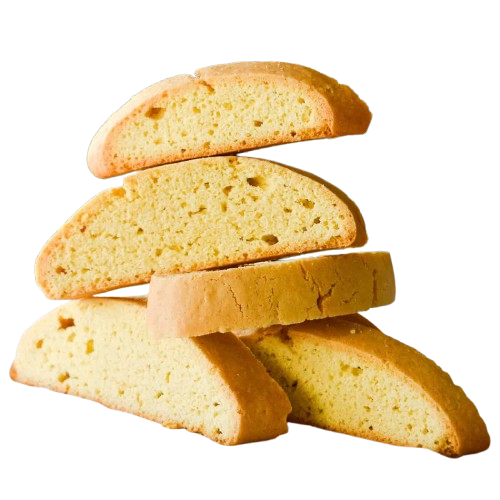
Biscotti are classic Italian almond cookies that get their signature hard texture from being baked twice. Biscotti calories depend on the size and coating of the Italian twice-baked biscuit. A small almond biscotti (10g or 0.35oz) contains 46 calories, while a small chocolate-dipped biscotti (10g or 0.35oz) has 50 calories. One Nonni's Originali Biscotti (33g or 1.2oz) contains 140 calories and a Starbucks Almond Biscotti (35g or 1.2oz) provides 160 calories. A 100g serving of plain almond biscotti contains 460 calories, while the same amount of chocolate-dipped biscotti provides 500 calories. Calories in a biscotti are densest in chocolate-coated varieties.
An assessment of the biscotti nutrition profile highlights a food rich in carbohydrates and sugar, with a large almond biscotti (38g or 1.3oz) delivering 4.2g of protein (8% DV), 7.6g of fat (10% DV), and 24.7g of carbohydrates (9% DV), including 11.4g of sugar. The preparation method involves a double-baking process that removes moisture, concentrating the caloric density. The inclusion of whole almonds enhances the nutritional value, and a study by Mandalari, G., et al. (2014) found that the cell walls of almonds in baked goods can impede lipid release during digestion, potentially modulating energy absorption compared to refined cookies. Chocolate coatings significantly elevate the saturated fat and sugar levels, increasing the energy density to 5,000 calories per kilogram.
Global availability of biscotti depends on the almond supply chain, with the United States leading production by yielding over 1.3 million tonnes of almonds in 2022. This agricultural output supports the sweet biscuit market, where the United States imported over $3.2 billion in cookies and biscuits in 2022. This crisp biscuit serves as a traditional accompaniment in at least one dozen distinct dessert pairings, such as Vin Santo with Cantucci, and functions as a staple in Italian and American coffee culture. Economic factors have driven costs upward, as a standard box of retail biscotti rose from under $3.00 in the early 2000s to over $5.50 after 2020. Menu prices reflect this trend, as a single Almond Biscotti at Starbucks moved from $1.50 to between $2.45 and $2.95.
The concentration of refined flour and added sweeteners makes biscotti a calorie-dense treat requiring moderation. Health authorities like the American Heart Association advise limiting added sugars, and a single large almond biscotti contains 11.4g of sugar, a substantial portion of the daily allowance. A suggested consumption rate is to limit intake to one medium biscuit (22g) paired with coffee or tea. Burning off the 101 calories found in a single medium biscuit requires an energy expenditure equivalent to 10 minutes of running or 13 minutes of swimming.
Biscotti nutrition
| Stats | Weight |
|---|---|
| Carbs | 14.3 grams |
| Protein | 2.4 grams |
| Fats | 0 grams |
| Sugars | 6.6 grams |
- Large Biscotti Calories (Nutritional Facts)
- Medium Biscotti Calories (Nutritional Facts)
- Small Biscotti Calories (Nutritional Facts)
- Raw Biscotti Nutrition
- Sodium in Biscotti
- Potassium in Biscotti
- Sugar in Biscotti
- Fiber in Biscotti
- Protein in Biscotti
- Carbs in Biscotti
- Fat in Biscotti
- Vitamins in Biscotti
- Minerals in Biscotti
Large Biscotti Calories (Nutritional Facts)
A large almond biscotti (38g or 1.3oz) contains 175 calories, 4.2g of protein, 7.6g of fat, 24.7g of carbohydrates, 1.5g of fiber, 11.4g of sugar, and 95mg of sodium. A large chocolate-dipped biscotti (38g or 1.3oz) provides 190 calories, 3.5g of protein, 9g of fat, 25g of carbohydrates, 1.2g of fiber, 14g of sugar, and 85mg of sodium.
A medium almond biscotti (22g or 0.8oz) provides 101 calories, 2.4g of protein, 4.4g of fat, 14.3g of carbohydrates, 0.9g of fiber, 6.6g of sugar, and 55mg of sodium. A medium chocolate-dipped biscotti (22g or 0.8oz) contains 110 calories, 2g of protein, 5.2g of fat, 14.5g of carbohydrates, 0.7g of fiber, 8.1g of sugar, and 49mg of sodium.
A small almond biscotti (10g or 0.35oz) contains 46 calories, 1.1g of protein, 2g of fat, 6.5g of carbohydrates, 0.4g of fiber, 3g of sugar, and 25mg of sodium. A small chocolate-dipped biscotti (10g or 0.35oz) provides 50 calories, 0.9g of protein, 2.4g of fat, 6.6g of carbohydrates, 0.3g of fiber, 3.7g of sugar, and 22mg of sodium.
Raw biscotti consists of a dense, sticky dough made from flour, sugar, eggs, and nuts that requires a double-baking process to become edible and shelf-stable, so nutritional data is based on the finished, moisture-reduced product.
A large almond biscotti (38g) contains 95mg of sodium (4% DV), while a large chocolate-dipped biscotti (38g) contains 85mg of sodium (4% DV). A medium almond biscotti (22g) has 55mg of sodium (2% DV), and a medium chocolate-dipped biscotti (22g) has 49mg of sodium (2% DV). A small almond biscotti (10g) contains 25mg of sodium (1% DV), whereas a small chocolate-dipped biscotti (10g) contains 22mg of sodium (1% DV).
A large almond biscotti (38g) contains 76mg of potassium (2% DV), and a large chocolate-dipped biscotti (38g) contains 100mg of potassium (2% DV). A medium almond biscotti (22g) has 44mg of potassium (1% DV), while a medium chocolate-dipped biscotti (22g) has 58mg of potassium (1% DV). A small almond biscotti (10g) contains 20mg of potassium (0% DV), whereas a small chocolate-dipped biscotti (10g) contains 26mg of potassium (1% DV).
A large almond biscotti (38g) contains 11.4g of sugar, while a large chocolate-dipped biscotti (38g) contains 14g of sugar. A medium almond biscotti (22g) has 6.6g of sugar, and a medium chocolate-dipped biscotti (22g) has 8.1g of sugar. A small almond biscotti (10g) contains 3g of sugar, whereas a small chocolate-dipped biscotti (10g) contains 3.7g of sugar.
A large almond biscotti (38g) provides 1.5g of dietary fiber (5% DV), and a large chocolate-dipped biscotti (38g) provides 1.2g of fiber (4% DV). A medium almond biscotti (22g) has 0.9g of fiber (3% DV), while a medium chocolate-dipped biscotti (22g) has 0.7g of fiber (3% DV). A small almond biscotti (10g) contains 0.4g of fiber (1% DV), whereas a small chocolate-dipped biscotti (10g) contains 0.3g of fiber (1% DV).
A large almond biscotti (38g) provides 4.2g of protein (8% DV), while a large chocolate-dipped biscotti (38g) provides 3.5g of protein (7% DV). A medium almond biscotti (22g) has 2.4g of protein (5% DV), and a medium chocolate-dipped biscotti (22g) has 2g of protein (4% DV). A small almond biscotti (10g) contains 1.1g of protein (2% DV), whereas a small chocolate-dipped biscotti (10g) contains 0.9g of protein (2% DV).
A large almond biscotti (38g) contains 24.7g of carbohydrates (9% DV), and a large chocolate-dipped biscotti (38g) contains 25g of carbohydrates (9% DV). A medium almond biscotti (22g) has 14.3g of carbohydrates (5% DV), while a medium chocolate-dipped biscotti (22g) has 14.5g of carbohydrates (5% DV). A small almond biscotti (10g) contains 6.5g of carbohydrates (2% DV), whereas a small chocolate-dipped biscotti (10g) contains 6.6g of carbohydrates (2% DV).
A large almond biscotti (38g) contains 7.6g of total fat (10% DV), while a large chocolate-dipped biscotti (38g) contains 9g of total fat (12% DV). A medium almond biscotti (22g) has 4.4g of total fat (6% DV), and a medium chocolate-dipped biscotti (22g) has 5.2g of total fat (7% DV). A small almond biscotti (10g) contains 2g of total fat (3% DV), whereas a small chocolate-dipped biscotti (10g) contains 2.4g of total fat (3% DV).
A large almond biscotti (38g) provides 1.5mg of Vitamin E (10% DV), while a large chocolate-dipped biscotti (38g) provides 1mg of Vitamin E (7% DV). A medium almond biscotti (22g) provides 0.9mg of Vitamin E (6% DV), and a medium chocolate-dipped biscotti (22g) provides 0.6mg of Vitamin E (4% DV). A small almond biscotti (10g) provides 0.4mg of Vitamin E (3% DV), whereas a small chocolate-dipped biscotti (10g) provides 0.3mg of Vitamin E (2% DV).
A large almond biscotti (38g) provides 1.1mg of iron (6% DV) and 30mg of calcium (2% DV), while a large chocolate-dipped biscotti (38g) provides 1.4mg of iron (8% DV) and 25mg of calcium (2% DV). A medium almond biscotti (22g) provides 0.6mg of iron (3% DV) and 17mg of calcium (1% DV), and a medium chocolate-dipped biscotti (22g) provides 0.8mg of iron (4% DV) and 14mg of calcium (1% DV). A small almond biscotti (10g) provides 0.3mg of iron (2% DV) and 8mg of calcium (1% DV), whereas a small chocolate-dipped biscotti (10g) provides 0.4mg of iron (2% DV) and 7mg of calcium (1% DV).
Get a Custom Report on Biscotti Nutrition Data – Contact Us!
What are the Types of Biscotti?
The types of biscotti are Cantucci (Traditional Almond), Chocolate Dipped, Fruit & Nut, and Savory. These variations are distinguished by the inclusions and coatings, which result in different caloric densities and flavor profiles. The following chart categorizes the nutritional differences between these styles.
| Type | Description | Calories (per 100g) | Calorie Qualifications |
|---|---|---|---|
|
Cantucci (Almond)
|
Traditional Tuscan biscuit made with flour, sugar, eggs, and almonds, no butter. | 460 | The nuts add calories, but the lack of butter keeps the fat lower than American versions. |
|
Chocolate Dipped
|
Biscotti dipped or drizzled in dark, milk, or white chocolate. | 500 | The chocolate coating significantly increases the sugar and saturated fat content. |
|
Fruit & Nut
|
Contains dried fruits like cranberries or apricots along with nuts like pistachios. | 440 | The dried fruit adds natural sugars but lowers the fat density slightly compared to pure nut versions. |
|
Savory Biscotti
|
Made with herbs, cheese (parmesan), and black pepper, often without sugar. | 450 | The cheese and oil add fat calories, but the sugar content is negligible. |
What are Desserts with Biscotti?
Biscotti serve as an accompaniment or ingredient in various sweet preparations, adding crunch and texture. The table below catalogs sweet courses that utilize biscotti.
| Dish Name | Calories (Estimate per serving) | Type of Dessert | Carbs (g) (Estimate) | Sugar (g) (Estimate) | Protein (g) (Estimate) | Fat (g) (Estimate) | Cuisine | Restaurants |
|---|---|---|---|---|---|---|---|---|
|
Cantucci e Vin Santo
|
350 | Dessert Drink | 45 | 30 | 5 | 8 | Italian (Tuscan) | Trattorias in Tuscany |
|
Biscotti Tortoni
|
300 | Frozen Dessert | 25 | 20 | 4 | 20 | Italian American | Bamonte's |
|
Biscotti Cheesecake Crust
|
600 | Cake | 50 | 35 | 8 | 40 | American | The Cheesecake Factory |
|
Chocolate Dipped Biscotti
|
190 | Confection | 25 | 14 | 3 | 9 | Global | Starbucks |
|
Affogato with Biscotti
|
250 | Coffee Dessert | 30 | 20 | 4 | 12 | Italian | Eataly |
|
Biscotti Crumble Sundae
|
550 | Sundae | 75 | 50 | 8 | 25 | American | Ghirardelli Soda Fountain |
|
Tiramisu (Biscotti Base)
|
450 | Cake | 40 | 25 | 6 | 30 | Italian | Olive Garden |
|
Biscotti Truffles
|
150 | Confection | 18 | 12 | 2 | 8 | Bakery | Local Bakeries |
|
Spumoni with Biscotti
|
280 | Frozen Dessert | 35 | 25 | 5 | 12 | Italian American | The Old Spaghetti Factory |
|
Ricotta with Biscotti Crumbs
|
200 | Dessert | 15 | 10 | 8 | 12 | Italian | Osteria Mozza |
What Cuisines Prefer Biscotti the Most?
Biscotti function as a staple in Italian and American culinary traditions, particularly associated with coffee breaks and dessert courses. The chart below identifies culinary traditions that regularly use this item.
| Cuisine | Dish | Types of Biscotti | Calories (Estimate) | Restaurant(s) |
|---|---|---|---|---|
|
Italian (Tuscan)
|
Cantucci e Vin Santo | Almond (Hard) | 300-400 | Trattoria Za Za (Florence) |
|
American (Coffee Shop)
|
Coffee Companion | Chocolate/Nut | 150-250 | Starbucks |
|
Italian American
|
Dessert Platter | Anise/Almond | 100-200 | Olive Garden |
|
Argentinian
|
Bay Biscuit | Plain/Vanilla | 80-150 | Havanna |
|
Jewish (Sephardic)
|
Mandelbrodt | Almond/Fruit | 150-250 | Russ & Daughters |
|
Australian
|
Cafe Biscuit | Almond/Hazelnut | 150-200 | McCafé |
|
British
|
Coffee Biscuit | Nut/Chocolate | 150-250 | Costa Coffee |
|
French (Corsican)
|
Canistrelli | Anise/Lemon | 100-180 | Local Patisseries |
|
Modern American
|
Gift Basket Item | Chocolate Dipped | 150-300 | Harry & David |
|
Canadian
|
Cafe Snack | Maple/Nut | 150-250 | Tim Hortons |
Which Countries Consume the Most Biscotti?
The top consumers of sweet biscuits, including biscotti, are the United Kingdom, Italy, and the United States. Consumption data for biscotti is best represented by import values for the broader category of sweet biscuits. The table below shows import values for this category in key markets.
| Country | 2003 | 2008 | 2013 | 2018 | 2019 | 2020 | 2021 | 2022 |
|---|---|---|---|---|---|---|---|---|
| United States | 800,000 | 1,200,000 | 1,500,000 | 2,000,000 | 2,100,000 | 2,300,000 | 2,800,000 | 3,200,000 |
| United Kingdom | 600,000 | 900,000 | 1,100,000 | 1,300,000 | 1,350,000 | 1,400,000 | 1,500,000 | 1,600,000 |
| France | 500,000 | 800,000 | 1,000,000 | 1,200,000 | 1,250,000 | 1,300,000 | 1,400,000 | 1,500,000 |
| Germany | 400,000 | 700,000 | 900,000 | 1,100,000 | 1,150,000 | 1,200,000 | 1,300,000 | 1,400,000 |
| Canada | 300,000 | 500,000 | 700,000 | 800,000 | 850,000 | 900,000 | 1,000,000 | 1,100,000 |
How Do Prices of Biscotti-Including Dishes Change?
The cost of biscotti on restaurant and cafe menus has risen over the past ten years due to higher wholesale costs for ingredients and increased operational expenses. This increasing cost pattern is observable on the menus of established dining establishments and retailers.
| Restaurant | Dish | Old Price (Year) | Current Price (2024/2025) |
|---|---|---|---|
| Starbucks | Almond Biscotti (Single) | $1.50 (2013) | $1.95 - $2.95 |
| Nonni's | Biscotti (8 Count Box) | $3.49 (2014) | $5.49 - $6.88 |
What is the Biscotti Calorie for 100 Grams?
A 100g serving of plain almond biscotti contains 460 calories, while a 100g serving of chocolate-dipped biscotti provides 500 calories.
What is the Biscotti Calorie for 1 KG?
One kilogram (1000g) of plain almond biscotti contains 4,600 calories, whereas one kilogram (1000g) of chocolate-dipped biscotti provides 5,000 calories.
What is the Calorie of 1 Biscotti?
A single medium almond biscotti (22g) contains 101 calories. Commercial versions vary, as one Nonni's Originali Biscotti (33g) contains 140 calories, while one Starbucks Almond Biscotti (35g) provides 160 calories.
What are the Health Benefits of Biscotti?
The inclusion of nuts, particularly almonds, provides specific nutritional advantages, although the sugar content in the biscuit format often mitigates these benefits. A summary of these positive attributes is outlined below.
- Provides Healthy Fats: Almond-based biscotti contain monounsaturated fats which support heart health. A study by Berryman, C. E., et al. (2015), "Effects of daily almond consumption on cardiometabolic risk and abdominal adiposity," confirms that incorporating almonds into the diet improves lipid profiles and reduces LDL cholesterol.
- Source of Vitamin E: The almonds in traditional recipes provide Vitamin E, a potent antioxidant. A review by Rizvi, S., et al. (2014), "The role of vitamin E in human health and some diseases," highlights that Vitamin E protects cells from oxidative stress and supports immune function.
- Offers Satiety: The dense texture and protein from nuts and eggs can promote a feeling of fullness compared to softer, high-sugar cookies. A study by Tan, S. Y., & Mattes, R. D. (2013), "Appetitive, dietary and health effects of almonds consumed with meals or as snacks," notes that almond consumption moderates postprandial glucose response and induces satiety.
What are the Downsides of Biscotti?
The preparation of the biscuit involves adding substantial amounts of refined sugar and flour. A breakdown of these nutritional drawbacks is detailed here.
- High Added Sugar: Recipes call for significant quantities of sugar to achieve the characteristic crunch and preservation, leading to a high glycemic load. A study by Yang, Q., et al. (2014), "Added sugar intake and cardiovascular diseases mortality among US adults,"links high consumption of added sugars to an increased risk of death from cardiovascular disease. A healthier alternative is a handful of raw almonds. A suggested amount is to limit consumption to one medium biscuit (22g) as an occasional treat.
- Caloric Density: The removal of moisture during the double-baking process concentrates the calories per gram. A study by Rolls, B. J. (2009), "The relationship between dietary energy density and energy intake," confirms that consuming energy-dense foods leads to passive overconsumption of calories as they provide less volume in the stomach.
Are Biscotti Good for You?
No, biscotti are not a healthy food for regular consumption because the high sugar and refined flour content outweighs the benefits of the nuts. The snack's impact on metabolic health is negative due to the rapid absorption of refined carbohydrates. A review by Ludwig, D. S. (2002), "The glycemic index: physiological mechanisms relating to obesity, diabetes, and cardiovascular disease," explains that high-glycemic foods induce hormonal responses that encourage fat storage. Regarding weight management, the high energy density makes portion control difficult. A comprehensive analysis by Mozaffarian, D., et al. (2011), "Changes in diet and lifestyle and long-term weight gain in women and men," indicates that diets high in processed, calorie-dense foods correlate with weight gain but compared to soft cookies or cakes, biscotti often contain less saturated fat (if no butter is used). A study by Slavin, J. L. (2005), "Dietary fiber and body weight,"suggests that while the nuts add fiber, whole food sources are superior to processed baked goods.
How Do Calories Change According to Biscotti Types?
The ingredients and coatings determine the calorie count of a biscotti variety. Chocolate-dipped biscotti have the highest calorie value at 500 calories per 100 grams, a consequence of the added sugar and fat from the cocoa butter glaze. Traditional almond Cantucci contains a high calorie value at 460 calories per 100 grams, representing a version dense in nuts but free of added butter. Fruit and nut variations fall in the lower range at 440 calories per 100 grams, as the dried fruit replaces some of the higher-fat nuts and flour volume. Savory biscotti containing cheese fall in the middle, providing energy from fats rather than sugars.
Are Biscotti Made with Almonds Higher in Calories Than Other Types?
Yes, biscotti made with almonds are higher in calories than plain or fruit-only types because nuts are energy-dense ingredients rich in fats. A standard 100g serving of almond biscotti contains 460 calories, whereas a plain anise biscotti without nuts provides approximately 400 calories per 100g. The fat content in almonds (about 50g per 100g of nuts) contributes significantly to the total caloric load, although these are primarily healthy monounsaturated fats.
What are Main Dishes with Biscotti?
Biscotti function exclusively as a dessert or snack item and do not appear in savory main dishes. The hard texture and sweet flavor profile make the food incompatible with savory entrees, although savory versions with cheese may appear on antipasti platters.
Are There Low-Calorie Biscotti Options Available?
Yes, low-calorie biscotti options are available, typically achieved by reducing the size (thins) or substituting sugar with sweeteners. Commercial "Biscotti Thins" or "Bites" often contain 30 to 40 calories per piece due to the reduced mass. Recipes utilizing egg whites only and replacing sugar with erythritol or stevia can reduce the calorie count to under 50 calories per standard biscuit, though the texture may be less crisp.
Does Biscotti Have Dairy?
No, traditional Italian Cantucci do not have dairy, as the recipe relies solely on eggs to bind the flour and sugar. But many modern American-style biscotti recipes and commercial brands include butter or oil to create a softer, more tender crumb. Chocolate-dipped varieties almost always contain dairy within the chocolate coating (milk solids or butterfat). Reading the ingredient label is essential for those with dairy allergies.
What is the Origin of Biscotti?
The origin of biscotti traces back to the Roman Empire, where the practice of twice-baking bread (bis coctus) was developed to create durable, shelf-stable food for legions on long marches. The modern sweet version, specifically Cantucci, re-emerged in the Tuscan city of Prato during the Renaissance. Antonio Mattei, a baker in Prato, formalized the recipe in the 19th century, winning a prize at the Paris Exposition of 1867. The cookies were traditionally served with Vin Santo, a sweet dessert wine, which softened the hard texture.
Which Countries Produce the Most Biscotti?
Italy and the United States are the primary producers of biscotti. Italy dominates the production of traditional Cantucci, particularly in the Tuscany region for export and domestic consumption. The United States produces a vast quantity of "American-style" biscotti, which are larger, softer, and often butter-based, through major brands like Nonni's. Production data for specific cookie types is not tracked globally, so trade in sweet biscuits serves as a proxy.
Explore More Desserts & Sweets
Discover more Desserts & Sweets with detailed nutrition facts, calorie counts, vitamins, minerals, and health benefits. Compare similar foods, serving sizes, macronutrients, and key nutrients to find the best option for your diet and nutrition goals.
 Apple Pie calories
 Banoffee Pudding calories
 Blondie calories
 Bread Pudding calories
 Brownie calories
 Butterscotch Pudding calories
 Cake calories
 Cannoli calories
 Caramel Pudding calories
 Cheesecake calories
 Cherry Pie calories
 Chia Seed Pudding calories