Calories and Nutritions in Yakult
Yakult is a low-calorie probiotic drink popular in Asia and Latin America, with yakult calories varying by type. One standard 80 mL (2.7 fl oz) bottle of Yakult Original contains 50 calories, while a smaller 65 mL bottle has 41 calories. The calories in yakult for the Light version are lower; an 80 mL Yakult Light contains 30 calories. The nutritional profile of an 80 mL Original bottle consists of 0 g of fat, 1.1 g of protein, 11 g of carbohydrates, and 11 g of sugar. Its primary health benefit comes from its high concentration of the live probiotic Lacticaseibacillus paracasei Shirota (LcS), with 8 billion active bacteria per 80 mL bottle in the US. Research confirms that this specific strain supports gut and immune health (Gleeson M, et al. 2011 "Daily probiotic's (Lactobacillus casei Shirota) drink prevents upper respiratory tract infections in athletes").
The main types of Yakult available are the full-sugar Original (red top) and the reduced-sugar Light (blue top), with some markets offering versions with a higher probiotic count or added fiber. A daily consumption of one bottle of Yakult (30-50 calories) is a common practice for its probiotic benefits. Burning the 50 calories from one bottle of Yakult Original is minimal and can be achieved with about 5-7 minutes of jogging or 10-12 minutes of brisk walking.
Yakult is a key ingredient in many modern dessert beverages. It is famously mixed into Yakult Green Tea, a staple at bubble tea chains worldwide like Kung Fu Tea, CoCo Fresh Tea & Juice, and Chatime. It is also used as a base for smoothies and slushes, and in cocktails like Yakult Soju, which is popular in Korean restaurants such as The Kunjip (NYC). Yakult is not used in savory main dishes.
Yakult originated in Japan in the 1930s, created by Dr. Minoru Shirota. It is now produced and consumed globally, with Japan, Indonesia, Mexico, and China being some of the largest markets. The price of Yakult has seen a gradual increase over the past two decades. A 5-pack of Yakult Original in the US, which cost $2.50 to $3.00 in 2004, now retails for $3.80 to $4.50 in 2024.
Yakult nutrition
| Stats | Weight |
|---|---|
| Carbs | 13.8 grams |
| Protein | 1.4 grams |
| Fats | 0 grams |
| Sugars | 13.8 grams |
- Large Yakult Calories (Nutritional Facts)
- Medium Yakult Calories (Nutritional Facts)
- Small Yakult Calories (Nutritional Facts)
- Yakult Bubble Tea Calories (Nutritional Facts)
- Lemon Yakult Calories (Nutritional Facts)
- Mango Yakult Calories (Nutritional Facts)
- Raw Yakult Nutrition
- Sodium in Yakult
- Potassium in Yakult
- Sugar in Yakult
- Fiber in Yakult
- Protein in Yakult
- Carbs in Yakult
- Fat in Yakult
- Vitamins in Yakult
- Minerals in Yakult
Large Yakult Calories (Nutritional Facts)
A large serving of Yakult, considered as two standard US bottles totaling 160 mL (5.4 fl oz), contains 100 calories. This serving provides 0 g of fat, 2.2 g of protein, 22 g of carbohydrates, and 22 g of sugar.
A medium serving of Yakult, considered as the Singaporean bottle size of 100 mL (3.4 fl oz), contains 63 calories. This serving size includes 0 g of fat, 1.4 g of protein, 13.8 g of carbohydrates, and 13.8 g of sugar.
A small serving of Yakult, which is the standard bottle size in Japan and Australia at 65 mL (2.2 fl oz), contains 41 calories. This portion offers 0 g of fat, 0.9 g of protein, 9.0 g of carbohydrates, and 9.0 g of sugar. Yakult Light in this size contains 27 calories.
A Yakult bubble tea, made with two bottles of Yakult (160 mL) and other ingredients like green tea and boba pearls, contains 250-350 calories for a 473 mL (16 fl oz) serving. This includes the calories from the Yakult and a significant amount of additional carbohydrates and sugar from the boba and any added syrups.
A lemon Yakult drink, made with one bottle of Yakult (80 mL) and a small amount of fresh lemon juice, contains 55-60 calories. The added lemon juice contributes a few extra calories and some Vitamin C.
A mango Yakult drink, made with one bottle of Yakult (80 mL) and 1/4 cup (41 g) of mango puree, contains 80-90 calories. The mango adds natural sugars, fiber, and vitamins to the base Yakult.
"Raw" Yakult refers to the standard, ready-to-drink fermented milk beverage. One standard US bottle of Yakult Original, weighing 80 mL (2.7 fl oz), provides 50 calories, 0 g of fat, 1.1 g of protein, 11 g of carbohydrates, 11 g of sugar, and contains 8 billion live Lacticaseibacillus paracasei Shirota (LcS) probiotic bacteria. Yakult Light (80 mL) contains 30 calories and 6 g of sugar.
One standard US bottle of Yakult (80 mL) contains 15 mg of sodium, which is less than 1% of the Daily Value (DV).
One standard US bottle of Yakult (80 mL) provides 45 mg of potassium, which is 1% of the DV.
One standard US bottle of Yakult Original (80 mL) is high in sugar, containing 11 g of sugar. Yakult Light (80 mL) contains 6 g of sugar, using sweeteners like sucralose.
Yakult contains 0 g of dietary fiber.
One standard US bottle of Yakult (80 mL) provides 1.1 g of protein.
One standard US bottle of Yakult Original (80 mL) contains 11 g of total carbohydrates, all of which are sugars. Yakult Light (80 mL) contains 6 g of carbohydrates.
Yakult, both Original and Light versions, contains 0 g of total fat.
Yakult is not a significant source of vitamins. A standard 80 mL bottle provides less than 2% DV for vitamins like Vitamin A, C, and B vitamins.
One standard US bottle of Yakult (80 mL) contains 40 mg of calcium, providing 4% of the DV.
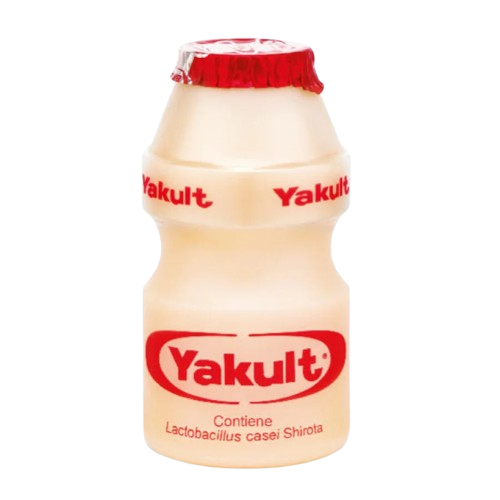
Get a Custom Report on Yakult Nutrition Data – Contact Us!
What are the Types of Yakult?
There are a few different types of Yakult, primarily varying in sugar/calorie content and the number of probiotic bacteria, with some regional variations in flavor or formulation. The table below shows the most common Yakult types and their calorie information.
| Type | Description | Calories (per 80 mL / 2.7 fl oz bottle) | Calorie Differences & Qualifications |
|---|---|---|---|
|
Yakult Original (Red Top)
|
The standard, classic version with a full sugar content. | 50 | High in sugar (11g per bottle), which accounts for most of its calories. Contains 8 billion LcS probiotics in the US version. |
|
Yakult Light (Blue Top)
|
A lower-sugar, lower-calorie version, sweetened with a mix of sugar and artificial sweeteners (sucralose). | 30 | Significantly lower in sugar (6g per bottle) and calories. Contains the same amount of probiotics as the original version. |
|
Yakult 400 series (Japan/some markets)
|
A version with a higher concentration of probiotics (40 billion LcS per bottle). Available in original and light. | 50 (Original), 30 (Light) per 65mL bottle | Calorie content is similar to the standard versions, but the bottle size is smaller (65mL) and the probiotic count is much higher. Not widely available in the US. |
|
Yakult Plus (some markets)
|
A version with added fiber and Vitamin C. | 25-30 (per 65mL bottle) | A functional food version with added nutrients. Calorie and sugar content is low, similar to Yakult Light. |
What are Desserts with Yakult?
Yakult, with its tangy, sweet, and yogurt-like flavor, has become a popular ingredient in a variety of modern desserts and beverages, especially within Asian-inspired and bubble tea cultures. While not a traditional dessert ingredient, its unique taste lends itself well to creative sweet applications.
| Dish Name | Calories (Estimate per serving/piece) | Type of Dish | Carps (g) (Estimate) | Sugar (g) (Estimate) | Protein (g) (Estimate) | Fat (g) (Estimate) | Cuisine | Restaurants |
|---|---|---|---|---|---|---|---|---|
|
Yakult Green Tea/Black Tea (with Boba)
|
250-400 | Beverage | 50-80 | 40-70 | 1-3 | 2-8 | Taiwanese/Fusion | Kung Fu Tea, CoCo Fresh Tea & Juice, Boba Guys, Sharetea, Chatime, Ten Ren's Tea Time. |
|
Yakult Slush/Smoothie
|
200-350 | Beverage | 45-70 | 40-65 | 1-4 | 1-5 | Modern/Fusion | Many independent boba shops and some chains like Kung Fu Tea offer Yakult slushies. |
|
Yakult Fruit Tea (e.g., with mango, passion fruit)
|
200-350 | Beverage | 45-70 | 40-65 | 1-3 | 1-4 | Modern Asian | CoCo Fresh Tea & Juice, Sharetea, and other boba chains. |
|
Yakult Yogurt Ice Cream/Frozen Yogurt
|
150-250 (cup) | Frozen Dessert | 30-50 | 25-45 | 3-6 | 2-8 | Modern/Artisanal | Found in some specialty yogurt or ice cream shops. |
|
Yakult Soju Cocktail
|
150-250 | Cocktail | 20-30 | 18-28 | 1-2 | 0 | Modern Korean | The Kunjip (NYC), Kang Ho Dong Baekjeong (various locations), many modern Korean bars and restaurants. |
|
Yakult Panna Cotta
|
200-350 | Custard | 25-40 | 20-35 | 3-6 | 10-18 | Italian/Fusion | May be found as a specialty dessert item in some innovative Asian-fusion restaurants. |
|
Yakult Cheesecake
|
350-550 (slice) | Baked Dessert | 35-55 | 30-50 | 5-8 | 18-30 | Modern Fusion | Some specialty bakeries or cafes in Asia; less common in the US. |
What Cuisines Prefer Yakult the Most?
Yakult is not a traditional ingredient in historical cuisines but is a modern cultured dairy drink that has become immensely popular as a beverage and a dessert ingredient, particularly within East and Southeast Asian food cultures and the global bubble tea (boba) phenomenon that originated in Taiwan.
| Cuisine | Dish Name/Usage Examples | Calories (Varies widely by dish) | Restaurants |
|---|---|---|---|
|
Taiwanese / Global Boba Culture
|
Yakult Green Tea, Yakult Slush, Yakult Fruit Teas (often with boba) | 200-400 | Kung Fu Tea, CoCo Fresh Tea & Juice, Boba Guys, Sharetea, Chatime, Ten Ren's Tea Time. |
|
Modern East Asian (Japanese, Korean)
|
Consumed as a daily health drink, Yakult Soju cocktails | 50-250 | The Kunjip (NYC), Kang Ho Dong Baekjeong (various locations), widely available in supermarkets like H Mart, Mitsuwa Marketplace, and Marukai. |
|
Modern Southeast Asian (Filipino, Thai, Vietnamese)
|
Yakult-based smoothies and drinks, often mixed with local fruits | 150-350 | Found in many cafes and drink stalls in Southeast Asia; some Filipino or Vietnamese restaurants in the US may offer Yakult drinks. |
Which Countries Produce the Most Yakult?
The top producers of Yakult globally are Japan, Indonesia, Thailand, Mexico, and Brazil. Yakult is produced in over 40 countries and regions worldwide, with its largest production facilities located in Asia and Latin America. In 2022, Japan produced an estimated 1.1 million bottles (80 mL equivalent) per day, while Indonesia produced 1.8 million bottles per day, based on company reports. Since FAOSTAT does not track "Yakult" production, the table below shows production figures for "Milk, whole fresh cow" as the primary raw material for Yakult, for key producing countries over the last two decades.
| Country | 2004 | 2005 | 2006 | 2007 | 2008 | 2009 | 2010 | 2011 | 2012 | 2013 | 2014 | 2015 | 2016 | 2017 | 2018 | 2019 | 2020 | 2021 | 2022 |
|---|---|---|---|---|---|---|---|---|---|---|---|---|---|---|---|---|---|---|---|
| USA | 77,556 | 80,256 | 82,405 | 84,276 | 86,177 | 85,879 | 87,461 | 88,996 | 90,865 | 91,273 | 93,464 | 94,647 | 96,383 | 97,729 | 98,669 | 99,161 | 101,252 | 102,661 | 102,716 |
| India | 37,551 | 39,358 | 41,400 | 43,600 | 45,800 | 48,100 | 50,400 | 52,700 | 55,000 | 57,300 | 60,600 | 63,900 | 67,700 | 71,500 | 75,800 | 80,100 | 84,400 | 88,700 | 93,000 |
| EU-27 (from 2020) | 130,000 | 131,000 | 132,000 | 133,000 | 134,000 | 133,000 | 135,000 | 138,000 | 140,000 | 142,000 | 145,000 | 148,000 | 150,000 | 152,000 | 153,000 | 154,000 | 155,000 | 156,000 | 155,000 |
| China | 21,960 | 28,660 | 32,740 | 35,560 | 36,000 | 35,190 | 35,590 | 36,580 | 37,380 | 35,310 | 36,110 | 35,700 | 35,710 | 35,450 | 35,600 | 36,830 | 37,780 | 39,320 | 40,270 |
| Brazil | 23,450 | 24,250 | 25,100 | 26,900 | 27,800 | 29,100 | 30,700 | 32,100 | 32,900 | 34,300 | 35,100 | 34,600 | 33,700 | 33,500 | 33,800 | 34,100 | 35,500 | 36,200 | 36,700 |
| Russian Federation | 31,900 | 31,400 | 31,600 | 32,000 | 32,400 | 32,600 | 31,800 | 31,600 | 31,800 | 30,500 | 30,800 | 30,800 | 30,700 | 31,100 | 31,400 | 31,700 | 32,200 | 32,300 | 32,900 |
| Germany | 27,800 | 27,900 | 28,200 | 28,400 | 28,600 | 28,800 | 29,200 | 29,700 | 30,400 | 31,100 | 31,900 | 32,400 | 32,700 | 32,800 | 33,100 | 33,000 | 33,200 | 32,900 | 32,400 |
| New Zealand | 14,700 | 14,900 | 14,800 | 15,100 | 15,600 | 16,500 | 17,000 | 18,900 | 19,800 | 21,300 | 21,900 | 21,700 | 21,300 | 21,400 | 21,700 | 21,600 | 21,900 | 22,100 | 21,400 |
| France | 24,500 | 24,300 | 24,100 | 23,900 | 23,700 | 23,500 | 23,300 | 23,800 | 24,100 | 24,400 | 25,000 | 25,300 | 24,900 | 24,800 | 24,700 | 24,600 | 24,800 | 24,700 | 24,400 |
| Turkey | 10,600 | 10,800 | 11,000 | 11,200 | 11,500 | 11,800 | 12,400 | 14,700 | 16,100 | 17,600 | 18,500 | 18,600 | 18,400 | 20,700 | 22,100 | 22,900 | 23,500 | 23,200 | 21,500 |
Which Countries Consume the Most Yakult?
Based on Yakult Honsha Co., Ltd.'s own reports and market data for fermented milk drinks, the top consumers of Yakult are Japan, Indonesia, Mexico, China, and Brazil. Consumption is widespread in Asia, Latin America, and Australia, reflecting Yakult's global distribution. Since FAOSTAT does not track "Yakult" consumption, the table below shows "Milk, whole fresh cow" Food Supply Quantity as a broad proxy for the raw material for Yakult, for key consuming countries over the last two decades.
| Country/Region | 2012 | 2013 | 2014 | 2015 | 2016 | 2017 | 2018 | 2019 | 2020 | 2021 |
|---|---|---|---|---|---|---|---|---|---|---|
| India | 55,000 | 57,300 | 60,600 | 63,900 | 67,700 | 71,500 | 75,800 | 80,100 | 84,400 | 88,700 |
| USA | 90,865 | 91,273 | 93,464 | 94,647 | 96,383 | 97,729 | 98,669 | 99,161 | 101,252 | 102,661 |
| China | 37,380 | 35,310 | 36,110 | 35,700 | 35,710 | 35,450 | 35,600 | 36,830 | 37,780 | 39,320 |
| Brazil | 32,900 | 34,300 | 35,100 | 34,600 | 33,700 | 33,500 | 33,800 | 34,100 | 35,500 | 36,200 |
| Russian Federation | 31,800 | 30,500 | 30,800 | 30,800 | 30,700 | 31,100 | 31,400 | 31,700 | 32,200 | 32,300 |
| Pakistan | 38,300 | 39,500 | 40,700 | 42,000 | 43,300 | 44,600 | 45,900 | 47,300 | 48,700 | 50,100 |
| Mexico | 16,100 | 17,600 | 18,500 | 18,600 | 18,400 | 20,700 | 22,100 | 22,900 | 23,500 | 23,200 |
| Japan | 7,500 | 7,600 | 7,700 | 7,800 | 7,900 | 8,000 | 8,100 | 8,200 | 8,300 | 8,400 |
| Indonesia | 1,200 | 1,300 | 1,400 | 1,500 | 1,600 | 1,700 | 1,800 | 1,900 | 2,000 | 2,100 |
| Australia | 9,000 | 9,100 | 9,200 | 9,300 | 9,400 | 9,500 | 9,600 | 9,700 | 9,800 | 9,900 |
How Do Prices of Yakult-including Dishes Change?
Menu prices for beverages featuring Yakult, such as Yakult green tea or smoothies, have increased over the past decade. This trend reflects the rising cost of Yakult itself, along with general inflation in beverage ingredients and operational costs for cafes and bubble tea shops.
| Restaurant | Dish (Yakult-prominent) | Old Price (Approx. Year) | Current Price (Estimate 2025) |
|---|---|---|---|
| Kung Fu Tea | Yakult Green Tea (Medium) | $3.75 - $4.25 (2014) | $5.50 - $8.40 |
| CoCo Fresh Tea & Juice | Yakult Green Tea (Regular) | $3.50 - $4.00 (2015) | $5.00 - $6.25 |
| Boba Guys | Yakult Green Tea (Regular) | $4.00 - $4.50 (2016) | $6.50 - $7.75 |
| Sharetea | Yakult Green Tea (Regular) | $3.50 - $4.00 (2015) | $5.00 - $6.00 |
| The Kunjip (New York, NY) | Yakult Soju l | $10.00 - $12.00 (2015) | $15.00 - $19.00 |
What is the Yakult Calorie for 100 Grams?
One hundred grams (equivalent to 100 mL) of Yakult Original contains 63 calories. One hundred grams of Yakult Light contains 38 calories.
What is the Yakult Calorie for 1 KG?
One kilogram (1 L or 33.8 fl oz) of Yakult Original contains 630 calories. One kilogram of Yakult Light contains 380 calories.
What is the Calorie of 1 Yakult?
One standard US bottle of Yakult Original (80 mL or 2.7 fl oz) contains 50 calories. One standard bottle of Yakult Light (80 mL) contains 30 calories. A smaller 65 mL bottle, common in Japan and Australia, contains 41 calories for the Original version.
What are the Health Benefits of Yakult?
Yakult provides some health benefits like supporting gut health and boosting the immune system due to its high concentration of a specific probiotic strain. Yakult is a fermented milk drink containing the live probiotic bacterium Lacticaseibacillus paracasei Shirota (LcS). A list of the health benefits of Yakult are shown below.
- Promotes Gut Health: The primary benefit of Yakult is its ability to deliver live, beneficial bacteria to the digestive tract. The LcS strain has been shown to survive stomach acid and reach the intestines, where it can help balance gut microbiota, which is crucial for overall digestive health (Dong H, et al., 2013, "Immunomodulatory effects of a probiotic drink containing Lactobacillus casei Shirota in healthy older volunteers").
- May Prevent Constipation and Improve Bowel Regularity: By promoting a healthy balance of gut bacteria, regular consumption of Yakult may help soften stools and increase bowel movement frequency, aiding in the prevention and relief of constipation.
- Supports a Healthy Immune System: A significant portion of the body's immune system resides in the gut. The LcS probiotic in Yakult has been shown to modulate immune responses, potentially enhancing the body's ability to fight off infections. A study by Gleeson M, et al. (2011), "Daily probiotics (Lactobacillus casei Shirota) prevents upper respiratory tract infections in athletes," found that it reduced the incidence of URTIs in athletes.
- May Reduce the Risk of Diarrhea: The probiotics in Yakult can help prevent or reduce the duration of certain types of diarrhea, including antibiotic-associated diarrhea, by restoring the balance of gut flora.
- May Have Anti-inflammatory Effects: A balanced gut microbiome, supported by probiotics, can help regulate the body's inflammatory responses.
- Potential to Reduce Stress and Anxiety: Emerging research in the gut-brain axis suggests that probiotics may have a positive impact on mood and mental health. Some studies have indicated that consumption of LcS can alleviate stress-related symptoms.
- May Inhibit Harmful Bacteria: The beneficial LcS bacteria can compete with harmful pathogens in the gut, helping to inhibit their growth.
What are the Downsides of Yakult?
Yakult has been known to cause some unwanted effects like a high sugar intake and potential digestive issues due to its formulation and live bacterial content. A list of the downsides of Yakult are shown below.
- High in Added Sugar (Original Version): A major downside of Yakult Original is its high sugar content. A small 80 mL bottle contains 11 grams of added sugar, which contributes significantly to daily sugar limits without providing substantial nutrition beyond the probiotics. High intake of added sugars is linked to numerous negative health outcomes (Malik VS, et al., 2010, "Sugar-Sweetened Beverages and Risk of Metabolic Syndrome and Type 2 Diabetes: A meta-analysis").
- Dairy Content (Lactose): Yakult is a milk-based product and contains lactose. While the amount is small, individuals with moderate to severe lactose intolerance may experience digestive symptoms like gas, bloating, or diarrhea.
- Potential for Mild Digestive Upset: When first introducing probiotics, some individuals may experience a temporary increase in gas or bloating as their gut microbiome adjusts.
- Limited Strain Diversity: Yakult provides a very high dose of a single strain of bacteria (Lacticaseibacillus paracasei Shirota). While this strain is well-researched, a healthy gut thrives on a diverse range of beneficial bacteria, which is best achieved by consuming a variety of fermented foods.
Is Yakult Good for You?
Yes, Yakult can be good for you, primarily due to its proven probiotic benefits for gut health and immune support. Each bottle contains billions of the live probiotic strain Lacticaseibacillus paracasei Shirota (LcS), which is scientifically documented to survive the journey through the stomach and colonize the intestines, where it contributes to a healthy balance of gut bacteria. Numerous studies, such as the one by Dong H, et al. (2013), "Immunomodulatory effects of a probiotic drink containing Lactobacillus casei Shirota in healthy older volunteers," have demonstrated its positive effects on the immune system and gut environment. However, the main drawback is the high sugar content of the original version. For this reason, the Yakult Light (or lower sugar) version is a much healthier choice. A preferred consumption rate is one bottle per day to consistently introduce the probiotic strain into your system without contributing an excessive amount of sugar.
How Do Calories Change According to Yakult Types?
The calories in Yakult change primarily based on the sugar content. The highest calorie version is Yakult Original, which contains 50 calories in a standard 80 mL US bottle, with these calories coming almost entirely from its 11 grams of added sugar. To provide a lower-calorie option, the company created Yakult Light. This version significantly reduces the calories to 30 per 80 mL bottle by using a combination of less sugar (6 grams) and artificial sweeteners like sucralose to maintain sweetness. Other specialized versions available in different global markets, like Yakult 400 or Yakult Plus, are also formulated to be low in calories, similar to Yakult Light, while offering a higher probiotic count or added nutrients like fiber.
Is Yakult Green Tea Caffeinated?
Yes, Yakult green tea is caffeinated if it is made with real green tea. The caffeine content comes from the green tea, not from the Yakult itself, which is a caffeine-free fermented milk drink. A standard 8 fl oz (240 mL) serving of green tea contains 25-30 mg of caffeine.
What are the Main Dishes with Yakult?
Yakult is a sweet, fermented milk beverage and is not used as an ingredient in savory main dishes. Its flavor profile, which is tangy and very sweet, is exclusively suited for beverages and desserts. It is sometimes consumed alongside a meal as a drink, but it is not a component of any widespread savory main dishes.
What is the Origin of the Yakult?
The origin of Yakult dates back to 1930s Japan. Dr. Minoru Shirota, a scientist and microbiologist at Kyoto Imperial University, was researching the role of intestinal bacteria in human health. He was motivated by the high incidence of infectious diseases and poor hygiene in Japan at the time. Through his research, he successfully isolated and cultivated a unique strain of lactic acid bacteria that was robust enough to survive stomach acid and bile to reach the intestines alive. This strain was named Lactobacillus casei Shirota in his honor (now officially reclassified as Lacticaseibacillus paracasei Shirota). In 1935, Dr. Shirota and his supporters began producing and selling a sweetened, fermented milk drink containing this beneficial bacteria, which they named "Yakult." The name is derived from "jahurto," an Esperanto word for yogurt. The drink was created with the philosophy of "preventive medicine" – to promote health and prevent disease by maintaining a healthy gut.
Explore More Fermented Foods
Discover more Fermented Foods with detailed nutrition facts, calorie counts, vitamins, minerals, and health benefits. Compare similar foods, serving sizes, macronutrients, and key nutrients to find the best option for your diet and nutrition goals.
 Miso Paste calories
 Olives calories
 Pickles calories