Calories and Nutritions in Chocolate Cake
Chocolate cake is a high calorie rich dessert made with cocoa powder or melted chocolate. Famous chocolate cake preparations like Devil's Food Cake and German Chocolate Cake are fixtures in bakeries worldwide. A small slice of chocolate cake (100g or 3.5oz) contains 371 calories, a medium slice (125g or 4.4oz) has 464 calories, and a large slice (156g or 5.5oz) provides 579 calories. Adding frosting increases the amount of calories in chocolate cake, and one slice with frosting (138g) has 537 calories. A whole frosted cake (1660g) contains 6457 calories. A chocolate cake slice from Portillo's has 360 calories, while a slice of Godiva Chocolate Cheesecake from The Cheesecake Factory contains 1,380 calories.
The chocolate cake nutrition profile reveals a dessert dense in fat and sugar, with a slice of chocolate cake with frosting (138g) providing 4.8g of protein (10% DV), 27.7g of fat (35% DV), and 72.9g of carbohydrates (27% DV), including 55.1g of sugar. Research from Katz, D. L., et al. (2011) confirmed that flavanols in cocoa have potent antioxidant effects, but any potential health benefits are minimal. For example, while a frosted slice (138g) provides some iron (4.2mg or 23% DV) from cocoa, this is delivered with over 55g of sugar, negating the overall nutritional value.
The global supply chain of top cocoa bean producers include Côte d'Ivoire and major bakery consumers are led by the United States. The price of a whole chocolate cake has increased from under $10.00 in the early 2000s to over $50.00 at high-end bakeries after 2020.
The extreme sugar and fat content necessitates health advisories recommending consumption as an infrequent indulgence, with intake limited to a single, small slice (around 100g). A single medium slice with 50g of sugar far exceeds the American Heart Association's recommended daily limit for added sugars, and overconsumption can lead to weight gain and an increased risk of chronic disease. A small portion (100g) delivers 371 chocolate cake slice calories, an energy value equivalent to 35 minutes of running or 48 minutes of swimming.
Chocolate Cake nutrition
| Stats | Weight |
|---|---|
| Carbs | 66.8 grams |
| Protein | 6.6 grams |
| Fats | 0 grams |
| Sugars | 50 grams |
- Large Chocolate Cake Calories (Nutritional Facts)
- Medium Chocolate Cake Calories (Nutritional Facts)
- Small Chocolate Cake Calories (Nutritional Facts)
- Chocolate Cake with Frosting Calories (Nutritional Facts)
- Chocolate Cake with Butter Cream Frosting Calories (Nutritional Facts)
- Raw Chocolate Cake Nutrition
- Sodium in Chocolate Cake
- Potassium in Chocolate Cake
- Sugar in Chocolate Cake
- Fiber in Chocolate Cake
- Protein in Chocolate Cake
- Carbs in Chocolate Cake
- Fat in Chocolate Cake
- Vitamins in Chocolate Cake
- Minerals in Chocolate Cake
Large Chocolate Cake Calories (Nutritional Facts)
A large slice of chocolate cake (156g or 5.5oz) contains 579 calories, 8.3g of protein, 23.6g of fat, 83.3g of carbohydrates, 2.5g of fiber, 62.4g of sugar, and 491mg of sodium.
A medium slice of chocolate cake (125g or 4.4oz) provides 464 calories, 6.6g of protein, 18.9g of fat, 66.8g of carbohydrates, 2g of fiber, 50g of sugar, and 394mg of sodium.
A small slice of chocolate cake (100g or 3.5oz) contains 371 calories, 5.3g of protein, 15.1g of fat, 53.4g of carbohydrates, 1.6g of fiber, 40g of sugar, and 315mg of sodium.
A slice of chocolate cake with frosting (138g or 4.9oz) contains 537 calories, 4.8g of protein, 27.7g of fat, 72.9g of carbohydrates, 3g of fiber, 55.1g of sugar, and 480mg of sodium. A smaller piece of frosted chocolate cake (64g or 2.3oz) has 249 calories, 2.2g of protein, 12.8g of fat, 33.8g of carbohydrates, 1.4g of fiber, 25.6g of sugar, and 223mg of sodium.
A serving of chocolate cake with buttercream frosting (75g or 2.6oz) contains 340 calories, 2g of protein, 15g of fat, 49g of carbohydrates, 1g of fiber, 40g of sugar, and 250mg of sodium.
Chocolate cake batter is not consumed raw due to health risks from uncooked eggs and flour. The nutritional information provided is for a fully baked cake.
A large slice of chocolate cake (156g) contains 491mg of sodium (21% DV). A medium slice (125g) has 394mg of sodium (17% DV). A small slice (100g) contains 315mg of sodium (14% DV). A slice of chocolate cake with frosting (138g) has 480mg of sodium (21% DV). A smaller piece of frosted chocolate cake (64g) has 223mg of sodium (10% DV). A serving of chocolate cake with buttercream frosting (75g) has 250mg of sodium (11% DV).
A large slice of chocolate cake (156g) contains 218mg of potassium (5% DV). A medium slice (125g) has 175mg of potassium (4% DV). A small slice (100g) contains 140mg of potassium (3% DV). A slice of chocolate cake with frosting (138g) has 373mg of potassium (8% DV). A smaller piece of frosted chocolate cake (64g) has 173mg of potassium (4% DV). A serving of chocolate cake with buttercream frosting (75g) has 140mg of potassium (3% DV).
A large slice of chocolate cake (156g) contains 62.4g of sugar. A medium slice (125g) has 50g of sugar. A small slice (100g) contains 40g of sugar. A slice of chocolate cake with frosting (138g) has 55.1g of sugar. A smaller piece of frosted chocolate cake (64g) has 25.6g of sugar. A serving of chocolate cake with buttercream frosting (75g) has 40g of sugar.
A large slice of chocolate cake (156g) provides 2.5g of dietary fiber (9% DV). A medium slice (125g) has 2g of fiber (7% DV). A small slice (100g) contains 1.6g of fiber (6% DV). A slice of chocolate cake with frosting (138g) has 3g of fiber (11% DV). A smaller piece of frosted chocolate cake (64g) has 1.4g of fiber (5% DV). A serving of chocolate cake with buttercream frosting (75g) has 1g of fiber (4% DV).
A large slice of chocolate cake (156g) provides 8.3g of protein (17% DV). A medium slice (125g) has 6.6g of protein (13% DV). A small slice (100g) contains 5.3g of protein (11% DV). A slice of chocolate cake with frosting (138g) has 4.8g of protein (10% DV). A smaller piece of frosted chocolate cake (64g) has 2.2g of protein (4% DV). A serving of chocolate cake with buttercream frosting (75g) has 2g of protein (4% DV).
A large slice of chocolate cake (156g) contains 83.3g of carbohydrates (30% DV). A medium slice (125g) has 66.8g of carbohydrates (24% DV). A small slice (100g) contains 53.4g of carbohydrates (19% DV). A slice of chocolate cake with frosting (138g) has 72.9g of carbohydrates (27% DV). A smaller piece of frosted chocolate cake (64g) has 33.8g of carbohydrates (12% DV). A serving of chocolate cake with buttercream frosting (75g) has 49g of carbohydrates (18% DV).
A large slice of chocolate cake (156g) contains 23.6g of total fat (30% DV). A medium slice (125g) has 18.9g of total fat (24% DV). A small slice (100g) contains 15.1g of total fat (19% DV). A slice of chocolate cake with frosting (138g) has 27.7g of total fat (35% DV). A smaller piece of frosted chocolate cake (64g) has 12.8g of total fat (16% DV). A serving of chocolate cake with buttercream frosting (75g) has 15g of total fat (19% DV).
A large slice of chocolate cake (156g) provides 0.3mg of Vitamin C (0% DV). A medium slice (125g) provides 0.25mg of Vitamin C (0% DV). A small slice (100g) provides 0.2mg of Vitamin C (0% DV). A slice of chocolate cake with frosting (138g) provides 0.14mg of Vitamin C (0% DV). A smaller piece of frosted chocolate cake (64g) provides 0.06mg of Vitamin C (0% DV).
A large slice of chocolate cake (156g) provides 2.5mg of iron (14% DV) and 94mg of calcium (7% DV). A medium slice (125g) provides 2mg of iron (11% DV) and 75mg of calcium (6% DV). A small slice (100g) provides 1.6mg of iron (9% DV) and 60mg of calcium (5% DV). A slice of chocolate cake with frosting (138g) provides 4.2mg of iron (23% DV) and 41mg of calcium (3% DV). A smaller piece of frosted chocolate cake (64g) provides 1.9mg of iron (11% DV) and 19mg of calcium (1% DV). A serving of chocolate cake with buttercream frosting (75g) provides 1.4mg of iron (8% DV) and 20mg of calcium (2% DV).
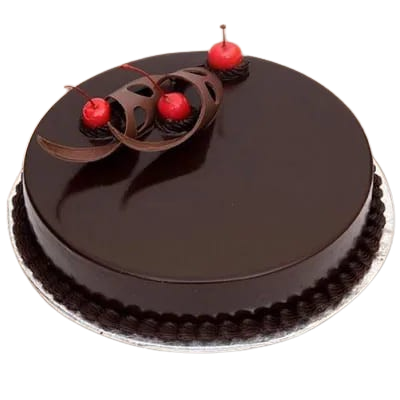
Get a Custom Report on Chocolate Cake Nutrition Data – Contact Us!
What are the Types of Chocolate Cakes?
The types of chocolate cakes include Devil's Food Cake, German Chocolate Cake, Flourless Chocolate Cake, and Black Forest Cake. These variations are defined by the ingredients used in the cake and frosting, which alter the texture, flavor, and nutritional content. A breakdown of these common cake styles is in the table below.
| Type | Description | Calories (Approximate per 100g) | Calorie Qualifications |
|---|---|---|---|
|
Devil's Food Cake
|
A rich, moist, dark chocolate layer cake, leavened with baking soda. | 371 | This is a standard chocolate cake, with its calorie count being a baseline for comparison. |
|
German Chocolate Cake
|
A layered chocolate cake with a rich coconut-pecan frosting made with evaporated milk and egg yolks. | 480 | The high-fat coconut and pecan frosting makes this one of the most calorie-dense chocolate cake versions. |
|
Flourless Chocolate Cake
|
A dense, rich cake made without flour, using egg whites for lift, resulting in a fudgy, brownie-like texture. | 510 | The extreme density and high proportion of chocolate and butter make this the highest-calorie option per gram. |
|
Black Forest Cake
|
A German chocolate sponge cake layered with whipped cream and cherries, often flavored with kirsch. | 265 | The lighter sponge cake and whipped cream filling result in a lower calorie count compared to dense, butter-rich cakes. |
What are Desserts With Chocolate Cake?
Chocolate cake is a rich dessert that is often served with accompaniments that complement its deep flavor. A catalog of items commonly served with chocolate cake is provided in the table below.
| Dish Name | Calories (Estimate per serving) | Type of Dessert | Carbs (g) (Estimate) | Sugar (g) (Estimate) | Protein (g) (Estimate) | Fat (g) (Estimate) | Cuisine | Restaurants |
|---|---|---|---|---|---|---|---|---|
|
Vanilla Ice Cream
|
150-250 (per scoop) | Frozen Dessert | 20 | 18 | 3 | 10 | American | Baskin-Robbins, Cold Stone Creamery |
|
Raspberry Coulis
|
40-60 (per 2 tbsp) | Sauce | 10 | 9 | 0 | 0 | French | The Capital Grille, Ruth's Chris Steak House |
|
Whipped Cream
|
50-100 (per dollop) | Topping | 2 | 2 | 0 | 8 | French/American | Starbucks, IHOP |
|
Fresh Strawberries
|
30-50 (per cup) | Fruit Side | 12 | 7 | 1 | 0 | American | Cracker Barrel |
|
Glass of Milk
|
150 (per 8 oz) | Beverage | 12 | 12 | 8 | 8 | American | Denny's |
|
Chocolate Ganache
|
150 (per 2 tbsp) | Topping/Sauce | 15 | 13 | 1 | 10 | French | The Cheesecake Factory |
|
Salted Caramel Sauce
|
120 (per 2 tbsp) | Sauce | 25 | 20 | 0 | 5 | American | Ghirardelli |
|
Black Coffee
|
<5 (per 8 oz cup) | Beverage | 0 | 0 | 0 | 0 | Global | Starbucks, Dunkin' |
|
Chocolate Ice Cream
|
160-260 (per scoop) | Frozen Dessert | 22 | 20 | 4 | 12 | American | Ben & Jerry's |
|
Toasted Pecans
|
100 (per 2 tbsp) | Topping | 2 | 1 | 2 | 10 | American | Texas Roadhouse |
What Cuisines Prefer Chocolate Cake the Most?
Chocolate cake is a globally cherished dessert, with deep roots in American and European baking traditions. The table below presents culinary traditions that prominently feature chocolate cake.
| Cuisine | Dish | Types of Chocolate Cakes Used | Calories (Estimate) | Restaurant(s) |
|---|---|---|---|---|
|
American
|
Devil's Food Cake / Layer Cake | Moist, dark chocolate cake with frosting | 350-800 | The Cheesecake Factory, Portillo's |
|
German
|
Black Forest Cake (Schwarzwälder Kirschtorte) | Chocolate sponge, cherries, whipped cream | 260-400 | Hofbräuhaus |
|
French
|
Chocolate Lava Cake (Mi-cuit au chocolat) | Underbaked cake with a liquid center | 350-500 | Chili's, Applebee's |
|
Austrian
|
Sachertorte | Dense chocolate cake with apricot jam | 300-450 | Wallsé (New York City) |
|
Italian
|
Torta Caprese | Flourless chocolate and almond cake | 400-550 | Eataly |
|
Mexican
|
Mexican Chocolate Cake | Spiced with cinnamon and chili | 350-500 | Rosa Mexicano |
|
Belgian
|
Belgian Chocolate Cake | Made with high-quality Belgian chocolate | 400-600 | Godiva Chocolatier (retail) |
|
American (Southern)
|
Chocolate Coca-Cola Cake | Cake made with Coca-Cola in the batter | 400-550 | Cracker Barrel |
|
British
|
Chocolate Fudge Cake | Dense, rich cake with a thick fudge icing | 450-600 | Tea & Sympathy |
|
American (Bakery)
|
Chocolate Cupcake | Individual cake with frosting | 250-450 | Sprinkles Cupcakes, Magnolia Bakery |
Which Countries Produce the Most Chocolate Cakes?
The top producers of cocoa beans, the primary ingredient in chocolate cake, are Côte d'Ivoire, Ghana, and Indonesia. Specific global production data for finished chocolate cakes is not tracked as a separate category. The table below shows the production quantity of cocoa beans in key countries.
| Country | 2003 | 2008 | 2013 | 2018 | 2019 | 2020 | 2021 | 2022 |
|---|---|---|---|---|---|---|---|---|
| Côte d'Ivoire | 1,323,000 | 1,300,000 | 1,448,000 | 2,150,000 | 2,180,000 | 2,200,000 | 2,240,000 | 2,250,000 |
| Ghana | 497,000 | 720,000 | 835,000 | 950,000 | 811,000 | 1,047,000 | 800,000 | 820,000 |
| Indonesia | 450,000 | 821,000 | 750,000 | 659,000 | 650,000 | 640,000 | 630,000 | 620,000 |
| Nigeria | 180,000 | 225,000 | 240,000 | 330,000 | 340,000 | 350,000 | 340,000 | 350,000 |
| Ecuador | 86,000 | 132,000 | 235,000 | 270,000 | 283,000 | 300,000 | 320,000 | 330,000 |
Which Countries Consume the Most Chocolate Cakes?
The top consumers of bakery products, a category that includes chocolate cake, are the United States, the United Kingdom, and Germany. Consumption data for chocolate cake is best represented by import values for the broader category of pastries, cakes, and sweet biscuits. The table below shows import values for this category in key markets.
| Country | 2003 | 2008 | 2013 | 2018 | 2019 | 2020 | 2021 | 2022 |
|---|---|---|---|---|---|---|---|---|
| United States | 1,300,000 | 2,000,000 | 2,900,000 | 3,800,000 | 4,000,000 | 4,300,000 | 5,000,000 | 5,600,000 |
| United Kingdom | 1,000,000 | 1,600,000 | 2,400,000 | 3,100,000 | 3,200,000 | 3,400,000 | 3,800,000 | 4,100,000 |
| Germany | 900,000 | 1,400,000 | 2,000,000 | 2,600,000 | 2,700,000 | 2,900,000 | 3,300,000 | 3,600,000 |
| France | 700,000 | 1,100,000 | 1,600,000 | 2,100,000 | 2,200,000 | 2,300,000 | 2,600,000 | 2,900,000 |
| Canada | 600,000 | 950,000 | 1,400,000 | 1,800,000 | 1,900,000 | 2,100,000 | 2,400,000 | 2,700,000 |
How Do Prices of Chocolate Cake-Including Dishes Change?
The price for a slice of chocolate cake on restaurant menus has climbed over the last decade, a direct consequence of higher wholesale ingredient costs and escalating operational expenses. This upward movement is reflected on the menus of prominent dining establishments.
| Restaurant | Dish | Old Price (Year) | Current Price (2024/2025) |
|---|---|---|---|
| The Cheesecake Factory | Linda's Fudge Cake Slice | $7.50 (2014) | $11.95 - $12.50 |
| Portillo's | Chocolate Cake Slice | $2.75 (2015) | $3.79 - $4.89 |
| Cracker Barrel | Double Chocolate Fudge Coca-Cola Cake | $4.69 (2016) | $7.79 - $8.79 |
What is the Chocolate Cake Calorie for 100 Grams?
A 100g serving of chocolate cake contains 371 calories, a 100g serving with frosting has 389 calories, and a 100g serving with buttercream frosting contains 453 calories.
What is the Chocolate Cake Calorie for 1 KG?
One kilogram (1000g) of chocolate cake contains 3,710 calories, a kilogram with frosting has 3,890 calories, and a kilogram with buttercream frosting contains 4,530 calories.
What is the Calorie of 1 Chocolate Cake?
One whole chocolate cake with frosting (1660g) contains 6457 calories. A slice of Godiva Chocolate Cheesecake at The Cheesecake Factory has 1,380 calories, a slice of Costco's All American Chocolate Cake contains 790 calories, and a slice from Portillo's has 360 calories.
What is the Calorie in a Slice of Chocolate Cake Without Frosting?
A slice of chocolate cake without frosting (85g or 3oz) contains 309 calories.
What are the Health Benefits of Chocolate Cake?
The health advantages of chocolate cake are linked to the cocoa powder used in the batter, which contains bioactive compounds. A summary of these potential benefits is available here.
- Contains Mood-Enhancing Compounds: Cocoa is a source of compounds that can positively influence mood. A study by Scholey, A., & Owen, L. (2013), "Effects of chocolate on cognitive function and mood: a systematic review," found that chronic consumption of cocoa flavanols can improve self-reported calmness and contentedness.
- Provides Antioxidant Flavanols: Cocoa powder is rich in flavanols, a type of antioxidant that helps protect the body's cells from damage caused by free radicals. Research from Katz, D. L., et al. (2011), "Cocoa and Chocolate in Human Health and Disease," confirmed that the flavanols in cocoa have potent antioxidant effects and can improve cardiovascular health markers.
- May Support Brain Health: The flavanols in cocoa may support cognitive function by improving blood flow to the brain. A study by Cocoa flavanol consumption improves cognitive function, blood pressure control, and metabolic profile in elderly subjects: the Cocoa, Cognition, and Aging (CoCoA) Study--a randomized controlled trial," demonstrated that regular consumption of a high-flavanol cocoa drink was associated with improvements in cognitive performance in an elderly population.
What are the Downsides of Chocolate Cake?
The dessert's rich composition poses several health concerns. An analysis of these health risks is provided here.
- Extremely High in Sugar and Calories: A single slice of chocolate cake contains a massive amount of added sugar and calories, which can contribute to weight gain and metabolic issues. A scientific statement from the American Heart Association by Johnson, R. K., et al. (2009), "Dietary sugars intake and cardiovascular health," recommends strict limits on added sugar, linking high consumption to an increased risk of obesity, high blood pressure, and other cardiovascular risk factors. A healthier alternative is a small square of dark chocolate (70% cocoa or higher). A suggested amount is to limit consumption to one small slice on rare occasions.
- High in Saturated Fat: The butter, oil, and frosting used in most chocolate cake recipes are high in saturated fat, which can raise LDL (bad) cholesterol levels. A presidential advisory from the American Heart Association by Sacks, F. M., et al. (2017), "Dietary Fats and Cardiovascular Disease," reaffirmed the recommendation to lower saturated fat intake to reduce the risk of cardiovascular disease.
Are Chocolate Cakes Good for You?
No, chocolate cakes are not a healthy food because the detrimental effects of high sugar, saturated fat, and refined flour content overwhelm any potential benefits from the cocoa. The cake's impact on metabolic health is negative. The high concentration of refined carbohydrates and sugar causes rapid spikes in blood glucose and insulin, which over time can lead to insulin resistance. A review by Ludwig, D. S., et al. (2018), "Dietary carbohydrates: role of quality and quantity in chronic disease," connects diets high in refined carbohydrates to an increased risk of type 2 diabetes and obesity.
For heart health, the high saturated fat content from butter and frosting can increase LDL cholesterol, a primary risk factor for atherosclerosis. A meta-analysis by de Souza, R. J., et al. (2015), "Intake of saturated and trans unsaturated fatty acids and risk of all cause mortality, cardiovascular disease, and type 2 diabetes," linked high saturated fat intake to adverse cardiovascular outcomes. For digestive health, the cake offers very little fiber, and the high sugar content can negatively alter the gut microbiome. A review by Satokari, R. (2020), "High Intake of Sugar and the Balance between Pro- and Anti-Inflammatory Gut Bacteria," confirms that high-sugar diets can disrupt the balance of gut microbiota, potentially leading to inflammation.
How Do Calories Change According to Chocolate Cake Types?
The calorie content of a chocolate cake is determined by the density of the cake and the richness of its frosting or filling. A flourless chocolate cake has the highest calorie value at 510 calories per 100 grams, a consequence of its dense composition of chocolate, butter, and eggs with no flour to add volume. A Black Forest cake contains the lowest calorie value at 265 calories per 100 grams, a reflection of its lighter sponge cake base and whipped cream filling, which are less dense than buttercream or coconut-pecan frostings. The overall fat and sugar content, along with the density of the ingredients, are the primary factors that dictate the final calorie count of the dessert.
What are Main Dishes With Chocolate Cake?
Chocolate cake is exclusively a dessert and is not served with main dishes. The rich, sweet profile of the cake is fundamentally incompatible with the savory flavors of a main course. Chocolate cake is traditionally served as the final course of a meal, following appetizers and a main dish, in dining traditions around the world.
What is the Origin of Chocolate Cake?
The history of chocolate cake began not as a cake, but as a beverage. For centuries, chocolate was consumed only as a drink. The transformation into a solid dessert was a gradual process that depended on several key 19th-century innovations. In 1828, Coenraad van Houten, a Dutch chemist, invented a press to separate cocoa butter from the cacao bean, leaving a fine cocoa powder. This "Dutch process" cocoa was easier to mix with liquids and was the first step toward modern chocolate baking. The first recipes calling for cocoa powder as an ingredient in cake batter appeared in American cookbooks in the 1880s. Before this, "chocolate cake" was a yellow or white cake served with a chocolate frosting.
A pivotal moment came in 1879 when Rodolphe Lindt of Switzerland invented the conching process, a method of agitating and aerating liquid chocolate that created the smooth, melting texture of modern eating chocolate. This made solid chocolate more palatable and easier to incorporate into recipes. The first recognizable, layered chocolate cakes as known today became popular in the United States around the turn of the 20th century, with the Devil's Food cake appearing in the early 1900s.
Explore More Desserts & Sweets
Discover more Desserts & Sweets with detailed nutrition facts, calorie counts, vitamins, minerals, and health benefits. Compare similar foods, serving sizes, macronutrients, and key nutrients to find the best option for your diet and nutrition goals.
 Apple Pie calories
 Banoffee Pudding calories
 Biscotti calories
 Blondie calories
 Bread Pudding calories
 Brownie calories
 Butterscotch Pudding calories
 Cake calories
 Cannoli calories
 Caramel Pudding calories
 Cheesecake calories
 Cherry Pie calories