Calories and Nutritions in Cookie Dough
Cookie dough is an unbaked blend of flour, sugar, butter, and eggs, forming the base for cookies. The cookie dough calories are very high, with a small serving (25g) containing 106 calories, a medium serving (50g) having 212 calories, and a large serving of oatmeal cookie dough (100g) providing 424 calories. A single tablespoon of chocolate chip cookie dough (28g) has 119 calories, while a full cup of raw cookie dough (250g) contains a massive 1078 calories. A single portion of Pillsbury dough (38g) has 170 calories.
An analysis of the cookie dough nutrition facts reveals a product concentrated in fat and sugar. A large serving of oatmeal cookie dough (100g) provides 5.4g of protein, 18.9g of fat, and 59.1g of carbohydrates. The preparation style dramatically alters the calorie density, ranging from 415 calories per 100g for sugar cookie dough to 510 calories per 100g for a peanut butter version. A potential health attribute comes from oats in some varieties, which contain soluble fiber. A meta-analysis by Whitehead, A., et al. (2014) concluded that oat beta-glucan has a cholesterol-lowering effect.
The product's widespread availability is supported by a global supply chain of top wheat producers like China and India, with its popularity centered in major bakery-consuming nations like the United States. Cookie dough is used as a central flavor in at least five different dessert categories, from ice cream to milkshakes, popular in American cuisine. The cost of a standard tube of refrigerated cookie dough climbed from under $2.50 in the early 2000s to over $4.00 after 2020.
The primary health concern with traditional cookie dough is the risk of foodborne illness from raw eggs and flour, as highlighted by the U.S. Food and Drug Administration (FDA). The high sugar and fat content also places the food in the category of a rare indulgence. A single tablespoon of cookie dough contains over 10g of sugar, a significant portion of the daily limit recommended by the American Heart Association. The 106 calories in just a small serving require an energy expenditure equivalent to 11 minutes of jogging or 14 minutes of cycling.
Cookie Dough nutrition
| Stats | Weight |
|---|---|
| Carbs | 29.6 grams |
| Protein | 2.7 grams |
| Fats | 0 grams |
| Sugars | 15.3 grams |
- Large Cookie Dough Calories (Nutritional Facts)
- Medium Cookie Dough Calories (Nutritional Facts)
- Small Cookie Dough Calories (Nutritional Facts)
- Chocolate Chip Cookie Dough Calories (Nutritional Facts)
- Raw Cookie Dough Nutrition
- Sodium in Cookie Dough
- Potassium in Cookie Dough
- Sugar in Cookie Dough
- Fiber in Cookie Dough
- Protein in Cookie Dough
- Carbs in Cookie Dough
- Fat in Cookie Dough
- Vitamins in Cookie Dough
- Minerals in Cookie Dough
Large Cookie Dough Calories (Nutritional Facts)
A large serving of oatmeal cookie dough (100g or 3.5oz) contains 424 calories, 5.4g of protein, 18.9g of fat, 59.1g of carbohydrates, 2.5g of fiber, 30.5g of sugar, and 294mg of sodium.
A medium serving of cookie dough (50g or 1.8oz) provides 212 calories, 2.7g of protein, 9.5g of fat, 29.6g of carbohydrates, 1.3g of fiber, 15.3g of sugar, and 147mg of sodium.
A small serving of cookie dough (25g or 0.9oz) contains 106 calories, 1.4g of protein, 4.7g of fat, 14.8g of carbohydrates, 0.6g of fiber, 7.6g of sugar, and 74mg of sodium.
A serving of chocolate chip cookie dough (1 tablespoon, 28g or 1oz) contains 119 calories, 0.9g of protein, 5.1g of fat, 17.3g of carbohydrates, 0.4g of fiber, 10.7g of sugar, and 116mg of sodium.
One cup of raw cookie dough (250g) contains 1078 calories, 12g of protein, 55.5g of fat, 135.5g of carbohydrates, 2.3g of fiber, 73.2g of sugar, and 1338mg of sodium. Consumption of raw cookie dough containing raw eggs and untreated flour is not recommended due to the risk of foodborne illnesses like Salmonella and E. coli.
A large serving of oatmeal cookie dough (100g) contains 294mg of sodium (13% DV). A medium serving (50g) has 147mg of sodium (6% DV). A small serving (25g) contains 74mg of sodium (3% DV). A serving of chocolate chip cookie dough (28g) has 116mg of sodium (5% DV). One cup of raw cookie dough (250g) contains 1338mg of sodium (58% DV).
A large serving of oatmeal cookie dough (100g) contains 147mg of potassium (3% DV). A medium serving (50g) has 74mg of potassium (2% DV). A small serving (25g) contains 37mg of potassium (1% DV). A serving of chocolate chip cookie dough (28g) has 27mg of potassium (1% DV). One cup of raw cookie dough (250g) contains 180mg of potassium (4% DV).
A large serving of oatmeal cookie dough (100g) contains 30.5g of sugar. A medium serving (50g) has 15.3g of sugar. A small serving (25g) contains 7.6g of sugar. A serving of chocolate chip cookie dough (28g) has 10.7g of sugar. One cup of raw cookie dough (250g) contains 73.2g of sugar.
A large serving of oatmeal cookie dough (100g) provides 2.5g of dietary fiber (9% DV). A medium serving (50g) has 1.3g of fiber (5% DV). A small serving (25g) contains 0.6g of fiber (2% DV). A serving of chocolate chip cookie dough (28g) has 0.4g of fiber (1% DV). One cup of raw cookie dough (250g) provides 2.3g of fiber (8% DV).
A large serving of oatmeal cookie dough (100g) provides 5.4g of protein (11% DV). A medium serving (50g) has 2.7g of protein (5% DV). A small serving (25g) contains 1.4g of protein (3% DV). A serving of chocolate chip cookie dough (28g) has 0.9g of protein (2% DV). One cup of raw cookie dough (250g) provides 12g of protein (24% DV).
A large serving of oatmeal cookie dough (100g) contains 59.1g of carbohydrates (21% DV). A medium serving (50g) has 29.6g of carbohydrates (11% DV). A small serving (25g) contains 14.8g of carbohydrates (5% DV). A serving of chocolate chip cookie dough (28g) has 17.3g of carbohydrates (6% DV). One cup of raw cookie dough (250g) contains 135.5g of carbohydrates (49% DV).
A large serving of oatmeal cookie dough (100g) contains 18.9g of total fat (24% DV). A medium serving (50g) has 9.5g of total fat (12% DV). A small serving (25g) contains 4.7g of total fat (6% DV). A serving of chocolate chip cookie dough (28g) has 5.1g of total fat (7% DV). One cup of raw cookie dough (250g) contains 55.5g of total fat (71% DV).
A large serving of oatmeal cookie dough (100g) provides 4mcg of Vitamin A (0% DV) and 53mcg of Folate DFE (13% DV). A medium serving (50g) provides 2mcg of Vitamin A (0% DV) and 27mcg of Folate DFE (7% DV). A small serving (25g) provides 1mcg of Vitamin A (0% DV) and 13mcg of Folate DFE (3% DV). One cup of raw cookie dough (250g) provides 0.5mcg of Vitamin D (3% DV) and 0.25mg of Vitamin C (0% DV).
A large serving of oatmeal cookie dough (100g) provides 2.1mg of iron (12% DV) and 31mg of calcium (2% DV). A medium serving (50g) provides 1.1mg of iron (6% DV) and 16mg of calcium (1% DV). A small serving (25g) provides 0.5mg of iron (3% DV) and 8mg of calcium (1% DV). A serving of chocolate chip cookie dough (28g) provides 1.1mg of iron (6% DV) and 5mg of calcium (0% DV). One cup of raw cookie dough (250g) provides 4.7mg of iron (26% DV) and 133mg of calcium (10% DV).
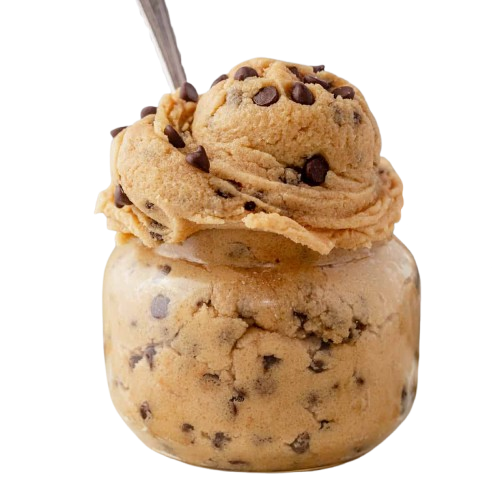
Get a Custom Report on Cookie Dough Nutrition Data – Contact Us!
What are the Types of Cookie Doughs?
The types of cookie doughs are Chocolate Chip, Oatmeal Raisin, Sugar Cookie, and Peanut Butter. These variations are defined by their primary ingredients and mix-ins, which alter the flavor, texture, and nutritional profile. A guide to these common dough styles is in the table below.
| Type | Description | Calories (Approximate per 100g) | Calorie Qualifications |
|---|---|---|---|
|
Chocolate Chip Cookie Dough
|
The classic version with a brown sugar and butter base, with semi-sweet chocolate chips mixed in. | 425 | This is the standard version, with a high calorie count from the butter, sugar, and chocolate. |
|
Oatmeal Raisin Cookie Dough
|
An oatmeal-based dough with raisins and spices like cinnamon. | 424 | The oats add fiber, but the calorie count remains high due to sugar and fat. |
|
Sugar Cookie Dough
|
A simple dough made with white sugar, flour, and butter, with a distinct vanilla flavor. | 415 | The absence of high-fat or high-sugar mix-ins makes this a slightly lower-calorie option. |
|
Peanut Butter Cookie Dough
|
A dough with peanut butter incorporated into the base. | 510 | The very high fat content of peanut butter makes this the most calorie-dense version. |
What are Desserts with Cookie Dough?
Cookie dough is a popular ingredient and flavor profile in many desserts, served both raw (in edible form) and baked. An inventory of dishes that feature cookie dough is detailed in the table below.
| Dish Name | Calories (Estimate per serving) | Type of Dessert | Carbs (g) (Estimate) | Sugar (g) (Estimate) | Protein (g) (Estimate) | Fat (g) (Estimate) | Cuisine | Restaurants |
|---|---|---|---|---|---|---|---|---|
|
Cookie Dough Ice Cream
|
300 (per 2/3 cup) | Frozen Dessert | 37 | 26 | 5 | 15 | American | Ben & Jerry's |
|
Deep-Fried Cookie Dough
|
450 (per serving) | Fried Dessert | 50 | 35 | 5 | 25 | American | State fairs |
|
Cookie Dough Milkshake
|
800+ (per shake) | Beverage | 100+ | 80+ | 15 | 40 | American | Sonic Drive-In |
|
Skillet Cookie
|
1000+ (per skillet) | Baked Dessert | 130+ | 90+ | 10 | 50 | American | Chili's, BJ's Restaurant |
|
Edible Cookie Dough Cup
|
400 (per 1/2 cup) | Raw Dessert | 55 | 35 | 4 | 20 | American | DŌ, Cookie DŌugh Cafe (retail) |
What Cuisines Prefer Cookie Dough the Most?
Cookie dough is a uniquely American phenomenon, deeply rooted in the nation's home-baking and dessert culture. The following list displays the culinary settings where cookie dough is a common item.
| Cuisine | Dish | Types of Cookie Doughs Used | Calories (Estimate) | Restaurant(s) |
|---|---|---|---|---|
|
American (Ice Cream)
|
Cookie Dough Ice Cream | Chocolate Chip | 300-400 | Ben & Jerry's, Häagen-Dazs |
|
American (Home Baking)
|
Refrigerated Cookie Dough | Chocolate Chip, Sugar, Oatmeal | 170 (per 2 cookies) | Pillsbury, Nestlé Toll House |
|
American (Casual Dining)
|
Skillet Cookie / Pizookie | Chocolate Chip | 1000+ | Chili's, BJ's Restaurant |
|
American (Modern)
|
Edible Cookie Dough | Various flavors | 400-600 | DŌ (Cookie Dough Confections) |
Which Countries Produce the Most Cookie Dough?
The top producers of wheat, a primary ingredient in cookie dough, are China, India, and Russia. Specific global production data for finished cookie dough is not tracked as a separate category. The table below shows the production quantity of wheat in key countries.
| Country | 2003 | 2008 | 2013 | 2018 | 2019 | 2020 | 2021 | 2022 |
|---|---|---|---|---|---|---|---|---|
| China | 86,500,000 | 112,500,000 | 121,700,000 | 131,400,000 | 133,600,000 | 134,300,000 | 136,900,000 | 137,700,000 |
| India | 72,100,000 | 78,600,000 | 93,500,000 | 99,700,000 | 103,600,000 | 107,600,000 | 109,600,000 | 104,000,000 |
| Russian Federation | 34,100,000 | 63,800,000 | 52,100,000 | 72,100,000 | 74,500,000 | 85,900,000 | 76,000,000 | 104,400,000 |
| United States | 63,800,000 | 68,000,000 | 61,700,000 | 51,300,000 | 52,300,000 | 49,700,000 | 44,800,000 | 44,900,000 |
| France | 30,500,000 | 39,000,000 | 38,600,000 | 35,800,000 | 39,500,000 | 30,100,000 | 36,600,000 | 30,400,000 |
Which Countries Consume the Most Cookie Dough?
The top consumers of bakery products and ice cream, categories that include cookie dough, are the United States, the United Kingdom, and Germany. Consumption data for cookie dough is best represented by import values for the broader category of pastries, cakes, and sweet biscuits. The table below shows import values for this category in key markets.
| Country | 2003 | 2008 | 2013 | 2018 | 2019 | 2020 | 2021 | 2022 |
|---|---|---|---|---|---|---|---|---|
| United States | 1,300,000 | 2,000,000 | 2,900,000 | 3,800,000 | 4,000,000 | 4,300,000 | 5,000,000 | 5,600,000 |
| United Kingdom | 1,000,000 | 1,600,000 | 2,400,000 | 3,100,000 | 3,200,000 | 3,400,000 | 3,800,000 | 4,100,000 |
| Germany | 900,000 | 1,400,000 | 2,000,000 | 2,600,000 | 2,700,000 | 2,900,000 | 3,300,000 | 3,600,000 |
| France | 700,000 | 1,100,000 | 1,600,000 | 2,100,000 | 2,200,000 | 2,300,000 | 2,600,000 | 2,900,000 |
| Canada | 600,000 | 950,000 | 1,400,000 | 1,800,000 | 1,900,000 | 2,100,000 | 2,400,000 | 2,700,000 |
How Do Prices of Cookie Dough-Including Dishes Change?
The cost of desserts featuring cookie dough has risen over the past ten years, a direct result of higher wholesale ingredient prices and increased operational and labor expenses. This upward price trend is evident in the retail and menu costs of popular branded items.
| Brand/Restaurant | Dish | Old Price (Year) | Current Price (2024/2025) |
|---|---|---|---|
| Ben & Jerry's | Chocolate Chip Cookie Dough Pint | $4.49 (2014) | $5.99 - $6.99 |
| Pillsbury | Chocolate Chip Cookie Dough (16.5 oz tube) | $2.69 (2015) | $3.46 - $5.05 |
| Chili's | Skillet Chocolate Chip Cookie | $6.99 (2017) | $8.89 - $10.29 |
What is the Cookie Dough Calorie for 100 Grams?
A 100g serving of oatmeal cookie dough contains 424 calories. A 100g serving of chocolate chip cookie dough contains 425 calories.
What is the Cookie Dough Calorie for 1 KG?
One kilogram (1000g) of oatmeal cookie dough contains 4,240 calories. One kilogram of chocolate chip cookie dough contains 4,250 calories.
What is the Calorie of 1 Cookie Dough?
The dough for one oatmeal cookie (16g) contains 68 calories. A scoop of Ben & Jerry's Chocolate Chip Cookie Dough ice cream (106g) has 300 calories. One Nestle Toll House chocolate chip cookie dough puck (38g) contains 170 calories.
What are the Health Benefits of Cookie Dough?
The health upsides of cookie dough are minimal and are primarily linked to the base ingredients before the addition of high amounts of sugar and fat. An examination of these limited attributes is provided here.
- Provides B Vitamins from Enriched Flour: The refined flour used in cookie dough is enriched with B vitamins like thiamin, niacin, and folate, which are essential for converting food into energy. A review from Kennedy, D. O. (2016), "B Vitamins and the Brain: Mechanisms, Dose and Efficacy—A Review," confirms the critical role of these vitamins in cellular metabolic processes.
- Contains Soluble Fiber from Oats: Oatmeal cookie dough contains oats, which are a source of beta-glucan, a type of soluble fiber that can help lower cholesterol levels. A meta-analysis by Whitehead, A., et al. (2014), "Cholesterol-lowering effects of oat β-glucan: a meta-analysis of randomized controlled trials," concluded that oat beta-glucan has a cholesterol-lowering effect.
- Supplies Protein from Eggs: The eggs in cookie dough provide a source of high-quality protein, which is necessary for muscle maintenance and repair. A study by Pasiakos, S. M., et al. (2015), "The effects of protein supplements on muscle mass, strength, and aerobic and anaerobic power in healthy adults: a systematic review," underscores the importance of dietary protein for maintaining muscle mass.
What are the Downsides of Cookie Dough?
The primary drawbacks of cookie dough are the significant health risks associated with consuming raw ingredients and its poor nutritional profile. A breakdown of these health risks is detailed here.
- Risk of Foodborne Illness: Raw cookie dough contains uncooked eggs and untreated flour, which can carry dangerous bacteria. Raw eggs may be contaminated with Salmonella, and raw flour can be a vehicle for pathogenic E. coli. The U.S. Food and Drug Administration (FDA) explicitly advises against consuming any raw dough for these reasons. A healthier alternative is a commercially produced edible cookie dough that uses heat-treated flour and pasteurized eggs. A suggested amount for any cookie dough is to limit consumption to a very small portion (one or two tablespoons) on a rare occasion.
- Extremely High in Sugar and Saturated Fat: Cookie dough is made with large amounts of sugar and butter, making the product very high in calories, added sugar, and saturated fat. A presidential advisory from the American Heart Association by Sacks, F. M., et al. (2017), "Dietary Fats and Cardiovascular Disease," reaffirmed the recommendation to lower saturated fat intake to reduce the risk of cardiovascular disease.
Is Cookie Dough Good for You?
No, cookie doughs are not good for a person. The product's extremely high sugar and saturated fat content, combined with the serious risks of foodborne illness from raw ingredients, make the food an unhealthy choice. The impact on food safety is paramount. An investigation by the Centers for Disease Control and Prevention (CDC) detailed in a 2017 report, "Consumption of Raw Cookie Dough and Other Raw Dough Products," linked an outbreak of E. coli infections directly to the consumption of raw flour in cookie dough.
From a metabolic health perspective, the high concentration of sugar and refined flour can cause a rapid spike in blood glucose. A meta-analysis by Sahyoun, N., et al. (2008), " Dietary glycemic index and glycemic load and the risk of type 2 diabetes in older adults," found that diets with a high glycemic load are associated with an increased risk of type 2 diabetes. For cardiovascular health, the high saturated fat content from butter can negatively impact blood lipid levels. A systematic review by Hooper, L., et al. (2020), "Reduction in saturated fat intake for cardiovascular disease," confirmed that reducing saturated fat intake leads to a reduction in cardiovascular events.
How Do Calories Change According to Cookie Dough Types?
The ingredients and mix-ins determine the calorie count of cookie dough. Peanut butter cookie dough has the highest calorie value at 510 calories per 100 grams, a consequence of the high-fat content of peanut butter. A plain sugar cookie dough contains the lowest calorie value at 415 calories per 100 grams, representing a baseline without the added fat from chocolate, nuts, or peanut butter. Chocolate chip and oatmeal raisin cookie doughs fall in between, with their calorie counts being very similar to each other.
Do All Cookie Dough Ice Creams Have the Same Calorie Content?
No, not all cookie dough ice creams have the same calorie content. The calorie count varies significantly between brands based on three main factors: the fat content of the base ice cream, the amount and type of cookie dough used, and the presence of other high-calorie mix-ins like chocolate chips or fudge swirls. For example, a serving of Ben & Jerry's Chocolate Chip Cookie Dough ice cream has 300 calories, while a serving of Häagen-Dazs Cookie Dough ice cream has 310 calories. A store brand, like Target's Favorite Day Cookie Dough, may have a different value, such as 270 calories per serving, due to a different ice cream base and formulation.
What are Main Dishes with Cookie Dough?
Cookie dough functions solely as a dessert or a component of a dessert and is not served with savory main courses. The sweet, rich, and dense profile of cookie dough makes the food unsuitable for pairing with savory lunch or dinner items. Cookie dough is conventionally eaten as a treat on its own or as an ingredient in other sweet dishes.
Are There Gluten-Free Cookie Dough Ice Cream Options?
Yes, there are gluten-free cookie dough ice cream options available. These products are made by substituting traditional wheat flour in the cookie dough pieces with a gluten-free alternative, such as a blend of rice flour, tapioca flour, or oat flour. The base ice cream is naturally gluten-free. Several major brands offer these options to cater to individuals with celiac disease or gluten sensitivity. For example, Ben & Jerry's offers a gluten-free version of its Chocolate Chip Cookie Dough ice cream, and brands like So Delicious and NadaMoo! offer dairy-free and gluten-free cookie dough ice cream varieties.
What is the Origin of Cookie Dough?
The development of cookie dough as a distinct product is directly tied to the invention of the chocolate chip cookie in the 1930s. Ruth Wakefield, owner of the Toll House Inn in Whitman, Massachusetts, created the first chocolate chip cookie. The recipe became immensely popular, and the practice of eating the raw dough was an informal, at-home tradition for decades. The idea of cookie dough as a commercial flavor was launched in 1984 when Ben & Jerry's, following an anonymous fan's suggestion, became the first company to mix chunks of raw chocolate chip cookie dough into vanilla ice cream. This creation, Chocolate Chip Cookie Dough, became one of the world's most popular ice cream flavors and started the trend of cookie dough as a standalone dessert ingredient.
Explore More Desserts & Sweets
Discover more Desserts & Sweets with detailed nutrition facts, calorie counts, vitamins, minerals, and health benefits. Compare similar foods, serving sizes, macronutrients, and key nutrients to find the best option for your diet and nutrition goals.
 Apple Pie calories
 Banoffee Pudding calories
 Biscotti calories
 Blondie calories
 Bread Pudding calories
 Brownie calories
 Butterscotch Pudding calories
 Cake calories
 Cannoli calories
 Caramel Pudding calories
 Cheesecake calories
 Cherry Pie calories