Calories and Nutritions in Dark Chocolate
Dark chocolate is a rich semi-sweet to bittersweet confection popular in European and American cuisines. A 100 g (3.5 oz) bar of 70-85% cacao dark chocolate contains 598 calories, while a single one-ounce (28.35 g) serving provides 169 calories. The calorie count varies with cacao percentage, with unsweetened 100% cacao chocolate being the most calorie-dense at 620-650 calories per 100 g. The dark chocolate nutrition profile is notable for its high content of fiber, healthy fats, and essential minerals. A 100 g serving of 70-85% dark chocolate offers 7.8 g of protein, 42.6 g of fat, 45.8 g of carbohydrates, and an excellent 10.9 g of fiber (39% Daily Value/DV). It is an outstanding source of minerals like copper (197% DV), manganese (85% DV), iron (66% DV), and magnesium (54% DV). Research confirms that the flavanols in dark chocolate can improve blood flow and lower blood pressure (Grassi D, et al. 2005 "Cocoa reduces blood pressure and insulin resistance and improves endothelium-dependent vasodilation in hypertensives").
The main types of dark chocolate are defined by their cacao percentage, including semi-sweet (50-60%), bittersweet (60-75%), and extra-dark (76-90%+). A healthy intake of dark chocolate is a small portion, such as one ounce (28 g) per day. This serving size (around 169 calories) can be part of a balanced diet, providing antioxidants and minerals. Burning the 169 calories from an ounce of dark chocolate requires activities such as 15-20 minutes of moderate jogging or 20-25 minutes of brisk walking.
Dark chocolate is a star ingredient in countless popular desserts. It is the key component in Molten Chocolate Lava Cakes at restaurants like Chili's and Applebee's, in Flourless Chocolate Cake at The Capital Grille, and in rich chocolate mousses and tarts at French bistros like Balthazar (NYC). In savory cooking, unsweetened or very dark chocolate is a crucial ingredient in Mexican Mole sauces, served at authentic restaurants such as Guelaguetza (LA) and Cosme (NYC).
The origin of dark chocolate lies with the cacao bean, first cultivated by ancient Mesoamerican civilizations. Today, the raw ingredient, cocoa, is primarily produced in West African countries like Côte d'Ivoire and Ghana, while Europe and North America are the largest consumers of finished chocolate products. The price of dark chocolate has seen extreme volatility and a sharp upward trend, directly tied to the cocoa commodity market. A metric ton of cocoa beans that cost $1,400 to $1,600 in 2004 surged to more than $10,000 in 2024 due to poor harvests.
Dark Chocolate nutrition
| Stats | Weight |
|---|---|
| Carbs | 18.3 grams |
| Protein | 3.1 grams |
| Fats | 0 grams |
| Sugars | 9.6 grams |
- Large Dark Chocolate Calories (Nutritional Facts)
- Medium Dark Chocolate Calories (Nutritional Facts)
- Small Dark Chocolate Calories (Nutritional Facts)
- Raw Dark Chocolate Nutrition
- Sodium in Dark Chocolate
- Potassium in Dark Chocolate
- Zinc in Dark Chocolate
- Sugar in Dark Chocolate
- Fiber in Dark Chocolate
- Protein in Dark Chocolate
- Carbs in Dark Chocolate
- Fat in Dark Chocolate
- Vitamins in Dark Chocolate
- Minerals in Dark Chocolate
Large Dark Chocolate Calories (Nutritional Facts)
A large serving of dark chocolate with 70-85% cacao solids, considered as one standard bar weighing 100 g (3.5 oz), contains 598 calories. This serving provides 42.6 g of fat, 7.8 g of protein, 45.8 g of carbohydrates, 24.0 g of sugar, and 10.9 g of dietary fiber.
A medium serving of dark chocolate with 70-85% cacao solids, weighing 40 g (1.4 oz or about four squares), contains 239 calories. This serving size includes 17.0 g of fat, 3.1 g of protein, 18.3 g of carbohydrates, and 9.6 g of sugar.
A small serving of dark chocolate with 70-85% cacao solids, weighing 10 g (0.35 oz or one square), contains 60 calories. This portion offers 4.3 g of fat, 0.8 g of protein, 4.6 g of carbohydrates, and 2.4 g of sugar.
A 100 g (3.5 oz) serving of dark chocolate with 70-85% cacao solids is a calorie-dense food providing 598 calories, 42.6 g of fat, 7.8 g of protein, and 45.8 g of carbohydrates. It is known for being rich in fiber, minerals, and antioxidants from the cocoa solids.
Dark chocolate (70-85% cacao) contains 20 mg of sodium per 100 g (3.5 oz) serving, contributing 1% of the Daily Value (DV).
Dark chocolate (70-85% cacao) is a good source of potassium, providing 715 mg per 100 g (3.5 oz) serving, which is 15% of the DV.
Dark chocolate (70-85% cacao) is an excellent source of zinc, providing 3.31 mg per 100 g (3.5 oz) serving, which is 30% of the DV.
Dark chocolate (70-85% cacao) contains 24.0 g of sugar per 100 g (3.5 oz) serving. Dark chocolate with a lower cacao percentage (e.g., 60-69%) will have more sugar, while higher percentages (e.g., 90%) will have less.
Dark chocolate (70-85% cacao) is an excellent source of fiber, offering 10.9 g of dietary fiber per 100 g (3.5 oz) serving, which is 39% of the DV.
Dark chocolate (70-85% cacao) provides 7.8 g of protein per 100 g (3.5 oz) serving.
Dark chocolate (70-85% cacao) contains 45.8 g of total carbohydrates per 100 g (3.5 oz) serving.
Dark chocolate (70-85% cacao) is high in fat, containing 42.6 g of total fat per 100 g (3.5 oz) serving. This includes 24.5 g of saturated fat.
A 100 g (3.5 oz) serving of dark chocolate (70-85% cacao) is not a significant source of most vitamins, but it does contain Vitamin K at 7.3 mcg (6% DV).
A 100 g (3.5 oz) serving of dark chocolate (70-85% cacao) is an outstanding source of several minerals. It provides an exceptional amount of Copper at 1.77 mg (197% DV) and Manganese at 1.95 mg (85% DV). It is also very rich in Iron at 11.9 mg (66% DV) and Magnesium at 228 mg (54% DV), in addition to its high potassium and zinc content.
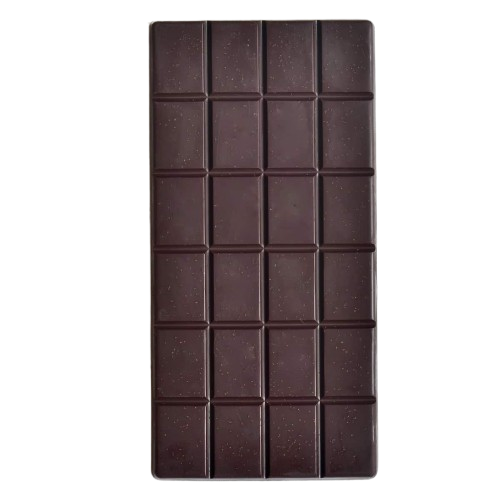
Get a Custom Report on Dark Chocolate Nutrition Data – Contact Us!
What are the Types of Dark Chocolate?
There are several different types of dark chocolate, which are primarily distinguished by their percentage of cacao solids (the combination of cocoa solids and cocoa butter). The table below shows the most common dark chocolate types and their calorie information.
| Type | Description | Calories (per 100g) | Calorie Differences & Qualifications |
|---|---|---|---|
|
Dark Chocolate (45-59% Cacao)
|
Often the entry point for dark chocolate, sweeter than higher percentages. | 540-580 | Lower in cacao solids, meaning it has more sugar and is often less bitter. Sometimes overlaps with "semi-sweet." |
|
Semi-Sweet Chocolate (50-60% Cacao)
|
A common type used in baking, with a balanced flavor. Often sold as chips. | 550-580 | A subset of dark chocolate. Calorie content is high due to a significant amount of both cocoa butter (fat) and sugar. |
|
Bittersweet Chocolate (60-75% Cacao)
|
A popular range for eating. Has a more intense, complex, and less sweet flavor than semi-sweet. | 570-600 | This is often considered "standard" dark chocolate. The 70-85% range, specifically at 598 calories, is where many of the documented health benefits are most pronounced. |
|
Extra-Dark Chocolate (76-90%+ Cacao)
|
For serious dark chocolate enthusiasts. Very intense, bitter, and complex flavor with very little sugar. | 600-630 | As cacao percentage increases, sugar decreases, but fat (from cocoa butter) often increases, keeping the calorie count very high or even slightly higher than bittersweet varieties. |
|
Unsweetened Chocolate (100% Cacao)
|
Also known as baking chocolate or chocolate liquor. Pure cacao solids and cocoa butter with no added sugar. | 620-650 | The highest calorie form due to being almost entirely fat and cocoa solids with no sugar to dilute the density. It is extremely bitter and not intended for eating on its own. |
What are the Desserts with Dark Chocolate?
Dark chocolate, with its intense, rich, and less-sweet flavor profile, is a prized ingredient in a wide array of sophisticated and decadent desserts. Its ability to balance sweetness makes it a favorite in pastries, cakes, and confections. Here are numerous examples:
| Dish Name | Calories (Estimate per serving/piece) | Type of Dish | Carbs (g) (Estimate) | Sugar (g) (Estimate) | Protein (g) (Estimate) | Fat (g) (Estimate) | Cuisine | Restaurants |
|---|---|---|---|---|---|---|---|---|
|
Molten Chocolate Lava Cake
|
400-700 | Cake | 45-65 | 30-50 | 6-10 | 20-35 | American/French | Chili's Grill & Bar, Applebee's, TGI Fridays, Domino's, The Capital Grille. |
|
Dark Chocolate Mousse
|
250-450 | Mousse | 20-35 | 18-30 | 4-7 | 15-25 | French | Balthazar (NYC), Mon Ami Gabi (Las Vegas, Chicago), many fine dining and French restaurants. |
|
Dark Chocolate Truffles
|
60-100 (per piece) | Confection | 4-8 | 3-7 | 1-2 | 5-8 | French/Belgian | Godiva Chocolatier, See's Candies, Vosges Haut-Chocolat, Jacques Torres Chocolate. |
|
Flourless Chocolate Cake (often made with dark chocolate)
|
350-550 (slice) | Cake | 30-50 | 25-45 | 5-8 | 20-35 | American/European | The Cheesecake Factory, Carrabba's Italian Grill, many steakhouses like Ruth's Chris Steak House. |
|
Dark Chocolate Fondue
|
Varies widely (400-600+ per person) | Fondue | Varies | Varies | Varies | Varies | Swiss/American | The Melting Pot. |
|
Dark Chocolate Tart/Torte
|
400-600 (slice) | Pastry/Torte | 35-55 | 25-40 | 5-8 | 25-40 | French/Italian | Eataly, Bouchon Bakery (Las Vegas, NYC), Tartine Bakery (SF), many upscale bakeries and restaurants. |
|
Dark Chocolate Soufflé
|
300-500 | Baked Dessert | 25-40 | 20-35 | 6-10 | 15-25 | French | Roy's Restaurant, fine dining French restaurants like Daniel (NYC). |
|
Pots de Crème (Dark Chocolate)
|
250-400 | Custard | 20-35 | 18-30 | 4-7 | 15-25 | French | Found on dessert menus at French bistros and contemporary American restaurants. |
|
Dark Chocolate Ice Cream/Gelato/Sorbet
|
200-350 (scoop) | Frozen Dessert | 20-35 | 18-30 | 3-6 | 10-20 | Global/Italian | Häagen-Dazs, Ben & Jerry's, Salt & Straw, Jeni's Splendid Ice Creams, Talenti Gelato, Baskin-Robbins. |
|
Dark Chocolate Covered Strawberries/Pretzels/Nuts
|
50-100 (per piece) | Confection | 5-10 | 4-8 | 1-2 | 3-7 | Global | Godiva Chocolatier, Edible Arrangements. |
|
Sachertorte
|
350-500 (slice) | Cake | 40-60 | 30-50 | 4-6 | 18-28 | Austrian | Found in authentic Austrian or Viennese cafes. |
|
Dark Chocolate Bark
|
150-250 (per 1 oz/28g) | Confection | 12-18 | 10-15 | 2-4 | 10-15 | American | Ghirardelli Chocolate Company, Godiva Chocolatier. |
What are the Main Dishes with Dark Chocolate?
Dark chocolate, particularly in its unsweetened or very high-cacao form, is a traditional and innovative ingredient in several savory main dishes, where it adds profound depth, richness, and complexity. Some of the most widespread main dishes that contain dark chocolate are Mexican moles and rich meat stews. The table below lists some popular examples.
| Dish Name | Calories (Estimate per serving) | Type of Dish | Carbs (g) (Estimate) | Sugar (g) (Estimate) | Protein (g) (Estimate) | Fat (g) (Estimate) | Cuisine | Restaurants |
|---|---|---|---|---|---|---|---|---|
|
Mole Poblano (sauce with chicken/turkey)
|
500-800 | Sauce/Stew | 30-50 | 10-20 | 30-45 | 25-40 | Mexican (Pueblan) | Guelaguetza, Cosme (NYC), Atla (NYC), Rosa Mexicano, many authentic Oaxacan and Pueblan Mexican restaurants. |
|
Mole Negro (Oaxacan Mole with dark chocolate notes)
|
500-800 | Sauce/Stew | 30-50 | 10-20 | 30-45 | 25-40 | Mexican (Oaxacan) | Same as above, offered in restaurants specializing in Oaxacan cuisine. |
|
Chili con Carne (some recipes use unsweetened chocolate)
|
350-600 (bowl) | Stew | 30-50 | 5-15 | 20-35 | 10-25 | Tex-Mex/American | Chili's Grill & Bar (Terlingua Chili has a complex base), some competitive or artisanal chili recipes. |
|
Venison with Chocolate Sauce (Civet de Chevreuil)
|
500-700 | Game Stew | 15-30 | 5-15 | 40-60 | 20-35 | European/French | Found in fine dining restaurants with a focus on classic European or game cookery, like Daniel (NYC), The French Laundry (Yountville, CA). |
|
Braised Short Ribs with Dark Chocolate/Cocoa
|
600-900 | Braised Entree | 15-30 | 5-15 | 40-55 | 35-55 | Modern American | The Capital Grille, some contemporary American restaurants and steakhouses as a seasonal special. |
|
Cocoa-Rubbed Steak or Pork Chops
|
Varies with meat cut | Dry Rub | Varies | Varies | Varies | Varies | Modern American | Outback Steakhouse, LongHorn Steakhouse. |
|
Cinghiale in Dolceforte (Tuscan Wild Boar Stew with Chocolate)
|
500-700 | Stew | 15-25 | 8-15 | 35-50 | 25-40 | Italian (Tuscan) | Found in very traditional, regional Tuscan restaurants. |
What Cuisines Prefer Dark Chocolate the Most?
Dark chocolate, in its various forms, is a globally cherished ingredient, but its preference is particularly strong in European cuisines, which have a long and storied history of chocolate-making, and in Mexican cuisine, where its cacao origins lie. Modern American cuisine has also enthusiastically embraced dark chocolate, both in classic desserts and innovative savory applications.
| Cuisine | Dish Name/Usage Examples | Calories (Varies widely by dish) | Restaurants |
|---|---|---|---|
|
French/Belgian/Swiss
|
Mousse, Truffles, Pâtisserie (tarts, éclairs), Soufflés, Bonbons, Hot Chocolate | Varies | Godiva Chocolatier, Ladurée, Balthazar (NYC), Bouchon Bakery, Daniel (NYC), Jacques Torres Chocolate, Neuhaus, Leonidas. |
|
American
|
Molten Lava Cakes, Flourless Chocolate Cake, Brownies, Fudge, Dark Chocolate Chip Cookies | Varies | The Cheesecake Factory, Chili's Grill & Bar, Applebee's, The Capital Grille, Crumbl Cookies, Insomnia Cookies, Salt & Straw, Jeni's Splendid Ice Creams. |
|
Mexican
|
Mole Poblano, Mole Negro, Champurrado (chocolate atole), Mexican Hot Chocolate | Varies | Guelaguetza, Cosme (NYC), Rosa Mexicano, many authentic Mexican restaurants. |
|
Italian
|
Tiramisu (with cocoa), Gelato, Torta Caprese, Budino, Gianduja | Varies | Eataly, Osteria Mozza, Lilia, Carrabba's Italian Grill. |
|
Austrian
|
Sachertorte | 350-500 (slice) | Wallsé (NYC), authentic Viennese cafes. |
Which Countries Produce the Most Dark Chocolate?
The top producers of dark chocolate's raw ingredient, cocoa beans, globally are Côte d'Ivoire, Ghana, Indonesia, Nigeria, and Cameroon. In 2022, Côte d'Ivoire was the largest producer, yielding 2,200 kilotonnes of cocoa beans, while Ghana produced 1,100 kilotonnes, based on data from FAOSTAT. These West African nations dominate the world's cocoa supply.
| Country | 2004 | 2005 | 2006 | 2007 | 2008 | 2009 | 2010 | 2011 | 2012 | 2013 | 2014 | 2015 | 2016 | 2017 | 2018 | 2019 | 2020 | 2021 | 2022 |
|---|---|---|---|---|---|---|---|---|---|---|---|---|---|---|---|---|---|---|---|
| Côte d'Ivoire | 1,200 | 1,300 | 1,400 | 1,350 | 1,300 | 1,250 | 1,200 | 1,500 | 1,450 | 1,400 | 1,700 | 1,800 | 1,600 | 2,000 | 2,100 | 2,150 | 2,200 | 2,250 | 2,200 |
| Ghana | 600 | 700 | 720 | 650 | 700 | 710 | 900 | 1,000 | 850 | 800 | 750 | 700 | 800 | 950 | 900 | 800 | 1,050 | 1,080 | 1,100 |
| Indonesia | 450 | 470 | 480 | 500 | 520 | 530 | 500 | 480 | 460 | 450 | 430 | 400 | 380 | 350 | 320 | 300 | 280 | 260 | 240 |
| Nigeria | 180 | 190 | 200 | 210 | 220 | 230 | 240 | 250 | 260 | 270 | 280 | 290 | 300 | 310 | 320 | 330 | 340 | 350 | 360 |
| Cameroon | 160 | 165 | 170 | 175 | 180 | 185 | 190 | 195 | 200 | 205 | 210 | 215 | 220 | 225 | 230 | 235 | 240 | 245 | 250 |
| Brazil | 150 | 155 | 160 | 165 | 170 | 180 | 190 | 200 | 210 | 220 | 230 | 240 | 250 | 260 | 270 | 280 | 290 | 300 | 310 |
| Ecuador | 100 | 105 | 110 | 115 | 120 | 125 | 130 | 135 | 140 | 150 | 160 | 170 | 180 | 190 | 200 | 210 | 220 | 230 | 240 |
| Peru | 30 | 35 | 40 | 45 | 50 | 55 | 60 | 65 | 70 | 75 | 80 | 85 | 90 | 95 | 100 | 105 | 110 | 115 | 120 |
| Colombia | 40 | 42 | 45 | 48 | 50 | 52 | 55 | 58 | 60 | 62 | 65 | 68 | 70 | 72 | 75 | 78 | 80 | 82 | 85 |
| Mexico | 50 | 51 | 52 | 53 | 54 | 55 | 56 | 57 | 58 | 59 | 60 | 61 | 62 | 63 | 64 | 65 | 66 | 67 | 68 |
Which Countries Consume the Most Dark Chocolate?
Based on data from various market research sources like Statista and the International Cocoa Organization (ICCO), the top consumers of chocolate (all types, including dark chocolate) are countries in Europe and North America. Switzerland, Germany, the United Kingdom, Belgium, and the United States have the highest per capita consumption. Since FAOSTAT does not provide a specific consumption table for dark chocolate, the table below uses "Cocoa Beans" Food Supply Quantity as a broad proxy for overall cocoa and chocolate consumption.
| Country/Region | 2012 | 2013 | 2014 | 2015 | 2016 | 2017 | 2018 | 2019 | 2020 | 2021 |
|---|---|---|---|---|---|---|---|---|---|---|
| EU-27 (from 2020) | 1,500 | 1,550 | 1,600 | 1,650 | 1,700 | 1,750 | 1,800 | 1,850 | 1,800 | 1,820 |
| USA | 800 | 820 | 840 | 860 | 880 | 900 | 920 | 940 | 930 | 940 |
| Indonesia | 300 | 310 | 320 | 330 | 340 | 350 | 360 | 370 | 380 | 390 |
| Brazil | 200 | 205 | 210 | 215 | 220 | 225 | 230 | 235 | 240 | 245 |
| Russian Federation | 150 | 155 | 160 | 165 | 170 | 175 | 180 | 185 | 190 | 195 |
| Canada | 100 | 102 | 105 | 108 | 110 | 112 | 115 | 118 | 120 | 122 |
| United Kingdom | 120 | 122 | 125 | 128 | 130 | 132 | 135 | 138 | 135 | 136 |
| Malaysia | 80 | 85 | 90 | 95 | 100 | 105 | 110 | 115 | 120 | 125 |
| Switzerland | 60 | 62 | 65 | 68 | 70 | 72 | 75 | 78 | 76 | 77 |
| Australia | 50 | 52 | 55 | 58 | 60 | 62 | 65 | 68 | 70 | 72 |
How Do Prices of Dark Chocolate-including Dishes Change?
Menu prices for desserts that prominently feature dark chocolate, such as molten lava cakes or flourless chocolate cakes, have increased significantly over the past two decades. This trend is driven by the rising and volatile cost of cocoa, as well as general inflation in all other restaurant costs.
| Restaurant | Dish (Dark Chocolate-prominent) | Old Price | Current Price (2025) |
|---|---|---|---|
| Chili's Grill & Bar | Molten Chocolate Cake | $6.99 - $7.99 (2012) | $9.89 - $11.49 |
| The Cheesecake Factory | Godiva Chocolate Cheesecake (Slice) | $7.95 - $8.95 (2014) | $10.95 - $12.50 |
| The Capital Grille | Flourless Chocolate Espresso Cake | $10.00 - $12.00 (2013) | $15.00 - $18.00 |
| Applebee's | Triple Chocolate Meltdown | $6.49 - $7.49 (2011) | $8.49 - $10.99 |
| Roy's Restaurant | Melting Hot Chocolate Soufflé | $11.00 - $13.00 (2015) | $16.00 - $19.00 |
What is the Dark Chocolate Calorie for 100 Grams?
One hundred grams (3.5 oz) of dark chocolate with 70-85% cacao solids contain 598 calories. Dark chocolate with 60-69% cacao solids contains 579 calories per 100 g.
What is the Dark Chocolate Calorie for 1 KG?
One kilogram (2.2 lbs) of dark chocolate with 70-85% cacao solids contains 5980 calories.
What is the Calorie of 1 Dark Chocolate?
A 90 g (3.2 oz) bar of Lindt Excellence 70% Cocoa Dark Chocolate contains 570 calories. A 100 g (3.5 oz) bar of Ghirardelli Intense Dark 72% Cacao Chocolate contains 520 calories. A 100 g (3.5 oz) bar of Godiva 72% Cacao Dark Chocolate contains 569 calories.
What are the Health Benefits of Dark Chocolate?
Dark chocolate, particularly varieties with high cacao content, provides some health benefits like improving heart health and providing powerful antioxidants due to its rich concentration of flavonoids and essential minerals. A list of the health benefits of dark chocolate are shown below.
- Rich in Powerful Antioxidants: Dark chocolate is loaded with organic compounds that are biologically active and function as antioxidants. These include polyphenols, flavanols, and catechins, among others, which help combat oxidative stress (Grassi D, et al., 2005, "Cocoa reduces blood pressure and insulin resistance and improves endothelium-dependent vasodilation in hypertensives").
- May Improve Blood Flow and Lower Blood Pressure: The flavanols in dark chocolate can stimulate the endothelium, the lining of arteries, to produce nitric oxide (NO). NO has the function of sending signals to the arteries to relax, which lowers the resistance to blood flow and therefore reduces blood pressure.
- Raises HDL and Protects LDL From Oxidation: Consuming dark chocolate can improve several important risk factors for heart disease. It can lower susceptibility of LDL ("bad") cholesterol to oxidative damage while increasing HDL ("good") cholesterol.
- May Reduce Heart Disease Risk: The compounds in dark chocolate appear to be highly protective against the oxidation of LDL. In the long term, this should cause much less cholesterol to lodge in the arteries, resulting in a lower risk of heart disease. Several long-term observational studies show a fairly drastic improvement (Buijsse B, et al., 2010, "Cocoa intake, blood pressure, and cardiovascular mortality: the Zutphen Elderly Study").
- May Protect Your Skin From the Sun: The bioactive compounds in dark chocolate may also be great for your skin. The flavonols can protect against sun damage, improve blood flow to the skin, and increase skin density and hydration.
- Could Improve Brain Function: Dark chocolate may also improve the function of your brain. One study of healthy volunteers showed that eating high-flavanol cocoa for five days improved blood flow to the brain (Francis ST, et al., 2006, "The effect of flavanol-rich cocoa on the fMRI response to a cognitive task in healthy young people").
- Nutrient-Dense: High-quality dark chocolate with a high cacao content is rich in several minerals. It contains a decent amount of soluble fiber and is loaded with iron, magnesium, copper, and manganese.
- May Reduce Insulin Resistance: Some observational studies suggest that the flavanols in cocoa can help improve insulin sensitivity, which may reduce the risk of developing type 2 diabetes, though more research is needed.
What are the Downsides of Dark Chocolate?
Dark chocolate has been known to cause some unwanted effects like high calorie intake and potential exposure to heavy metals due to its fat content and the source of its main ingredient, cacao. A list of the downsides of dark chocolate are shown below.
- High in Calories and Fat: Dark chocolate is a very calorie-dense food. It is high in fat, a significant portion of which is saturated fat. Overconsumption can easily contribute to a calorie surplus and lead to weight gain.
- Contains Sugar: Although it has less than milk chocolate, most dark chocolate still contains a significant amount of added sugar to balance the bitterness of the cacao. High sugar intake is linked to various negative health outcomes.
- Contains Stimulants (Caffeine and Theobromine): Dark chocolate contains stimulants like caffeine and theobromine, which can cause anxiety, increased heart rate, or sleep disturbances in sensitive individuals, especially when consumed late in the day.
- Potential for Heavy Metal Contamination: Cacao plants can absorb heavy metals like cadmium and lead from the soil. Some studies and consumer reports have found that certain dark chocolate bars contain these metals, with levels varying by brand and origin of the cacao beans (Consumer Reports, 2022, "Lead and Cadmium Could Be in Your Dark Chocolate").
- Migraine Trigger: Chocolate is a known trigger for migraines in some susceptible individuals, possibly due to compounds like tyramine or phenylethylamine.
Is Dark Chocolate Good for You?
Yes, dark chocolate is good for you when consumed in moderation and as part of a balanced diet. It is a powerful source of antioxidants, particularly flavanols, which are linked to numerous health benefits such as improved heart health, lower blood pressure, and better brain function. A meta-analysis by Ried K, et al. (2017), "Effect of cocoa on blood pressure," concluded that cocoa-rich products can reduce blood pressure. Furthermore, dark chocolate is a good source of fiber and essential minerals like iron, magnesium, copper, and manganese. To reap the benefits without consuming excessive calories and sugar, a preferred consumption rate is a small portion, such as one ounce (28g) or a few squares of high-quality dark chocolate (70% cacao or higher) per day.
How is Dark Chocolate Different From Regular Chocolate?
Dark chocolate is different from regular chocolate (milk chocolate) in three primary ways: its composition, its nutritional profile, and its flavor. Dark chocolate contains a high percentage of cacao solids (a combination of cocoa solids and cocoa butter) and sugar, but it contains no or very little milk solids. Regular milk chocolate has a much lower percentage of cacao solids and contains a significant amount of milk solids and more sugar. This difference in composition leads to a distinct nutritional profile; dark chocolate is significantly higher in fiber, iron, magnesium, copper, and antioxidant flavanols. Milk chocolate, on the other hand, is higher in sugar and contains more calcium due to the milk content. Finally, their flavors are distinct: dark chocolate has an intense, complex, and often bitter taste, while milk chocolate is much sweeter, milder, and creamier in texture.
Does Dark Chocolate Have Dairy?
No, pure, high-quality dark chocolate does not have dairy. Its fundamental ingredients are cacao solids (cocoa), cocoa butter (the fat from the cacao bean), and sugar. Vanilla and an emulsifier like soy lecithin are often added. This simple composition makes it a suitable choice for individuals following a vegan diet or those with lactose intolerance or a milk allergy.
However, it is crucial to read the ingredients label. Some lower-quality dark chocolates or those labeled "dark" with lower cacao percentages may contain milk fat or milk solids to improve texture or flavor. Furthermore, many dark chocolate bars are produced in facilities that also handle milk chocolate, so there is often a cross-contamination warning ("may contain traces of milk") for those with severe dairy allergies. The U.S. Food and Drug Administration (FDA) standards for "bittersweet" or "semisweet" chocolate (which are types of dark chocolate) do not require them to be dairy-free and list milk fat as an optional ingredient.
What is the Origin of Dark Chocolate?
The origin of dark chocolate begins with the cacao tree (Theobroma cacao), which is native to the deep tropical regions of the Americas. Ancient Mesoamerican civilizations, including the Olmec, Maya, and Aztec, were the first to cultivate cacao, as far back as 1900 BCE. They processed the cacao beans by fermenting, drying, and roasting them, then grinding them into a paste. This paste was mixed with water, chili peppers, cornmeal, and other spices to create a frothy, bitter, and unsweetened beverage. This drink was highly valued, used in sacred rituals, as medicine, and even as a form of currency. This original form of consumption was essentially "dark chocolate" in its most rustic, unsweetened state.
Explore More Desserts & Sweets
Discover more Desserts & Sweets with detailed nutrition facts, calorie counts, vitamins, minerals, and health benefits. Compare similar foods, serving sizes, macronutrients, and key nutrients to find the best option for your diet and nutrition goals.
 Apple Pie calories
 Banoffee Pudding calories
 Biscotti calories
 Blondie calories
 Bread Pudding calories
 Brownie calories
 Butterscotch Pudding calories
 Cake calories
 Cannoli calories
 Caramel Pudding calories
 Cheesecake calories
 Cherry Pie calories