Calories and Nutritions in Flan
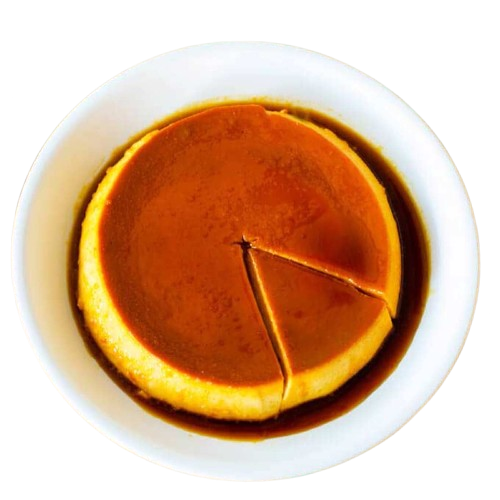
Flan is a baked custard dessert with a soft caramel topping. The flan calories vary with portion size and recipe. A small one-cubic-inch flan (19g) contains 34 calories, while a large slice (140g) provides 248 calories. A half-cup serving of caramel flan (153g) contains 222 calories, and a whole flan from a single recipe can reach 2220 calories. Commercial products are comparable, with a Senor Rico Caramel Flan cup (113g) containing 160 calories.
An analysis of the flan nutrition facts reveals a dessert rich in sugar and protein from its custard base. A large slice (140g) provides 7.3g of protein, 6.6g of fat, and 40.7g of carbohydrates, with nearly all carbs coming from 40.5g of sugar. The preparation style dramatically alters the calorie density, ranging from 145 calories per 100g for a classic flan to over 300 calories per 100g for a dense Filipino Leche Flan. A key health attribute is the high egg and milk content, making flan a source of bone-supporting nutrients like calcium and Vitamin D, with a large slice providing 134mg of calcium (10% DV) and 1.5mcg of Vitamin D (8% DV), a benefit confirmed in a study by Heaney, R. P. (2009).
Flan’s widespread appeal is supported by a global food system that includes top milk producers like the United States and India and is embraced by major dessert-consuming nations such as Brazil and Mexico. It’s often a standalone dessert paired with beverages like coffee and holding a place of honor in Latin American and European food traditions. This international demand, combined with rising costs for dairy and sugar, has driven a steady increase in price, with a multi-pack of flan cups climbing from under $2.00 in the early 2000s to over $3.50 after 2020.
Health authorities like the American Heart Association recommend strict limits on added sugar, and a single medium slice of flan contains over 32g of sugar, exceeding the entire daily recommendation for women. The 34 calories in just one small piece of flan require an energy expenditure equivalent to 3 minutes of running or 4 minutes of swimming.
Flan nutrition
| Stats | Weight |
|---|---|
| Carbs | 32.8 grams |
| Protein | 5.9 grams |
| Fats | 0 grams |
| Sugars | 32.7 grams |
- Caramel Flan Calories (Nutritional Facts)
- Large Flan Calories (Nutritional Facts)
- Medium Flan Calories (Nutritional Facts)
- Small Flan Calories (Nutritional Facts)
- Raw Flan Nutrition
- Sodium in Flan
- Potassium in Flan
- Sugar in Flan
- Fiber in Flan
- Protein in Flan
- Carbs in Flan
- Fat in Flan
- Vitamins in Flan
- Minerals in Flan
Caramel Flan Calories (Nutritional Facts)
A half-cup serving of caramel flan (153g or 5.4oz) contains 222 calories, 6.9g of protein, 6.2g of fat, 34.9g of carbohydrates, 0g of fiber, 34.9g of sugar, and 81mg of sodium.
A large slice of flan (140g or 4.9oz) contains 248 calories, 7.3g of protein, 6.6g of fat, 40.7g of carbohydrates, 0g of fiber, 40.5g of sugar, and 231mg of sodium.
A medium slice of flan (113g or 4oz) provides 200 calories, 5.9g of protein, 5.3g of fat, 32.8g of carbohydrates, 0g of fiber, 32.7g of sugar, and 187mg of sodium.
A small piece of flan (one cubic inch, 19g or 0.7oz) contains 34 calories, 1g of protein, 0.9g of fat, 5.5g of carbohydrates, 0g of fiber, 5.5g of sugar, and 31mg of sodium.
Flan is a baked custard and is not consumed raw. All nutritional information reflects a fully cooked and chilled dessert made from eggs, milk, and sugar.
A large slice of flan (140g) contains 231mg of sodium (10% DV). A medium slice (113g) has 187mg of sodium (8% DV). A small piece (19g) contains 31mg of sodium (1% DV). A half-cup serving of caramel flan (153g) has 81mg of sodium (4% DV). A 142g serving of vanilla flan has 227mg of sodium (10% DV). One whole flan (1531g) contains 811mg of sodium (35% DV).
A large slice of flan (140g) contains 181mg of potassium (4% DV). A medium slice (113g) has 146mg of potassium (3% DV). A small piece (19g) contains 25mg of potassium (1% DV). A half-cup serving of caramel flan (153g) has 181mg of potassium (4% DV). A 142g serving of vanilla flan has 178mg of potassium (4% DV). One whole flan (1531g) contains 1810mg of potassium (39% DV).
A large slice of flan (140g) contains 40.5g of sugar. A medium slice (113g) has 32.7g of sugar. A small piece (19g) contains 5.5g of sugar. A half-cup serving of caramel flan (153g) has 34.9g of sugar. A 142g serving of vanilla flan has 39.8g of sugar. One whole flan (1531g) contains 349g of sugar.
A large slice of flan (140g) provides 0g of dietary fiber (0% DV). A medium slice (113g) has 0g of fiber (0% DV). A small piece (19g) contains 0g of fiber (0% DV). A half-cup serving of caramel flan (153g) has 0g of fiber (0% DV). A 142g serving of vanilla flan has 0g of fiber (0% DV). One whole flan (1531g) provides 0g of fiber (0% DV).
A large slice of flan (140g) provides 7.3g of protein (15% DV). A medium slice (113g) has 5.9g of protein (12% DV). A small piece (19g) contains 1g of protein (2% DV). A half-cup serving of caramel flan (153g) has 6.9g of protein (14% DV). A 142g serving of vanilla flan has 7.1g of protein (14% DV). One whole flan (1531g) provides 69.4g of protein (139% DV).
A large slice of flan (140g) contains 40.7g of carbohydrates (15% DV). A medium slice (113g) has 32.8g of carbohydrates (12% DV). A small piece (19g) contains 5.5g of carbohydrates (2% DV). A half-cup serving of caramel flan (153g) has 34.9g of carbohydrates (13% DV). A 142g serving of vanilla flan has 39.8g of carbohydrates (14% DV). One whole flan (1531g) contains 349g of carbohydrates (127% DV).
A large slice of flan (140g) contains 6.6g of total fat (8% DV). A medium slice (113g) has 5.3g of total fat (7% DV). A small piece (19g) contains 0.9g of total fat (1% DV). A half-cup serving of caramel flan (153g) has 6.2g of total fat (8% DV). A 142g serving of vanilla flan has 15.6g of total fat (20% DV). One whole flan (1531g) contains 61.7g of total fat (79% DV).
A large slice of flan (140g) provides 1.5mcg of Vitamin D (8% DV). A medium slice (113g) provides 1.2mcg of Vitamin D (6% DV). A small piece (19g) provides 0.2mcg of Vitamin D (1% DV). A half-cup serving of caramel flan (153g) provides 70mcg of Vitamin A (8% DV). One whole flan (1531g) provides 704mcg of Vitamin A (78% DV) and 5.5mcg of Vitamin B12 (230% DV).
A large slice of flan (140g) provides 134mg of calcium (10% DV) and 0.7mg of iron (4% DV). A medium slice (113g) provides 109mg of calcium (8% DV) and 0.6mg of iron (3% DV). A small piece (19g) provides 18mg of calcium (1% DV) and 0.1mg of iron (1% DV). A half-cup serving of caramel flan (153g) provides 127mg of calcium (10% DV) and 0.6mg of iron (3% DV). One whole flan (1531g) provides 1270mg of calcium (98% DV) and 5.8mg of iron (32% DV).
Get a Custom Report on Flan Nutrition Data – Contact Us!
What are the Types of Flans?
The types of flans are Classic Caramel Flan, Chocoflan, and Leche Flan. These variations are distinguished by their ingredients and layers, which results in different flavors and textures. A description of these common flan styles is in the table below.
| Type | Description | Calories (Approximate per 100g) | Calorie Qualifications |
|---|---|---|---|
|
Classic Caramel Flan
|
The standard version with a creamy egg custard base and a soft caramel topping. | 145 | This is the baseline version, with calories coming from milk, eggs, and sugar. |
|
Chocoflan ("Impossible Cake")
|
A layered dessert with a rich chocolate cake on the bottom and a layer of flan on top. | 250 | The addition of a dense chocolate cake layer makes this version much higher in calories, fat, and carbohydrates. |
|
Leche Flan (Filipino)
|
A much richer and denser version made with a high proportion of egg yolks and condensed milk. | 300 | The use of condensed milk and a high number of egg yolks makes this the most calorie-dense type of flan. |
What are the Desserts with Flan?
Flan is a complete dessert that is served on its own to highlight its creamy texture and caramel sauce. A list of beverages commonly served with flan is detailed in the table below.
| Dish Name | Calories (Estimate per serving) | Type of Dessert | Carbs (g) (Estimate) | Sugar (g) (Estimate) | Protein (g) (Estimate) | Fat (g) (Estimate) | Cuisine | Restaurants |
|---|---|---|---|---|---|---|---|---|
|
Espresso
|
<5 (per shot) | Beverage | 0 | 0 | 0 | 0 | Italian/Global | Starbucks |
|
Cappuccino
|
120 (per 12 oz) | Beverage | 12 | 10 | 8 | 6 | Italian | La Colombe Coffee Roasters |
|
Sweet Dessert Wine
|
150 (per 5 oz) | Beverage | 15 | 12 | 0 | 0 | French/Italian | The Capital Grille |
What Cuisines Prefer Flan the Most?
Flan is a globally cherished dessert, with deep roots in Spanish, Portuguese, and Latin American cuisines. The following list displays the culinary settings where flan is a signature item.
| Cuisine | Dish | Types of Flans Used | Calories (Estimate) | Restaurant(s) |
|---|---|---|---|---|
|
Spanish
|
Flan de Huevo | Classic Caramel Flan | 150-250 | Jaleo, Spanish restaurants |
|
Mexican
|
Flan Napolitano | Often made with cream cheese for richness | 200-350 | Rosa Mexicano |
|
Filipino
|
Leche Flan | Dense, rich, made with condensed milk | 250-400 | Jollibee |
|
French
|
Crème Caramel | Lighter texture, classic caramel flan | 150-250 | Balthazar |
|
Cuban
|
Flan de Leche | Classic Caramel Flan | 150-250 | Versailles Restaurant |
|
Brazilian
|
Pudim de Leite Condensado | Similar to Leche Flan, made with condensed milk | 250-350 | Fogo de Chão |
Which Countries Produce the Most Flans?
The top producers of milk and eggs, the essential ingredients for flan, are the United States, India, and China. Specific global production data for finished flan is not tracked as a separate category. The table below shows the production quantity of whole fresh cow milk in key countries.
| Country | 2003 | 2008 | 2013 | 2018 | 2019 | 2020 | 2021 | 2022 |
|---|---|---|---|---|---|---|---|---|
| United States | 77,000,000 | 86,000,000 | 91,000,000 | 98,000,000 | 99,000,000 | 101,000,000 | 102,000,000 | 102,700,000 |
| India | 35,000,000 | 45,000,000 | 60,000,000 | 88,000,000 | 92,000,000 | 95,000,000 | 98,000,000 | 101,000,000 |
| China | 18,000,000 | 37,000,000 | 38,000,000 | 33,000,000 | 34,000,000 | 35,000,000 | 37,000,000 | 39,000,000 |
| Brazil | 23,000,000 | 28,000,000 | 34,000,000 | 34,000,000 | 35,000,000 | 36,000,000 | 37,000,000 | 37,500,000 |
| Russian Federation | 32,000,000 | 32,000,000 | 30,000,000 | 30,000,000 | 31,000,000 | 32,000,000 | 32,500,000 | 33,000,000 |
Which Countries Consume the Most Flans?
The top consumers of flan are found in countries where the dish is a traditional dessert, including Mexico, Spain, the Philippines, and Brazil. Consumption data for flan is best represented by retail sales data for the broader "desserts" category. The table below shows the market value for desserts in key countries.
| Country | 2013 | 2018 | 2019 | 2020 | 2021 | 2022 |
|---|---|---|---|---|---|---|
| United States | 18,500 | 22,000 | 23,000 | 24,500 | 26,000 | 27,500 |
| Brazil | 5,000 | 6,500 | 7,000 | 7,500 | 8,000 | 8,500 |
| Mexico | 4,000 | 5,500 | 6,000 | 6,500 | 7,000 | 7,500 |
| Spain | 2,000 | 2,500 | 2,600 | 2,800 | 3,000 | 3,200 |
| Philippines | 1,000 | 1,500 | 1,600 | 1,800 | 2,000 | 2,200 |
How Do Prices of Flan-Including Dishes Change?
The cost of flan on restaurant menus has climbed over the last decade, a change directly caused by higher wholesale ingredient prices and increased labor and operational expenses. This upward price trend is evident on the menus of well-known dining establishments.
| Restaurant | Dish | Old Price (Year) | Current Price (2024/2025) |
|---|---|---|---|
| Goya Foods | Goya Flan (single cup, retail) | $1.29 (2015) | $1.99 - $6.59 |
| Senor Rico | Caramel Flan (2-pack, retail) | $2.49 (2016) | $3.19 - $4.19 |
| Fogo de Chão | Flan | $8.50 (2017) | $10.00 - $12.00 |
| Rosa Mexicano | Flan de Cajeta | $7.00 (2016) | $9.00 - $13.00 |
What is the Flan Calorie for 100 Grams?
A 100g serving of flan contains 177 calories. A 100g serving of caramel flan contains 145 calories. A 100g serving of vanilla flan contains 232 calories.
What is the Flan Calorie for 1 KG?
One kilogram (1000g) of flan contains 1,770 calories. One kilogram of caramel flan contains 1,450 calories. One kilogram of vanilla flan contains 2,320 calories.
What is the Calorie of 1 Flan?
One whole flan from a recipe (1531g) contains 2220 calories. A single-serving Goya Flan (113g) has 180 calories. A Senor Rico Caramel Flan cup (113g) contains 160 calories.
What are the Health Benefits of Flan?
The nutritional upsides of flan are linked to its primary ingredients, milk and eggs. An account of these potential benefits is provided here.
- Provides High-Quality Protein: The eggs and milk used to make the custard base supply a significant amount of high-quality protein, which is essential for muscle repair and building tissues. A medium slice of flan (113g) contains 5.9g of protein.
- Rich in Calcium and Vitamin D: The milk in the custard is a primary source of calcium, and the eggs provide Vitamin D, both of which are crucial for building and maintaining strong bones. A study by Heaney, R. P. (2009), "Dairy and bone health," confirms that dairy products are a primary source of dietary calcium.
- Contains Choline for Brain Health: Egg yolks are a key ingredient, making flan a source of choline, a nutrient that is vital for brain development, memory, and neurotransmitter synthesis. A study by Zeisel, S. H., & da Costa, K. A. (2009), "Choline: an essential nutrient for public health," confirms that choline is a critical nutrient for cognitive function.
What are the Downsides of Flan?
The dessert's rich and sweet nature presents several health considerations. An examination of these health risks is detailed here.
- Extremely High in Sugar: Flan is made with a large amount of sugar in both the custard and the caramel sauce, which can cause a rapid and significant spike in blood glucose levels. A scientific statement from the American Heart Association by Johnson, R. K., et al. (2009), "Dietary sugars intake and cardiovascular health," recommends strict limits on added sugar, linking high consumption to an increased risk of obesity and heart disease. A healthier alternative is a bowl of plain Greek yogurt. A suggested amount is to limit consumption to one small slice on a rare occasion.
- Contains Saturated Fat: Flan made with whole milk or heavy cream contains saturated fat, which can raise LDL (bad) cholesterol levels. A presidential advisory from the American Heart Association by Sacks, F. M., et al. (2017), "Dietary Fats and Cardiovascular Disease," reaffirmed the recommendation to lower saturated fat intake to reduce the risk of cardiovascular disease.
Are Flans Good for You?
No, flans are not a healthy food because the detrimental effects of the high sugar content overwhelm any nutritional benefits from the milk and eggs. The dessert's impact on metabolic health is negative. The high glycemic load from the sugar and refined carbohydrates can lead to sharp fluctuations in blood glucose. A meta-analysis by Sahyoun, N., et al. (2008), " Dietary glycemic index and glycemic load and the risk of type 2 diabetes in older adults," found that diets with a high glycemic load are associated with an increased risk of type 2 diabetes. For cardiovascular health, high sugar intake can lead to an increase in triglycerides and other risk factors. A review by Te Morenga, L. A., et al. (2013), "Dietary sugars and body weight: systematic review and meta-analyses of randomised controlled trials and cohort studies," concluded that reduced intake of dietary sugars is associated with a decrease in body weight. For liver health, the high fructose content (from sucrose) can be converted into fat by the liver. A review by Jensen, T., et al. (2018), "Fructose and sugar: A major driving force for non-alcoholic fatty liver disease," details how excess sugar consumption promotes fat accumulation in the liver.
Is Flan Bad for You?
Yes, flan is bad for a person when consumed regularly. The dessert is extremely high in sugar, with a single medium slice containing over 32 grams. High sugar intake is linked to a host of negative health outcomes. A meta-analysis by Imamura, F., et al. (2015), "Consumption of sugar sweetened beverages, artificially sweetened beverages, and fruit juice and incidence of type 2 diabetes," demonstrated a clear link between consuming sugary items and a higher risk of developing type 2 diabetes. The sugar also contributes empty calories, which can lead to weight gain. A meta-analysis by Malik, V. S., et al. (2006), "Intake of sugar-sweetened beverages and weight gain: a systematic review," found clear evidence linking the consumption of sugary items to weight gain. Furthermore, the high sugar content can negatively affect heart health by increasing triglycerides and other risk factors. A review by DiNicolantonio, J. J., et al. (2016), "The evidence for saturated fat and for sugar related to coronary heart disease," argues that sugar consumption is a greater driver of heart disease than dietary fat. A suggested consumption rate is to treat flan as a rare indulgence, limiting intake to one small slice.
Is Flan Unhealthy When Eaten Often?
Yes, flan is unhealthy when eaten often. Regular consumption of high-sugar, high-calorie desserts like flan can lead to chronic health problems. The primary risk is the development of metabolic syndrome and type 2 diabetes. A review by Stanhope, K. L. (2016), "Sugar consumption, metabolic disease and obesity: The state of the controversy," details how chronic excessive sugar intake is a key driver of these conditions. Frequent consumption also contributes to weight gain and obesity. A study by Pérez-Escamilla, R., et al. (2012), "Dietary energy density and body weight in adults and children: a systematic review," found a positive association between consuming energy-dense foods and having a higher body weight. The high saturated fat content in some flan recipes can also negatively impact cardiovascular health over time. A systematic review by Hooper, L., et al. (2020), "Reduction in saturated fat intake for cardiovascular disease," confirmed that reducing saturated fat intake leads to a reduction in cardiovascular events. A suggested consumption rate is to limit flan to special occasions, not as a regular part of the diet.
How Do Calories Change According to Flan Types?
The ingredients used in the custard base determine the calorie count of flan. A Filipino-style Leche Flan has the highest calorie value at 300 calories per 100 grams, a consequence of using high-sugar condensed milk and a large number of high-fat egg yolks. A classic caramel flan contains the lowest calorie value at 145 calories per 100 grams, representing a baseline made with regular milk and whole eggs. A Chocoflan falls in between, with its higher calorie count coming from the addition of a dense chocolate cake layer.
What are the Main Dishes with Flan?
Flan is served only as a dessert and is not paired with savory main entrees. The delicate profile of the custard and caramel makes the dessert incompatible with a main dish. Flan is conventionally presented at the conclusion of a meal, particularly within Latin American, Spanish, and Filipino culinary traditions.
How Many Calories Does Flan Have per Serving?
The calories in flan change based on the flan serving size and recipe. A small piece of flan (one cubic inch, 19g) has 34 calories. A medium slice (113g) contains 200 calories. A large slice (140g) has 248 calories. A half-cup serving of caramel flan (153g) contains 222 calories. Commercial single-serving products are also available, such as the Senor Rico Caramel Flan (113g) which contains 160 calories.
Do Flan Desserts Vary in Calories by Recipe?
Yes, flan desserts vary significantly in calories by recipe. The primary drivers of the calorie count are the type of dairy used and the ratio of egg yolks to whole eggs. A classic flan made with low-fat milk will have far fewer calories than a traditional Leche Flan, which is made with high-sugar condensed milk and a large number of high-fat egg yolks. A 100g serving of a standard flan has 145 calories, while a 100g serving of Leche Flan can have 300 calories. Adding a layer of chocolate cake to create Chocoflan also dramatically increases the calorie count.
What is the Origin of Flan?
The history of flan begins in ancient Rome. The Romans were the first to domesticate chickens for egg production and created a savory dish called "flado" from eggs, milk, and various ingredients, which was then baked. The name comes from the Old German word "flado," meaning a flat cake. As the recipe spread throughout Europe, the Spanish developed a sweet version, adding a caramelized sugar topping. This sweet custard, known as crème caramel in France and flan in Spain, was brought to the Americas by Spanish and Portuguese colonists. The dessert became immensely popular in Latin America and the Philippines, where each culture adapted the recipe, most notably by incorporating local ingredients like condensed milk in place of fresh milk, creating the rich and dense versions known today.
Explore More Desserts & Sweets
Discover more Desserts & Sweets with detailed nutrition facts, calorie counts, vitamins, minerals, and health benefits. Compare similar foods, serving sizes, macronutrients, and key nutrients to find the best option for your diet and nutrition goals.
 Apple Pie calories
 Banoffee Pudding calories
 Biscotti calories
 Blondie calories
 Bread Pudding calories
 Brownie calories
 Butterscotch Pudding calories
 Cake calories
 Cannoli calories
 Caramel Pudding calories
 Cheesecake calories
 Cherry Pie calories