Calories and Nutritions in Marshmallows
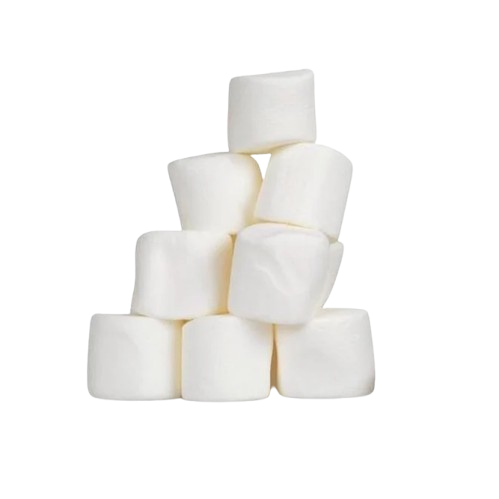
Marshmallows are a soft confection made from sugar, corn syrup, and gelatin. A single marshmallow (7g) contains 22 calories, while a large serving (50g) provides 159 calories. One Peeps Marshmallow Chick (8.5g) has 28 calories and a single miniature marshmallow contains just 2 calories. A standard 100g portion of marshmallows contains 318 calories.
An analysis of marshmallow nutrition shows a product with minimal components beyond carbohydrates. A large serving (50g) provides 0.9g of protein, 0.1g of fat, and 39.9g of carbohydrates, which includes 28.8g of sugar. The preparation style affects the final calorie count, with a standard marshmallow at 318 calories per 100g, while a shaped, sugar-coated version has 330 calories per 100g. A potential health attribute is the gelatin content, which provides the amino acid glycine. A review by Wang, W., et al. (2013) discusses the diverse functions of glycine, including its role in metabolic regulation, though the amount in marshmallows is not therapeutically significant.
The confection's global availability relies on top sugar producers like Brazil and India and major confectionery consumers such as the United States, where the high number of calories in marshmallow treats is a known characteristic. Its versatility is demonstrated in its use as a key ingredient in many American desserts, from S'mores to Rice Krispies Treats. This demand and the rising costs of sugar are reflected in the price, with a standard bag increasing from under $1.50 in the early 2000s to over $2.50 after 2020.
Marshmallow’s composition of nearly pure sugar makes it fattening when eaten in excess due to its high energy density and low satiety. Dietary guidelines from organizations like the American Heart Association advise limiting such foods, and a single medium serving with over 17g of sugar represents a large portion of the daily recommended limit. The 22 calories in just one large marshmallow require an energy expenditure equivalent to 2 minutes of running or 3 minutes of swimming.
Marshmallows nutrition
| Stats | Weight |
|---|---|
| Carbs | 23.9 grams |
| Protein | 0.6 grams |
| Fats | 0 grams |
| Sugars | 17.3 grams |
- Large Marshmallows Calories (Nutritional Facts)
- Medium Marshmallows Calories (Nutritional Facts)
- Small Marshmallows Calories (Nutritional Facts)
- Raw Marshmallows Nutrition
- Sodium in Marshmallows
- Potassium in Marshmallows
- Sugar in Marshmallows
- Fiber in Marshmallows
- Protein in Marshmallows
- Carbs in Marshmallows
- Fat in Marshmallows
- Vitamins in Marshmallows
- Minerals in Marshmallows
Large Marshmallows Calories (Nutritional Facts)
A large serving of marshmallows (50g or 1.8oz) contains 159 calories, 0.9g of protein, 0.1g of fat, 39.9g of carbohydrates, 0g of fiber, 28.8g of sugar, and 40mg of sodium.
A medium serving of marshmallows (30g or 1.1oz) provides 95 calories, 0.6g of protein, 0.1g of fat, 23.9g of carbohydrates, 0g of fiber, 17.3g of sugar, and 24mg of sodium.
A small serving of one large marshmallow (7g or 0.25oz) contains 22 calories, 0.1g of protein, 0g of fat, 5.6g of carbohydrates, 0g of fiber, 4g of sugar, and 6mg of sodium.
Marshmallows are a processed confection and are not considered "raw" in a culinary sense. The nutritional information provided is for the standard, ready-to-eat form of the product.
A large serving of marshmallows (50g) contains 40mg of sodium (2% DV). A medium serving (30g) has 24mg of sodium (1% DV). A small serving of one large marshmallow (7g) contains 6mg of sodium (0% DV).
A large serving of marshmallows (50g) contains 6mg of potassium (0% DV). A medium serving (30g) has 3mg of potassium (0% DV). A small serving of one large marshmallow (7g) contains 1mg of potassium (0% DV).
A large serving of marshmallows (50g) contains 28.8g of sugar. A medium serving (30g) has 17.3g of sugar. A small serving of one large marshmallow (7g) contains 4g of sugar.
A large serving of marshmallows (50g) provides 0g of dietary fiber (0% DV). A medium serving (30g) has 0g of fiber (0% DV). A small serving of one large marshmallow (7g) contains 0g of fiber (0% DV).
A large serving of marshmallows (50g) provides 0.9g of protein (2% DV). A medium serving (30g) has 0.6g of protein (1% DV). A small serving of one large marshmallow (7g) contains 0.1g of protein (0% DV).
A large serving of marshmallows (50g) contains 39.9g of carbohydrates (15% DV). A medium serving (30g) has 23.9g of carbohydrates (9% DV). A small serving of one large marshmallow (7g) contains 5.6g of carbohydrates (2% DV).
A large serving of marshmallows (50g) contains 0.1g of total fat (0% DV). A medium serving (30g) has 0.1g of total fat (0% DV). A small serving of one large marshmallow (7g) contains 0g of total fat (0% DV).
Marshmallows do not contain any significant amount of vitamins.
A large serving of marshmallows (50g) provides 1.2mcg of selenium (2% DV) and 0.12mg of iron (1% DV). A medium serving (30g) provides 0.7mcg of selenium (1% DV) and 0.07mg of iron (0% DV). A small serving of one large marshmallow (7g) provides 0.2mcg of selenium (0% DV) and 0.02mg of iron (0% DV).
Get a Custom Report on Marshmallows Nutrition Data – Contact Us!
What are the Types of Marshmallows?
The types of marshmallows are Standard, Miniature, and Flavored/Shaped. These variations are defined by their size, shape, and added flavorings. A guide to these common marshmallow styles is in the table below.
| Type | Description | Calories (Approximate per 100g) | Calorie Qualifications |
|---|---|---|---|
|
Standard Marshmallow
|
The classic cylindrical marshmallow, used for roasting or in recipes. | 318 | This is the baseline version, with all calories coming from sugar and gelatin. |
|
Miniature Marshmallow
|
Small, bite-sized versions of the standard marshmallow, used in baking, hot chocolate, and salads. | 320 | The smaller size can lead to a slightly higher calorie density due to a greater surface area-to-volume ratio. |
|
Flavored/Shaped Marshmallow (e.g., Peeps)
|
Marshmallows that are flavored (e.g., strawberry) or cut into shapes and coated with colored sugar. | 330 | The outer coating of coarse sugar adds to the total sugar and calorie content. |
What are Desserts With Marshmallows?
Marshmallows are a key ingredient in many classic desserts, valued for their sweet flavor and ability to melt into a gooey texture. An inventory of dishes that feature marshmallows is detailed in the table below.
| Dish Name | Calories (Estimate per serving) | Type of Dessert | Carbs (g) (Estimate) | Sugar (g) (Estimate) | Protein (g) (Estimate) | Fat (g) (Estimate) | Cuisine | Restaurants |
|---|---|---|---|---|---|---|---|---|
|
S'mores
|
230 (per s'more) | Confection | 35 | 20 | 3 | 9 | American | Campfire tradition |
|
Rice Krispies Treats
|
150 (per bar) | Cereal Bar | 33 | 15 | 1 | 2 | American | Kellogg's (retail) |
|
Hot Chocolate with Marshmallows
|
250 (per cup) | Beverage | 45 | 40 | 2 | 8 | American | Starbucks |
|
Rocky Road Ice Cream
|
280 (per 2/3 cup) | Frozen Dessert | 35 | 28 | 5 | 14 | American | Baskin-Robbins |
|
Ambrosia Salad
|
150 (per 1/2 cup) | Dessert Salad | 25 | 20 | 1 | 6 | American (Southern) | Golden Corral |
What Cuisines Prefer Marshmallows the Most?
The marshmallow is a classic American confection, central to the country's traditions of camping, holidays, and home baking. The following list displays the culinary settings where the marshmallow is a common item.
| Cuisine | Dish | Types of Marshmallows Used | Calories (Estimate) | Brand(s) |
|---|---|---|---|---|
|
American (Campfire)
|
S'mores | Standard | 230 | Hershey's, Nabisco, Kraft (retail) |
|
American (Home Baking)
|
Rice Krispies Treats | Miniature | 150 | Kellogg's (retail) |
|
American (Holiday)
|
Sweet Potato Casserole Topping | Miniature | Varies | Thanksgiving tradition |
|
American (Confection)
|
Peeps (Easter) | Shaped, colored | 28 (per chick) | Just Born (retail) |
|
American (Beverage)
|
Hot Chocolate Topping | Miniature | Varies | Swiss Miss, Starbucks |
Which Countries Produce the Most Marshmallows?
The top producers of sugar, the primary ingredient in marshmallows, are Brazil, India, and China. Specific global production data for finished marshmallows is not tracked as a separate category. The table below shows the production quantity of raw sugar in key countries.
| Country | 2003 | 2008 | 2013 | 2018 | 2019 | 2020 | 2021 | 2022 |
|---|---|---|---|---|---|---|---|---|
| Brazil | 25,000,000 | 32,000,000 | 37,000,000 | 29,500,000 | 29,800,000 | 41,800,000 | 35,300,000 | 33,700,000 |
| India | 22,000,000 | 28,000,000 | 25,000,000 | 33,000,000 | 27,400,000 | 31,000,000 | 35,900,000 | 33,000,000 |
| China | 10,000,000 | 12,000,000 | 13,000,000 | 10,500,000 | 10,400,000 | 11,000,000 | 10,700,000 | 10,300,000 |
| Thailand | 7,000,000 | 7,200,000 | 10,000,000 | 14,500,000 | 14,800,000 | 7,500,000 | 10,100,000 | 10,000,000 |
| United States | 7,500,000 | 6,500,000 | 7,800,000 | 8,200,000 | 8,400,000 | 8,300,000 | 8,200,000 | 8,100,000 |
Which Countries Consume the Most Marshmallows?
The top consumers of confectionery, a category that includes marshmallows, are found in Europe and North America. Consumption data for marshmallows is best represented by import values for the broader category of "sugar confectionery." The table below shows import values for this category in key markets.
| Country | 2003 | 2008 | 2013 | 2018 | 2019 | 2020 | 2021 | 2022 |
|---|---|---|---|---|---|---|---|---|
| United States | 1,500,000 | 2,200,000 | 2,800,000 | 3,500,000 | 3,700,000 | 3,900,000 | 4,500,000 | 5,100,000 |
| Germany | 1,200,000 | 1,800,000 | 2,400,000 | 2,900,000 | 3,000,000 | 3,100,000 | 3,500,000 | 3,800,000 |
| United Kingdom | 1,100,000 | 1,600,000 | 2,100,000 | 2,600,000 | 2,700,000 | 2,800,000 | 3,100,000 | 3,400,000 |
| France | 800,000 | 1,200,000 | 1,600,000 | 2,000,000 | 2,100,000 | 2,200,000 | 2,500,000 | 2,700,000 |
| Netherlands | 600,000 | 950,000 | 1,300,000 | 1,700,000 | 1,800,000 | 1,900,000 | 2,200,000 | 2,400,000 |
How Do Prices of Marshmallows-Including Dishes Change?
The cost of treats and desserts that contain marshmallows has risen over the past ten years, a direct result of higher wholesale ingredient prices and increased operational expenses. This upward price trend is evident in the retail cost of popular branded items.
| Brand | Dish | Old Price (Year) | Current Price (2024/2025 Estimate) |
|---|---|---|---|
| Kellogg's | Rice Krispies Treats (8-pack) | $1.99 (2014) | $2.49 - $3.99 |
| Just Born | Peeps Marshmallow Chicks (5-pack) | $1.29 (2013) | $1.44 - $7.00 |
| Kraft Heinz | Jet-Puffed Marshmallows (12 oz bag) | $1.79 (2016) | $1.98 - $2.29 |
What is the Marshmallows Calorie for 100 Grams?
A 100g serving of marshmallows contains 318 calories.
What is the Marshmallows Calorie for 1 KG?
One kilogram (1000g) of marshmallows contains 3,180 calories.
What is the Calorie of 1 Marshmallow?
One large Jet-Puffed marshmallow (7g) contains 22 calories, while one Peeps Marshmallow Chick (8.5g) has 28 calories, and one miniature marshmallow (0.7g) contains 2 calories.
What are the Health Benefits of Marshmallows?
The nutritional upsides of modern, commercially produced marshmallows are negligible. A review of these extremely limited potential attributes is available here.
- Provides Gelatin: Marshmallows contain gelatin, which is a source of amino acids like glycine. Some research suggests glycine may have various physiological roles. A review by Wang, W., et al. (2013), "Glycine metabolism in animals and humans: implications for nutrition and health," discusses the diverse functions of glycine, including its role as a neurotransmitter and its anti-inflammatory properties, although the amount in marshmallows is not therapeutically significant.
- Low in Fat: Standard marshmallows are a fat-free food, which can be a consideration for individuals on a strict low-fat diet. A large serving of marshmallows (50g) contains only 0.1g of fat.
What are the Downsides of Marshmallows?
The confection's composition presents several significant health liabilities. An overview of these health risks is presented here.
- Composed Almost Entirely of Sugar: Marshmallows are made from corn syrup, sugar, and dextrose, meaning they are a source of "empty calories" with no vitamins, minerals, or fiber. A scientific statement from the American Heart Association by Johnson, R. K., et al. ((2009), "Dietary sugars intake and cardiovascular health," recommends strict limits on added sugar, linking high consumption to an increased risk of obesity, type 2 diabetes, and heart disease. A healthier alternative is a piece of whole fruit. A suggested amount is to limit consumption to one or two large marshmallows on a rare occasion.
- Highly Processed Food: Commercial marshmallows are an ultra-processed food containing artificial flavors and other additives. A large prospective cohort study by Fiolet, T., et al. (2018), "Consumption of ultra-processed foods and cancer risk: results from NutriNet-Santé prospective cohort," found an association between higher consumption of ultra-processed foods and an increased risk of overall cancer.
Are Marshmallows Good for You?
No, marshmallows are not good for a person because they are an ultra-processed confection made almost entirely of sugar. The negative health impacts are numerous. For metabolic health, the rapid absorption of sugars like corn syrup and dextrose leads to a sharp increase in blood glucose, which can strain the body's insulin response. A meta-analysis by Imamura, F., et al. (2015), "Consumption of sugar sweetened beverages, artificially sweetened beverages, and fruit juice and incidence of type 2 diabetes," demonstrated a clear link between consuming sugary items and a higher risk of developing type 2 diabetes.
For systemic health, marshmallows are an ultra-processed food, a category of products whose high consumption is linked to negative outcomes. A large cohort study by Srour, B., et al. (2019), "Ultra-processed food intake and risk of cardiovascular disease: prospective cohort study," found that a higher proportion of ultra-processed food in the diet was associated with higher risks of overall cardiovascular disease. For weight management, marshmallows provide "empty calories" with no fiber or protein to promote satiety. A study by Hu, F., et al. (2011), "Changes in Diet and Lifestyle and Long-Term Weight Gain in Women and Men," found that consumption of sugar-sweetened foods was one of the lifestyle factors most strongly associated with long-term weight gain.
Are Marshmallows Good for Your Stomach?
No, modern marshmallows are not good for an upset stomach. The historical marshmallow root was used as an herbal remedy to soothe sore throats and stomach ailments due to its mucilage content. A review by Deters, A., et al. (2010), "Aqueous extracts and polysaccharides from Marshmallow roots (Althea officinalis L.): Cellular internalisation and stimulation of cell physiology of human epithelial cells in vitro," confirms the traditional use of the plant root for irritation of oral and pharyngeal mucosa. However, the modern confection sold in stores does not contain any marshmallow root. The confection is made of sugar, corn syrup, and gelatin. The extremely high sugar content can worsen an upset stomach. A review by Szilagyi, A., & Ishayek, N. (2018), "Lactose Intolerance, Dairy Avoidance, and Treatment Options," explains how high concentrations of sugar can draw water into the intestines, potentially leading to osmotic diarrhea.
Is Marshmallow Good for Weight Loss?
No, marshmallows are not good for weight loss. The confection is extremely high in sugar and calories with no fiber or protein, a combination that is counterproductive to weight management. Foods that support weight loss are typically high in protein and fiber to promote satiety. A study by Douglas, S. M., et al. (2013), "Low, moderate, or high protein yogurt snacks on appetite control and subsequent eating in healthy women," found that high-protein snacks improved appetite control. Another study by Clark, M. J., & Slavin, J. L. (2013), "The effect of fiber on satiety and food intake: a systematic review," confirmed that dietary fiber intake is associated with reduced appetite. Marshmallows lack these key nutrients. The high sugar content can also lead to a rapid spike and crash in blood sugar, which can trigger more cravings. A study by Ludwig, D. S., et al. (2013), "High glycemic index meals, overeating, and obesity," showed that high-glycemic meals could stimulate brain regions associated with reward and craving, promoting overeating.
Are Marshmallows Fattening?
Yes, marshmallows are fattening when consumed in excess. The confection is exceptionally high in calories from sugar packed into a light, airy form, making the food easy to overconsume. Consuming more calories than the body expends leads to weight gain. A study by Pérez-Escamilla, R., et al. (2012), "Dietary energy density and body weight in adults and children: a systematic review," found a positive association between dietary energy density and body weight.
The large amount of sugar in marshmallows promotes fat storage in the body. The liver can convert excess sugar into fat through a process called de novo lipogenesis. A review by Tappy, L., & Lê, K. A. (2010), "Metabolic effects of fructose and the worldwide increase in obesity," explains the metabolic pathways through which excess dietary sugar can lead to fat accumulation. The high sugar content is also highly palatable and not very filling, which can lead to overeating. A study by Holt, S. H., et al. (1995), "A satiety index of common foods," found that confectionery items like candy were among the least satiating foods tested per calorie. A suggested consumption rate is to limit intake to one or two large marshmallows on an infrequent basis.
How Do Calories Change According to Marshmallows Types?
The calorie content of marshmallows is determined almost entirely by the sugar content. A flavored or shaped marshmallow, like a Peep, has the highest calorie value at 330 calories per 100 grams, a consequence of the outer coating of colored sugar. A standard marshmallow contains a slightly lower calorie value at 318 calories per 100 grams, representing the baseline without the extra sugar coating. Miniature marshmallows have a similar calorie count to the standard version.
Do Marshmallows Go Bad?
Yes, marshmallows do go bad, but they have a very long shelf life. An unopened bag of commercially produced marshmallows can last for 6 to 12 months past the printed date. The high sugar content acts as a preservative, inhibiting the growth of bacteria and mold. Over time, the primary issue is not spoilage but a decline in quality. The marshmallows will lose moisture, becoming hard, dry, and difficult to chew. Once a bag is opened, the marshmallows are exposed to air and will begin to stale more quickly. They should be stored in an airtight container to prolong their freshness.
What are the Main Dishes With Marshmallows?
Marshmallows are served almost exclusively in sweet dishes and desserts. The one notable exception is their use as a topping for sweet potato casserole, a traditional side dish in American Southern cuisine, especially at Thanksgiving.
What is the Origin of Marshmallows?
The history of the marshmallow begins with the mallow plant (Althaea officinalis), which grows in marshes. Ancient Egyptians were the first to create a confection by mixing the sweet, mucilaginous sap from the mallow root with honey and nuts. This treat was reserved for royalty and gods. For centuries, the sap of the marshmallow root was also used for medicinal purposes, primarily to soothe sore throats and coughs. The modern marshmallow confection was developed in 19th-century France. French confectioners were the first to whip the mallow sap with sugar and egg whites to create a light, puffy sweet. The process was laborious, and the use of the mallow root was eventually replaced with gelatin to provide a more stable structure. In the late 19th century, the manufacturing process was revolutionized by the invention of the starch mogul system, which allowed for the mass production of marshmallows in their familiar cylindrical shape.
Explore More Desserts & Sweets
Discover more Desserts & Sweets with detailed nutrition facts, calorie counts, vitamins, minerals, and health benefits. Compare similar foods, serving sizes, macronutrients, and key nutrients to find the best option for your diet and nutrition goals.
 Apple Pie calories
 Banoffee Pudding calories
 Biscotti calories
 Blondie calories
 Bread Pudding calories
 Brownie calories
 Butterscotch Pudding calories
 Cake calories
 Cannoli calories
 Caramel Pudding calories
 Cheesecake calories
 Cherry Pie calories