Calories and Nutritions in Meringue
Meringue is a confection of whipped egg whites and sugar common in French, British, and Australian baking.There are 390 calories per 100 g serving of baked meringue, while a single medium meringue cookie (12 g) yields 47 calories. A 100 g serving delivers 92 g of carbohydrates, 4.8 g of protein, 90 g of sugars, and 0 g of fat. While meringue offers a fat-free dessert base, its high sucrose volume requires moderate consumption to prevent dietary imbalances. A study by Abeyrathne et al. (2013), "Egg white proteins and their potential use in food processing or as nutraceutical and pharmaceutical agents," notes that while egg whites possess functional health properties, combining them with high amounts of sugar limits their utility in balanced nutrition plans.
Common varieties available in the market include French Meringue, Swiss Meringue, Italian Meringue, and plant-based Vegan Meringue made from aquafaba. Because of its crisp, airy texture, it is utilized heavily in pastry shops and fine dining, featuring in popular desserts at renowned restaurants, such as the Lemon Meringue Pie at Tartine Bakery and the Baked Alaska at Oceana. It is a staple in commercial dessert production, and consumers looking for retail options often purchase tubs of meringue drop cookies from supermarkets.
The origin of the confection is rooted in 17th-century Europe, evolving alongside the invention of the wire whisk into the airy dessert recognized today. Global production data tracks its primary structural ingredient closely, an industry led by China, which produced 30,500 kt of chicken eggs in 2026. Consumption of egg products is high in China, Mexico, and Japan. The retail price for a 113 g (4 oz) tub of meringue cookies has increased from $2.50 USD in 2007 to $5.99 USD in 2026.
Health experts suggest consuming meringue strictly in moderation. A standard medium cookie (12 g) adds 47 calories to a person's diet. These calories can be burned by doing 12 minutes of walking at 5 km/h for an average sized woman or 10 minutes of walking for an average sized man. If a person consumes a rich dining dessert like the Classic Pavlova yielding 410 calories, the physical requirement increases to 102 minutes of walking for a woman and 86 minutes of walking for a man.
Meringue nutrition
| Stats | Weight |
|---|---|
| Carbs | 11 grams |
| Protein | 0.5 grams |
| Fats | 0 grams |
| Sugars | 10.8 grams |
- Large Meringue Calories (Nutritional Facts)
- Medium Meringue Calories (Nutritional Facts)
- Small Meringue Calories (Nutritional Facts)
- Raw Meringue Nutrition
- Sodium in Meringue
- Potassium in Meringue
- Sugar in Meringue
- Fiber in Meringue
- Protein in Meringue
- Carbs in Meringue
- Fat in Meringue
- Vitamins in Meringue
- Minerals in Meringue
Large Meringue Calories (Nutritional Facts)
A large serving of baked meringue, such as a dessert shell or nest weighing 25 g (0.8 oz), contains 98 calories. This 25 g (0.8 oz) portion provides 0 g of total fat, 1.2 g of protein, 23 g of carbohydrates, and 22.5 g of sugar. A large 25 g (0.8 oz) serving of meringue filled with 30 g (2 tablespoons) of lemon curd contains 176 calories due to the added fat and sugar in the curd.
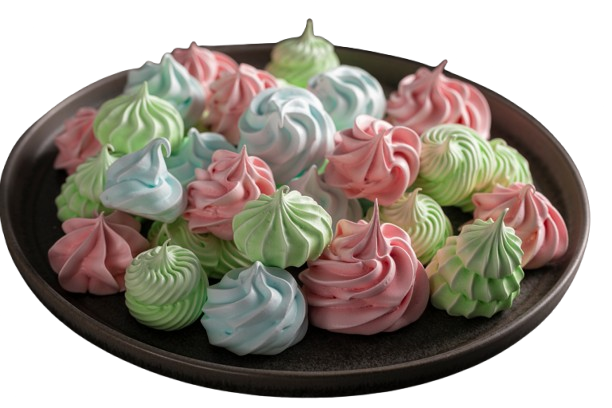
A medium serving of baked meringue, such as a standard cookie weighing 12 g (0.4 oz), provides 47 calories. This 12 g (0.4 oz) portion delivers 0 g of total fat, 0.5 g of protein, 11 g of carbohydrates, and 10.8 g of sugar. A 12 g (0.4 oz) serving of chocolate-dipped meringue contains 65 calories because of the cocoa butter content.
A small serving of baked meringue, such as a mini drop cookie weighing 5 g (0.17 oz), contains 20 calories. This 5 g (0.17 oz) portion consists of 0 g of total fat, 0.2 g of protein, 4.6 g of carbohydrates, and 4.5 g of sugar.
A 100 g (3.5 oz) serving of raw, unbaked meringue batter provides 390 calories, 0.1 g of total fat, 4.8 g of protein, 92 g of total carbohydrates, and 0 g of dietary fiber. Raw meringue is a whipped mixture of egg whites and fine sugar. The nutrient concentration relies on the egg whites, which provide high-quality proteins like ovalbumin, while the sugar contributes simple carbohydrates.
Meringue contains 43 mg of sodium per 100 g (3.5 oz) serving, contributing 2% of the Daily Value (DV). This sodium originates naturally from the egg whites and from trace amounts of cream of tartar used as a stabilizer.
Meringue supplies 62 mg of potassium per 100 g (3.5 oz) serving, fulfilling 1% of the DV. This mineral helps support fluid balance in the body.
One hundred grams (3.5 oz) of baked meringue contains 90 g of sugar. This sugar consists entirely of refined sucrose folded into the egg whites to create structural stability. The sugar levels in meringue are high, categorizing it as an energy-dense dessert.
Meringue provides 0 g of dietary fiber per 100 g (3.5 oz) serving, fulfilling 0% of the DV.
Meringue provides 4.8 g of protein per 100 g (3.5 oz) serving.
Meringue contains 92 g of total carbohydrates per 100 g (3.5 oz) serving.
Meringue contains 0.1 g of total fat per 100 g (3.5 oz) serving.
A 100 g (3.5 oz) serving of meringue provides 0.1 mg of Riboflavin (8% DV) and trace amounts of Folate. These vitamins come directly from the egg whites used in the base.
A 100 g (3.5 oz) serving provides 9 mcg of Selenium (16% DV), 5 mg of Calcium (0% DV), and 0.1 mg of Iron (0% DV). They also contain trace amounts of phosphorus.
Get a Custom Report on Meringue Nutrition Data – Contact Us!
What are the Types of Meringue?
There are 4 different types of meringue preparations such as the classic French Meringue and the heated Swiss Meringue. The table below shows the common meringue types and their calorie information.
| Type | Description | Calories (per 100g) | Calorie Differences & Qualifications |
|---|---|---|---|
|
French Meringue
|
Uncooked egg whites whipped directly with fine granulated sugar. | 390 | Baseline energy for the standard preparation. |
|
Swiss Meringue
|
Egg whites and sugar whisked over a warm water bath until dissolved. | 390 | Identical calories; differs only in preparation method. |
|
Italian Meringue
|
Hot sugar syrup is poured into whipping egg whites to cook them. | 385 | Slightly lower calories due to the added water in the sugar syrup. |
|
Vegan Meringue
|
Made using aquafaba (chickpea water) in place of egg whites. | 380 | Lower protein content and slightly lower calories. |
What are the Desserts with Meringue?
Meringue is a foundational element in classical pastry, acting as a crisp shell, a soft topping, or a standalone cookie. Bakeries and fine dining restaurants rely on it to add texture without introducing heavy fats. The table below shows desserts containing meringue that are served in restaurants.
| Dish Name | Calories | Type | Carbs | Sugar | Protein | Fat | Cuisine | Restaurants |
|---|---|---|---|---|---|---|---|---|
|
Classic Pavlova
|
410 | Baked Dessert | 58g | 48g | 4g | 18g | Australian | Balthazar |
|
Lemon Meringue Pie
|
460 | Pie | 62g | 42g | 5g | 22g | American | Tartine Bakery |
|
Baked Alaska
|
520 | Frozen Dessert | 65g | 45g | 7g | 26g | American | Oceana |
|
Eton Mess (Seasonal)
|
480 | Parfait | 54g | 40g | 6g | 28g | British | St. John |
|
Creole Bread Pudding Souffle
|
610 | Pudding | 75g | 55g | 8g | 30g | Creole | Commander's Palace |
|
Strawberry Pavlova (Seasonal)
|
390 | Baked Dessert | 55g | 45g | 4g | 16g | Middle Eastern | Bavel |
|
Vanilla Macarons
|
210 | Cookie | 28g | 22g | 4g | 10g | French | Ladurée |
|
Coconut Meringue Cake
|
540 | Cake | 68g | 48g | 6g | 28g | American | Grill 23 & Bar |
What Cuisines Prefer Meringue the Most?
Meringue is a primary component of French, British, American, and Australian/New Zealand cuisines. In France, it is the base for macarons and tart toppings. In Australia and New Zealand, the crisp-on-the-outside, marshmallow-on-the-inside Pavlova is a national dessert. The table below outlines the cuisines and dishes.
| Cuisine | Dish Name | Calories | Restaurants |
|---|---|---|---|
|
Australian
|
Classic Pavlova | 410 | Balthazar |
|
American
|
Lemon Meringue Pie | 460 | Tartine Bakery |
|
British
|
Eton Mess (Seasonal) | 480 | St. John |
|
French
|
Vanilla Macarons | 210 | Ladurée |
|
Creole
|
Creole Bread Pudding Souffle | 610 | Commander's Palace |
Which Countries Produce the Most Meringue?
The top producers of chicken eggs, the foundational ingredient for meringue, globally are China, the United States, India, Mexico, and Brazil. In 2026, China produced 30,500.00 kilotonnes of eggs based on international agricultural data. Because meringue is a prepared recipe, global agricultural bodies track the yield of its core functional ingredient. The table below displays chicken egg production volumes over the last 20 years in kilotonnes.
| Country | 2007 | 2008 | 2009 | 2010 | 2011 | 2012 | 2013 | 2014 | 2015 | 2016 | 2017 | 2018 | 2019 | 2020 | 2021 | 2022 | 2023 | 2024 | 2025 | 2026 |
|---|---|---|---|---|---|---|---|---|---|---|---|---|---|---|---|---|---|---|---|---|
| China | 23000 | 23500 | 24000 | 24500 | 25000 | 25500 | 26000 | 26500 | 27000 | 27500 | 28000 | 28500 | 29000 | 29200 | 29500 | 29800 | 30000 | 30200 | 30300 | 30500 |
| USA | 5300 | 5400 | 5450 | 5500 | 5600 | 5700 | 5800 | 5900 | 6000 | 6100 | 6200 | 6300 | 6400 | 6500 | 6600 | 6650 | 6700 | 6750 | 6800 | 6850 |
| India | 2800 | 3000 | 3200 | 3400 | 3600 | 3800 | 4000 | 4200 | 4400 | 4600 | 4800 | 5000 | 5200 | 5400 | 5600 | 5800 | 6000 | 6200 | 6300 | 6400 |
| Mexico | 2300 | 2350 | 2400 | 2450 | 2500 | 2550 | 2600 | 2650 | 2700 | 2750 | 2800 | 2850 | 2900 | 2950 | 3000 | 3050 | 3100 | 3150 | 3200 | 3250 |
| Brazil | 1800 | 1850 | 1900 | 1950 | 2000 | 2050 | 2100 | 2150 | 2200 | 2300 | 2400 | 2500 | 2600 | 2700 | 2800 | 2900 | 3000 | 3050 | 3100 | 3150 |
Which Countries Consume the Most Meringue?
The top consumers of chicken eggs used in making meringue are China, Mexico, Japan, the United States, and Russia. Egg consumption is high across diverse culinary traditions, supporting baked goods like meringue and daily dietary protein needs. The table below represents the food supply of chicken eggs for these nations based on agricultural tracking.
| Country | 2007 | 2008 | 2009 | 2010 | 2011 | 2012 | 2013 | 2014 | 2015 | 2016 | 2017 | 2018 | 2019 | 2020 | 2021 | 2022 | 2023 | 2024 | 2025 | 2026 |
|---|---|---|---|---|---|---|---|---|---|---|---|---|---|---|---|---|---|---|---|---|
| China | 22500 | 23000 | 23500 | 24000 | 24500 | 25000 | 25500 | 26000 | 26500 | 27000 | 27500 | 28000 | 28500 | 28800 | 29000 | 29300 | 29500 | 29800 | 30000 | 30200 |
| Mexico | 2250 | 2300 | 2350 | 2400 | 2450 | 2500 | 2550 | 2600 | 2650 | 2700 | 2750 | 2800 | 2850 | 2900 | 2950 | 3000 | 3050 | 3100 | 3150 | 3200 |
| Japan | 2400 | 2420 | 2440 | 2460 | 2480 | 2500 | 2520 | 2540 | 2560 | 2580 | 2600 | 2620 | 2640 | 2660 | 2680 | 2700 | 2720 | 2740 | 2760 | 2780 |
| USA | 4800 | 4900 | 4950 | 5000 | 5100 | 5200 | 5300 | 5400 | 5500 | 5600 | 5700 | 5800 | 5900 | 6000 | 6100 | 6150 | 6200 | 6250 | 6300 | 6350 |
| Russia | 2100 | 2150 | 2200 | 2250 | 2300 | 2350 | 2400 | 2450 | 2500 | 2550 | 2600 | 2650 | 2700 | 2750 | 2800 | 2850 | 2900 | 2950 | 3000 | 3050 |
How Do Prices of Meringue-including Dishes Change?
Restaurant menu prices for meringue desserts have increased steadily due to inflation and the rising costs of commercial baking labor. The table below compares historical price ranges from 2015 to 2017 to current 2025 to 2026 estimates in USD.
| Restaurant | Dish Name | Old Price Range (2015-17) | Current Price Range (2025-26) |
|---|---|---|---|
| Balthazar | Classic Pavlova | $10.00 to $12.00 | $15.00 to $18.00 |
| Tartine Bakery | Lemon Meringue Pie | $6.50 to $8.00 | $9.50 to $12.50 |
| Oceana | Baked Alaska | $14.00 to $17.00 | $20.00 to $25.00 |
| Ladurée | Vanilla Macarons (Box of 6) | $16.00 to $19.00 | $22.00 to $26.00 |
What is the Meringue Calorie for 100 Grams?
One hundred grams (3.5 oz) of baked meringue contains 390 calories.
What is the Meringue Calorie for 1 KG?
One kilogram (1,000 g) of baked meringue provides 3,900 calories.
What is the Calorie of 1 Meringue?
One large meringue nest weighing 25 g contains 98 calories. One medium meringue cookie weighing 12 g contains 47 calories. One small meringue drop weighing 5 g contains 20 calories.
What are the Health Benefits of Meringue?
Meringue provides some health benefits like a fat-free energy source and a supply of bioavailable protein due to its egg white foundation. This dessert component is a common alternative for individuals avoiding heavy, butter-laden pastries. A list of the health benefits of meringue are shown below.
- Provides Fat-Free Energy: Traditional recipes contain zero fat, making it suitable for strict low-fat dietary plans.
- Supplies Bioavailable Protein: Egg whites contain ovalbumin and lysozyme, which are proteins easily absorbed by the human body for tissue repair.
- Supports Dairy-Free Diets: Made without butter, milk, or cream, it is a safe dessert option for individuals with severe lactose intolerance or dairy allergies.
- Maintains Low Cholesterol: The absence of egg yolks ensures the dessert remains completely cholesterol-free.
- Offers Gluten-Free Applications: Basic recipes utilize only sugar and egg whites, providing a safe base for celiac-friendly desserts when prepared in a clean environment.
- Contributes Trace Selenium: The egg whites provide a source of selenium, a mineral that assists in thyroid function.
What are the Downsides of Meringue?
Meringue has been known to cause some unwanted effects like blood sugar spikes and dental decay due to its high refined sugar content. A list of the downsides of meringue are shown below.
- Causes Blood Sugar Spikes: The composition is roughly 90% simple sucrose, which causes a rapid release of insulin and subsequent energy crashes.
- Promotes Dental Cavities: The sticky, sugary nature of the dessert adheres to tooth enamel, fostering bacterial growth and tooth decay.
- Poses Salmonella Risks: If the egg whites are undercooked, such as in raw Italian or French preparations, there is a risk of contracting foodborne illnesses.
- Lacks Dietary Fiber: The complete absence of fiber means it does not provide satiety or support digestive transit.
Are Meringues Good for You?
No, meringues are not considered a health food because they are composed almost entirely of refined sugar. While they do offer a fat-free, cholesterol-free dessert option with trace amounts of high-quality protein from egg whites, the high sugar concentration outweighs these minor nutritional points. A study by Abeyrathne et al. (2013), "Egg white proteins and their potential use in food processing or as nutraceutical and pharmaceutical agents," notes that while egg whites possess functional health properties, pairing them with heavy sucrose limits their utility in healthy diets. They are a treat intended for occasional consumption.
How Do Calories Change According to Meringue Types?
The calories in meringue remain relatively stable across traditional methods, hovering around 390 calories per 100 g (3.5 oz). French and Swiss meringues utilize the same ratio of sugar to egg whites, resulting in identical caloric densities. If the preparation is Italian Meringue, the energy decreases slightly to 385 calories per 100 g (3.5 oz) because water is used to boil the sugar syrup, adding trace moisture to the final whip. Vegan Meringue made with aquafaba drops to 380 calories per 100 g (3.5 oz) due to the differing macronutrient profile of chickpea water compared to animal egg whites.
What are the Main Dishes with Meringue?
There are no main dishes with meringue as it is composed almost entirely of whipped sugar and egg whites, its sweet flavor profile limits it exclusively to desserts and confections.
What is the Origin of Meringue?
The origin of meringue traces back to Europe in the 17th century. Culinary historians debate its exact birthplace, with claims rooted in the Swiss village of Meiringen, as well as in France and Italy. The first written recipe for the confection appeared in a 1692 French cookbook by François Massialot. The invention of the wire whisk in the 19th century allowed cooks to incorporate air into egg whites more efficiently, transforming meringue from a difficult, labor-intensive treat into a widely accessible baking staple.
Explore More Desserts & Sweets
Discover more Desserts & Sweets with detailed nutrition facts, calorie counts, vitamins, minerals, and health benefits. Compare similar foods, serving sizes, macronutrients, and key nutrients to find the best option for your diet and nutrition goals.
 Apple Pie calories
 Banoffee Pudding calories
 Biscotti calories
 Blondie calories
 Bread Pudding calories
 Brownie calories
 Butterscotch Pudding calories
 Cake calories
 Cannoli calories
 Caramel Pudding calories
 Cheesecake calories
 Cherry Pie calories