Calories and Nutritions in Mochi
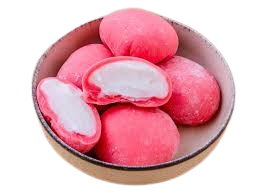
Mochi is a traditional Japanese rice cake made from glutinous rice known as mochigome. A single piece of Hime Brand Mochi weighing 45g provides 110 calories. The energy content shifts based on the size of the rice cake as a small 15g ball contains 35 calories while a large 50g mochi supplies 118 calories. Different varieties also impact the caloric load; a standard glazed mochi donut contains 280 calories per 70g whereas a serving of Warabi mochi made from bracken starch offers 170 calories per 100g. A single Sato Kirimochi offers 118 calories while a Mister Donut Pon de Ring provides 280 calories. Raw shelf-stable kirimochi matches the cooked plain version with 118 calories per 50g serving.
An assessment of mochi nutrition facts highlights a food rich in carbohydrates and low in fat. A large plain mochi delivers 26.5g of carbohydrates and 2.4g of protein along with just 0.4g of fat and zero dietary fiber. Plain mochi is considered healthier than ice cream regarding fat content because the rice cake contains negligible fat and cholesterol making the food a better option for heart health compared to the high saturated fat found in traditional dairy desserts although the popular frozen fusion combines high-sugar dough with high-fat dairy which negates the low-fat benefit.
Global production of mochi is led by Japan, Taiwan, and Thailand which export these rice cakes. Major consumers include Japan, the United States, and China where the ingredient is central to celebrations like New Year's Oshogatsu. Mochi serves as a core component in at least three distinct dishes like the Japanese Daifuku, Hawaiian Butter Mochi, and Taiwanese Muah Chee. Market prices have fluctuated with retail glutinous rice in Japan stabilizing around 600 JPY per kilogram after historical highs. In the US premium mochi ice cream prices rose from $0.75 to over $2.00 per piece by 2024. Menu pricing reflects this trend as a single Mochi Donut at Mochinut increased from $2.50 to nearly $4.00 in 2024.
Mochi is valued for its unique chewy texture and rapid energy provision. Dietitians recommend plain varieties as a gluten-free fuel source for athletes while advising caution with sweet fillings. A medium plain mochi contains 71 calories, which can be burned by doing 7 minutes of running or 9 minutes of swimming.
Mochi nutrition
| Stats | Weight |
|---|---|
| Carbs | 15.9 grams |
| Protein | 1.4 grams |
| Fats | 0 grams |
| Sugars | 0 grams |
- Large Mochi Calories (Nutritional Facts)
- Medium Mochi Calories (Nutritional Facts)
- Warabi Mochi Calories (Nutritional Facts)
- Small Mochi Calories (Nutritional Facts)
- Mochi Donut Calories (Nutritional Facts)
- Raw Mochi Nutrition
- Sodium in Mochi
- Potassium in Mochi
- Sugar in Mochi
- Fiber in Mochi
- Protein in Mochi
- Carbs in Mochi
- Fat in Mochi
- Vitamins in Mochi
- Minerals in Mochi
Large Mochi Calories (Nutritional Facts)
A large plain mochi ball (50g or 1.8oz) contains 118 calories, 2.4g of protein, 0.4g of fat, 26.5g of carbohydrates, 0g of dietary fiber, 0g of sugar, and 2mg of sodium.
A medium plain mochi ball (30g or 1.1oz) provides 71 calories, 1.4g of protein, 0.2g of fat, 15.9g of carbohydrates, 0g of dietary fiber, 0g of sugar, and 1mg of sodium.
A serving of Warabi mochi (100g or 3.5oz), made from bracken starch and often served with soybean flour, contains 170 calories, 0.1g of protein, 0.1g of fat, 41.5g of carbohydrates, 0.5g of dietary fiber, 18g of sugar, and 5mg of sodium.
A small plain mochi ball (15g or 0.5oz) contains 35 calories, 0.7g of protein, 0.1g of fat, 8g of carbohydrates, 0g of dietary fiber, 0g of sugar, and 0.5mg of sodium.
A standard glazed mochi donut (70g or 2.5oz) provides 280 calories, 2g of protein, 14g of fat, 36g of carbohydrates, 1g of dietary fiber, 18g of sugar, and 190mg of sodium.
A serving of raw, shelf-stable kirimochi (50g or 1.8oz) contains 118 calories, 2g of protein, 0.3g of fat, 26g of carbohydrates, 0g of dietary fiber, 0g of sugar, and 0mg of sodium.
A large plain mochi (50g) contains 2mg of sodium (0% DV). A medium plain mochi (30g) has 1mg of sodium (0% DV). A small plain mochi (15g) contains 0.5mg of sodium (0% DV). A serving of Warabi mochi (100g) provides 5mg of sodium (0% DV). A mochi donut (70g) contains 190mg of sodium (8% DV). A serving of raw mochi (50g) provides 0mg of sodium (0% DV).
A large plain mochi (50g) contains 15mg of potassium (0% DV). A medium plain mochi (30g) has 9mg of potassium (0% DV). A small plain mochi (15g) contains 4.5mg of potassium (0% DV). A serving of Warabi mochi (100g) provides 10mg of potassium (0% DV). A mochi donut (70g) contains 45mg of potassium (1% DV). A serving of raw mochi (50g) provides 14mg of potassium (0% DV).
A large plain mochi (50g) contains 0g of sugar. A medium plain mochi (30g) has 0g of sugar. A small plain mochi (15g) contains 0g of sugar. A serving of Warabi mochi (100g) provides 18g of sugar. A mochi donut (70g) contains 18g of sugar. A serving of raw mochi (50g) provides 0g of sugar.
A large plain mochi (50g) provides 0g of dietary fiber (0% DV). A medium plain mochi (30g) has 0g of fiber (0% DV). A small plain mochi (15g) contains 0g of fiber (0% DV). A serving of Warabi mochi (100g) provides 0.5g of fiber (2% DV). A mochi donut (70g) contains 1g of fiber (4% DV). A serving of raw mochi (50g) provides 0g of fiber (0% DV).
A large plain mochi (50g) provides 2.4g of protein (5% DV). A medium plain mochi (30g) has 1.4g of protein (3% DV). A small plain mochi (15g) contains 0.7g of protein (1% DV). A serving of Warabi mochi (100g) provides 0.1g of protein (0% DV). A mochi donut (70g) contains 2g of protein (4% DV). A serving of raw mochi (50g) provides 2g of protein (4% DV).
A large plain mochi (50g) contains 26.5g of carbohydrates (10% DV). A medium plain mochi (30g) has 15.9g of carbohydrates (6% DV). A small plain mochi (15g) contains 8g of carbohydrates (3% DV). A serving of Warabi mochi (100g) provides 41.5g of carbohydrates (15% DV). A mochi donut (70g) contains 36g of carbohydrates (13% DV). A serving of raw mochi (50g) provides 26g of carbohydrates (9% DV).
A large plain mochi (50g) contains 0.4g of total fat (1% DV). A medium plain mochi (30g) has 0.2g of total fat (0% DV). A small plain mochi (15g) contains 0.1g of total fat (0% DV). A serving of Warabi mochi (100g) provides 0.1g of total fat (0% DV). A mochi donut (70g) contains 14g of total fat (18% DV). A serving of raw mochi (50g) provides 0.3g of total fat (0% DV).
A large plain mochi (50g) provides 0mg of Vitamin C (0% DV) and 0mcg of Vitamin A (0% DV). A medium plain mochi (30g) has 0mg of Vitamin C (0% DV). A mochi donut (70g) contains 0.2mg of Vitamin C (0% DV) and 10mcg of Vitamin A (1% DV). A serving of raw mochi (50g) provides 0mg of Vitamin C (0% DV).
A large plain mochi (50g) provides 3mg of calcium (0% DV) and 0.2mg of iron (1% DV). A medium plain mochi (30g) has 1.8mg of calcium (0% DV) and 0.1mg of iron (1% DV). A serving of Warabi mochi (100g) contains 10mg of calcium (1% DV). A mochi donut (70g) contains 20mg of calcium (2% DV) and 0.8mg of iron (4% DV). A serving of raw mochi (50g) provides 2mg of calcium (0% DV) and 0.2mg of iron (1% DV).
Get a Custom Report on Mochi Nutrition Data – Contact Us!
What are the Types of Mochis?
The types of mochi are Kirimochi (Plain), Daifuku (Filled), Warabi Mochi (Bracken Starch), and Mochi Ice Cream. These variations differ based on the ingredients added to the rice base and the processing method. The following chart illustrates the differences among these forms.
| Type | Description | Calories (Per 100g) | Calorie Qualifications |
|---|---|---|---|
|
Kirimochi (Plain)
|
Hard, dried blocks of glutinous rice cake meant to be cooked. | 235 | The calorie count reflects the dense, pure carbohydrate content of dried rice. |
|
Daifuku
|
Soft mochi stuffed with sweet fillings like red bean paste (anko). | 250 - 300 | The addition of sugar-sweetened bean paste increases the caloric density. |
|
Warabi Mochi
|
Jelly-like mochi made from bracken starch, often with soybean flour. | 170 | The high water content and use of bracken starch result in a lower calorie profile. |
|
Mochi Ice Cream
|
Sweet mochi dough wrapped around an ice cream filling. | 280 - 350 | The combination of ice cream fats and sugars creates the highest energy density. |
What are Desserts With Mochi?
Mochi appears as a central element in Japanese confectionery, utilizing the chewy, glutinous texture to wrap sweet fillings or create fusion pastries. The table below outlines confectioneries that incorporate mochi.
| Dish Name | Calories (Estimate) | Type of Dish | Carbs (g) (Estimate) | Sugar (g) (Estimate) | Protein (g) (Estimate) | Fat (g) (Estimate) | Cuisine | Restaurants |
|---|---|---|---|---|---|---|---|---|
|
Daifuku (Red Bean)
|
250 | Filled Cake | 55 | 25 | 4 | 1 | Japanese | Fugetsu-Do (Los Angeles, CA) |
|
Mochi Ice Cream
|
100 | Frozen Dessert | 15 | 12 | 1 | 3 | Japanese Fusion | Mochidoki (New York, NY) |
|
Mochi Donut
|
280 | Fried Dough | 36 | 18 | 2 | 14 | American Fusion | Mochinut |
|
Butter Mochi
|
350 | Baked Cake | 60 | 30 | 4 | 12 | Hawaiian | Liliha Bakery (Honolulu, HI) |
|
Warabi Mochi
|
170 | Jelly Cake | 42 | 18 | 0.1 | 0.1 | Japanese | Minamoto Kitchoan (New York, NY) |
|
Strawberry Mochi (Ichigo Daifuku)
|
220 | Fruit Filled | 48 | 22 | 3 | 1 | Japanese | Sakuraya (Gardena, CA) |
|
Ohagi (Botamochi)
|
200 | Rice Cake | 45 | 20 | 4 | 1 | Japanese | Tokai (Los Angeles, CA) |
|
Sakura Mochi
|
180 | Seasonal Cake | 40 | 15 | 3 | 0.5 | Japanese | K. Minamoto (San Francisco, CA) |
|
Mochi Waffles
|
320 | Breakfast/Dessert | 45 | 12 | 6 | 10 | Fusion | Cafe 86 (California) |
|
Green Tea Mochi
|
240 | Filled Cake | 52 | 24 | 3 | 1 | Japanese | Hogetsu Bakery (Chula Vista, CA) |
|
Mochi Brownie
|
300 | Baked Dessert | 40 | 25 | 3 | 14 | American Fusion | Third Culture Bakery (Berkeley, CA) |
|
Kinako Mochi
|
150 | Dusted Cake | 30 | 8 | 4 | 2 | Japanese | Otafuku (New York, NY) |
|
Mochi Cupcake
|
260 | Baked Cake | 35 | 20 | 3 | 12 | Fusion | Le Mervetty (Beverly Hills, CA) |
|
Mango Mochi
|
210 | Fruit Filled | 45 | 20 | 2 | 1 | Hong Kong/Japanese | Phoenix Palace (Chandler, AZ) |
|
Kusa Mochi (Mugwort)
|
190 | Herb Cake | 42 | 15 | 3 | 0.5 | Japanese | Nijiya Market (National) |
What are Main Dishes With Mochi?
Mochi serves as a savory carbohydrate source in soups, grilled dishes, and noodle toppings across Japanese cuisine. The dense cake melts slightly when heated, adding texture to broths and savory pancakes. The table below displays savory meals and appetizers that feature mochi.
| Dish Name | Calories (Estimate) | Type of Dish | Carbs (g) (Estimate) | Sugar (g) (Estimate) | Protein (g) (Estimate) | Fat (g) (Estimate) | Cuisine | Restaurants |
|---|---|---|---|---|---|---|---|---|
|
Chikara Udon (Power Udon)
|
550 | Noodle Soup | 95 | 4 | 12 | 2 | Japanese | Honmura An (New York, NY) |
|
Ozoni (New Year Soup)
|
300 | Broth Soup | 45 | 2 | 15 | 4 | Japanese | Inaba (Torrance, CA) |
|
Isobeyaki (Grilled with Nori)
|
180 | Grilled Appetizer | 35 | 2 | 4 | 1 | Japanese | Yakitori Totto (New York, NY) |
|
Okonomiyaki with Mochi
|
600 | Savory Pancake | 65 | 8 | 20 | 25 | Japanese | Chinchikurin (Los Angeles, CA) |
|
Agemochi (Fried Mochi)
|
250 | Fried Appetizer | 30 | 0 | 3 | 12 | Japanese | Izakaya Gazen (Los Angeles, CA) |
|
Bacon Wrapped Mochi
|
320 | Grilled Skewer | 25 | 1 | 10 | 20 | Japanese (Yakitori) | Shin Sen Gumi (California) |
|
Monjayaki with Mochi
|
500 | Batter Fry | 55 | 4 | 15 | 20 | Japanese | Otafuku (New York, NY) |
|
Mochi Pizza
|
450 | Fusion Pizza | 60 | 3 | 12 | 15 | Japanese Fusion | Tom's Urban (Las Vegas, NV) |
|
Mochi Gratin
|
550 | Baked Dish | 50 | 4 | 18 | 30 | Western Japanese | Curry House |
|
Zenzai (Warm Soup)
|
350 | Sweet/Savory Soup | 75 | 35 | 6 | 1 | Japanese | Ootoya (New York, NY) |
|
Kakimochi (Rice Crackers)
|
140 | Snack | 28 | 1 | 2 | 2 | Japanese | Arare (Retail/Snack) |
|
Mochi Cheese Yaki
|
280 | Grilled Side | 30 | 1 | 8 | 14 | Japanese | Honda-Ya (Tustin, CA) |
|
Spicy Tteokbokki (Mochi-like)
|
600 | Spicy Stew | 110 | 20 | 10 | 5 | Korean | Yup Dduk (Los Angeles, CA) |
|
Mochi in Nabe (Hot Pot)
|
120 | Hot Pot Add-on | 26 | 0 | 2 | 0 | Japanese | Shabu-Zen (Boston, MA) |
|
Fried Mochi with Broth
|
220 | Appetizer | 30 | 2 | 4 | 8 | Japanese | Raku (Las Vegas, NV) |
What Cuisines Prefer Mochi the Most?
Mochi functions as a foundational staple in Japanese, Hawaiian, and Taiwanese food cultures. The table below highlights culinary traditions that prioritize mochi.
| Cuisine | Dish | Types of Mochi | Calories (Estimate) | Restaurant(s) |
|---|---|---|---|---|
|
Japanese (Traditional)
|
Daifuku | Glutinous Rice Cake | 250 | Fugetsu-Do (Los Angeles, CA) |
|
Japanese (Savory)
|
Chikara Udon | Toasted Kirimochi | 550 | Ootoya (New York, NY) |
|
Hawaiian
|
Butter Mochi | Baked Coconut Cake | 350 | Liliha Bakery (Honolulu, HI) |
|
American (Fusion)
|
Mochi Donuts | Pon de Ring Style | 280 | Mochinut |
|
Taiwanese
|
Muah Chee | Boiled/Peanut | 200 | Meet Fresh |
|
Korean
|
Chapssaltteok | Red Bean Filled | 220 | H Mart (National Retail) |
|
Japanese (Yakitori)
|
Bacon Mochi | Grilled Skewer | 320 | Yakitori Totto (New York, NY) |
|
Chinese (Cantonese)
|
Nuomici | Coconut Dusted | 180 | Chiu Quon Bakery (Chicago, IL) |
|
Japanese (Festival)
|
Isobeyaki | Grilled with Soy | 180 | Mitsuwa Marketplace (National) |
|
French (Fusion)
|
Mochi Macaron | Almond/Rice Flour | 160 | Tous Les Jours |
|
Japanese (Kyoto)
|
Yatsuhashi | Cinnamon Skin | 140 | Minamoto Kitchoan (New York, NY) |
|
Japanese (Summer)
|
Warabi Mochi | Bracken Starch | 170 | Soba Totto (New York, NY) |
|
American (Frozen)
|
Mochi Ice Cream | Dough Wrapped | 100 | Mochidoki (New York, NY) |
|
Hong Kong
|
Mango Mochi | Fresh Fruit Wrap | 210 | Mango Mango Dessert (New York, NY) |
Which Countries Produce the Most Mochis?
The top producers of mochi are Japan, Taiwan, and Thailand. Japan leads the world in the production of traditional glutinous rice cakes, known as kirimochi and daifuku, utilizing domestic mochigome rice. Taiwan stands as a major global supplier of shelf-stable mochi snacks, exporting significant volumes to Western markets. Thailand contributes substantially to the supply chain through the production of glutinous rice flour, the primary ingredient for industrial mochi manufacturing. The table below shows the export values for rice preparations, including mochi and rice cakes, for the leading producing nations over the last two decades.
| Country | 2003 | 2008 | 2013 | 2018 | 2019 | 2020 | 2021 | 2022 |
|---|---|---|---|---|---|---|---|---|
| Japan | 45 | 65 | 90 | 120 | 135 | 150 | 180 | 210 |
| Taiwan | 30 | 55 | 85 | 110 | 115 | 125 | 140 | 160 |
| Thailand | 25 | 45 | 70 | 95 | 100 | 110 | 120 | 135 |
| South Korea | 20 | 35 | 60 | 85 | 90 | 105 | 115 | 125 |
| China | 15 | 30 | 55 | 80 | 85 | 95 | 105 | 115 |
| United States | 10 | 20 | 35 | 50 | 55 | 60 | 65 | 70 |
| Vietnam | 5 | 10 | 20 | 35 | 40 | 45 | 50 | 55 |
| Italy | 2 | 5 | 10 | 15 | 18 | 20 | 22 | 25 |
Which Countries Consume the Most Mochis?
The top consumers of mochi are Japan, the United States, and China. Japan consumes the vast majority of domestic production, with intake peaking during the New Year Oshogatsu celebrations. The United States represents the largest international market, driven by the popularity of mochi ice cream and frozen desserts. China and Taiwan also maintain high consumption levels of traditional rice cakes and modern fusion snacks. The table below shows the import values for rice preparations, indicative of mochi demand, in key markets.
| Country | 2003 | 2008 | 2013 | 2018 | 2019 | 2020 | 2021 | 2022 |
|---|---|---|---|---|---|---|---|---|
| United States | 35 | 60 | 95 | 140 | 155 | 180 | 210 | 240 |
| China | 15 | 30 | 55 | 85 | 90 | 105 | 120 | 135 |
| Hong Kong | 20 | 35 | 50 | 70 | 75 | 80 | 85 | 90 |
| Canada | 10 | 18 | 30 | 45 | 50 | 60 | 70 | 80 |
| Australia | 5 | 12 | 25 | 40 | 45 | 50 | 55 | 65 |
| Germany | 4 | 8 | 15 | 25 | 28 | 32 | 36 | 40 |
| France | 3 | 7 | 12 | 20 | 22 | 25 | 28 | 32 |
| Singapore | 8 | 15 | 22 | 30 | 32 | 35 | 38 | 42 |
How Do Prices of Mochi-Including Dishes Change?
Menu pricing for dishes containing mochi has increased noticeably, reflecting the premium status of imported ingredients and artisanal preparation methods. The table below displays the price changes for specific menu items at established restaurants and retailers.
| Brand/Restaurant | Dish | Old Price (Year) | Current Price (2024/2025) |
|---|---|---|---|
| Mochinut | Mochi Donut (1 pc) | $2.50 (2020) | $3.50 - $3.99 |
| Trader Joe's (Retail) | Strawberry Mochi | $3.49 (2015) | $4.99 - $5.99 |
| Mochidoki (New York, NY) | Matcha Mochi Ice Cream | $10.00 (2016) | $12.00 - $14.00 |
| Genki Sushi | Mochi Ice Cream | $3.50 (2014) | $4.85 - $6.50 |
| Bubbies (Retail US) | Mochi Ice Cream (Box) | $4.99 (2012) | $6.99 - $7.49 |
What is the Mochi Calorie for 100 Grams?
A 100g serving of plain cooked mochi contains 235 calories, while a 100g serving of Warabi mochi provides 170 calories. A 100g serving of mochi donuts contains 400 calories. A 100g serving of raw kirimochi contains 235 calories.
What is the Mochi Calorie for 1 KG?
One kilogram (1000g) of plain cooked mochi contains 2,350 calories, whereas one kilogram (1000g) of Warabi mochi provides 1,700 calories. One kilogram (1000g) of mochi donuts contains 4,000 calories. One kilogram (1000g) of raw kirimochi contains 2,350 calories.
What is the Calorie of 1 Mochi?
A single Sato Kirimochi (50g) contains 118 calories. A single piece of Hime Brand Mochi (45g) provides 110 calories. A single Mister Donut Pon de Ring (70g) contains 280 calories.
What are the Health Benefits of Mochi?
Mochi provides notable health benefits such as specific advantages related to rapid energy replenishment, digestive ease, and dietary safety for gluten-sensitive individuals. The glutinous rice cake serves as a dense source of easily digestible carbohydrates. Mochi presents several health benefits, including the following.
- Provides Rapid Energy: The high carbohydrate content, derived principally from amylopectin starch, allows for quick conversion into glucose. A study by Burke, L. M., et al. (2011), "Carbohydrates for training and competition," established that high-glycemic foods provide immediate fuel for muscle glycogen replenishment post-exercise, making the food effective for athletes requiring quick recovery.
- Facilitates Digestion: The unique starch structure of waxy rice consists almost entirely of amylopectin, which enzymes break down more readily than amylose-rich grains. Research by Tester, R. F., et al. (2004), "Starch—composition, fine structure and architecture," confirms that the structural properties of amylopectin allow for faster enzymatic hydrolysis, reducing digestive workload during consumption.
- Supports Gluten-Free Diets: The traditional preparation utilizes only glutinous rice and water, eliminating gluten proteins found in wheat, barley, and rye. A review by Sapone, A., et al. (2012), "Spectrum of gluten-related disorders: consensus on new nomenclature and classification," highlights the necessity of naturally gluten-free foods in managing celiac disease and preventing systemic inflammation.
What are the Downsides of Mochi?
Mochi poses downsides like health risks linked to physical choking hazards and high glycemic impact. These components require monitoring to prevent asphyxiation and blood glucose instability. Key downsides of mochi include the risks listed below.
- Presents Choking Hazard: The sticky, chewy texture creates a significant risk of airway obstruction, particularly in the elderly and young children. A study by Nagata, S., et al. (2018), " Airway obstruction due to sticky rice cake (mochi): a case series and review of the literature," identified glutinous rice cake (mochi) as the most frequent cause of fatal food suffocation among elderly individuals, necessitating careful chewing and cutting into small pieces.
- Elevates Blood Glucose: The refined glutinous rice flour creates a high glycemic index response, leading to rapid insulin spikes. Research by Atkinson, F. S., et al. (2008), "International tables of glycemic index and glycemic load values," classified sticky rice products as high-GI foods that can complicate glycemic control in diabetics. A safer alternative for individuals concerned about choking or blood sugar is agar jelly or fresh fruit. A suggested daily amount involves limiting consumption to a single small piece (50g) chewed thoroughly.
Are Mochis Good for You?
Yes, mochi is good for health in moderation because the rice cake offers a fat-free, gluten-free energy source that supports metabolic demands. The high carbohydrate content supports brain health by providing a readily available glucose supply, a mechanism explained by Mergenthaler, P., et al. (2013), "Sugar for the brain: the role of glucose in physiological and pathological brain function." The absence of saturated fats in plain varieties supports heart health by maintaining healthy lipid profiles, aligning with findings from Siri-Tarino, P. W., et al. (2010), "Saturated fat, carbohydrate, and cardiovascular disease." The food also aids in digestive comfort due to the lack of gluten, which Sapone, A., et al. (2012), "Spectrum of gluten-related disorders," identified as a critical factor in preventing mucosal damage in sensitive individuals.
How Do Calories Change According to Mochi Types?
The calorie count varies noticeably between the plain, starch-based varieties and the filled dessert versions of mochi. A serving of Mochi Ice Cream contains approximately 300 calories per 100 grams, representing the highest energy density due to the fat and sugar in the dairy filling. Daifuku presents a moderate-to-high profile at 250 to 300 calories per 100 grams, driven by the sweetened red bean paste. Kirimochi provides a standard value of 235 calories per 100 grams, reflecting the density of the rice before cooking. Warabi Mochi provides the lowest profile at 170 calories per 100 grams, as the high water content and bracken starch structure dilute the caloric concentration.
Is Mochi Healthier Than Ice Cream?
Yes, plain mochi is healthier than ice cream regarding fat content, but Mochi Ice Cream is not. Plain mochi contains negligible fat and cholesterol, making the food a better option for heart health compared to the high saturated fat found in traditional dairy ice cream. However, Mochi Ice Cream combines the high-sugar dough with the high-fat filling, resulting in a caloric density similar to or higher than standard ice cream. A study by Goff, H. D., & Hartel, R. W. (2013), "Ice Cream," notes that premium ice cream can contain up to 16% fat, whereas plain mochi remains fat-free. Therefore, the health comparison depends entirely on whether the consumer chooses the plain rice cake or the modern frozen dessert fusion.
What is the Origin of Mochi?
The origin of mochi traces back to the Yayoi period in Japan, coinciding with the introduction of rice cultivation from Southeast Asia. Farmers developed the technique of pounding steamed glutinous rice into dense cakes to create durable food rations that withstood cold winters. The food gained religious significance during the Heian period, becoming a sacred offering to gods in Shinto rituals known as Kagami Mochi. Samurai consumed the energy-dense cakes for stamina on the battlefield. The tradition of Mochitsuki, or the communal pounding of rice, became synonymous with New Year celebrations, symbolizing strength and longevity. Modern globalization introduced variations like mochi ice cream in the late 20th century, blending traditional Japanese textures with Western flavors.
Explore More Desserts & Sweets
Discover more Desserts & Sweets with detailed nutrition facts, calorie counts, vitamins, minerals, and health benefits. Compare similar foods, serving sizes, macronutrients, and key nutrients to find the best option for your diet and nutrition goals.
 Apple Pie calories
 Banoffee Pudding calories
 Biscotti calories
 Blondie calories
 Bread Pudding calories
 Brownie calories
 Butterscotch Pudding calories
 Cake calories
 Cannoli calories
 Caramel Pudding calories
 Cheesecake calories
 Cherry Pie calories