Calories and Nutritions in Rice Pudding
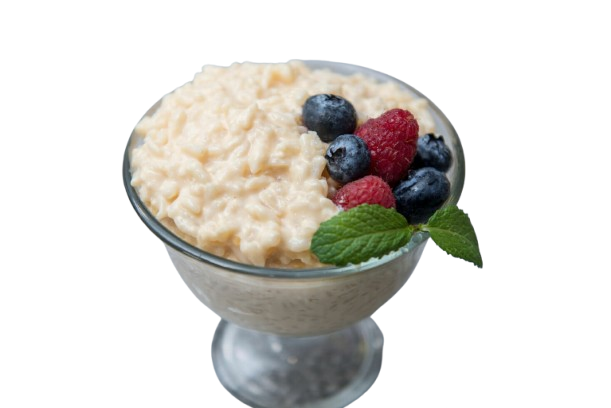
Rice pudding is a creamy dessert made by cooking rice with milk and sugar. A medium serving of rice pudding (150g or 5.3oz) provides 167 calories, a large serving (200g or 7.1oz) contains 222 calories, while a small serving (100g or 3.5oz) has 111 calories. Commercial products show similar values, with a Kozy Shack Original Rice Pudding cup (113g) having 130 calories and a Senor Rico Rice Pudding tub (227g) containing 260 calories.
The rice pudding nutrition facts are shaped by its simple ingredients, providing energy primarily from carbohydrates and key nutrients from its milk base. A medium serving (150g) contains 31.2g of carbohydrates and a notable 4.9g of protein (10% DV). The milk is also a primary source of calcium, with that same serving providing 158mg (12% DV), a mineral essential for bone health as confirmed in a study by Heaney, R. P. (2009). The overall rice pudding macros confirm its role as a carbohydrate-rich food with moderate protein and low fat.
Common preparations of rice pudding include Stovetop, Baked, and Chilled versions, with each having a unique texture. The dessert's global presence is built upon the massive production of rice in countries like China and India, and its popularity is seen in major dessert-consuming markets like the United Kingdom. This global demand and rising ingredient costs are reflected in the price, with a multi-pack of pudding cups increasing from below $2.50 in the early 2000s to over $4.00 after 2020.
The use of sugar and refined white rice makes rice pudding a food for mindful consumption. The dessert can contribute to weight gain if eaten in large, frequent portions due to its energy density and low fiber content. Contrary to the belief that rice is good for an upset stomach, the high sugar and dairy content in rice pudding can worsen digestive issues and is not recommended for diarrhea. Dietary guidelines from organizations like the American Heart Association suggest limiting intake to a single small bowl (around 100g). The 111 calories in this small serving require an energy expenditure equivalent to 11 minutes of jogging or 14 minutes of cycling.
Rice Pudding nutrition
| Stats | Weight |
|---|---|
| Carbs | 31.2 grams |
| Protein | 4.9 grams |
| Fats | 0 grams |
| Sugars | 17.4 grams |
- Large Rice Pudding Calories (Nutritional Facts)
- Medium Rice Pudding Calories (Nutritional Facts)
- Small Rice Pudding Calories (Nutritional Facts)
- Raw Rice Pudding Nutrition
- Sodium in Rice Pudding
- Potassium in Rice Pudding
- Fiber in Rice Pudding
- Protein in Rice Pudding
- Carbs in Rice Pudding
- Fat in Rice Pudding
- Vitamins in Rice Pudding
- Minerals in Rice Pudding
Large Rice Pudding Calories (Nutritional Facts)
A large serving of rice pudding (200g or 7.1oz) contains 222 calories, 6.6g of protein, 3.3g of fat, 41.6g of carbohydrates, 0.2g of fiber, and 218mg of sodium.
A medium serving of rice pudding (150g or 5.3oz) provides 167 calories, 4.9g of protein, 2.4g of fat, 31.2g of carbohydrates, 0.2g of fiber, and 164mg of sodium.
A small serving of rice pudding (100g or 3.5oz) contains 111 calories, 3.3g of protein, 1.6g of fat, 20.8g of carbohydrates, 0.1g of fiber, and 109mg of sodium.
Rice pudding is a cooked dish and is not consumed raw. All nutritional information reflects a fully cooked pudding made from a dry mix prepared with 2% milk.
A large serving of rice pudding (200g) contains 218mg of sodium (9% DV). A medium serving (150g) has 164mg of sodium (7% DV). A small serving (100g) contains 109mg of sodium (5% DV).
A large serving of rice pudding (200g) contains 260mg of potassium (6% DV). A medium serving (150g) has 195mg of potassium (4% DV). A small serving (100g) contains 130mg of potassium (3% DV).
A large serving of rice pudding (200g) provides 0.2g of dietary fiber (1% DV). A medium serving (150g) has 0.2g of fiber (1% DV). A small serving (100g) contains 0.1g of fiber (0% DV).
A large serving of rice pudding (200g) provides 6.6g of protein (13% DV). A medium serving (150g) has 4.9g of protein (10% DV). A small serving (100g) contains 3.3g of protein (7% DV).
A large serving of rice pudding (200g) contains 41.6g of carbohydrates (15% DV). A medium serving (150g) has 31.2g of carbohydrates (11% DV). A small serving (100g) contains 20.8g of carbohydrates (8% DV).
A large serving of rice pudding (200g) contains 3.3g of total fat (4% DV). A medium serving (150g) has 2.4g of total fat (3% DV). A small serving (100g) contains 1.6g of total fat (2% DV).
A large serving of rice pudding (200g) provides 92mcg of Vitamin A (10% DV) and 1.6mcg of Vitamin D (8% DV). A medium serving (150g) provides 69mcg of Vitamin A (8% DV) and 1.2mcg of Vitamin D (6% DV). A small serving (100g) provides 46mcg of Vitamin A (5% DV) and 0.8mcg of Vitamin D (4% DV).
A large serving of rice pudding (200g) provides 210mg of calcium (16% DV) and 0.7mg of iron (4% DV). A medium serving (150g) provides 158mg of calcium (12% DV) and 0.6mg of iron (3% DV). A small serving (100g) provides 105mg of calcium (8% DV) and 0.4mg of iron (2% DV).
Get a Custom Report on Rice Pudding Nutrition Data – Contact Us!
What are the Types of Rice Puddings?
The types of rice puddings are Stovetop, Baked, and Chilled. These variations are defined by the cooking method and final serving temperature, which alter the texture and flavor profile. A description of these common rice pudding styles is in the table below.
| Type | Description | Calories (Approximate per 100g) | Calorie Qualifications |
|---|---|---|---|
|
Stovetop Rice Pudding
|
Cooked in a pot on the stove, resulting in a creamy, loose texture. Can be served warm or cold. | 111 | This is the baseline version, with a moderate calorie count from the milk, rice, and sugar. |
|
Baked Rice Pudding
|
Baked in the oven, often with eggs, which creates a firmer, more custard-like texture and a browned top. | 145 | The addition of eggs and a longer cooking time that reduces water content makes this version more calorie-dense. |
|
Chilled Rice Pudding (e.g., Kheer)
|
Cooked and then chilled completely before serving. Often includes ingredients like cardamom, saffron, and nuts. | 186 | The addition of high-fat nuts and sometimes condensed milk makes this version higher in calories. |
What are Desserts With Rice Pudding?
Rice pudding is a complete dessert that is often garnished with simple toppings that add texture and complementary flavors. An inventory of items commonly served with rice pudding is detailed in the table below.
| Dish Name | Calories (Estimate per serving) | Type of Dessert | Carbs (g) (Estimate) | Sugar (g) (Estimate) | Protein (g) (Estimate) | Fat (g) (Estimate) | Cuisine | Restaurants |
|---|---|---|---|---|---|---|---|---|
|
Ground Cinnamon
|
6 (per tsp) | Garnish | 2 | 0 | 0 | 0 | Global | Most cafes |
|
Raisins
|
30 (per tbsp) | Topping | 8 | 6 | 0 | 0 | American/British | Sun-Maid (retail) |
|
Toasted Almonds
|
50 (per tbsp) | Topping | 2 | 1 | 2 | 4 | Middle Eastern | Blue Diamond (retail) |
|
Fruit Compote
|
40 (per 2 tbsp) | Topping | 10 | 9 | 0 | 0 | French | Panera Bread |
|
Whipped Cream
|
50 (per dollop) | Topping | 2 | 2 | 0 | 4 | American | Denny's |
What Cuisines Prefer Rice Pudding the Most?
Rice pudding is a globally cherished comfort food, with strong roots in many culinary traditions where rice is a staple grain. The following list displays the culinary settings where rice pudding is a common item.
| Cuisine | Dish | Types of Rice Puddings Used | Calories (Estimate) | Restaurant(s) |
|---|---|---|---|---|
|
American/British
|
Rice Pudding | Stovetop or Baked, often with raisins | 130-160 | Kozy Shack (retail) |
|
Indian
|
Kheer | Chilled, with cardamom, saffron, nuts | 180-250 | Gits (retail mix) |
|
Scandinavian
|
Risalamande (Christmas) | Chilled, with whipped cream and almonds | 250-350 | Scandinavian cafes |
|
Spanish
|
Arroz con Leche | Stovetop, with cinnamon and lemon zest | 140-180 | Goya (retail) |
Which Countries Produce the Most Rice Puddings?
The top producers of rice, the essential ingredient for rice pudding, are China, India, and Bangladesh. Specific global production data for finished rice pudding is not tracked as a separate category. The table below shows the production quantity of rice (paddy) in key countries.
| Country | 2003 | 2008 | 2013 | 2018 | 2019 | 2020 | 2021 | 2022 |
|---|---|---|---|---|---|---|---|---|
| China | 167,000,000 | 193,000,000 | 204,000,000 | 212,000,000 | 210,000,000 | 211,000,000 | 212,800,000 | 208,500,000 |
| India | 132,000,000 | 148,000,000 | 159,000,000 | 172,000,000 | 177,000,000 | 178,000,000 | 195,400,000 | 201,000,000 |
| Bangladesh | 39,000,000 | 47,000,000 | 51,000,000 | 53,000,000 | 54,600,000 | 54,900,000 | 56,900,000 | 57,200,000 |
| Indonesia | 52,000,000 | 60,000,000 | 71,000,000 | 59,000,000 | 54,600,000 | 54,650,000 | 55,200,000 | 54,750,000 |
| Viet Nam | 34,000,000 | 38,000,000 | 44,000,000 | 44,000,000 | 43,800,000 | 42,800,000 | 43,900,000 | 43,000,000 |
Which Countries Consume the Most Rice Puddings?
The top consumers of rice pudding are found in countries where the dish is a traditional comfort food, including the United Kingdom, the United States, and Scandinavian nations. Consumption data for rice pudding is best represented by retail sales data for the broader "desserts" category. The table below shows the market value for desserts in key countries.
| Country | 2013 | 2018 | 2019 | 2020 | 2021 | 2022 |
|---|---|---|---|---|---|---|
| United States | 18,500 | 22,000 | 23,000 | 24,500 | 26,000 | 27,500 |
| United Kingdom | 4,500 | 5,200 | 5,400 | 5,700 | 6,000 | 6,300 |
| Germany | 4,000 | 4,800 | 5,000 | 5,300 | 5,600 | 5,900 |
| France | 3,500 | 4,200 | 4,400 | 4,700 | 5,000 | 5,300 |
| Canada | 2,000 | 2,500 | 2,600 | 2,800 | 3,000 | 3,200 |
How Do Prices of Rice Pudding-Including Dishes Change?
The price for rice pudding in retail and on menus has climbed over the last decade, a direct result of higher wholesale ingredient costs and increased labor and operational expenses. This upward adjustment is reflected in the pricing of popular brands and at dining establishments that offer the classic comfort food.
| Restaurant | Dish | Old Price (Year) | Current Price (2024/2025) |
|---|---|---|---|
| Kozy Shack | 4-Pack Original Rice Pudding | $2.99 (2015) | $3.97 - $4.29 |
| Golden Corral | Rice Pudding (Buffet Item) | Part of buffet price | Part of buffet price |
| Greek-American Diners | Bowl of Rice Pudding | $3.50 (2014) | $4.95 - $5.99 |
What is the Rice Pudding Calorie for 100 Grams?
A 100g serving of rice pudding contains 111 calories.
What is the Rice Pudding Calorie for 1 KG?
One kilogram (1000g) of rice pudding contains 1,110 calories.
What is the Calorie of 1 Rice Pudding?
A single-serving cup of Kozy Shack Original Rice Pudding (113g) has 130 calories, while a Lakeview Farms Rice Pudding cup (113g) has 140 calories, and a Senor Rico Rice Pudding tub (227g) contains 260 calories.
What are the Health Benefits of Rice Pudding?
The nutritional advantages of rice pudding are linked to the milk and rice used in its preparation. An account of these potential benefits is provided here.
- Provides Calcium for Bone Health: The milk used as the base for rice pudding is a significant source of calcium, an essential mineral for building and maintaining strong bones and teeth. A study by Heaney, R. P. (2009), "Dairy and bone health," confirms that dairy products are a primary source of dietary calcium and are important for bone health throughout life.
- Supplies B Vitamins for Energy: The milk and enriched white rice in the pudding provide B vitamins, such as riboflavin and vitamin B12, which play a crucial role in converting food into energy. A review from Kennedy, D. O. (2016), "B Vitamins and the Brain: Mechanisms, Dose and Efficacy—A Review," details the importance of B vitamins in cellular metabolic processes and brain function.
- Offers a Source of Protein: The combination of milk and rice provides a source of protein, which is necessary for muscle repair, immune function, and overall body maintenance. A large serving of rice pudding (200g) contains 6.6g of protein.
What are the Downsides of Rice Pudding?
The composition of traditional rice pudding presents several health considerations. An examination of these health risks is detailed here.
- High in Added Sugar: Rice pudding is very high in added sugar, which provides a large number of calories with no other nutritional benefits. A scientific statement from the American Heart Association by Johnson, R. K., et al. (2009), "Dietary sugars intake and cardiovascular health," recommends strict limits on added sugar, linking high consumption to an increased risk of obesity, type 2 diabetes, and heart disease. A healthier alternative is plain cooked rice with a sprinkle of cinnamon. A suggested amount is to limit consumption to one small bowl on an infrequent basis.
- Made with Refined Carbohydrates: The white rice used in the pudding is a refined carbohydrate, meaning the bran and germ have been removed, stripping away most of the fiber and micronutrients. A review by Ludwig, D. S., et al. (2018), "Dietary carbohydrates: role of quality and quantity in chronic disease," connects diets high in refined carbohydrates to a greater risk of metabolic diseases.
Is Rice Pudding Good for You?
No, rice puddings are not a healthy food choice because the high sugar content and use of refined carbohydrates outweigh the benefits from the milk. The dessert's impact on metabolic health is negative. The combination of sugar and white rice creates a high-glycemic food that can cause rapid spikes in blood sugar and insulin. A review by Stanhope, K. L. (2016), "Sugar consumption, metabolic disease and obesity: The state of the controversy," details how excessive sugar intake is a primary driver of metabolic syndrome.
Moreover, the high sugar content can lead to the liver producing more triglycerides, a type of fat in the blood that increases heart disease risk. A study by Malik, V. S., et al. (2010), "Sugar-Sweetened Beverages and Risk of Metabolic Syndrome and Type 2 Diabetes," found that higher consumption of sugary items was associated with the development of these risk factors. For digestive health, the low fiber content of white rice offers minimal benefits. A comprehensive review by Anderson, J. W., et al. (2009), "Health benefits of dietary fiber," established a clear link between higher fiber intake and a reduced risk for numerous chronic diseases, including constipation, highlighting the deficiency in low-fiber foods like rice pudding.
Is Rice Pudding Good for Your Stomach?
No, typical store-bought or traditionally prepared rice pudding is not good for an upset stomach. Plain, boiled white rice is a key component of the BRAT diet and is recommended for digestive distress because the starch is easy to digest, but rice pudding contains other ingredients that can cause problems. The high sugar content can worsen an upset stomach. A review by Szilagyi, A., & Ishayek, N. (2018), "Lactose Intolerance, Dairy Avoidance, and Treatment Options," explains how high concentrations of sugar can draw water into the intestines, potentially leading to osmotic diarrhea. The dairy content can also be problematic. Many adults have some degree of lactose intolerance, and consuming milk-based products during a bout of digestive illness can exacerbate symptoms like gas, bloating, and diarrhea. A study by Lomer, M. C., et al. (2008), "Review article: lactose intolerance in clinical practice--myths and realities," confirms that lactose malabsorption is a common issue that can cause significant gastrointestinal symptoms.
Is Rice Pudding Good for Diarrhea?
No, standard rice pudding is not a good food to eat during a bout of diarrhea. The recommendation of "rice" for diarrhea refers specifically to plain, steamed, or boiled white rice, which is bland and easy to digest. Rice pudding's other main ingredients, sugar and milk, can worsen diarrhea. High amounts of sugar can have an osmotic effect, pulling excess water into the bowel and making diarrhea more severe. A study by Hammer, H. F., et al. (1990), "Carbohydrate malabsorption: its measurement and its contribution to the production of gas," details how unabsorbed sugars can lead to osmotic diarrhea. The lactose in the milk can also cause or worsen diarrhea in individuals who are lactose intolerant or who have temporary lactose intolerance due to a gastrointestinal illness. A review by Mattar, R., et al. (2012), "Lactose intolerance: diagnosis, genetic, and clinical factors," highlights how lactose malabsorption is a frequent cause of diarrhea. For these reasons, a person with diarrhea should avoid sweet, dairy-based rice pudding and opt for plain white rice instead.
How Do Calories Change According to Rice Pudding Types?
The ingredients and cooking process determine the calorie count of rice pudding. A chilled rice pudding like Indian Kheer has the highest calorie value at 186 calories per 100 grams, a consequence of added high-fat ingredients like nuts and sometimes condensed milk or cream. A standard stovetop rice pudding prepared from a mix with 2% milk contains the lowest calorie value at 111 calories per 100 grams, representing a baseline with a simple composition. A baked rice pudding falls in between, with a higher calorie count than the stovetop version due to the addition of eggs and a denser final texture.
What are Main Dishes With Rice Pudding?
Rice pudding is served exclusively as a dessert or breakfast food and is not paired with savory main courses. The sweet, creamy profile of the dish makes the dessert unsuitable for pairing with savory lunch or dinner items. Rice pudding is conventionally served on its own at the end of a meal or as a comforting breakfast dish.
Does Rice Pudding Make You Gain Weight?
Yes, rice pudding can make a person gain weight if consumed in large quantities or frequently. The dessert combines sugar and refined carbohydrates (white rice), creating an energy-dense food that is not very filling. Consuming more calories than the body needs leads to weight gain. A study by Pérez-Escamilla, R., et al. (2017), "Dietary energy density and body weight in adults and children: a systematic review," found a positive association between dietary energy density and body weight. The high sugar content can also lead to overconsumption. A meta-analysis by Malik, V. S., et al. (2006), "Intake of sugar-sweetened beverages and weight gain: a systematic review," found clear evidence linking the consumption of sugary items to weight gain. Foods low in fiber and protein, like rice pudding, are less satiating. A study by Holt, S. H., et al. (1995), "A satiety index of common foods," found that simple-carbohydrate foods were less satiating per calorie, which can lead to eating more later.
What is the Origin of Rice Pudding?
The history of rice pudding starts in ancient times, originating in areas where rice was first cultivated. The earliest versions were likely simple porridges made by boiling rice with water or milk, used for medicinal purposes in ancient India and Persia to soothe the stomach. The Romans and Greeks knew of rice and used rice water as a remedy. During the Middle Ages, rice was an expensive import in Europe, and rice puddings were reserved for the wealthy, often appearing at royal banquets. These early puddings were savory, made with broths and spices. The shift to a sweet dessert occurred as sugar became more widely available. By the Tudor period in England, rice pudding had evolved into a recognizable sweet dessert, baked with milk, sugar, and spices like nutmeg. The dish became a staple of British cuisine and spread throughout the world via colonization and trade, with each culture adapting the recipe to local tastes and ingredients.
Explore More Desserts & Sweets
Discover more Desserts & Sweets with detailed nutrition facts, calorie counts, vitamins, minerals, and health benefits. Compare similar foods, serving sizes, macronutrients, and key nutrients to find the best option for your diet and nutrition goals.
 Apple Pie calories
 Banoffee Pudding calories
 Biscotti calories
 Blondie calories
 Bread Pudding calories
 Brownie calories
 Butterscotch Pudding calories
 Cake calories
 Cannoli calories
 Caramel Pudding calories
 Cheesecake calories
 Cherry Pie calories