Calories and Nutritions in Sorbet
Sorbet is a frozen dessert made from fruit puree, water, and sugar. The sorbet calories, which come almost entirely from sugar, change with portion size. A small serving (1 scoop, 85g, or 1/2 cup) provides 109 calories, a medium serving (2 scoops, 170g, or 1 cup) has 218 calories, and a large serving (3 scoops, 255g, or 1 1/3 cups) contains 326 calories. Specific flavors also have varying calorie content, with a serving of mango sorbet (89g) having 110 calories. A serving of Ciao Bella Mango Sorbetto has 110 calories, while a serving of Talenti Roman Raspberry Sorbetto contains 150 calories.
The nutritional profile of sorbet is dominated by carbohydrates from sugar, with virtually no fat or protein. A medium serving (2 scoops, 170g) provides 0g of protein (0% DV), 0g of fat (0% DV), and 53g of carbohydrates (19% DV), which includes 44.9g of sugar. A review by Carr, A. C., & Maggini, S. (2017) established that Vitamin C is vital for immune function, and some sorbets provide this nutrient. A serving of mango sorbet (89g), for example, contains 2.4mg (3% DV) of Vitamin C. The dessert's simple composition is confirmed by its standard macros per 100g, containing 0g of protein, 0g of fat, and 31.2g of carbohydrates.
Common styles like citrus, berry, and tropical fruit sorbets are staples of French and Italian cuisine. The dessert's global availability is linked to top processed fruit producers like China and the United The global demand and the rising cost of sugar and fruit are reflected in the price, with a pint of premium sorbet increasing from below $3.50 in the early 2000s to over $6.50 after 2020.
The extremely high sugar content necessitates health advisories recommending consumption as an infrequent treat, with intake limited to a single, small scoop (around 85g). A single medium serving with nearly 45g of sugar exceeds the American Heart Association's recommended daily limit for added sugar for both men and women, and overconsumption can lead to weight gain. A small scoop delivers 109 calories, an energy value equivalent to 11 minutes of running or 14 minutes of swimming.
Sorbet nutrition
| Stats | Weight |
|---|---|
| Carbs | 53 grams |
| Protein | 0 grams |
| Fats | 0 grams |
| Sugars | 44.9 grams |
- Large Sorbet Calories (Nutritional Facts)
- Medium Sorbet Calories (Nutritional Facts)
- Small Sorbet Calories (Nutritional Facts)
- Mango Sorbet Calories (Nutritional Facts)
- Raw Sorbet Nutrition
- Sodium in Sorbet
- Potassium in Sorbet
- Sugar in Sorbet
- Fiber in Sorbet
- Protein in Sorbet
- Carbs in Sorbet
- Fat in Sorbet
- Vitamins in Sorbet
- Minerals in Sorbet
Large Sorbet Calories (Nutritional Facts)
A large serving of sorbet (3 scoops, 255g, 9oz, or 1 1/3 cups) contains 326 calories, 0g of protein (0% DV), 0g of fat (0% DV), and 79.6g of carbohydrates (29% DV), which includes 67.3g of sugar.
A medium serving of sorbet (2 scoops, 170g, 6oz, or 1 cup) provides 218 calories, 0g of protein (0% DV), 0g of fat (0% DV), and 53g of carbohydrates (19% DV), which includes 44.9g of sugar.
A small serving of sorbet (1 scoop, 85g, 3oz, or 1/2 cup) contains 109 calories, 0g of protein (0% DV), 0g of fat (0% DV), and 26.5g of carbohydrates (10% DV), which includes 22.4g of sugar.
A serving of mango sorbet (0.5 cup, 89g, or 3.1oz) contains 110 calories, 0g of protein (0% DV), 0g of fat (0% DV), and 28g of carbohydrates (10% DV), which includes 27g of sugar.
Sorbet is a finished frozen dessert not eaten raw, and the nutritional data reflects the final churned product.
A large serving of sorbet (3 scoops, 255g, or 1 1/3 cups) contains 20mg of sodium (1% DV). A medium serving (2 scoops, 170g, or 1 cup) has 14mg of sodium (1% DV). A small serving (1 scoop, 85g, or 1/2 cup) contains 7mg of sodium (0% DV). A serving of mango sorbet (0.5 cup, 89g) contains 0mg of sodium (0% DV).
A large serving of sorbet (3 scoops, 255g, or 1 1/3 cups) contains 97mg of potassium (2% DV). A medium serving (2 scoops, 170g, or 1 cup) has 65mg of potassium (1% DV). A small serving (1 scoop, 85g, or 1/2 cup) contains 32mg of potassium (1% DV).
A large serving of sorbet (3 scoops, 255g, or 1 1/3 cups) contains 67.3g of sugar. A medium serving (2 scoops, 170g, or 1 cup) has 44.9g of sugar. A small serving (1 scoop, 85g, or 1/2 cup) contains 22.4g of sugar. A serving of mango sorbet (0.5 cup, 89g) contains 27g of sugar.
A large serving of sorbet (3 scoops, 255g, or 1 1/3 cups) provides 0g of dietary fiber (0% DV). A medium serving (2 scoops, 170g, or 1 cup) has 0g of fiber (0% DV). A small serving (1 scoop, 85g, or 1/2 cup) contains 0g of fiber (0% DV). A serving of mango sorbet (0.5 cup, 89g) provides 0g of fiber (0% DV).
A large serving of sorbet (3 scoops, 255g, or 1 1/3 cups) provides 0g of protein (0% DV). A medium serving (2 scoops, 170g, or 1 cup) has 0g of protein (0% DV). A small serving (1 scoop, 85g, or 1/2 cup) contains 0g of protein (0% DV). A serving of mango sorbet (0.5 cup, 89g) provides 0g of protein (0% DV).
A large serving of sorbet (3 scoops, 255g, or 1 1/3 cups) contains 79.6g of carbohydrates (29% DV). A medium serving (2 scoops, 170g, or 1 cup) has 53g of carbohydrates (19% DV). A small serving (1 scoop, 85g, or 1/2 cup) contains 26.5g of carbohydrates (10% DV). A serving of mango sorbet (0.5 cup, 89g) contains 28g of carbohydrates (10% DV).
A large serving of sorbet (3 scoops, 255g, or 1 1/3 cups) contains 0g of total fat (0% DV). A medium serving (2 scoops, 170g, or 1 cup) has 0g of total fat (0% DV). A small serving (1 scoop, 85g, or 1/2 cup) contains 0g of total fat (0% DV). A serving of mango sorbet (0.5 cup, 89g) contains 0g of total fat (0% DV).
A serving of mango sorbet (0.5 cup, 89g) provides 2.4mg of Vitamin C (3% DV). Most other fruit sorbets contain minimal to no vitamin content.
A large serving of sorbet (3 scoops, 255g, or 1 1/3 cups) provides 0mg of iron (0% DV) and 15mg of calcium (1% DV). A medium serving (2 scoops, 170g, or 1 cup) provides 0mg of iron (0% DV) and 10mg of calcium (1% DV). A small serving (1 scoop, 85g, or 1/2 cup) provides 0mg of iron (0% DV) and 5mg of calcium (0% DV). A serving of mango sorbet (0.5 cup, 89g) provides 0mg of iron (0% DV) and 0mg of calcium (0% DV).
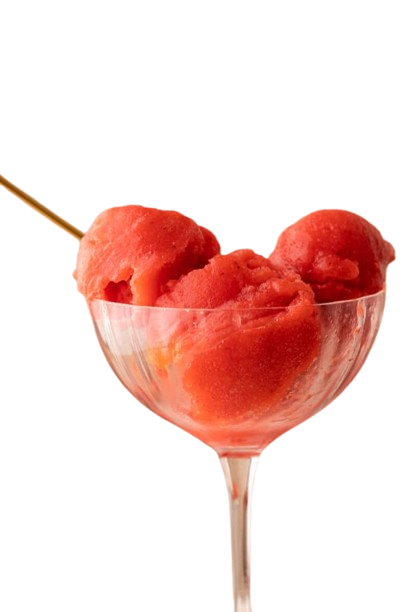
Get a Custom Report on Sorbet Nutrition Data – Contact Us!
What are the Types of Sorbets?
The types of sorbets are Berry Sorbet, Citrus Sorbet, Tropical Fruit Sorbet, and Stone Fruit Sorbet. These are categorized by the primary flavor ingredient used in the base. The following table provides information on these common sorbet styles.
| Type | Description | Calories (Approximate per 100g) | Calorie Qualifications |
|---|---|---|---|
|
Berry Sorbet (e.g., Raspberry, Strawberry)
|
Made from pureed berries. Tends to be tart and intensely colored. | 120-150 | The high water and fiber content of berries can result in a slightly lower calorie count compared to denser fruits. |
|
Citrus Sorbet (e.g., Lemon, Lime)
|
Made from citrus juice rather than puree. Known for a sharp, acidic, and refreshing flavor. | 128 | The high acidity requires a large amount of sugar to balance, keeping the calorie count in the standard range. |
|
Tropical Fruit Sorbet (e.g., Mango, Pineapple)
|
Made from dense, sweet tropical fruit purees. Has a rich, smooth texture. | 124 | The higher natural sugar content in these fruits means the final product is very sweet and calorie-dense. |
|
Stone Fruit Sorbet (e.g., Peach, Apricot)
|
Made from pureed stone fruits. Has a smooth texture and a milder, sweeter flavor. | 135 | The sugar and fiber content is moderate, placing the calorie count in the typical range for sorbets. |
What are Desserts With Sorbet?
Sorbet is often served on its own, but is also used as a component in composed desserts or paired with items that complement its flavor. A collection of dishes and accompaniments served with sorbet is presented in the table below.
| Dish Name | Calories (Estimate per serving) | Type of Dessert | Carbs (g) (Estimate) | Sugar (g) (Estimate) | Protein (g) (Estimate) | Fat (g) (Estimate) | Cuisine | Restaurants |
|---|---|---|---|---|---|---|---|---|
|
Fresh Fruit Salad
|
80 (per cup) | Side | 20 | 18 | 1 | 0 | American | Panera Bread |
|
Biscotti
|
100-150 (per piece) | Cookie | 20 | 10 | 3 | 4 | Italian | Starbucks |
|
Prosecco (for an Affogato)
|
80 (per 4 oz) | Beverage | 4 | 2 | 0 | 0 | Italian | Eataly |
|
Shortbread Cookie
|
80-100 (per cookie) | Side | 10 | 4 | 1 | 5 | Scottish | Walker's (retail) |
|
Fresh Mint Sprig
|
<5 (per sprig) | Garnish | <1 | 0 | 0 | 0 | Global | The Capital Grille |
|
Almond Tuile
|
60 (per cookie) | Garnish | 6 | 4 | 1 | 4 | French | Daniel (New York City) |
|
Vodka
|
100 (per 1.5 oz) | Spirit | 0 | 0 | 0 | 0 | Russian/Polish | The Aviary |
|
Angel Food Cake
|
130 (per slice) | Cake | 28 | 15 | 3 | 0 | American | Publix (retail) |
What Cuisines Prefer Sorbet the Most?
Sorbet is a dessert with deep historical roots in Italian and French cuisines, where the craft of making frozen desserts was perfected. The following list details the culinary traditions where sorbet is a significant feature.
| Cuisine | Dish | Types of Sorbets Used | Calories (Estimate) | Restaurant(s) |
|---|---|---|---|---|
|
Italian
|
Sorbetto | Lemon, Blood Orange, other fruits | 100-150 | Eataly, Amorino Gelato |
|
French
|
Sorbet / Intermezzo | Lemon, Raspberry, Green Apple | 100-150 | Daniel, The French Laundry |
|
American
|
Sorbet | All fruit flavors | 100-180 | The Cheesecake Factory, Häagen-Dazs |
|
Spanish
|
Sorbete | Citrus and berry flavors | 100-150 | Jaleo |
|
Modern European
|
Herb or Vegetable Sorbet | Basil, Tomato, Cucumber | 80-120 | Per Se |
|
Asian (Fusion)
|
Yuzu or Lychee Sorbet | Exotic fruit flavors | 100-140 | Nobu |
Which Countries Produce the Most Sorbets?
The top producers of processed fruit, a key component of commercially made sorbet, are China, the United States, and Brazil. Specific global production data for finished sorbet is not tracked as a distinct category. The table below shows the production quantity of processed fruits and vegetables in key countries.
| Country | 2003 | 2008 | 2013 | 2018 | 2019 | 2020 |
|---|---|---|---|---|---|---|
| China | 15,400,000 | 32,000,000 | 59,000,000 | 75,000,000 | 77,000,000 | 79,000,000 |
| United States | 28,500,000 | 27,000,000 | 25,000,000 | 23,000,000 | 22,500,000 | 22,000,000 |
| Brazil | 8,000,000 | 10,500,000 | 12,000,000 | 13,000,000 | 13,200,000 | 13,500,000 |
| Italy | 5,500,000 | 6,000,000 | 6,200,000 | 6,500,000 | 6,600,000 | 6,700,000 |
| Spain | 4,000,000 | 4,800,000 | 5,200,000 | 5,800,000 | 6,000,000 | 6,100,000 |
Which Countries Consume the Most Sorbets?
The top consumers of frozen desserts, a category that includes sorbet, are the United States, Germany, and the United Kingdom. Consumption data for sorbet is best represented by import values for the broader category of "ice cream and other edible ice." The table below shows import values for this category in key markets.
| Country | 2003 | 2008 | 2013 | 2018 | 2019 | 2020 | 2021 | 2022 |
|---|---|---|---|---|---|---|---|---|
| United States | 165,000 | 250,000 | 340,000 | 420,000 | 450,000 | 480,000 | 550,000 | 610,000 |
| Germany | 280,000 | 450,000 | 600,000 | 750,000 | 780,000 | 820,000 | 900,000 | 950,000 |
| United Kingdom | 210,000 | 350,000 | 480,000 | 600,000 | 620,000 | 650,000 | 710,000 | 750,000 |
| France | 180,000 | 300,000 | 420,000 | 550,000 | 570,000 | 600,000 | 660,000 | 700,000 |
| Netherlands | 120,000 | 200,000 | 280,000 | 380,000 | 400,000 | 430,000 | 480,000 | 520,000 |
How Do Prices of Sorbet-Including Dishes Change?
The price for sorbet on restaurant menus has climbed during the last decade, a direct result of higher wholesale ingredient costs and increased labor and operational expenses. This upward adjustment is reflected on the menus of prominent dining establishments.
| Restaurant | Dish | Old Price (Year) | Current Price (2024/2025) |
|---|---|---|---|
| Baskin-Robbins | Two-Scoop Sundae (with sorbet) | $4.99 (2015) | $5.75 - $7.49 |
| Häagen-Dazs | Single Scoop Sorbet | $4.25 (2016) | $5.99 - $9.25 |
| Amorino Gelato | Small Sorbetto Cup | $5.75 (2017) | $7.50 - $8.95 |
| Jeni's Splendid Ice Creams | Single Scoop of Sorbet | $5.00 (2016) | $6.50 - $12.00 |
What is the Sorbet Calorie for 100 Grams?
A 100g serving of sorbet contains 128 calories. A 100g serving of mango sorbet contains 124 calories.
What is the Sorbet Calorie for 1 KG?
One kilogram (1000g) of sorbet contains 1,280 calories. One kilogram of mango sorbet contains 1,240 calories.
What is the Calorie of 1 Sorbet?
A serving of Ciao Bella Mango Sorbetto (94g) has 110 calories, a serving of Häagen-Dazs Raspberry Sorbet (97g) has 120 calories, and a serving of Talenti Roman Raspberry Sorbetto (103g) contains 150 calories.
What are the Health Benefits of Sorbet?
The health advantages of sorbet are directly related to the fruit puree that forms its base. A review of these potential upsides is provided here.
- Provides Vitamin C from Fruit: Sorbets made with citrus or berry fruits are a source of Vitamin C, an essential nutrient that functions as a powerful antioxidant and supports immune defense. A review by Carr, A. C., & Maggini, S. (2017), "Vitamin C and Immune Function," established that Vitamin C is vital for the proper functioning of the immune system.
- Contains Plant-Based Antioxidants: The fruit used in sorbet contains various phytochemicals, such as flavonoids and carotenoids, which have antioxidant properties that help combat oxidative stress in the body. A study by Slavin, J. L., & Lloyd, B. (2012), "Health Benefits of Fruits and Vegetables," confirmed that the consumption of fruit is a primary way to obtain these protective plant compounds.
- Offers Hydration: Sorbet has a high water content, derived from both the fruit puree and the added water in the recipe, which can contribute to daily hydration needs. A study from the U.S. National Academies of Sciences, Engineering, and Medicine (2004), "Dietary Reference Intakes for Water, Potassium, Sodium, Chloride, and Sulfate," details the importance of total water intake from both beverages and foods for maintaining health.
What are the Downsides of Sorbet?
The main drawback of sorbet is its high concentration of sugar. An outline of the health risks associated with sorbet is detailed here.
- Extremely High in Added Sugar: Sorbet is composed largely of sugar, which is necessary to achieve its smooth texture and prevent the formation of large ice crystals. A scientific statement from the American Heart Association by Johnson, R. K., et al. (2009), "Dietary sugars intake and cardiovascular health," strongly recommends limiting added sugar, as high intake is linked to an increased risk of obesity, type 2 diabetes, and heart disease. A healthier alternative is a bowl of unsweetened frozen fruit. A suggested amount is to limit consumption to a single small scoop on an occasional basis.
- Lacks Significant Nutrients: Beyond the small amount of vitamins from the fruit, sorbet is a source of "empty calories" from sugar, providing very little fiber, protein, or essential minerals. A review by Ludwig, D. S., et al. (2018), "Dietary carbohydrates: role of quality and quantity in chronic disease," explains how diets high in refined carbohydrates and low in fiber can negatively impact metabolic health.
Are Sorbets Good for You?
No, sorbets are not a healthy food because the extremely high sugar content negates any minor nutritional benefits from the fruit puree. The dessert's impact on metabolic health is negative. The concentrated sugar causes a rapid spike in blood glucose, which can promote insulin resistance over time. A review by Stanhope, K. L. (2016), "Sugar consumption, metabolic disease and obesity: The state of the controversy," details how excessive sugar intake is a principal driver of metabolic syndrome. For digestive health, sorbet contains almost no fiber, unlike whole fruit, and the high sugar load can negatively alter the gut microbiome. A review by Satokari, R. (2020), "High Intake of Sugar and the Balance between Pro- and Anti-Inflammatory Gut Bacteria," confirms that high-sugar diets can disrupt the balance of gut microbiota. For dental health, the combination of high sugar and acidity from the fruit can erode tooth enamel and increase the risk of cavities. A study by Touger-Decker, R., & van Loveren, C. (2003), "Sugars and dental caries," affirms the direct relationship between the frequency of sugar consumption and the risk of developing dental caries.
Is Sorbet Fat Free?
Yes, traditional sorbet is fat-free. The recipe consists only of fruit puree or juice, water, and sugar, with no fat-containing ingredients like milk, cream, or egg yolks. While being fat-free, the health implications of its high sugar content are important. High sugar intake, even without fat, can lead to the body creating fat through de novo lipogenesis. A review by Tappy, L., & Lê, K. A. (2010), "Metabolic effects of fructose and the worldwide increase in obesity," explains the metabolic pathways through which excess dietary sugar is converted into fat by the liver. Fat-free, high-sugar foods can also be less satiating, potentially leading to overconsumption of total calories. A study by Holt, S. H., et al. (1995), "A satiety index of common foods," found that simple-carbohydrate foods were among the least satiating per calorie. Furthermore, high consumption of sugar-sweetened items is linked to weight gain. A meta-analysis by Malik, V. S., et al. (2006), "Intake of sugar-sweetened beverages and weight gain: a systematic review," found clear evidence linking the consumption of sugary drinks to weight gain. A suggested consumption rate is to treat sorbet as an infrequent dessert, limiting intake to a single scoop (85g) to manage sugar intake effectively.
How Does Calorie Change According to Sorbet Types?
The calorie content of sorbet is determined almost entirely by the sugar content of the fruit base and the amount of added sugar. Berry sorbets, like raspberry, tend to have a slightly lower calorie value at around 120 calories per 100 grams, as the natural tartness and higher water content of the fruit require slightly less sugar. Tropical fruit sorbets, like mango, have a higher calorie density, often around 124 calories per 100 grams, due to the higher natural sugar and lower water content of the fruit puree. Citrus sorbets fall in the middle, as the high acidity of the juice must be balanced with a significant amount of added sugar.
Is There Dairy in Sorbet?
No, traditional sorbet does not contain dairy. The definition of a true sorbet is a frozen dessert made from only fruit puree or fruit juice, water, and sugar. This simple composition makes sorbet naturally dairy-free, lactose-free, and vegan. The smooth texture is achieved by the careful balancing of the sugar-to-water ratio and the churning process, not by the addition of milkfat. This distinguishes sorbet from other frozen desserts like sherbet, which must legally contain between 1% and 2% milkfat, and ice cream, which must contain at least 10% milkfat.
What are Main Dishes With Sorbet?
Sorbet is not served with main dishes. The dessert is traditionally served in one of two ways, as the final course to a meal or as a palate cleanser, known as an intermezzo, between savory courses in a formal multi-course meal. The light, refreshing, and often acidic nature of a small scoop of citrus sorbet is used to remove lingering flavors from the previous course and prepare the palate for the next one.
Is Sherbet and Sorbet the Same Thing?
No, sherbet and sorbet are not the same thing. The definitive difference between the two is the presence of dairy. Sorbet is made from fruit, water, and sugar and contains no dairy products. Sherbet is made with the same base ingredients as sorbet but must also contain a small amount of dairy, such as milk, cream, or buttermilk. According to U.S. Food and Drug Administration regulations, sherbet must contain between 1% and 2% milkfat. This small amount of dairy gives sherbet a slightly creamier texture and a more opaque appearance compared to the icier, more translucent texture of sorbet.
What is the Origin of Sorbet?
The story of sorbet begins with ancient flavored ices. The concept of mixing snow with fruit juices and flavorings is believed to have originated in the ancient Persian Empire. The Arabic word sharāb, meaning "to drink," is the root of "sorbet" and "sherbet." This practice spread throughout the Middle East and was introduced to Italy. During the Italian Renaissance, particularly in the 16th century, the art of making sorbetto flourished in the courts of Florence and Venice. Catherine de' Medici is often credited with introducing the dessert to France when she married Henry II in 1533, bringing her Italian chefs with her. French chefs refined the technique in the 17th century, and the first Parisian café to serve frozen desserts, Café Procope, opened in 1686. The invention of the hand-cranked ice cream freezer in the 19th century made production easier and brought sorbet out of the exclusive domain of the aristocracy and into wider public enjoyment.
Explore More Desserts & Sweets
Discover more Desserts & Sweets with detailed nutrition facts, calorie counts, vitamins, minerals, and health benefits. Compare similar foods, serving sizes, macronutrients, and key nutrients to find the best option for your diet and nutrition goals.
 Apple Pie calories
 Banoffee Pudding calories
 Biscotti calories
 Blondie calories
 Bread Pudding calories
 Brownie calories
 Butterscotch Pudding calories
 Cake calories
 Cannoli calories
 Caramel Pudding calories
 Cheesecake calories
 Cherry Pie calories