Calories and Nutritions in Almond Milk
Almond milk is a staple in plant-based diets and used as a base for smoothies, lattes, and baking in Vegan American and Mediterranean cuisines. A single-serve carton of unsweetened almond milk (244g) contains 37 almond milk calories, whereas a carton of original sweetened almond milk (240g) provides 60 calories. A 360g serving of unsweetened almond milk contains 55 calories, while a 180g cup supplies 27 calories. A cup of Numilk Fresh Milled Almond Milk (240g) contains 139 calories, while a serving of 365 Whole Foods Market Organic Almond Milk (237g) provides 40 calories.
An assessment of the almond milk nutrition label reveals a low-carbohydrate profile with moderate healthy fats, as a serving of unsweetened almond milk (360g) provides 2.1g of carbohydrates, 2.1g of protein, and 4g of fat. Almond milk is a source of antioxidants due to high levels of Vitamin E, which protects skin cells from oxidative stress. Research by Keen, M. A., & Hassan, I. (2016), "Vitamin E in dermatology," confirmed that Vitamin E accumulation in the skin prevents collagen degradation and supports tissue repair. The energy content stems mainly from monounsaturated fats, establishing the drink as a heart-healthy option rather than a high-energy fuel source. Micronutrient density is high in fortified versions, offering 709mg of calcium (55% DV) per 360g serving. Vitamin D levels are substantial, providing 3.5mcg per 360g or 12oz serving to support skeletal maintenance.
Global output of almond milk relies on production in the United States, Spain, and Australia, with the United States leading innovation in shelf-stable packaging. The United States, the United Kingdom, and Germany consume vast volumes of this nut-based beverage. Culinary practices in Vegan American and Health Food cultures rely on almond milk for dishes like Vegan Mac and Cheese, Chia Pudding, and Lattes. Escalating global demand and rising processing costs have driven retail costs upward, as the price for a standard 64 fl oz carton of Blue Diamond Almonds Original Almond Milk rose from $1.99 in 2012 to between $2.99 and $4.79 in 2024. This inflation aligns with broader market indicators, with the Producer Price Index for fluid milk products rising to 300.332 in 2024. Restaurant menu pricing reflects this economic upward trend, as a 20oz Activator Recovery GLP-1 Almond Berry smoothie at Smoothie King increased from $5.29 in 2014 to between $7.49 and $9.50 in 2024.
The almond milk nutrition facts highlight benefits for skeletal health through high concentrations of calcium and iron, providing 709mg of calcium and 1.25mg of iron per 360g serving. Nutritionists recommend drinking 240ml per day to avoid overloading the system with added sugars in flavored varieties, as an unsweetened portion contains 37 calories, an energy load that requires 7 minutes of raking leaves or 5 minutes of moving furniture to burn. Consumers tracking sodium intake must monitor their consumption of processed varieties, as a 360g or 12oz serving contains 256mg of sodium compared to just 10mg in fresh milled raw preparations.
Almond Milk nutrition
| Stats | Weight |
|---|---|
| Carbs | 0.671 grams |
| Protein | 0.656 grams |
| Fats | 1.56 grams |
| Sugars | 0 grams |
- Large Almond Milk Calories (Nutritional Facts)
- Medium Almond Milk Calories (Nutritional Facts)
- Small Almond Milk Calories (Nutritional Facts)
- Unsweetened Almond Milk Calories (Nutritional Facts)
- Vanilla Almond Milk Calories (Nutritional Facts)
- Raw Almond Milk Nutrition
- Sodium in Almond Milk
- Potassium in Almond Milk
- Sugar in Almond Milk
- Fiber in Almond Milk
- Protein in Almond Milk
- Carbs in Almond Milk
- Fat in Almond Milk
- Vitamins in Almond Milk
- Minerals in Almond Milk
Large Almond Milk Calories (Nutritional Facts)
A large serving of unsweetened almond milk (360g or 12oz) contains 55 calories, 2.1g of protein, 4g of fat, 2.1g of carbohydrates, 0g of fiber, 0g of sugar, and 256mg of sodium. A large serving of original almond milk (360g or 12oz) provides 90 calories, 1.5g of protein, 3.8g of fat, 12g of carbohydrates, 0g of fiber, 10.5g of sugar, and 223mg of sodium. A large serving of fresh milled raw almond milk (360g or 12oz) supplies 209 calories due to the higher concentration of almond solids.
A medium portion of unsweetened almond milk (240g or 8oz) provides 36 calories, 1.4g of protein, 2.7g of fat, 1.4g of carbohydrates, 0g of fiber, 0g of sugar, and 170mg of sodium. A medium portion of original almond milk (240g or 8oz) supplies 60 calories, 1g of protein, 2.5g of fat, 8g of carbohydrates, 0g of fiber, 7g of sugar, and 149mg of sodium. A medium portion of fresh milled raw almond milk (240g or 8oz) contains 139 calories.
A small cup of unsweetened almond milk (180g or 6oz) contains 27 calories, 1g of protein, 2g of fat, 1g of carbohydrates, 0g of fiber, 0g of sugar, and 128mg of sodium. A small cup of original almond milk (180g or 6oz) provides 45 calories, 0.8g of protein, 1.9g of fat, 6g of carbohydrates, 0g of fiber, 5.3g of sugar, and 112mg of sodium. A small cup of fresh milled raw almond milk (180g or 6oz) supplies 104 calories.
A standard cup of unsweetened almond milk (244g) contains 37 calories, 1.4g of protein, 2.7g of fat, 1.4g of carbohydrates, 0g of fiber, 0g of sugar, and 173.2mg of sodium. A liter (1000g) of unsweetened almond milk provides 152 calories, 5.7g of protein, 11g of fat, 5.7g of carbohydrates, 0g of fiber, 0g of sugar, and 710mg of sodium.
A cup of sweetened vanilla almond milk (240g or 8oz) contains 91 calories, 1g of protein, 2.5g of fat, 16g of carbohydrates, 1g of fiber, 15g of sugar, and 150mg of sodium. A cup of unsweetened vanilla almond milk (240g or 8oz) provides 40 calories, 1g of protein, 3g of fat, 2g of carbohydrates, 1g of fiber, 0g of sugar, and 180mg of sodium.
A cup of fresh milled raw almond milk (240g or 8oz) supplies 139 calories, 5g of protein, 11g of fat, 6g of carbohydrates, 3g of fiber, 1g of sugar, and 10mg of sodium. A liter (1000g) of fresh milled raw almond milk contains 579 calories, 20.8g of protein, 45.8g of fat, 25g of carbohydrates, 12.5g of fiber, 4.1g of sugar, and 41mg of sodium.
A large serving of unsweetened almond milk (360g or 12oz) contains 256mg of sodium (11% DV), while a large serving of original almond milk (360g or 12oz) provides 223mg of sodium (9% DV). A medium portion of unsweetened almond milk (240g or 8oz) has 170mg of sodium (7% DV), whereas a medium portion of original almond milk (240g or 8oz) supplies 149mg of sodium (6% DV). A small cup of unsweetened almond milk (180g or 6oz) contains 128mg of sodium (5% DV), and a small cup of original almond milk (180g or 6oz) provides 112mg of sodium (5% DV).
A large serving of unsweetened almond milk (360g or 12oz) provides 241mg of potassium (5% DV), while a large serving of original almond milk (360g or 12oz) contains 0mg of potassium (0% DV). A medium portion of unsweetened almond milk (240g or 8oz) has 161mg of potassium (3% DV), whereas a medium portion of original almond milk (240g or 8oz) supplies 0mg of potassium (0% DV). A small cup of unsweetened almond milk (180g or 6oz) contains 120mg of potassium (2% DV), and a small cup of original almond milk (180g or 6oz) provides 0mg of potassium (0% DV).
A large serving of original almond milk (360g or 12oz) contains 10.5g of sugar, while a large serving of unsweetened almond milk (360g or 12oz) provides 0g of sugar. A medium portion of original almond milk (240g or 8oz) has 7g of sugar, whereas a medium portion of unsweetened almond milk (240g or 8oz) supplies 0g of sugar. A small cup of original almond milk (180g or 6oz) contains 5.3g of sugar, and a small cup of unsweetened almond milk (180g or 6oz) provides 0g of sugar.
A large serving of unsweetened almond milk (360g or 12oz) provides 0g of dietary fiber (0% DV), and a large serving of original almond milk (360g or 12oz) also contains 0g of fiber (0% DV). A medium portion of unsweetened almond milk (240g or 8oz) has 0g of fiber (0% DV), whereas a medium portion of original almond milk (240g or 8oz) supplies 0g of fiber (0% DV). A cup of fresh milled raw almond milk (240g or 8oz) supplies 3g of fiber (11% DV).
A large serving of unsweetened almond milk (360g or 12oz) provides 2.1g of protein (4% DV), while a large serving of original almond milk (360g or 12oz) contains 1.5g of protein (3% DV). A medium portion of unsweetened almond milk (240g or 8oz) has 1.4g of protein (3% DV), whereas a medium portion of original almond milk (240g or 8oz) supplies 1g of protein (2% DV). A small cup of unsweetened almond milk (180g or 6oz) contains 1g of protein (2% DV), and a small cup of original almond milk (180g or 6oz) provides 0.8g of protein (1.5% DV).
A large serving of original almond milk (360g or 12oz) contains 12g of carbohydrates (4.5% DV), while a large serving of unsweetened almond milk (360g or 12oz) provides 2.1g of carbohydrates (1.5% DV). A medium portion of original almond milk (240g or 8oz) has 8g of carbohydrates (3% DV), whereas a medium portion of unsweetened almond milk (240g or 8oz) supplies 1.4g of carbohydrates (1% DV). A small cup of original almond milk (180g or 6oz) contains 6g of carbohydrates (2% DV), and a small cup of unsweetened almond milk (180g or 6oz) provides 1g of carbohydrates (0.7% DV).
A large serving of unsweetened almond milk (360g or 12oz) contains 4g of total fat (4.4% DV), while a large serving of original almond milk (360g or 12oz) provides 3.8g of total fat (4.5% DV). A medium portion of unsweetened almond milk (240g or 8oz) has 2.7g of total fat (3% DV), whereas a medium portion of original almond milk (240g or 8oz) supplies 2.5g of total fat (3% DV). A small cup of unsweetened almond milk (180g or 6oz) contains 2g of total fat (2% DV), and a small cup of original almond milk (180g or 6oz) provides 1.9g of total fat (2% DV).
A large serving of unsweetened almond milk (360g or 12oz) provides 3.5mcg of Vitamin D (18% DV). A medium portion of unsweetened almond milk (240g or 8oz) has 2.4mcg of Vitamin D (12% DV). A small cup of unsweetened almond milk (180g or 6oz) contains 1.8mcg of Vitamin D (9% DV). The original almond milk formulation provided does not contain significant amounts of Vitamin D or Vitamin C.
A large serving of unsweetened almond milk (360g or 12oz) provides 709mg of calcium (55% DV), 1.25mg of iron (7% DV), and 36mg of phosphorus (3% DV). A large serving of original almond milk (360g or 12oz) contains 705mg of calcium (54% DV) and 0.75mg of iron (4.5% DV). A medium portion of unsweetened almond milk (240g or 8oz) has 473mg of calcium (36% DV), 0.84mg of iron (5% DV), and 24mg of phosphorus (2% DV). A medium portion of original almond milk (240g or 8oz) supplies 470.4mg of calcium (36% DV) and 0.5mg of iron (3% DV).
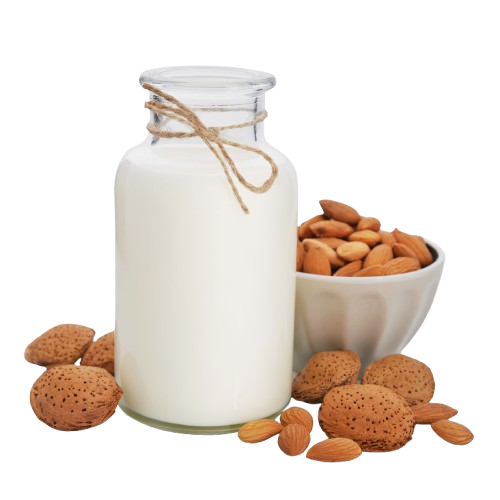
Get a Custom Report on Almond Milk Nutrition Data – Contact Us!
What are the Types of Almond Milks?
The types of Almond Milk include Unsweetened, Original, Vanilla, Chocolate, Barista Blend, and Fresh Milled. The table below outlines the nutritional differences across these specific categories.
| Type | Description | Calories (Per 240ml) | Calorie Qualifications |
|---|---|---|---|
|
Unsweetened Almond Milk
|
Filtered water and almonds. | 30 | The absence of sugar results in the lowest energy density. |
|
Original Almond Milk
|
Sweetened with cane sugar. | 60 | Added sugar doubles the calorie count compared to unsweetened. |
|
Vanilla Almond Milk
|
Infused with vanilla and sugar. | 80 | Flavorings and sweeteners increase the caloric load. |
|
Chocolate Almond Milk
|
Blended with cocoa and sugar. | 100 | Cocoa solids and high sugar content yield a higher calorie figure. |
|
Barista Blend Almond Milk
|
Formulated with extra oil/gums. | 70 | Added fats for frothing create a moderate calorie increase. |
|
Fresh Milled Almond Milk
|
Whole almonds and water only. | 139 | Retention of almond solids and fats results in the highest calorie count. |
What are the Desserts With Almond Milk?
Almond milk serves as a naturally nutty, light liquid base for puddings and frozen treats, allowing for a smooth texture without the heaviness of cream. The ingredient functions exceptionally well in recipes requiring a subtle flavor profile. The table below highlights selected desserts made using this nut-based extract.
| Dish Name | Calories (Estimate) | Type of Dish | Carbs (g) (Estimate) | Sugar (g) (Estimate) | Protein (g) (Estimate) | Fat (g) (Estimate) | Cuisine | Restaurants |
|---|---|---|---|---|---|---|---|---|
|
Chia Seed Pudding
|
220 | Pudding | 28 | 12 | 6 | 10 | Health Food | First Watch (Bradenton, FL) |
|
Vegan Vanilla Ice Cream
|
180 | Frozen Dessert | 24 | 18 | 2 | 9 | American Vegan | Van Leeuwen (New York, NY) |
|
Almond Milk Smoothie
|
240 | Beverage | 45 | 30 | 4 | 6 | American | Smoothie King (Dallas, TX) |
|
Vegan Chocolate Shake
|
350 | Frozen Dessert | 55 | 45 | 3 | 12 | American | Next Level Burger (Portland, OR) |
|
Dairy-Free Panna Cotta
|
210 | Dessert | 22 | 16 | 2 | 14 | Italian Vegan | Crossroads Kitchen (Los Angeles, CA) |
|
Acai Bowl Base
|
320 | Breakfast/Dessert | 58 | 35 | 4 | 8 | Brazilian/American | Playa Bowls (Belmar, NJ) |
|
Vegan Donuts (Glaze)
|
280 | Pastry | 35 | 18 | 3 | 14 | American | Voodoo Doughnut (Portland, OR) |
|
Horchata de Almendra
|
200 | Beverage | 30 | 22 | 2 | 8 | Spanish | Despaña (New York, NY) |
|
Vegan Cheesecake
|
410 | Cake | 42 | 28 | 6 | 24 | American Vegan | The Chicago Diner (Chicago, IL) |
|
Almond Milk Latte (Iced)
|
120 | Beverage | 14 | 10 | 1 | 4 | American Cafe | Peet's Coffee (Berkeley, CA) |
|
Vegan Rice Pudding
|
250 | Pudding | 45 | 20 | 3 | 6 | Global Fusion | Rice to Riches (New York, NY) |
|
Overnight Oats
|
300 | Breakfast/Dessert | 48 | 12 | 8 | 7 | Health Food | Pret A Manger (New York, NY) |
|
Vegan Cupcakes
|
340 | Pastry | 45 | 30 | 2 | 16 | American | Erin McKenna's Bakery (New York, NY) |
|
Golden Milk Latte
|
140 | Beverage | 18 | 12 | 1 | 6 | Ayurvedic | Cafe Gratitude (Los Angeles, CA) |
|
Fruit Tart Filling
|
290 | Pastry | 38 | 22 | 3 | 14 | French Vegan | Le Pain Quotidien (New York, NY) |
What are the Main Dishes With Almond Milk?
Almond milk functions as a creamy, neutral binder in savory vegan cooking, particularly in soups and white sauces where a lack of dairy is required. The liquid thickens slightly when heated, making the ingredient suitable for béchamel and creamy bases. The list below outlines recipes that include this ingredient.
| Dish Name | Calories (Estimate) | Type of Dish | Carbs (g) (Estimate) | Sugar (g) (Estimate) | Protein (g) (Estimate) | Fat (g) (Estimate) | Cuisine | Restaurants |
|---|---|---|---|---|---|---|---|---|
|
Vegan Mac and Cheese
|
480 | Pasta Entree | 65 | 4 | 12 | 18 | American Comfort | Planta (Miami, FL) |
|
Creamy Mushroom Soup
|
220 | Soup | 18 | 3 | 5 | 14 | American | True Food Kitchen (Phoenix, AZ) |
|
Vegan Alfredo
|
540 | Pasta Entree | 70 | 2 | 10 | 24 | Italian American | Double Zero (New York, NY) |
|
Green Curry (Vegan)
|
380 | Curry Entree | 35 | 8 | 12 | 22 | Thai Fusion | Real Thai (San Francisco, CA) |
|
Vegan Mashed Potatoes
|
210 | Side Dish | 32 | 2 | 4 | 8 | American | The Butcher's Daughter (Venice, CA) |
|
Corn Chowder
|
290 | Soup | 38 | 6 | 5 | 12 | American | Veggie Grill (Santa Monica, CA) |
|
Creamy Polenta
|
260 | Side Dish | 35 | 1 | 5 | 10 | Italian | Bottiglia Cucina & Enoteca (Henderson, NV) |
|
Vegan Biscuits and Gravy
|
520 | Breakfast Entree | 60 | 4 | 8 | 28 | Southern Vegan | Spiral Diner (Dallas, TX) |
|
Savory Oatmeal
|
280 | Breakfast Bowl | 45 | 1 | 9 | 6 | Health Food | Daily Harvest |
|
Vegan Pot Pie
|
490 | Baked Entree | 52 | 5 | 10 | 26 | American | Modern Love (Omaha, NE) |
|
Creamy Tomato Soup
|
240 | Soup | 28 | 9 | 4 | 12 | American | Panera Bread (St. Louis, MO) |
|
Vegan Lasagna
|
510 | Pasta Entree | 55 | 6 | 15 | 22 | Italian Vegan | Pura Vita (West Hollywood, CA) |
|
Cauliflower Gratin
|
310 | Side Dish | 22 | 4 | 6 | 20 | French American | The Little Beet Table (New York, NY) |
|
Vegan Vodka Sauce Pasta
|
560 | Pasta Entree | 68 | 5 | 11 | 24 | Italian American | Willow (New York, NY) |
|
Creamy Grits
|
300 | Breakfast Side | 42 | 1 | 5 | 12 | Southern | The Grit (Athens, GA) |
What Cuisines Prefer Almond Milk the Most?
Vegan American and Health Food cuisines rely heavily on almond milk as a primary dairy substitute. The table that follows identifies food cultures that rely heavily on this nut-based extract.
| Cuisine | Dish | Types of Almond Milk Use | Calories (Estimate) | Restaurant(s) |
|---|---|---|---|---|
|
Vegan American
|
Mac and Cheese | Sauce Base | 480 | Planta (Miami, FL) |
|
Health Food
|
Chia Pudding | Soaking Liquid | 220 | First Watch (Bradenton, FL) |
|
American Cafe
|
Latte | Dairy Alternative | 120 | Peet's Coffee (Berkeley, CA) |
|
Spanish
|
Horchata de Almendra | Beverage Base | 200 | Despaña (New York, NY) |
|
Thai Fusion
|
Green Curry | Coconut Milk Sub | 380 | Real Thai (San Francisco, CA) |
|
Italian Vegan
|
Alfredo Sauce | Cream Substitute | 540 | Double Zero (New York, NY) |
|
Southern Vegan
|
Biscuits and Gravy | Gravy Liquid | 520 | Spiral Diner (Dallas, TX) |
|
Japanese Fusion
|
Mochi Ice Cream | Dough Hydration | 180 | Mochidoki (New York, NY) |
|
Ayurvedic
|
Golden Milk | Carrier Liquid | 140 | Cafe Gratitude (Los Angeles, CA) |
|
French Vegan
|
Fruit Tart | Custard Base | 290 | Le Pain Quotidien (New York, NY) |
|
Mexican Vegan
|
Horchata | Beverage Base | 240 | Gracias Madre (West Hollywood, CA) |
|
Brazilian
|
Acai Bowl | Blending Liquid | 320 | Playa Bowls (Belmar, NJ) |
|
Indian Vegan
|
Kheer | Pudding Base | 250 | Vatan (New York, NY) |
|
Global Fusion
|
Rice Pudding | Pudding Base | 250 | Rice to Riches (New York, NY) |
|
Bakery/Pastry
|
Cupcakes | Batter Liquid | 340 | Erin McKenna's Bakery (New York, NY) |
Which Countries Produce the Most Almond Milk?
The top producers of Almond Milk are the United States, Spain, and Australia, followed by Italy and the United Kingdom. The United States leads global production due to the massive output of California orchards which supply over 80% of the world's almonds. Spain ranks as a major producer in Europe due to its long history of almond cultivation. Australia and Italy also contribute significantly to the global supply through advanced processing facilities. The table below shows the estimated production of processed almond beverages (in Million Liters) for the top producing nations over the last two decades.
| Country | 2004 | 2009 | 2014 | 2019 | 2020 | 2021 | 2022 | 2023 | 2024 |
|---|---|---|---|---|---|---|---|---|---|
| United States | 80 | 250 | 800 | 1200 | 1300 | 1350 | 1400 | 1450 | 1500 |
| Spain | 20 | 40 | 80 | 150 | 160 | 170 | 180 | 190 | 200 |
| Australia | 10 | 25 | 60 | 100 | 110 | 115 | 120 | 125 | 130 |
| Italy | 15 | 30 | 50 | 90 | 95 | 100 | 105 | 110 | 115 |
| United Kingdom | 5 | 15 | 45 | 85 | 90 | 95 | 100 | 105 | 110 |
| Germany | 4 | 10 | 35 | 70 | 75 | 80 | 85 | 90 | 95 |
| Canada | 3 | 8 | 30 | 60 | 65 | 70 | 75 | 80 | 85 |
| France | 2 | 6 | 20 | 45 | 50 | 55 | 60 | 65 | 70 |
Which Countries Consume the Most Almond Milk?
The top consumers of Almond Milk are the United States and European nations, driven by the demand for hypoallergenic dairy alternatives. The United States represents the largest single market, where the beverage serves as a standard option in coffee shops and grocery stores. The United Kingdom utilizes the liquid extensively in tea and cereal consumption. The table below shows the estimated consumption volumes of almond milk for key markets over the last two decades.
| Country | 2004 | 2009 | 2014 | 2019 | 2020 | 2021 | 2022 | 2023 | 2024 |
|---|---|---|---|---|---|---|---|---|---|
| United States | 75 | 240 | 780 | 1150 | 1250 | 1300 | 1350 | 1400 | 1450 |
| United Kingdom | 6 | 18 | 50 | 95 | 105 | 110 | 115 | 120 | 125 |
| Germany | 5 | 12 | 40 | 80 | 85 | 90 | 95 | 100 | 105 |
| Canada | 4 | 10 | 35 | 65 | 70 | 75 | 80 | 85 | 90 |
| Spain | 18 | 35 | 70 | 130 | 140 | 145 | 150 | 155 | 160 |
| Australia | 8 | 20 | 55 | 90 | 95 | 100 | 105 | 110 | 115 |
| Italy | 12 | 25 | 45 | 80 | 85 | 90 | 95 | 100 | 105 |
| France | 3 | 8 | 25 | 50 | 55 | 60 | 65 | 70 | 75 |
How Do Prices of Almond Milk-Including Dishes Change?
Restaurant costs for almond-based beverages and desserts have increased, reflecting the broader inflation of labor and ingredients. The table below illustrates price adjustments for selected items at well-known establishments and retail outlets.
| Brand/Restaurant | Dish | Old Price (Year) | Current Price Range (2024/2025) |
|---|---|---|---|
| Peet's Coffee | Cold Brew (custom add on) | $.50 (2015) | $0.80 - $.95 |
| Smoothie King | Activator® Recovery GLP-1 Almond Berry (20oz) | $5.29 (2014) | $7.49 - $9.50 |
| Smoothie King | Power Meal Slim™ GLP-1 Chocolate (20oz) | $6.59 (2014) | $8.61 - $10.50 |
| Califia Farms | Almond Milk (6 pack) | $14.99 (2012) | $16.79 - $20.11 |
| Blue Diamond Almonds | Original Almond Milk (64 fl oz) | $1.99 (2012) | $2.99 - $4.79 |
What is the Almond Milk Calorie for 100 Grams?
A 100g serving of unsweetened almond milk contains 12 calories, while a 100g serving of organic unsweetened almond milk provides 17 calories. A 100g serving of fresh milled raw almond milk supplies 58 calories.
What is the Almond Milk Calorie for 1 KG?
One liter (1000g) of unsweetened almond milk contains 120 calories, while one liter (1000g) of organic unsweetened almond milk provides 170 calories. One liter (1000g) of fresh milled raw almond milk supplies 580 calories.
What is the Calorie of 1 Almond Milk?
A single-serve carton of original almond milk (240g or 8oz) contains 60 calories, while a carton of unsweetened almond milk (240g or 8oz) provides 29 calories. Market formulations yield distinct caloric figures, as a cup of Numilk Fresh Milled Almond Milk (240g) contains 139 calories. A serving of 365 Whole Foods Market Organic Almond Milk (237g) provides 40 calories, whereas a portion of Topco Associates Unsweetened Almond Milk (240g) supplies 29 calories.
What are the Health Benefits of Almond Milk?
Almond milk functions as a nutrient-dense beverage suitable for individuals seeking heart-healthy and skin-supporting compounds. Almond milk provides significant amounts of Vitamin E and calcium when fortified, and its benefits are discussed here.
- Supports Skin Health: The beverage contains high levels of Vitamin E, an antioxidant that protects skin cells from oxidative stress and UV damage. A study by Keen, M. A., & Hassan, I. (2016), "Vitamin E in dermatology," confirmed that Vitamin E accumulation in the skin prevents collagen degradation and supports tissue repair.
- Enhances Bone Density: Manufacturers fortify the liquid with calcium and Vitamin D to replicate the profile of cow's milk. Research by Weaver, C. M., et al. (2016), "Calcium plus vitamin D supplementation and risk of fractures," demonstrated that consistent intake of calcium-fortified plant beverages maintains skeletal integrity in aging populations.
- Regulates Blood Glucose: The unsweetened variety possesses a low glycemic index which prevents rapid spikes in insulin. A study by Jenkins, D. J., et al. (2002), "Glycemic index: overview of implications in health and disease," established that low-glycemic foods improve long-term glycemic control and reduce the risk of Type 2 diabetes.
What are the Downsides of Almond Milk?
Almond milk presents specific nutritional gaps regarding protein content and potential gastrointestinal irritation from additives. Nutritionists recommend limiting intake to 240ml daily and choosing unsweetened soy milk as a higher-protein alternative to ensure adequate muscle repair support. The table below shows specific negative health implications.
- Lacks Protein Content: The liquid offers only 1g of protein per serving, which fails to support muscle synthesis independently. A study by Vanga, S. K., & Raghavan, V. (2018), "How well do plant based alternatives fare nutritionally compared to cow’s milk?," noted that almond milk requires dietary supplementation to match the amino acid profile of dairy.
- Causes Gut Inflammation: Commercial brands often utilize carrageenan as a thickening agent, which triggers digestive distress in sensitive individuals. Research by Tobacman, J. K. (2001), "Review of harmful gastrointestinal effects of carrageenan in animal experiments," linked the additive to intestinal inflammation and ulceration.
- Contains Added Sugars: Flavored varieties often exceed 15g of sugar per cup, contributing to excessive caloric intake. A study by Malik, V. S., et al. (2010), "Sugar-sweetened beverages and risk of metabolic syndrome and type 2 diabetes," found that frequent consumption of sweetened beverages correlates with metabolic disorders.
Is Almond Milk Good for You?
Yes, almond milk is good for health because the beverages provide essential antioxidants and lack cholesterol. Heart health improves through the consumption of monounsaturated fats found in the nut base as detailed in the study by Musa-Veloso, K., et al. (2016), "The effects of whole almond consumption on blood lipid profiles." Digestive health benefits from the lactose-free nature of the liquid which prevents bloating as explored by Misselwitz, B., et al. (2019), "Update on lactose malabsorption and intolerance." Brain function receives support from high levels of Vitamin E which combats oxidative stress in neural tissues as confirmed by the study from La Fata, G., et al. (2014), "Effects of Vitamin E on Cognitive Performance during Ageing and in Alzheimer’s Disease."
How Does Calorie Change According to Almond Milk Types?
Calorie levels change mainly due to added sweeteners and fat concentration. Fresh milled raw almond milk ranks highest per serving because the product retains full almond fat and protein content. Unsweetened almond milk sits at the lower end due to the high water content and absence of sugar. Flavored varieties fall in the middle range depending on the amount of cane sugar added. Chocolate almond milk often contains the highest calorie count among processed varieties due to the combination of cocoa solids and significant amounts of added sugar to offset bitterness.
Does Almond Milk Have Lactose?
No, almond milk does not have lactose. The beverage derives entirely from plant matter which naturally lacks the milk sugar found in mammalian dairy. Lactose consists of a disaccharide sugar composed of galactose and glucose that exists exclusively in the milk of mammals. The production process of almond milk involves blending nuts with water and straining the solids, ensuring no animal byproducts enter the final liquid. This absence makes the drink suitable for individuals with lactase non-persistence who cannot enzymatically break down dairy sugars.
What is the Origin of Almond Milk?
The concept of almond milk dates back to the Middle Ages in the Islamic world and Christian Europe. Cooks in the Levant utilized the liquid in the 13th century. European populations consumed the beverage during Lent when religious laws forbade animal milk. The product functioned as a shelf-stable staple before the invention of refrigeration. Modern commercial production surged in the United States during the early 2000s as demand for soy-free and dairy-free options increased. Blue Diamond Growers played a pivotal role in popularizing the beverage by launching Almond Breeze in 1998, which shifted the product from health food aisles to mainstream grocery shelves.
Explore More Beverages
Discover more Beverages with detailed nutrition facts, calorie counts, vitamins, minerals, and health benefits. Compare similar foods, serving sizes, macronutrients, and key nutrients to find the best option for your diet and nutrition goals.
 Aloe Vera Juice calories
 Americano calories
 Apple Cider calories
 Apple Juice calories
 Apricot Juice calories
 Aronia Juice calories
 Avocado Shake calories
 Banana Juice calories
 Baobab Juice calories
 Barley Tea calories
 Beer calories
 Beet Juice calories