Calories and Nutritions in Beet Juice
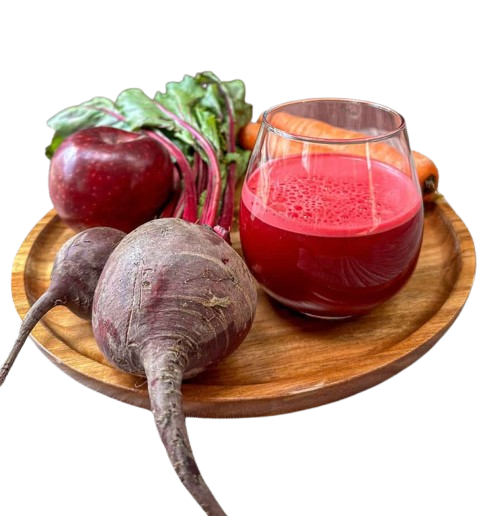
Beet juice is a nutrient-rich beverage made from beetroots, popular in modern health and wellness cuisines for its performance-enhancing properties. The beetroot juice calories are moderate for a juice, with a standard 240 mL (8 fl oz) glass of unsweetened beet juice containing 101 calories. A larger 473 mL (16 fl oz) serving provides 199 calories. The beet juice nutrition facts highlight its high natural sugar content but also its richness in beneficial compounds like dietary nitrates, folate, and potassium. A 100 mL (3.4 fl oz) serving of beet juice offers 42 calories, 1.0 g of protein, 0 g of fat, 10.0 g of carbohydrates (of which 8.3 g is sugar), and is a good source of potassium (6% Daily Value/DV) and folate (5% DV).
A meta-analysis concluded that beetroot juice supplementation significantly reduces blood pressure in adults (Siervo M, et al. 2013 "Inorganic nitrate and beetroot juice supplementation reduces blood pressure in adults: a systematic review and meta-analysis"). Although sometimes linked to skin whitening, beet juice does not lighten skin tone. Its Vitamin C and antioxidants support skin health by promoting collagen and protecting against damage, which can result in a brighter complexion.
The main types of beet juice include fresh unsweetened, commercial 100% juice, fruit juice blends (which are higher in calories), and fermented beet kvass (which is lower in calories and sugar). A daily consumption of one small glass (8 fl oz or 101 calories) is a common practice for those seeking its health benefits, keeping in mind its sugar and oxalate content. Burning the 101 calories from a glass of beet juice requires activities such as 10-12 minutes of moderate jogging or 15-20 minutes of brisk walking.
Beet juice is primarily consumed as a beverage but is also used as an ingredient in some popular main dishes and desserts. It is a key component in "immunity" or "detox" juice blends and smoothies at chains like Jamba Juice, Smoothie King, and Pressed Juicery. It is also used as a natural colorant, famously giving the "bleeding" effect to plant-based burgers from Impossible Foods, which are served at restaurants like Burger King. In desserts, beet juice adds color and earthy sweetness to modern Red Velvet Cake at vegan bakeries such as By Chloe. or in beet-flavored sorbets at artisanal ice cream shops like Salt & Straw.
The origin of beet juice is modern, tied to the 20th-century health food movement and the popularization of juicing, though its source, the beetroot, has been cultivated since ancient Roman times. Today, the largest producers of beets are Russia, France, and the United States. The biggest consumer markets for beet juice as a wellness drink are the US, the UK, and Germany. The price of beet juice has increased over the last 15 years with its rise in popularity. A 32 fl oz bottle of organic beet juice in the US that cost $4.00 to $5.00 in 2010 now retails for $6.00 to as high as $8.00.
Beet Juice nutrition
| Stats | Weight |
|---|---|
| Carbs | 35.5 grams |
| Protein | 3.6 grams |
| Fats | 0 grams |
| Sugars | 29.5 grams |
- Large Beet Juice Calories (Nutritional Facts)
- Medium Beet Juice Calories (Nutritional Facts)
- Small Beet Juice Calories (Nutritional Facts)
- Raw Beet Juice Nutrition
- Sodium in Beet Juice
- Potassium in Beet Juice
- Sugar in Beet Juice
- Fiber in Beet Juice
- Protein in Beet Juice
- Carbs in Beet Juice
- Fat in Beet Juice
- Vitamins in Beet Juice
- Minerals in Beet Juice
Large Beet Juice Calories (Nutritional Facts)
A large serving of unsweetened beet juice, also known as beetroot juice, weighing 473 mL (16 fl oz), contains 199 calories. This serving provides 0 g of fat, 4.7 g of protein, 47.3 g of carbohydrates, and 39.3 g of sugar.
A medium serving of unsweetened beet juice, weighing 355 mL (12 fl oz), contains 149 calories. This serving size includes 0 g of fat, 3.6 g of protein, 35.5 g of carbohydrates, and 29.5 g of sugar.
A small serving of unsweetened beet juice, considered as one cup weighing 240 mL (8 fl oz), contains 101 calories. This portion offers 0 g of fat, 2.4 g of protein, 24.0 g of carbohydrates, and 20.0 g of sugar.
A 100 mL (3.4 fl oz) serving of raw beet juice provides 42 calories, 0 g of fat, 1.0 g of protein, 10.0 g of carbohydrates, 8.3 g of sugar, and 0 g of dietary fiber, as fiber is removed during juicing.
Beet juice contains 54 mg of sodium per 100 mL (3.4 fl oz) serving, contributing 2% of the Daily Value (DV).
Beet juice is a good source of potassium, providing 292 mg per 100 mL (3.4 fl oz) serving, which is 6% of the DV.
Beet juice contains 8.3 g of sugar per 100 mL (3.4 fl oz) serving. These are naturally occurring sugars from the beetroot.
Beet juice contains 0 g of dietary fiber, as the fibrous pulp is removed during the juicing process.
Beet juice provides 1.0 g of protein per 100 mL (3.4 fl oz) serving.
Beet juice contains 10.0 g of total carbohydrates per 100 mL (3.4 fl oz) serving.
Beet juice contains 0 g of total fat.
A 100 mL (3.4 fl oz) serving of beet juice is a good source of Folate (Vitamin B9), providing 21 mcg (5% DV). It also contains a small amount of Vitamin C.
A 100 mL (3.4 fl oz) serving of beet juice provides Manganese at 0.05 mg (2% DV) and Magnesium at 17 mg (4% DV), in addition to its potassium content.
Get a Custom Report on Beet Juice Nutrition Data – Contact Us!
What are the Types of Beet Juice?
There are a few different types of beet juice, primarily differing in preparation method and whether other ingredients are added. The table below shows the most common beet juice types and their calorie information.
| Type | Description | Calories (per 8 fl oz / 240 mL) | Calorie Differences & Qualifications |
|---|---|---|---|
|
Fresh, Unsweetened Beet Juice
|
Juice pressed directly from raw beetroots, with no other ingredients. Also known as beetroot juice. | 101 | This is the baseline for pure beet juice nutrition. It is high in natural sugars and nitrates. |
|
Commercial Beet Juice (100%)
|
Pasteurized 100% beet juice sold in bottles, often from concentrate. | 100-120 | Calorie content is very similar to fresh juice. Pasteurization can slightly reduce levels of some heat-sensitive nutrients. |
|
Beet Juice Blends (e.g., with apple, carrot, lemon)
|
Beet juice mixed with the juice of other fruits and vegetables. | 110-140+ | Calorie content is higher than pure beet juice due to the added sugars from other fruits like apples or oranges. |
|
Fermented Beet Juice (Beet Kvass)
|
Beet juice that has undergone fermentation, often with added salt. | 30-50 | Significantly lower in calories and sugar, as the fermentation process consumes the natural sugars. It contains probiotics but is also high in sodium. |
What are the Desserts with Beet Juice?
Beet juice, with its earthy sweetness and vibrant color, is an innovative ingredient in a variety of modern and health-focused desserts. It is often paired with chocolate, berries, or citrus to create unique flavor combinations. These desserts are found in contemporary restaurants and bakeries.
| Dish Name | Calories (Estimate per serving/piece) | Type of Dish | Carbs (g) (Estimate) | Sugar (g) (Estimate) | Protein (g) (Estimate) | Fat (g) (Estimate) | Cuisine | Restaurants |
|---|---|---|---|---|---|---|---|---|
|
Red Velvet Cake/Cupcakes (with beet juice for color)
|
350-550 (slice/cupcake) | Baked Good | 45-65 | 30-50 | 3-6 | 18-30 | Modern American/Health-focused | By Chloe., Erin McKenna's Bakery NYC, Sprinkles Cupcakes. |
|
Chocolate Beet Cake/Brownies
|
300-500 (slice/square) | Baked Good | 40-60 | 25-45 | 4-7 | 15-25 | Modern Health-focused | Found in some artisanal or health-conscious bakeries. |
|
Beet & Berry Smoothie
|
200-350 | Smoothie | 40-60 | 30-50 | 2-5 | 2-8 | Modern Health-focused | Jamba Juice, Smoothie King, Robeks, Juice Generation, Pressed Juicery. |
|
Beet Sorbet/Ice Cream
|
100-180 (scoop) | Frozen Dessert | 25-40 | 20-35 | <1-2 | <1-5 | Artisanal | Salt & Straw, Jeni's Splendid Ice Creams. |
|
Beet Juice Gummies
|
50-80 (serving) | Confection | 12-20 | 10-18 | <1 | 0 | Health Food | Found in health food stores. |
|
Beet Juice Panna Cotta
|
200-350 | Custard | 20-35 | 18-30 | 3-6 | 10-20 | Modern Italian/Fusion | May appear on seasonal menus at fine dining restaurants. |
|
Pink Lattes (colored with beet powder/juice)
|
100-180 (cup) | Beverage | 15-25 | 12-22 | 8-12 | 2-6 | Modern Cafe | Alfred Coffee, Bluestone Lane. |
|
Beet Juice Popsicles
|
40-80 (each) | Frozen Dessert | 10-20 | 8-18 | <1 | <1 | Modern Health-focused | GoodPop (retail brand). |
What are the Main Dishes with Beet Juice?
Beet juice is not a common ingredient in savory main dishes but the whole or roasted beetroot is preferred. Its vibrant color and earthy sweetness are sometimes used in sauces, marinades, or as a natural food coloring. Some of the most widespread main dishes that contain beet juice (or a pureed beet equivalent) are soups and sauces. The table below lists some examples.
| Dish Name | Calories (Estimate per serving) | Type of Dish | Carbs (g) (Estimate) | Sugar (g) (Estimate) | Protein (g) (Estimate) | Fat (g) (Estimate) | Cuisine | Restaurants |
|---|---|---|---|---|---|---|---|---|
|
Borscht (Cold or Hot Beet Soup)
|
150-300 (bowl, without sour cream) | Soup | 20-40 | 10-20 | 5-10 | 2-8 | Eastern European | Veselka (NYC), Russian Tea Room (NYC). |
|
Beet Juice Marinade (for fish, e.g., Beet Cured Salmon)
|
150-250 (3 oz serving of salmon) | Cured Fish | 2-5 | 1-3 | 18-25 | 8-15 | Scandinavian/Modern | Russ & Daughters (NYC - for general cured fish), Aquavit (NYC). |
|
"Pink" Pasta Dough (colored with beet juice)
|
Varies with pasta dish | Pasta | Varies | Varies | Varies | Varies | Modern Italian | Eataly, Lilia (Brooklyn), Osteria Mozza (LA) (may offer as a specialty item). |
|
Beet Hummus/Dip (using beet juice/puree)
|
80-120 (¼ cup serving) | Dip | 8-15 | 2-5 | 2-4 | 4-8 | Modern Middle Eastern | CAVA, Trader Joe's (retail brand). |
|
Beet Vinaigrette
|
60-100 (2 tbsp serving) | Salad Dressing | 4-8 | 3-7 | <1 | 5-9 | Modern American | Sweetgreen, Tender Greens. |
|
"Bleeding" Veggie Burger (using beet juice for color)
|
300-500 (patty + bun) | Veggie Burger | 30-50 | 5-10 | 15-25 | 10-20 | Modern American | Beyond Meat, Impossible Foods (major brands using beet extract, supplied to restaurants like Burger King, Carl's Jr., Hardee's). |
What Cuisines Prefer Beet Juice the Most?
Beet juice as a standalone beverage is most popular within modern Health and Wellness culture globally, where it is prized for its nutritional and performance-enhancing benefits. It is a staple in juice bars and smoothie shops. The whole beetroot is central to Eastern European cuisine but the juice form is less traditional. It serves as the base for some modern interpretations of classic dishes.
| Cuisine/Context | Dish Name/Usage Examples | Calories (Varies widely by dish) | Restaurants |
|---|---|---|---|
|
Modern Health-focused / Wellness Culture
|
Pure Beet Juice, Beet & Fruit/Vegetable Blends, "Detox" Juices, "Immunity" Shots | 80-150 | Juice Generation, Pressed Juicery, Jamba Juice, Smoothie King, Robeks. |
|
Eastern European (Modern interpretations)
|
Base for cold Borscht, coloring agent | 150-300 | Veselka (NYC), Russian Tea Room (NYC). |
|
Modern American/Fusion
|
"Bleeding" Veggie Burgers, Vinaigrettes, Pink Lattes, Marinades | Varies | Burger King, Carl's Jr., Hardee's, Alfred Coffee, Bluestone Lane. |
Which Countries Produce the Most Beet Juice?
The top producers of beet juice's raw ingredient, beetroot, globally are the Russian Federation, France, Germany, the United States, and Poland. In 2022, Russia was a leading producer of beets (including table beets and sugar beets), while the US also maintained significant production, based on data from FAOSTAT. Since FAOSTAT does not track "Beetroot for juicing" specifically, the table below uses production figures for "Roots and Tubers, Total," a broad category that includes beetroots, potatoes, and other root crops, for key beet-producing countries.
| Country/Region | 2004 | 2005 | 2006 | 2007 | 2008 | 2009 | 2010 | 2011 | 2012 | 2013 | 2014 | 2015 | 2016 | 2017 | 2018 | 2019 | 2020 | 2021 | 2022 |
|---|---|---|---|---|---|---|---|---|---|---|---|---|---|---|---|---|---|---|---|
| China | 325,000 | 330,000 | 335,000 | 340,000 | 345,000 | 350,000 | 355,000 | 360,000 | 365,000 | 370,000 | 375,000 | 380,000 | 385,000 | 390,000 | 395,000 | 400,000 | 405,000 | 410,000 | 415,000 |
| India | 100,000 | 105,000 | 110,000 | 115,000 | 120,000 | 125,000 | 130,000 | 135,000 | 140,000 | 145,000 | 150,000 | 155,000 | 160,000 | 165,000 | 170,000 | 175,000 | 180,000 | 185,000 | 190,000 |
| Russian Federation | 40,000 | 42,000 | 45,000 | 43,000 | 38,000 | 40,000 | 30,000 | 38,000 | 39,000 | 38,000 | 40,000 | 42,000 | 38,000 | 39,000 | 32,000 | 31,000 | 28,000 | 27,000 | 27,500 |
| USA | 35,000 | 34,000 | 35,000 | 34,500 | 35,000 | 34,000 | 34,500 | 33,500 | 34,000 | 35,000 | 35,500 | 35,000 | 35,500 | 35,000 | 36,000 | 35,000 | 35,500 | 34,000 | 33,500 |
| EU-27 (from 2020) | 60,000 | 61,000 | 60,000 | 62,000 | 60,000 | 58,000 | 57,000 | 60,000 | 58,000 | 57,000 | 60,000 | 58,000 | 58,000 | 60,000 | 55,000 | 57,000 | 60,000 | 59,000 | 58,000 |
| Germany | 18,000 | 18,500 | 18,000 | 18,700 | 17,500 | 17,000 | 17,200 | 18,800 | 18,000 | 17,800 | 18,600 | 17,500 | 17,800 | 18,700 | 16,000 | 17,600 | 18,700 | 18,300 | 17,600 |
| France | 15,000 | 14,500 | 14,000 | 13,500 | 14,000 | 14,500 | 14,200 | 15,000 | 14,300 | 14,500 | 15,200 | 14,800 | 14,500 | 15,300 | 14,800 | 15,100 | 15,800 | 15,400 | 15,200 |
| Poland | 18,000 | 16,000 | 16,500 | 17,000 | 15,000 | 14,000 | 14,500 | 15,500 | 13,500 | 12,500 | 13,800 | 14,800 | 15,000 | 14,900 | 13,500 | 12,000 | 13,800 | 13,100 | 12,200 |
| Nigeria | 80,000 | 85,000 | 90,000 | 95,000 | 100,000 | 105,000 | 110,000 | 115,000 | 120,000 | 125,000 | 130,000 | 135,000 | 140,000 | 145,000 | 150,000 | 155,000 | 160,000 | 165,000 | 170,000 |
| Brazil | 28,000 | 29,000 | 30,000 | 31,000 | 32,000 | 33,000 | 34,000 | 35,000 | 36,000 | 37,000 | 38,000 | 37,500 | 37,000 | 37,000 | 37,500 | 38,000 | 39,000 | 40,000 | 41,000 |
Which Countries Consume the Most Beet Juice?
Based on market data from various sources like Statista for the juice and health beverage market, the top consumers of beet juice are the United States, the United Kingdom, Germany, Australia, and Canada. Consumption is driven by health and wellness trends, particularly the popularity of beet juice for its athletic performance and cardiovascular health benefits. Since FAOSTAT does not provide a specific consumption table for beet juice, the table below uses "Vegetables, Total" apparent consumption.
| Country/Region | 2012 | 2013 | 2014 | 2015 | 2016 | 2017 | 2018 | 2019 | 2020 | 2021 |
|---|---|---|---|---|---|---|---|---|---|---|
| China | 570,000 | 585,000 | 600,000 | 615,000 | 630,000 | 645,000 | 660,000 | 675,000 | 690,000 | 705,000 |
| India | 140,000 | 145,000 | 150,000 | 155,000 | 160,000 | 165,000 | 170,000 | 175,000 | 180,000 | 185,000 |
| USA | 40,800 | 41,000 | 41,200 | 41,500 | 41,800 | 42,000 | 42,200 | 42,500 | 42,800 | 43,000 |
| EU-27 (from 2020) | 59,000 | 59,500 | 60,000 | 60,500 | 61,000 | 61,500 | 62,000 | 62,500 | 63,000 | 63,500 |
| Turkey | 24,000 | 24,500 | 25,000 | 25,500 | 26,000 | 26,500 | 27,000 | 27,500 | 28,000 | 28,500 |
| Russian Federation | 16,000 | 16,200 | 16,400 | 16,600 | 16,200 | 16,400 | 16,000 | 16,200 | 15,800 | 16,000 |
| Brazil | 17,000 | 17,500 | 18,000 | 18,200 | 18,400 | 18,600 | 18,800 | 19,000 | 19,200 | 19,400 |
| Mexico | 12,400 | 12,700 | 13,000 | 13,300 | 13,600 | 13,900 | 14,200 | 14,500 | 14,800 | 15,100 |
| Egypt | 16,000 | 16,500 | 17,000 | 17,500 | 18,000 | 18,500 | 19,000 | 19,500 | 20,000 | 20,500 |
| Japan | 12,000 | 11,800 | 11,600 | 11,400 | 11,200 | 11,000 | 10,800 | 10,600 | 10,400 | 10,200 |
How Do Prices of Beet Juice-including Dishes Change?
Restaurant menu prices for dishes and beverages that feature beet juice, primarily found in juice bars, smoothie shops, and health-focused cafes, have increased over the past decade. This reflects the rising cost of fresh produce and the premium positioning of "wellness" beverages.
| Restaurant | Dish (Beet Juice-prominent) | Old Price (Approx. Year) | Current Price (Estimate 2025) |
|---|---|---|---|
| Jamba Juice | "Veggie Vitality" Power Smoothie (contains beet) | $5.99 - $6.99 (2016) | $8.49 - $9.99 |
| Smoothie King | "Veggie Apple Kiwi Kale" (contains beet) | $6.29 - $7.29 (2015) | $8.99 - $10.49 |
| Juice Generation (New York, NY) | "Get Ur Green On" (contains beet juice) | $8.95 - $9.95 (2014) | $11.95 - $13.95 |
| Pressed Juicery | "Roots 3" (contains beet) | $6.50 - $7.50 (2013) | $8.00 - $9.50 |
| True Food Kitchen | "Kale Aid" (a comparable vegetable juice) | $7.00 - $8.50 (2016) | $9.50 - $11.50 |
What is the Beet Juice Calorie for 100 ml?
One hundred milliliters (3.4 fl oz) of unsweetened beet juice contains 42 calories.
What is the Beet Juice Calorie for 1 Liter?
One liter (1000 mL or 33.8 fl oz) of unsweetened beet juice contains 420 calories.
How Many Calories are in 1 Glass of Beetroot Juice?
One glass of beetroot juice, considered as a standard 240 mL (8 fl oz) serving, contains 101 calories.
What is the Calorie of 1 Beet Juice?
A 946 mL (32 fl oz) bottle of R.W. Knudsen Organic Beet Juice contains 360 calories. A 946 mL (32 fl oz) bottle of Lakewood Organic Pure Beet Juice contains 400 calories.
What are the Health Benefits of Beet Juice?
Beet juice provides some health benefits like lowering blood pressure and improving athletic performance due to its high concentration of dietary nitrates. Beet juice, also known as beetroot juice, is a nutrient-rich beverage made from the beetroot vegetable. A list of the health benefits of beet juice are shown below.
- Helps Lower Blood Pressure: Beet juice is rich in inorganic nitrates, which the body converts to nitric oxide. Nitric oxide helps relax and dilate blood vessels, leading to a reduction in blood pressure. A meta-analysis by Siervo M, et al. (2013), "Inorganic nitrate and beetroot juice supplementation reduces blood pressure in adults: a systematic review and meta-analysis," confirmed this significant effect.
- Improves Athletic Performance: The dietary nitrates in beet juice can enhance physical performance, especially during endurance exercise, by improving oxygen efficiency and extending time to exhaustion (Lansley KE, et al., 2011, "Dietary nitrate supplementation reduces the O2 cost of low-intensity exercise and enhances tolerance to high-intensity exercise in humans").
- Anti-inflammatory Properties: Beets contain pigments called betalains, which have been shown to possess anti-inflammatory properties, potentially helping to combat chronic inflammation.
- Good Source of Folate: Beet juice is a good source of folate (Vitamin B9), an essential B vitamin for DNA synthesis, cell growth, and preventing neural tube defects during pregnancy.
- Provides Essential Minerals: It contains important minerals like potassium, which supports heart and nerve function, and manganese, which is crucial for bone health and metabolism.
- May Support Cognitive Function: The nitric oxide produced from beet juice's nitrates can increase blood flow to the brain, which may help improve cognitive function, particularly in areas related to executive function. A study by Presley TD, et al. (2011), "Acute effect of a high nitrate diet on brain perfusion in older adults," demonstrated this effect in older adults.
- Supports Liver Health: The antioxidant betaine, found in beet juice, may help protect the liver from damage and reduce fatty deposits in the liver.
- Rich in Antioxidants: Beyond betalains and nitrates, beet juice contains other antioxidants that help protect the body's cells from damage caused by free radicals.
What are the Downsides of Beet Juice?
Beet juice has been known to cause some unwanted effects like temporarily coloring urine and stools and increasing the risk of kidney stones due to its high content of natural pigments and oxalates. A list of the downsides of beet juice are shown below.
- Beeturia (Pink or Red Urine/Stools): Drinking beet juice can cause beeturia, a harmless condition where urine and/or stools turn a pink or red color. This is caused by the betalain pigments in the beets.
- High Oxalate Content: Beets are high in oxalates, which can contribute to the formation of kidney stones in susceptible individuals. People with a history of calcium oxalate kidney stones are often advised to limit their intake of beet juice (Massey LK, et al., 2001, "Effect of dietary oxalate and calcium on urinary oxalate and risk of formation of calcium oxalate kidney stones").
- High in Natural Sugar: While nutritious, beet juice is high in natural sugars. This can be a concern for individuals with diabetes, who need to monitor their carbohydrate and sugar intake to manage blood sugar levels. The lack of fiber in juice compared to the whole vegetable means the sugar is absorbed more quickly.
- May Cause a Temporary Drop in Blood Pressure: Due to its potent blood pressure-lowering effect, individuals who already have low blood pressure (hypotension) or are on blood pressure-lowering medication should use caution, as beet juice could cause blood pressure to drop too low.
Is Beetroot Juice Good for Skin Whitening?
No, beetroot juice is not good for skin whitening in the sense of changing a person's natural skin tone or melanin levels. There is no scientific evidence to support the claim that drinking beetroot juice can lighten the overall complexion. The compounds present in beetroot juice, such as Vitamin C and antioxidants like betalains, are excellent for overall skin health. These compounds can help protect the skin from damage caused by free radicals, promote collagen production (which improves skin elasticity and firmness), and may contribute to a brighter, more even-toned appearance by reducing inflammation and supporting healthy cell turnover. This can result in a radiant "glow," but it does not bleach or whiten the skin's natural pigment.
How Do Calories Change According to Beet Juice Types?
The calories in beet juice change based on whether other fruit juices are added or if the juice has been fermented. The baseline is fresh, 100% unsweetened beet juice, which contains around 101 calories per 8 fl oz serving. Commercial 100% beet juices have a very similar calorie count. The calorie content increases when beet juice is blended with other fruit juices, such as apple or orange, which add their own natural sugars, pushing the total to 110-140 calories or more per serving. The lowest calorie version is fermented beet juice, known as beet kvass. The fermentation process consumes a significant portion of the natural sugars in the beets, which drastically reduces the calorie and sugar content to a range of 30-50 calories per 8 fl oz serving, although this type is high in sodium.
Can Beetroot Juice Be Consumed Daily?
Yes, beetroot juice can be consumed daily by most healthy individuals, but it should be done in moderation. Daily consumption of a small glass, such as 240 mL (8 fl oz), can provide benefits like lower blood pressure and improved athletic performance due to its high nitrate content. However, there are important considerations. Beets are high in oxalates, and daily high intake could contribute to the formation of kidney stones in susceptible individuals. Its potent blood pressure-lowering effect means people with low blood pressure or on hypertension medication should monitor their levels carefully. The natural sugar content should also be considered by those managing blood sugar.
What is the Origin of the Beet Juice?
The origin of beet juice is tied to the history of the beetroot (Beta vulgaris) itself, which is native to the Mediterranean region. Ancient civilizations like the Romans cultivated beets, initially for their leaves, and later for their roots. For centuries, the root was used primarily as a medicinal plant, often to treat ailments related to blood and digestion. The use of beets as a food source became more widespread in Europe during the Middle Ages.
The practice of juicing vegetables for health purposes is a more modern development, gaining significant traction in the 20th century with the rise of the natural health movement and the invention of efficient juicers. Beetroot, with its long history as a "blood-building" and cleansing root in folk medicine, was a natural candidate for juicing. Its popularity surged in the early 21st century when scientific research began to robustly validate its health benefits, particularly the effects of its high nitrate content on blood pressure and athletic performance. This transformed beet juice from a niche health food store item into a mainstream wellness beverage and athletic supplement.
Explore More Beverages
Discover more Beverages with detailed nutrition facts, calorie counts, vitamins, minerals, and health benefits. Compare similar foods, serving sizes, macronutrients, and key nutrients to find the best option for your diet and nutrition goals.
 Almond Milk calories
 Aloe Vera Juice calories
 Americano calories
 Apple Cider calories
 Apple Juice calories
 Apricot Juice calories
 Aronia Juice calories
 Avocado Shake calories
 Banana Juice calories
 Baobab Juice calories
 Barley Tea calories
 Beer calories