Calories and Nutritions in Banana Chips
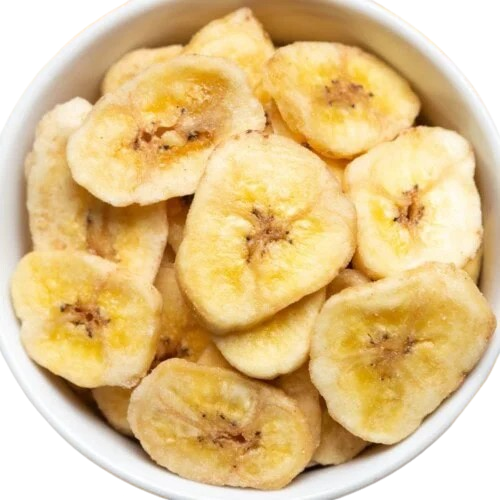
The calories in banana chips vary by portion size, with a single banana chip (4g) containing 21 calories. Banana chips nutrition facts indicate that energy increases with serving size, as a small serving (28g or 1oz) contains 145 calories, a medium serving (56g or 2oz) has 290 calories, and a large serving (85g or 3oz) provides 441 calories. Commercial brands of banana chips display specific energy values, with a serving of Bare Baked Crunchy Banana Chips (31g or 1.1oz) containing 120 calories, while a serving of Trader Joe's Sweetened Banana Chips (28g or 1oz) provides 160 calories. A standard 100g portion of sweetened fried banana chips contains 519 calories.
An evaluation of the banana chips calories profile reveals a food dense in saturated fat and sugar, primarily due to the use of coconut oil and honey or syrup during processing. A large serving (85g or 3oz) provides 2g of protein (4% DV), 28.6g of fat (37% DV), and 49.6g of carbohydrates (18% DV), including 30g of sugar. The production method dictates the nutrient density, as dehydrated unsweetened versions contain fewer calories than the deep-fried honey-dipped varieties common in snack aisles. The fruit base supports electrolyte balance, with a large serving providing 456mg of potassium, and a study by Whelton, P. K., et al. (1997) confirms that potassium intake significantly reduces blood pressure in adult populations.
The snack's global supply chain depends on massive fruit cultivation, with top producers like the Philippines harvesting over 9 million tonnes of bananas in 2022 to support the export market. High demand drives trade in major economies, where the United States imported over $1.1 billion in processed fruit products in 2022. This popular snack serves as a crunchy element in at least 15 distinct dessert preparations, such as Acai Bowls, and as a savory side dish in South Indian culinary traditions like Upperi and Nendran chips. Inflationary pressures have impacted retail costs, pushing the price of a standard bag of sweetened chips from under $1.50 in the early 2000s to over $2.99 after 2020. Menu pricing reflects these shifts, with a Halo-Halo featuring banana chip toppings at Chowking rising from $3.50 to a range between $5.50 and $6.50.
The inclusion of added sugar and saturated fat renders banana chips nutrition less favorable for daily consumption compared to fresh fruit. Health organizations like the American Heart Association advise restricting intake of saturated fats to support cardiovascular health. A large serving of banana chips contains 24.7g of saturated fat, a specific amount exceeding the daily limit for most individuals. A recommended approach involves limiting consumption to one small handful (28g) on rare occasions. Expending the 145 calories contained in a single small serving necessitates physical activity equivalent to 15 minutes of running or 20 minutes of swimming.
Banana Chips nutrition
| Stats | Weight |
|---|---|
| Carbs | 32.7 grams |
| Protein | 1.3 grams |
| Fats | 0 grams |
| Sugars | 19.8 grams |
- Large Banana Chips Calories (Nutritional Facts)
- Medium Banana Chips Calories (Nutritional Facts)
- Small Banana Chips Calories (Nutritional Facts)
- Dried Banana Chips Calories (Nutritional Facts)
- Raw Banana Chips Nutrition
- Sodium in Banana Chips
- Potassium in Banana Chips
- Sugar in Banana Chips
- Fiber in Banana Chips
- Protein in Banana Chips
- Carbs in Banana Chips
- Fat in Banana Chips
- Vitamins in Banana Chips
- Minerals in Banana Chips
Large Banana Chips Calories (Nutritional Facts)
A large serving of sweetened banana chips (85g or 3oz) contains 441 calories, 2g of protein, 28.6g of fat, 49.6g of carbohydrates, 6.5g of fiber, 30g of sugar, and 5mg of sodium.
A medium serving of sweetened banana chips (56g or 2oz) provides 290 calories, 1.3g of protein, 18.8g of fat, 32.7g of carbohydrates, 4.3g of fiber, 19.8g of sugar, and 3.4mg of sodium.
A small serving of sweetened banana chips (28g or 1oz) contains 145 calories, 0.6g of protein, 9.4g of fat, 16.4g of carbohydrates, 2.2g of fiber, 9.9g of sugar, and 1.7mg of sodium.
A serving of unsweetened, dehydrated banana chips without added oil (28g or 1oz) contains 89 calories, 1g of protein, 0.5g of fat, 23g of carbohydrates, 2.5g of fiber, 14g of sugar, and 1mg of sodium.
Raw banana chips refer to thin slices of unripe green bananas or plantains that are dehydrated without cooking, resulting in a high resistant starch content and a lower calorie density compared to fried versions, though these are rarely consumed without some form of seasoning or curing.
A large serving of sweetened banana chips (85g) contains 5mg of sodium (0% DV). A medium serving of sweetened banana chips (56g) has 3.4mg of sodium (0% DV). A small serving of sweetened banana chips (28g) contains 1.7mg of sodium (0% DV). A serving of dried banana chips (28g) contains 1mg of sodium (0% DV).
A large serving of sweetened banana chips (85g) contains 456mg of potassium (10% DV). A medium serving of sweetened banana chips (56g) has 300mg of potassium (6% DV). A small serving of sweetened banana chips (28g) contains 150mg of potassium (3% DV). A serving of dried banana chips (28g) contains 420mg of potassium (9% DV).
A large serving of sweetened banana chips (85g) contains 30g of sugar (60% DV). A medium serving of sweetened banana chips (56g) has 19.8g of sugar (40% DV). A small serving of sweetened banana chips (28g) contains 9.9g of sugar (20% DV). A serving of dried banana chips (28g) contains 14g of sugar (28% DV).
A large serving of sweetened banana chips (85g) provides 6.5g of dietary fiber (23% DV). A medium serving of sweetened banana chips (56g) has 4.3g of fiber (15% DV). A small serving of sweetened banana chips (28g) contains 2.2g of fiber (8% DV). A serving of dried banana chips (28g) provides 2.5g of fiber (9% DV).
A large serving of sweetened banana chips (85g) provides 2g of protein (4% DV). A medium serving of sweetened banana chips (56g) has 1.3g of protein (3% DV). A small serving of sweetened banana chips (28g) contains 0.6g of protein (1% DV). A serving of dried banana chips (28g) provides 1g of protein (2% DV).
A large serving of sweetened banana chips (85g) contains 49.6g of carbohydrates (18% DV). A medium serving of sweetened banana chips (56g) has 32.7g of carbohydrates (12% DV). A small serving of sweetened banana chips (28g) contains 16.4g of carbohydrates (6% DV). A serving of dried banana chips (28g) contains 23g of carbohydrates (8% DV).
A large serving of sweetened banana chips (85g) contains 28.6g of total fat (37% DV). A medium serving of sweetened banana chips (56g) has 18.8g of total fat (24% DV). A small serving of sweetened banana chips (28g) contains 9.4g of total fat (12% DV). A serving of dried banana chips (28g) contains 0.5g of total fat (1% DV).
A large serving of sweetened banana chips (85g) provides 5.4mg of Vitamin C (6% DV) and 0.22mg of Vitamin B6 (13% DV). A medium serving (56g) provides 3.5mg of Vitamin C (4% DV) and 0.15mg of Vitamin B6 (9% DV). A small serving (28g) provides 1.8mg of Vitamin C (2% DV) and 0.07mg of Vitamin B6 (4% DV). A serving of dried banana chips (28g) provides 2mg of Vitamin C (2% DV).
A large serving of sweetened banana chips (85g) provides 65mg of magnesium (15% DV) and 1.1mg of iron (6% DV). A medium serving (56g) provides 43mg of magnesium (10% DV) and 0.7mg of iron (4% DV). A small serving (28g) provides 21mg of magnesium (5% DV) and 0.35mg of iron (2% DV). A serving of dried banana chips (28g) provides 30mg of magnesium (7% DV) and 0.4mg of iron (2% DV).
Get a Custom Report on Banana Chips Nutrition Data – Contact Us!
What are the Types of Banana Chips?
The types of banana chips are Sweetened (Fried), Unsweetened (Fried), Dehydrated (Dried), and Savory (Salted). These variations are distinguished by the cooking method and seasoning, which results in different caloric densities. The following chart breaks down the nutritional differences between these types.
| Type | Description | Calories (per 100g) | Calorie Qualifications |
|---|---|---|---|
|
Sweetened (Fried)
|
Slices of banana dipped in honey or syrup and deep-fried in coconut oil. | 519 | The combination of added sugar and oil results in the highest calorie density. |
|
Unsweetened (Fried)
|
Banana or plantain slices fried in oil without added sweeteners. | 500 | The absence of sugar lowers the calories slightly, but the oil content keeps the count high. |
|
Dehydrated (Dried)
|
Banana slices with water removed via low heat, no added oil. | 346 | The lack of frying oil results in a significantly lower calorie density. |
|
Savory (Salted)
|
Plantain slices fried and seasoned with salt, turmeric, or chili. | 500 | Similar to unsweetened fried chips, but the sodium content is elevated. |
What are Desserts with Banana Chips?
Banana chips serve as a crunchy topping or ingredient in various sweet preparations, particularly in tropical and Asian-fusion cuisines. The following table enumerates desserts featuring banana chips.
| Dish Name | Calories (Estimate per serving) | Type of Dessert | Carbs (g) (Estimate) | Sugar (g) (Estimate) | Protein (g) (Estimate) | Fat (g) (Estimate) | Cuisine | Restaurants |
|---|---|---|---|---|---|---|---|---|
|
Banana Granola Parfait
|
450 | Parfait | 60 | 30 | 12 | 18 | American | Whole Foods Market |
|
Acai Bowl with Banana Chips
|
500 | Bowl | 80 | 45 | 6 | 18 | Brazilian/American | Jamba |
|
Tropical Trail Mix
|
350 | Snack Mix | 40 | 25 | 6 | 20 | American | Trader Joe's (Retail) |
|
Banana Cream Pie (Garnish)
|
450 | Pie | 55 | 35 | 5 | 25 | American | Marie Callender's |
|
Coconut Banana Chip Cookie
|
220 | Cookie | 28 | 15 | 2 | 12 | Fusion | Insomnia Cookies |
|
Frozen Yogurt with Banana Chips
|
300 | Frozen Dessert | 50 | 40 | 6 | 8 | American | Pinkberry |
|
Banana Chip Muffin
|
380 | Pastry | 50 | 25 | 5 | 18 | American | Panera Bread |
|
Chocolate Covered Banana Chips
|
300 | Confection | 35 | 28 | 3 | 18 | American | Sprouts Farmers Market |
|
Thai Fried Banana (Garnish)
|
400 | Dessert | 50 | 20 | 2 | 22 | Thai | Thai Express |
|
Banana Chip Ice Cream Sundae
|
550 | Sundae | 70 | 55 | 8 | 28 | American | Ben & Jerry's Scoop Shops |
|
Sharkara Varatti (Jaggery Chips)
|
250 | Sweet Snack | 45 | 30 | 1 | 8 | Indian (Kerala) | Indian Sweet Shops |
|
Banana Chip Cheesecake
|
600 | Cake | 55 | 40 | 8 | 40 | American | Cheesecake Factory |
|
Caramel Popcorn with Banana Chips
|
300 | Snack Mix | 45 | 30 | 2 | 12 | American | Garrett Popcorn Shops |
What are Main Dishes with Banana Chips?
Banana chips, particularly savory plantain varieties, serve as a side dish or garnish in tropical and South Asian cuisines rather than a central entree ingredient. The table below illustrates common savory dishes that include banana chips.
| Dish Name | Calories (Estimate per serving) | Type of Dish | Carbs (g) (Estimate) | Sugar (g) (Estimate) | Protein (g) (Estimate) | Fat (g) (Estimate) | Cuisine | Restaurants |
|---|---|---|---|---|---|---|---|---|
|
Kerala Sadya (with Upperi)
|
800 | Feast/Meal | 120 | 15 | 20 | 30 | Indian | Saravana Bhavan |
|
Cuban Sandwich with Plantain Chips
|
750 | Sandwich/Side | 65 | 8 | 35 | 40 | Cuban | Versailles Restaurant |
|
Ceviche with Chifles
|
400 | Appetizer | 30 | 4 | 25 | 15 | Peruvian | La Mar |
|
Caribbean Curry with Chips
|
600 | Entree | 70 | 10 | 25 | 25 | Caribbean | Bahama Breeze |
|
Poke Bowl with Plantain Crunch
|
550 | Bowl | 60 | 8 | 30 | 22 | Hawaiian | Sweetfin |
|
Black Bean Soup with Chips
|
350 | Soup | 50 | 5 | 12 | 10 | Cuban/Latin | Havana Central |
|
Guacamole with Plantain Chips
|
450 | Appetizer | 35 | 4 | 6 | 35 | Mexican | Rosa Mexicano |
|
Jerk Chicken with Chip Side
|
700 | Entree | 60 | 10 | 35 | 35 | Jamaican | Golden Krust |
|
Arroz con Pollo (Chip Garnish)
|
650 | Entree | 80 | 5 | 30 | 25 | Latin American | Pollo Campero |
|
Tuna Tartare with Plantain Chips
|
350 | Appetizer | 20 | 2 | 20 | 22 | Fusion | Nobu |
|
Brazilian Feijoada (Side)
|
900 | Stew/Meal | 85 | 5 | 45 | 45 | Brazilian | Fogo de Chão |
|
Fish Tacos with Chip Side
|
500 | Entree | 45 | 4 | 20 | 25 | Mexican | Rubio's Coastal Grill |
|
Lentil Soup with Banana Chips
|
300 | Soup | 40 | 3 | 12 | 8 | Indian | Anjappar Chettinad |
|
Pulled Pork Slider with Chips
|
550 | Sandwich | 50 | 12 | 25 | 28 | American BBQ | Famous Dave's |
What Cuisines Prefer Banana Chips the Most?
Banana chips function as a staple snack and ceremonial food in Southeast Asian, South Indian, and Latin American culinary traditions. The table below details the cuisines that frequently incorporate this item.
| Cuisine | Dish | Types of Banana Chips | Calories (Estimate) | Restaurant(s) |
|---|---|---|---|---|
|
Indian (Kerala)
|
Upperi/Kaya Varuthathu | Savory/Fried in Coconut Oil | 150-200 | Saravana Bhavan |
|
Filipino
|
Halo-Halo/Snack | Sweetened/Fried | 200-300 | Chowking |
|
Cuban
|
Mariquitas (Side) | Savory Plantain | 150-250 | Versailles Restaurant |
|
Peruvian
|
Chifles (Garnish) | Savory Plantain | 150-200 | La Mar |
|
Thai
|
Gluay Kaek (Variant) | Sweetened/Sesame | 200-300 | Thai Express |
|
Jamaican
|
Plantain Chips (Snack) | Savory/Spicy | 150-250 | Golden Krust |
|
Indonesian
|
Keripik Pisang | Sweet/Chocolate | 200-350 | Indo Java |
|
Brazilian
|
Salgado (Side) | Savory | 150-250 | Fogo de Chão |
|
American (Health)
|
Trail Mix Component | Sweetened/Dried | 150-250 | Whole Foods Market |
|
Vietnamese
|
Banh Chuoi (Variant) | Sweet/Fried | 200-300 | Lee's Sandwiches |
|
Ecuadorian
|
Chifles (Soup Side) | Savory | 150-200 | Local Ecuadorian Spots |
|
Nigerian
|
Ipekere | Savory Plantain | 200-300 | Local West African Spots |
|
Puerto Rican
|
Platanutres | Savory | 150-250 | Mofongo Restaurants |
|
Colombian
|
Patacones (Thin) | Savory | 150-250 | Mondongo's |
|
Malaysian
|
Kerepek Pisang | Salty/Sweet | 180-280 | PappaRich |
Which Countries Produce the Most Banana Chips?
The top producers of bananas, which serve as the raw material for banana chips, are India, China, and the Philippines. The Philippines is specifically noted as the leading exporter of the processed sweetened banana chips found globally. The table below shows the production quantity of bananas in key countries.
| Country | 2003 | 2008 | 2013 | 2018 | 2019 | 2020 | 2021 | 2022 |
|---|---|---|---|---|---|---|---|---|
| India | 16,000,000 | 26,000,000 | 27,500,000 | 30,800,000 | 30,500,000 | 31,500,000 | 33,000,000 | 34,500,000 |
| China | 6,000,000 | 8,000,000 | 11,000,000 | 11,200,000 | 11,500,000 | 11,500,000 | 11,700,000 | 11,800,000 |
| Philippines | 5,500,000 | 8,500,000 | 8,600,000 | 9,300,000 | 9,100,000 | 9,000,000 | 8,900,000 | 9,200,000 |
| Indonesia | 4,500,000 | 5,800,000 | 6,200,000 | 7,200,000 | 7,300,000 | 8,100,000 | 8,700,000 | 9,000,000 |
| Brazil | 6,500,000 | 7,000,000 | 6,900,000 | 6,700,000 | 6,800,000 | 6,600,000 | 6,800,000 | 6,900,000 |
Which Countries Consume the Most Banana Chips?
The top consumers of processed fruit snacks based on import volumes are the United States, China, and the United Kingdom. Consumption data for banana chips is best represented by import values for the broader category of prepared or preserved fruits. The table below shows import values for this category in key markets.
| Country | 2003 | 2008 | 2013 | 2018 | 2019 | 2020 | 2021 | 2022 |
|---|---|---|---|---|---|---|---|---|
| United States | 400,000 | 600,000 | 800,000 | 950,000 | 1,000,000 | 1,050,000 | 1,100,000 | 1,200,000 |
| China | 50,000 | 100,000 | 250,000 | 400,000 | 450,000 | 500,000 | 600,000 | 700,000 |
| United Kingdom | 200,000 | 300,000 | 400,000 | 450,000 | 460,000 | 480,000 | 500,000 | 550,000 |
| Germany | 150,000 | 250,000 | 350,000 | 400,000 | 410,000 | 420,000 | 450,000 | 480,000 |
| Japan | 100,000 | 150,000 | 200,000 | 250,000 | 260,000 | 270,000 | 290,000 | 310,000 |
How Do Prices of Banana Chips-Including Dishes Change?
The cost of banana chips and related dishes on fast-casual and restaurant menus has risen over the past ten years due to higher wholesale costs for imported dried fruit and increased labor expenses. This upward price trend is evident on the menus of well-known food service chains.
| Restaurant | Dish | Old Price (Year) | Current Price (2024/2025 Estimate) |
|---|---|---|---|
| Jamba | Acai Primo Bowl (with Banana) | $6.99 (2014) | $12.50 - $19.79 |
| Whole Foods Market | Banana Chips (Bulk per lb) | $3.99 (2012) | $5.99 - $11.29 |
| Trader Joe's | Banana Chips (Bag) | $1.49 (2013) | $1.99 - $2.49 |
What is the Banana Chips Calorie for 100 Grams?
A 100g serving of sweetened, fried banana chips contains 519 calories. A 100g serving of unsweetened, dried banana chips provides 346 calories.
What is the Banana Chips Calorie for 1 KG?
One kilogram (1000g) of sweetened, fried banana chips contains 5,190 calories. One kilogram (1000g) of unsweetened, dried banana chips provides 3,460 calories.
What is the Calorie of 1 Banana Chips?
A single fried banana chip (4g) contains 21 calories.
What are the Health Benefits of Banana Chips?
The nutritional profile of banana chips offers specific advantages derived from the mineral content of the fruit, provided the added sugar and fat are minimal. A compilation of these health benefits is detailed below.
- Supports Cardiovascular Health: Bananas are a recognized source of potassium, an electrolyte essential for maintaining healthy blood pressure levels. A meta-analysis by Aburto, N. J., et al. (2013), "Effect of increased potassium intake on cardiovascular risk factors and disease: systematic review and meta-analyses," confirms that increased potassium intake reduces blood pressure and the risk of stroke.
- Aids Muscle and Nerve Function: The snack contains magnesium, a mineral vital for muscle contraction and nerve transmission. A review by Volpe, S. L. (2013), "Magnesium in disease prevention and overall health," highlights that adequate magnesium status supports physical performance and prevents muscle cramps.
- Provides Quick Energy: The high carbohydrate content serves as a rapid source of fuel for the body, making the snack useful for endurance activities. A study by Nieman, D. C., et al. (2012), "Bananas as an Energy Source during Exercise: A Metabolomics Approach," found that bananas provide energy substrates comparable to carbohydrate drinks during prolonged exercise.
What are the Downsides of Banana Chips?
The processing methods involving deep-frying and sweetening present specific health liabilities. An examination of these potential health risks is provided here.
- High Saturated Fat: Manufacturers typically fry banana chips in coconut oil, leading to a high concentration of saturated fats. A review by Sacks, F. M., et al. (2017), "Dietary Fats and Cardiovascular Disease: A Presidential Advisory From the American Heart Association," advises that replacing saturated fats with unsaturated fats reduces the risk of cardiovascular disease. A healthier alternative is a fresh banana. A suggested amount is to limit consumption to one small handful (28g) per week.
- Formation of Acrylamide: The high-temperature frying of carbohydrate-rich foods promotes the formation of acrylamide. A study by Mottram, D. S., et al. (2002), "Acrylamide is formed in the Maillard reaction," identifies this compound as a potential carcinogen formed when starchy foods are cooked at high temperatures.
Are Banana Chips Good for You?
No, banana chips are not a healthy food for regular consumption because the deep-frying process significantly alters the nutritional profile of the fruit, adding excessive calories and oxidized fats. The snack's impact on cardiovascular health is detrimental. A review by Gadiraju, T. V., et al. (2015), "Fried Food Consumption and Cardiovascular Health: A Review of Current Evidence," establishes a clear correlation between the frequent intake of fried foods and an increased risk of coronary artery disease and heart failure. For weight management, the high energy density presents a major obstacle. A study by Ledikwe, J. H., et al. (2006), "Dietary energy density is associated with energy intake and weight status in US adults," found that individuals with diets high in energy-dense foods, such as fried snacks, have significantly higher body mass indexes.
The processing also degrades heat-sensitive nutrients. A review by Fillion, L., & Henry, C. J. (1998), "Nutrient losses and gains during frying: a review," confirms that deep-frying at high temperatures leads to the degradation of heat-sensitive vitamins like Vitamin C and carotenoids, reducing the antioxidant capacity compared to the fresh fruit.
Is Banana Chips a Good Snack for People with Diabetes?
No, banana chips are not a good snack for people with diabetes due to the high glycemic load resulting from added sugars and the removal of water. The concentration of carbohydrates causes rapid blood sugar spikes. A study by Atkinson, F. S., et al. (2008), "International tables of glycemic index and glycemic load values: 2008," classifies dried and sweetened bananas as having a higher glycemic load than fresh bananas. The added fat does not sufficiently mitigate the glycemic response. A randomized trial by O'Keefe, J. H., et al. (2008), "Dietary strategies for improving post-prandial glucose, lipids, inflammation, and cardiovascular health," emphasizes minimizing processed carbohydrates to maintain glycemic control.
Furthermore, the caloric density promotes weight gain, which complicates diabetes management. A review by Franz, M. J., et al. (2012), "Macronutrients, food groups, and eating patterns in the management of diabetes," recommends whole foods over processed snacks for optimal weight and glucose management. A preferred consumption rate is to avoid sweetened chips entirely and limit unsweetened dried bananas to a very small portion (15g) paired with protein.
How Does Calorie Change According to Banana Chips Types?
The cooking medium and the addition of sweeteners determine the calorie count of a banana chip variety. Sweetened fried banana chips have the highest calorie value at 519 calories per 100 grams, a consequence of the porous fruit absorbing oil and the coating of honey or syrup. Dehydrated banana chips contain the lowest calorie value at 346 calories per 100 grams, representing a version prepared without added fats. Savory fried plantain chips fall in the high range, as the starch absorbs significant oil during deep-frying, similar to potato chips. Unsweetened fried versions are slightly lower than sweetened ones but still exceed 500 calories per 100 grams due to the fat content.
Do Banana Chips Contain More Calories Than Fresh Bananas?
Yes, banana chips contain significantly more calories than fresh bananas because the removal of water concentrates the energy density of the fruit. A standard 100g serving of fresh banana provides 89 calories, whereas the same weight of fried banana chips contains 519 calories. The dehydration process reduces the volume, allowing for a much higher intake of sugar and carbohydrates per gram, while the deep-frying process adds substantial calories from fat that are absent in the raw fruit.
Are Banana Chips Fried?
Yes, commercial banana chips are fried in oil, most commonly coconut oil or palm oil, to achieve a crispy texture. The process involves slicing the fruit and submerging the pieces in hot oil, which dehydrates the banana while simultaneously impregnating the tissue with fat. A review of ingredient labels from major brands like Bare and generic bulk bin varieties confirms that "oil" is the second primary ingredient after bananas. While baked and freeze-dried options exist, the standard product found in snack aisles is a deep-fried confection.
What is the Origin of Banana Chips?
The origin of banana chips traces back to the Kerala region of India, where the frying of Nendran bananas in coconut oil is a centuries-old tradition integral to the Onam festival feast known as Sadya. The dish, known locally as Upperi or Kaya Varuthathu, utilizes unripe plantains. Simultaneously, similar traditions evolved in the Philippines and Latin America, where the abundance of bananas and plantains led to the development of preservation methods involving drying and frying. The sweetened, honey-dipped version popular in the West is largely a product of the Philippine export industry, which began commercializing the snack for global markets in the mid-20th century.
Explore More Snacks
Discover more Snacks with detailed nutrition facts, calorie counts, vitamins, minerals, and health benefits. Compare similar foods, serving sizes, macronutrients, and key nutrients to find the best option for your diet and nutrition goals.
 Apple Chips calories
 Chips calories
 Corn Nuts calories
 Crackers calories
 Granola Bar calories
 Kale Chips calories
 Nachos calories
 Pita Chips calories
 Plantain Chips calories
 Pop Chips calories
 Popcorn calories
 Pretzels calories