Calories and Nutritions in Plantain Chips
Plantain chips are a savory snack made from thin slices of green or ripe plantains that are fried or baked until crisp. Plantain chips calories vary based on the ripeness of the fruit and the cooking method employed. A large serving of fried chips (85g) contains 453 calories while a small bag of plantain chips (1 oz) has 150 calories. The type of processing significantly impacts energy density, as dehydrated dried plantains provide 339 calories per 100g whereas raw plantain slices contain only 122 calories for the same weight. A single Goya Plantain Chip contains 8 calories while one Chifles Plantain Chip provides 10 calories.
An analysis of plantain chips nutrition facts reveals a food rich in carbohydrates and healthy fats when prepared correctly. A large serving of fried plantain chips (85g) delivers 54g of carbohydrates and 4g of dietary fiber along with 25.5g of fat and 2g of protein.
Global production of plantain chips is led by Cameroon, Ghana, and Colombia which cultivate the plantain fruit to support local and export markets. Major consumers include the United States, Colombia, and Nigeria where the snack is a popular alternative to potato chips. The ingredient serves as a core component in at least three dishes such as the Cuban Mariquitas, Ecuadorian Chifles, and Puerto Rican Platanutres. Market prices of plantain have risen steadily with wholesale bulk chips increasing from between $2.00 and $3.00 per pound in the early 2000s to retail prices between $5.00 and $8.00 per pound by 2024. Menu pricing reflects this trend as a side of Plantain Chips at Havana Central increased from $5.00 to between $8.00 and $14.95 in 2024.
Plantain chips are valued for their crunch and nutrient density providing significant amounts of Vitamin A and potassium. Dietitians recommend baked or dehydrated varieties as a healthier alternative to deep-fried snacks due to lower saturated fat content. A small serving of fried plantain chips contains 150 calories, which can be burned doing 15 minutes of running or 19 minutes of swimming. People monitoring sodium intake should be cautious with salted varieties as processed brands often contain high levels of added salt.
Plantain Chips nutrition
| Stats | Weight |
|---|---|
| Carbs | 36 grams |
| Protein | 1.4 grams |
| Fats | 0 grams |
| Sugars | 4 grams |
- Large Plantain Chips Calories (Nutritional Facts)
- Medium Plantain Chips Calories (Nutritional Facts)
- Small Plantain Chips Calories (Nutritional Facts)
- Dried Plantain Calories (Nutritional Facts)
- Raw Plantain Chips Nutrition
- Sodium in Plantain Chips
- Potassium in Plantain Chips
- Sugar in Plantain Chips
- Fiber in Plantain Chips
- Protein in Plantain Chips
- Carbs in Plantain Chips
- Fat in Plantain Chips
- Vitamins in Plantain Chips
- Minerals in Plantain Chips
Large Plantain Chips Calories (Nutritional Facts)
A large serving of fried plantain chips (85g or 3oz) contains 453 calories, 2g of protein, 25.5g of fat, 54g of carbohydrates, 4g of dietary fiber, 6g of sugar, and 260mg of sodium.
A medium serving of fried plantain chips (57g or 2oz) provides 302 calories, 1.4g of protein, 17g of fat, 36g of carbohydrates, 2.7g of dietary fiber, 4g of sugar, and 174mg of sodium.
A small serving of fried plantain chips (28g or 1oz) contains 150 calories, 0.7g of protein, 8.5g of fat, 18g of carbohydrates, 1.3g of dietary fiber, 2g of sugar, and 87mg of sodium.
A serving of dehydrated dried plantains (100g or 3.5oz) contains 339 calories, 2.5g of protein, 0.6g of fat, 89g of carbohydrates, 6g of dietary fiber, 45g of sugar, and 15mg of sodium. The dehydration process concentrates the natural sugars and carbohydrates significantly compared to the fresh fruit.
A serving of raw plantain slices (100g or 3.5oz) contains 122 calories, 1.3g of protein, 0.4g of fat, 32g of carbohydrates, 2.3g of dietary fiber, 15g of sugar, and 4mg of sodium.
A large serving of salted plantain chips (85g) contains 260mg of sodium (11% DV). A medium serving of salted plantain chips (57g) has 174mg of sodium (7% DV). A small serving of salted plantain chips (28g) contains 87mg of sodium (4% DV). A serving of dehydrated dried plantains (100g) provides 15mg of sodium (1% DV). A serving of raw plantain slices (100g) provides 4mg of sodium (0% DV).
A large serving of fried plantain chips (85g) contains 690mg of potassium (15% DV). A medium serving of fried plantain chips (57g) has 460mg of potassium (10% DV). A small serving of fried plantain chips (28g) contains 230mg of potassium (5% DV). A serving of dehydrated dried plantains (100g) provides 1050mg of potassium (22% DV). A serving of raw plantain slices (100g) provides 499mg of potassium (11% DV).
A large serving of fried plantain chips (85g) contains 6g of sugar. A medium serving of fried plantain chips (57g) has 4g of sugar. A small serving of fried plantain chips (28g) contains 2g of sugar. A serving of dehydrated dried plantains (100g) contains 45g of sugar. A serving of raw plantain slices (100g) provides 15g of sugar.
A large serving of fried plantain chips (85g) provides 4g of dietary fiber (14% DV). A medium serving of fried plantain chips (57g) has 2.7g of fiber (10% DV). A small serving of fried plantain chips (28g) contains 1.3g of fiber (5% DV). A serving of dehydrated dried plantains (100g) has 6g of dietary fiber (21% DV). A serving of raw plantain slices (100g) contains 2.3g of dietary fiber (8% DV).
A large serving of fried plantain chips (85g) provides 2g of protein (4% DV). A medium serving of fried plantain chips (57g) has 1.4g of protein (3% DV). A small serving of fried plantain chips (28g) contains 0.7g of protein (1% DV). A serving of dehydrated dried plantains (100g) provides 2.5g of protein (5% DV). A serving of raw plantain slices (100g) contains 1.3g of protein (3% DV).
A large serving of fried plantain chips (85g) contains 54g of carbohydrates (20% DV). A medium serving of fried plantain chips (57g) has 36g of carbohydrates (13% DV). A small serving of fried plantain chips (28g) contains 18g of carbohydrates (7% DV). A serving of dehydrated dried plantains (100g) has 89g of carbohydrates (32% DV). A serving of raw plantain slices (100g) provides 32g of carbohydrates (12% DV).
A large serving of fried plantain chips (85g) contains 25.5g of total fat (33% DV). A medium serving of fried plantain chips (57g) has 17g of total fat (22% DV). A small serving of fried plantain chips (28g) contains 8.5g of total fat (11% DV). A serving of dehydrated dried plantains (100g) provides 0.6g of total fat (1% DV). A serving of raw plantain slices (100g) provides 0.4g of total fat (1% DV).
A large serving of fried plantain chips (85g) provides 12mg of Vitamin C (13% DV) and 70mcg of Vitamin A (8% DV). A medium serving of fried plantain chips (57g) has 8mg of Vitamin C (9% DV). A small serving of fried plantain chips (28g) contains 4mg of Vitamin C (4% DV). A serving of dehydrated dried plantains (100g) provides 30mg of Vitamin C (33% DV). A serving of raw plantain slices (100g) contains 18.4mg of Vitamin C (20% DV) and 56mcg of Vitamin A (6% DV).
A large serving of fried plantain chips (85g) provides 55mg of magnesium (13% DV) and 0.8mg of iron (4% DV). A medium serving of fried plantain chips (57g) has 37mg of magnesium (9% DV). A small serving of fried plantain chips (28g) contains 18mg of magnesium (4% DV). A serving of dehydrated dried plantains (100g) provides 80mg of magnesium (19% DV). A serving of raw plantain slices (100g) contains 37mg of magnesium (9% DV) and 0.6mg of iron (3% DV).
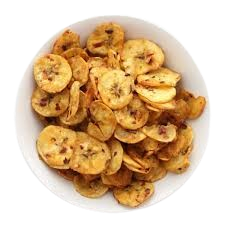
Get a Custom Report on Plantain Chips Nutrition Data – Contact Us!
What are the Types of Plantain Chips?
The types of plantain chips are Green (Savory), Sweet (Ripe/Maduros), Spicy/Garlic, and Baked. These variations differ based on the ripeness of the fruit used and the cooking method applied. The chart below outlines the characteristics of each category.
| Type | Description | Calories (Per 100g) | Calorie Qualifications |
|---|---|---|---|
|
Green Plantain Chips (Savory)
|
Made from unripe, starchy fruit; usually salted. | 533 | The starch absorbs oil readily during frying, resulting in high caloric density. |
|
Sweet Plantain Chips (Maduros)
|
Made from ripe, yellow fruit; naturally sweet. | 500 | The higher sugar content leads to caramelization, often retaining slightly less oil than starchier green versions. |
|
Baked Plantain Chips
|
Cooked with hot air rather than deep frying. | 450 | The reduction in cooking oil lowers the total fat and calorie count compared to fried versions. |
|
Dehydrated Plantain Chips
|
Dried without added fat. | 339 | The absence of cooking oil results in the lowest caloric density per gram. |
What are Desserts With Plantain Chips?
Plantain chips appear in Latin American and fusion desserts, utilizing the natural sweetness of the ripe fruit or the crunch of the green variety to complement syrups and chocolates. The following table lists sweet preparations utilizing this ingredient.
| Dish Name | Calories (Estimate) | Type of Dish | Carbs (g) (Estimate) | Sugar (g) (Estimate) | Protein (g) (Estimate) | Fat (g) (Estimate) | Cuisine | Restaurants |
|---|---|---|---|---|---|---|---|---|
|
Chocolate Covered Plantain Chips
|
280 | Coated Snack | 30 | 18 | 2 | 16 | Fusion | Trader Joe's (Retail) |
|
Sweet Plantain Chips with Honey
|
200 | Glazed Snack | 35 | 20 | 1 | 8 | Cuban | Havana Central (New York, NY) |
|
Plantain Chip Crumble (Ice Cream)
|
350 | Dessert Topping | 45 | 25 | 4 | 18 | Fusion | Coppelia (New York, NY) |
|
Cinnamon Sugar Plantain Chips
|
180 | Sweet Snack | 28 | 12 | 1 | 9 | Mexican | La Monarca Bakery (Los Angeles, CA) |
|
Plantain Nachos (Dessert)
|
450 | Sweet Nachos | 60 | 30 | 5 | 22 | Fusion | Chiflez (Miami, FL) |
|
Caramelized Plantain Chips
|
220 | Glazed Snack | 32 | 18 | 1 | 10 | Caribbean | Bahama Breeze |
|
Plantain Chip Parfait
|
300 | Yogurt Dessert | 40 | 20 | 8 | 12 | Health Fusion | Tropical Smoothie Cafe (National) |
|
Coconut Breaded Plantain Chips
|
250 | Fried Dessert | 30 | 15 | 2 | 14 | Caribbean | Miss Lily's (New York, NY) |
|
Plantain Chip Turon (Deconstructed)
|
320 | Pastry Fusion | 45 | 22 | 3 | 15 | Filipino Fusion | Jeepney (New York, NY - Historical) |
|
Rum Glazed Plantain Chips
|
210 | Boozy Snack | 28 | 16 | 1 | 8 | Jamaican | The Door (Queens, NY) |
What are the Main Dishes With Plantain Chips?
Plantain chips serve as a primary scoop, side dish, or garnish in Latin American and Caribbean cuisines. The chips replace bread or tortilla chips in many dining contexts. Savory entrees incorporating the ingredient are listed here.
| Dish Name | Calories (Estimate) | Type of Dish | Carbs (g) (Estimate) | Sugar (g) (Estimate) | Protein (g) (Estimate) | Fat (g) (Estimate) | Cuisine | Restaurants |
|---|---|---|---|---|---|---|---|---|
|
Ceviche with Chifles
|
350 | Seafood Appetizer | 25 | 4 | 25 | 12 | Peruvian | Pio Pio (New York, NY) |
|
Mariquitas with Mojo
|
300 | Appetizer | 35 | 6 | 2 | 18 | Cuban | Versailles (Los Angeles, CA) |
|
Encebollado (Tuna Soup)
|
500 | Fish Soup | 45 | 5 | 35 | 15 | Ecuadorian | Ñaño Ecuadorian Kitchen (New York, NY) |
|
Plantain Nachos (Savory)
|
650 | Loaded Chips | 55 | 8 | 25 | 40 | Puerto Rican | La Placita (Miami, FL) |
|
Guacamole with Plantain Chips
|
400 | Dip Appetizer | 25 | 4 | 5 | 32 | Mexican Fusion | Rosa Mexicano (National) |
|
Cuban Sandwich (with Chips)
|
850 | Sandwich Plate | 75 | 8 | 45 | 45 | Cuban | Puerto Sagua (Miami, FL) |
|
Black Bean Dip with Chips
|
350 | Dip Appetizer | 40 | 2 | 12 | 15 | Latin American | Las Palmas (Chicago, IL) |
|
Shrimp Cocktail (Colombian)
|
450 | Seafood | 30 | 12 | 20 | 25 | Colombian | Bogota Latin Bistro (Brooklyn, NY) |
|
Fried Fish with Plantain Chips
|
700 | Seafood Plate | 50 | 5 | 35 | 40 | Caribbean | Fishey's (Miami, FL) |
|
Lechon Asado (with Mariquitas)
|
800 | Roast Pork | 45 | 6 | 55 | 50 | Cuban | Larios on the Beach (Miami, FL) |
What Cuisines Prefer Plantain Chips the Most?
Plantain chips function as a foundational staple in Cuban, Ecuadorian, and Puerto Rican food cultures. The following chart identifies food cultures where this ingredient is essential.
| Cuisine | Dish | Types of Plantain Chips | Calories (Estimate) | Restaurant(s) |
|---|---|---|---|---|
|
Cuban
|
Mariquitas | Green (Long Sliced) | 300 | Versailles (Los Angeles, CA) |
|
Ecuadorian
|
Chifles | Green (Round/Long) | 150 | Ñaño Ecuadorian Kitchen (New York, NY) |
|
Peruvian
|
Chifles (Side) | Green (Round) | 150 | Pio Pio (New York, NY) |
|
Puerto Rican
|
Platanutres | Green (Round) | 160 | La Placita (Miami, FL) |
|
Indian (Kerala)
|
Kaya Varuthathu | Green (Coconut Oil) | 180 | Taste of Kerala (New York, NY) |
|
Nigerian
|
Ipekere | Unripe/Ripe | 200 | Buka (Brooklyn, NY) |
|
Colombian
|
Platanitos | Green (Round) | 150 | Bogota Latin Bistro (Brooklyn, NY) |
|
Dominican
|
Platanitos | Green (Round) | 160 | Malecon (New York, NY) |
|
Guatemalan
|
Plataninas | Green (Round) | 150 | Pollo Campero |
|
Honduran
|
Tajadas (Chips) | Green (Long) | 180 | Honduras Kitchen (Los Angeles, CA) |
Which Countries Produce the Most Plantain Chips?
The top producers of plantain chips align with the major cultivators of plantains, primarily in Africa and Latin America. Cameroon, Ghana, and Colombia lead the global production of the raw fruit, which directly supports the local and export markets for chips. Colombia and Ecuador serve as the primary exporters of processed chifles to the United States and Europe. The table below shows the estimated production of plantains, the raw material for chips, for the leading countries over the last two decades.
| Country | 2003 | 2008 | 2013 | 2018 | 2019 | 2020 | 2021 | 2022 |
|---|---|---|---|---|---|---|---|---|
| Cameroon | 2,500 | 3,200 | 3,800 | 4,500 | 4,600 | 4,800 | 4,900 | 5,100 |
| Ghana | 2,300 | 3,000 | 3,600 | 4,200 | 4,300 | 4,500 | 4,700 | 4,900 |
| Uganda | 2,100 | 2,800 | 3,400 | 3,900 | 4,000 | 4,100 | 4,200 | 4,300 |
| Colombia | 2,800 | 3,100 | 3,300 | 3,500 | 3,600 | 3,700 | 3,800 | 3,900 |
| Nigeria | 2,000 | 2,400 | 2,800 | 3,100 | 3,150 | 3,200 | 3,300 | 3,400 |
| Philippines | 800 | 900 | 1,000 | 1,100 | 1,150 | 1,200 | 1,250 | 1,300 |
| Peru | 1,500 | 1,700 | 1,900 | 2,100 | 2,150 | 2,200 | 2,250 | 2,300 |
| Ivory Coast | 1,400 | 1,500 | 1,600 | 1,800 | 1,850 | 1,900 | 1,950 | 2,000 |
Which Countries Consume the Most Plantain Chips?
The top consumers of plantain chips are the United States, Colombia, and Nigeria. The United States represents the largest import market for processed plantain snacks, driven by the demand for gluten-free and paleo-friendly alternatives to potato chips. Colombia and Ecuador maintain high domestic consumption rates, where the chips are a standard accompaniment to soups and ceviches. The table below shows the import values for prepared fruits and vegetables (including plantain chips) in key markets.
| Country | 2003 | 2008 | 2013 | 2018 | 2019 | 2020 | 2021 | 2022 |
|---|---|---|---|---|---|---|---|---|
| United States | 120 | 250 | 450 | 680 | 720 | 780 | 850 | 920 |
| United Kingdom | 45 | 80 | 120 | 180 | 190 | 210 | 230 | 250 |
| Netherlands | 30 | 55 | 85 | 130 | 140 | 160 | 175 | 190 |
| Canada | 25 | 45 | 70 | 110 | 115 | 125 | 135 | 145 |
| France | 20 | 40 | 65 | 95 | 100 | 110 | 120 | 130 |
| Germany | 15 | 30 | 50 | 80 | 85 | 95 | 105 | 115 |
| Spain | 12 | 25 | 45 | 70 | 75 | 85 | 95 | 105 |
| Belgium | 10 | 20 | 35 | 55 | 60 | 65 | 70 | 80 |
How Do Prices of Plantain Chips-Including Dishes Change?
The cost of menu items featuring plantain chips has increased noticeably, reflecting the rising costs of the main entrees they accompany and the labor involved in frying. The table below displays the price changes for specific menu items at established restaurants.
| Brand/Restaurant | Dish | Old Price (Year) | Current Price (2024/2025) |
|---|---|---|---|
| Havana Central (New York, NY) | Lunch Bowl served with Plantain Chips (Side) | $5.00 (2014) | $8.00 - $14.95 |
| Bogota Latin Bistro (Brooklyn) | Dip Sampler (with plantain chips) | $8.00 (2011) | $14.00 - $18.00 |
| Chifles (Retail US) | Plantain Chips (5oz) | $1.99 (2015) | $3.49 - $4.50 |
| Goya (Retail US) | Plantain Chips (5oz) | $1.79 (2014) | $2.99 - $3.85 |
| Trader Joe's (Retail US) | Roasted Plantain Chips | $2.69 (2016) | $3.29 - $5.47 |
What is the Plantain Chips Calorie for 100 Grams?
A 100g serving of fried plantain chips contains 533 calories, while a 100g serving of raw plantain slices provides 122 calories and a 100g serving of dehydrated dried plantains contains 339 calories.
What is the Plantain Chips Calorie for 1 KG?
One kilogram (1000g) of fried plantain chips contains 5,330 calories, whereas one kilogram (1000g) of raw plantain slices provides 1,220 calories and one kilogram (1000g) of dehydrated dried plantains contains 3,390 calories.
What is the Calorie of 1 Plantain Chips?
A single fried plantain chip (2g) contains 10 calories, while a single slice of raw plantain (15g) provides 18 calories. Commercial brands vary, as a single Goya Plantain Chip (1.5g) provides 8 calories, and a single Chifles Plantain Chip (2g) contains 10 calories.
What are the Health Benefits of Plantain Chips?
Plantain chips offer measurable health benefits such as specific advantages related to immune support, metabolic function, and digestive maintenance. The snack serves as a dense source of Vitamins A and C, along with essential minerals. Key physiological advantages of plantain chips are shown below.
- Boosts Immune System: Plantain chips contain significant levels of Vitamin A and Vitamin C, antioxidants known to enhance immune response. A study by Carr, A. C., & Maggini, S. (2017), "Vitamin C and Immune Function," confirmed that adequate intake of these micronutrients supports the cellular defense against pathogens and reduces oxidative stress.
- Supports Metabolic Function: The food supplies a high concentration of magnesium, a mineral critical for energy production and enzyme activity. Research by Volpe, S. L. (2013), "Magnesium in disease prevention and overall health," established that magnesium participates in over 300 enzymatic reactions, regulating blood pressure and insulin metabolism.
- Regulates Blood Pressure: The high potassium content in plantains aids in vasodilation and fluid balance. A review by Weaver, C. M. (2013), "Potassium and health," highlights that increased potassium intake is associated with lower blood pressure and a reduced risk of stroke.
What are the Downsides of Plantain Chips?
Plantain chips show notable downsides such as health risks linked to acrylamide formation, high sodium content, and caloric density. These components require monitoring to prevent chemical exposure and cardiovascular strain.
- Contains Acrylamide: The deep-frying of starchy plantains at high temperatures promotes the formation of acrylamide, a potential carcinogen. A study by Pedreschi, F., et al. (2006), "Acrylamide content in fried potato and plantain chips," found that plantain chips often contain higher levels of acrylamide compared to other fried snacks due to the specific sugar-amino acid composition of the fruit.
- Elevates Sodium Intake: The seasoning process involves substantial amounts of salt, leading to excessive sodium consumption. Research by He, F. J., & MacGregor, G. A. (2009), "A comprehensive review on salt and health," links high sodium intake from processed snacks to hypertension and increased cardiovascular risk.
- Increases Caloric Density: The deep-frying process causes the porous starch structure to absorb substantial amounts of oil, drastically increasing the energy count. Research by Gadiraju, T. V., et al. (2015), "Fried Food Consumption and Cardiovascular Health: A Review of Current Evidence," associates frequent consumption of deep-fried foods with a higher risk of obesity and type 2 diabetes. A safer alternative for individuals monitoring carcinogen or fat intake is baked plantain slices or dehydrated fruit. A suggested daily amount involves limiting consumption to a single small serving (28g) on rare occasions.
Are Plantain Chips Good for You?
Yes, plantain chips are good for health in moderation because the fruit offers a rich profile of Vitamin A, Vitamin C, and magnesium that support immune and metabolic systems. The high Vitamin A content supports vision and skin health, a benefit highlighted by Carr, A. C., & Maggini, S. (2017), "Vitamin C and Immune Function." The presence of magnesium aids in muscle and nerve function, as noted by Volpe, S. L. (2013), "Magnesium in disease prevention and overall health." The snack also supports cardiovascular health through significant potassium levels, which Weaver, C. M. (2013), "Potassium and health," identified as a critical factor in maintaining healthy blood pressure levels.
Are Plantain Chips Healthy?
No, plantain chips are not healthy as a daily staple due to the deep-frying process which adds significant saturated fats and calories. The high thermal processing creates acrylamide, a chemical concern raised by Pedreschi, F., et al. (2006), "Acrylamide content in fried potato and plantain chips." The excessive sodium levels found in commercial brands pose risks for blood pressure regulation, supported by He, F. J., & MacGregor, G. A. (2009), "A comprehensive review on salt and health." The consumption of fried foods correlates with adverse metabolic outcomes, as demonstrated by Gadiraju, T. V., et al. (2015), "Fried Food Consumption and Cardiovascular Health: A Review of Current Evidence," which links such snacks to increased risks of coronary artery disease.
How Do Calories Change According to Plantain Chips Types?
The calorie count varies significantly between the processing methods applied to the plantain chips. A serving of Fried Green Plantain Chips contains 533 calories per 100 grams, representing the highest energy density due to the absorption of oil into the starchy matrix. Sweet Plantain Chips present a slightly lower profile at roughly 500 calories per 100 grams, as the sugar content alters the texture and oil uptake. Baked Plantain Chips provide a moderate value of 450 calories per 100 grams, reflecting the reduction of added fats. Dehydrated Plantain Chips provide the lowest density at 339 calories per 100 grams, reflecting the natural sugar and starch content without the caloric load of frying oil.
Are Plantain Chips Healthier Than Potato Chips?
Yes, plantain chips are healthier than potato chips regarding micronutrient density, but not necessarily regarding calories or fat. Plantain chips contain significantly higher levels of Vitamin A and Vitamin C compared to potato chips, which lack these specific vitamins. A comparison of USDA data shows that plantain chips provide 8% DV of Vitamin A per serving, whereas potato chips provide 0%. Both snacks undergo deep-frying and contain similar amounts of total fat (approx. 25g per 100g) and calories (approx. 530 per 100g). The health advantage lies solely in the vitamin content of the raw material rather than a reduction in macronutrient load.
What is the Origin of Plantain Chips?
The origin of plantain chips traces back to the tropical regions of Africa and Southeast Asia where the Musa genus originated. The specific culinary tradition of frying thin slices of plantain, known as chifles or mariquitas, developed in Latin America following the introduction of the fruit by Spanish and Portuguese traders. In Peru and Ecuador, the term chifle dates back centuries, referring to the savory snack made from green plantains. In Cuba, mariquitas became a staple side dish, served alongside mojo sauce. The snack gained global popularity in the 20th century as industrial production allowed for export to North American and European markets.
Explore More Snacks
Discover more Snacks with detailed nutrition facts, calorie counts, vitamins, minerals, and health benefits. Compare similar foods, serving sizes, macronutrients, and key nutrients to find the best option for your diet and nutrition goals.
 Apple Chips calories
 Banana Chips calories
 Chips calories
 Corn Nuts calories
 Crackers calories
 Granola Bar calories
 Kale Chips calories
 Nachos calories
 Pita Chips calories
 Pop Chips calories
 Popcorn calories
 Pretzels calories