Calories and Nutritions in Granola Bar
Calories in a granola bar vary based on size, type, and ingredients. A small 1 ounce granola bar (28g) has 117 calories, 4.6g of fat, 1.6g of protein, and 20g of carbohydrates. A small chewy bar (24g or 0.85oz) contains 100 calories, a medium crunchy bar (42g or 1.5oz) provides 190 calories, while a large protein bar (60g) offers 220 calories. Nutrient content also differs greatly as shown in the granola bar nutrition label. A medium crunchy Nature Valley Oats 'n Honey bar (42g) contains 190 calories, 8g fat, 3g protein, and 29g carbohydrates, but a medium classic granola bar contains 198 calories, 10.8g of fat, 5.2g of protein, and 18.4g of carbohydrates. Granola bar nutrition facts shows that oats, which is the main ingredient of granola bars, can aid in cholesterol management and digestion because of its beta-glucan content (Joyce, SA et al, 2019).
Granola bar types include chewy, crunchy, protein, fruit and nut, energy, low sugar, organic, and whole grain varieties. Russia leads in oats production, which is the main ingredient in granola bars, followed by Canada, Australia, Poland, Brazil, and Spain. High oat consumption is observed in Russia, USA, Canada, and the UK. Granola bar prices have increased over 20 years and basic bars cost $0.40-$0.75 each in multi-packs, while premium bars are priced between $1.50 and $3.00.
Granola bars are featured in breakfast dishes and desserts. Yogurt parfaits, oatmeal toppings, smoothie bowls, and acai bowls use crumbled bars or granola. Restaurants like Starbucks, Panera Bread, and Jamba Juice offer such items. Dietary Guidelines suggest one high-fiber granola bar as an occasional snack, which contains an average of 190 calories. Burning 190 granola bar calories requires 25 minutes of brisk walking, 20 minutes of running at 6mph, or 25 minutes of cycling at moderate intensity.
Granola Bar nutrition
| Stats | Weight |
|---|---|
| Carbs | 25 grams |
| Protein | 6 grams |
| Fats | 0 grams |
| Sugars | 11 grams |
- Large Granola Bar Calories (Nutritional Facts)
- Medium Granola Bar Calories (Nutritional Facts)
- Small Granola Bar Calories (Nutritional Facts)
- Chocolate Chip Granola Bar Calories (Nutritional Facts)
- Chewy Granola Bar Calories (Nutritional Facts)
- Sugar in Granola Bar
- Fiber in Granola Bar
- Protein in Granola Bar
- Carbs in Granola Bar
- Fat in Granola Bar
- Vitamins in Granola Bar
- Minerals in Granola Bar
Large Granola Bar Calories (Nutritional Facts)
A large oatmeal snack granola bar (60g or 2.1oz) contains 233 calories, 4g of fat, 4g of protein, and 45.3g of carbohydrates. A large protein bar (60g) contains 220 calories, 7g of fat, 22g of protein, and 23g of carbohydrates. A large Clif Bar Chocolate Chip energy bar contains 260 calories, 7g of fat, 9g of protein, and 43g of carbohydrates. A large Quest Protein Bar Chocolate Chip Cookie Dough flavor provides 200 calories, 8g of fat, 21g of protein, and 22g of carbohydrates. A large Clif Builder's Protein Bar Chocolate Peanut Butter flavor (68g) contains 290 calories, 11g of fat, 20g of protein, and 31g of carbohydrates.
A medium cranberry and almond chewy granola bar (40g or 1.4oz) provides 170 calories, 7g of fat, 6g of protein, and 25g of carbohydrates. A medium crunchy oat granola bar (42g or 1.5oz) contains 190 calories, 8g of fat, 3g of protein, and 29g of carbohydrates. A medium protein-focused peanut and chocolate bar has 198 calories, 12g of fat, 10.2g of protein, and 9.6g of carbohydrates. A classic granola bar (40g) contains 198 calories, 10.8g of fat, 5.2g of protein, and 18.4g of carbohydrates. A medium KIND Cranberry Almond bar provides 170 calories, 7g of fat, 6g of protein, and 25g of carbohydrates. A Nature Valley Oats 'n Honey crunchy granola bar (42g) contains 190 calories, 8g of fat, 3g of protein, and 29g of carbohydrates. A Nature Valley Protein Peanut Butter Dark Chocolate chewy bar (40g) has 190 calories, 12g of fat, 10g of protein, and 14g of carbohydrates. A MadeGood Chocolate Chip Granola Bar (40g) contains 160 calories, 7g of fat, 2g of protein and 24g of carbohydrates.
A 28g (1oz) granola bar has 117 calories, 4.6g of fat, 1.6g of protein, and 20g of carbohydrates. A small 24g chewy chocolate chip granola bar contains 100 calories, 3.5g of fat, 1g of protein, and 17g of carbohydrates. A small (24g) Quaker Chewy Chocolate Chip granola bar contains 100 calories, 3.5g of fat, 1g of protein, and 17g of carbohydrates. A small 24g (0.85oz) Nature Valley Sweet & Salty Nut Peanut granola bar provides 160 calories, 10g of fat, 4g of protein, and 15g of carbohydrates.
The chocolate chip granola bar nutrition facts for a chewy chocolate chip granola bar (24g) include 100 calories, 3.5g of fat, 1g of protein, and 17g of carbohydrates. A 30g (1 oz) chewy chocolate chip granola bar provides 140 calories, 5g of fat, 2g of protein, and 21g of carbohydrates. A 48g chocolate chip protein bar (1.7 oz) contains 200 calories, 9g of fat, 17g of protein, and 18g of carbohydrates.
A chewy chocolate chip granola bar (24g) offers 100 calories, 3.5g of fat, 1g of protein, and 17g of carbohydrates. Healthy chew bars such as the chewy trail mix granola bar (35g) contains 150 calories, 5g of fat, 6g of protein, and 19g of carbohydrates. A 40g chewy cranberry and almond granola bar provides 170 calories, 7g of fat, 6g of protein, and 25g of carbohydrates.
A 100g serving of a hard granola bar contains 20g of sugar. A small chewy chocolate chip granola bar (24g) contains 7g of sugar. A medium crunchy oat granola bar (42g) has 11g of sugar. A large 60g oatmeal snack granola bar contains 18.9g of sugar. A 30g chewy chocolate chip bar provides 10g of sugar.
Granola bar fiber for a 100g serving of a hard granola bar provides 10g of fiber. A small 24g chewy chocolate chip granola bar contains 1g of fiber. A medium 42g crunchy oat granola bar offers 3g of fiber. A large 60g oatmeal snack granola bar contains 2.8g of fiber. A 35g chewy trail mix bar provides 4g of fiber. A large 60g protein bar contains 10g of fiber.
A 100g serving of a hard granola bar contains 15g of protein. A small 24g chewy chocolate chip granola bar has 1g of protein. A medium 42g crunchy oat granola bar provides 3g of protein. A large 60g oatmeal snack granola bar offers 4g of protein. A large 60g protein bar contains 22g of protein. A 35g chewy trail mix bar provides 6g of protein
A 100g serving of a hard granola bar contains 63g of carbohydrates. A small 24g chewy chocolate chip granola bar provides 17g of carbohydrates. A medium 42g crunchy oat granola bar has 29g of carbohydrates. A large 60g oatmeal snack granola bar contains 45.3g of carbohydrates. A 35g chewy trail mix bar offers 19g of carbohydrates.
A 100g serving of a hard granola bar contains 15g of fat. A small 24g chewy chocolate chip granola bar has 3.5g of fat. A medium 42g crunchy oat granola bar provides 8g of fat. A large 60g oatmeal snack granola bar contains 4g of fat. A 35g chewy trail mix bar offers 5g of fat.
A 100g serving (3.5oz) of a fortified oatmeal snack bar provides 238mcg RAE of Vitamin A (26% DV), 0.5mg of Thiamin (42% DV), 0.6mg of Riboflavin (44% DV), 6.7mg of Niacin (42% DV), 0.9mg of Vitamin B6 (51% DV), 75mcg DFE of Folate (19% DV), 0.71mcg of Vitamin B12 (30% DV), 1.1mg of Vitamin C (1% DV), 0.2mcg of Vitamin D (1% DV), 2.2mg of Vitamin E (15% DV), and 7.5mcg of Vitamin K (6% DV). A 24g (0.85oz) Quaker Chewy Chocolate Chip granola bar contains 0mcg RAE of Vitamin A (0% DV), 0mg of Vitamin C (0% DV), and 0mcg of Vitamin D (0% DV), as this specific bar is not highly fortified with these vitamins.
A 100g serving (3.5oz) of a fortified oatmeal snack bar contains 333mg of Calcium (33% DV), 13.5mg of Iron (75% DV), 67mg of Magnesium (16% DV), 238mg of Phosphorus (24% DV), 240mg of Potassium (5% DV), 361mg of Sodium (16% DV), 1.4mg of Zinc (13% DV), 0.2mg of Copper (19% DV), 1.5mg of Manganese (67% DV), and 20.3mcg of Selenium (29% DV). A 24g (0.85oz) Quaker Chewy Chocolate Chip granola bar provides 86mg of Calcium (7% DV) and 0.54mg of Iron (3% DV). A 60g (2.1oz) Quest Protein Bar (Chocolate Chip Cookie Dough flavor) contains 110mg of Calcium (8% DV), 0.4mg of Iron (2% DV), and 90mg of Potassium (2% DV).
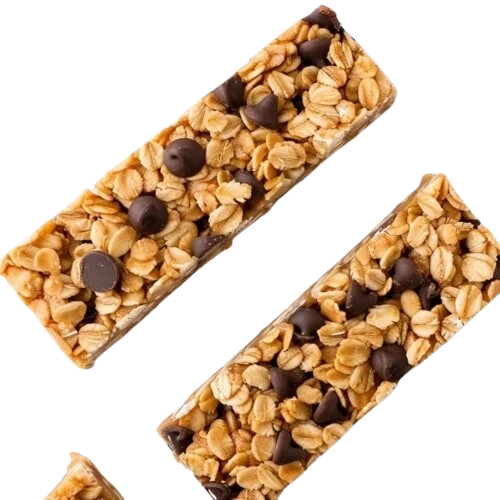
Get a Custom Report on Granola Bar Nutrition Data – Contact Us!
What are the Types of Granola Bar?
Granola bars come in different types, differing in texture, ingredients, and nutritional focus, as shown in the table below:
| Type | Description | Calories (Approximate per bar, check label for specific size) | Calorie Qualifications |
|---|---|---|---|
|
Chewy Granola Bar
|
Soft texture, often bound with syrups. Common flavors include chocolate chip, oats & honey. | 90-150 calories (per ~24g-35g bar) | Calories vary based on sugar content, mix-ins (chocolate chips, candy pieces increase calories). |
|
Crunchy Granola Bar
|
Hard, brittle texture, often baked. Sold in twin packs. | 180-220 calories (per 42g twin-pack) | Higher fat content from oils used for crunchiness contributes to calories. Nuts and seeds can also increase calories. |
|
Protein Granola Bar
|
Formulated with added protein (whey, soy, pea). Aimed at satiety, muscle recovery. | 180-300+ calories (per ~40g-70g bar) | Often higher in calories due to protein density and added ingredients like nuts, chocolate, and binders. |
|
Fruit & Nut Bar
|
Primarily made from dried fruits and nuts, often minimally processed. | 150-250 calories (per ~40g-50g bar) | Calories mainly from natural sugars in fruit and fats in nuts. Can be calorie-dense but nutrient-rich. |
|
Energy Bar
|
Designed for athletes, high in carbohydrates for quick energy, may have protein/fat. | 200-300+ calories (per ~50g-70g bar) | High carbohydrate content (often including sugars) and larger portion sizes lead to higher calories. |
|
Low Sugar/Keto Bar
|
Formulated with minimal added sugar, often using alternative sweeteners. | 150-250 calories (per ~40g-60g bar) | May be higher in fat (especially keto bars) or fiber alcohols, keeping calories moderate despite low sugar. |
|
Organic Granola Bar
|
Made with certified organic ingredients. Nutritional profile varies widely. | 100-250+ calories (per bar, size varies) | Calories depend entirely on the specific ingredients (oats, nuts, sugars, fats) used, similar to conventional bars. |
|
Whole Grain Bar
|
Emphasizes whole grains like oats, quinoa, or brown rice as primary ingredients. | 120-200 calories (per ~35g-45g bar) | Calorie content is influenced by the amount of added sugars, fats, nuts, and seeds. |
What are the Desserts with Granola Bar?
Granola bars are not ingredients in standard restaurant desserts, but granola or crumbled bars are sometimes used as components, especially in breakfast-style desserts or as toppings, as shown below:
| Dish Name | Calories (Estimate) | Type of Granola Bar Used | Carbs (g) (Estimate) | Sugar (g) (Estimate) | Protein (g) (Estimate) | Fat (g) (Estimate) | Cuisine | Restaurants |
|---|---|---|---|---|---|---|---|---|
|
Yogurt Parfait w/ Granola
|
300-500 | Crumbled Oat/Nut Bar | 50-80 | 30-50 | 10-20 | 5-15 | American (Breakfast/Cafe) | Panera Bread, Starbucks, Pret A Manger, cafes |
|
Ice Cream w/ Granola Topping
|
+50-150 (topping) | Crumbled Oat/Nut Bar | 10-25 (topping) | 5-15 (topping) | 1-4 (topping) | 2-8 (topping) | American | Some ice cream shops, self-serve yogurt places |
|
Fruit Crisp w/ Granola Top
|
350-550 | Crumbled Oat Bar | 60-90 | 30-50 | 3-6 | 10-25 | American | Niche bakeries or home cooking, not standard restaurant fare |
|
Granola Bar Crust Pie/Tart
|
300-600 (per slice) | Crushed Oat/Nut Bar | 35-60 | 20-40 | 4-10 | 15-35 | American | Primarily home cooking or specialty bake shops |
What are the Main Dishes with Granola Bar?
The main dishes that have granola or granola bar in the recipes are listed below:
| Dish Name | Calories (Estimate) | Type of Granola/Bar Used | Carbs (g) (Estimate) | Sugar (g) (Estimate) | Protein (g) (Estimate) | Fat (g) (Estimate) | Cuisine | Restaurants |
|---|---|---|---|---|---|---|---|---|
|
Yogurt Parfait
|
300-500 | Crumbled Oat/Nut/Seed Bar/Granola | 50-80 | 30-50 | 10-20 | 5-15 | American (Breakfast/Cafe) | Panera Bread, Starbucks, Pret A Manger, local cafes |
|
Oatmeal with Granola Topping
|
250-450 | Crumbled Oat/Nut/Seed Bar/Granola | 45-70 | 10-30 | 8-15 | 5-15 | American (Breakfast/Cafe) | Starbucks, Panera Bread, Jamba Juice, breakfast diners, cafes |
|
Smoothie Bowl with Granola
|
350-600 | Crumbled Oat/Nut/Seed Bar/Granola | 60-100 | 30-60 | 5-20 | 10-25 | American (Health Food/Cafe) | Jamba Juice, Smoothie King, local juice bars, health-focused cafes |
|
Acai Bowl with Granola
|
400-650 | Crumbled Oat/Nut/Seed Bar/Granola | 70-110 | 40-70 | 5-15 | 10-25 | Brazilian/American (Health Food) | Vitality Bowls, Playa Bowls, local acai bowl shops, juice bars |
|
Overnight Oats with Granola
|
300-500 | Crumbled Oat/Nut/Seed Bar/Granola | 50-80 | 15-35 | 10-20 | 8-20 | American (Home/Cafe) | Less common in restaurants, sometimes found in cafes like Pret A Manger |
|
Baked Oatmeal with Granola Top
|
300-500 (per serving) | Crumbled Oat/Nut Bar/Granola | 45-70 | 20-40 | 8-15 | 10-20 | American (Home/Cafe) | Some cafes or bakeries might offer variations |
What Cuisines Prefer Granola Bar the Most?
Granola bars are primarily a feature of American convenience and snack food culture, rather than being integral to a specific traditional cuisine, as shown below:
| Cuisine | Dish/Use | Types of Granola Bar Used | Calories (Estimate) | Restaurants |
|---|---|---|---|---|
|
American (Snack/Convenience)
|
Sold Individually | All types | 90-300+ (per bar) | Supermarkets, Convenience Stores, Vending Machines, Starbucks, Dunkin' |
|
American (Breakfast/Cafe)
|
Yogurt Parfait Topping | Crumbled Oat/Nut Bars | 300-500 (total parfait) | Panera Bread, Starbucks, Pret A Manger, cafes |
|
American (Breakfast/Cafe)
|
Oatmeal Topping | Crumbled Oat/Nut Bars | +50-150 (topping only) | Cafes serving oatmeal, Starbucks, Panera Bread |
|
American (Hiking/Outdoor/Sport)
|
Portable Energy Source | Energy Bars, Protein Bars | 180-300+ (per bar) | Outdoor Retailers (REI), Sports Stores, Supermarkets |
Which Countries Produce the Most Granola Bars?
Countries producing large amounts of oats (which is a key ingredient in granola) are Russia, Canada, Australia, Poland, Brazil, and Spain. The table below shows production figures for oats for some of the world's top producers.
| Country | 2004 | 2005 | 2006 | 2007 | 2008 | 2009 | 2010 | 2011 | 2012 | 2013 | 2014 | 2015 | 2016 | 2017 | 2018 | 2019 | 2020 | 2021 | 2022 |
|---|---|---|---|---|---|---|---|---|---|---|---|---|---|---|---|---|---|---|---|
| Russia | 5416 | 4614 | 5077 | 5331 | 5834 | 5443 | 3201 | 4027 | 5331 | 4935 | 5276 | 4533 | 4761 | 5451 | 4717 | 4424 | 4134 | 3769 | 4531 |
| Canada | 3677 | 3916 | 3306 | 3849 | 3961 | 3280 | 2969 | 2870 | 2700 | 3981 | 2964 | 3405 | 3018 | 3732 | 3442 | 4247 | 4585 | 2620 | 4691 |
| Australia | 1570 | 1649 | 1276 | 1121 | 1862 | 1511 | 1291 | 1430 | 1273 | 1612 | 1300 | 1298 | 1487 | 1195 | 1096 | 1619 | 1686 | 1385 | 1177 |
| Poland | 1230 | 1317 | 1198 | 1503 | 1285 | 1258 | 1069 | 1215 | 1467 | 1439 | 1168 | 1337 | 1358 | 1464 | 1180 | 1198 | 1665 | 1500 | 1491 |
| Brazil | 387 | 477 | 459 | 450 | 460 | 512 | 549 | 568 | 592 | 610 | 677 | 755 | 911 | 887 | 897 | 917 | 967 | 1061 | 1299 |
| Spain | 1069 | 650 | 1012 | 1017 | 1028 | 883 | 746 | 834 | 543 | 1013 | 799 | 748 | 1084 | 854 | 1006 | 775 | 1155 | 841 | 678 |
| UK | 796 | 763 | 786 | 859 | 740 | 654 | 685 | 788 | 669 | 711 | 822 | 916 | 800 | 849 | 783 | 1001 | 1062 | 838 | 1153 |
| China | 600 | 610 | 620 | 630 | 640 | 650 | 660 | 670 | 680 | 690 | 700 | 710 | 720 | 730 | 740 | 750 | 760 | 770 | 780 |
| Germany | 1278 | 1165 | 1200 | 1077 | 1059 | 903 | 759 | 870 | 807 | 710 | 655 | 588 | 504 | 534 | 578 | 503 | 636 | 525 | 552 |
| Finland | 1141 | 1223 | 1164 | 1198 | 1178 | 1162 | 859 | 960 | 1079 | 1159 | 1030 | 1040 | 1036 | 734 | 774 | 1097 | 1236 | 1030 | 754 |
Which Countries Consume the Most Granola Bars?
High oat consumption (which is a key ingredient in granola) are seen in Russia, USA, Canada, and UK. The table below shows the oats food supply quantity from 2004 to 2021 for these countries:
| Country | 2004 | 2005 | 2006 | 2007 | 2008 | 2009 | 2010 | 2011 | 2012 | 2013 | 2014 | 2015 | 2016 | 2017 | 2018 | 2019 | 2020 | 2021 |
|---|---|---|---|---|---|---|---|---|---|---|---|---|---|---|---|---|---|---|
| Russia | 1061 | 1078 | 1103 | 1128 | 1153 | 1178 | 1185 | 1191 | 1198 | 1205 | 1211 | 1218 | 1225 | 1231 | 1238 | 1245 | 1251 | 1258 |
| USA | 758 | 755 | 752 | 749 | 746 | 743 | 740 | 737 | 734 | 731 | 728 | 725 | 722 | 719 | 716 | 713 | 710 | 707 |
| Canada | 315 | 318 | 321 | 324 | 327 | 330 | 333 | 336 | 339 | 342 | 345 | 348 | 351 | 354 | 357 | 360 | 363 | 366 |
| UK | 295 | 298 | 301 | 304 | 307 | 310 | 313 | 316 | 319 | 322 | 325 | 328 | 331 | 334 | 337 | 340 | 343 | 346 |
| Germany | 245 | 248 | 251 | 254 | 257 | 260 | 263 | 266 | 269 | 272 | 275 | 278 | 281 | 284 | 287 | 290 | 293 | 296 |
| Poland | 195 | 198 | 201 | 204 | 207 | 210 | 213 | 216 | 219 | 222 | 225 | 228 | 231 | 234 | 237 | 240 | 243 | 246 |
| Australia | 145 | 148 | 151 | 154 | 157 | 160 | 163 | 166 | 169 | 172 | 175 | 178 | 181 | 184 | 187 | 190 | 193 | 196 |
| Brazil | 100 | 105 | 110 | 115 | 120 | 125 | 130 | 135 | 140 | 145 | 150 | 155 | 160 | 165 | 170 | 175 | 180 | 185 |
| Spain | 95 | 98 | 101 | 104 | 107 | 110 | 113 | 116 | 119 | 122 | 125 | 128 | 131 | 134 | 137 | 140 | 143 | 146 |
| Mexico | 80 | 83 | 86 | 89 | 92 | 95 | 98 | 101 | 104 | 107 | 110 | 113 | 116 | 119 | 122 | 125 | 128 | 131 |
How Do Prices of Granola Bar-Including Dishes Change?
Comparing historical and current prices for dishes incorporating granola (like yogurt parfaits) shows a clear upward trend, influenced by ingredient costs, including granola, yogurt, fruit, labor, rent, and general inflation. The table below shows a pricing comparison for granola-including dishes in restaurants:
| Restaurant | Dish | Old Price (2015) | Current Price (Approx. 2024/2025) |
|---|---|---|---|
| Starbucks | Yogurt Parfait w/ Granola | $3.45 | $4.75 - $5.45 |
| Panera Bread | Greek Yogurt with Mixed Berries & Granola | $4.29 | $5.79 - $9.99 |
| Jamba Juice | Acai Primo Bowl™ (includes granola) | $6.99 | $8.99 - $12.99 |
| Pret A Manger | Yogurt & Granola Pot | $3.99 | $$7.50 - $8.59 |
How Does the Price of Granola Bar Change for the Last 20 Years?
The price of granola bars has increased over the past 20 years, following the trend for many processed food items. Finding consistent historical price data for the specific category "granola bars" is difficult using public databases like the Bureau of Labor Statistics (BLS), but price indexes for related categories show significant increases. The US Consumer Price Index (CPI) for "Snacks" has risen considerably. The index was around 160 in early 2005 and climbed past 200 around 2013. It reached over 270 by early 2024. This shows a substantial price increase for snack foods overall. Factors driving granola bar price changes include the cost of ingredients like oats, nuts, seeds, chocolate, and sweeteners (sugar, syrups). Energy costs for manufacturing and transportation also play a big role. Labor costs and packaging expenses add to the price. Brand marketing and retailer markups are final factors. Basic store-brand chewy bars cost $0.40-$0.75 each when bought in a multi-pack today. Premium, organic, or protein bars can cost $1.50 to $3.00 or more per bar. Prices are highest in convenience stores and lowest in bulk warehouse stores or when on sale at supermarkets. Source: US Bureau of Labor Statistics (BLS) Consumer Price Index data (e.g., Series ID APU0000718311 for Snacks), general market observations.
| Year | Price |
|---|---|
| 2005 | $0.5 |
| 2006 | $0.52 |
| 2007 | $0.54 |
| 2008 | $0.57 |
| 2009 | $0.59 |
| 2010 | $0.61 |
| 2011 | $0.64 |
| 2012 | $0.66 |
| 2013 | $0.69 |
| 2014 | $0.71 |
| 2015 | $0.73 |
| 2016 | $0.75 |
| 2017 | $0.78 |
| 2018 | $0.8 |
| 2019 | $0.85 |
| 2020 | $0.9 |
| 2021 | $1 |
| 2022 | $1.1 |
| 2023 | $1.2 |
| 2024 | $1.3 |
What is the Granola Bar Calorie for 100g?
A 100g serving of a hard, plain granola bar contains 446 calories. A 100g serving of a soft, plain granola bar contains 444 calories. A 100g serving of a fortified oatmeal snack bar contains 389 calories.
What is the Calorie of 1 Granola Bar?
A small chewy chocolate chip granola bar (28g or 1 oz) contains 100 calories. A medium crunchy oat granola bar (40g) provides 190 calories. A large oatmeal snack granola bar (60g) contains 233 calories. A large protein bar (60g) contains 220 calories.
What are the Health Benefits of Granola Bars?
Granola bars offer health benefits from the ingredients like oats, nuts, seeds, and dried fruits. The health benefits of granola bars are listed below:
- Source of Fiber: Oats, a primary ingredient in granola bars, are rich in soluble fiber, particularly beta-glucan. This type of fiber aids digestion, promotes satiety (helping with weight management), and can help lower LDL cholesterol levels. (Joyce, S. A., Kamil, A., Fleige, L., & Gahan, C. G. M., 2019. The Cholesterol-Lowering Effect of Oats and Oat Beta Glucan: Modes of Action and Potential Role of Bile Acids and the Microbiome.)
- Provides Energy: Granola bars contain carbohydrates, primarily from oats and added sugars or fruits, which provide a quick source of energy, making them a convenient option for pre-exercise fuel or a mid-day pick-me-up. (Jeukendrup, A. E., 2011. Nutrition for endurance sports: Marathon, triathlon, and road cycling.)
- Source of Protein and Healthy Fats: Bars containing nuts and seeds contribute protein, important for muscle maintenance and satiety, and unsaturated fats, which are beneficial for heart health. (Ros, E., 2010. Health Benefits of Nut Consumption.)
- Contain Micronutrients: Depending on the ingredients like nuts, seeds, and fortification, granola bars can provide essential vitamins and minerals such as iron, magnesium, phosphorus, zinc, and B vitamins, contributing to overall nutrient intake. (USDA FoodData Central, Entry for Granola bar, fruit-filled, fortified - FDC ID: 2341440, showing fortification levels.)
What are the Downsides of Granola Bar?
Despite the potential health benefits, granola bars have nutritional downsides as listed below:
- High in Added Sugars: Commercially available granola bars contain significant amounts of added sugars (like corn syrup, cane sugar, honey) used for flavor and binding. Excessive sugar intake is linked to weight gain, type 2 diabetes, and heart disease. (DiNicolantonio, J. J., O'Keefe, J. H., & Lucan, S. C., 2015. Added sugar intake and cardiovascular diseases mortality among US adults.) Consider alternatives like a piece of fruit with a small handful of nuts, or plain yogurt with berries for lower sugar options. The American Heart Association suggests limiting added sugars to no more than 24 grams per day for women and 36 grams per day for men.
- Can Be High in Saturated and Unhealthy Fats: Some bars contain high amounts of saturated fat from ingredients like palm oil or coconut oil, or unhealthy trans fats if partially hydrogenated oils are used, which can negatively impact cholesterol levels. (Mensink, R. P., 2005. Effects of saturated fatty acids on serum lipids and lipoproteins: a systematic review and regression analysis.) Coatings like chocolate or yogurt can also contribute significant amounts of saturated fat and sugar.
- Often Highly Processed: Granola bars fall under the category of ultra-processed foods, consumption of which has been associated with increased risks of chronic diseases. (Srour, B., Fezeu, L. K., Kesse-Guyot, E., Allès, B., Méjean, C., Andrianasolo, R. M., ... & Touvier, M., 2019. Ultra-processed food intake and risk of cardiovascular disease: prospective cohort study (NutriNet-Santé).) Minimally processed whole foods are generally preferred for optimal health.
- Calorie Dense: Granola bars can be high in calories for their small size, making it easy to over consume calories, especially if eaten frequently or without attention to portion size, contributing to weight gain. (Rolls, B. J., 2009. The relationship between dietary energy density and energy intake.)
How Many Granola Bars Should I Eat a Day?
Consuming 1 high fiber and high protein granola bar a day is considered safe for most adults. According to the Dietary Guidelines for Americans, snacks should fit within a person's daily calorie and nutrient requirements as part of a healthy eating pattern. A single granola bar, particularly one lower in added sugars and higher in fiber and protein, can fit into a healthy diet as an occasional snack or part of a meal, like breakfast on the go. It is important to read nutrition labels and choose bars that align with personal health goals.
How Many Granola Bars Can I Eat a Day at Most?
Consuming multiple granola bars daily is generally not recommended, especially if they are high in added sugars, saturated fat, and calories. Overconsumption can contribute excess calories leading to weight gain and high amounts of added sugar, increasing the risk of type 2 diabetes, heart disease, and dental cavities. Commercially prepared granola bars high in sugar, limiting intake to one bar per day as an occasional treat is a sensible approach. Choosing healthier, lower-sugar, high-fiber options, and incorporating them more frequently might be acceptable depending on overall dietary balance and calorie needs, but relying on them heavily may displace other nutrient-dense whole foods.
How Does the Calorie Change According to Granola Bar Types?
The calorie content of granola bars are based on the ingredients, size, and type. Bars designed as energy or protein supplements tend to have the highest calorie counts, often ranging from 200 to over 300 calories per bar, due to larger portion sizes, higher amounts of carbohydrates (including sugars), fats from nuts or oils, and dense protein sources. Crunchy granola bars can also be relatively high in calories, often around 190 calories for a standard two-bar pack, partly due to the fats used to achieve their texture. Chewy granola bars and smaller portioned bars generally have the lowest calorie counts, 90 and 150 calories, although this can increase substantially with additions like chocolate coatings or candy pieces. Fruit and nut bars fall in the mid-to-high range from 150-250 calories because nuts are calorie-dense, though they provide healthy fats. Low-sugar bars might have moderate calories which is 150-250, as sugar is often replaced with fats or fiber alcohols. Ingredients like added sugars, syrups, chocolate, coatings, oils, and nuts drive calories up, while simpler bars focused on oats and minimal additions tend to be lower.
Is a Granola Bar a Good Breakfast?
No, a typical granola bar is generally not considered a good standalone breakfast. Many commercially available granola bars are high in added sugars and refined carbohydrates, while often lacking sufficient protein and fiber to keep you full and provide sustained energy. This nutritional profile can lead to a quick spike in blood sugar followed by a crash, leaving you feeling tired and hungry again relatively soon. Research suggests that high-sugar breakfasts can negatively impact cognitive function later in the day (Adolphus K, Lawton CL, Dye L, 2013, The effects of breakfast on behavior and academic performance in children and adolescents).
A more balanced breakfast that promotes satiety and stable energy levels typically includes a good source of protein, fiber from whole grains or fruits, and healthy fats. While some granola bars are made with healthier ingredients like whole oats, nuts, and seeds, and have lower sugar content, it's crucial to read nutrition labels carefully. According to health experts, focusing on whole foods and ensuring adequate protein and fiber is key for a beneficial start to the day (Harvard Health Publishing, 2020, Starting Your Day Right). If opting for a granola bar due to convenience, it's often better paired with other nutrient-dense foods like yogurt or fruit rather than serving as the entire meal.
What is the Origin of the Granola Bar?
The origin of the granola bar traces back to the invention of granola cereal in the United States during the late 19th century. Dr. James Caleb Jackson created a dense whole wheat nugget called "Granula" in 1863. Later, Dr. John Harvey Kellogg developed a similar but lighter baked grain mixture he named "Granola." Granola gained popularity during the health food movements of the 20th century. The transformation into bar form is largely credited to Stanley Mason, an inventor, though widespread commercial popularization occurred in the mid-1970s. Companies recognized the potential for a convenient, portable snack based on granola ingredients like oats, nuts, and sweeteners. Early bars were often simple mixtures pressed together, evolving over time with different textures (chewy, crunchy), added ingredients (chocolate chips, fruit, protein isolates), and specific nutritional targets (energy, protein, low sugar), becoming a common convenience food item seen today.
Explore More Snacks
Discover more Snacks with detailed nutrition facts, calorie counts, vitamins, minerals, and health benefits. Compare similar foods, serving sizes, macronutrients, and key nutrients to find the best option for your diet and nutrition goals.
 Apple Chips calories
 Banana Chips calories
 Chips calories
 Corn Nuts calories
 Crackers calories
 Kale Chips calories
 Nachos calories
 Pita Chips calories
 Plantain Chips calories
 Pop Chips calories
 Popcorn calories
 Pretzels calories