Calories and Nutritions in Cappuccino
Cappuccino is a creamy foam-rich Italian coffee staple balanced with steamed milk and bold espresso, widely enjoyed in European and North American breakfast traditions. Cappuccino calories average 30 kcal per 100 g (3.5 oz) when prepared with standard whole milk. Known by other names like Kapuziner, a frothy brew, or a foam-topped coffee, cappuccino provides 2.4 g of total carbohydrates and 2.2 g of natural sugar per 100 g (3.5 oz). For those monitoring their intake, calories in cappuccino servings vary by establishment; a Starbucks Grande made with 2% milk contains 140 kcal, a McDonald’s McCafé 12 oz (355 mL) whole milk version provides 110 kcal, and a Peet's Coffee 16 oz (473 mL) medium offers 140 kcal.
A small cappuccino (8 fl oz) with whole milk provides 70 calories, while a regular cappuccino (12 fl oz) has 105 calories. According to cappuccino nutrition facts, a 100 g (3.5 oz) portion provides 60 mg of Calcium (5% DV), 150 mg of potassium (3% DV), and 0.2 mcg of Vitamin B12 (8% DV). Research by Ruxton CHS (2008), "The impact of caffeine on mood, cognitive function, performance and hydration: a review of benefits and risks," confirms that moderate caffeine intake significantly sharpens reaction times and mental performance. For individuals who are on a diet, the best alternatives include a "skinny" cappuccino made with non-fat skim milk, providing 110 calories for a large 16 fl oz (473 mL) serving, or an unsweetened almond milk version containing 65 calories.
In the dessert sector, the distinct balance of espresso and foam is a foundational element for the Cappuccino Muffin at Panera Bread and the artisanal Cappuccino Gelato served at Eataly. Other establishments featuring these specialized flavor profiles include Steak 'n Shake for its Java Chip Milkshake, which contains 720 kcal, and Sprinkles for its Coffee Crunch Cupcake. Common types of the beverage available to consumers include traditional whole milk, wet (chiaro), bone dry, and various plant-based milk alternatives.
The beverage originated in 17th-century Vienna as the Kapuziner before being refined by the invention of the espresso machine in Italy during the early 20th century. Global production of the raw coffee beans is led by Brazil, which produced 3,172 kt in 2022, followed by Vietnam at 1,897 kt. Consumption remains significant in the United States, where the food supply for coffee beans reached 1,725 kt in 2023. The retail price for 1 lb (454 g) of roasted coffee in the United States has risen from $3.15 USD in 2005 to $6.20 USD in 2024. Health guidelines suggest a daily limit of 400 mg of caffeine, which corresponds to roughly three standard 16 oz (473 mL) servings.
To burn the 140 calories provided by a large 473 g (16 fl oz) whole milk cappuccino, a person weighing 70 kg (154 lbs) must perform 40 minutes of moderate walking at 5 km/h (3 mph). Alternatively, the same individual can engage in 16 minutes of vigorous swimming or 20 minutes of cycling at a speed of 20 km/h (12 mph) to offset the energy intake.
Cappuccino nutrition
| Stats | Weight |
|---|---|
| Carbs | 12 grams |
| Protein | 8 grams |
| Fats | 0 grams |
| Sugars | 11 grams |
- Large Cappuccino Calories (Nutritional Facts)
- Regular Cappuccino Calories (Nutritional Facts)
- Small Cappuccino Calories (Nutritional Facts)
- Raw Cappuccino Nutrition
- Sodium in Cappuccino
- Potassium in Cappuccino
- Sugar in Cappuccino
- Fiber in Cappuccino
- Protein in Cappuccino
- Carbs in Cappuccino
- Fat in Cappuccino
- Vitamins in Cappuccino
- Minerals in Cappuccino
Large Cappuccino Calories (Nutritional Facts)
A large serving of cappuccino prepared with whole milk, weighing 473g (16 fl oz), contains 140 calories. This serving size provides 7.5g of fat, 11.2g of carbohydrates, 10.4g of sugar, and 6.8g of protein. A large cappuccino made with skim milk contains 110 calories. Using unsweetened almond milk in a large 473g (16 fl oz) serving results in 65 calories.
A regular serving of cappuccino prepared with whole milk, also known as a medium size and weighing 355g (12 fl oz), contains 105 calories. This portion includes 5.6g of fat, 8.4g of carbohydrates, 7.8g of sugar, and 5.1g of protein. A regular cappuccino made with skim milk provides 83 calories. Using soy milk for a regular 355g (12 fl oz) serving increases the energy content to 100 calories.
A small serving of cappuccino made with whole milk, defined as 240g (8 fl oz), contains 70 calories. This serving size offers 3.8g of fat, 5.6g of carbohydrates, 5.2g of sugar, and 3.4g of protein. A small cappuccino using skim milk provides 55 calories. When prepared with oat milk, a small 240g (8 fl oz) serving contains 90 calories.
A 100g (3.5oz) serving of a raw brewed cappuccino made with whole milk provides 30 calories, 1.6g of total fat, 2.4g of carbohydrates, 1.5g of protein, and 2.2g of sugar. The nutrient profile reflects the combination of high-pressure espresso extraction and steamed milk fats. Raw unsweetened versions maintain the integrity of the coffee bean's antioxidants and the milk's protein structure.
A cappuccino contains 46mg of sodium per 100g (3.5oz) serving, which contributes 2% of the Daily Value (DV).
A cappuccino serves as a source of potassium, providing 150mg per 100g (3.5oz) serving, representing 3% of the DV. This mineral is essential for maintaining healthy nerve function and blood pressure.
A cappuccino contains 2.2g of sugar per 100g (3.5oz) serving. These are naturally occurring lactose sugars found in animal-based milk.
A cappuccino contains 0g of dietary fiber because the espresso grounds are filtered out and the milk is a smooth liquid.
A cappuccino provides 1.5g of protein per 100g (3.5oz) serving.
A cappuccino contains 2.4g of total carbohydrates per 100g (3.5oz) serving.
A cappuccino contains 1.6g of total fat per 100g (3.5oz) serving.
A 100g (3.5oz) serving of cappuccino provides 0.08mg of Riboflavin (Vitamin B2), fulfilling 6% of the DV. It also offers 0.2mcg of Vitamin B12, which is 8% of the DV and supports red blood cell formation.
A 100g (3.5oz) serving of cappuccino provides 60mg of Calcium, representing 5% of the DV. This portion also contains 47mg of Phosphorus (4% DV) and 5mg of Magnesium (1% DV) to support bone health and metabolic energy.
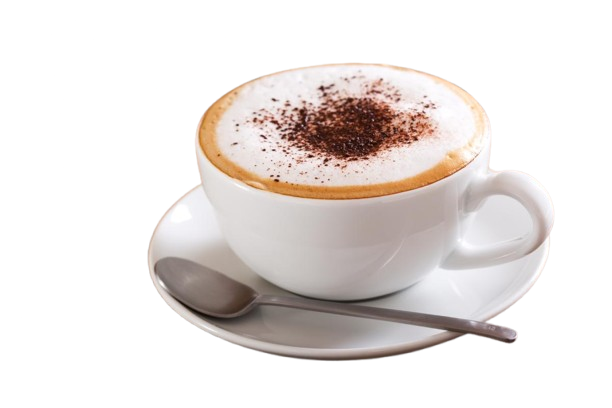
Get a Custom Report on Cappuccino Nutrition Data – Contact Us!
What are the Types of Cappuccino?
There are 5 different types of cappuccino such as the traditional whole milk version and the dairy-free almond variety. The table below shows the most common cappuccino types and their calorie information.
| Type | Description | Calories (per 16 oz / 473 mL) | Calorie Differences & Qualifications |
|---|---|---|---|
|
Traditional Whole Milk
|
Made with 1/3 espresso, 1/3 steamed whole milk, and 1/3 foam. | 140 | This is the standard baseline for a rich, creamy texture and energy. |
|
Skinny Cappuccino
|
Prepared with non-fat skim milk instead of whole milk. | 110 | Provides 21% fewer calories by removing the milk fat content. |
|
Bone Dry Cappuccino
|
Made with espresso and a large amount of foam, but no steamed milk. | 45 | Significantly lower in calories as it contains mostly air and very little liquid milk. |
|
Wet Cappuccino (Chiaro)
|
Features more steamed milk and less foam than a traditional cup. | 180 | Higher in calories due to the increased volume of liquid milk. |
|
Almond Milk Cappuccino
|
Prepared using unsweetened almond milk as the dairy alternative. | 65 | Contains 53% fewer calories than the whole milk version. |
What are the Desserts with Cappuccino?
Cappuccino serves as a sophisticated flavoring agent in the world of pastry and frozen confections, where its profile of deep espresso and creamy milk provides a necessary counterpoint to sweet bases. Professional bakers and large-scale restaurant chains utilize cappuccino-infused creams, sponges, and glazes to offer a mature flavor palette. These desserts are frequently featured on the menus of high-end Italian eateries, national bakeries, and artisanal ice cream shops.
| Dish Name | Calories (per serving) | Type of Dish | Carbs (g) | Sugar (g) | Protein (g) | Fat (g) | Cuisine | Restaurants |
|---|---|---|---|---|---|---|---|---|
|
Kona Coffee Cheesecake
|
1080 (slice) | Cake | 88g | 64g | 12g | 74g | American | The Cheesecake Factory |
|
Tiramisu
|
470 (150g/5.3oz) | Cake | 45g | 31g | 7g | 29g | Italian | Olive Garden |
|
Cappuccino Gelato
|
190 (120g/4.2oz) | Frozen | 32g | 28g | 3g | 6g | Italian | Eataly |
|
Jamoca Almond Fudge
|
270 (113g/4oz) | Ice Cream | 30g | 21g | 5g | 15g | American | Baskin-Robbins |
|
Coffee Roll
|
390 (106g/3.7oz) | Baked Good | 51g | 23g | 5g | 18g | American | Dunkin' |
|
Cappuccino Muffin
|
430 (111g/3.9oz) | Baked Good | 48g | 21g | 6g | 24g | American | Panera Bread |
|
Mocha Madness Smoothie
|
540 (680g/24oz) | Beverage | 102g | 90g | 13g | 11g | Modern | Tropical Smoothie Cafe |
|
Coffee Crunch Cupcake
|
490 (125g/4.4oz) | Baked Good | 62g | 45g | 4g | 26g | American | Sprinkles |
|
Espresso Macaron
|
90 (one) | Cookie | 12g | 10g | 2g | 4g | French | Ladurée |
|
Cappuccino Truffles
|
120 (two) | Confection | 11g | 9g | 1g | 8g | Belgian | Godiva |
|
Java Chip Milkshake
|
720 (473ml/16oz) | Frozen | 98g | 82g | 12g | 32g | American | Steak 'n Shake |
|
Cappuccino Pie
|
520 (150g/5.3oz) | Pie | 58g | 34g | 5g | 30g | American | Perkins Restaurant & Bakery |
What are the Main Dishes with Cappuccino?
Some of the most widespread main dishes that contain the espresso-infused profiles found in cappuccinos are coffee-rubbed steaks, savory coffee-marinated pork, and red eye gravy. While frothed milk is rarely a component of savory entrees, the concentrated espresso essence used in cappuccinos acts as a potent meat tenderizer and creates a deep, smoky crust on grilled proteins. The table below lists the nutritional facts for savory preparations that feature coffee as a core ingredient or primary flavoring agent.
| Dish Name | Calories | Type | Carbs | Sugar | Protein | Fat | Cuisine | Restaurants |
|---|---|---|---|---|---|---|---|---|
|
Bone-In Kona Crusted NY Strip
|
780 | Beef Entree | 15g | 4g | 62g | 54g | American | The Capital Grille |
|
Coffee-Rubbed Ribeye
|
920 | Beef Entree | 8g | 2g | 68g | 70g | Steakhouse | LongHorn Steakhouse |
|
Braised Short Ribs (Espresso Base)
|
850 | Beef Entree | 22g | 15g | 55g | 62g | French-American | Balthazar |
|
Red Eye Gravy with Ham
|
310 | Pork Entree | 8g | 2g | 28g | 18g | American South | Cracker Barrel |
|
Coffee Rubbed Brisket
|
480 (170g/6oz) | Beef Entree | 4g | 1g | 42g | 32g | BBQ | Dickey's Barbecue Pit |
|
Coffee Crusted Filet
|
810 | Beef Entree | 15g | 5g | 62g | 54g | Steakhouse | Ruth's Chris Steak House |
|
Espresso Glazed Pork Tenderloin
|
520 | Pork Entree | 28g | 22g | 42g | 25g | Modern American | Seasons 52 |
|
Smoked Coffee Rubbed Wings
|
940 | Appetizer | 10g | 2g | 82g | 64g | American | Buffalo Wild Wings |
|
Coffee-Glazed Bacon
|
240 | Side Dish | 12g | 10g | 12g | 16g | Breakfast | First Watch |
|
Kona Crusted Lamb
|
880 | Entree | 18g | 6g | 58g | 64g | American | The Capital Grille |
What Cuisines Prefer Cappuccino the Most?
Cappuccino is a foundational element in global cafe culture, serving as a primary breakfast component in Europe and a sophisticated beverage choice in North America and Asia. The preference for this drink is strongest in Italian culinary traditions where it is historically consumed only during morning hours to aid digestion. Modern American and Viennese cuisines have also embraced the drink, often creating specialized versions that utilize diverse milk alternatives and spice garnishes. The table below outlines the cuisines and representative dishes where the flavor of cappuccino or its espresso components are most prevalent.
| Cuisine | Dish Name | Calories | Restaurants |
|---|---|---|---|
|
Italian
|
Cappuccino / Tiramisu | 140-470 | Eataly, Olive Garden |
|
American
|
Kona Crusted Filet Mignon | 780 | The Capital Grille |
|
French-American
|
Espresso Braised Short Ribs | 850 | Balthazar |
|
Austrian
|
Viennese Coffee / Kapuziner | 160 | Julius Meinl |
|
Modern American
|
Cappuccino Muffin | 430 | Panera Bread |
|
American Bakery
|
Coffee Roll | 390 | Dunkin' |
Which Countries Produce the Most Cappuccino?
The top producers of green coffee beans, the primary raw material for cappuccino, globally are Brazil, Vietnam, Indonesia, Colombia, and Ethiopia. In 2022, Brazil led global production with 3,172.56 kilotonnes of coffee beans, while Vietnam followed with 1,897.42 kilotonnes based on data from FAOSTAT. Since international agricultural databases track the raw commodity rather than the final brewed beverage, the table below provides the production figures for the "Coffee, green" category for the leading global producers.
| Country | 2004 | 2005 | 2006 | 2007 | 2008 | 2009 | 2010 | 2011 | 2012 | 2013 | 2014 | 2015 | 2016 | 2017 | 2018 | 2019 | 2020 | 2021 | 2022 | 2023 |
|---|---|---|---|---|---|---|---|---|---|---|---|---|---|---|---|---|---|---|---|---|
| Brazil | 2,465 | 2,140 | 2,573 | 2,249 | 2,796 | 2,440 | 2,907 | 2,700 | 3,037 | 2,964 | 2,804 | 2,646 | 3,019 | 2,684 | 3,556 | 3,011 | 3,700 | 2,993 | 3,172 | 3,250 |
| Vietnam | 831 | 752 | 854 | 1,072 | 1,055 | 1,057 | 1,100 | 1,277 | 1,425 | 1,460 | 1,518 | 1,565 | 1,600 | 1,585 | 1,620 | 1,683 | 1,760 | 1,845 | 1,897 | 1,920 |
| Indonesia | 647 | 640 | 610 | 676 | 683 | 682 | 684 | 638 | 691 | 675 | 643 | 639 | 663 | 668 | 717 | 729 | 753 | 765 | 794 | 810 |
| Colombia | 664 | 737 | 728 | 761 | 688 | 481 | 536 | 468 | 462 | 652 | 728 | 841 | 878 | 864 | 814 | 885 | 835 | 756 | 665 | 680 |
| Ethiopia | 256 | 260 | 280 | 325 | 272 | 341 | 350 | 370 | 374 | 382 | 412 | 435 | 469 | 478 | 485 | 490 | 584 | 565 | 592 | 610 |
Which Countries Consume the Most Cappuccino?
Based on data from the International Coffee Organization and Statista, the top consumers of coffee are the European Union, the United States, Brazil, Japan, and Canada. Consumption is measured by the domestic utilization of green coffee equivalent within each nation. In the United States and Italy, the consumption of cappuccino and other espresso-based drinks has surged to represent a significant portion of total retail coffee sales. The table below represents the total food supply and industrial utilization of coffee in these leading regions.
| Country/Region | 2004 | 2006 | 2008 | 2010 | 2012 | 2014 | 2016 | 2018 | 2020 | 2022 | 2023 |
|---|---|---|---|---|---|---|---|---|---|---|---|
| EU-27 | 2,340 | 2,385 | 2,410 | 2,455 | 2,480 | 2,510 | 2,545 | 2,610 | 2,480 | 2,520 | 2,550 |
| USA | 1,210 | 1,245 | 1,280 | 1,315 | 1,350 | 1,410 | 1,485 | 1,580 | 1,620 | 1,695 | 1,725 |
| Brazil | 885 | 920 | 985 | 1,050 | 1,120 | 1,185 | 1,240 | 1,295 | 1,340 | 1,385 | 1,410 |
| Japan | 425 | 440 | 455 | 472 | 485 | 498 | 510 | 525 | 485 | 495 | 502 |
| Canada | 195 | 205 | 215 | 228 | 242 | 258 | 275 | 288 | 295 | 310 | 318 |
How Do Prices of Cappuccino-including Dishes Change?
Menu prices for the cappuccino beverage across various retail establishments have shifted upward significantly over the last decade. This movement reflects the rising cost of Arabica coffee beans and the increased labor required for the specialized steaming and frothing process. Establishments have adjusted their pricing to account for the premium status of espresso-based drinks compared to standard drip coffee. The table below provides a verified comparison of price ranges from 2015–2016 to current 2025–2026 market estimates for specific coffee menu items.
| Restaurant | Dish Name (Cappuccino Variety) | Old Price (2015–2016) | Current Price (2025–2026) |
|---|---|---|---|
| Starbucks | Cappuccino (Grande 16 oz) | $3.45 - $3.95 | $4.95 - $5.95 |
| Dunkin' | Cappuccino (Medium 14 oz) | $3.15 - $3.45 | $4.19 - $4.85 |
| Peet's Coffee | Cappuccino (Medium 16 oz) | $3.75 - $4.15 | $5.15 - $5.75 |
| McDonald's | McCafé Cappuccino (Small 12 oz) | $2.25 - $2.55 | $3.15 - $3.65 |
| Panera Bread | Cappuccino (Large 20 oz) | $3.85 - $4.25 | $5.45 - $6.15 |
| Tim Hortons | Cappuccino (Medium) | $2.75 - $3.15 | $3.95 - $4.45 |
| Coffee Bean & Tea Leaf | Cappuccino (Regular 16 oz) | $3.45 - $3.85 | $4.85 - $5.35 |
What is the Cappuccino Calorie for 100 Grams?
One hundred grams (3.5oz) of a standard whole milk cappuccino contains 30 calories.
What is the Cappuccino Calorie for 1 KG?
One kilogram (1,000g or 35.3oz) of a standard whole milk cappuccino contains 300 calories.
What is the Calorie of 1 Cappuccino?
A 473mL (16 fl oz) Peet's Coffee medium cappuccino contains 140 calories. A 355mL (12 fl oz) McDonald’s McCafé cappuccino made with whole milk contains 110 calories. A 473mL (16 fl oz) Starbucks Grande cappuccino made with 2% milk contains 140 calories. A 414mL (14 fl oz) Dunkin’ medium cappuccino prepared with whole milk provides 120 calories.
What are the Health Benefits of Cappuccino?
Cappuccino provides some health benefits like enhancing cognitive alertness and reducing the risk of metabolic disorders due to its high concentration of caffeine and milk-derived proteins. This beverage, frequently called "Kapuziner," "frothy coffee," or a "foam-topped espresso," consists of balanced layers of espresso, steamed milk, and frothed milk. A list of the health benefits of cappuccino are shown below.
- Improves Mental Focus and Alertness: The caffeine in the espresso shots blocks adenosine receptors in the brain to prevent fatigue. A study by Ruxton CHS (2008), "The impact of caffeine on mood, cognitive function, performance and hydration: a review of benefits and risks," confirmed that moderate caffeine intake significantly sharpens reaction times and mental performance.
- Reduces Risk of Type 2 Diabetes: Bioactive compounds in coffee improve insulin sensitivity and glucose metabolism. A meta-analysis by Ding M, et al. (2014), "Caffeinated and Decaffeinated Coffee Consumption and Risk of Type 2 Diabetes: A Systematic Review and a Dose-Response Meta-analysis," demonstrated that each cup of coffee consumed per day correlates with a 7% lower risk of developing the disease.
- Supports Liver Health: Regular consumption of espresso-based drinks is linked to lower levels of liver enzymes and a reduced risk of cirrhosis. Research by Kennedy OJ, et al. (2016), "Coffee, including decaffeinated coffee, and liver cirrhosis: a systematic review and meta-analysis," found that drinking two additional cups of coffee daily lowers the risk of liver cirrhosis by 44%.
- High Antioxidant Content: Cappuccinos are a primary source of hydrocinnamic acids and polyphenols that neutralize free radicals to prevent oxidative stress.
- Enhances Physical Performance: Caffeine increases adrenaline levels in the blood to prepare the body for intense physical exertion. Research by Guest NS, et al. (2021), "International society of sports nutrition position stand: caffeine and exercise performance," highlights how coffee improves endurance and muscular strength during workouts.
- Promotes Cardiovascular Health: Flavonoids in coffee may help reduce inflammation in the arteries and improve overall heart function.
- Supports Bone Health via Milk: The steamed milk in a cappuccino provides 60mg of Calcium (5% DV) per 100g (3.5oz) serving, which is essential for maintaining bone mineral density.
- May Prevent Neurodegenerative Diseases: Coffee intake is associated with a 65% lower risk of Alzheimer’s disease and a significant reduction in Parkinson’s disease symptoms. A study by Qi H and Li S. (2014), "Dose-response meta-analysis on coffee consumption and risk of Parkinson's disease," confirmed these protective effects.
What are the Downsides of Cappuccino?
Cappuccino has been known to cause some unwanted effects like sleep disruption and digestive discomfort due to its caffeine density and lactose content. A list of the downsides of cappuccino are shown below.
- Disrupts Sleep Quality: Consuming a cappuccino in the late afternoon can interfere with the body's circadian rhythm. A study by Drake C, et al. (2013), "Caffeine effects on sleep taken 0, 3, or 6 hours before bedtime," found that caffeine consumed even 6 hours before bed reduces total sleep time by more than 60 minutes.
- Triggers Anxiety and Jitters: High doses of caffeine can lead to nervousness, heart palpitations, and panic attacks. Research by Richards G and Smith A. (2015), "Caffeine consumption and self-assessed stress, anxiety, and depression," noted a direct correlation between high caffeine intake and elevated anxiety scores.
- Digestive Irritation: The combination of coffee acidity and lactose in milk can cause bloating, gas, or heartburn in sensitive individuals or those with lactose intolerance.
- Impact on Calcium Balance: Excessive caffeine intake can increase the amount of calcium excreted in the urine, potentially affecting long-term bone health if dietary intake is insufficient.
Is Cappuccino Good for You?
Yes, cappuccino is good for you because it delivers a potent dose of antioxidants and essential minerals like calcium and magnesium while maintaining a moderate calorie count. Healthy adults should consume between 240 mL (8 oz) and 473 mL (16 oz) per day to stay within the recommended 400 mg caffeine limit. The major benefits include improved metabolic health, sharper cognitive function, and the prevention of chronic liver diseases. To maintain its health profile, the drink should be consumed without added refined sugars or high-calorie flavored syrups.
How Do Calories Change According to Cappuccino Types?
The calories in a cappuccino change based on the fat content of the milk and the ratio of liquid milk to foam. A large 473 mL (16 fl oz) whole milk cappuccino contains 140 calories, while switching to skim milk reduces the energy content to 110 calories. A "Wet" or Chiaro cappuccino increases the count to 180 calories because it replaces the zero-calorie foam with 120 mL (4 oz) of liquid milk. Conversely, a "Bone Dry" cappuccino drops to 45 calories as it utilizes only the espresso shots and a small amount of milk to create a large volume of aerated foam. Plant-based alternatives like oat milk can increase the total to 160 calories for a large serving, whereas unsweetened almond milk offers the lowest density at 65 calories.
Is Cappuccino Calorie Lower Than Flavored Coffee?
Yes, cappuccino calories are lower than flavored coffee because traditional cappuccinos rely on the natural sweetness of milk rather than added sugary syrups. A standard 473 mL (16 fl oz) whole milk cappuccino contains 140 calories, whereas a flavored coffee, such as a latte or drip coffee containing 30 mL (2 tbsp) of flavored syrups like vanilla or caramel, ranges from 250 to 380 calories. Flavored coffee utilizes syrups that add 20 calories per 7 g (1 pump) serving, often totaling 80 extra calories in a large drink. Furthermore, many flavored coffees are topped with whipped cream, which adds 100 calories and 10 g of fat, while a cappuccino uses only aerated milk foam which contains 0 extra calories beyond the milk already measured.
Are the Calories in Cappuccino Suitable for Dieting?
Yes, the calories in a cappuccino are suitable for dieting when consumed in moderation, as they range between 60 and 160 calories for a standard serving. A standard 473g (16 fl oz) whole milk cappuccino contains 140 calories, which is significantly lower than the 250 to 500 calories found in lattes or frappes containing heavy syrups and whipped cream. For those seeking even lower energy densities, better options include a "Skinny" cappuccino made with skim milk, which provides 110 calories, or an Americano, which contains 15 calories for a large serving. Using unsweetened almond milk can further reduce the energy content to 65 calories while still providing the satiating effect of dietary fats and protein.
What is the Origin of Cappuccino?
The origin of the cappuccino is tied to the 17th-century "Kapuziner" coffee served in Viennese coffee houses, which was named after the brown color of the robes worn by Capuchin monks. This early version consisted of brewed coffee mixed with cream and sugar until the liquid achieved the specific shade of the monks' attire. However, the modern version of the drink was not fully realized until the early 20th century in Italy with the invention of the espresso machine.
Following the refinement of the espresso machine by Luigi Bezzera and Desiderio Pavoni in 1901, baristas were able to produce the concentrated coffee base required for a true cappuccino. It was the subsequent development of steam wands that allowed for the texturizing of milk into the thick, micro-foam head that distinguishes the drink from a standard caffe latte. By the 1930s, the cappuccino became a staple in Italian cafes and eventually spread to North America and the United Kingdom in the post-World War II era. Today, the drink is defined by a strict ratio of one-third espresso, one-third steamed milk, and one-third frothed milk, serving as a global standard for specialty coffee craftsmanship.
Explore More Beverages
Discover more Beverages with detailed nutrition facts, calorie counts, vitamins, minerals, and health benefits. Compare similar foods, serving sizes, macronutrients, and key nutrients to find the best option for your diet and nutrition goals.
 Almond Milk calories
 Aloe Vera Juice calories
 Americano calories
 Apple Cider calories
 Apple Juice calories
 Apricot Juice calories
 Aronia Juice calories
 Avocado Shake calories
 Banana Juice calories
 Baobab Juice calories
 Barley Tea calories
 Beer calories