Calories and Nutritions in Dragon Fruit Juice
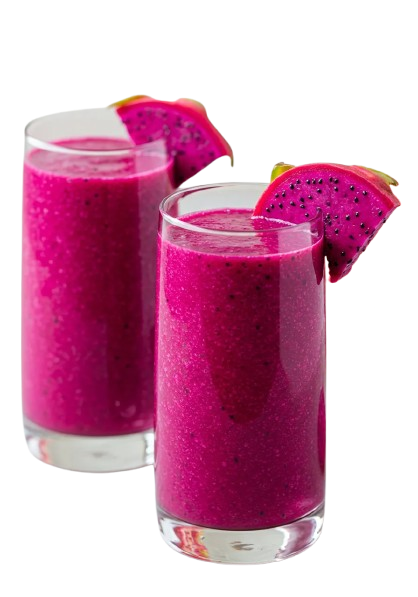
Dragon fruit juice is a refreshing beverage, often used as a natural coloring agent in smoothies and cocktails. A 480ml serving (16 oz) of fresh dragon fruit juice contains 158 calories, while a 16 oz serving of sweetened dragon fruit nectar provides 260 calories. A standard cup (140ml) of raw red-fleshed dragon fruit smoothie contains 130 calories. Retail dragon fruit juice products have different energy values, as a single bottle of dragon fruit drink by D Natural (320ml) contains 100 calories, while a one cup serving of dragon fruit juice by Sun Berry Farms (236ml) supplies 130 calories.
A nutritional analysis of dragon fruit juice reveals a carbohydrate-heavy profile with minimal lipids, as a 480ml serving of fresh dragon fruit juice provides 40g of carbohydrates and 0g of fat. The liquid is a source of betalains and essential vitamins required for metabolic health. A study conducted by Swarup, K., et al. (2010), "Effect of dragon fruit extract on oxidative stress and aortic stiffness in streptozotocin-induced diabetes in rats," confirms that the bioactive compounds present in the liquid reduce vascular complications. Natural fructose and glucose constitute the primary energy source, establishing the drink as an immediate fuel provider. Dragon fruit juice is fat-free and its micronutrient levels are notable, offering 432mg of potassium (9% DV) and 14.4mg of Vitamin C per 16 oz portion.
Global availability of dragon fruit depends heavily on the agricultural output of Vietnam, China, and Indonesia, with Vietnam leading export volumes. These yields satisfy consumption in major markets where China and the United States consume vast amounts of the tropical extract. Inside Vietnamese, American, and Thai culinary traditions, the ingredient acts as a central element in refreshers, smoothies, and desserts like Sinh To Thanh Long and the Mango Dragonfruit Refresher. Market dynamics have shifted from niche novelty to mainstream commodity, yet wholesale rates for frozen concentrate climbed from $1,500 per ton in the early 2000s to between $2,800 and $3,200 by 2024. Cafes and juice bars reflect these economic shifts, as the Mango Dragonfruit Refresher at Starbucks increased from $3.95 in 2018 to between $4.95 and $5.25 in 2024.
Dragon fruit juice is a mineral-dense beverage containing high concentrations of magnesium and phosphorus, providing 48mg of magnesium and 81.6mg of phosphorus per 480ml fresh serving. These elements support bone mineralization and cellular energy production. Dietitians advise consuming 240ml per day to maximize antioxidant absorption while limiting sugar intake, as this portion contains 79 calories, an energy load that requires 9 minutes of Zumba or 7 minutes of CrossFit to metabolize. Individuals monitoring blood glucose levels must track their consumption of this sweet liquid to prevent insulin spikes.
Dragon Fruit Juice nutrition
| Stats | Weight |
|---|---|
| Carbs | 25 grams |
| Protein | 1 grams |
| Fats | 0 grams |
| Sugars | 25 grams |
- Large Dragon Fruit Juice Calories (Nutritional Facts)
- Medium Dragon Fruit Juice Calories (Nutritional Facts)
- Small Dragon Fruit Juice Calories (Nutritional Facts)
- Raw Dragon Fruit Juice Nutrition
- Sodium in Dragon Fruit Juice
- Potassium in Dragon Fruit Juice
- Sugar in Dragon Fruit Juice
- Fiber in Dragon Fruit Juice
- Protein in Dragon Fruit Juice
- Carbs in Dragon Fruit Juice
- Fat in Dragon Fruit Juice
- Vitamins in Dragon Fruit Juice
- Minerals in Dragon Fruit Juice
Large Dragon Fruit Juice Calories (Nutritional Facts)
A large serving of fresh dragon fruit juice (480ml or 16oz) contains 158 calories, 1.6g of protein, 0g of fat, 40g of carbohydrates, 0g of fiber, 40g of sugar, and 40mg of sodium. A large serving of sweetened dragon fruit nectar (480ml or 16oz) provides 260 calories, 1g of protein, 0g of fat, 65g of carbohydrates, 1g of fiber, 60g of sugar, and 30mg of sodium.
A medium portion of fresh dragon fruit juice (300ml or 10oz) provides 99 calories, 1g of protein, 0g of fat, 25g of carbohydrates, 0g of fiber, 25g of sugar, and 25mg of sodium. A medium portion of sweetened dragon fruit nectar (300ml or 10oz) supplies 162 calories, 0.6g of protein, 0g of fat, 40g of carbohydrates, 0.6g of fiber, 38g of sugar, and 19mg of sodium.
A small cup of fresh dragon fruit juice (180ml or 6oz) contains 59 calories, 0.6g of protein, 0g of fat, 15g of carbohydrates, 0g of fiber, 15g of sugar, and 15mg of sodium. A small cup of sweetened dragon fruit nectar (180ml or 6oz) provides 97 calories, 0.4g of protein, 0g of fat, 24g of carbohydrates, 0.4g of fiber, 22g of sugar, and 11mg of sodium.
A cup of fresh raw dragon fruit juice (240ml or 8oz) provides 79 calories, 0.8g of protein, 0g of fat, 20g of carbohydrates, 0g of fiber, 20g of sugar, and 20mg of sodium. A cup of raw red-fleshed dragon fruit smoothie (240ml or 8oz) contains 130 calories, 2g of protein, 1g of fat, 28g of carbohydrates, 4g of fiber, 22g of sugar, and 15mg of sodium.
A large serving of fresh dragon fruit juice (480ml or 16oz) contains 40mg of sodium (2% DV), while a large serving of sweetened dragon fruit nectar (480ml or 16oz) provides 30mg of sodium (1% DV). A medium portion of fresh dragon fruit juice (300ml or 10oz) has 25mg of sodium (1% DV), whereas a medium portion of sweetened dragon fruit nectar (300ml or 10oz) supplies 19mg of sodium (1% DV). A small cup of fresh dragon fruit juice (180ml or 6oz) contains 15mg of sodium (1% DV), and a small cup of sweetened dragon fruit nectar (180ml or 6oz) provides 11mg of sodium (0% DV). A cup of fresh raw dragon fruit juice (240ml or 8oz) supplies 20mg of sodium (1% DV), while a cup of raw red-fleshed dragon fruit smoothie (240ml or 8oz) contains 15mg of sodium (1% DV).
A large serving of fresh dragon fruit juice (480ml or 16oz) provides 432mg of potassium (9% DV), while a large serving of sweetened dragon fruit nectar (480ml or 16oz) contains 150mg of potassium (3% DV). A medium portion of fresh dragon fruit juice (300ml or 10oz) has 270mg of potassium (6% DV), whereas a medium portion of sweetened dragon fruit nectar (300ml or 10oz) supplies 94mg of potassium (2% DV). A small cup of fresh dragon fruit juice (180ml or 6oz) contains 162mg of potassium (3% DV), and a small cup of sweetened dragon fruit nectar (180ml or 6oz) provides 56mg of potassium (1% DV). A cup of fresh raw dragon fruit juice (240ml or 8oz) supplies 216mg of potassium (5% DV), while a cup of raw red-fleshed dragon fruit smoothie (240ml or 8oz) contains 350mg of potassium (7% DV).
A large serving of fresh dragon fruit juice (480ml or 16oz) contains 40g of sugar, while a large serving of sweetened dragon fruit nectar (480ml or 16oz) provides 60g of sugar. A medium portion of fresh dragon fruit juice (300ml or 10oz) has 25g of sugar, whereas a medium portion of sweetened dragon fruit nectar (300ml or 10oz) supplies 38g of sugar. A small cup of fresh dragon fruit juice (180ml or 6oz) contains 15g of sugar, and a small cup of sweetened dragon fruit nectar (180ml or 6oz) provides 22g of sugar. A cup of fresh raw dragon fruit juice (240ml or 8oz) supplies 20g of sugar, while a cup of raw red-fleshed dragon fruit smoothie (240ml or 8oz) contains 22g of sugar.
A large serving of fresh dragon fruit juice (480ml or 16oz) provides 0g of dietary fiber (0% DV), while a large serving of sweetened dragon fruit nectar (480ml or 16oz) contains 1g of fiber (4% DV). A medium portion of fresh dragon fruit juice (300ml or 10oz) has 0g of fiber (0% DV), whereas a medium portion of sweetened dragon fruit nectar (300ml or 10oz) supplies 0.6g of fiber (2% DV). A small cup of fresh dragon fruit juice (180ml or 6oz) contains 0g of fiber (0% DV), and a small cup of sweetened dragon fruit nectar (180ml or 6oz) provides 0.4g of fiber (1% DV). A cup of fresh raw dragon fruit juice (240ml or 8oz) supplies 0g of fiber (0% DV), while a cup of raw red-fleshed dragon fruit smoothie (240ml or 8oz) contains 4g of fiber (14% DV).
A large serving of fresh dragon fruit juice (480ml or 16oz) provides 1.6g of protein (3% DV), while a large serving of sweetened dragon fruit nectar (480ml or 16oz) contains 1g of protein (2% DV). A medium portion of fresh dragon fruit juice (300ml or 10oz) has 1g of protein (2% DV), whereas a medium portion of sweetened dragon fruit nectar (300ml or 10oz) supplies 0.6g of protein (1% DV). A small cup of fresh dragon fruit juice (180ml or 6oz) contains 0.6g of protein (1% DV), and a small cup of sweetened dragon fruit nectar (180ml or 6oz) provides 0.4g of protein (1% DV). A cup of fresh raw dragon fruit juice (240ml or 8oz) supplies 0.8g of protein (2% DV), while a cup of raw red-fleshed dragon fruit smoothie (240ml or 8oz) contains 2g of protein (4% DV).
A large serving of fresh dragon fruit juice (480ml or 16oz) contains 40g of carbohydrates (15% DV), while a large serving of sweetened dragon fruit nectar (480ml or 16oz) provides 65g of carbohydrates (24% DV). A medium portion of fresh dragon fruit juice (300ml or 10oz) has 25g of carbohydrates (9% DV), whereas a medium portion of sweetened dragon fruit nectar (300ml or 10oz) supplies 40g of carbohydrates (15% DV). A small cup of fresh dragon fruit juice (180ml or 6oz) contains 15g of carbohydrates (5% DV), and a small cup of sweetened dragon fruit nectar (180ml or 6oz) provides 24g of carbohydrates (9% DV). A cup of fresh raw dragon fruit juice (240ml or 8oz) supplies 20g of carbohydrates (7% DV), while a cup of raw red-fleshed dragon fruit smoothie (240ml or 8oz) contains 28g of carbohydrates (10% DV).
A large serving of fresh dragon fruit juice (480ml or 16oz) contains 0g of total fat (0% DV), while a large serving of sweetened dragon fruit nectar (480ml or 16oz) provides 0g of total fat (0% DV). A medium portion of fresh dragon fruit juice (300ml or 10oz) has 0g of total fat (0% DV), whereas a medium portion of sweetened dragon fruit nectar (300ml or 10oz) supplies 0g of total fat (0% DV). A small cup of fresh dragon fruit juice (180ml or 6oz) contains 0g of total fat (0% DV), and a small cup of sweetened dragon fruit nectar (180ml or 6oz) provides 0g of total fat (0% DV). A cup of fresh raw dragon fruit juice (240ml or 8oz) supplies 0g of total fat (0% DV), while a cup of raw red-fleshed dragon fruit smoothie (240ml or 8oz) contains 1g of total fat (1% DV).
A large serving of fresh dragon fruit juice (480ml or 16oz) provides 14.4mg of Vitamin C (16% DV) and 0.2mg of Vitamin B2 (15% DV). A large serving of sweetened dragon fruit nectar (480ml or 16oz) contains 60mg of Vitamin C (67% DV) due to fortification. A medium portion of fresh dragon fruit juice (300ml or 10oz) has 9mg of Vitamin C (10% DV), whereas a medium portion of sweetened dragon fruit nectar (300ml or 10oz) supplies 37mg of Vitamin C (41% DV). A small cup of fresh dragon fruit juice (180ml or 6oz) contains 5.4mg of Vitamin C (6% DV), and a small cup of sweetened dragon fruit nectar (180ml or 6oz) provides 22mg of Vitamin C (24% DV). A cup of fresh raw dragon fruit juice (240ml or 8oz) supplies 7.2mg of Vitamin C (8% DV), while a cup of raw red-fleshed dragon fruit smoothie (240ml or 8oz) contains 6mg of Vitamin C (7% DV).
A large serving of fresh dragon fruit juice (480ml or 16oz) provides 81.6mg of phosphorus (7% DV) and 48mg of magnesium (11% DV). A large serving of sweetened dragon fruit nectar (480ml or 16oz) contains 10mg of magnesium (2% DV) and 0.2mg of iron (1% DV). A medium portion of fresh dragon fruit juice (300ml or 10oz) has 51mg of phosphorus (4% DV), whereas a medium portion of sweetened dragon fruit nectar (300ml or 10oz) supplies 6mg of magnesium (1% DV). A small cup of fresh dragon fruit juice (180ml or 6oz) contains 30.6mg of phosphorus (2% DV), and a small cup of sweetened dragon fruit nectar (180ml or 6oz) provides 4mg of magnesium (1% DV). A cup of fresh raw dragon fruit juice (240ml or 8oz) supplies 40.8mg of phosphorus (3% DV), while a cup of raw red-fleshed dragon fruit smoothie (240ml or 8oz) contains 24mg of magnesium (6% DV).
Get a Custom Report on Dragon Fruit Juice Nutrition Data – Contact Us!
What are the Types of Dragon Fruit Juices?
The types of Dragon Fruit Juices include Fresh Pressed Red, Fresh Pressed White, Sweetened Nectar, Fermented Kombucha, and Frozen Puree. The chart below displays the nutritional variances among these distinct classifications.
| Type | Description | Calories (Per 100ml) | Calorie Qualifications |
|---|---|---|---|
|
Fresh Pressed Red Juice
|
Extracted from Hylocereus polyrhizus. | 33 | The natural sugars provide a low caloric load with high antioxidant content. |
|
Fresh Pressed White Juice
|
Extracted from Hylocereus undatus. | 32 | The slightly less sweet profile results in a comparable but minimal energy density. |
|
Sweetened Dragon Fruit Nectar
|
Juice mixed with water and cane sugar. | 54 | The added sweeteners significantly increase the carbohydrate and energy count. |
|
Fermented Dragon Fruit Juice
|
Probiotic drink like kombucha or wine. | 40 | The fermentation process consumes some sugars, moderating the caloric impact. |
|
Frozen Dragon Fruit Puree
|
Blended whole fruit pulp. | 60 | The retention of fiber and pulp creates a denser caloric profile per volume. |
What are the Desserts with Dragon Fruit Juice?
Dragon fruit juice functions as a vibrant coloring agent and mild sweetener in confectionery by adding a neon pink hue and tropical notes to pastries and frozen treats. The liquid serves as a base for sorbets, moisture for cakes, and flavoring for jellies. The compilation below lists sweet treats that incorporate this tropical liquid as a core ingredient.
| Dish Name | Calories (Estimate) | Type of Dish | Carbs (g) (Estimate) | Sugar (g) (Estimate) | Protein (g) (Estimate) | Fat (g) (Estimate) | Cuisine | Restaurants |
|---|---|---|---|---|---|---|---|---|
|
Dragon Fruit Sorbet
|
140 | Frozen Dessert | 35 | 30 | 0 | 0 | American | Baskin-Robbins |
|
Pitaya Bowl
|
350 | Smoothie Bowl | 65 | 45 | 4 | 8 | American | Jamba |
|
Dragon Fruit Cheesecake
|
480 | Cake | 45 | 32 | 8 | 30 | American | The Cheesecake Factory (National) |
|
Tropical Fruit Tart
|
320 | Pastry | 40 | 22 | 4 | 14 | French | Paris Baguette |
|
Dragon Fruit Mousse
|
280 | Pudding | 25 | 20 | 3 | 18 | French-Asian | 85°C Bakery Cafe |
|
Pitaya Panna Cotta
|
310 | Custard | 28 | 24 | 4 | 20 | Italian | Eataly (Various Locations) |
|
Dragon Fruit Macaron
|
90 | Cookie | 15 | 12 | 2 | 4 | French | Ladurée (New York/LA) |
|
Pink Popsicle
|
80 | Frozen Treat | 20 | 18 | 0 | 0 | Mexican | La Michoacana |
|
Dragon Fruit Jelly
|
120 | Gelatin Dessert | 30 | 28 | 1 | 0 | Asian | Meet Fresh |
|
Pitaya Chia Pudding
|
220 | Pudding | 25 | 12 | 6 | 10 | Health Food | True Food Kitchen |
What are the Main Dishes with Dragon Fruit Juice?
Culinary experts utilize dragon fruit juice to introduce a subtle sweetness and striking color to savory preparations, particularly within vinaigrettes and seafood glazes. The ingredient serves as a sauce component or marinade to enhance the visual appeal and flavor complexity of light meats. The enumeration below describes unique savory dishes that feature this extract.
| Dish Name | Calories (Estimate) | Type of Dish | Carbs (g) (Estimate) | Sugar (g) (Estimate) | Protein (g) (Estimate) | Fat (g) (Estimate) | Cuisine | Restaurants |
|---|---|---|---|---|---|---|---|---|
|
Dragon Fruit Glazed Salmon
|
450 | Seafood Entree | 15 | 12 | 35 | 28 | Fusion | Roy's (Various Locations) |
|
Pitaya Shrimp Tacos
|
380 | Taco Entree | 35 | 8 | 22 | 16 | Mexican-Fusion | Puesto (California) |
|
Dragon Fruit Salad Vinaigrette
|
180 | Salad Dressing | 8 | 6 | 0 | 16 | American | Sweetgreen |
|
Scallop Ceviche with Pitaya
|
220 | Seafood Appetizer | 12 | 8 | 25 | 6 | Peruvian | La Mar (San Francisco, CA) |
|
Dragon Fruit Salsa (on Chicken)
|
320 | Grilled Entree | 15 | 10 | 30 | 14 | Caribbean | Bahama Breeze |
|
Pitaya Poke Bowl
|
550 | Rice Bowl | 65 | 12 | 25 | 18 | Hawaiian | Poke Bar |
|
Duck Breast with Pitaya Sauce
|
580 | Roasted Entree | 18 | 14 | 35 | 40 | French-Fusion | The Modern (New York, NY) |
|
Dragon Fruit Gazpacho
|
150 | Cold Soup | 25 | 18 | 3 | 4 | Spanish | Jaleo (DC/Vegas) |
|
Grilled Mahimahi (Pitaya Glaze)
|
420 | Seafood Entree | 10 | 8 | 40 | 22 | Hawaiian | Duke's (Hawaii/California) |
|
Tropical Fruit Curry
|
480 | Curry Entree | 45 | 20 | 12 | 28 | Thai | Thai Express |
What Cuisines Do Prefer Dragon Fruit Juice Most?
Vietnamese, Thai, and Central American culinary traditions fundamentally depend on this fruit as a refreshing beverage and dessert ingredient. The following table identifies particular culinary traditions that favor this beverage.
| Cuisine | Dish | Types of Dragon Fruit Use | Calories (Estimate) | Restaurant(s) |
|---|---|---|---|---|
|
Vietnamese
|
Sinh To Thanh Long | Smoothie Base | 250 | Bambu |
|
Thai
|
Nam Kaew Mangkorn | Fresh Juice | 120 | Pok Pok (Portland, OR - Closed/Legacy) |
|
American
|
Mango Dragonfruit Refresher | Caffeinated Juice | 90 | Starbucks |
|
Mexican
|
Agua de Pitahaya | Fruit Water | 110 | La Michoacana |
|
Nicaraguan
|
Refresco de Pitahaya | Juice Drink | 130 | Fritanga (Miami, FL) |
|
Hawaiian
|
Pitaya Bowl | Smoothie Base | 350 | Lanikai Juice (Hawaii) |
|
Indonesian
|
Es Buah | Fruit Soup Liquid | 200 | Simpang Asia (Los Angeles, CA) |
|
Chinese
|
Dragon Fruit Tea | Tea Infusion | 180 | Happy Lemon |
|
Brazilian
|
Pitaya Caipirinha | Cocktail Mixer | 220 | Fogo de Chão |
|
Peruvian
|
Pitaya Pisco Sour | Cocktail Mixer | 240 | La Mar (San Francisco, CA) |
Which Countries Produce the Most Dragon Fruit Juices?
The top producers of dragon fruit juice are Vietnam, China, and Indonesia. These nations dominate the global supply due to expansive agricultural zones dedicated to Hylocereus cultivation. Vietnam consistently leads in total volume, exporting processed puree and concentrate to international partners. China has rapidly expanded domestic planting to meet internal demand, reducing reliance on imports. Indonesia and Thailand also contribute substantial quantities to the global stock. The table below shows the estimated production of dragon fruit (in Thousand Metric Tons) for the top producing nations over the last two decades.
| Country | 2003 | 2008 | 2013 | 2018 | 2019 | 2020 | 2021 | 2022 |
|---|---|---|---|---|---|---|---|---|
| Vietnam | 150 | 300 | 600 | 1,070 | 1,150 | 1,200 | 1,300 | 1,350 |
| China | 10 | 50 | 200 | 800 | 1,000 | 1,300 | 1,500 | 1,600 |
| Indonesia | 5 | 20 | 80 | 250 | 300 | 350 | 400 | 450 |
| Thailand | 20 | 40 | 60 | 80 | 85 | 90 | 95 | 100 |
| Mexico | 30 | 35 | 45 | 55 | 60 | 65 | 70 | 75 |
| Nicaragua | 15 | 20 | 25 | 30 | 32 | 35 | 38 | 40 |
| Ecuador | 2 | 5 | 10 | 25 | 35 | 50 | 70 | 90 |
| Philippines | 5 | 8 | 12 | 18 | 20 | 22 | 25 | 28 |
Which Countries Consume the Most Dragon Fruit Juices?
The top consumers of dragon fruit juice are China, Vietnam, and the United States. China represents the largest import market, absorbing vast quantities of fresh fruit and processed liquid from Vietnam. Vietnam maintains high domestic consumption rates, utilizing the juice in traditional beverages and desserts. The United States has seen a surge in demand driven by the health food trend and the popularity of dragon fruit-based refreshers in major coffee chains. The table below shows the import/consumption volumes of dragon fruit for key markets over the last two decades.
| Country | 2003 | 2008 | 2013 | 2018 | 2019 | 2020 | 2021 | 2022 |
|---|---|---|---|---|---|---|---|---|
| China | 50 | 150 | 400 | 800 | 900 | 950 | 1,000 | 1,100 |
| Vietnam | 80 | 120 | 180 | 250 | 260 | 270 | 280 | 290 |
| United States | 2 | 5 | 15 | 40 | 50 | 60 | 70 | 80 |
| Thailand | 15 | 25 | 35 | 45 | 48 | 50 | 52 | 55 |
| Indonesia | 5 | 15 | 60 | 200 | 240 | 280 | 320 | 360 |
| Netherlands | 1 | 2 | 5 | 10 | 12 | 14 | 16 | 18 |
| France | 1 | 2 | 4 | 8 | 9 | 10 | 11 | 12 |
| Canada | 0.5 | 1 | 3 | 8 | 10 | 12 | 14 | 16 |
How Do Prices of Dragon Fruit Juice-Including Dishes Change?
Menu prices for dragon fruit-infused drinks and meals have risen, mirroring the increased expense of sourcing fresh produce and labor. The table below illustrates price adjustments for selected items at well-known establishments.
| Brand/Restaurant | Dish | Old Price (Year) | Current Price (2024/2025) |
|---|---|---|---|
| Starbucks | Mango Dragonfruit Refresher (Grande) | $3.95 (2018) | $4.95 - $5.25 |
| Jamba | Dragon Fruit Delight Smoothie Bowl | $16.29 (2019) | $8.49 - $19.79 |
| Tropical Smoothie Cafe | Tropical Dragon Passion Smoothie | $5.50 (2018) | $7.99 - $8.50 |
| Tropical Smoothie Cafe | Dragon Fruit Bowl | $7.89 (2018) | $9.49 - $10.19 |
| Nekter Juice Bar | Glow Getter Smoothie | $6.95 (2017) | $7.59 - $13.59 |
| Nekter Juice Bar | Dragon Fruit Bowl | $8.89 (2017) | $10.89 - $11.29 |
| Playa Bowls | Dragonberry Bowl | $10.00 (2018) | $13.00 - $15.95 |
What is the Dragon Fruit Juice Calorie for 100 Grams?
A 100g serving of fresh dragon fruit juice contains 33 calories, while a 100g serving of sweetened dragon fruit nectar provides 54 calories. A 100g serving of frozen dragon fruit puree supplies 60 calories.
What is the Dragon Fruit Juice Calorie for 1 KG?
One liter (1000ml) of fresh dragon fruit juice contains 330 calories, while one liter (1000ml) of sweetened dragon fruit nectar provides 540 calories. One liter (1000ml) of frozen dragon fruit puree supplies 600 calories.
What is the Calorie of 1 Dragon Fruit Juice?
A single bottle of Dragon fruit juice by D Natural (320ml) contains 100 calories, while a container of Dragon fruit juice drink by Pocasville (300ml) provides 122 calories, and a serving of Dragon fruit juice by Sun Berry Farms (236ml) supplies 130 calories.
What are the Health Benefits of Dragon Fruit Juice?
Dragon fruit juice serves as a potent source of betalains, prebiotics, and Vitamin C, supporting various physiological systems. The liquid ensures rapid absorption of antioxidants and fiber. The list below highlights these particular physiological advantages.
- Enhances Gut Health: The beverage supplies oligosaccharides, a type of prebiotic fiber that stimulates the growth of beneficial gut bacteria like lactobacilli and bifidobacteria. A study by Wichienchot, S., et al. (2010), "Oligosaccharides of pitaya (dragon fruit) flesh and their prebiotic properties," confirmed that these compounds actively promote a healthy microbiome and improve digestive function.
- Reduces Oxidative Stress: High concentrations of betalains, particularly in red-fleshed varieties, combat free radicals and prevent cellular damage. Research by Tenore, G. C., et al. (2012), "Antioxidant and antimicrobial properties of dragon fruit," demonstrated that the juice possesses significant radical-scavenging activity which protects against chronic diseases.
- Supports Cardiovascular Health: The liquid provides bioactive compounds that help lower arterial stiffness and regulate blood pressure. A study by Swarup, K., et al. (2010), " Effect of dragon fruit extract on oxidative stress and aortic stiffness in streptozotocin-induced diabetes in rats," established that regular consumption reduces the risk of vascular complications.
What are the Downsides of Dragon Fruit Juice?
Dragon fruit juice remains safe for most populations when consumed in moderation, yet specific metabolic and gastrointestinal concerns exist. Dietitians advise limiting intake to 240ml (1 cup) daily and choosing whole fruit or water as a lower-sugar alternative to mitigate potential risks. The subsequent points outline specific adverse health effects.
- Triggers Digestive Distress: The high oligosaccharide content acts as a mild laxative when consumed in large quantities, potentially causing bloating and diarrhea. A study by Wichienchot, S., et al. (2010), "Oligosaccharides of pitaya (dragon fruit) flesh and their prebiotic properties," noted that excessive intake of these fermentable fibers leads to gastrointestinal discomfort.
- Increases Glycemic Load: The beverage lacks the structural fiber of the whole fruit and contains concentrated free sugars which cause rapid spikes in blood glucose. Research by Imamura, F., et al. (2015), "Consumption of sugar sweetened beverages, artificially sweetened beverages, and fruit juice and incidence of type 2 diabetes," found that frequent consumption of fruit juices correlates with metabolic dysregulation.
- Causes Allergic Reactions: Specific proteins in the fruit trigger hypersensitivity in rare cases, resulting in oral allergy syndrome. A case study by Kleinheinz, A., et al. (2009), " Anaphylactic reaction to (mixed) fruit juice containing dragon fruit," documented instances where ingestion caused swelling and anaphylaxis in sensitized individuals.
Are Dragon Fruit Juices Good for You?
Yes, dragon fruit juices are good for health because the beverages provide concentrated antioxidants that support heart health, digestive efficiency, and immune defense. Cardiovascular function improves through the presence of betalains which reduce low-density lipoprotein cholesterol as explored by Swarup, K., et al. (2010), "Effect of Dragon Fruit Extract on Oxidative Stress and Aortic Stiffness." Digestive health strengthens due to the prebiotic oligosaccharides which foster beneficial bacterial growth as confirmed by Wichienchot, S., et al. (2010), "Oligosaccharides of pitaya (dragon fruit) flesh and their prebiotic properties." Immune defense benefits from the substantial Vitamin C content which stimulates white blood cell production as detailed in the study by Perween, T., et al. (2018), "Dragon fruit: A powerhouse of nutrition and antioxidants."
How Does Calorie Change According to Dragon Fruit Juice Types?
Caloric content shifts depending on the processing method and the inclusion of external sweeteners. Frozen dragon fruit puree contains the highest energy load per 100ml due to the density of the pulp and the retention of soluble solids. Sweetened dragon fruit nectar presents a moderate caloric profile caused by added cane sugar or high-fructose corn syrup. Fresh pressed red and white juices offer the lowest profiles with approximately 33 calories per 100ml. Fermented varieties provide variable caloric density as the yeast consumes the natural sugars during the fermentation process.
What Does Dragon Fruit Juice Taste Like?
Dragon fruit juice tastes like a mild combination of pear and a kiwi, characterized by a subtle sweetness and faint earthy undertones. The flavor profile remains delicate and refreshing, lacking the aggressive acidity found in citrus or the intense sugar of pineapple. Red-fleshed varieties offer a slightly sweeter, berry-like nuance compared to the cleaner, more neutral taste of the white-fleshed counterparts. The texture typically presents a smooth consistency with a slight viscosity similar to watermelon juice.
How to Make Dragon Fruit Juice?
Preparation involves extracting the flesh and blending the pulp to release the liquid. Slice the fruit in half lengthwise and scoop the inner flesh into a blender, discarding the leathery outer skin. Blend the pulp on high speed until smooth, adding a small amount of water if the consistency appears too thick. Strain the mixture through a fine-mesh sieve or cheesecloth to remove the black seeds for a clearer juice, or leave the seeds intact for added texture. Chill the liquid immediately to preserve the vibrant color and nutrients before serving.
Is Dragon Fruit Puree Used in Drinks?
Yes, dragon fruit puree is used in drinks as a foundational base for smoothies, cocktails, and commercial refreshers due to the vibrant magenta color and thickening properties. Major coffee chains and juice bars utilize the puree to create visually striking beverages without artificial dyes. The pulp blends seamlessly with lemonade, coconut milk, and other tropical juices, adding body and a boost of antioxidants. Bartenders frequently employ the ingredient in margaritas and mojitos to provide an exotic twist and Instagram-worthy aesthetic.
What is the Origin of Dragon Fruit Juice?
The dragon fruit cactus, known as Hylocereus, originated in the Americas, spanning from Southern Mexico through Central America to Northern South America. Indigenous peoples consumed the fruit for centuries before French colonists introduced the plant to Vietnam in the late 19th century. The crop thrived in the tropical climate of Southeast Asia, where the fruit became known as "Thanh Long" or "Green Dragon" due to the scale-like appearance of the skin. Commercial juicing and processing expanded significantly in the late 20th century as global trade routes opened and demand for exotic superfoods rose in Western markets. Vietnam currently stands as the leading historical and modern hub for the cultivation and export of the fruit used in juice production.
Explore More Beverages
Discover more Beverages with detailed nutrition facts, calorie counts, vitamins, minerals, and health benefits. Compare similar foods, serving sizes, macronutrients, and key nutrients to find the best option for your diet and nutrition goals.
 Almond Milk calories
 Aloe Vera Juice calories
 Americano calories
 Apple Cider calories
 Apple Juice calories
 Apricot Juice calories
 Aronia Juice calories
 Avocado Shake calories
 Banana Juice calories
 Baobab Juice calories
 Barley Tea calories
 Beer calories