Calories and Nutritions in Feijoa Juice
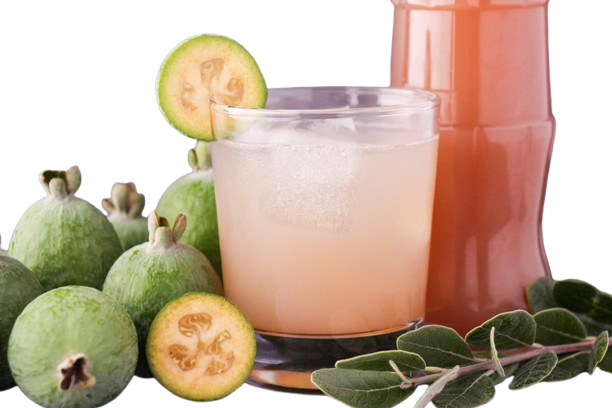
Feijoa juice is a highly aromatic and sweet-tart beverage containing 48 calories, 10.9 g of carbohydrates (4% RDA), 0.5 g of protein (1% RDA), 0.03 g of fat (0% RDA), and 30 mg of Vitamin C (33% RDA) per 100 ml. Also known by names like pineapple guava or guavasteen juice, this pale green liquid holds massive cultural significance across New Zealand and South American culinary traditions. A medium 240 ml (1 cup) serving of feijoa juice supplies 115 calories, while a larger 480 ml (2 cups) portion introduces 230 calories. Supermarket labels provide distinct energy measurements, with 100 ml of Coca Cola's MOST Apple & Feijoa yielding 48 Cal, and a 200 ml serving of Feijoa Smoothie with Raw Apple Juice by The Homegrown Juice Company delivering 94 calories. A study on pineapple guava by Weston (2010), "Bioactive products from fruit of the feijoa (Feijoa sellowiana, Myrtaceae): A review," indicates that the plant's extracts exhibit strong antioxidant and antibacterial properties, though the metabolic load from natural sugars in the pressed liquid must be factored into daily dietary limits.
Shoppers frequently discover several variations of this liquid on grocery shelves, including 100% Feijoa Juice, Feijoa Apple Blend, Feijoa Smoothie, and Sparkling Feijoa Water. Its distinctive flavor (resembling a mix of pineapple, apple, and mint) makes it a prized ingredient in modern Pacific dining, appearing in 5 savory dishes and 5 sweet desserts at established restaurants, such as the Venison with Feijoa Jus at Logan Brown and the Feijoa Sorbet at Amisfield.
The history of this beverage stems from the highlands of South America, where the Acca sellowiana shrub was first discovered before being widely adopted and commercialized in New Zealand. Agricultural tracking organizations monitor the core fruit ingredient, placing it within the tropical fruits industry led by India, which yielded 10,900 kt in 2026. The global food supply records reflect a high dietary intake of these crops in India and Indonesia. The average export cost for a kilogram of raw tropical fruits has grown from $0.45 USD in 2007 to $1.25 USD in 2026.
Nutritionists recommend drinking feijoa juice with strict portion control. Having a medium 240 ml (1 cup) glass adds 115 calories to a daily meal plan. An individual can burn this energy by engaging in 12 minutes of swimming at a steady pace for an average sized woman or 10 minutes of moderate bicycling for an average sized man.
Feijoa Juice nutrition
| Stats | Weight |
|---|---|
| Carbs | 26.1 grams |
| Protein | 1.2 grams |
| Fats | 0 grams |
| Sugars | 24.9 grams |
- Large Feijoa Juice Calories (Nutritional Facts)
- Medium Feijoa Juice Calories (Nutritional Facts)
- Small Feijoa Juice Calories (Nutritional Facts)
- Raw Feijoa Juice Nutrition
- Sodium in Feijoa Juice
- Potassium in Feijoa Juice
- Sugar in Feijoa Juice
- Fiber in Feijoa Juice
- Protein in Feijoa Juice
- Carbs in Feijoa Juice
- Fat in Feijoa Juice
- Vitamins in Feijoa Juice
- Minerals in Feijoa Juice
Large Feijoa Juice Calories (Nutritional Facts)
A large 480 ml (2 cups) glass of feijoa juice provides 230 calories. This 480 ml (2 cups) volume, sometimes referred to as pineapple guava juice, supplies 0.1 g of total fat, 2.4 g of protein, 52.3 g of carbohydrates, and 49.9 g of sugar. A large 480 ml (2 cups) portion of sweetened feijoa nectar holds 310 calories because commercial producers blend in refined cane sugar to reduce the natural tartness of the fruit.
A medium 240 ml (1 cup) serving of feijoa juice contains 115 calories. This 240 ml (1 cup) amount delivers 0.07 g of total fat, 1.2 g of protein, 26.1 g of carbohydrates, and 24.9 g of sugar. A 240 ml (1 cup) serving of sparkling guavasteen drink offers 85 calories due to the physical space taken up by carbonated water.
A modest 100 ml tasting sample of feijoa juice introduces 48 calories to a diet. This 100 ml volume consists of 0.03 g of total fat, 0.5 g of protein, 10.9 g of carbohydrates, and 10.4 g of sugar.
Unpasteurized, raw feijoa juice yields 48 calories, 0.03 g of total fat, 0.5 g of protein, 10.9 g of total carbohydrates, and 0 g of dietary fiber per 100 ml. The nutritional profile of this pressed Acca sellowiana beverage centers on natural fruit sugars and significant amounts of Vitamin C, providing micronutrients with almost zero plant fats.
The sodium content remains extremely low in feijoa juice, measuring just 1 mg (0% of the Daily Value or DV) per 100 ml. This lack of salt makes the pale green drink a safe choice for blood pressure management plans.
Cellular fluid balance benefits from the 150 mg of potassium found in a 100 ml serving of feijoa juice, which meets 3% of the DV. This mineral moves directly from the pressed fruit into the liquid, aiding in proper muscle contraction.
You will find 10.4 g of natural sugar in every 100 ml of feijoa juice. This sugar consists of naturally occurring fructose and glucose from the gelatinous fruit pulp.
Straining the fruit leaves feijoa juice with 0 g of dietary fiber (0% DV) per 100 ml. Industrial juicing extracts almost all of the natural roughage found in the whole plant.
A standard 100 ml glass of feijoa juice offers 0.5 g of plant-based protein.
There are 10.9 g of total carbohydrates present in a 100 ml serving of feijoa juice.
The lipid levels in feijoa juice sit at a very low 0.03 g per 100 ml.
A 100 ml portion of feijoa juice delivers 30 mg of Vitamin C (33% DV) alongside trace amounts of Vitamin E. This vitamin concentration supports immune cell production and skin health.
Trace minerals such as 8 mg of Calcium (1% DV) appear in a 100 ml measure of feijoa juice. The liquid also offers 5 mg of Magnesium (1% DV) and 0.1 mg of Iron (0% DV).
Get a Custom Report on Feijoa Juice Nutrition Data – Contact Us!
What are the Types of Feijoa Juice?
Grocery shoppers will discover 4 distinct commercial variations of feijoa juice on specialty market shelves. The table below shows the common feijoa juice types and their calorie information.
| Type | Description | Calories (per 100ml) | Calorie Differences & Qualifications |
|---|---|---|---|
|
100% Feijoa Juice
|
Pure liquid pressed from fresh pineapple guavas with no added sweeteners. | 48 | Baseline energy for the pure fruit beverage. |
|
Feijoa Smoothie
|
A thicker drink retaining some of the fruit's gelatinous pulp. | 52 | Higher calories due to the retained complex carbohydrates and fruit mass. |
|
Feijoa Apple Blend
|
Pure juice diluted with sweeter apple juice. | 48 | Similar calories because both fruits share comparable sugar densities. |
|
Sparkling Feijoa Water
|
Carbonated water lightly flavored with fruit extract. | 20 | Low calories due to the high volume of carbonated water. |
What are the Desserts with Feijoa Juice?
Pastry chefs use feijoa juice to flavor bright autumn sweets like sorbets and fruit crumbles. Culinary professionals rely on it to impart a natural sweet-and-sour flavor and a pale green hue to the final dish. The table below shows desserts and beverages containing feijoa juice that are served in restaurants.
| Dish Name | Calories | Type | Carbs | Sugar | Protein | Fat | Cuisine | Restaurants |
|---|---|---|---|---|---|---|---|---|
|
Feijoa Sorbet (Seasonal)
|
140 | Frozen | 34g | 30g | 0g | 0g | Contemporary | Amisfield |
|
Feijoa Panna Cotta
|
320 | Pudding | 33g | 27g | 5g | 19g | Fusion | Sidart |
|
Feijoa and Apple Crumble (Seasonal)
|
450 | Baked Dessert | 58g | 35g | 4g | 22g | British Fusion | The Sugar Club |
|
Feijoa Macaron
|
95 | Cookie | 13g | 11g | 2g | 4g | French | Milse |
|
Iced Feijoa Green Tea
|
85 | Beverage | 21g | 18g | 0g | 0g | Cafe | Mojo Coffee |
What are the Main Dishes with Feijoa Juice?
Savory recipes incorporate feijoa juice to balance rich, fatty meat dishes with a touch of floral sweetness. Chefs use the acidic liquid in marinades and seafood reductions. The table below lists the main dishes containing feijoa juice.
| Dish Name | Calories | Type | Carbs | Sugar | Protein | Fat | Cuisine | Restaurants |
|---|---|---|---|---|---|---|---|---|
|
Pork Belly with Feijoa Glaze
|
680 | Meat | 24g | 16g | 42g | 48g | Asian Fusion | Cassia |
|
Venison with Feijoa Jus (Seasonal)
|
560 | Game | 18g | 12g | 52g | 30g | New Zealand | Logan Brown |
|
Scallop Crudo with Feijoa Juice
|
220 | Seafood | 12g | 8g | 25g | 7g | Seafood | Depot Eatery |
|
Roast Duck with Feijoa Reduction
|
650 | Poultry | 16g | 12g | 40g | 47g | French Fusion | The French Cafe |
|
Summer Salad with Feijoa Vinaigrette
|
310 | Salad | 18g | 12g | 6g | 24g | Farm-to-Table | Orphans Kitchen |
What Cuisines Prefer Feijoa Juice the Most?
New Zealand, Australian, and Modern fusion culinary traditions rely heavily on feijoa juice to flavor beverages and sweeten savory glazes. In New Zealand, the juice and raw fruit are celebrated seasonal staples incorporated into chutneys and baked goods. Local chefs utilize the juice to create clear, tart bases for raw seafood dishes and game meats. The table below outlines the cuisines and dishes.
| Cuisine | Dish Name | Calories | Restaurants |
|---|---|---|---|
|
New Zealand
|
Venison with Feijoa Jus (Seasonal) | 560 | Logan Brown |
|
Asian Fusion
|
Pork Belly with Feijoa Glaze | 680 | Cassia |
|
French Fusion
|
Roast Duck with Feijoa Reduction | 650 | The French Cafe |
|
Seafood
|
Scallop Crudo with Feijoa Juice | 220 | Depot Eatery |
|
Contemporary
|
Feijoa Sorbet (Seasonal) | 140 | Amisfield |
Which Countries Produce the Most Feijoa Juice?
India, Indonesia, the Philippines, Thailand, and Vietnam stand as the leading global producers of tropical fruits, the broader agricultural category that encompasses feijoa juice. In 2026, India produced 10,900.00 kilotonnes of fresh tropical fruits based on international agricultural data from the Food and Agriculture Organization (FAOSTAT). Since feijoa juice is a manufactured beverage derived from cultivated plants, international food organizations record the harvest volume under the broader fruit crop. The table below displays fresh tropical fruit production volumes over the last 20 years in kilotonnes.
| Country | 2007 | 2008 | 2009 | 2010 | 2011 | 2012 | 2013 | 2014 | 2015 | 2016 | 2017 | 2018 | 2019 | 2020 | 2021 | 2022 | 2023 | 2024 | 2025 | 2026 |
|---|---|---|---|---|---|---|---|---|---|---|---|---|---|---|---|---|---|---|---|---|
| India | 6200 | 6400 | 6700 | 7000 | 7300 | 7600 | 7900 | 8200 | 8500 | 8800 | 9100 | 9400 | 9600 | 9800 | 10000 | 10200 | 10400 | 10600 | 10800 | 10900 |
| Indonesia | 1600 | 1700 | 1800 | 1900 | 2000 | 2150 | 2300 | 2400 | 2550 | 2700 | 2800 | 2900 | 2950 | 3000 | 3050 | 3100 | 3150 | 3200 | 3250 | 3300 |
| Philippines | 2700 | 2800 | 2900 | 3000 | 3100 | 3200 | 3300 | 3400 | 3450 | 3500 | 3550 | 3600 | 3650 | 3700 | 3750 | 3800 | 3850 | 3900 | 3950 | 4000 |
| Thailand | 850 | 900 | 950 | 1000 | 1050 | 1100 | 1150 | 1200 | 1250 | 1300 | 1350 | 1400 | 1450 | 1500 | 1550 | 1600 | 1650 | 1700 | 1750 | 1800 |
| Vietnam | 750 | 800 | 850 | 900 | 950 | 1000 | 1050 | 1100 | 1150 | 1200 | 1250 | 1300 | 1350 | 1400 | 1450 | 1500 | 1550 | 1600 | 1650 | 1700 |
Which Countries Consume the Most Feijoa Juice?
The highest dietary intake of tropical fruits, generating the supply for feijoa juice, happens in India, Indonesia, the Philippines, Thailand, and Vietnam. The dietary integration of sweet fruit beverages remains highly prevalent in these nations, with Oceania maintaining a massive, specific intake of the feijoa varieties. The table below represents the food supply of these crops for these nations based on international tracking.
| Country | 2007 | 2008 | 2009 | 2010 | 2011 | 2012 | 2013 | 2014 | 2015 | 2016 | 2017 | 2018 | 2019 | 2020 | 2021 | 2022 | 2023 | 2024 | 2025 | 2026 |
|---|---|---|---|---|---|---|---|---|---|---|---|---|---|---|---|---|---|---|---|---|
| India | 6100 | 6300 | 6600 | 6900 | 7200 | 7500 | 7800 | 8100 | 8400 | 8700 | 9000 | 9300 | 9500 | 9700 | 9900 | 10100 | 10300 | 10500 | 10700 | 10800 |
| Indonesia | 1450 | 1550 | 1650 | 1750 | 1850 | 1950 | 2050 | 2150 | 2250 | 2350 | 2450 | 2550 | 2650 | 2750 | 2850 | 2950 | 3050 | 3150 | 3250 | 3350 |
| Philippines | 2650 | 2750 | 2850 | 2950 | 3050 | 3150 | 3250 | 3350 | 3400 | 3450 | 3500 | 3550 | 3600 | 3650 | 3700 | 3750 | 3800 | 3850 | 3900 | 3950 |
| Thailand | 800 | 850 | 900 | 950 | 1000 | 1050 | 1100 | 1150 | 1200 | 1250 | 1300 | 1350 | 1400 | 1450 | 1500 | 1550 | 1600 | 1650 | 1700 | 1750 |
| Vietnam | 700 | 750 | 800 | 850 | 900 | 950 | 1000 | 1050 | 1100 | 1150 | 1200 | 1250 | 1300 | 1350 | 1400 | 1450 | 1500 | 1550 | 1600 | 1650 |
How Do Prices of Feijoa Juice-including Dishes Change?
Dining establishments charging for feijoa juice infused dishes and teas have raised prices to match inflation in food sourcing. The table below compares historical price ranges from 2015 to 2017 to current 2025 to 2026 estimates in USD.
| Restaurant | Dish Name | Old Price Range (2015-17) | Current Price Range (2025-26) |
|---|---|---|---|
| Logan Brown | Venison with Feijoa Jus (Seasonal) | $35.00 to $42.00 | $50.00 to $65.00 |
| Amisfield | Feijoa Sorbet (Seasonal) | $10.00 to $12.00 | $15.00 to $18.00 |
| The French Cafe | Roast Duck with Feijoa Reduction (Seasonal) | $38.00 to $45.00 | $55.00 to $68.00 |
| Milse | Feijoa Macaron (Seasonal) | $2.50 to $3.50 | $4.00 to $5.50 |
| Depot Eatery | Scallop Crudo with Feijoa Juice (Seasonal) | $18.00 to $22.00 | $26.00 to $34.00 |
What is the Feijoa Juice Calorie for 100 Grams?
Exactly 48 calories are present in 100 grams of raw feijoa juice.
What is the Feijoa Juice Calorie for 1 KG?
A full kilogram (1,000 g) of feijoa juice amounts to 480 calories.
What is the Calorie of 1 Feijoa Juice?
Energy counts in commercial feijoa juice drinks vary by brand. A 100 ml serving of Coca Cola's MOST Apple & Feijoa yields 48 calories. A 200 ml portion of Feijoa Smoothie with Raw Apple Juice by The Homegrown Juice Company provides 94 calories. A 350 ml bottle of Squeezed Feijoa Smoothie Juice from Simply has 182 calories.
What are the Health Benefits of Feijoa Juice?
Incorporating feijoa juice into a meal plan brings several physiological advantages, such as aiding immune function and providing cellular protection. This sweet-tart beverage holds a firm place as a pantry staple in New Zealand and South American kitchens. A list of the health benefits of feijoa juice are shown below.
- Stimulates Immune Activity: The high Vitamin C content actively supports the generation of white blood cells to combat infections.
- Provides Cellular Protection: The juice contains polyphenols and antioxidants that defend tissues from oxidative stress and reduce chronic disease risk.
- Supports Heart Function: The natural potassium aids in balancing bodily sodium, which manages steady blood pressure.
- Aids Digestive Health: When consumed as an unfiltered smoothie, the retained fiber helps regulate bowel movements.
- Improves Oxygen Transport: Trace amounts of dietary iron assist in hemoglobin production.
- Maintains Skin Structure: Vitamin C facilitates collagen synthesis, helping the skin remain firm and resilient.
What are the Downsides of Feijoa Juice?
Drinking large volumes of feijoa juice triggers specific physical drawbacks, particularly rapid blood sugar spikes if heavily sweetened. A list of the downsides of feijoa juice are shown below.
- Elevates Blood Sugar: The removal of dietary fiber causes rapid fructose absorption, triggering sharp insulin releases.
- Contributes to Weight Gain: Drinking sweetened liquid calories bypasses the fullness signals normally activated by eating whole fruit.
- Promotes Dental Decay: Natural fruit acids and concentrated sugars weaken tooth enamel and provide food for oral bacteria.
- Induces Mild Heartburn: The natural acidity causes acid reflux or gastrointestinal irritation in sensitive individuals.
Are Feijoa Juices Good for You?
Yes, adding feijoa juice to a balanced diet is a smart choice when managed with proper portion control, providing hydration and a solid dose of Vitamin C in a 100 ml serving. Healthy adults should limit intake to 240 ml (1 cup) daily to secure the antioxidant properties of the fruit without taking in excess simple sugars. A study on pineapple guava's health benefits by Weston (2010) shows that the bioactive products from the fruit of the feijoa exhibit significant antibacterial and antioxidant properties. The liquid is a tart, functional drink requiring careful portioning.
How Do Calories Change According to Feijoa Juice Types?
The energy values of feijoa juice fluctuate based on the filtration methods and fruit blends. Standard 100% Feijoa Juice contains 48 calories per 100 ml. If the product is a Feijoa Smoothie, the energy rises to 52 calories per 100 ml because producers leave the gelatinous pulp inside to create a thicker texture. A Feijoa Apple Blend yields 48 calories per 100 ml since the addition of apple liquid matches the natural sugar profile of the base fruit. When carbonated water is injected to produce a Sparkling Feijoa Water, the value decreases to 20 calories per 100 ml because the gas takes up physical space in the container.
What is the Origin of Feijoa Juice?
The botanical origins of feijoa juice trace back to the highlands of southern Brazil, Colombia, Uruguay, and northern Argentina, where the raw Acca sellowiana shrub grows natively. Early South American societies gathered the fruits for hydration and sustenance. The plant was transported to New Zealand in the 1920s, where the temperate climate proved incredibly hospitable. Local farmers cultivated sweeter varieties, and as extraction methods evolved, the juice was pressed for commercial hydration. Today, modern processing allows the fruit to be blended and bottled across Oceania for wide consumption.
Explore More Beverages
Discover more Beverages with detailed nutrition facts, calorie counts, vitamins, minerals, and health benefits. Compare similar foods, serving sizes, macronutrients, and key nutrients to find the best option for your diet and nutrition goals.
 Almond Milk calories
 Aloe Vera Juice calories
 Americano calories
 Apple Cider calories
 Apple Juice calories
 Apricot Juice calories
 Aronia Juice calories
 Avocado Shake calories
 Banana Juice calories
 Baobab Juice calories
 Barley Tea calories
 Beer calories