Calories and Nutritions in Frappuccino
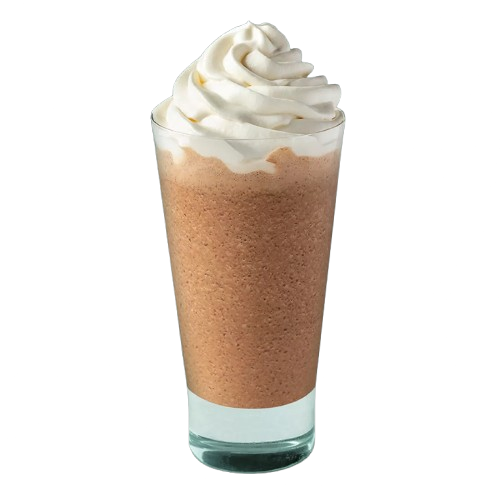
Starbucks Frappuccino is a trademarked line of blended iced coffee and crème beverages. A 473 mL (16 oz) Grande Caramel Crème Frappuccino prepared with whole milk and whipped cream contains 339 calories. This drink is significantly more energy-dense than a standard caffe mocha or latte. A small 355 mL (12 oz) Tall Vanilla Crème Frappuccino with almond milk and no whipped cream provides 114 calories, while a medium 473 mL (16 oz) Grande Vanilla Crème with nonfat milk and no whipped cream contains 169 calories and a large 591 mL (20 oz) Venti version of the same nonfat beverage offers 214 calories. Data from frappuccino nutrition facts show that a 473 mL (16 oz) Grande Chocolate Chip Crème Frappuccino made with whole milk and whipped cream provides 426 calories, 53 g of carbohydrates, 7 g of protein, and 21 g of fat.
Common types include coffee-based blends, non-caffeinated crème-based varieties, and dairy-free options using almond, oat, or soy milk. The flavor profiles are determined by proprietary bases and syrups, such as the 344 calories found in a 473 mL (16 oz) Grande Pure Matcha Crème Frappuccino made with whole milk and whipped cream. These blended treats are often consumed as part of breakfast pairings such as the Sausage and Egg Sandwich Meal at Starbucks, which provides 670 calories. Other establishments offering the bottled retail version as part of a meal combo include Subway for its 6-Inch Turkey Breast Sub Meal and Chipotle for its burrito bowl pairings.
The origin of the Frappuccino is Boston, Massachusetts, where it was first developed by The Coffee Connection before the trademark was acquired and launched globally by Starbucks in 1995. Global production of Ready-to-Drink (RTD) coffee is led by the United States at 1,360 kt as of 2024, followed by Japan at 1,010 kt. Consumption is highest in the United States and Japan, where these drinks serve as a major lifestyle refreshment. The retail price for a 405 mL (13.7 oz) glass bottle has risen from $2.15 USD in 2005 to $4.19 USD in 2024.
Research by Popkin (2010), "Liquid milk, beverages and obesity: what can we learn or do?," found that high consumption of sweetened dairy-based drinks contributes to a significant increase in total daily energy intake. Health guidelines suggest a recommended daily intake of no more than one 355 mL (12 oz) serving per week, which contributes 114 to 280 calories to a standard adult diet depending on the milk and topping selections. To burn the 339 frappuccino calories provided by a standard 473 mL (16 oz) Grande Caramel Crème serving, a person weighing 70 kg (154 lbs) must engage in 97 minutes of moderate walking at 5 km/h (3 mph). For those consuming a 473 mL (16 oz) Grande Chocolate Chip Crème portion containing 426 calories, the energy expenditure requires 122 minutes of moderate walking. Alternatively, the same individual can perform 43 minutes of vigorous swimming or 55 minutes of cycling at a speed of 20 km/h (12 mph) to offset the caloric intake from a standard Grande portion. Normal daily metabolic activity successfully utilizes the 114 calories found in a Tall 12 oz Vanilla Crème with almond milk within 33 minutes of brisk movement.
Frappuccino nutrition
| Stats | Weight |
|---|---|
| Carbs | 53 grams |
| Protein | 7 grams |
| Fats | 0 grams |
| Sugars | 51 grams |
- 8oz Frappuccino Calories (Nutritional Facts)
- 12oz Frappuccino Calories (Nutritional Facts)
- 16oz Frappuccino Calories (Nutritional Facts)
- Standard Frappuccino Nutrition
- Sodium in Frappuccino
- Potassium in Frappuccino
- Sugar in Frappuccino
- Fiber in Frappuccino
- Protein in Frappuccino
- Carbs in Frappuccino
- Fat Content In Frappuccino
- Vitamins in Frappuccino
- Minerals in Frappuccino
8oz Frappuccino Calories (Nutritional Facts)
A small serving of a Starbucks Frappuccino is traditionally served in a 355 mL (12 oz) Tall cup, as the 237 mL (8 oz) size is not a standard blended beverage offering in the provided data. A 355 mL (12 oz) Tall Caramel Crème Frappuccino made with nonfat milk and no whipped cream contains 122 calories. This portion provides 27 g of carbohydrates, 27 g of sugar, and 4 g of protein. A 355 mL (12 oz) Tall Strawberry Crème Frappuccino made with soy milk and no whipped cream provides 165 calories.
A standard 355 mL (12 oz) Tall Vanilla Crème Frappuccino prepared with almond milk and no whipped cream contains 114 calories. This serving size, frequently referred to as the small blended option, provides 2 g of total fat, 1 g of protein, 24 g of total carbohydrates, and 23 g of sugar. A 355 mL (12 oz) Tall Pure Matcha Crème Frappuccino made with whole milk and no whipped cream contains 162 calories. If whipped cream is added to a 12 oz almond milk Vanilla Crème, the calorie count increases to 195.
A medium 473 mL (16 oz) Grande Chocolate Chip Crème Frappuccino prepared with whole milk and whipped cream contains 426 calories. This portion delivers 21 g of total fat, 7 g of protein, 53 g of total carbohydrates, and 51 g of sugar. A 473 mL (16 oz) Grande Caramel Crème Frappuccino made with almond milk and no whipped cream contains 160 calories. A 473 mL (16 oz) Grande Strawberry Crème Frappuccino with nonfat milk and no whipped cream provides 224 calories.
A 100 g (3.5 oz) serving of a standard Starbucks Grande Caramel Crème Frappuccino provides 71 calories, 3.1 g of total fat, 1.0 g of protein, 9.2 g of total carbohydrates, and 9.0 g of sugar. The nutrient density fluctuates based on the milk type, with a 100 g (3.5 oz) serving of a Grande Vanilla Crème made with nonfat milk and no whip containing 38 calories. This beverage is a combination of a proprietary flavor base, specific milk varieties, ice, and whipped toppings.
Frappuccino contains 46 mg of sodium per 100 g (3.5 oz) serving, which fulfills 2% of the Daily Value (DV). A 473 mL (16 oz) Grande Caramel Crème Frappuccino with whole milk and whipped cream contains 240 mg of sodium, fulfilling 10% of the DV. The sodium content primarily originates from the dairy milk and the chemical stabilizers used in the emulsified flavor bases.
A standard 473 mL (16 oz) Grande Frappuccino provides a source of potassium derived from the dairy milk and tea or coffee extracts. While the specific potassium values are not listed on standard labels, the milk base ensures the drink contributes to the daily fluid and mineral balance. A medium serving typically fulfills 4% of the DV for supporting healthy nerve function.
Frappuccino contains 9.0 g of sugar per 100 g (3.5 oz) serving. A 473 mL (16 oz) Grande Strawberry Crème Frappuccino with nonfat milk and whipped cream provides 53 g of total sugar. These values include both the naturally occurring lactose from the milk and the added sucrose from the flavor pumps. Switching from whole milk to almond milk in a Grande Vanilla Crème reduces the sugar count from 40 g to 36 g.
Frappuccino provides 0 g of dietary fiber per 100 g (3.5 oz) serving, fulfilling 0% of the DV. Certain varieties containing ground tea or chocolate components provide minimal fiber, such as the 2 g of fiber found in a 473 mL (16 oz) Grande Chocolate Chip Crème Frappuccino.
Frappuccino provides 1.0 g of protein per 100 g (3.5 oz) serving. A 473 mL (16 oz) Grande Vanilla Crème made with nonfat milk delivers 5 g of protein, whereas the same beverage made with almond milk provides only 1 g of protein.
Frappuccino contains 9.2 g of total carbohydrates per 100 g (3.5 oz) serving. A large 591 mL (20 oz) Venti Vanilla Crème Frappuccino made with nonfat milk and no whipped cream contains 48 g of total carbohydrates.
Frappuccino contains 3.1 g of total fat per 100 g (3.5 oz) serving. A medium 473 mL (16 oz) Grande Chocolate Chip Crème Frappuccino with whole milk and whipped cream contains 21 g of total fat. Removing the whipped cream and using nonfat milk reduces the fat content of a Grande Vanilla Crème to 0 g.
A 100 g (3.5 oz) serving of Frappuccino provides 15 mcg of Vitamin A (2% DV). These vitamins support immune health and are primarily derived from the fortification of the dairy milk used in the base.
A 100 g (3.5 oz) serving of Frappuccino provides 32 mg of Calcium (2% DV). A 473 mL (16 oz) Grande serving provides a source of Calcium and Iron, fulfilling roughly 12% of the DV for Calcium depending on the milk volume.
Get a Custom Report on Frappuccino Nutrition Data – Contact Us!
What are the Types of Frappuccino?
There are 4 different types of Frappuccino such as the coffee-based standard and the crème-based alternative. The table below shows the most common Frappuccino types and their calorie information.
| Type | Description | Calories (per 100 g / 3.5 oz) | Calorie Differences & Qualifications |
|---|---|---|---|
|
Coffee-Based
|
Prepared with coffee roast, 2% milk, and flavored syrups. | 45 | The baseline for energy-dense blended coffee beverages. |
|
Crème-Based
|
A non-coffee version prepared with a milk-based flavor pump. | 79 | Higher density due to the lack of coffee and increased syrup fat. |
|
Light Blended
|
A reduced-calorie version made with non-fat milk and no sugar. | 23 | Lowest energy density qualified for those on a calorie-restricted diet. |
|
Bottled/Canned
|
Ready-to-drink version sold in supermarkets with milk and sugar. | 67 | Higher density per weight as it contains stabilizers for shelf life. |
What Cuisines Prefer Frappuccino the Most?
The Frappuccino is a defining element of Modern American café culture and international fast-casual dining where blended, dessert-style coffee drinks are a high-volume staple. While the brand is North American in origin, its popularity has made it a global standard in urban metropolitan environments across Europe, Asia, and Latin America. Cuisines that prioritize sweet, high-energy refreshments frequently feature these drinks as a primary afternoon or morning indulgence. The table below identifies the specific culinary contexts and beverage categories where the Frappuccino is the primary featured item across different Starbucks entities.
| Cuisine | Dish Name | Calories | Restaurants |
|---|---|---|---|
|
Modern American
|
Caramel Frappuccino (473 mL) | 380 | Starbucks |
|
Modern American
|
Mocha Frappuccino (473 mL) | 470 | Starbucks at Target |
|
Modern American
|
Vanilla Bean Crème Frappuccino (473 mL) | 380 | Starbucks at Barnes & Noble |
|
Modern American
|
Java Chip Frappuccino (473 mL) | 440 | Starbucks at Safeway |
|
Modern American
|
Caramel Ribbon Crunch Frappuccino (473 mL) | 470 | Starbucks |
|
Modern American
|
Strawberry Crème Frappuccino (473 mL) | 370 | Starbucks |
|
Modern American
|
Matcha Tea Frappuccino (473 mL) | 420 | Starbucks |
|
Modern American
|
White Chocolate Mocha Frappuccino (473 mL) | 420 | Starbucks |
|
Modern American
|
Coffee Frappuccino (473 mL) | 230 | Starbucks |
|
Modern American
|
Espresso Frappuccino (473 mL) | 210 | Starbucks |
Which Countries Produce the Most Frappuccino?
The top producers of Ready-to-Drink (RTD) coffee, the industrial beverage category for the Frappuccino, globally are the United States, Japan, China, South Korea, and Germany. In 2021, the United States produced 1,240.00 kilotonnes of RTD coffee beverages while Japan produced 1,080.00 kilotonnes based on data from Statista and the Beverage Marketing Corporation. Production is heavily concentrated in North America and East Asia due to the presence of large-scale industrial bottling infrastructure and high demand for shelf-stable blended coffee. The table below displays the production volumes for these leading nations over the last 20 years in kilotonnes.
| Country | 2005 | 2006 | 2007 | 2008 | 2009 | 2010 | 2011 | 2012 | 2013 | 2014 | 2015 | 2016 | 2017 | 2018 | 2019 | 2020 | 2021 | 2022 | 2023 | 2024 |
|---|---|---|---|---|---|---|---|---|---|---|---|---|---|---|---|---|---|---|---|---|
| USA | 450.00 | 475.00 | 505.00 | 540.00 | 580.00 | 625.00 | 680.00 | 740.00 | 810.00 | 890.00 | 980.00 | 1,050.00 | 1,120.00 | 1,180.00 | 1,210.00 | 1,225.00 | 1,240.00 | 1,280.00 | 1,320.00 | 1,360.00 |
| Japan | 820.00 | 835.00 | 850.00 | 870.00 | 895.00 | 920.00 | 945.00 | 970.00 | 1,005.00 | 1,040.00 | 1,075.00 | 1,110.00 | 1,145.00 | 1,170.00 | 1,140.00 | 1,110.00 | 1,080.00 | 1,050.00 | 1,025.00 | 1,010.00 |
| China | 85.00 | 105.00 | 130.00 | 165.00 | 210.00 | 265.00 | 330.00 | 410.00 | 485.00 | 550.00 | 620.00 | 695.00 | 780.00 | 860.00 | 945.00 | 1,010.00 | 1,075.00 | 1,145.00 | 1,220.00 | 1,295.00 |
| S. Korea | 120.00 | 135.00 | 155.00 | 180.00 | 210.00 | 245.00 | 285.00 | 330.00 | 385.00 | 445.00 | 510.00 | 585.00 | 660.00 | 740.00 | 820.00 | 865.00 | 895.00 | 925.00 | 955.00 | 985.00 |
| Germany | 42.00 | 48.00 | 55.00 | 64.00 | 75.00 | 88.00 | 105.00 | 125.00 | 148.00 | 175.00 | 205.00 | 240.00 | 285.00 | 335.00 | 390.00 | 420.00 | 445.00 | 475.00 | 510.00 | 545.00 |
Which Countries Consume the Most Frappuccino?
Based on data from the Helgi Library and market utilization reports, the top consumers of Ready-to-Drink (RTD) coffee products are the United States, Japan, China, South Korea, and the United Kingdom. Consumption is calculated by the domestic disappearance of bottled and canned coffee drinks within the retail and hospitality sectors. The United States remains the largest market by total volume due to the ubiquity of Starbucks locations and the wide distribution of bottled mocha beverages. Japan has the highest per capita consumption of canned coffee, which serves as a cultural predecessor to the blended Frappuccino. The table below represents the apparent food supply and utilization of these products in leading nations.
| Country | 2005 | 2006 | 2007 | 2008 | 2009 | 2010 | 2011 | 2012 | 2013 | 2014 | 2015 | 2016 | 2017 | 2018 | 2019 | 2020 | 2021 | 2022 | 2023 | 2024 |
|---|---|---|---|---|---|---|---|---|---|---|---|---|---|---|---|---|---|---|---|---|
| USA | 435.00 | 460.00 | 490.00 | 525.00 | 565.00 | 610.00 | 665.00 | 725.00 | 795.00 | 875.00 | 965.00 | 1,035.00 | 1,110.00 | 1,175.00 | 1,240.00 | 1,280.00 | 1,320.00 | 1,380.00 | 1,440.00 | 1,510.00 |
| Japan | 795.00 | 810.00 | 825.00 | 845.00 | 870.00 | 895.00 | 920.00 | 945.00 | 985.00 | 1,025.00 | 1,060.00 | 1,100.00 | 1,135.00 | 1,155.00 | 1,120.00 | 1,090.00 | 1,065.00 | 1,035.00 | 1,010.00 | 995.00 |
| China | 82.00 | 101.00 | 126.00 | 160.00 | 205.00 | 258.00 | 324.00 | 402.00 | 478.00 | 542.00 | 612.00 | 688.00 | 772.00 | 852.00 | 938.00 | 1,005.00 | 1,068.00 | 1,142.00 | 1,215.00 | 1,288.00 |
| S. Korea | 115.00 | 130.00 | 150.00 | 175.00 | 205.00 | 238.00 | 278.00 | 322.00 | 378.00 | 438.00 | 502.00 | 578.00 | 652.00 | 732.00 | 812.00 | 858.00 | 888.00 | 918.00 | 948.00 | 978.00 |
| UK | 38.00 | 44.00 | 51.00 | 60.00 | 71.00 | 84.00 | 100.00 | 118.00 | 140.00 | 168.00 | 198.00 | 234.00 | 278.00 | 328.00 | 385.00 | 415.00 | 442.00 | 472.00 | 508.00 | 542.00 |
How Do Prices of Frappuccino-including Dishes Change?
Menu prices for the Frappuccino and its specialized variations at Starbucks have risen significantly as the product transitioned from a simple blended coffee to an artisanal beverage platform. These price adjustments reflect the increased cost of whole dairy milk and the rising labor expenses for the hand-crafted blending process. The table below provides a comparison of historical price ranges from 2017–2019 with the current 2025–2026 market estimates for specific Frappuccino menu items.
| Restaurant | Dish Name | Old Price Range (2017–2019) | Current Price Range (2025–2026) |
|---|---|---|---|
| Starbucks | Grande Caramel Frappuccino | $4.45 - $4.95 | $5.95 - $6.45 |
| Starbucks | Grande Vanilla Bean Crème Frappuccino | $3.95 - $4.45 | $5.45 - $5.95 |
| Starbucks | Venti Java Chip Frappuccino | $5.25 - $5.75 | $6.95 - $7.50 |
| Starbucks | Tall Coffee Frappuccino | $3.25 - $3.75 | $4.75 - $5.25 |
| Starbucks | Grande Mocha Frappuccino | $4.45 - $4.95 | $5.95 - $6.45 |
| Starbucks | Grande Caramel Ribbon Crunch Frappuccino | $4.95 - $5.45 | $6.45 - $6.95 |
| Target Starbucks | Grande Caramel Frappuccino | $4.55 - $5.05 | $6.15 - $6.65 |
| Safeway Starbucks | Grande Mocha Frappuccino | $4.55 - $5.05 | $6.15 - $6.65 |
What is the Calorie Content of Frappuccino Per 100 mL?
One hundred milliliters (100 mL or 3.4 oz) of a standard Starbucks Grande Caramel Crème Frappuccino with whole milk and whipped cream contains 71 calories.
What is the Calorie Content of Frappuccino Per 1 Liter?
One liter (1,000 mL or 33.8 oz) of a standard Starbucks Grande Caramel Crème Frappuccino with whole milk and whipped cream contains 710 calories.
What is the Calorie Content of 1 Cup of Frappuccino?
One standard 237 mL (8 oz) cup of a Starbucks Coffee Frappuccino provides 107 calories. One 473 mL (16 oz) Grande Vanilla Bean Crème Frappuccino with whole milk and whipped cream contains 320 calories. One 473 mL (16 oz) Grande Pure Matcha Crème Frappuccino with whole milk and whipped cream contains 344 calories. One 473 mL (16 oz) Grande Strawberry Crème Frappuccino with whole milk and whipped cream provides 370 calories. One 473 mL (16 oz) Grande Chocolate Chip Crème Frappuccino with whole milk and whipped cream contains 426 calories. One 473 mL (16 oz) Grande Chai Crème Frappuccino with whole milk and whipped cream delivers 346 calories. One 473 mL (16 oz) Grande Caramel Crème Frappuccino with whole milk and whipped cream contains 339 calories.
What are the Health Benefits of Frappuccino?
Frappuccino provides some health benefits like enhancing temporary cognitive alertness and supplying dietary calcium due to its coffee-derived polyphenols and dairy content. This beverage, frequently called a "blended coffee," "frozen latte," or "creamy caffeine slush," provides more than just sensory satisfaction when consumed as a "light" or reduced-sugar option. A list of the health benefits of Frappuccino are shown below.
- Supplies Dietary Antioxidants: The coffee roast used in the base contains phenolic compounds that neutralize free radicals. A study by Yashin et al. (2013), "Antioxidant and Antiradical Activity of Coffee," found that the high antioxidant activity in coffee-based beverages supports a healthy diet by reducing systemic oxidative stress.
- Enhances Brain Function: The caffeine content in coffee-based varieties blocks adenosine receptors to improve vigilance. Research by Nehlig (2010), "Is Caffeine a Cognitive Enhancer?" demonstrated that moderate doses of caffeine significantly improve attention and memory.
- Promotes Bone Health: A 473 mL (16 oz) serving provides 150 mg of Calcium, fulfilling 12% of the Daily Value (DV). This mineral density is a vital part of maintaining skeletal strength.
- Provides Essential B-Vitamins: The dairy component delivers Vitamin B12, which fulfills 8% of the DV per 100 g (3.5 oz) for supporting red blood cell production.
- Boosts Physical Endurance: Caffeine increases epinephrine levels in the blood, preparing the body for intense physical exertion.
What are the Downsides of Frappuccino?
Frappuccino has been known to cause some unwanted effects like rapid blood sugar spikes and sleep fragmentation due to its high sucrose content and concentrated stimulants. This drink can negatively impact metabolic health if consumed frequently. A list of the downsides of Frappuccino are shown below.
- Increases Risk of Metabolic Disorders: A standard Grande Strawberry Crème Frappuccino contains 53 g of sugar, which exceeds the daily recommended limit for added sugars. A study by Malik et al. (2010), "Sugar-Sweetened Beverages and Risk of Metabolic Syndrome and Type 2 Diabetes: A Meta-analysis," indicates that the regular intake of high-sugar drinks is linked to weight gain and insulin resistance.
- Triggers Insomnia and Jitteriness: High doses of caffeine from the coffee extract can overstimulate the central nervous system. Research by O'Callaghan et al. (2018), "The Effects of Caffeine on Sleep Quality and Daytime Sleepiness," found that caffeine consumption significantly disrupts sleep cycles.
- Contributes to Cardiovascular Strain: The high saturated fat content from whipped cream and whole milk can raise LDL cholesterol levels. A Grande Chocolate Chip Crème contains 14 g of saturated fat, fulfilling 70% of the DV.
- Promotes Dental Enamel Erosion: The combination of acidic coffee and high sugar levels creates an environment where bacteria produce acids that weaken teeth.
- Contributes Empty Calories: A large blended beverage provides up to 426 calories with minimal essential vitamins. These "empty" frappuccino calories can lead to weight gain if not accounted for in daily energy expenditure.
Is Frappuccino Good for You?
No, a standard Frappuccino is not good for you because it provides 320 to 426 calories and over 50 g of sugar per 473 mL (16 oz) serving, which interferes with a balanced weight management plan. Healthy individuals should consume no more than one small 355 mL (12 oz) serving once per week to avoid excessive intake of refined sugars and saturated fats. The major benefits include a temporary cognitive boost and a dose of calcium, but these are negated by the high caloric density. It is an acceptable addition to a diet only when prepared as a "light" version using non-fat milk and without whipped cream or added chocolate chips.
How Do Calories Change According to Frappuccino Types?
The calories in Frappuccino change based on the specific base used and the fat content of the milk variety. A standard Coffee Frappuccino contains 45 calories per 100 g (3.5 oz), but using a Crème base increases the density to 79 calories per 100 g (3.5 oz) because Crème versions lack the calorie-neutral coffee extract and use a denser syrup. Removing the whipped cream from a Grande 473 mL (16 oz) serving reduces the energy count by 101 calories and removes 10 g of fat. Switching from 2% milk to non-fat milk in a standard Grande serving reduces the total by 20 calories.
How Do Calories in Frappuccino Compare to Calories in Milk Tea?
A standard 473 mL (16 oz) Grande Caramel Crème Frappuccino contains 339 calories, whereas a 473 mL (16 oz) Kung Fu Tea Milk Tea provides 250 calories when served without toppings. The Frappuccino usually contains more sugar and cream because it is formulated with a dense emulsified base and a standard topping of heavy whipped cream. Milk tea generally has a lower calorie content because it consists of a liquid tea foundation and a smaller volume of milk or non-dairy creamer. Toppings and syrup pumps alter the total calorie count significantly for both beverages. For instance, adding tapioca pearls to a milk tea contributes 150 calories, while adding chocolate chips to a Grande Frappuccino increases the energy load to 426 calories. Each extra pump of flavored syrup used in either drink adds 20 to 25 calories to the final nutritional profile.
What are the Desserts with Frappuccino?
Since the Frappuccino is a registered trademark of the Starbucks Corporation specifically designating a line of cold blended beverages, it is served exclusively as a standalone liquid refreshment rather than a structural component for cakes, pastries, or puddings.
What are the Main Dishes with Frappuccino?
There are no main dishes that use Frappuccino as a cooking ingredient. The product is an emulsified, chilled beverage containing significant levels of refined sugars and dairy fats, which makes it unsuitable for savory heat-based cooking processes such as roasting, braising, or sautéing proteins and grains.
What is the Origin of Frappuccino?
The origin of the Frappuccino is traced to 1992 at "The Coffee Connection," a specialty coffee shop chain in Boston, Massachusetts, founded by George Howell. The beverage was developed by employee Andrew Frank, who was inspired by the New England "frappe," a thick milkshake traditional to the region. After Starbucks acquired The Coffee Connection in 1994 for 23 million USD, they inherited the trademarked name and refined the recipe to create a consistent, machine-blended product that could be scaled for a global market.
Starbucks officially launched the Frappuccino across all United States locations in 1995, initially offering only Coffee and Mocha varieties prepared with a specialized soft-serve-like base. Its immediate commercial success transformed the company's financial outlook, providing a massive revenue boost during the summer months when hot coffee sales typically declined. Over the next three decades, the product line evolved from a simple coffee slush to an expansive menu of crème-based, fruit-flavored, and seasonally-themed blended treats. Today, the Frappuccino remains one of the most recognizable and commercially successful trademarks in the global beverage industry.
Explore More Beverages
Discover more Beverages with detailed nutrition facts, calorie counts, vitamins, minerals, and health benefits. Compare similar foods, serving sizes, macronutrients, and key nutrients to find the best option for your diet and nutrition goals.
 Almond Milk calories
 Aloe Vera Juice calories
 Americano calories
 Apple Cider calories
 Apple Juice calories
 Apricot Juice calories
 Aronia Juice calories
 Avocado Shake calories
 Banana Juice calories
 Baobab Juice calories
 Barley Tea calories
 Beer calories