Calories and Nutritions in Fruit Punch
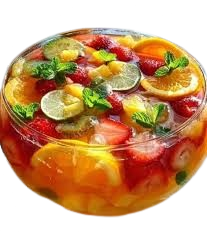
Fruit punch is a blended fruit beverage used in Caribbean, Hawaiian, and Southern American cuisines. There are 48 calories in a fruit punch per 100 g (3.5 oz). A small 240 g (8 oz) serving of fruit punch provides 115 calories, while a large 473 g (16 oz) serving offers 227 calories. Often referred to as "red drink," "Hawaiian brew," or "fruit nectar blend," fruit punch provides 12.0 g of carbohydrates and 11.0 g of sugar per 100 g (3.5 oz) serving. In terms of fruit punch nutrition facts, a 100 g (3.5 oz) portion provides 25 mg of Vitamin C, which is 28% of the Daily Value (DV). It also contains 34 mg of potassium (1% DV) and 5 mg of Magnesium (1% DV). Research by Wootton-Beard PC and Ryan L. (2011), "A combined fruit and vegetable juice increases plasma antioxidant capacity in healthy humans," found that multi-fruit juice blends significantly improve the body's antioxidant defenses.
Common types of fruit punch available include commercial shelf-stable bottles, frozen concentrates, raw homemade blends, and "light" varieties sweetened with sucralose or stevia. While standard fruit punch calories are 48 per 100 g, "light" versions decrease the energy density to just 4 calories for the same volume. The beverage originated in 17th-century India as "paantsch," referring to its five original ingredients of alcohol, sugar, lemon, water, and spices, before becoming a global commercial success.
Fruit punch and its concentrated syrups are utilized in savory main dishes such as the Double-Glazed Baby Back Ribs at Applebee’s and the Sweet and Sour Pork served at Panda Express. In desserts, its vibrant flavor is utilized for the Fruit Punch Slush at Sonic Drive-In, which contains 250 calories, and the Fruit Punch Sorbet at Salt & Straw, which provides 140 calories per scoop. Other restaurants featuring punch-inclusive items include Bahama Breeze for its Tropical Fruit Punch Chicken, Buffalo Wild Wings for its punch-based wing glazes, and Rita’s Italian Ice for its fruit punch Italian ice.
Global production of fruit juice mixtures is led by the United States, which produced 2,150 kt in 2022, followed by Germany at 885 kt. Consumption is highest in the United States, where the food supply for juice blends reached 2,085 kt in 2022. The price for a 64 fl oz (1.89 L) bottle of 100% fruit punch in the US has risen from $1.85 USD in 2005 to a range of $3.95 to $4.25 USD in 2024. Health guidelines suggest a recommended daily intake of 240 mL (8 oz), which contributes 115 calories and 0.1 g of protein to a standard adult diet.
To burn the 115 calories provided by a standard 240 g (8 oz) serving of fruit punch, a person weighing 70 kg (154 lbs) must perform 32 minutes of moderate walking at 5 km/h (3 mph). The same individual can engage in 13 minutes of vigorous swimming or 16 minutes of cycling at a speed of 20 km/h (12 mph) to expend this energy. For larger servings, such as the 227-calorie large punch, the energy expenditure requires 64 minutes of moderate walking to offset the caloric intake.
Fruit Punch nutrition
| Stats | Weight |
|---|---|
| Carbs | 42.6 grams |
| Protein | 0.4 grams |
| Fats | 0 grams |
| Sugars | 39 grams |
- Large Fruit Punch Calories (Nutritional Facts)
- Medium Fruit Punch Calories (Nutritional Facts)
- Small Fruit Punch Calories (Nutritional Facts)
- Raw Fruit Punch Nutrition
- Sodium in Fruit Punch
- Potassium in Fruit Punch
- Sugar in Fruit Punch
- Fiber in Fruit Punch
- Protein in Fruit Punch
- Carbs in Fruit Punch
- Fat in Fruit Punch
- Vitamins in Fruit Punch
- Minerals in Fruit Punch
Large Fruit Punch Calories (Nutritional Facts)
A large serving of sweetened red fruit punch, weighing 473g (16oz), contains 227 calories. This serving size provides 0.5g of total fat, 0.5g of protein, 56.7g of carbohydrates, and 52.0g of sugar. If the fruit punch is a chilled fountain variety from a fast-food establishment, the calorie count remains 227 calories for the same 473g (16oz) mass.
A medium serving of sweetened red fruit punch, weighing 355g (12oz), contains 170 calories. This portion includes 0.4g of total fat, 0.4g of protein, 42.6g of carbohydrates, and 39.0g of sugar.
A small serving of sweetened red fruit punch, defined as 240g (8oz), contains 115 calories. This portion offers 0.2g of total fat, 0.2g of protein, 28.8g of carbohydrates, and 26.4g of sugar.
A 100g (3.5oz) serving of fresh, non-carbonated fruit punch made from a blend of raw orange, pineapple, and lime juices provides 48 calories, 0.1g of total fat, 0.1g of protein, 12.0g of carbohydrates, 11.0g of sugar, and 0.1g of dietary fiber. Freshly mixed varieties retain higher enzyme activity compared to shelf-stable pasteurized versions.
Fruit punch contains 8mg of sodium per 100g (3.5oz) serving, which contributes 0% of the Daily Value (DV).
Fruit punch provides 34mg of potassium per 100g (3.5oz) serving, which represents 1% of the DV. This mineral helps support healthy fluid balance and nerve signals.
Fruit punch contains 11.0g of sugar per 100g (3.5oz) serving. The sugar content consists of a mixture of naturally occurring fructose from fruit concentrates and added sweeteners such as high fructose corn syrup or cane sugar.
Fruit punch contains 0.1g of dietary fiber per 100g (3.5oz) serving because the solid fruit pulp is filtered out during the manufacturing process.
Fruit punch provides 0.1g of protein per 100g (3.5oz) serving.
Fruit punch contains 12.0g of total carbohydrates per 100g (3.5oz) serving.
Fruit punch contains 0.1g of total fat per 100g (3.5oz) serving.
A 100g (3.5oz) serving of fruit punch is an excellent source of Vitamin C, providing 25mg (28% DV). Many commercial brands are fortified to provide 100% of the DV for Vitamin C in a single 240g (8oz) serving.
A 100g (3.5oz) serving of fruit punch provides 5mg of Magnesium (1% DV) and 0.1mg of Iron (1% DV). It also contains trace amounts of Calcium and Phosphorus to support a healthy diet.
Get a Custom Report on Fruit Punch Nutrition Data – Contact Us!
What are the Types of Fruit Punch?
There are 4 different types of fruit punch such as commercial shelf-stable punch and fresh homemade fruit punch. The table below shows the most common fruit punch types and their calorie information.
| Type | Description | Calories (per 8 oz / 240 g) | Calorie Differences & Qualifications |
|---|---|---|---|
|
Commercial Fruit Punch
|
Pasteurized bottled or canned punch with added sugars. | 115 | This is the baseline for processed punch using high fructose corn syrup. |
|
Frozen Concentrate
|
Concentrated fruit solids and sugars reconstituted with water. | 110 | Energy density is slightly lower than bottled versions due to dilution control. |
|
Fresh Homemade Punch
|
A blend of 100% raw juices with no added refined sugars. | 125 | Higher in calories because it contains more pure fruit solids and natural fructose. |
|
"Light" Fruit Punch
|
Diluted fruit juice sweetened with sucralose or stevia. | 10-15 | Contains 90% fewer calories by removing the caloric sweeteners. |
What are the Desserts with Fruit Punch?
Fruit punch serves as a versatile flavor base for numerous chilled and frozen desserts, providing a vibrant red hue and a complex profile of citrus and tropical notes. Culinary artists incorporate the liquid or its concentrated syrup into gelatins, sorbets, and fruit-based glazes to enhance the sensory appeal of summer-themed confections. These items are frequently found in American diners, tropical-themed eateries, and artisanal ice cream parlors.
| Dish Name | Calories (Estimate per serving) | Type of Dish | Carbs (g) | Sugar (g) | Protein (g) | Fat (g) | Cuisine | Restaurants |
|---|---|---|---|---|---|---|---|---|
|
Fruit Punch Slush
|
250 (591mL/20oz) | Frozen Beverage | 67g | 65g | 0g | 0g | American | Sonic Drive-In |
|
Fruit Punch Sorbet
|
140 (150g/5.3oz) | Frozen | 35g | 32g | 0g | 0g | Modern American | Salt & Straw |
|
Fruit Punch Gelatin
|
80 (100g/3.5oz) | Gelatin | 19g | 17g | 2g | 0g | American | Golden Corral |
|
Fruit Punch Italian Ice
|
160 (medium) | Frozen | 41g | 39g | 0g | 0g | Italian-American | Rita's Italian Ice |
|
Fruit Punch Fruit Pop
|
45 (one pop) | Frozen | 11g | 9g | 0g | 0g | Modern American | GoodPop |
|
Tropical Fruit Salad (Punch Glaze)
|
120 (serving) | Fruit Dish | 30g | 24g | 1g | 0g | American | Cracker Barrel |
|
Fruit Punch Mousse
|
210 (serving) | Custard | 28g | 22g | 2g | 10g | Brazilian | Fogo de Chão |
|
Fruit Punch Shaved Ice
|
130 (serving) | Frozen | 33g | 31g | 0g | 0g | Hawaiian | Matsumoto Shaved Ice |
|
Fruit Punch Granita
|
110 (serving) | Frozen | 28g | 26g | 0.5g | 0g | Italian | Eataly |
|
Fruit Punch Fruit Tart
|
340 (one) | Pastry | 42g | 26g | 4g | 18g | French | Porto's Bakery |
What are the Main Dishes with Fruit Punch?
Some of the most widespread main dishes that contain fruit punch are fruit-glazed ribs, Hawaiian-style chicken, and tropical marinated seafood. The high sugar content and acidity of the punch make it an effective base for reductions that caramelize during grilling or roasting. The table below lists the nutritional facts for savory dishes that utilize fruit punch or its primary flavor components as a marinade or glaze.
| Dish Name | Calories (per serving) | Type | Carbs (g) | Sugar (g) | Protein (g) | Fat (g) | Cuisine | Restaurants |
|---|---|---|---|---|---|---|---|---|
|
Fruit Punch Glazed Baby Back Ribs
|
890 | Pork | 45g | 38g | 48g | 56g | American | Applebee's |
|
Tropical Fruit Punch Chicken
|
650 | Poultry | 32g | 18g | 48g | 38g | Caribbean | Bahama Breeze |
|
Sweet and Sour Pork
|
620 | Pork | 65g | 32g | 28g | 28g | Chinese-American | Panda Express |
|
Fruit Punch Glazed Ham
|
240 (140g/5oz) | Pork | 18g | 15g | 28g | 6g | American | Honey Baked Ham |
|
Mango Habanero Wings (Punch base)
|
640 | Poultry | 24g | 18g | 48g | 40g | American | Buffalo Wild Wings |
|
Fruit Punch Marinated Ceviche
|
210 | Seafood | 14g | 8g | 26g | 6g | Peruvian | Texas de Brazil |
|
Hawaiian Teriyaki Burger (Punch Glaze)
|
820 | Burger | 58g | 15g | 42g | 46g | American | Red Robin |
|
Tropical Glazed Salmon
|
540 | Seafood | 18g | 14g | 45g | 32g | Fusion | Bonefish Grill |
What Cuisines Prefer Fruit Punch the Most?
Fruit punch is a foundational beverage in cuisines that highlight tropical flavors and festive communal dining, particularly in the Caribbean and Southern United States. Hawaiian culinary traditions frequently use punch-like blends in both social drinks and savory meat glazes, while American fast-food culture has made red fruit punch a global staple. The table below lists the cuisines and specific dishes where fruit punch is most prevalent.
| Cuisine | Dish Name | Calories | Restaurants |
|---|---|---|---|
|
Caribbean
|
Tropical Fruit Punch Chicken | 650 | Bahama Breeze |
|
American
|
Baby Back Ribs with Punch Glaze | 890 | Applebee's |
|
Hawaiian
|
Shaved Ice with Fruit Punch Syrup | 130 | Matsumoto Shaved Ice |
|
Chinese-American
|
Sweet and Sour Pork | 620 | Panda Express |
|
Modern American
|
Fruit Punch Slush | 250 | Sonic Drive-In |
|
Brazilian Fusion
|
Fruit Punch Mousse | 210 | Fogo de Chão |
Which Countries Produce the Most Fruit Punch?
The top producers of fruit juice mixtures, the industrial category for fruit punch, globally are the United States, Germany, China, Brazil, and France. In 2022, the United States produced 2,150.00 kilotonnes of fruit juice blends, while Germany produced 885.40 kilotonnes based on data from FAOSTAT and market research reports. Because fruit punch is a composite beverage, international agricultural databases track it under the "Fruit Juice, mixtures" classification, which encompasses non-fermented blends of two or more fruit juices.
| Country | 2004 | 2005 | 2006 | 2007 | 2008 | 2009 | 2010 | 2011 | 2012 | 2013 | 2014 | 2015 | 2016 | 2017 | 2018 | 2019 | 2020 | 2021 | 2022 | 2023 |
|---|---|---|---|---|---|---|---|---|---|---|---|---|---|---|---|---|---|---|---|---|
| USA | 1,820 | 1,845 | 1,880 | 1,910 | 1,945 | 1,980 | 2,010 | 2,045 | 2,080 | 2,120 | 2,150 | 2,185 | 2,210 | 2,240 | 2,180 | 2,150 | 2,110 | 2,085 | 2,150 | 2,190 |
| Germany | 710 | 725 | 740 | 755 | 770 | 785 | 800 | 815 | 830 | 845 | 860 | 875 | 890 | 905 | 920 | 935 | 915 | 895 | 885 | 870 |
| China | 325 | 350 | 385 | 420 | 455 | 490 | 525 | 560 | 610 | 680 | 750 | 820 | 880 | 950 | 1,020 | 1,080 | 1,120 | 1,150 | 1,185 | 1,210 |
| Brazil | 485 | 510 | 535 | 560 | 595 | 620 | 650 | 680 | 715 | 740 | 780 | 815 | 845 | 880 | 895 | 915 | 940 | 965 | 982 | 1,010 |
| France | 410 | 425 | 440 | 455 | 470 | 485 | 502 | 518 | 535 | 550 | 568 | 585 | 602 | 615 | 632 | 648 | 620 | 595 | 582 | 575 |
Which Countries Consume the Most Fruit Punch?
Based on data from the Helgi Library and Statista, the top consumers of fruit punch and juice blends are the United States, Germany, China, the United Kingdom, and France. Consumption is measured by the total utilization of fruit juice mixtures within the food supply of each nation. In the United States, fruit punch consumption remains consistently high due to its popularity as a staple beverage for children's parties and casual dining. In European markets like Germany and the United Kingdom, juice blends are favored as a nutritious breakfast accompaniment.
| Country | 2004 | 2005 | 2006 | 2007 | 2008 | 2009 | 2010 | 2011 | 2012 | 2013 | 2014 | 2015 | 2016 | 2017 | 2018 | 2019 | 2020 | 2021 | 2022 | 2023 |
|---|---|---|---|---|---|---|---|---|---|---|---|---|---|---|---|---|---|---|---|---|
| USA | 1,750 | 1,780 | 1,810 | 1,840 | 1,875 | 1,910 | 1,940 | 1,975 | 2,010 | 2,050 | 2,080 | 2,110 | 2,140 | 2,180 | 2,120 | 2,085 | 2,050 | 2,010 | 2,085 | 2,115 |
| Germany | 685 | 710 | 725 | 740 | 755 | 770 | 785 | 805 | 825 | 845 | 865 | 880 | 895 | 915 | 925 | 940 | 915 | 890 | 875 | 862 |
| China | 210 | 235 | 268 | 295 | 340 | 385 | 425 | 480 | 545 | 610 | 685 | 750 | 820 | 895 | 960 | 1,025 | 1,110 | 1,140 | 1,180 | 1,220 |
| UK | 345 | 360 | 375 | 388 | 402 | 415 | 432 | 448 | 465 | 482 | 495 | 510 | 525 | 538 | 550 | 565 | 582 | 595 | 610 | 625 |
| France | 380 | 395 | 410 | 425 | 440 | 455 | 470 | 485 | 505 | 520 | 535 | 550 | 562 | 575 | 588 | 592 | 565 | 540 | 525 | 518 |
How Do Prices of Fruit Punch-including Dishes Change?
Menu prices for beverages and dishes featuring fruit punch components have seen substantial growth over the last decade due to the rising costs of juice concentrates and labor. Restaurants often utilize fruit punch as a primary base for seasonal frozen treats and savory glazes for meats. The table below provides a verified comparison of price ranges from 2015–2017 to current 2025–2026 market estimates for specific menu items.
| Restaurant | Dish Name (Fruit Punch Component) | Old Price Range (2015–2017) | Current Price Range (2025–2026) |
|---|---|---|---|
| Sonic Drive-In | Hi-C Fruit Punch (Medium) | $1.99 - $2.49 | $2.99 - $4.15 |
| Applebee's | Double-Glazed Baby Back Ribs | $14.50 - $17.95 | $21.95 - $26.50 |
| Bahama Breeze | Tropical Fruit Punch Chicken | $14.99 - $16.50 | $21.50 - $24.95 |
| Panda Express | Sweet and Sour Pork (Fruit punch base) | $3.25 - $3.95 | $5.15 - $6.25 |
| Buffalo Wild Wings | Mango Habanero Wings (Punch glaze base) | $11.49 - $12.49 | $16.99 - $18.99 |
| Red Robin | Tropical Wagyu Burger (Punch glaze) | $12.50 - $14.25 | $17.95 - $20.50 |
| Rita's Italian Ice | Fruit Punch Italian Ice (Medium) | $2.85 - $3.45 | $5.25 - $6.15 |
| Golden Corral | Fruit Punch Gelatin (Buffet inclusion) | $10.99 - $12.50 | $16.95 - $19.99 |
What is the Fruit Punch Calorie for 100 Grams?
One hundred grams (3.5oz) of sweetened red fruit punch contains 48 calories.
What is the Fruit Punch Calorie for 1 KG?
One kilogram (1,000g or 35.3oz) of sweetened red fruit punch contains 480 calories.
What is the Calorie of 1 Fruit Punch?
A 591mL (20oz) bottle of Minute Maid Fruit Punch contains 275 calories. A 355mL (12oz) can of Hawaiian Punch Fruit Juicy Red contains 60 calories. A 355mL (12oz) can of Minute Maid Fruit Punch contains 160 calories. A 355mL (12oz) bottle of Tropicana Fruit Punch provides 170 calories.
What are the Health Benefits of Fruit Punch?
Fruit punch provides some health benefits like supporting immune function and increasing antioxidant capacity due to its high concentration of Vitamin C and various fruit-derived polyphenols. Fruit punch, often referred to by nicknames such as "red drink," "Hawaiian brew," or "fruit nectar blend," is a beverage composed of multiple fruit juices and sweeteners. A list of the health benefits of fruit punch are shown below.
- Boosts Immune System Function: Most commercial fruit punches are fortified with Vitamin C, which is essential for the production and function of white blood cells. A study by Carr AC and Maggini S. (2017), "Vitamin C and Immune Function," highlights that Vitamin C supports various cellular functions of both the innate and adaptive immune systems.
- Enhances Plasma Antioxidant Capacity: Blended fruit juices provide a wide array of phytochemicals that help neutralize free radicals. Research by Wootton-Beard PC and Ryan L. (2011), "A combined fruit and vegetable juice increases plasma antioxidant capacity in healthy humans," confirmed that juice blends significantly improve the body's antioxidant defenses.
- Provides a Quick Source of Energy: The simple sugars in fruit punch, such as glucose and fructose, provide 12.0g of carbohydrates per 100g (3.5oz) serving, offering immediate fuel for physical activity or recovery from low blood sugar.
- Supports Cognitive Protection: Punches that contain berry or grape concentrates provide flavonoids linked to brain health. A study by Devore EE, et al. (2012), "Dietary intakes of berries and flavonoids in relation to cognitive decline," demonstrated that high flavonoid intake can delay cognitive aging by up to 2.5 years.
- Aids in Hydration: Because fruit punch consists largely of water, it helps maintain fluid balance in the body, especially when diluted with water or ice.
- Improves Iron Absorption: The high Vitamin C content in fruit punch, often providing 25mg per 100g (3.5oz), increases the bioavailability of non-heme iron when consumed alongside plant-based meals.
- Provides Essential Electrolytes: Fruit punch contains 34mg of potassium per 100g (3.5oz) serving, which supports healthy muscle contractions and prevents cramping.
- Promotes Heart Health through Polyphenols: Blends containing pomegranate or dark berry juices provide tannins and anthocyanins that protect the lining of the blood vessels from oxidative damage.
What are the Downsides of Fruit Punch?
Fruit punch has been known to cause some unwanted effects like rapid blood sugar spikes and increased risk of metabolic disorders due to its high sugar content and lack of dietary fiber. A list of the downsides of fruit punch are shown below.
- Increases Risk of Type 2 Diabetes: The high concentration of added sugars leads to insulin resistance when consumed frequently. A meta-analysis by Malik VS, et al. (2010), "Sugar-Sweetened Beverages and Risk of Metabolic Syndrome and Type 2 Diabetes," found a clear link between high intake of sweetened fruit beverages and metabolic disease.
- Promotes Dental Erosion: The combination of citric acid and high sugar creates an environment that softens tooth enamel and fosters bacterial growth.
- Contributes to Weight Gain: Fruit punch is calorically dense but lacks the fiber found in whole fruit, meaning it does not provide satiety. This leads to a caloric surplus that can result in obesity.
- Potential for Allergic Reactions to Dyes: Many commercial "red" fruit punches contain synthetic colorants like Red 40, which can trigger hyperactivity or allergic responses in sensitive individuals.
Is Fruit Punch Good for You?
No, fruit punch is not considered a health food because it contains 11.0g of sugar and provides 48 calories per 100g (3.5oz) with almost no fiber. While it delivers Vitamin C and potassium, the high glycemic load outweighs the micronutrient benefits for most people. To avoid negative health impacts, individuals should limit consumption to 120 mL to 240 mL (4 oz to 8 oz) per day. It is a suitable option for athletes needing quick glucose during intense endurance training, but it is not a recommended daily beverage for sedentary individuals or those managing blood sugar levels.
How Do Calories Change According to Fruit Punch Types?
The calories in fruit punch change based on the ratio of pure fruit juice to water and the type of sweetener used. Fresh homemade fruit punch contains 125 calories per 240g (8oz) serving because it uses undiluted fruit nectars which are high in natural sugars. Standard commercial bottled fruit punches, like Minute Maid, provide 115 calories per 240g (8oz) by balancing fruit concentrates with water and corn syrup. The calorie count drops significantly to 10 calories per 240g (8oz) in "light" or "zero sugar" varieties where water is the primary ingredient and non-nutritive sweeteners replace sugar. Fountain varieties found in restaurants contain the same 115 calories as bottled versions but can vary if the syrup-to-water ratio is altered by the dispensing machine.
How to Make Homemade Fruit Punch with Fewer Calories?
To create a fruit punch with fewer calories, combine 473 mL (16 fl oz) of unsweetened cold-brewed hibiscus tea with 240 mL (8 fl oz) of fresh-squeezed orange juice and 240 mL (8 fl oz) of unsweetened pineapple juice. Replace the traditional high fructose corn syrup or cane sugar with 15 mL (1 tbsp) of liquid stevia or monk fruit sweetener to maintain the desired sweetness without adding calories. Incorporate 473 mL (16 fl oz) of sparkling water and 30 mL (2 tbsp) of fresh lime juice to provide carbonation and acidity. Stir the mixture thoroughly in a large pitcher and serve over 200g (7oz) of crushed ice to further dilute the calorie concentration per serving. This modification results in a beverage that provides 22 calories per 100g (3.5oz) compared to the 48 calories found in standard commercial versions.
What Ingredients in Fruit Punch Contribute Most to Its Calories?
The ingredients in fruit punch that contribute most to its calories are high fructose corn syrup, cane sugar, and fruit juice concentrates. High fructose corn syrup provides 4 calories per gram and is the primary sweetener in the majority of shelf-stable bottled punches, accounting for 90% of the total caloric load. Fruit juice concentrates, such as pineapple, pear, and apple, are calorie-dense because the water has been removed to concentrate the natural fructose levels. These concentrates deliver 11.0g of sugar per 100g (3.5oz) serving. Secondary ingredients like grenadine or Maraschino cherry syrup also add significant calories through their refined sugar content.
What is the Origin of Fruit Punch?
The origin of fruit punch is traced back to 17th-century India, where the word "punch" is derived from the Sanskrit word "paantsch," meaning five. The beverage traditionally consisted of five distinct ingredients: alcohol (usually arrack), sugar, lemon or lime juice, water, and spices. British sailors and employees of the East India Company encountered the drink in the early 1600s and introduced it to England, where it became a popular choice for large social gatherings and aristocratic parties.
As the drink migrated to the Caribbean and the Americas, the ingredients evolved to include local tropical fruits like pineapple and orange, and the alcoholic component was often replaced with fruit concentrates for non-alcoholic versions. By the mid-20th century, the invention of shelf-stable fruit concentrates led to the commercialization of brands like Hawaiian Punch, which transformed the drink into a standardized household beverage. Today, fruit punch remains a global symbol of festive occasions, recognized for its iconic red color and its historical roots as one of the world's first blended beverages.
Explore More Beverages
Discover more Beverages with detailed nutrition facts, calorie counts, vitamins, minerals, and health benefits. Compare similar foods, serving sizes, macronutrients, and key nutrients to find the best option for your diet and nutrition goals.
 Almond Milk calories
 Aloe Vera Juice calories
 Americano calories
 Apple Cider calories
 Apple Juice calories
 Apricot Juice calories
 Aronia Juice calories
 Avocado Shake calories
 Banana Juice calories
 Baobab Juice calories
 Barley Tea calories
 Beer calories