Calories and Nutritions in Grape Juice
Grape juice is a flavorful beverage obtained from the crushing and blending of grapes, serving as a staple in Mediterranean, French, and American breakfast cuisines. Calories in grape juice are 60 calories per 100 g (3.5 oz). A small 253 g (8 fl oz) serving of grape juice provides 152 calories, whereas a medium 380 g (12 fl oz) serving contains 228 calories and a large 506 g (16 fl oz) serving offers 304 calories. Grape juice calories decrease to 50 calories per 253 g (8 fl oz) when the liquid is a light, reduced-sugar version.
In terms of grape juice nutrition, a 100 g (3.5 oz) portion provides 34.4 mg of Vitamin C, which is 38% of the Daily Value (DV). It also contains 104 mg of potassium (2% DV) and 10 mg of magnesium (2% DV). Research by Stein JH, et al. (1999), "Purple grape juice improves endothelial function and reduces the susceptibility of LDL cholesterol to oxidation in patients with coronary artery disease," found that daily intake improves vascular health. The grape originated in the Near East during the Neolithic period, though the modern pasteurization process was developed in 1869 in New Jersey. Often called "nectar of the vine" or "purple gold," grape juice provides 14.8 g of carbohydrates and 13.9 g of sugar per 100 g (3.5 oz) serving.
Common types include raw pressed juice, pasteurized bottled juice, and unfermented white grape must. Grape juice is a key component in dishes like Sweet and Sour Chicken, which contains 510 calories per serving, and breakfast staples like jelly-filled donuts found at Dunkin'. Other restaurants featuring grape-inclusive items include Chick-fil-A, Waffle House, and Panera Bread. Global production of grapes is led by China, which produced 15,602 kt in 2022, followed by Italy at 8,437 kt. Consumption is significant in the United States, where the food supply for grapes reached 6,450 kt in 2021. The price for a 64 fl oz bottle of 100% grape juice has risen from $2.65 in 2004 to a range of $4.95 to $5.50 in 2024.
Health guidelines suggest a recommended daily consumption of 240 mL (8 oz), which provides 152 calories and 0.9 g of protein. To burn the 152 calories from a 240 mL (8 oz) serving, a person weighing 70 kg (154 lbs) must walk at 5 km/h (3 mph) for 43 minutes. The same individual can perform 17 minutes of vigorous swimming or 22 minutes of cycling at 20 km/h (12 mph) to expend this energy.
Grape Juice nutrition
| Stats | Weight |
|---|---|
| Carbs | 56.1 grams |
| Protein | 1.4 grams |
| Fats | 0 grams |
| Sugars | 52.8 grams |
- Large Grape Juice Calories (Nutritional Facts)
- Medium Grape Juice Calories (Nutritional Facts)
- Small Grape Juice Calories (Nutritional Facts)
- Raw Grape Juice Nutrition
- Sodium in Grape Juice
- Potassium in Grape Juice
- Sugar in Grape Juice
- Fiber in Grape Juice
- Protein in Grape Juice
- Carbs in Grape Juice
- Fat in Grape Juice
- Vitamins in Grape Juice
- Minerals in Grape Juice
Large Grape Juice Calories (Nutritional Facts)
A large serving of unsweetened 100% purple grape juice, weighing 506 g (16 fl oz), contains 304 calories. This serving size provides 0 g of total fat, 1.8 g of protein, 74.8 g of carbohydrates, and 70.3 g of sugar. Unsweetened white grape juice in the same serving size provides 309 calories.
A medium serving of unsweetened 100% purple grape juice, weighing 380 g (12 fl oz), contains 228 calories. This portion includes 0 g of total fat, 1.4 g of protein, 56.1 g of carbohydrates, and 52.8 g of sugar. A medium serving of white grape juice provides 232 calories.
A small serving of unsweetened 100% purple grape juice, weighing 253 g (8 fl oz), contains 152 calories. This serving offers 0 g of total fat, 0.9 g of protein, 37.4 g of carbohydrates, and 35.2 g of sugar. A small serving of white grape juice contains 155 calories.
A 100 g (3.5 oz) serving of raw, fresh-pressed Concord grape juice provides 60 calories, 0 g of total fat, 0.4 g of protein, 14.8 g of carbohydrates, 13.9 g of sugar, and 0.1 g of dietary fiber. Raw white grape juice provides 61 calories and 15.1 g of carbohydrates per 100 g (3.5 oz) serving. Pasteurization does not change the calorie count of these juices, but it reduces the enzyme activity present in the raw state.
Grape juice contains 5 mg of sodium per 100 g (3.5 oz) serving, which contributes 0% of the Daily Value (DV).
Grape juice provides 104 mg of potassium per 100 g (3.5 oz) serving, which is 2% of the DV. This mineral supports healthy nerve function and blood pressure regulation.
Grape juice contains 13.9 g of sugar per 100 g (3.5 oz) serving. These are naturally occurring sugars from the grapes, consisting primarily of glucose and fructose.
Grape juice contains 0.1 g of dietary fiber per 100 g (3.5 oz) serving because the fibrous skins and pulp are removed during the pressing and filtration process.
Grape juice provides 0.4 g of protein per 100 g (3.5 oz) serving.
Grape juice contains 14.8 g of total carbohydrates per 100 g (3.5 oz) serving.
Grape juice contains 0 g of total fat per 100 g (3.5 oz) serving.
A 100 g (3.5 oz) serving of grape juice provides 34.4 mg of Vitamin C, which is 38% of the DV and supports immune health. It also provides 0.1 mcg of Vitamin K, contributing 0% of the DV. Many commercial varieties are fortified with additional Vitamin C to enhance the nutritional profile.
A 100 g (3.5 oz) serving of grape juice provides 10 mg of Magnesium (2% DV), 0.1 mg of Manganese (4% DV), and 0.3 mg of Iron (2% DV). These minerals contribute to bone health and energy metabolism.
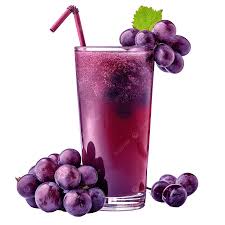
Get a Custom Report on Grape Juice Nutrition Data – Contact Us!
What are the Types of Grape Juice?
There are 5 different types of grape juice such as Concord purple grape juice and Niagara white grape juice. The table below shows the most common grape juice types and their calorie information.
| Type | Description | Calories (per 8 fl oz / 240 mL) | Calorie Differences & Qualifications |
|---|---|---|---|
|
Concord Purple Grape Juice
|
Juice made from deep purple Concord grapes; the most common variety. | 152 | This is the baseline for high-polyphenol juice with significant natural sugar. |
|
White Grape Juice
|
Made from green-skinned grapes like Niagara or Thompson Seedless. | 155 | Slightly higher in calories than purple juice but lower in anthocyanin antioxidants. |
|
Red Grape Juice
|
Produced from red-skinned table grapes with a milder flavor than Concord. | 148 | Contains lower calorie density than white grape juice but higher than light versions. |
|
Light Grape Juice
|
A diluted version of grape juice often sweetened with low-calorie sweeteners. | 50 | Provides 67% fewer calories by reducing the sugar concentration through dilution. |
|
Muscadine Grape Juice
|
Juice from thick-skinned Muscadine grapes native to the southern United States. | 135 | Contains lower sugar levels than Concord juice but higher levels of specific phenolic compounds. |
What are Desserts with Grape Juice?
Grape juice provides a natural sweetness and intense color that culinary professionals utilize in various frozen treats, jellies, and baked goods. While many desserts incorporate whole grapes, the juice form is preferred for creating smooth textures in sorbets, glazes, and custards. These items are frequently featured in specialized bakeries, Italian gelaterias, and classic American diners.
| Dish Name | Calories (Estimate per serving/piece) | Type of Dish | Carbs (g) | Sugar (g) | Protein (g) | Fat (g) | Cuisine | Restaurants |
|---|---|---|---|---|---|---|---|---|
|
Concord Grape Sorbet
|
120 | Frozen | 31g | 28g | 0g | 0g | American | Salt & Straw |
|
Grape Jelly Crepes
|
450 | Crepe | 68g | 34g | 8g | 16g | French-American | IHOP |
|
Grape Juice Panna Cotta
|
310 | Custard | 28g | 24g | 4g | 20g | Italian | Eataly |
|
Grape Juice Glazed Donut
|
260 | Donut | 35g | 18g | 3g | 12g | American | Voodoo Doughnut |
|
Grape Granita
|
110 | Frozen | 28g | 26g | 0g | 0g | Italian | Rita’s Italian Ice |
|
Grape Jelly Cheesecake
|
980 | Cake | 92g | 65g | 12g | 62g | American | The Cheesecake Factory |
|
Grape & Berry Smoothie
|
220 | Beverage | 54g | 48g | 1g | 0g | Modern Healthy | Smoothie King |
|
Concord Grape Tart
|
380 | Tart | 48g | 32g | 4g | 19g | American | Magnolia Bakery |
|
Grape Juice Gelato
|
180 | Frozen | 32g | 28g | 3g | 5g | Italian | Grom |
|
Grape Juice Pudding
|
160 | Pudding | 34g | 28g | 2g | 3g | American | Kozy Shack (Retail/Foodservice) |
What are the Main Dishes with Grape Juice?
Grape juice is frequently used as a base for reductions, marinades, and savory glazes due to its high sugar content and acidity which helps tenderize meats. It serves as a non-alcoholic alternative to wine in French and Italian pan sauces, providing a rich depth to poultry and beef dishes. Some of the most widespread main dishes that contain grape juice are Sweet and Sour Chicken, Grape Glazed Pork, and Braised Short Ribs. The table below lists the nutritional profiles and restaurants that feature these dishes.
| Dish Name | Calories | Type | Carbs | Sugar | Protein | Fat | Cuisine | Restaurants |
|---|---|---|---|---|---|---|---|---|
|
Sweet and Sour Chicken
|
510 | Entree | 60g | 30g | 20g | 20g | Chinese-American | Panda Express |
|
Braised Short Ribs (Grape Reduction)
|
850 | Entree | 45g | 35g | 55g | 50g | Italian-American | Maggiano’s Little Italy |
|
Waldorf Salad (Grape Dressing)
|
420 | Salad | 25g | 18g | 8g | 32g | American | California Pizza Kitchen |
|
Grape Glazed Pork Medallions
|
580 | Entree | 42g | 28g | 38g | 28g | Modern American | Seasons 52 |
|
Grape Juice Cured Salmon
|
220 | Appetizer | 5g | 4g | 22g | 12g | Scandinavian | Russ & Daughters |
|
Grape Juice Reduction Steak
|
950 | Entree | 12g | 8g | 65g | 72g | Steakhouse | Ruth’s Chris Steak House |
|
Sweet Chili Chicken
|
480 | Entree | 55g | 32g | 24g | 18g | Asian Fusion | Pei Wei |
|
Roast Duck with Grape Sauce
|
720 | Entree | 38g | 26g | 42g | 45g | French | Balthazar |
What Cuisines Prefer Grape Juice the Most?
Grape juice is a staple in various culinary traditions ranging from Western health-focused diets to religious observances and high-end European cooking. It is particularly prominent in Modern American wellness culture as a base for antioxidants, and it serves as a critical ingredient in Kosher cuisine. The table below outlines the cuisines and dishes where grape juice is most prevalent.
| Cuisine | Dish Name | Calories | Restaurants |
|---|---|---|---|
|
Modern American
|
Concord Grape Smoothie | 210 | Smoothie King |
|
French
|
Duck with Grape Juice Glaze | 720 | Balthazar |
|
Italian
|
Panna Cotta with Grape Reduction | 310 | Eataly |
|
Modern Healthy
|
Grape Juice Wellness Shot | 60 | Pressed Juicery |
|
Kosher
|
Challah with Grape Juice Glaze | 280 | Zabar’s |
|
Chinese-American
|
Sweet and Sour Pork | 620 | P.F. Chang’s |
Which Countries Produce the Most Grape Juice?
The top producers of grapes globally are China, Italy, France, Spain, and the United States. In 2022, China led global production with 15,602.16 kt of grapes, while Italy followed with 8,437.97 kt and France produced 6,200.00 kt based on data from FAOSTAT. Because international databases track the primary raw material, the table below provides production figures for the "Grapes" category, which includes fruit destined for juice, wine, and fresh consumption.
| Country | 2003 | 2005 | 2007 | 2009 | 2011 | 2013 | 2015 | 2017 | 2019 | 2021 | 2022 |
|---|---|---|---|---|---|---|---|---|---|---|---|
| China | 5,176 | 6,050 | 7,100 | 8,500 | 10,200 | 12,000 | 13,500 | 14,300 | 14,800 | 15,400 | 15,602 |
| Italy | 7,490 | 8,670 | 7,390 | 8,240 | 7,110 | 8,010 | 8,200 | 7,170 | 7,900 | 8,150 | 8,437 |
| France | 6,250 | 6,740 | 6,050 | 6,100 | 6,580 | 5,480 | 6,370 | 5,010 | 5,480 | 5,070 | 6,200 |
| Spain | 6,180 | 5,900 | 5,980 | 5,530 | 5,800 | 7,470 | 5,940 | 5,380 | 5,740 | 6,080 | 5,900 |
| USA | 5,900 | 7,050 | 6,380 | 6,620 | 6,750 | 7,740 | 6,880 | 6,650 | 6,230 | 6,050 | 5,370 |
| Turkey | 3,600 | 3,850 | 3,610 | 3,850 | 4,290 | 4,000 | 3,650 | 4,200 | 4,100 | 3,670 | 4,160 |
| India | 1,450 | 1,560 | 1,680 | 1,880 | 2,210 | 2,480 | 2,590 | 2,740 | 3,040 | 3,350 | 3,490 |
| Chile | 1,850 | 2,200 | 2,350 | 2,150 | 2,450 | 2,650 | 2,740 | 2,380 | 2,700 | 2,580 | 2,400 |
| Argentina | 2,250 | 2,880 | 2,980 | 2,180 | 2,870 | 2,820 | 2,410 | 1,960 | 2,520 | 2,240 | 1,930 |
| South Africa | 1,320 | 1,440 | 1,580 | 1,650 | 1,680 | 1,790 | 1,750 | 1,720 | 1,880 | 2,020 | 1,940 |
Which Countries Consume the Most Grape Juice?
Based on data from the OIV and FAOSTAT, the top consumers of grapes and grape-based products are China, the United States, France, Italy, and Germany. Consumption is measured by the apparent supply available for food and processing within each nation. In the United States, consumption of 100% grape juice remains high due to its historical association with breakfast and health benefits. The table below displays the total food supply for grapes in these regions over a ten-year span.
| Country/Region | 2012 | 2013 | 2014 | 2015 | 2016 | 2017 | 2018 | 2019 | 2020 | 2021 |
|---|---|---|---|---|---|---|---|---|---|---|
| China | 10,250 | 11,800 | 12,400 | 13,100 | 13,900 | 14,250 | 14,580 | 14,820 | 15,100 | 15,250 |
| USA | 6,850 | 7,120 | 6,950 | 6,820 | 6,740 | 6,680 | 6,550 | 6,420 | 6,380 | 6,450 |
| France | 5,420 | 4,950 | 5,280 | 5,340 | 5,120 | 4,850 | 4,920 | 5,010 | 4,750 | 4,820 |
| Italy | 6,150 | 6,850 | 5,950 | 6,420 | 6,280 | 5,840 | 6,100 | 6,250 | 5,920 | 6,050 |
| Germany | 1,420 | 1,380 | 1,410 | 1,435 | 1,450 | 1,465 | 1,480 | 1,495 | 1,510 | 1,525 |
| Turkey | 3,120 | 3,250 | 3,380 | 3,150 | 3,240 | 3,310 | 3,420 | 3,450 | 3,380 | 3,420 |
| India | 2,210 | 2,480 | 2,590 | 2,740 | 2,820 | 2,950 | 3,040 | 3,180 | 3,350 | 3,450 |
| Brazil | 1,350 | 1,380 | 1,420 | 1,450 | 1,180 | 1,650 | 1,580 | 1,620 | 1,720 | 1,750 |
How Do Prices of Grape Juice-including Dishes Change?
Menu prices for beverages and breakfast items featuring grape juice or grape-based preserves have undergone significant adjustments over the last decade. This trend is largely driven by the rising cost of Concord grape concentrates and the logistical expenses associated with refrigerated juice distribution. While grape juice is frequently found as a primary ingredient in bottled wellness blends at premium cafes, it is also a staple condiment in high-volume breakfast chains. The table below provides a verified comparison of price ranges from 2015–2016 to the current 2025 market rates for items that feature grape juice or grape jelly as a core component.
| Restaurant | Dish (Grape Juice/Jelly prominent) | Old Price Range (2015-2016) | Current Price Range (2025) |
|---|---|---|---|
| Starbucks | Evolution Fresh Organic Defense Up (Grape Juice base) | $3.95 - $4.50 | $5.95 - $6.95 |
| Dunkin' | Jelly Filled Donut (Grape Jelly) | $0.99 - $1.19 | $1.59 - $2.10 |
| Waffle House | Side of Toast with Grape Jelly | $1.50 - $1.95 | $2.25 - $3.15 |
| Chick-fil-A | Chicken Biscuit with Grape Jam | $2.65 - $3.15 | $4.15 - $5.25 |
| McDonald's | Fruit & Maple Oatmeal (includes juice-infused raisins) | $2.49 - $2.99 | $3.69 - $4.49 |
| Denny's | Build Your Own Grand Slam (includes Toast & Grape Jelly) | $7.99 - $9.99 | $11.49 - $15.99 |
| Krispy Kreme | Glazed Jelly Filled Donut (Grape filling) | $1.15 - $1.35 | $1.95 - $2.45 |
| Panera Bread | Toasted Bagel with Grape Cream Cheese Spread | $2.85 - $3.45 | $4.25 - $5.50 |
What is the Grape Juice Calorie for 100 Grams?
One hundred grams (3.5 oz) of unsweetened 100% purple grape juice contains 60 calories.
What is the Grape Juice Calorie for 1 KG?
One kilogram (1,000 g) of unsweetened 100% purple grape juice contains 600 calories.
What is the Grape Juice Calorie for 100 mL?
One hundred milliliters (3.4 fl oz) of unsweetened 100% purple grape juice contains 60 calories.
What is the Grape Juice Calorie for 1 Liter?
One liter (1,000 mL) of unsweetened 100% purple grape juice contains 600 calories.
What is the Calorie of 1 Grape Juice?
A 296 mL (10 fl oz) bottle of Welch's 100% Grape Juice contains 170 calories. A 296 mL (10 fl oz) bottle of Ocean Spray 100% Juice Concord Grape contains 160 calories. A 355 mL (12 fl oz) can of Old Orchard 100% Grape Juice concentrate, when reconstituted, contains 170 calories per 240 mL (8 fl oz) serving.
What are the Health Benefits of Grape Juice?
Grape juice provides some health benefits like supporting cardiovascular function and improving memory due to its high concentration of polyphenols and antioxidants. This beverage, frequently called "nectar of the vine" or "purple gold," is a nutrient-rich extract from various grape species. A list of the health benefits of grape juice are shown below.
- Improves Heart Health: Purple grape juice contains flavonoids that help prevent the oxidation of LDL cholesterol and improve the function of the lining of blood vessels. A study by Stein JH, et al. (1999), "Purple grape juice improves endothelial function and reduces the susceptibility of LDL cholesterol to oxidation in patients with coronary artery disease," confirmed that daily consumption significantly improves vascular health.
- Enhances Cognitive Function: The antioxidants in Concord grapes can reduce oxidative stress in the brain, potentially delaying age-related memory loss. Research by Krikorian R, et al. (2010), "Concord grape juice supplementation improves memory function in older adults with mild cognitive impairment," demonstrated that regular intake leads to significant improvements in verbal learning.
- Boosts Antioxidant Status: Grape juice is rich in resveratrol and quercetin, which neutralize free radicals. A study by O'Byrne DJ, et al. (2002), "Comparison of the antioxidant effects of Concord grape juice flavonoids and alpha-tocopherol on mammalian lipoprotein oxidation," showed that grape juice polyphenols are effective in reducing oxidative stress markers.
- Supports Immune System: The high concentration of Vitamin C in fortified grape juice helps the body produce white blood cells and resist infections.
- Maintains Healthy Blood Pressure: The potassium content in grape juice, providing 263 mg per 240 mL (8 fl oz) serving, helps balance sodium levels and reduce tension in blood vessel walls.
- Supports Digestive Health: While juice lacks the bulk fiber of the whole fruit, it contains tartaric acid which aids in the digestive process.
- Reduces Inflammation: Polyphenols in red and purple grape juices inhibit inflammatory pathways in the body, which can reduce the risk of chronic inflammatory diseases.
- Protects Vision: Certain compounds in grapes, such as lutein and zeaxanthin, help protect the eyes from damage caused by ultraviolet light and oxidative stress.
What are the Downsides of Grape Juice?
Grape juice has been known to cause some unwanted effects like rapid blood sugar spikes and potential weight gain due to its high natural sugar content and lack of dietary fiber. A list of the downsides of grape juice are shown below.
- High Glycemic Load: Because the juicing process removes the fiber that slows sugar absorption, grape juice causes a fast increase in blood glucose. A study by Banini AE, et al. (2006), "Muscadine grape products intake, diet and blood constituents of non-diabetic and type 2 diabetic subjects," noted that high intake can impact insulin responses in diabetic individuals.
- Risk of Dental Erosion: The combination of natural acids and high sugar content can weaken tooth enamel over time, leading to cavities and sensitivity.
- Weight Gain Potential: Grape juice is more calorie-dense than many other fruit juices, containing 152 calories per 240 mL (8 fl oz). Frequent consumption without adjusting total daily caloric intake can lead to an increase in body mass.
Digestive Distress: In some individuals, the high fructose content in grape juice can lead to bloating, gas, or diarrhea if consumed in large quantities.
How Do Calories Change According to Grape Juice Types?
The calories in grape juice change based on the specific grape variety used and the presence of added water or sweeteners. Concord purple grape juice serves as the standard, containing 152 calories per 240 mL (8 fl oz) serving. White grape juice, typically made from Niagara grapes, contains 155 calories for the same volume because these grapes possess a higher brix level, or natural sugar concentration. Red grape juice varieties offer a slightly lower energy density at 148 calories per serving. The most significant reduction occurs in "Light" grape juice products, which use dilution and non-nutritive sweeteners to bring the calorie count down to 50 calories per 240 mL (8 fl oz). Pure, undiluted Muscadine juice provides 135 calories, as this wild grape variety naturally contains less fructose than commercial Concord grapes.
Do Vitamins in Grape Juice Vary by Grape Type?
Yes, the vitamin and nutrient profiles in grape juice vary significantly depending on the grape type. Purple Concord grape juice provides 34.4 mg of Vitamin C per 100 g (3.5 oz) serving, while white grape juice often provides 32.2 mg per 100 g (3.5 oz) unless further fortified. Purple juice is distinct for its high concentration of Vitamin K, providing 0.1 mcg per 100 g (3.5 oz), whereas white grape varieties contain less than 0.05 mcg. Additionally, the Vitamin B6 content in Concord juice is 0.04 mg per serving, which is 20% higher than the 0.03 mg found in most white grape juice varieties. While Vitamin C levels are often standardized through fortification in commercial products, the naturally occurring phytonutrients and B vitamins remain higher in darker, thick-skinned grape varieties.
Is Grape Juice Suitable for Daily Intake?
Yes, grape juice is suitable for daily intake provided it is consumed in controlled portions. A standard daily serving of 118 mL to 240 mL (4 oz to 8 oz) provides significant amounts of polyphenols and Vitamin C which support heart health and immune function. However, the high natural sugar content and lack of dietary fiber mean that excessive consumption can contribute to a high caloric load and rapid blood sugar spikes. Individuals managing diabetes or weight should limit intake to smaller volumes or choose "Light" varieties to avoid consuming more than 35 g of sugar in a single sitting.
What is the Origin of Grape Juice?
The origin of processed, non-alcoholic grape juice dates back to 1869 in Vineland, New Jersey, when a dentist named Thomas Bramwell Welch applied pasteurization to fruit juice. While humans have consumed fresh grape must for thousands of years, the juice would naturally ferment into wine within days. Welch utilized the recent discoveries of Louis Pasteur to heat the juice of Concord grapes, successfully killing the yeast and preventing fermentation. This allowed the juice to be bottled and stored as a non-alcoholic beverage for the first time in history. Initially marketed as "unfermented wine" for religious communion services, the product gained wider popularity during the American Temperance movement and eventually became a mainstream consumer product under the Welch’s brand. Today, the technology for producing shelf-stable grape juice has expanded globally, supporting a massive industry centered on various grape cultivars.
Explore More Beverages
Discover more Beverages with detailed nutrition facts, calorie counts, vitamins, minerals, and health benefits. Compare similar foods, serving sizes, macronutrients, and key nutrients to find the best option for your diet and nutrition goals.
 Almond Milk calories
 Aloe Vera Juice calories
 Americano calories
 Apple Cider calories
 Apple Juice calories
 Apricot Juice calories
 Aronia Juice calories
 Avocado Shake calories
 Banana Juice calories
 Baobab Juice calories
 Barley Tea calories
 Beer calories