Calories and Nutritions in Hemp Milk
Hemp milk is a dairy-free staple in vegan diets and functions as a base for smoothies, lattes, and breakfast bowls in Californian and health-conscious cuisines. A standard single-serve carton of processed hemp milk (240g) contains 79 calories in hemp milk, whereas a glass of homemade raw hemp milk (240g) supplies 130 calories due to the retention of natural oils. A glass of Elmhurst Vanilla Milked Hemp (240ml) provides 101 calories, while a cup of Living Harvest Coconut Hempmilk (236g) supplies 50 calories.
An assessment of hemp milk nutrition reveals it is rich in fat, with moderate protein and negligible carbohydrates, as a 360g serving provides 12g of fat, 3g of protein, and only 1.5g of carbohydrates. This milk supplies essential fatty acids, specifically providing 1g of Omega-3 and 3g of Omega-6 per 240g serving to support cardiovascular function. A study conducted by Rodriguez-Leyva, D., & Pierce, G. N. (2010), "The cardiac and haemostatic effects of dietary hempseed," confirms that dietary hempseed intake protects the heart during ischemic events and lowers blood pressure. The energy content stems mainly from these healthy fats, establishing the drink as a satiating fuel source. Micronutrient density is high in fortified versions, offering 450mg of calcium (35% DV) per 360g serving. Iron levels are notable, providing 1.65mg per 360g serving to support oxygen transport.
Global output of hemp milk relies significantly on the agricultural yields of France, China, and the United States, to meet the demand in major markets where the United States, Germany, and the United Kingdom consume vast volumes of hemp milk beverage. Within Californian, Raw Vegan, and American health food traditions, hemp milk is a central element in dishes like the Billion Dollar Bowl, Hemp Milk Lattes, and Chia Seed Puddings. Escalating global demand and economic shifts have driven retail costs upward, as the price for a standard 32oz carton rose from $3.50 in the early 2010s to between $5.50 and $7.50 in 2024. This inflation aligns with broader market indicators, with the Producer Price Index for fluid milk products rising to 300.332 in 2024. Dining establishments mirror this inflation, as The Billion Dollar Meal at SunLife Organics increased from $28.00 in 2016 to between $33.00 and $40.00 in 2024.
The benefits of hemp milk extend to skeletal health through high concentrations of phosphorus and calcium, providing 299mg of phosphorus and 450mg of calcium per 360g serving. This nutrient profile aids bone maintenance and supports metabolic processes. Nutritionists recommend drinking 240g per day to balance nutrient absorption with caloric intake, as this portion contains 79 calories, an energy load that requires 18 minutes of walking or 8 minutes of burpees to burn.
Hemp Milk nutrition
| Stats | Weight |
|---|---|
| Carbs | 1 grams |
| Protein | 2 grams |
| Fats | 0 grams |
| Sugars | 0 grams |
- Large Hemp Milk Calories (Nutritional Facts)
- Medium Hemp Milk Calories (Nutritional Facts)
- Small Hemp Milk Calories (Nutritional Facts)
- Raw Hemp Milk Nutrition
- Sodium in Hemp Milk
- Potassium in Hemp Milk
- Sugar in Hemp Milk
- Fiber in Hemp Milk
- Protein in Hemp Milk
- Carbs in Hemp Milk
- Fat in Hemp Milk
- Vitamins in Hemp Milk
- Minerals in Hemp Milk
Large Hemp Milk Calories (Nutritional Facts)
A large serving of Hemp milk (360g or 12oz) contains 119 calories, 3g of protein, 12g of fat, 1.5g of carbohydrates, 0g of fiber, 0g of sugar, and 187mg of sodium.
A medium portion of Hemp milk (240g or 8oz) provides 79 calories, 2g of protein, 8g of fat, 1g of carbohydrates, 0g of fiber, 0g of sugar, and 125mg of sodium.
A small cup of Hemp milk (180g or 6oz) contains 59 calories, 1.5g of protein, 6g of fat, 0.8g of carbohydrates, 0g of fiber, 0g of sugar, and 94mg of sodium.
A cup of fresh raw hemp milk (240g or 8oz) supplies 130 calories, 7g of protein, 11g of fat, 2g of carbohydrates, 1g of fiber, 0.5g of sugar, and 5mg of sodium.
A large serving of Hemp milk (360g or 12oz) contains 187mg of sodium (8% DV). A medium portion of Hemp milk (240g or 8oz) has 125mg of sodium (5% DV). A small cup of Hemp milk (180g or 6oz) contains 94mg of sodium (4% DV). A cup of fresh raw hemp milk (240g or 8oz) supplies 5mg of sodium (0% DV).
A large serving of Hemp milk (360g or 12oz) provides negligible amounts of potassium. A medium portion of Hemp milk (240g or 8oz) has minimal potassium content. A small cup of Hemp milk (180g or 6oz) contains trace amounts of potassium. A cup of fresh raw hemp milk (240g or 8oz) supplies 412mg of potassium (9% DV).
A large serving of Hemp milk (360g or 12oz) contains 0g of sugar. A medium portion of Hemp milk (240g or 8oz) has 0g of sugar. A small cup of Hemp milk (180g or 6oz) contains 0g of sugar. A cup of fresh raw hemp milk (240g or 8oz) provides 0.5g of sugar.
A large serving of Hemp milk (360g or 12oz) provides 0g of dietary fiber (0% DV). A medium portion of Hemp milk (240g or 8oz) has 0g of fiber (0% DV). A small cup of Hemp milk (180g or 6oz) contains 0g of fiber (0% DV). A cup of fresh raw hemp milk (240g or 8oz) supplies 1g of fiber (4% DV).
A large serving of Hemp milk (360g or 12oz) provides 3g of protein (6% DV). A medium portion of Hemp milk (240g or 8oz) has 2g of protein (4% DV). A small cup of Hemp milk (180g or 6oz) contains 1.5g of protein (3% DV). A cup of fresh raw hemp milk (240g or 8oz) supplies 7g of protein (14% DV).
A large serving of Hemp milk (360g or 12oz) contains 1.5g of carbohydrates (0% DV). A medium portion of Hemp milk (240g or 8oz) has 1g of carbohydrates (0% DV). A small cup of Hemp milk (180g or 6oz) contains 0.8g of carbohydrates (0% DV). A cup of fresh raw hemp milk (240g or 8oz) provides 2g of carbohydrates (1% DV).
A large serving of Hemp milk (360g or 12oz) contains 12g of total fat (15% DV). A medium portion of Hemp milk (240g or 8oz) has 8g of total fat (10% DV). A small cup of Hemp milk (180g or 6oz) contains 6g of total fat (8% DV). A cup of fresh raw hemp milk (240g or 8oz) provides 11g of total fat (14% DV).
A large serving of Hemp milk (360g or 12oz) provides 0mg of Vitamin C (0% DV). A medium portion of Hemp milk (240g or 8oz) has 0mg of Vitamin C (0% DV). A small cup of Hemp milk (180g or 6oz) contains 0mg of Vitamin C (0% DV). A cup of fresh raw hemp milk (240g or 8oz) supplies 0.6mg of Vitamin E (4% DV).
A large serving of Hemp milk (360g or 12oz) provides 450mg of calcium (35% DV), 1.65mg of iron (9% DV), and 299mg of phosphorus (24% DV). A medium portion of Hemp milk (240g or 8oz) has 300mg of calcium (23% DV), 1.1mg of iron (6% DV), and 199mg of phosphorus (16% DV). A small cup of Hemp milk (180g or 6oz) contains 225mg of calcium (17% DV), 0.8mg of iron (5% DV), and 149mg of phosphorus (12% DV). A cup of fresh raw hemp milk (240g or 8oz) supplies 225mg of phosphorus (18% DV), 120mg of magnesium (29% DV), and 2.9mg of iron (16% DV).
Get a Custom Report on Hemp Milk Nutrition Data – Contact Us!
What are the Types of Hemp Milks?
The types of Hemp Milk include Unsweetened, Original Sweetened, Vanilla, Chocolate, and Barista Blend. The table below outlines the nutritional differences across these specific categories.
| Type | Description | Calories (Per 240ml) | Calorie Qualifications |
|---|---|---|---|
|
Unsweetened Hemp Milk
|
Pure hemp seed extract and water. | 60 | The absence of added sugars results in the lowest caloric density. |
|
Original Hemp Milk
|
Sweetened with cane sugar or brown rice syrup. | 140 | Added sweeteners significantly increase the energy load. |
|
Vanilla Hemp Milk
|
Flavored with natural vanilla and sugar. | 150 | The combination of flavoring agents and sugars raises the calorie count. |
|
Chocolate Hemp Milk
|
Blended with cocoa powder and sweeteners. | 190 | Cocoa and high sugar content create the highest caloric profile. |
|
Barista Blend Hemp Milk
|
Formulated with added fats for foaming. | 80 | Added stabilizers and oils slightly increase the calories compared to unsweetened versions. |
|
Raw/Homemade Hemp Milk
|
Freshly blended seeds and water. | 130 | The retention of all natural seed oils results in a higher calorie count than processed unsweetened versions. |
What are the Desserts with Hemp Milk?
Hemp milk serves as a creamy, nutty base for vegan confectionery, providing a rich texture without dairy. The liquid functions as a primary ingredient in smoothies, shakes, and frozen desserts at health-focused establishments. The table below details specific sweet items that utilize this plant-based extract.
| Dish Name | Calories (Estimate) | Type of Dish | Carbs (g) (Estimate) | Sugar (g) (Estimate) | Protein (g) (Estimate) | Fat (g) (Estimate) | Cuisine | Restaurants |
|---|---|---|---|---|---|---|---|---|
|
Mint Chocolate Chip Shake
|
480 | Smoothie/Shake | 55 | 38 | 12 | 24 | Californian Vegan | SunLife Organics (Malibu, CA) |
|
Chocolate Hemp Mousse
|
320 | Pudding | 28 | 18 | 8 | 22 | Raw Vegan | Cafe Gratitude (Venice, CA) |
|
Hemp Cacao Smoothie
|
340 | Smoothie | 35 | 22 | 14 | 16 | American Health | Juice Press (New York, NY) |
|
Vegan Hemp Gelato
|
210 | Frozen Dessert | 25 | 20 | 4 | 10 | Italian Vegan | Urban Dessert Lab (New York, NY) |
|
Million Dollar Smoothie
|
550 | Smoothie | 45 | 30 | 18 | 32 | Californian | SunLife Organics (Austin, TX) |
|
Hemp Milk Latte (Vanilla)
|
180 | Beverage/Dessert | 22 | 18 | 4 | 8 | American Cafe | Blue Bottle Coffee (San Francisco, CA) |
|
Chia Seed Pudding
|
280 | Pudding | 32 | 14 | 8 | 12 | Health Food | Erewhon Market (Los Angeles, CA) |
|
Hemp Brownie
|
350 | Baked Good | 40 | 25 | 6 | 18 | Vegan Bakery | Erin McKenna's Bakery (New York, NY) |
|
Green Smoothie Bowl
|
420 | Smoothie Bowl | 65 | 35 | 10 | 14 | Tropical Health | Rush Bowls (Boulder, CO) |
|
Chocolate Peanut Butter Shake
|
580 | Smoothie | 50 | 32 | 20 | 35 | American Vegan | Next Level Burger (Portland, OR) |
|
Hemp Frosty
|
290 | Frozen Dessert | 45 | 38 | 3 | 10 | American Fast Food | Plant Power Fast Food (San Diego, CA) |
|
Golden Milk Latte
|
160 | Beverage | 18 | 12 | 3 | 8 | Ayurvedic | Moon Juice (Venice, CA) |
|
Raw Cacao Truffles
|
180 | Confectionery | 15 | 10 | 4 | 12 | Raw Food | Juice Generation (New York, NY) |
|
Berry Hemp Smoothie
|
260 | Smoothie | 40 | 28 | 8 | 6 | American | Smoothie King (Dallas, TX) |
|
Matcha Hemp Latte
|
140 | Beverage | 12 | 8 | 4 | 7 | Japanese Fusion | Cha Cha Matcha (New York, NY) |
What are the Main Dishes with Hemp Milk?
Hemp milk functions as a substantial base for savory bowls, soups, and creamy sauces in plant-based culinary traditions. The high fat content allows the liquid to emulate heavy cream in pasta dishes and provide satiety in breakfast bowls. The list below enumerates savory and meal-sized recipes that incorporate this ingredient.
| Dish Name | Calories (Estimate) | Type of Dish | Carbs (g) (Estimate) | Sugar (g) (Estimate) | Protein (g) (Estimate) | Fat (g) (Estimate) | Cuisine | Restaurants |
|---|---|---|---|---|---|---|---|---|
|
Billion Dollar Bowl
|
1270 | Acai Bowl | 145 | 85 | 35 | 65 | Californian Superfood | SunLife Organics (Malibu, CA) |
|
Samurai Bowl
|
1020 | Acai Bowl | 130 | 75 | 25 | 45 | Californian Superfood | SunLife Organics (Austin, TX) |
|
Bliss Bowl
|
850 | Acai Bowl | 95 | 55 | 18 | 42 | Californian Superfood | SunLife Organics (West Hollywood, CA) |
|
Creamy Mushroom Soup
|
320 | Soup | 25 | 6 | 8 | 22 | Vegan American | True Food Kitchen (Phoenix, AZ) |
|
Hemp Pesto Pasta
|
680 | Pasta Entree | 75 | 4 | 18 | 32 | Italian Vegan | Cafe Gratitude (Los Angeles, CA) |
|
Vegan Mac and Cheese
|
540 | Pasta Entree | 65 | 5 | 16 | 24 | American Comfort | Planta (Miami, FL) |
|
Hemp Seed Porridge
|
380 | Breakfast Bowl | 45 | 12 | 14 | 16 | Health Food | First Watch (Bradenton, FL) |
|
Green Goddess Salad (Creamy Dressing)
|
450 | Salad | 18 | 6 | 12 | 38 | Californian | Sweetgreen (Washington, DC) |
|
Vegan Clam Chowder
|
310 | Soup | 28 | 5 | 6 | 18 | American Seafood | Veggie Grill (Santa Monica, CA) |
|
Dragon Fruit Bowl
|
560 | Fruit Bowl | 85 | 45 | 8 | 14 | Tropical | Nekter Juice Bar (Costa Mesa, CA) |
|
Savory Oatmeal
|
340 | Breakfast Bowl | 42 | 2 | 10 | 14 | American Cafe | Pret A Manger (New York, NY) |
|
Creamy Polenta
|
280 | Side Dish | 35 | 2 | 6 | 12 | Italian | Crossroads Kitchen (Los Angeles, CA) |
|
Hemp Milk Curry
|
480 | Curry Entree | 35 | 8 | 12 | 30 | Thai Fusion | Urban Thai (Fort Lauderdale, FL) |
|
Vegan Alfredo
|
620 | Pasta Entree | 70 | 3 | 15 | 28 | Italian American | Double Zero (New York, NY) |
|
Superfood Cereal Bowl
|
410 | Breakfast Bowl | 60 | 18 | 12 | 14 | Health Food | Whole Foods Market (Austin, TX) |
What Cuisines Prefer Hemp Milk the Most?
Hemp milk functions as a foundational element in Vegan, Raw Food, and Californian health-conscious culinary traditions. The subsequent table pinpoints specific food cultures that fundamentally depend on this plant-based extract.
| Cuisine | Dish | Types of Hemp Milk Use | Calories (Estimate) | Restaurant(s) |
|---|---|---|---|---|
|
Californian
|
Acai Bowl | Liquid Base | 600-1200 | SunLife Organics (Malibu, CA) |
|
Raw Vegan
|
Chia Pudding | Soaking Liquid | 280 | Erewhon Market (Los Angeles, CA) |
|
American Health
|
Protein Smoothie | Liquid Base | 350 | Juice Press (New York, NY) |
|
Vegan Italian
|
Creamy Pesto Pasta | Sauce Base | 680 | Cafe Gratitude (Venice, CA) |
|
Ayurvedic
|
Golden Milk | Carrier Lipid | 160 | Moon Juice (Venice, CA) |
|
Modern American
|
Vegan Latte | Dairy Substitute | 140 | Blue Bottle Coffee (San Francisco, CA) |
|
Plant-Based Comfort
|
Mac and Cheese | Cheese Sauce Base | 540 | Planta (Miami, FL) |
|
Tropical Fusion
|
Dragon Fruit Bowl | Liquid Base | 560 | Nekter Juice Bar (Costa Mesa, CA) |
|
Vegan Bakery
|
Chocolate Mousse | Cream Substitute | 320 | Urban Dessert Lab (New York, NY) |
|
Eco-Conscious
|
Hemp Frosty | Frozen Base | 290 | Plant Power Fast Food (San Diego, CA) |
|
Wellness
|
Green Juice | Protein Additive | 180 | Pressed Juicery (Santa Monica, CA) |
|
Breakfast Cafe
|
Oatmeal | Milk Alternative | 340 | First Watch (Bradenton, FL) |
|
Vegan Thai
|
Green Curry | Coconut Milk Sub | 480 | Farmhouse Kitchen Thai Cuisine (San Francisco, CA) |
|
Raw Food
|
Truffles | Binder | 180 | Juice Generation (New York, NY) |
|
American Fast Food
|
Milkshake | Dairy-Free Base | 580 | Next Level Burger (Portland, OR) |
Which Countries Produce the Most Hemp Milk?
France, China, and the United States dominate the manufacturing sectors for hemp milk due to extensive industrial hemp cultivation and established processing facilities. France leads European production, utilizing the crop for both fiber and food products. China maintains massive agricultural yields, supplying raw material for domestic beverage production and export. The United States saw a surge in production following the 2018 Farm Bill, allowing domestic brands to source local grain for extraction. Canada remains a key supplier of the raw seed to North American processors. The table below shows the estimated production of hemp seeds intended for processing (in Metric Tons) for the top producing nations over the last two decades.
| Country | 2003 | 2008 | 2013 | 2018 | 2019 | 2020 | 2021 | 2022 |
|---|---|---|---|---|---|---|---|---|
| France | 45 | 55 | 70 | 85 | 90 | 95 | 105 | 110 |
| China | 30 | 40 | 65 | 75 | 78 | 80 | 85 | 90 |
| United States | 0 | 0 | 5 | 25 | 35 | 40 | 45 | 50 |
| Canada | 15 | 25 | 45 | 50 | 48 | 45 | 40 | 42 |
| Chile | 4 | 5 | 8 | 12 | 14 | 15 | 16 | 18 |
| Ukraine | 3 | 4 | 6 | 8 | 9 | 10 | 8 | 6 |
| Germany | 2 | 3 | 5 | 8 | 10 | 12 | 14 | 15 |
| Lithuania | 1 | 2 | 4 | 8 | 9 | 10 | 11 | 12 |
Which Countries Consume the Most Hemp Milk?
The United States, Germany, and the United Kingdom consume the highest volumes of hemp milk, driven by the prevalence of dairy-free diets and vegan lifestyles. The United States functions as the primary market, with widespread availability in supermarkets and coffee chains. Germany absorbs a significant portion of the European supply, favoring organic and non-GMO plant beverages. The United Kingdom utilizes the liquid extensively in hot beverages and health-focused culinary applications. The table below shows the estimated consumption volumes of hemp milk for key markets over the last two decades.
| Country | 2003 | 2008 | 2013 | 2018 | 2019 | 2020 | 2021 | 2022 |
|---|---|---|---|---|---|---|---|---|
| United States | 2 | 8 | 25 | 45 | 50 | 58 | 65 | 72 |
| Germany | 1 | 3 | 10 | 18 | 20 | 24 | 28 | 32 |
| United Kingdom | 0.5 | 2 | 8 | 15 | 17 | 20 | 22 | 25 |
| Canada | 0.5 | 1.5 | 5 | 10 | 12 | 14 | 16 | 18 |
| France | 0.2 | 1 | 4 | 8 | 10 | 12 | 14 | 16 |
| Australia | 0.1 | 0.5 | 2 | 6 | 7 | 9 | 11 | 13 |
| Netherlands | 0.1 | 0.4 | 1.5 | 4 | 5 | 6 | 7 | 8 |
| Italy | 0.1 | 0.3 | 1 | 3 | 4 | 5 | 6 | 7 |
How Do Prices of Hemp Milk-Including Dishes Change?
Restaurant costs for hemp-based beverages and bowls have surged, mirroring the increased expense of sourcing organic seeds and labor. The table below illustrates price adjustments for selected items at well-known establishments.
| Brand/Restaurant | Dish | Old Price (Year) | Current Price (2024/2025) |
|---|---|---|---|
| SunLife Organics | The Billion Dollar Meal (Hemp Milk Base) | $28.00 (2016) | $33.00 - $40.00 |
| Blue Bottle Coffee | Cafe Milk Latte (Hemp Milk) | $5.50 (2018) | $6.25 - $7.50 |
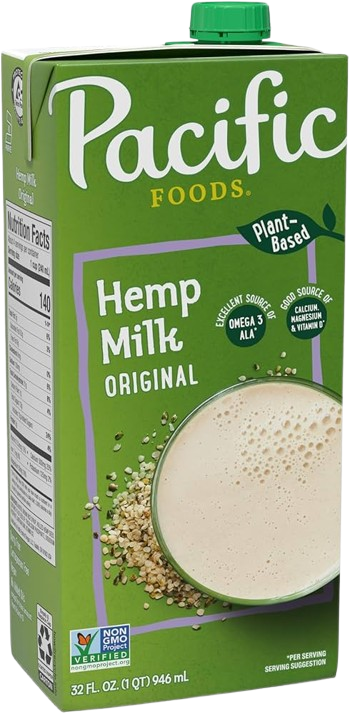
| Pacific Foods | Original Hemp Milk (32oz Carton) | $3.79 (2014) | $4.99 - $7.49 |
What is the Hemp Milk Calorie for 100 Grams?
A 100g serving of Hemp milk contains 33 calories, while a 100g serving of fresh raw hemp milk provides 54 calories.
What is the Hemp Milk Calorie for 1 KG?
One liter (1000g) of Hemp milk contains 330 calories, while one liter (1000g) of fresh raw hemp milk provides 540 calories.
What is the Calorie of 1 Hemp Milk?
A single-serve carton of Hemp milk (240g or 8oz) contains 79 calories, while a glass of homemade raw hemp milk (240g or 8oz) supplies 130 calories. Commercial packaging varies, as a serving of Pacific Foods Original Hemp Milk (240ml or 8oz) contains 140 calories. A glass of Elmhurst Vanilla Milked Hemp (240g or 8oz) provides 101 calories, whereas a cup of Living Harvest Coconut Hempmilk (236g or 8oz) supplies 50 calories.
What are the Health Benefits of Hemp Milk?
Hemp milk functions as a rich source of essential fatty acids and plant-based protein supporting cardiovascular and integumentary systems. The beverage ensures the delivery of Omega-3 and Omega-6 in an optimal ratio, as discussed below.
- Supports Cardiovascular Health: The liquid supplies high levels of alpha-linolenic acid (ALA), an Omega-3 fatty acid that reduces cholesterol levels and prevents arterial inflammation. A study by Rodriguez-Leyva, D., & Pierce, G. N. (2010), "The cardiac and haemostatic effects of dietary hempseed," confirmed that dietary hempseed intake protects the heart during ischemic events and lowers blood pressure.
- Improves Skin Condition: The presence of essential fatty acids aids in maintaining skin hydration and reducing symptoms of atopic dermatitis. Research by Callaway, J. C., et al. (2005), "Efficacy of dietary hempseed oil in patients with atopic dermatitis," demonstrated that consumption of hemp seed oil increased plasma fatty acid profiles and reduced skin dryness and itchiness.
- Strengthens Bone Density: Commercial fortification enriches the drink with calcium and Vitamin D, nutrients necessary for skeletal maintenance. A meta-analysis by Tai, V., et al. (2015), "Calcium intake and bone mineral density: systematic review and meta-analysis," established that increasing calcium intake from dietary sources improves bone mineral density and reduces fracture risk in older adults.
What are the Downsides of Hemp Milk?
Hemp milk remains safe for consumption, yet specific nutritional drawbacks exist regarding additives and antinutrients. Nutritionists recommend limiting intake to 240ml daily and choosing fortified almond milk as a lower-calorie alternative to mitigate potential caloric excess. The following list details specific negative health implications.
- Inhibits Mineral Absorption: The seeds contain phytic acid, an antinutrient that binds to minerals like iron and zinc, preventing absorption by the body. A study by Gibson, R. S., et al. (2010), "A review of phytate, iron, zinc, and calcium absorption," noted that high phytate levels in plant-based foods significantly reduce the bioavailability of essential micronutrients.
- Increases Sugar Intake: Sweetened commercial varieties contain added cane sugar which elevates the caloric load and spikes blood glucose. Research by Malik, V. S., et al. (2010), "Sugar-sweetened beverages and risk of metabolic syndrome and type 2 diabetes," found that regular consumption of sugar-sweetened drinks correlates strongly with weight gain and metabolic disorders.
Is Hemp Milk Good for You?
Yes, hemp milk is good for health because the beverages provide a balanced profile of Omega-3 and Omega-6 fatty acids supporting heart health, brain function, and inflammation reduction. Cardiovascular health benefits from the arginine content which promotes nitric oxide production and relaxes blood vessels as explored by Rodriguez-Leyva, D., & Pierce, G. N. (2010), "The cardiac and haemostatic effects of dietary hempseed." Cognitive function improves through the intake of polyunsaturated fats which maintain neuronal membrane integrity as detailed in the study by Campoy, C., et al. (2012), "Omega 3 fatty acids on child growth, visual acuity and neurodevelopment." Systemic inflammation decreases due to the presence of gamma-linolenic acid (GLA) which inhibits the production of pro-inflammatory cytokines as confirmed by the study from Kapoor, R., & Huang, Y. S. (2006), "Gamma-linolenic acid: an antiinflammatory omega-6 fatty acid."
Is Hemp Milk Healthy for Weight Loss?
Yes, hemp milk supports weight loss when consumers select unsweetened varieties due to the low caloric density and the presence of healthy fats that promote satiety. The beverage contains GLA (gamma-linolenic acid), a fatty acid that aids in appetite regulation and reduces cravings.
How Does Calorie Change According to Hemp Milk Types?
Energy values vary depending on the inclusion of sweeteners, flavoring agents, and the processing method used. Chocolate hemp milk contains the highest energy load per serving due to the addition of cocoa solids and substantial amounts of sugar. Unsweetened commercial hemp milk offers the lowest caloric density as manufacturers filter out solid matter and exclude additional carbohydrates. Raw homemade hemp milk retains a moderate to high caloric profile because the liquid preserves the full fat content of the hemp seed.
Is Hemp Milk Gluten Free?
Yes, hemp milk is naturally gluten-free because the hemp seed does not contain the gluten protein found in wheat, barley, or rye. Manufacturers often certify the product to ensure no cross-contamination occurred during the harvesting or processing stages.
What Does Hemp Milk Taste Like?
Hemp milk possesses a distinct nutty, earthy flavor profile comparable to sunflower seeds or pine nuts. The texture remains creamy and chalky, with a consistency thicker than skim milk but lighter than heavy cream. Unsweetened varieties exhibit a slightly grassy or vegetal aftertaste due to the presence of natural chlorophyll and Omega fatty acids. Sweetened versions mask the bitterness with cane sugar or vanilla, resulting in a taste similar to almond milk but with a richer, grainier mouthfeel.
What is the Origin of Hemp Milk?
The consumption of hemp seeds originated in Ancient China around 2800 BCE, where the crop served as a staple grain and medicinal ingredient. Industrial production of hemp milk as a commercial beverage emerged in the late 20th century within the United States and Europe, driven by the rising demand for dairy-free and soy-free alternatives. The legalization of industrial hemp in various Western nations during the early 2000s accelerated the availability of the drink. Brands like Living Harvest and Pacific Foods pioneered the shelf-stable version, allowing the product to enter mainstream supermarkets. The inclusion of hemp milk in dishes like Acai Bowls and Vegan Lattes developed alongside the "superfood" movement in California during the 2010s, cementing the ingredient's status in modern health cuisine.
Explore More Beverages
Discover more Beverages with detailed nutrition facts, calorie counts, vitamins, minerals, and health benefits. Compare similar foods, serving sizes, macronutrients, and key nutrients to find the best option for your diet and nutrition goals.
 Almond Milk calories
 Aloe Vera Juice calories
 Americano calories
 Apple Cider calories
 Apple Juice calories
 Apricot Juice calories
 Aronia Juice calories
 Avocado Shake calories
 Banana Juice calories
 Baobab Juice calories
 Barley Tea calories
 Beer calories