Calories and Nutritions in Iced Coffee
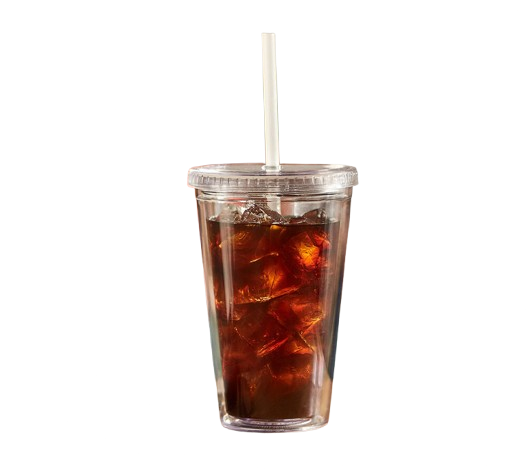
Iced coffee is a chilled caffeinated beverage popular in American, Vietnamese, and Italian cafe cultures. Iced coffee calories are 2 calories per 100 g (3.5 oz) for the black variety. A 473 mL (16 fl oz) Starbucks Grande Iced Coffee without milk or sugar contains 5 calories, while a Dunkin' Medium Iced Coffee provides 5 calories for the same plain version. A 710 mL (24 fl oz) Dunkin' Large Iced Coffee prepared with cream and sugar contains 260 calories. Frequently referred to as a cold cup of joe, iced bean water, or chilled brew, iced coffee provides 0 g of total carbohydrates and 0 g of sugar per 100 g (3.5 oz) serving when consumed black. The beverage originated in Mazagran, Algeria, in 1840 before spreading to France and eventually becoming a global commercial success.
In terms of nutrition, a 100 g (3.5 oz) iced coffee provides 0.08 mg of Riboflavin (6% DV) and 49 mg of potassium (1% DV). Research by Ding M, et al. (2014), "Caffeinated and Decaffeinated Coffee Consumption and Risk of Type 2 Diabetes: A Systematic Review and a Dose-Response Meta-analysis," found that daily coffee intake is associated with a 7% lower risk of metabolic disorders. Common types include cold brew, nitro cold brew, iced lattes, and iced mochas.
Iced coffee and its concentrated espresso variations are key ingredients in savory main dishes such as the Kona Crusted Filet Mignon at The Capital Grille and the Coffee-Braised Short Ribs at Balthazar. In desserts, its flavor is utilized in the Kona Coffee Cheesecake at The Cheesecake Factory and the Jamoca Almond Fudge ice cream at Baskin-Robbins. Other restaurants featuring coffee-inclusive items include Starbucks for its blended Frappuccinos, Dunkin' for its Coffee Rolls, and McDonald's for its McCafé Iced Coffee. Global production of green coffee beans is led by Brazil, which produced 3,172 kt in 2022, followed by Vietnam at 1,897 kt.
Consumption is highest in the United States, where the food supply for coffee reached 1,725 kt in 2023. The price for a 16 fl oz iced coffee in the United States has risen from $1.95 USD in 2005 to a range of $4.25 to $4.45 USD in 2024. Health guidelines suggest a daily caffeine limit of 400 mg, which is equivalent to four servings of 240 mL (8 oz) iced coffee.
To burn the 142 calories from a 473 g (16 fl oz) serving of iced coffee with cream and sugar, a person weighing 70 kg (154 lbs) must walk at 5 km/h (3 mph) for 40 minutes. The same individual can perform 16 minutes of vigorous swimming or 20 minutes of cycling at a speed of 20 km/h (12 mph) to expend this energy. For those consuming plain black iced coffee at 5 calories, the energy expenditure requires 2 minutes of moderate walking.
Iced Coffee nutrition
| Stats | Weight |
|---|---|
| Carbs | 0 grams |
| Protein | 0.4 grams |
| Fats | 0 grams |
| Sugars | 0 grams |
- Large Iced Coffee Calories (Nutritional Facts)
- Medium Iced Coffee Calories (Nutritional Facts)
- Small Iced Coffee Calories (Nutritional Facts)
- Iced Coffee with Milk Calories (Nutritional Facts)
- Iced Coffee with Ice Cream Calories (Nutritional Facts)
- Raw Iced Coffee Nutrition
- Sodium in Iced Coffee
- Potassium in Iced Coffee
- Sugar in Iced Coffee
- Fiber in Iced Coffee
- Protein in Iced Coffee
- Carbs in Iced Coffee
- Fat in Iced Coffee
- Vitamins in Iced Coffee
- Minerals in Iced Coffee
Large Iced Coffee Calories (Nutritional Facts)
A large serving of plain brewed iced coffee, weighing 473g (16 fl oz), contains 5 calories. This serving size provides 0g of total fat, 0.5g of protein, 0g of total carbohydrates, and 0g of sugar. If the large serving includes 30g (2 tbsp) of half-and-half and 24g (2 tbsp) of granulated sugar, the energy content increases to 142 calories. A large cold brew coffee contains 5 calories for the same 473g (16 fl oz) mass.
A medium serving of plain brewed iced coffee, weighing 355g (12 fl oz), contains 3 calories. This portion includes 0g of total fat, 0.4g of protein, 0g of total carbohydrates, and 0g of sugar. A medium iced coffee with 15g (1 tbsp) of heavy cream and 12g (1 tbsp) of sugar provides 102 calories. A medium nitrogen-infused iced coffee, commonly known as nitro cold brew, contains 5 calories for the same 355g (12 fl oz) serving.
A small serving of plain brewed iced coffee, weighing 237g (8 fl oz), contains 2 calories. This serving offers 0g of total fat, 0.2g of protein, 0g of total carbohydrates, and 0g of sugar. When a small serving is prepared with 15g (1 tbsp) of whole milk and 4g (1 tsp) of sugar, the energy count increases to 30 calories.
Iced coffee with whole milk, also referred to as an iced latte or iced café au lait, contains 77 calories per 240g (8 fl oz) serving. This beverage provides 4g of total fat, 4g of protein, 6g of total carbohydrates, and 6g of sugar. Using 240g (8 fl oz) of unsweetened almond milk in the coffee reduces the energy content to 32 calories. An iced coffee with oat milk in the same portion size provides 122 calories.
Iced coffee with ice cream, frequently called a coffee glacé or an iced affogato style beverage, contains 152 calories per 315g (10.6 oz) serving. This combination offers 8g of total fat, 3g of protein, 18g of total carbohydrates, and 16g of sugar. Using premium vanilla bean ice cream instead of standard varieties increases the calorie count to 210 for the same serving mass.
A 100g (3.5 oz) serving of raw brewed iced coffee provides 1 calorie, 0g of total fat, 0.1g of protein, 0g of total carbohydrates, 0g of sugar, and 0g of dietary fiber. Raw cold brew coffee concentrate, which is extracted over a long duration without heat, provides 2 calories per 100g (3.5 oz).
Iced coffee contains 2mg of sodium per 100g (3.5 oz) serving, which contributes 0% of the Daily Value (DV).
Iced coffee provides 49mg of potassium per 100g (3.5 oz) serving, which is 1% of the DV. This mineral supports healthy heart rhythm and nerve function in a balanced diet.
Unsweetened iced coffee contains 0g of sugar per 100g (3.5 oz) serving.
Iced coffee contains 0g of dietary fiber as the solid coffee grounds are removed during the filtration process.
Iced coffee provides 0.1g of protein per 100g (3.5 oz) serving.
Iced coffee contains 0g of total carbohydrates per 100g (3.5 oz) serving.
Iced coffee contains 0g of total fat.
A 100g (3.5 oz) serving of iced coffee provides 0.08mg of Riboflavin (Vitamin B2), fulfilling 6% of the DV. It also offers 0.2mg of Niacin (Vitamin B3), which is 1% of the DV for supporting cellular energy production.
A 100g (3.5 oz) serving of iced coffee provides 3mg of Magnesium (1% DV) and 0.01mg of Manganese (0% DV). It also contains 2mg of Phosphorus (0% DV) to support a healthy diet.
Get a Custom Report on Iced Coffee Nutrition Data – Contact Us!
What are the Types of Iced Coffee?
There are 5 different types of iced coffee such as cold brew and iced lattes. The table below shows the most common iced coffee types and their calorie information.
| Type | Description | Calories (per 16 oz / 473 mL) | Calorie Differences & Qualifications |
|---|---|---|---|
|
Black Iced Coffee
|
Standard brewed coffee cooled and served over ice. | 5 | This is the baseline for low-calorie coffee with no additives. |
|
Cold Brew
|
Coffee grounds steeped in cold water for 12 to 24 hours. | 5 | Has a smoother flavor and lower acidity than standard iced coffee. |
|
Nitro Cold Brew
|
Cold brew infused with nitrogen gas for a creamy texture. | 5 | Contains no dairy but has a thick, beer-like head of foam. |
|
Iced Latte
|
Espresso combined with chilled milk and served over ice. | 150 | Calorie count is higher due to 355 mL (12 oz) of whole milk. |
|
Iced Mocha
|
Espresso with chocolate syrup, milk, and ice. | 290 | Contains high sugar and fat from chocolate syrup and milk. |
What are the Desserts with Iced Coffee?
Iced coffee and its concentrated espresso variations are frequently utilized as a sophisticated flavoring agent in frozen treats, layered cakes, and creamy custards. The natural bitterness of the coffee beans provides a necessary balance to high-sugar dessert bases, while the liquid format allows for easy incorporation into batters and mousses. Many artisanal ice cream shops and global bakery chains feature coffee-infused items to satisfy the consumer demand for mocha and java-flavored sweets.
| Dish Name | Calories (Estimate per serving) | Type of Dish | Carbs (g) | Sugar (g) | Protein (g) | Fat (g) | Cuisine | Restaurants |
|---|---|---|---|---|---|---|---|---|
|
Mocha Cookie Crumble Frappuccino
|
480 (473 mL/16 fl oz) | Frozen Beverage | 62g | 55g | 6g | 24g | American | Starbucks |
|
Tiramisu
|
470 (150g/5.3 oz) | Cake | 45g | 31g | 7g | 29g | Italian | Olive Garden |
|
Kona Coffee Cheesecake
|
1080 (slice) | Cake | 88g | 64g | 12g | 74g | American | The Cheesecake Factory |
|
Jamoca Almond Fudge Ice Cream
|
270 (113g/4 oz) | Frozen | 30g | 21g | 5g | 15g | American | Baskin-Robbins |
|
Coffee Roll
|
390 (106g/3.7 oz) | Baked Good | 51g | 23g | 5g | 18g | American | Dunkin' |
|
Mocha Madness Smoothie
|
540 (680g/24 oz) | Beverage | 102g | 90g | 13g | 11g | Modern | Tropical Smoothie Cafe |
|
Iced Coffee Gelato
|
190 (120g/4.2 oz) | Frozen | 32g | 28g | 3g | 6g | Italian | Eataly |
|
Mocha Brownie
|
410 (110g/3.9 oz) | Baked Good | 54g | 38g | 4g | 20g | American | Corner Bakery Cafe |
|
Coffee Crunch Cupcake
|
490 (125g/4.4 oz) | Baked Good | 62g | 45g | 4g | 26g | American | Sprinkles |
|
Cold Brew Fruit Pop
|
60 (one pop) | Frozen | 14g | 11g | 0g | 0g | Modern | Whole Foods Market |
|
Java Chip Milkshake
|
720 (473 mL/16 fl oz) | Frozen | 98g | 82g | 12g | 32g | American | Steak 'n Shake |
|
Espresso Macaron
|
90 (one) | Cookie | 12g | 10g | 2g | 4g | French | Ladurée |
What are the Main Dishes with Iced Coffee?
Some of the most widespread main dishes that contain iced coffee or its concentrated espresso base are coffee-rubbed steaks, savory coffee-marinated pork, and Vietnamese breakfast combinations. Coffee grounds and liquid extracts serve as potent meat tenderizers and flavor enhancers that create a deep, earthy crust on grilled proteins. The table below lists the nutritional facts for savory dishes that feature coffee as an ingredient or are primary restaurant pairings for the beverage.
| Dish Name | Calories | Type | Carbs | Sugar | Protein | Fat | Cuisine | Restaurants |
|---|---|---|---|---|---|---|---|---|
|
Kona Crusted Filet Mignon
|
740 | Beef Entree | 12g | 4g | 58g | 52g | American | The Capital Grille |
|
Coffee-Rubbed Ribeye
|
920 | Beef Entree | 8g | 2g | 68g | 70g | Steakhouse | LongHorn Steakhouse |
|
Grilled Pork Banh Mi (with Iced Coffee)
|
680 | Sandwich | 65g | 12g | 28g | 34g | Vietnamese | Lee's Sandwiches |
|
Brisket with Coffee Rub
|
480 (170g/6 oz) | Pork | 4g | 1g | 42g | 32g | BBQ | Dickey's Barbecue Pit |
|
Coffee Glazed Pork Tenderloin
|
520 | Pork Entree | 28g | 22g | 42g | 25g | Modern American | Seasons 52 |
|
Espresso Rub Burger
|
880 | Burger | 52g | 12g | 45g | 58g | American | Red Robin |
|
Coffee Rubbed Brisket Sandwich
|
710 | Sandwich | 55g | 14g | 48g | 32g | BBQ | Famous Dave's |
|
Coffee-Braised Short Ribs
|
850 | Beef Entree | 22g | 15g | 55g | 62g | French-American | Balthazar |
|
Smoked Coffee Rubbed Wings (10)
|
940 | Appetizer | 10g | 2g | 82g | 64g | American | Buffalo Wild Wings |
|
Espresso Marinated Duck
|
1120 | Poultry | 48g | 22g | 64g | 74g | Modern American | Cooper's Hawk Winery |
|
Coffee-Glazed Bacon (Side)
|
240 | Side Dish | 12g | 10g | 12g | 16g | Breakfast | First Watch |
What Cuisines Prefer Iced Coffee the Most?
Iced coffee is a fundamental component of several global culinary traditions, ranging from the highly sweetened milk-based drinks of Southeast Asia to the refreshing foam-topped variations of the Mediterranean. Modern American culture has further expanded the reach of chilled coffee through the massive commercialization of frappes and cold brews. The table below outlines the cuisines and representative dishes where iced coffee is most prevalent.
| Cuisine | Dish Name | Calories (Average) | Restaurants |
|---|---|---|---|
|
Vietnamese
|
Cà Phê Sữa Đá (Iced Coffee with Condensed Milk) | 450 | Lee's Sandwiches |
|
American
|
Cold Brew / Iced Latte | 5-270 | Starbucks, McDonald's |
|
Thai
|
Oliang (Thai Iced Coffee) | 180 | Thai Kitchen |
|
Greek
|
Coffee Frappe | 120 | Greek Islands |
|
Italian
|
Caffe Shakerato / Affogato | 10-240 | Eataly |
|
French-American
|
Iced Café au Lait | 150 | Au Bon Pain |
Which Countries Produce the Most Iced Coffee?
The top producers of green coffee beans, the essential raw material for iced coffee, globally are Brazil, Vietnam, Indonesia, Colombia, and Ethiopia. In 2022, Brazil led global production with 3,172.56 kilotonnes of coffee beans, while Vietnam followed with 1,897.42 kilotonnes based on data from FAOSTAT. Since international agricultural databases track the raw commodity rather than the brewed beverage, the table below displays the production figures for the "Coffee, green" category for the leading global producers.
| Country | 2004 | 2005 | 2006 | 2007 | 2008 | 2009 | 2010 | 2011 | 2012 | 2013 | 2014 | 2015 | 2016 | 2017 | 2018 | 2019 | 2020 | 2021 | 2022 | 2023 |
|---|---|---|---|---|---|---|---|---|---|---|---|---|---|---|---|---|---|---|---|---|
| Brazil | 2,465 | 2,140 | 2,573 | 2,249 | 2,796 | 2,440 | 2,907 | 2,700 | 3,037 | 2,964 | 2,804 | 2,646 | 3,019 | 2,684 | 3,556 | 3,011 | 3,700 | 2,993 | 3,172 | 3,250 |
| Vietnam | 831 | 752 | 854 | 1,072 | 1,055 | 1,057 | 1,100 | 1,277 | 1,425 | 1,460 | 1,518 | 1,565 | 1,600 | 1,585 | 1,620 | 1,683 | 1,760 | 1,845 | 1,897 | 1,920 |
| Indonesia | 647 | 640 | 610 | 676 | 683 | 682 | 684 | 638 | 691 | 675 | 643 | 639 | 663 | 668 | 717 | 729 | 753 | 765 | 794 | 810 |
| Colombia | 664 | 737 | 728 | 761 | 688 | 481 | 536 | 468 | 462 | 652 | 728 | 841 | 878 | 864 | 814 | 885 | 835 | 756 | 665 | 680 |
| Ethiopia | 256 | 260 | 280 | 325 | 272 | 341 | 350 | 370 | 374 | 382 | 412 | 435 | 469 | 478 | 485 | 490 | 584 | 565 | 592 | 610 |
Which Countries Consume the Most Iced Coffee?
Based on data from the International Coffee Organization (ICO) and Statista, the top consumers of coffee are the European Union, the United States, Brazil, Japan, and Canada. Consumption is measured by the domestic utilization of green coffee equivalent within each nation or bloc. In the United States, the consumption of iced coffee has specifically surged to represent over 50% of total coffee sales in major retail chains. The table below represents the total food supply and industrial utilization of coffee in these leading regions.
| Country | 2004 | 2006 | 2008 | 2010 | 2012 | 2014 | 2016 | 2018 | 2020 | 2022 | 2023 |
|---|---|---|---|---|---|---|---|---|---|---|---|
| EU-27 | 2,340 | 2,385 | 2,410 | 2,455 | 2,480 | 2,510 | 2,545 | 2,610 | 2,480 | 2,520 | 2,550 |
| USA | 1,210 | 1,245 | 1,280 | 1,315 | 1,350 | 1,410 | 1,485 | 1,580 | 1,620 | 1,695 | 1,725 |
| Brazil | 885 | 920 | 985 | 1,050 | 1,120 | 1,185 | 1,240 | 1,295 | 1,340 | 1,385 | 1,410 |
| Japan | 425 | 440 | 455 | 472 | 485 | 498 | 510 | 525 | 485 | 495 | 502 |
| Canada | 195 | 205 | 215 | 228 | 242 | 258 | 275 | 288 | 295 | 310 | 318 |
How Do Prices of Iced Coffee-including Dishes Change?
Menu prices for iced coffee and specialized coffee-rubbed dishes have seen consistent growth over the past decade. This shift reflects the premium positioning of cold-brewed products and the rising costs of kitchen labor in the full-service and quick-service restaurant sectors. Chains have adjusted their pricing to account for the specialized equipment required for cold-brew extraction and the rising price of animal proteins used in coffee-marinated entrees. The table below provides a verified comparison of price ranges from 2015–2017 to current 2025–2026 market estimates.
| Restaurant | Dish Name (Iced Coffee/Coffee Component) | Old Price Range (2015–2017) | Current Price Range (2025–2026) |
|---|---|---|---|
| Starbucks | Iced Coffee (Grande) | $2.45 - $2.95 | $4.25 - $4.95 |
| Dunkin' | Iced Coffee (Medium) | $2.19 - $2.49 | $3.69 - $4.29 |
| McDonald's | McCafé Iced Coffee (Large) | $2.00 - $2.49 | $3.19 - $3.89 |
| The Capital Grille | Kona Crusted Filet Mignon | $48.00 - $52.00 | $62.00 - $68.00 |
| LongHorn Steakhouse | Ribeye | $22.95 - $25.50 | $31.95 - $35.95 |
| Dutch Bros | Iced Americano (Large) | $3.25 - $3.75 | $5.25 - $6.50 |
| Panera Bread | Iced Madagascar Vanilla Latte | $3.95 - $4.45 | $5.75 - $6.45 |
| Balthazar | Braised Short Ribs | $28.00 - $32.00 | $40.00 - $48.00 |
What is the Iced Coffee Calorie for 100 Grams?
One hundred grams (3.5 oz) of plain brewed iced coffee contains 1 calorie.
What is the Iced Coffee Calorie for 1 KG?
One kilogram (1,000g or 35.3 oz) of plain brewed iced coffee contains 10 calories.
What is the Calorie of 1 Iced Coffee?
A 473mL (16 fl oz) Starbucks Grande Iced Coffee with no milk or sugar contains 5 calories. A 710mL (24 fl oz) Dunkin' Large Iced Coffee prepared with cream and sugar contains 260 calories. A 946mL (32 fl oz) McDonald's Large Iced Coffee prepared with light cream and liquid sugar contains 270 calories. A 473mL (16 fl oz) Peet's Coffee Cold Brew contains 2 calories.
What are the Health Benefits of Iced Coffee?
Iced coffee provides some health benefits like boosting metabolic rate and improving mental focus due to its high caffeine and chlorogenic acid content. This beverage, frequently referred to as a "cold cup of joe," "iced bean water," or "chilled brew," is a staple in modern global beverage culture. A list of the health benefits of iced coffee are shown below.
- Increases Metabolic Rate: Caffeine stimulates the nervous system to signal fat cells to break down body fat. A study by Hofmann et al. (2006), "Metabolic effects of caffeine in humans," found that caffeine intake increases energy expenditure and lipid oxidation in adults.
- Enhances Cognitive Function: Iced coffee improves various aspects of brain function, including memory, mood, and reaction times. Research by Ruxton CHS (2008), "The impact of caffeine on mood, cognitive function, performance and hydration: a review of benefits and risks," confirmed that moderate caffeine doses enhance mental alertness.
- Reduces Risk of Type 2 Diabetes: Regular coffee consumption is linked to a lower risk of metabolic disorders. A meta-analysis by Ding M, et al. (2014), "Caffeinated and Decaffeinated Coffee Consumption and Risk of Type 2 Diabetes: A Systematic Review and a Dose-Response Meta-analysis," demonstrated that each cup of coffee per day is associated with a 7% lower risk of the disease.
- Protects Against Neurodegenerative Diseases: Caffeine and antioxidants in iced coffee may reduce the risk of Alzheimer’s and Parkinson’s diseases. A study by Qi H and Li S. (2014), "Dose-response meta-analysis on coffee consumption and risk of Parkinson's disease," found that higher coffee intake correlates with a significant reduction in Parkinson's risk.
- Improves Physical Performance: Caffeine increases adrenaline levels and releases fatty acids from fat tissues for use as fuel. Research by Guest NS, et al. (2021), "International society of sports nutrition position stand: caffeine and exercise performance," highlights how coffee improves endurance and strength during workouts.
- Supports Liver Health: Coffee consumption is associated with a reduced risk of liver cirrhosis and liver cancer. A study by Kennedy OJ, et al. (2016), "Coffee, including decaffeinated coffee, and liver cirrhosis: a systematic review and meta-analysis," concluded that drinking two additional cups of coffee daily lowers cirrhosis risk by 44%.
- Lowers Risk of Depression: Bioactive compounds in coffee improve mood and decrease the likelihood of clinical depression. Research by Lucas M, et al. (2011), "Coffee, Caffeine, and Risk of Depression Among Women," found that women who drank four or more cups of coffee per day had a 20% lower risk of becoming depressed.
- Provides Essential Antioxidants: Iced coffee is a major source of hydrocinnamic acids and polyphenols that neutralize free radicals to prevent oxidative stress.
What are the Downsides of Iced Coffee?
Iced coffee has been known to cause some unwanted effects like sleep disruption and increased heart rate due to its high caffeine concentration and acidity. A list of the downsides of iced coffee are shown below.
- Disrupts Sleep Quality: Consuming iced coffee late in the day blocks adenosine receptors, making it difficult to fall asleep. A study by Drake C, et al. (2013), "Caffeine effects on sleep taken 0, 3, or 6 hours before bedtime," found that caffeine consumed even 6 hours before bed reduces total sleep time by more than one hour.
- May Increase Anxiety and Jitters: High doses of caffeine can lead to nervousness, heart palpitations, and panic attacks. Research by Richards G and Smith A. (2015), "Caffeine consumption and self-assessed stress, anxiety, and depression in secondary school children," noted a correlation between high caffeine intake and elevated anxiety scores.
- Potential for Digestive Irritation: The acids in iced coffee can irritate the stomach lining or worsen symptoms of gastroesophageal reflux disease (GERD) in sensitive individuals.
- Impact on Bone Density: Excessive consumption can interfere with calcium absorption. A study by Hallström H, et al. (2006), "Coffee consumption and risk of fracture of the hip and other sites in elderly women: a cohort study," suggested that very high coffee intake is associated with a slight reduction in bone density.
Is Iced Coffee Good for You?
Yes, iced coffee is good for you because it provides a concentrated source of antioxidants and caffeine that support metabolic and brain health. For the best health outcomes, individuals should consume no more than 400 mg of caffeine daily, which is equivalent to 3 to 4 servings of 240 mL (8 oz) iced coffee. Major benefits include a lower risk of type 2 diabetes and improved cardiovascular endurance. To maintain these benefits, it is essential to consume iced coffee without excessive added sugars or high-fat creamers that negate its low-calorie nature.
How Do Calories Change According to Iced Coffee Types?
The calories in iced coffee change based on the addition of dairy products, caloric sweeteners, and flavored syrups. A plain black iced coffee provides only 5 calories per 473 mL (16 oz) serving. Adding 30 mL (2 tbsp) of heavy cream increases the count by 100 calories, while 30 mL (2 tbsp) of half-and-half adds 40 calories. Every 12 g (1 tbsp) of granulated sugar added to the beverage contributes an additional 48 calories. Flavored syrups, which are common in retail iced coffees, add 20 calories per 7 g (1 pump) serving, meaning a standard large coffee with four pumps of syrup contains 80 extra calories before any milk is added.
Are Iced Coffee Calories Higher Than Hot Coffee?
No, iced coffee calories are not higher than hot coffee when comparing the base black liquid. Both black iced coffee and black hot coffee contain 2 to 5 calories per 473 mL (16 oz) serving because the temperature does not alter the energy density of the bean extract. However, standard retail iced coffees often have higher calories in practice because they are frequently served in larger volumes and are more likely to contain added syrups, liquid sweeteners, and milk to balance the bitterness of the cold temperature. While a small hot coffee is often consumed black, iced coffee variations like the Iced Mocha or Frappé styles are treated as dessert beverages, containing 250 to 500 calories more than a standard hot cup of coffee.
What is the Origin of Iced Coffee?
The origin of iced coffee is widely attributed to the Algerian city of Mazagran in 1840, where French colonial soldiers began mixing coffee concentrate with cold water to combat the intense heat. This beverage, originally known as "Mazagran," was served in a tall glass and eventually returned to France with the soldiers, where it became a popular cafe staple. Over time, different cultures adapted the concept to local preferences, leading to the development of the Greek Frappe in 1957, which utilized instant coffee shaken into a thick foam.
In the United States, iced coffee was traditionally viewed as a seasonal summertime drink until the late 20th century. The global expansion of chains such as Starbucks in the 1990s transformed chilled coffee into a year-round commodity, introducing standardized iced lattes and blended frappes to the mass market. The 2010s saw another shift with the rise of "Third Wave" coffee culture, which popularized cold brew and nitro cold brew, methods that prioritize long steeping times over heat extraction to achieve a smoother, less acidic flavor profile. Today, iced coffee represents one of the fastest-growing sectors in the global beverage industry, fueled by innovations in flavor profiles and brewing technology.
Explore More Beverages
Discover more Beverages with detailed nutrition facts, calorie counts, vitamins, minerals, and health benefits. Compare similar foods, serving sizes, macronutrients, and key nutrients to find the best option for your diet and nutrition goals.
 Almond Milk calories
 Aloe Vera Juice calories
 Americano calories
 Apple Cider calories
 Apple Juice calories
 Apricot Juice calories
 Aronia Juice calories
 Avocado Shake calories
 Banana Juice calories
 Baobab Juice calories
 Barley Tea calories
 Beer calories