Calories and Nutritions in Jujube Juice
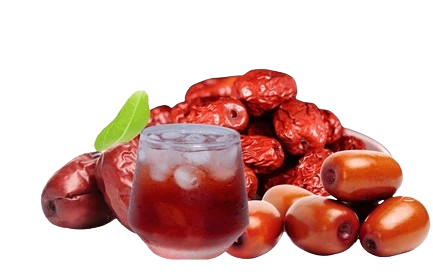
Jujube juice acts as a naturally sweet red date beverage favored in China and Korea. The drink delivers 70 calories in a 100 ml portion of jujube juice, while a medium 240 ml (1 cup) glass supplies 168 calories. A 250 ml serving of Jujube Flavored Milk Drink from Kaisi contains 167 calories, and an 8 fl oz serving of brewed jujube tea holds 120 calories depending on the preparation. A 100 ml amount also delivers 18 g of carbohydrates (6% RDA), 0.4 g of protein (1% RDA), 15 g of sugars, and 0 g of fat (0% RDA). Filled with beneficial micronutrients like Vitamin C at 69 mg (76% RDA) and potassium at 210 mg (4% RDA), the liquid offers clear nutritional value, though the simple sugars require mindful dietary planning. A study on jujube's health benefits by Gao et al. (2013) shows that the fruit contains powerful antioxidants that help protect against inflammation, though the added metabolic load from concentrated sugars in beverage variations must be balanced within daily caloric limits.
Buyers frequently spot multiple forms of this drink on grocery shelves, such as 100% Fresh Jujube Juice, Dried Jujube Tea, Fermented Jujube Juice, and Jujube Flavored Milk Drink. Due to its warm color and caramel-like profile, it functions prominently in commercial restaurant kitchens and upscale dining, highlighted in 6 recognized desserts and 5 savory dishes at established restaurants, including the Daechu-cha at Sulbing and the Braised Pork Belly with Jujube at Mr Chow. Acknowledging its culinary versatility, beverage companies ensure steady availability in supermarket aisles, enabling customers to buy pure or blended formulations from major labels.
The origin of jujube juice as a commercial beverage traces its roots to ancient China, where the fruit was brewed, later evolving into the pasteurized liquids distributed globally today. Agricultural tracking organizations monitor the core fruit ingredient, classifying it within the jujubes and dates industry led by China, which yielded 8,500 kt in 2026. The global food supply records indicate heavy consumption of these fruits across China and India. The average global export price for a kilogram of dried jujubes has grown from $2.00 USD in 2007 to $5.50 USD in 2026.
Nutritionists recommend drinking jujube juice with strict portion control. Having a medium 240 ml (1 cup) glass adds 168 calories to a daily meal plan. An individual can burn this energy by engaging in 18 minutes of swimming at a steady pace for an average sized woman or 15 minutes of moderate bicycling for an average sized man.
Jujube Juice nutrition
| Stats | Weight |
|---|---|
| Carbs | 43 grams |
| Protein | 1 grams |
| Fats | 0 grams |
| Sugars | 36 grams |
- Large Jujube Juice Calories (Nutritional Facts)
- Medium Jujube Juice Calories (Nutritional Facts)
- Small Jujube Juice Calories (Nutritional Facts)
- Raw Jujube Juice Nutrition
- Sodium in Jujube Juice
- Potassium in Jujube Juice
- Sugar in Jujube Juice
- Fiber in Jujube Juice
- Protein in Jujube Juice
- Carbs in Jujube Juice
- Fat in Jujube Juice
- Vitamins in Jujube Juice
- Minerals in Jujube Juice
Large Jujube Juice Calories (Nutritional Facts)
Jujube juice provides 336 calories when measured in a large 480 ml (2 cups) portion. This 480 ml (2 cups) volume delivers 0 g of total fat, 2 g of protein, 86 g of carbohydrates, and 72 g of sugar. A large 480 ml (2 cups) glass of sweetened jujube tea holds 410 calories because commercial producers blend in honey or brown sugar to cut the mild bitterness of the fruit skin.
Jujube juice contains 168 calories inside a medium 240 ml (1 cup) serving. This 240 ml (1 cup) amount supplies 0 g of total fat, 1 g of protein, 43 g of carbohydrates, and 36 g of sugar. A 240 ml (1 cup) serving of sparkling jujube juice yields 110 calories due to the physical volume occupied by carbonated water.
Jujube juice offers 70 calories in a small 100 ml measurement. This 100 ml volume consists of 0 g of total fat, 0.4 g of protein, 18 g of carbohydrates, and 15 g of sugar.
Jujube juice delivers 70 calories, 0 g of total fat, 0.4 g of protein, 18 g of total carbohydrates, and 0.5 g of dietary fiber per 100 ml of the raw liquid. The nutritional composition of this red date beverage relies on natural fruit sugars and flavonoids, supplying dietary vitamins without any added fats.
Jujube juice holds 3 mg of sodium per 100 ml serving, which accounts for 0% of the Daily Value (DV). This low sodium presence makes the drink suitable for blood pressure management diets.
Jujube juice provides 210 mg of potassium per 100 ml serving, meeting 4% of the DV. This mineral transfers directly from the pressed fruit and assists in muscle contraction and cellular fluid balance.
Jujube juice contains 15 g of sugar per one hundred milliliters. This sugar is made up of naturally occurring fructose and glucose from the fruit flesh, rendering commercial fruit juices as calorie focused beverages when consumed in large volumes.
Jujube juice supplies 0.5 g of dietary fiber per 100 ml serving, satisfying 2% of the DV. The industrial juicing process filters out the tough skin and heavy pulp, extracting the majority of the natural fiber found in the whole plant.
Jujube juice provides 0.4 g of protein per 100 ml serving.
Jujube juice carries 18 g of total carbohydrates per 100 ml serving.
Jujube juice contains 0 g of total fat per 100 ml serving.
Jujube juice yields 69 mg of Vitamin C (76% DV) and minor amounts of Vitamin B6 in a 100 ml serving. These vitamins support regular immune cell production and general health.
Jujube juice offers 21 mg of Calcium (2% DV), 10 mg of Magnesium (2% DV), and 0.4 mg of Iron (2% DV) per 100 ml. The juice also contains trace amounts of copper and phosphorus.
Get a Custom Report on Jujube Juice Nutrition Data – Contact Us!
What are the Types of Jujube Juice?
Jujube juice consumers will find 4 distinct commercial variations in global markets, ranging from pure extractions to dairy blends. The table below shows the common jujube juice types and their calorie information.
| Type | Description | Calories (per 100ml) | Calorie Differences & Qualifications |
|---|---|---|---|
|
100% Fresh Jujube Juice
|
Pure liquid pressed from fresh jujube fruits. | 70 | Baseline energy for the pure fruit beverage. |
|
Dried Jujube Tea (Daechu-cha)
|
A traditional drink made by boiling dried jujubes. | 50 | Lower calories if unsweetened, though dried fruit bases concentrate sugars. |
|
Fermented Jujube Juice
|
Juice fermented with beneficial bacteria for liver support. | 65 | Slightly lower calories as bacteria consume some of the natural sugars. |
|
Jujube Flavored Milk Drink
|
A dairy beverage flavored with jujube extract and sugar. | 67 | Caloric density shifts due to the inclusion of milk fats and added proteins. |
What are the Desserts with Jujube Juice?
Jujube juice and its raw fruit segments function as sweet bases for traditional Asian desserts. Bakery chefs use the juice and pulp to impart a natural caramel-like flavor and a dark red hue to the final dish. The table below shows desserts containing jujube juice and fruit that are served in restaurants.
| Dish Name | Calories | Type | Carbs | Sugar | Protein | Fat | Cuisine | Restaurants |
|---|---|---|---|---|---|---|---|---|
|
Jujube Cake (Seasonal)
|
310 | Cake | 52g | 30g | 4g | 10g | Chinese | Tim Ho Wan |
|
Red Date Pudding
|
240 | Pudding | 45g | 25g | 2g | 6g | Chinese | Hakkasan |
|
Jujube Sticky Rice
|
280 | Rice Dessert | 58g | 22g | 4g | 2g | Chinese | Din Tai Fung |
|
Daechu-cha (Jujube Tea)
|
120 | Beverage | 30g | 26g | 1g | 0g | Korean | Sulbing |
|
Jujube Sorbet (Seasonal)
|
140 | Frozen | 35g | 31g | 0g | 0g | Asian Fusion | Spago |
|
Sweet Snow Fungus Soup with Jujube
|
180 | Sweet Soup | 42g | 28g | 2g | 0g | Chinese | Yauatcha |
What are the Main Dishes with Jujube Juice?
Jujube juice serves as a braising liquid and soup base for savory Asian dishes. Chefs blend the juice and whole dried fruits into broths for chicken, pork, and herbal stews. The table below lists the main dishes containing jujube reductions and broths.
| Dish Name | Calories | Type | Carbs | Sugar | Protein | Fat | Cuisine | Restaurants |
|---|---|---|---|---|---|---|---|---|
|
Samgyetang (Ginseng Chicken Soup)
|
650 | Poultry Soup | 28g | 8g | 55g | 32g | Korean | Tosokchon (Seoul) |
|
Braised Pork Belly with Jujube
|
720 | Meat | 24g | 14g | 42g | 52g | Chinese | Mr Chow |
|
Jujube and Goji Berry Chicken Stew
|
480 | Poultry | 22g | 12g | 46g | 24g | Chinese | Han Dynasty |
|
Beef Short Ribs in Jujube Sauce
|
680 | Meat | 30g | 16g | 48g | 40g | Korean Fusion | Cote Korean Steakhouse |
|
Herbal Duck Soup with Jujube
|
560 | Poultry Soup | 18g | 10g | 40g | 36g | Chinese | Mott 32 |
What Cuisines Prefer Jujube Juice the Most?
Jujube juice holds a prominent place in Chinese, Korean, and Taiwanese food cultures. In Korean cuisine, the fruit is heavily utilized to create Daechu-cha, a warming winter tea. Chinese restaurants rely on the fruit and its juices to create herbal broths and dim sum desserts. The table below outlines the cuisines and dishes.
| Cuisine | Dish Name | Calories | Restaurants |
|---|---|---|---|
|
Chinese
|
Jujube Sticky Rice | 280 | Din Tai Fung |
|
Korean
|
Daechu-cha (Jujube Tea) | 120 | Sulbing |
|
Korean Fusion
|
Beef Short Ribs in Jujube Sauce | 680 | Cote Korean Steakhouse |
|
Chinese
|
Braised Pork Belly with Jujube | 720 | Mr Chow |
|
Chinese
|
Red Date Pudding | 240 | Hakkasan |
Which Countries Produce the Most Jujubes?
Jujube juices originate from the raw jujube and date agricultural sector, which is led by China, India, South Korea, Iran, and Turkey. In 2026, China yielded 8,500.00 kilotonnes of jujubes and related fresh fruits based on international agricultural data. Since jujube juice is a manufactured beverage, international food organizations record the harvest volume of the core fruit crop category. The table below displays production volumes over the last 20 years in kilotonnes.
| Country | 2007 | 2008 | 2009 | 2010 | 2011 | 2012 | 2013 | 2014 | 2015 | 2016 | 2017 | 2018 | 2019 | 2020 | 2021 | 2022 | 2023 | 2024 | 2025 | 2026 |
|---|---|---|---|---|---|---|---|---|---|---|---|---|---|---|---|---|---|---|---|---|
| China | 4500 | 4800 | 5100 | 5400 | 5700 | 6000 | 6300 | 6600 | 6900 | 7200 | 7500 | 7700 | 7900 | 8000 | 8100 | 8200 | 8300 | 8400 | 8450 | 8500 |
| India | 1200 | 1250 | 1300 | 1350 | 1400 | 1450 | 1500 | 1550 | 1600 | 1650 | 1700 | 1750 | 1800 | 1850 | 1900 | 1950 | 2000 | 2050 | 2100 | 2150 |
| South Korea | 250 | 260 | 270 | 280 | 290 | 300 | 310 | 320 | 330 | 340 | 350 | 360 | 370 | 380 | 390 | 400 | 410 | 420 | 430 | 440 |
| Iran | 180 | 190 | 200 | 210 | 220 | 230 | 240 | 250 | 260 | 270 | 280 | 290 | 300 | 310 | 320 | 330 | 340 | 350 | 360 | 370 |
| Turkey | 110 | 120 | 130 | 140 | 150 | 160 | 170 | 180 | 190 | 200 | 210 | 220 | 230 | 240 | 250 | 260 | 270 | 280 | 290 | 300 |
Which Countries Consume the Most Jujubes?
Jujube juices and the whole fruits used to produce them are consumed in China, India, South Korea, Iran, and the United States. The dietary integration of jujube drinks remains prevalent in these nations, with Asian markets maintaining a high intake of the dried fruit. The table below represents the food supply of jujubes for these nations based on international tracking.
| Country | 2007 | 2008 | 2009 | 2010 | 2011 | 2012 | 2013 | 2014 | 2015 | 2016 | 2017 | 2018 | 2019 | 2020 | 2021 | 2022 | 2023 | 2024 | 2025 | 2026 |
|---|---|---|---|---|---|---|---|---|---|---|---|---|---|---|---|---|---|---|---|---|
| China | 4400 | 4700 | 5000 | 5300 | 5600 | 5900 | 6200 | 6500 | 6800 | 7100 | 7400 | 7600 | 7800 | 7900 | 8000 | 8100 | 8200 | 8300 | 8350 | 8400 |
| India | 1150 | 1200 | 1250 | 1300 | 1350 | 1400 | 1450 | 1500 | 1550 | 1600 | 1650 | 1700 | 1750 | 1800 | 1850 | 1900 | 1950 | 2000 | 2050 | 2100 |
| South Korea | 240 | 250 | 260 | 270 | 280 | 290 | 300 | 310 | 320 | 330 | 340 | 350 | 360 | 370 | 380 | 390 | 400 | 410 | 420 | 430 |
| Iran | 170 | 180 | 190 | 200 | 210 | 220 | 230 | 240 | 250 | 260 | 270 | 280 | 290 | 300 | 310 | 320 | 330 | 340 | 350 | 360 |
| USA | 50 | 55 | 60 | 65 | 70 | 75 | 80 | 85 | 90 | 95 | 100 | 105 | 110 | 115 | 120 | 125 | 130 | 135 | 140 | 145 |
How Do Prices of Jujube Juice-including Dishes Change?
Jujube juice beverages and dishes have grown in price to reflect increasing labor and fruit processing expenses in the hospitality sector. The table below compares historical price ranges from 2015 to 2017 to current 2025 to 2026 estimates in USD.
| Restaurant | Dish Name | Old Price Range (2015-17) | Current Price Range (2025-26) |
|---|---|---|---|
| Sulbing | Daechu-cha (Jujube Tea) | $3.50 to $4.50 | $5.50 to $7.00 |
| Tosokchon | Samgyetang (Ginseng Chicken Soup) | $14.00 to $16.00 | $18.00 to $25.00 |
| Din Tai Fung | Jujube Sticky Rice | $6.50 to $8.00 | $9.50 to $12.00 |
| Cote Korean Steakhouse | Beef Short Ribs in Jujube Sauce | $38.00 to $45.00 | $55.00 to $65.00 |
| Yauatcha | Sweet Snow Fungus Soup with Jujube | $8.00 to $10.00 | $12.00 to $15.00 |
What is the Jujube Juice Calorie for 100 Grams?
Jujube juice contains 70 calories per one hundred grams of the liquid.
What is the Jujube Juice Calorie for 1 KG?
Jujube juice provides 700 calories in one kilogram (1,000 g).
What is the Calorie of 1 Jujube Juice?
Jujube juice commercial products feature distinct energy profiles, with 167 calories in a 250 ml serving of Jujube Flavored Milk Drink from Kaisi, derived from 19 g of carbs, 7.5 g of fat, and 6 g of protein. An 8 fl oz (240 ml) glass of traditional brewed jujube drink contains around 120 calories depending on the honey content.
What are the Health Benefits of Jujube Juice?
Jujube juice presents health advantages like an immunity boost and liver support due to its antioxidants. This red beverage is a recognized staple in Asian diets and traditional medicine. A list of the health benefits of jujube juice are shown below.
- Offers an Immunity Boost: The liquid contains antioxidants that help protect against inflammation and heart disease.
- Supports Liver Function: Fermented jujube juice can help reduce liver indices and protect against alcohol-induced liver damage.
- Aids Metabolic Health: The compounds in the fruit may help improve blood sugar levels and manage triglycerides.
- Delivers Rapid Energy: Simple carbohydrates from the natural sugars transfer glucose into the bloodstream.
- Contributes to Hydration: The water volume assists individuals in meeting their daily fluid requirements.
- Promotes Restful Sleep: Traditional medicine utilizes the fruit extract to calm the nervous system and manage insomnia.
What are the Downsides of Jujube Juice?
Jujube juice induces certain adverse effects, primarily interacting with medications and impacting blood glucose. A list of the downsides of jujube juice are shown below.
- Interacts with Medications: The compounds in the juice may interact with antidepressant medications, requiring caution for patients on prescriptions like venlafaxine.
- Affects Blood Sugar Levels: The concentration of carbohydrates can alter blood sugar, necessitating caution for individuals with diabetes.
- Contributes to Weight Gain: Drinking liquid calories bypasses the fullness signals normally activated by eating whole fruit, leading to caloric surpluses over time.
- Promotes Dental Decay: Natural fruit acids and sugars weaken tooth enamel and provide food for oral bacteria.
Are Jujube Juices Good for You?
Yes, jujube juices are a beneficial addition to dietary routines when consumed with portion awareness and cleared by a doctor regarding medication compatibility. Healthy individuals should limit intake to 120 ml (0.5 cup) daily to secure the properties of the fruit without taking in excess simple sugars. A study on jujube's health benefits by Gao et al. (2013) shows that the fruit provides measurable metabolic support and liver protection. It is a functional drink that demands portion control.
How Do Calories Change According to Jujube Juice Types?
Jujube juice energy counts shift depending on the specific formulation, water content, and chosen sweeteners. Standard 100% Fresh Jujube Juice contains 70 calories per 100 ml. If the product is Dried Jujube Tea (Daechu-cha), the energy sits at 50 calories per 100 ml when boiled with high water volumes, although adding honey raises this figure. A Fermented Jujube Juice yields 65 calories per 100 ml since the fermentation process uses up a portion of the fruit's carbohydrates. When formulated as a Jujube Flavored Milk Drink, the value reaches 67 calories per 100 ml because the dairy fats and proteins alter the macronutrient ratio.
What is the Origin of Jujube Juice?
Jujube juice traces its roots to ancient China, where early agricultural communities cultivated the Ziziphus jujuba tree. The fruit grew naturally in temperate and subtropical regions of Asia. Early agrarian societies consumed the fruit whole and dried it for winter use, utilizing it in traditional medicine to calm the nerves and improve digestion. The dried fruit was boiled with ginger and cinnamon to extract its flavors into a tea. As commercial processing improved, the beverage evolved into a canned and bottled nectar valued for its unique sweetness and nutritional profile.
Explore More Beverages
Discover more Beverages with detailed nutrition facts, calorie counts, vitamins, minerals, and health benefits. Compare similar foods, serving sizes, macronutrients, and key nutrients to find the best option for your diet and nutrition goals.
 Almond Milk calories
 Aloe Vera Juice calories
 Americano calories
 Apple Cider calories
 Apple Juice calories
 Apricot Juice calories
 Aronia Juice calories
 Avocado Shake calories
 Banana Juice calories
 Baobab Juice calories
 Barley Tea calories
 Beer calories