Calories and Nutritions in Kombucha
Kombucha calories are low, with a 100g (3.5 oz) serving of plain kombucha containing 10-30 calories. A standard 8 fl oz (240ml, 8.47 oz) serving ranges from 20-50 calories for plain types to 50-90 calories for fruit-flavored commercial varieties. The nutrition facts kombucha provides are centered on its carbohydrate content, with a 100g portion offering 2-6g of carbs (1-2% Daily Value/DV), almost entirely from residual sugar, and 0g of protein and fat. Kombucha nutritional value is also found in its probiotics and antioxidants from the tea base, with some B vitamins produced during fermentation. Research confirms that kombucha is a complex beverage containing various bioactive components, including organic acids and polyphenols, which are responsible for its purported health effects (Villarreal-Soto, S.A., et al., 2018, "Understanding Kombucha Tea Fermentation: A Review").
The main types of kombucha are distinguished by their base tea and added flavors. Plain or original kombucha is made with a black or green tea base. Fruit-flavored kombucha, the most common commercial type, is secondarily fermented with juices like ginger, berry, or mango. Other types include herbal or floral kombuchas infused with ingredients like lavender or hibiscus, hard kombucha which is fermented to increase alcohol content, and low-sugar or zero-sugar kombuchas that use alternative sweeteners.
The recommended daily consumption of kombucha is considered to be 4 to 8 fl oz (120-240ml). This serving size provides 20 to 60 calories for plain or low-sugar varieties. Burning the 50 calories from an 8 oz serving of kombucha would require minimal physical activity, such as 5-7 minutes of walking or light chores, reflecting its low caloric impact as a beverage choice.
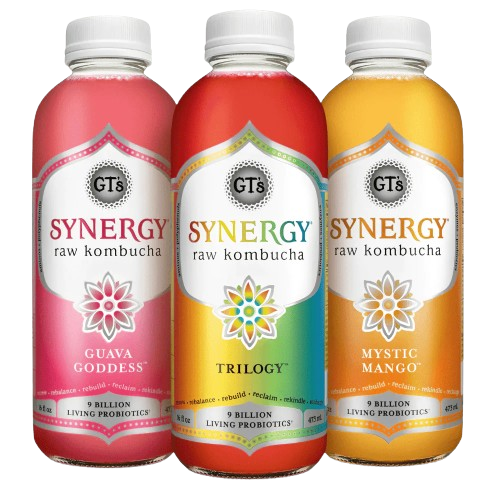
Kombucha is primarily a beverage though it is sometimes used creatively in salad dressings or sorbets. It is a popular offering at health-focused cafes and restaurants like True Food Kitchen and is widely sold from brands like GT's Synergy and Health-Ade in grocery stores such as Target and Whole Foods Market. Kombucha originated in Northeast China (Manchuria) around 220 BC. Today, the United States and China lead in commercial production, with high consumption in the USA, Canada, and Australia. The price of a 16 fl oz (473ml) bottle in the U.S., once a niche item costing $3.00 to $5.00 in 2003 has become more competitive, now ranging from $2.50 to $4.50.
Kombucha nutrition
| Stats | Weight |
|---|---|
| Carbs | 16 grams |
| Protein | 0 grams |
| Fats | 0 grams |
| Sugars | 14 grams |
- Homemade Kombucha Calories (Nutritional Facts)
- Raw Kombucha Nutrition
- Caffeine in Kombucha
- Probiotics in Kombucha
- Sodium in Kombucha
- Potassium in Kombucha
- Sugar in Kombucha
- Fiber in Kombucha
- Protein in Kombucha
- Carbs in Kombucha
- Fat in Kombucha
- Vitamins in Kombucha
- Minerals in Kombucha
Homemade Kombucha Calories (Nutritional Facts)
The calories in homemade kombucha vary widely depending on the amount of sugar used for fermentation, fermentation time, and any added fruit juices. A 100g (3.5 oz) or 100ml serving of plain, well-fermented homemade kombucha can contain 10 to 25 calories. An 8 fl oz (240ml, 8.47 oz) cup of homemade kombucha provides 24 to 60 calories. Homemade kombucha (100g) also contains 0g of protein, 2-6g of carbohydrates, and 0g of total fat.
Raw kombucha, referring to unpasteurized kombucha that contains live and active probiotic cultures, has a nutritional profile similar to standard kombucha. A 100g (3.5 oz) serving of raw kombucha, such as that from GT's Synergy Raw Kombucha (Gingerade flavor), contains 21 calories. An 8 fl oz (240ml, 8.47 oz) serving of this raw kombucha provides 50 calories. Raw kombucha (100g) contains 0g of protein, 5g of total carbohydrates (all from sugar), and 0g of total fat.
Kombucha contains caffeine, as it is made from brewed tea (black or green). The caffeine content varies but is generally low, as some is consumed by the yeast during fermentation. A 100g (3.5 oz) serving of kombucha typically contains 3-10mg of caffeine. An 8 fl oz (240ml, 8.47 oz) cup of kombucha can provide 7-25mg of caffeine. For comparison, an 8 fl oz cup of coffee contains 80-100mg of caffeine.
Kombucha is a source of probiotics, which are live beneficial bacteria and yeasts produced during the fermentation process. The specific strains and quantity of probiotics in kombucha can vary greatly, especially in homemade batches. Common probiotic bacteria found include Acetobacter, Lactobacillus, and Zygosaccharomyces. These live cultures are a primary reason for kombucha's consumption for health purposes, though the exact benefits and amounts are not standardized.
Plain kombucha contains a small amount of sodium. A 100g (3.5 oz) serving of plain kombucha provides 4mg of sodium (0% DV). An 8 fl oz (240ml, 8.47 oz) cup of plain kombucha has 10mg of sodium (0% DV). Commercial brands like GT's Synergy Raw Kombucha list 4mg of sodium per 100g.
Plain kombucha contains a modest amount of potassium. A 100g (3.5 oz) serving of plain kombucha provides 21mg of potassium (0% DV). An 8 fl oz (240ml, 8.47 oz) cup of plain kombucha has 50mg of potassium (1% DV). Flavored kombuchas may have more potassium if made with potassium-rich fruit juices.
Plain kombucha contains sugar, as it is a key ingredient for fermentation, but the final amount depends on fermentation time. A 100g (3.5 oz) serving of plain, commercially produced kombucha contains 2-6g of total sugars. An 8 fl oz (240ml, 8.47 oz) cup of kombucha can provide 5-14g of sugar. For example, GT's Synergy Raw Kombucha (Gingerade flavor) contains 5g of sugar per 100g.
Plain kombucha contains 0g of dietary fiber per 100g. An 8 fl oz (240ml, 8.47 oz) cup of plain kombucha also provides 0g of dietary fiber.
Plain kombucha contains 0g of protein per 100g. An 8 fl oz (240ml, 8.47 oz) cup of plain kombucha also provides 0g of protein.
Plain kombucha has 2-6g of total carbohydrates per 100g (1-2% DV). An 8 fl oz (240ml, 8.47 oz) cup of kombucha contains 5-14g of total carbohydrates (2-5% DV). These carbohydrates are almost entirely from the remaining sugar.
Plain kombucha contains 0g of total fat per 100g. An 8 fl oz (240ml, 8.47 oz) cup of plain kombucha also provides 0g of total fat.
Kombucha contains small amounts of B vitamins produced by the yeast during fermentation, including Vitamin B1 (Thiamin), B6, and B12. However, the amounts are typically very small and variable, often less than 2% of the DV per serving, and are not considered a significant source of these vitamins.
A 100g (3.5 oz) serving of plain kombucha is not a significant source of most minerals. It contains trace amounts of sodium (4mg, 0% DV) and potassium (21mg, 0% DV), along with very small quantities of other minerals like iron and zinc derived from the tea and sugar.
Get a Custom Report on Kombucha Nutrition Data – Contact Us!
What are the Types of Kombucha?
There are many types of kombucha, with variations primarily coming from the type of tea used as the base and, most significantly, the flavors added after the initial fermentation. The table below shows some common types of kombucha and their general calorie information.
| Type (Based on Flavor/Tea Base) | Description | Calories (per 8 fl oz / 240ml) | Calorie Qualifications |
|---|---|---|---|
|
Plain/Original Kombucha (Black Tea)
|
The classic version, made with fermented black tea and sugar. Tangy, slightly sweet, and vinegary flavor. | 20-50 | Lowest in calories among flavored options, but can still vary based on residual sugar. |
|
Green Tea Kombucha
|
Made using green tea instead of or in addition to black tea. Often has a lighter, more delicate flavor. | 20-50 | Similar calorie range to black tea kombucha. Contains green tea catechins. |
|
Fruit-Flavored Kombucha (e.g., Ginger, Berry, Mango)
|
The most common commercial type. Plain kombucha with added fruit juices or purees for a second fermentation and flavoring. | 50-90 | Higher in calories and sugar due to the added fruit juice. |
|
Herbal/Floral Kombucha (e.g., Lavender, Hibiscus, Mint)
|
Kombucha infused with herbs, spices, or flowers. | 40-70 | Calorie content depends on the infusion and whether additional sweeteners are used. Often lower in sugar than fruit-flavored types. |
|
Hard Kombucha
|
Kombucha that undergoes a secondary fermentation specifically to increase the alcohol content (typically 4-8% ABV). | 100-150 | Higher in calories due to alcohol content (alcohol has 7 calories per gram). |
|
Low-Sugar/Zero-Sugar Kombucha
|
Formulated with very little initial sugar or uses non-caloric sweeteners like stevia or erythritol to achieve sweetness. | 0-20 | Lowest in calories, designed for those avoiding sugar. |
What are the Main Dishes with Kombucha?
Kombucha is primarily consumed as a beverage and is not typically used as a direct ingredient in a wide variety of main dishes in the way a sauce or vegetable would be. However, its tangy, slightly sweet, and vinegary profile has led to its use in some modern culinary applications, such as marinades, dressings, or deglazing liquids, where it can add a unique flavor dimension. Some of the most widespread culinary uses for kombucha in main dishes are as a base for salad dressings and as a tenderizing marinade for meats. The table below lists some conceptual or modern dishes where kombucha is incorporated:
| Dish Name | Calories (per serving) | Type of Kombucha Used (Often Plain/Ginger) | Carbs (g) (of dish) | Sugar (g) (of dish) | Protein (g) (of dish) | Fat (g) (of dish) | Cuisine | Restaurants |
|---|---|---|---|---|---|---|---|---|
|
Kombucha Vinaigrette Salad Dressing
|
80-150 (2 tbsp dressing) | Plain, Ginger, or Herbal | 2-5 | 1-4 | 0 | 8-15 (from oil) | Modern, Health-conscious | Health-focused cafes, restaurants with innovative menus like True Food Kitchen |
|
Kombucha Marinated Chicken or Pork
|
300-500 | Plain or Ginger | 5-10 | 3-8 | 25-40 | 12-20 | Modern American | Trendy bistros, gastropubs (less common, more of a niche application) |
|
Pulled Pork or Chicken with Kombucha BBQ Sauce
|
450-700 | Plain or Apple | 40-60 | 25-40 | 20-30 | 15-25 | Modern BBQ/Fusion | Niche barbecue joints or food trucks experimenting with unique sauces |
|
Kombucha Deglazed Pan Sauce for Steak/Fish
|
Adds 20-40 calories | Plain | 3-6 | 2-5 | <1 | <1 | Contemporary | Upscale contemporary American restaurants |
|
Vegan "Cheese" or Dips with a Kombucha base
|
Varies | Plain | Varies | Varies | Varies | Varies | Vegan | Some specialized vegan restaurants or cafes |
|
Kombucha as a liquid in Smoothies
|
Adds 20-50 calories | Fruit-flavored | 5-12 | 4-10 | <1 | 0 | Health-conscious | Smoothie bars like Jamba (some may offer it), health food cafes |
|
Kombucha-Brined Tofu or Tempeh
|
250-400 | Plain | 15-25 | 4-8 | 15-25 | 8-15 | Modern Vegan | Some vegetarian/vegan restaurants |
What are the Desserts with Kombucha?
Using kombucha in desserts is an emerging, creative application that leverages its natural effervescence and tangy flavor profile to create unique treats. It's not a traditional dessert ingredient, but it can be used to make sorbets, glazes, or as a fermenting agent in some baked goods.
| Dish Name | Calories (per serving) | Type of Kombucha Used (Often Fruit-Flavored) | Carbs (g) | Sugar (g) | Protein (g) | Fat (g) | Cuisine | Restaurants/Brands |
|---|---|---|---|---|---|---|---|---|
|
Kombucha Sorbet/Granita
|
80-150 | Fruit-flavored (e.g., Berry, Mango) | 20-35 | 18-30 | <1 | 0 | Modern, Experimental | Some artisanal ice cream/sorbet shops, restaurants with a focus on fermentation |
|
Kombucha Popsicles
|
50-100 | Fruit-flavored | 12-25 | 10-22 | <1 | 0 | Healthy Treats | Often homemade; some health-focused brands might offer them (e.g., Goodpop - sometimes has kombucha pops) |
|
Kombucha Glaze for Cakes or Doughnuts
|
Adds 30-60 calories | Fruit-flavored | 8-15 | 7-14 | 0 | 0 | Modern Baking | Niche or experimental bakeries |
|
Kombucha as a liquid in Chia Seed Pudding
|
200-350 | Fruit-flavored | 25-40 | 15-25 | 5-8 | 8-15 | Healthy Treats, Vegan | Health-focused cafes |
|
Kombucha "Gummies" (using gelatin or agar-agar)
|
50-80 (small serving) | Fruit-flavored | 10-18 | 8-15 | 1-3 | 0 | Healthy Treats | Primarily homemade recipes found on health and wellness blogs |
What Cuisines Prefer Kombucha the Most?
Kombucha is not a traditional component of any ancient cuisine in the way that, for example, olive oil is to Mediterranean food. Its consumption is a modern, global health and wellness trend rather than being specific to a particular national cuisine. Its popularity is highest in health-conscious communities within North America (USA, Canada), Oceania (Australia, New Zealand), and parts of Europe (Germany, UK). While it originated in Asia, its modern, commercially-driven popularity is a Western phenomenon. It is preferred as a beverage choice rather than a culinary ingredient.
| Cuisine/Culture | Dish/Context Name | Calories (per 8 fl oz serving) | Restaurants/Brands |
|---|---|---|---|
|
American (Health & Wellness)
|
As a functional beverage choice | 20-90 | GT's Synergy, Health-Ade, Brew Dr. Kombucha (available at Whole Foods Market, Target, etc.) |
|
American (Café/Bar Culture)
|
On-tap Kombucha, Kombucha Cocktails | Varies | Health-focused cafes, modern bars, and breweries with non-alcoholic options, e.g., some locations of Whole Foods Market on tap |
|
Canadian (Health & Wellness)
|
As a functional beverage choice | 20-90 | GT's Synergy, Rise Kombucha, other local and national brands available in grocery stores |
|
Australian (Health & Wellness)
|
As a functional beverage choice | 20-90 | Remedy Kombucha, a popular brand in Australia |
|
European (Health & Wellness)
|
As a functional beverage choice | 20-90 | Various local and imported brands like Captain Kombucha |
Which Countries Produce the Most Kombucha?
The top producers of commercial kombucha globally are the United States, China, Brazil, Germany, and the United Kingdom. While kombucha originated in Asia, its commercial production on a large scale is a more recent phenomenon, driven by its popularity as a health beverage in Western markets. The United States has the largest and most developed market for commercial kombucha. China is a massive producer for its large domestic market and for export. The table below uses estimated production/sales volumes for ready-to-drink kombucha for leading countries, reflecting their manufacturing output.
| Country | 2004 | 2005 | 2006 | 2007 | 2008 | 2009 | 2010 | 2011 | 2012 | 2013 | 2014 | 2015 | 2016 | 2017 | 2018 | 2019 | 2020 | 2021 | 2022 | 2023 (Est.) |
|---|---|---|---|---|---|---|---|---|---|---|---|---|---|---|---|---|---|---|---|---|
| USA | <1 | <1 | <1 | 2 | 5 | 10 | 20 | 40 | 70 | 110 | 160 | 220 | 300 | 380 | 450 | 520 | 550 | 580 | 610 | 630 |
| China | <1 | <1 | <1 | <1 | 2 | 5 | 10 | 15 | 25 | 40 | 60 | 85 | 110 | 140 | 170 | 200 | 230 | 260 | 290 | 310 |
| Brazil | <1 | <1 | <1 | <1 | <1 | <1 | <1 | 2 | 5 | 10 | 15 | 25 | 35 | 50 | 65 | 80 | 95 | 110 | 125 | 135 |
| Germany | <1 | <1 | <1 | <1 | 1 | 2 | 4 | 8 | 12 | 18 | 25 | 35 | 45 | 55 | 65 | 75 | 80 | 85 | 90 | 92 |
| United Kingdom | <1 | <1 | <1 | <1 | <1 | 1 | 2 | 5 | 8 | 12 | 18 | 25 | 32 | 40 | 50 | 60 | 65 | 70 | 75 | 78 |
| Australia | <1 | <1 | <1 | <1 | 1 | 2 | 4 | 7 | 10 | 15 | 22 | 30 | 40 | 50 | 60 | 70 | 75 | 80 | 85 | 88 |
Which Countries Consume the Most Kombucha?
Based on market data from firms like Statista, Nielsen, and Grand View Research, the United States is the largest consumer of kombucha by total volume. Its popularity is driven by a strong health and wellness culture. On a per capita basis, consumption is also high in other Western countries that have embraced the trend, including Australia, Canada, New Zealand, and parts of Europe, particularly Germany and the United Kingdom. While kombucha has Asian origins, its modern, commercialized form is most popular in these Western markets.
| Country | 2004 | 2005 | 2006 | 2007 | 2008 | 2009 | 2010 | 2011 | 2012 | 2013 | 2014 | 2015 | 2016 | 2017 | 2018 | 2019 | 2020 | 2021 |
|---|---|---|---|---|---|---|---|---|---|---|---|---|---|---|---|---|---|---|
| USA | <1 | <1 | <1 | 2 | 5 | 10 | 20 | 38 | 65 | 105 | 155 | 210 | 280 | 360 | 420 | 480 | 510 | 540 |
| Canada | <1 | <1 | <1 | <1 | <1 | <1 | 2 | 4 | 7 | 11 | 16 | 22 | 30 | 38 | 45 | 52 | 55 | 58 |
| Australia | <1 | <1 | <1 | <1 | 1 | 2 | 4 | 6 | 9 | 14 | 20 | 28 | 38 | 48 | 58 | 68 | 72 | 78 |
| Germany | <1 | <1 | <1 | <1 | 1 | 2 | 4 | 7 | 11 | 16 | 23 | 32 | 42 | 52 | 62 | 72 | 76 | 81 |
| United Kingdom | <1 | <1 | <1 | <1 | <1 | <1 | 1 | 4 | 7 | 11 | 16 | 23 | 30 | 38 | 48 | 58 | 62 | 68 |
| China | <1 | <1 | <1 | <1 | 2 | 4 | 8 | 12 | 20 | 35 | 55 | 75 | 95 | 120 | 150 | 180 | 210 | 240 |
How Do Prices of Kombucha-including Dishes Change?
Since kombucha is almost exclusively a beverage and not a standard culinary ingredient in restaurant dishes, the primary price change is for the kombucha beverage itself on restaurant, cafe, or bar menus, as shown below:
| Establishment Type | Type of Offering | Old Price (Early 2010s) | Current Price (2024-2025) |
|---|---|---|---|
| Health Food Cafe / Juice Bar | Bottled Kombucha ( GT's Synergy) | $3.50 - $5.00 per bottle | $4.00 - $6.50 per bottle |
| Trendy Cafe / Coffee Shop | Kombucha on Tap (per glass) | $4.00 - $6.00 (less common) | $5.00 - $8.00 |
What is the Kombucha Calorie for 100g?
A 100g (3.5 oz) serving of plain, unflavored kombucha typically contains 10 to 30 calories. Commercial brands often fall in this range; for example, GT's Synergy Raw Kombucha (Gingerade flavor) contains 21 calories per 100g. Health-Ade Kombucha (Pink Lady Apple flavor) contains 29 calories per 100g. Homemade kombucha calories will vary based on the initial sugar content and fermentation duration.
What are the Health Benefits of Kombucha?
Kombucha provides some health benefits like supporting gut health with probiotics and offering antioxidants from its tea base due to the fermentation process and its core ingredients. A list of the health benefits of kombucha are shown below:
- Source of Probiotics: Kombucha is a fermented beverage rich in live bacteria and yeasts, which function as probiotics. These beneficial microorganisms can help improve gut health by balancing the gut microbiome, which is linked to better digestion and overall health. (Parvez, S., et al., 2006, "Probiotics and their fermented food products are beneficial for health").
- Contains Antioxidants from Tea: Since kombucha is made from black or green tea, it contains polyphenols, such as catechins, which have powerful antioxidant properties. These antioxidants help protect the body's cells from damage caused by free radicals. (Vázquez-Cabral, B.D., et al., 2017, "Oak kombucha, a new source of antioxidant and anti-inflammatory compounds").
- May Support Liver Health: Some animal studies suggest that the antioxidants in kombucha may help protect the liver from toxicity and damage, although more research in humans is needed to confirm these effects. (Murugesan, G.S., et al., 2009, "Hepatoprotective and antioxidant effects of kombucha tea against CCl4-induced liver injury in rats").
- May Have Antimicrobial Properties: The fermentation of kombucha produces acetic acid (also found in vinegar), which has demonstrated antimicrobial properties. It may help inhibit the growth of undesirable bacteria and yeasts. (Sreeramulu, G., et al., 2000, "Kombucha fermentation and its antimicrobial activity").
- Potential to Support Cardiovascular Health: Green tea, often used to make kombucha, contains compounds that may help reduce risk factors for heart disease, such as LDL (bad) cholesterol. While more research on kombucha itself is needed, it may retain some of these benefits. (Kuriyama, S., et al., 2006, "Green tea consumption and mortality due to cardiovascular disease, cancer, and all causes in Japan: the Ohsaki study").
- Low in Calories Compared to Sugary Drinks: Plain or lightly flavored kombucha is generally low in sugar and calories compared to sodas and many fruit juices, making it a healthier beverage choice.
What are the Downsides of Kombucha?
Kombucha has been known to cause some unwanted effects like potential for digestive upset and risks associated with improper home brewing due to its nature as a live, fermented product. A list of the downsides of kombucha are shown below:
- Risk of Contamination in Home Brews: Improperly brewed homemade kombucha can become contaminated with harmful pathogens, including molds and opportunistic bacteria, which can cause serious illness. It is crucial to use sterile equipment and follow proper procedures. (Greenwalt, C.J., et al., 2000, "Kombucha, the fermented tea: microbiology, composition, and claimed health effects").
- Can Cause Digestive Distress: For some individuals, especially those new to kombucha or with sensitive digestive systems, the probiotics and acids in kombucha can cause bloating, gas, or an upset stomach.
- Contains Sugar and Calories: Although much of the sugar is consumed during fermentation, commercial kombuchas, particularly flavored varieties, can still contain a significant amount of added sugar and calories, which can contribute to weight gain and other issues if consumed in excess.
- Contains Alcohol: The fermentation process naturally produces a small amount of alcohol. While commercial kombuchas must contain less than 0.5% alcohol by volume to be sold as non-alcoholic, homemade versions can have higher, more variable alcohol levels. This can be a concern for pregnant women, individuals avoiding alcohol, and children.
- High Acidity: Kombucha is acidic, which can be problematic for some individuals. The acidity can potentially erode tooth enamel over time or aggravate conditions like heartburn or acid reflux.
- Potential for Adverse Effects in Some Individuals: There have been rare case reports of more severe adverse effects, such as metabolic acidosis or liver toxicity, linked to kombucha consumption, although these are often associated with excessive consumption or contaminated home brews. (SungHee Kole, A., et al., 2009, "A case of Kombucha tea toxicity").
Is Kombucha Good for You?
Yes and no; kombucha can be good for you in moderation if it is a commercially prepared, low-sugar variety, but it also carries risks, especially with homemade versions or excessive consumption. The main benefits of kombucha stem from its probiotic content, which can support a healthy gut microbiome, and the antioxidants derived from its tea base. (Leal, J.M., et al., 2018, "A review on health benefits of kombucha nutritional compounds and metabolites"). However, these benefits must be weighed against its potential downsides. Kombucha contains sugar, caffeine, and a small amount of alcohol. Some commercial brands can be high in added sugars, which negates many of the health benefits. (Villarreal-Soto, S.A., et al., 2018, "Understanding Kombucha Tea Fermentation: A Review"). Furthermore, improperly prepared homemade kombucha can pose serious health risks due to contamination. (Gedela, M., et al., 2016, "A case of hepatotoxicity related to kombucha tea consumption"). For most healthy adults, consuming a small serving (e.g., 4-8 fl oz) of a reputable, low-sugar commercial kombucha per day can be a part of a healthy diet, but it is not a "miracle cure" and should not be consumed in large quantities.
Is Pure Kombucha Healthy?
Yes pure unflavored kombucha can be a healthy beverage choice when consumed in moderation, but it's important to understand its composition. Its healthfulness comes from a few key attributes. First, it contains probiotics, the beneficial bacteria and yeast that result from the fermentation process, which can contribute to a healthy gut microbiome. (Kaewkod, T., et al., 2019, "Effects of Kombucha-derived postbiotics on the growth and virulence of foodborne pathogens"). Second, being made from tea (usually green or black), it retains some of the tea's natural antioxidants, such as polyphenols, which help combat cellular damage. (Jayabalan, R., et al., 2014, "A Review on Kombucha Tea—Microbiology, Composition, Fermentation, Beneficial Effects, Toxicity, and Tea Fungus"). Finally, when properly fermented, it is much lower in sugar than sodas or many fruit juices. However, it is not "purely" healthy without caveats. It still contains some sugar, caffeine, and a small amount of alcohol. Its acidic nature can be problematic for dental health or for individuals with acid reflux. (Greenwalt, C.J., et al., 2000, "Kombucha, the fermented tea: microbiology, composition, and claimed health effects"). Homemade versions also carry a risk of contamination if not prepared under sterile conditions.
How Much Kombucha Does a Person Drink Per Day?
A person can drink 4 to 8 fl oz (120-240ml) of kombucha per day safely. There is no official recommended daily consumption of kombucha, but starting with a small amount (like 4 fl oz) and observing how your body reacts is a good approach. Drinking kombucha daily in this moderate amount can provide a regular intake of probiotics, which may support digestive health and regularity. The antioxidants from the tea base can also contribute to overall wellness. It is generally considered okay to drink kombucha every day, provided it is a low-sugar variety and you are not part of a sensitive group (e.g., pregnant, have a compromised immune system, or are avoiding alcohol and caffeine). Overconsumption can lead to digestive upset, excessive sugar intake, or potential issues from its acidity.
Does Drinking Kombucha Daily Help with Weight Loss?
Yes, drinking kombucha daily may offer some indirect support for weight loss, but it is not a direct or powerful weight loss tool on its own. Its potential benefits for weight management stem from a few factors. First, if used as a replacement for high-calorie, sugary beverages like soda or sweetened juices, it can help reduce overall calorie and sugar intake, which is a key component of weight loss. Second, the probiotics in kombucha may play a role in gut health, and some research suggests a link between a healthy gut microbiome and weight regulation, although this connection is complex and still being studied. (Kobyliak, N., et al., 2016, "Probiotics in prevention and treatment of obesity: a systematic review"). Third, some animal studies have suggested that the acetic acid and polyphenols in kombucha (derived from tea and fermentation) may slightly improve metabolism, but robust evidence in humans for significant weight loss is lacking. For any potential benefits to be realized, it must be part of an overall healthy diet and active lifestyle.
How Do Calories Change According to Kombucha Types?
The calorie content of kombucha changes significantly based on the amount of sugar present in the final product, which is influenced by flavoring additions and initial recipe choices. Plain or original kombucha, made from just tea, sugar, and the SCOBY (symbiotic culture of bacteria and yeast), is the lowest in calories among standard sweetened types, typically ranging from 20 to 50 calories per 8 fl oz serving. This is because a large portion of the initial sugar is consumed by the culture during fermentation. Low-sugar or zero-sugar kombuchas, which often use non-caloric sweeteners, have the absolute lowest calorie count, from 0 to 20 calories per serving. The highest calorie kombuchas are the fruit-flavored varieties. When fruit juices or purees are added for a second fermentation, their natural sugars significantly increase the total sugar and calorie content of the beverage, often bringing it into the 50 to 90 calorie range per 8 fl oz serving. Hard kombuchas are also higher in calories, typically 100 to 150 calories per serving, due to the caloric content of the alcohol produced during their extended fermentation process. Herbal or floral kombuchas often fall in a middle range, as the infusions themselves add few calories unless they are accompanied by additional sweeteners.
Which Macronutrients of Kombucha Change During Fermentation?
The primary macronutrient of kombucha that changes dramatically during fermentation is carbohydrates, specifically sugar. The fermentation process is what fundamentally alters the kombucha macros from the initial sweet tea mixture to the final tangy beverage. The SCOBY (symbiotic culture of bacteria and yeast) consumes the sucrose (sugar) added at the beginning of the brew. The yeast breaks down the sucrose into glucose and fructose, and then ferments these simple sugars to produce ethanol (alcohol) and carbon dioxide. The bacteria then consume the ethanol and convert it into various organic acids, such as acetic acid, gluconic acid, and lactic acid, which give kombucha its characteristic tart flavor. (Villarreal-Soto, S.A., et al., 2018, "Understanding Kombucha Tea Fermentation: A Review").
As fermentation progresses, the carbohydrate and sugar content of the liquid significantly decreases, while the concentration of organic acids, B vitamins (produced by the yeast), and microbial populations (probiotics) increases. Protein and fat content remain at or near zero throughout the process, as the base ingredients (tea, water, sugar) do not contain them in significant amounts.
What is the Origin of Kombucha?
The origin of kombucha is ancient and somewhat shrouded in mystery, with its exact beginnings being a subject of various legends. It is generally believed to have originated in Northeast China (Manchuria) or possibly Russia around 220 BC during the Qin Dynasty. The name "kombucha" itself is thought to be a misnomer, possibly a Western misinterpretation of the Japanese words "kombu" (kelp) and "cha" (tea), even though kelp is not an ingredient. In its region of origin, it was valued as a health elixir and known as the "Tea of Immortality."
From China, the fermented tea spread to Japan and Russia, likely via trade routes like the Silk Road. It became popular in Russia and Eastern Europe in the early 20th century. Its journey to Western Europe and North America was more recent, gaining some traction in the mid-20th century but truly exploding in popularity in the late 1990s and 21st century as part of the growing interest in probiotics, fermented foods, and overall wellness. A popular "dish" that highlights kombucha's essence is not a food but its most basic form: plain, unflavored kombucha. This preparation of fermented sweet tea showcases the beverage's unique tangy, vinegary, and naturally effervescent character created by the SCOBY (Symbiotic Culture of Bacteria and Yeast). This simple form is the foundation for all the flavored varieties popular today and best represents the original fermented tea that has been consumed for centuries for its perceived health benefits.
Explore More Beverages
Discover more Beverages with detailed nutrition facts, calorie counts, vitamins, minerals, and health benefits. Compare similar foods, serving sizes, macronutrients, and key nutrients to find the best option for your diet and nutrition goals.
 Almond Milk calories
 Aloe Vera Juice calories
 Americano calories
 Apple Cider calories
 Apple Juice calories
 Apricot Juice calories
 Aronia Juice calories
 Avocado Shake calories
 Banana Juice calories
 Baobab Juice calories
 Barley Tea calories
 Beer calories