Calories and Nutritions in Milkshake
The calories in milkshakes vary greatly depending on size, flavor, and preparation. A small chocolate shake from Wendy's (Jr. Frosty, 177mL or 6 fl oz) contains 190 calories, whereas a large chocolate milkshake from McDonald's (828mL or 28 fl oz) provides 830 calories. A medium chocolate milkshake (561mL or 19 fl oz) contains 600 calories, 14 grams protein (28% Daily Value, DV), 16 grams fat (21% DV), 103 grams carbohydrates (37% DV), and 85 grams of sugar. Research consistently links high intake of sugar-sweetened beverages to increased risks of weight gain, type 2 diabetes, and cardiovascular disease (Malik VS, Hu FB., 2022).
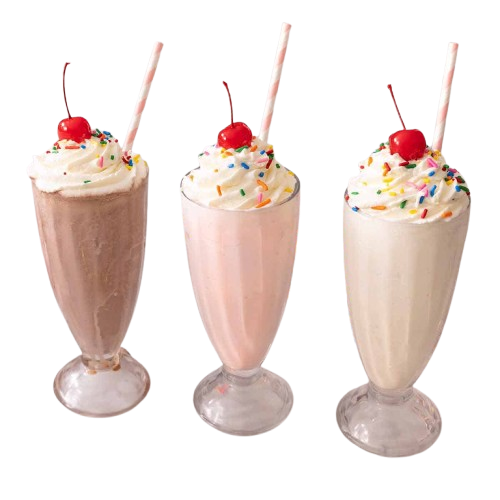
Common milkshake types range from classic Vanilla, Chocolate, and Strawberry to flavors like Cookies & Cream, Malted varieties, Coffee, Caramel, and Loaded shakes piled with toppings. The primary ingredient in milkshake, which is milk, sees massive production globally, with India and the United States leading (producing 218.0 and 102.7 million tonnes respectively in 2022). Milkshake consumption is highest in the United States, along with Canada, the UK, and Australia.
Milkshakes function primarily as desserts or as beverage pairings with meals, accompanying burgers and fries in American diner and fast-food culture. Major chains like McDonald's, Five Guys, Shake Shack, Chick-fil-A, and specialty dessert spots like Black Tap Craft Burgers & Beer offer milkshakes on the menu. Due to their high content of added sugars, saturated fat, and calories, health guidelines do not recommend daily consumption of milkshakes. The Dietary Guidelines for Americans advise limiting added sugars to less than 10% of daily calories. Consuming a single medium 600-calorie milkshake would require 60 minutes of moderate jogging, 50 to 60 minutes of vigorous swimming, or more than 90 minutes of brisk walking.
Milkshake nutrition
| Stats | Weight |
|---|---|
| Carbs | 100 grams |
| Protein | 15 grams |
| Fats | 0 grams |
| Sugars | 80 grams |
- Large Milkshake Calories (Nutritional Facts)
- Medium Milkshake Calories (Nutritional Facts)
- Small Milkshake Calories (Nutritional Facts)
- Strawberry Milkshake Calories (Nutritional Facts)
- Chocolate Milkshake Calories (Nutritional Facts)
- Sugar in Milkshake
- Fiber in Milkshake
- Protein in Milkshake
- Carbs in Milkshake
- Fat in Milkshake
- Vitamins in Milkshake
- Minerals in Milkshake
Large Milkshake Calories (Nutritional Facts)
A large milkshake (20 to 30 fluid ounces or 590 to 890mL) contains 700 to 900 calories. A large vanilla milkshake from McDonald's (28 fl oz or 828mL) contains 780 calories, 18g of protein, 21g of fat, and 131g of carbohydrates. A large chocolate milkshake from Burger King (20 fl oz or 591mL) provides 760 calories, 18g of protein, 21g of fat, and 128g of carbohydrates. A Five Guys chocolate milkshake base (16 fl oz or 473mL before mix-ins, served in a larger cup) contains 670 calories, 13g of protein, 32g of fat, and 82g of carbohydrates; adding mix-ins increases these values for a final large serving.
A medium milkshake (16 to 20 fluid ounces or 470 to 590mL) provides 550 to 750 calories. A medium chocolate milkshake from McDonald's (19 fl oz or 561mL) contains 600 calories, 14g of protein, 16g of fat, and 103g of carbohydrates. A medium vanilla shake from Dairy Queen (16 fl oz or 473mL) provides 650 calories, 15g of protein, 28g of fat, and 86g of carbohydrates. A Chick-fil-A Cookies & Cream Milkshake (14.5 fl oz or 429mL) contains 630 calories, 14g of protein, 26g of fat, and 88g of carbohydrates.
A small milkshake, with sizes from 6 to 14 fluid ounces contains from 200 to over 500 calories. A small strawberry milkshake from McDonald's (14 fl oz or 414mL) contains 490 calories, 11g of protein, 14g of fat, and 81g of carbohydrates. A small chocolate shake from Wendy's, known as a Jr. Frosty (6 fl oz or 177mL), contains 200 calories, 5g of protein, 5g of fat, and 32g of carbohydrates. A small vanilla shake from Burger King (12 fl oz or 355mL) provides 500 calories, 12g of protein, 14g of fat, and 84g of carbohydrates.
A strawberry milkshake's calories depend on serving size, ranging from 450 calories for a small to nearly 800 calories for a large, influenced by strawberry syrup and ice cream content. A small McDonald's strawberry shake (14 fl oz or 414mL) contains 490 calories, 11g of protein, 14g of fat, and 81g of carbohydrates. A medium McDonald's strawberry shake (19 fl oz or 561mL) has 570 calories, 13g of protein, 15g of fat, and 96g of carbohydrates. A large McDonald's strawberry shake (28 fl oz or 828mL) provides 790 calories, 18g of protein, 21g of fat, and 134g of carbohydrates.
Chocolate milkshakes are calorie-dense because of chocolate flavoring and ice cream. A small McDonald's chocolate shake (14 fl oz or 414mL) contains 510 calories, 11g of protein, 14g of fat, and 86g of carbohydrates. A medium McDonald's chocolate shake (19 fl oz or 561mL) has 600 calories, 14g of protein, 16g of fat, and 103g of carbohydrates. A large McDonald's chocolate shake (28 fl oz or 828mL) provides 830 calories, 19g of protein, 22g of fat, and 141g of carbohydrates. A Chick-fil-A Chocolate Milkshake (14.5 fl oz or 429mL) contains 610 calories, 14g of protein, 24g of fat, and 85g of carbohydrates.
Milkshakes contain high amounts of sugar, sourced from ice cream, milk, syrups, and other flavorings. A medium McDonald's chocolate shake (19 fl oz or 561mL) contains 85g of sugar. A Chick-fil-A Cookies & Cream Milkshake (14.5 fl oz or 429mL) contains 83g of sugar. A Five Guys chocolate milkshake base (16 fl oz or 473mL) contains 80g of sugar before mix-ins are added.
Dietary fiber is low or absent in standard milkshakes, as the main ingredients (milk, ice cream, syrups) contain little to no fiber. A medium McDonald's chocolate shake contains 1g of fiber (4% DV). Most standard milkshakes provide less than 2g of fiber per serving.
A medium McDonald's chocolate shake (19 fl oz or 561mL) supplies 14g of protein (28% DV). A Chick-fil-A Cookies & Cream Milkshake (14.5 fl oz or 429mL) offers 14g of protein (28% DV). A large Burger King chocolate shake (20 fl oz or 591mL) contains 18g of protein (36% DV).
Carbohydrates are abundant in milkshakes. A medium McDonald's chocolate shake (19 fl oz or 561mL) has 103g of total carbohydrates (37% DV). A Chick-fil-A Cookies & Cream Milkshake (14.5 fl oz or 429mL) contains 88g of carbohydrates (32% DV). A large McDonald's vanilla shake (28 fl oz or 828mL) contains 131g of carbohydrates (48% DV).
A medium McDonald's chocolate shake (19 fl oz or 561mL) contains 16g of total fat (21% DV), including 9g of saturated fat (45% DV). A Chick-fil-A Cookies & Cream Milkshake (14.5 fl oz or 429mL) has 26g of total fat (33% DV), with 15g of saturated fat (75% DV). A Five Guys chocolate milkshake base (16 fl oz or 473mL) contains 32g of total fat (41% DV), including 20g of saturated fat (100% DV).
Milkshakes supply certain vitamins from their dairy base, such as Vitamin A and Vitamin D if the milk or ice cream is fortified. A medium McDonald's chocolate shake provides Vitamin D at 1.2mcg (6% DV) and Vitamin A at 150mcg RAE (17% DV). Other B vitamins like Riboflavin (Vitamin B2) and Vitamin B12 are present in smaller quantities.
Milkshakes are a good source of the mineral calcium and also provide potassium and phosphorus. A medium McDonald's chocolate shake (19 fl oz or 561mL) provides 450mg of calcium (35% DV) and 650mg of potassium (14% DV). Sodium content differs based on ingredients; the same shake has 240mg (10% DV).
Get a Custom Report on Milkshake Nutrition Data – Contact Us!
What are the Types of Milkshakes?
Milkshakes come in numerous flavors and variations, with nutritional content varying widely based on ingredients and preparation. The characteristics and typical calorie ranges for a standard medium size (around 16 fl oz / 473 mL) are provided below:
| Type | Description | Calories (per ~16 fl oz / 473 mL) | Calorie Differences & Qualifications |
|---|---|---|---|
|
Vanilla
|
Classic flavor made with vanilla ice cream, milk, sometimes vanilla extract. | 500-700 | Generally the baseline; calories depend heavily on ice cream fat content and milk type. Lower end if made with lower-fat ingredients. |
|
Chocolate
|
Made with chocolate ice cream and/or chocolate syrup added to a vanilla base. | 550-800 | Higher calories than vanilla due to added sugar and fat from chocolate syrup/ice cream. Dark chocolate versions might vary slightly. |
|
Strawberry
|
Made with strawberry ice cream and/or strawberry syrup/fruit puree. | 550-800 | Similar calorie range to chocolate, driven by sugary syrups or sweetened fruit preparations. Using real, unsweetened fruit might lower calories slightly but is uncommon. |
|
Cookies & Cream
|
Vanilla base with crushed cookies (e.g., Oreos) blended in. | 600-900+ | Significantly higher calories due to added cookies (sugar, fat, carbs). Often one of the higher-calorie options. |
|
Fruit (Other)
|
Flavored with syrups like banana, peach, or sometimes blended fruit pieces. | 550-850 | Calories depend heavily on whether sugary syrups or actual fruit (and how much) are used. Syrups add more calories and sugar. |
|
Malted ("Malt")
|
A standard flavor (vanilla, chocolate) with malted milk powder added. | 550-850 | Malt powder adds extra calories, carbohydrates, and a distinct flavor. Calorie increase over the base flavor is usually moderate (50-100 kcal). |
|
Coffee/Caramel
|
Flavored with coffee extracts/syrups or caramel sauce. | 600-900 | High calorie content due to sugary coffee syrups or rich caramel sauce. |
|
Specialty/Loaded
|
Includes extra mix-ins like candy pieces, brownies, cake, extra sauces, large toppings. | 800-1500+ | Highest calorie category due to multiple high-sugar, high-fat additions. Often served as "freakshakes". |
What are the Desserts with Milkshakes?
Milkshakes are desserts themselves. But the trend of "loaded" or "freakshakes" elevates them into elaborate dessert creations, often incorporating other dessert items, as shown below:
| Dish Name | Calories (Estimate per serving) | Type | Carbs (g) | Sugar (g) | Protein (g) | Fat (g) | Cuisine | Restaurants |
|---|---|---|---|---|---|---|---|---|
|
Loaded/Freakshake
|
1000 - 2000+ | Elaborate Dessert | 150 - 300+ | 100 - 200+ | 15 - 30 | 40 - 80+ | Modern American Dessert | Black Tap Craft Burgers & Beer (NYC, Vegas), Sugar Factory, Toothsome Chocolate Emporium (Universal Orlando) |
|
Milkshake with Cake/Brownie Topping
|
800 - 1500+ | Milkshake/Dessert Hybrid | 100 - 250 | 80 - 180 | 12 - 25 | 35 - 70+ | Modern American Dessert | Often found at specialty dessert shops or restaurants known for extravagant shakes like those mentioned above. |
|
Milkshake Float (e.g., Root Beer)
|
400 - 700 | Beverage/Dessert | 70 - 120 | 65 - 115 | 5 - 10 | 10 - 25 | American | A&W Restaurants |
|
Affogato (Espresso over Ice Cream)
|
200 - 400 | Dessert/Beverage | 20 - 40 | 18 - 38 | 4 - 8 | 10 - 20 | Italian/Modern Dessert | Common in Italian restaurants and cafes, conceptually similar to a simple coffee/ice cream blend, simpler than a milkshake. |
What are the Main Dishes with Milkshakes?
Milkshakes are beverages typically consumed alongside main dishes, especially in American diner and fast-food culture, rather than being main dishes themselves. Common pairings include:
| Dish Pairing | Calories (Estimate for Pairing) | Type | Carbs (g) (Pairing) | Sugar (g) (Pairing) | Protein (g) (Pairing) | Fat (g) (Pairing) | Cuisine | Restaurants |
|---|---|---|---|---|---|---|---|---|
|
Cheeseburger & Medium Milkshake
|
900 - 1500+ | Meal Pairing (Main+Bev) | 120 - 200+ | 80 - 150+ | 40 - 70+ | 40 - 80+ | American Fast Food/Diner | Five Guys, Shake Shack, In-N-Out Burger, Steak 'n Shake, Johnny Rockets, numerous local diners. |
|
Fried Chicken Sandwich & Milkshake
|
800 - 1400+ | Meal Pairing (Main+Bev) | 110 - 180+ | 70 - 130+ | 35 - 60+ | 35 - 70+ | American Fast Food | Chick-fil-A, Shake Shack, PDQ. |
|
French Fries & Milkshake (Dipping)
|
600 - 1200+ (Depending on sizes) | Snack/Side + Beverage Pairing | 100 - 180+ | 60 - 120+ | 15 - 30+ | 25 - 60+ | American Fast Food/Diner | Common practice at places like Wendy's (with Frosty), McDonald's, Burger King, Five Guys, Steak 'n Shake. |
What Cuisines Prefer Milkshake the Most?
The milkshake is overwhelmingly associated with American cuisine, particularly its diner, fast-food, and soda fountain culture. While variations exist globally, its origin and highest prevalence are in the United States, as shown below:
| Cuisine | Dish Name / Use | Calories (Estimate per serving) | Restaurants |
|---|---|---|---|
|
American
|
Classic Milkshakes (Vanilla, Choc, Strawberry) | 500 - 800 (Medium) | McDonald's, Burger King, Wendy's, Five Guys, Shake Shack, Steak 'n Shake, Chick-fil-A, Dairy Queen, Johnny Rockets, Diners |
|
American
|
Malted Milkshakes ("Malts") | 550 - 850 (Medium) | Steak 'n Shake, many classic diners and ice cream parlors. |
|
American
|
Loaded / Freakshakes | 1000 - 2000+ | Black Tap, Sugar Factory, specialty dessert cafes. |
|
American
|
Paired with Burgers, Fries, Diner Food | Varies (see pairings above) | Fast food, fast casual, and diner segments. |
|
Modern International
|
Gourmet/Artisanal Milkshakes | 600 - 1000+ | Upscale casual restaurants, dessert bars adapting the concept with unique flavors or ingredients. |
Which Countries Produce the Most Milkshakes?
The top producers of milk, which is the key ingredient in milkshakes, are India and the United States, followed by countries like Pakistan, China, and Brazil. The table below shows the total milk production for the leading countries over the past two decades.
| Country | 2004 | 2005 | 2006 | 2007 | 2008 | 2009 | 2010 | 2011 | 2012 | 2013 | 2014 | 2015 | 2016 | 2017 | 2018 | 2019 | 2020 | 2021 | 2022 |
|---|---|---|---|---|---|---|---|---|---|---|---|---|---|---|---|---|---|---|---|
| India | 91.0 | 95.4 | 100.9 | 105.4 | 110.0 | 114.4 | 121.8 | 127.9 | 132.4 | 137.7 | 146.3 | 154.0 | 162.7 | 171.7 | 181.0 | 190.6 | 199.8 | 208.9 | 218.0 |
| United States | 78.0 | 80.3 | 82.6 | 84.2 | 86.2 | 86.0 | 87.5 | 89.0 | 91.0 | 91.3 | 93.5 | 94.6 | 96.4 | 97.7 | 98.7 | 99.2 | 101.0 | 102.7 | 102.7 |
| Pakistan | 30.7 | 31.9 | 33.1 | 34.3 | 35.6 | 36.9 | 38.3 | 39.7 | 41.2 | 42.7 | 44.3 | 45.8 | 47.4 | 49.1 | 50.8 | 52.6 | 54.3 | 56.1 | 57.9 |
| China | 24.6 | 29.6 | 33.9 | 36.9 | 37.8 | 37.6 | 38.2 | 39.3 | 40.4 | 41.6 | 42.7 | 43.8 | 44.9 | 45.9 | 46.8 | 47.7 | 48.6 | 49.5 | 50.3 |
| Brazil | 23.9 | 24.8 | 25.8 | 26.9 | 27.9 | 29.1 | 30.7 | 32.1 | 32.9 | 34.3 | 35.1 | 34.6 | 33.8 | 33.5 | 33.8 | 34.1 | 35.5 | 36.4 | 37.3 |
| Russia | 31.6 | 31.1 | 31.4 | 32.0 | 32.4 | 32.6 | 31.9 | 31.6 | 31.8 | 30.5 | 30.8 | 30.8 | 30.7 | 31.1 | 31.4 | 31.7 | 32.2 | 32.3 | 32.9 |
| Germany | 28.0 | 28.5 | 28.7 | 28.4 | 28.9 | 29.0 | 29.6 | 30.3 | 30.5 | 31.1 | 32.4 | 32.7 | 32.7 | 32.7 | 33.1 | 33.1 | 33.2 | 32.9 | 32.4 |
| France | 24.9 | 24.8 | 24.4 | 23.9 | 24.3 | 24.2 | 24.3 | 24.7 | 24.6 | 24.8 | 25.3 | 25.2 | 24.9 | 24.6 | 24.9 | 24.8 | 24.7 | 24.4 | 24.0 |
| Turkey | 10.6 | 11.5 | 10.9 | 11.1 | 12.0 | 12.2 | 12.4 | 14.7 | 16.7 | 18.2 | 18.6 | 18.5 | 18.8 | 20.7 | 22.1 | 22.9 | 23.5 | 23.2 | 21.5 |
| New Zealand | 14.9 | 14.6 | 15.1 | 15.6 | 15.2 | 16.6 | 17.2 | 18.9 | 19.8 | 20.9 | 21.7 | 21.6 | 21.3 | 21.4 | 21.7 | 21.6 | 21.9 | 22.1 | 21.4 |
Which Countries Consume the Most Milkshakes?
The United States is considered the largest consumer of milkshakes, followed by other Western countries such as Canada, the United Kingdom, and Australia. As a broad indicator related to the availability and consumption of dairy products used in milkshakes, the table below shows the Milk Supply Quantity per capita (excluding butter) for selected countries.
| Country | 2004 | 2005 | 2006 | 2007 | 2008 | 2009 | 2010 | 2011 | 2012 | 2013 | 2014 | 2015 | 2016 | 2017 | 2018 | 2019 | 2020 | 2021 |
|---|---|---|---|---|---|---|---|---|---|---|---|---|---|---|---|---|---|---|
| Finland | 145.1 | 142.8 | 140.5 | 138.2 | 135.9 | 133.6 | 131.3 | 129.0 | 126.7 | 124.4 | 122.1 | 119.8 | 117.5 | 115.2 | 112.9 | 110.6 | 108.3 | 106.0 |
| Netherlands | 128.2 | 127.0 | 125.8 | 124.6 | 123.4 | 122.2 | 121.0 | 119.8 | 118.6 | 117.4 | 116.2 | 115.0 | 113.8 | 112.6 | 111.4 | 110.2 | 109.0 | 107.8 |
| Sweden | 120.5 | 118.9 | 117.3 | 115.7 | 114.1 | 112.5 | 110.9 | 109.3 | 107.7 | 106.1 | 104.5 | 102.9 | 101.3 | 99.7 | 98.1 | 96.5 | 94.9 | 93.3 |
| Switzerland | 115.3 | 114.1 | 112.9 | 111.7 | 110.5 | 109.3 | 108.1 | 106.9 | 105.7 | 104.5 | 103.3 | 102.1 | 100.9 | 99.7 | 98.5 | 97.3 | 96.1 | 94.9 |
| Albania | 110.2 | 111.5 | 112.8 | 114.1 | 115.4 | 116.7 | 118.0 | 119.3 | 120.6 | 121.9 | 123.2 | 124.5 | 125.8 | 127.1 | 128.4 | 129.7 | 131.0 | 132.3 |
| Ireland | 108.9 | 107.7 | 106.5 | 105.3 | 104.1 | 102.9 | 101.7 | 100.5 | 99.3 | 98.1 | 96.9 | 95.7 | 94.5 | 93.3 | 92.1 | 90.9 | 89.7 | 88.5 |
| Montenegro | 105.6 | 106.8 | 108.0 | 109.2 | 110.4 | 111.6 | 112.8 | 114.0 | 115.2 | 116.4 | 117.6 | 118.8 | 120.0 | 121.2 | 122.4 | 123.6 | 124.8 | 126.0 |
| Denmark | 102.1 | 101.0 | 99.9 | 98.8 | 97.7 | 96.6 | 95.5 | 94.4 | 93.3 | 92.2 | 91.1 | 90.0 | 88.9 | 87.8 | 86.7 | 85.6 | 84.5 | 83.4 |
| Norway | 98.5 | 97.3 | 96.1 | 94.9 | 93.7 | 92.5 | 91.3 | 90.1 | 88.9 | 87.7 | 86.5 | 85.3 | 84.1 | 82.9 | 81.7 | 80.5 | 79.3 | 78.1 |
| United Kingdom | 95.2 | 94.1 | 93.0 | 91.9 | 90.8 | 89.7 | 88.6 | 87.5 | 86.4 | 85.3 | 84.2 | 83.1 | 82.0 | 80.9 | 79.8 | 78.7 | 77.6 | 76.5 |
How Do Prices of Milkshake-including Dishes Change?
The cost of milkshakes at restaurants has noticeably increased over the past two decades. The table below shows price comparisons for restaurant menu items with milkshakes from 2005 to 2025:
| Restaurant | Dish | Old Price (2005-2010) | Current Price (2025) |
|---|---|---|---|
| McDonald's | Medium Milkshake | $2.19 - $2.59 (2005) | $3.59 - $4.79 |
| Burger King | Medium Milkshake | $2.29 - $2.79 (2007) | $3.99 - $4.99 |
| Wendy's | Classic Frosty (Medium) | $1.29 - $1.69 (2006) | $2.59 - $3.29 |
| Steak 'n Shake | Regular Classic Milkshake | $2.99 - $3.49 (2008) | $4.99 - $5.99 |
| Chick-fil-A | Milkshake | $2.75 - $3.25 (2010) | $4.49 - $5.49 |
| Five Guys | Milkshake (Base) | $3.99 - $4.49 (2012) | $5.99 - $6.99 |
How Does the Price of Milkshake Change for the Last 20 Years?
The price of milkshakes sold in restaurants has increased significantly over the last 20 years. This follows the general trend of rising prices for food purchased away from home. Specific global tracking for milkshake prices doesn't exist. However, the U.S. Consumer Price Index (CPI) for "Food Away From Home" provides a good indicator. This index has roughly doubled between 2004 and 2024, meaning consumers pay significantly more for restaurant items, including milkshakes, than they did two decades ago. Key factors driving price increases include the rising cost of dairy ingredients (milk, ice cream), sugar, flavorings, cups/straws, labor wages, rent for restaurant locations, and energy costs. Milkshake prices are generally highest in major cities and developed countries with higher operating costs (like the US, UK, Canada, Australia) compared to developing countries. Prices also vary based on the type of establishment, with fast-food chains typically offering lower prices than sit-down diners, ice cream parlors, or specialty dessert shops offering "gourmet" or "loaded" shakes.
| Year | Price |
|---|---|
| 2005 | $2.1 |
| 2006 | $2.2 |
| 2007 | $2.3 |
| 2008 | $2.45 |
| 2009 | $2.5 |
| 2010 | $2.6 |
| 2011 | $2.75 |
| 2012 | $2.85 |
| 2013 | $2.95 |
| 2014 | $3.1 |
| 2015 | $3.2 |
| 2016 | $3.3 |
| 2017 | $3.4 |
| 2018 | $3.5 |
| 2019 | $3.6 |
| 2020 | $3.7 |
| 2021 | $3.85 |
| 2022 | $4.1 |
| 2023 | $4.25 |
| 2024 | $4.4 |
What is the Calorie of 100mL Milkshakes?
The calorie density per 100mL of milkshake differs by type and brand. A McDonald's vanilla milkshake contains 102 calories per 100mL. A McDonald's chocolate milkshake contains 107 calories per 100mL. A Chick-fil-A Cookies & Cream Milkshake contains 147 calories per 100mL. A Five Guys chocolate milkshake base contains 142 calories per 100mL.
What is the Calorie of 1 L Milkshake?
One liter of McDonald's vanilla milkshake provides 1020 calories. One liter of McDonald's chocolate milkshake contains 1070 calories. One liter of Chick-fil-A Cookies & Cream Milkshake contains 1470 calories. One liter of Five Guys chocolate milkshake base contains 1420 calories.
How Many Calories in 1 Glass of Milkshake?
The calories in one glass of milkshake depend on the volume of the glass and the specific milkshake's calorie density. For a standard 16 fl oz (473mL) glass, a glass of McDonald's vanilla milkshake contains 482 calories (102 kcal/100mL * 4.73). A glass of McDonald's chocolate milkshake contains 506 calories (107 kcal/100mL * 4.73). A glass of Chick-fil-A Cookies & Cream Milkshake contains 695 calories (147 kcal/100mL * 4.73). A glass of Five Guys chocolate milkshake base contains 671 calories (142 kcal/100mL * 4.73).
What are the Health Benefits of Milkshakes?
Milkshakes can offer some limited nutritional benefits primarily derived from their dairy components, including:
- Source of Calcium: Milkshakes made with milk and ice cream provide calcium, which is essential for building and maintaining strong bones and teeth. Calcium also plays roles in muscle function and nerve transmission. (Weaver, C.M., Peacock, M., & Calcium, V.D., 2014. Calcium requirements and dietary sources.) A typical medium milkshake can provide 30-40% of the Daily Value for calcium.
- Provides Protein: The milk and ice cream contribute protein, necessary for muscle repair, tissue building, and various bodily functions. A medium milkshake might contain 10-15 grams of protein. (NIH, Office of Dietary Supplements. Protein)
- Source of Some Vitamins and Minerals: Dairy ingredients supply other nutrients like Vitamin D (often fortified in milk), Vitamin B12, phosphorus, and potassium, which support various aspects of health, including immune function, nerve function, and blood pressure regulation. (USDA, FoodData Central)
- Provides Quick Energy: Due to their high carbohydrate content, primarily from sugars, milkshakes can provide a rapid source of energy. This might be perceived as beneficial in situations requiring quick fuel, although this energy source is not sustained and can lead to subsequent energy crashes.
- Source of Vitamin A: Milkfat in ice cream and milk contributes Vitamin A, which is important for vision, immune function, and skin health.
What are the Downsides of Milkshakes?
Milkshakes have significant nutritional drawbacks that often outweigh their benefits, such as:
- Extremely High in Added Sugars: This is the most significant downside. Milkshakes contain large amounts of added sugars from ice cream, syrups, flavored powders, and whipped cream. A single medium or large milkshake can easily exceed the daily recommended limit for added sugars (less than 10% of total calories, per the Dietary Guidelines for Americans), contributing to weight gain, increased risk of type 2 diabetes, and heart disease. (Malik VS, Hu FB., 2022. The role of sugar-sweetened beverages in the global epidemics of obesity and chronic diseases.) Healthier alternatives include smoothies made with fruit, yogurt/milk, and no added sugar, or simply drinking plain milk.
- High in Saturated Fat: Depending on the type of ice cream and milk used (whole milk vs. lower fat), milkshakes can be very high in saturated fat. Excessive saturated fat intake can raise LDL (bad) cholesterol levels, increasing the risk of heart disease. (Eric B. Rimm, Walter C. Willett, Meir J. Stampfer, et al., 1996. Dietary fat and coronary heart disease: A critical review.) Choosing shakes made with lower-fat dairy or plant-based alternatives (though check their sugar content) can reduce this, but often the base is high-fat ice cream. A low-fat fruit smoothie is a better alternative.
- High in Calories: Due to the high sugar and fat content, milkshakes are very calorie-dense. Regularly consuming high-calorie beverages can easily lead to a calorie surplus and contribute to weight gain and obesity. A single shake can contain anywhere from 400 to over 1000 calories. Water, unsweetened tea, or milk are lower-calorie beverage choices.
- Can Cause Digestive Issues for Some: The high dairy content makes milkshakes unsuitable for individuals with lactose intolerance, potentially causing symptoms like bloating, gas, and diarrhea.
- Low in Fiber: Milkshakes contain minimal, if any, dietary fiber. Fiber is crucial for digestive health, regulating blood sugar, and promoting satiety, all aspects where milkshakes fall short.
- Displacement of Nutrient-Dense Foods: Regularly choosing a high-calorie, low-nutrient-density milkshake over healthier snacks or beverages means missing opportunities to consume beneficial vitamins, minerals, fiber, and antioxidants found in fruits, vegetables, nuts, and whole grains.
- Potential Allergens: Besides dairy (lactose and milk protein), milkshakes can contain other common allergens depending on the flavorings and mix-ins used, such as nuts, soy (in cookies or chocolate), wheat, or specific fruits.
- Risk to Dental Health: The extremely high sugar content directly contributes to tooth decay and cavities by feeding harmful bacteria in the mouth.
Are Milkshakes Good for You?
No, milkshakes are generally not considered good for you when evaluated for overall health impact. While they provide some beneficial nutrients like calcium and protein from their dairy base, these benefits are heavily overshadowed by the extremely high amounts of added sugars and often significant levels of saturated fat and total calories. Regular consumption can negatively impact heart health due to saturated fat raising cholesterol and high sugar intake contributing to metabolic issues. Their high calorie density can easily lead to weight gain. They offer minimal fiber, providing little benefit for digestive health. The excessive sugar load provides a quick energy spike but can lead to crashes and does not support sustained energy or optimal brain function. While offering some minerals for bone health, the detrimental effects of excess sugar and fat make milkshakes a poor choice for regular consumption and unsuitable for promoting liver health or stable energy levels. They are best categorized as indulgent desserts to be enjoyed infrequently and in moderation within an otherwise balanced diet.
How Many Milkshakes Should I Drink a Day?
Health organizations like the American Heart Association and the Dietary Guidelines for Americans strongly advise limiting intake of added sugars and saturated fats. Given that a single typical milkshake often contains amounts of added sugar and saturated fat that meet or exceed the recommended daily limits for adults, drinking a milkshake every day is not recommended for maintaining good health. They are considered sugar-sweetened beverages and high-calorie treats that should be consumed rarely, not daily.
How Many Milkshakes Can I Drink a Day at Most?
There is no "safe" maximum number of milkshakes to drink per day from a health perspective. Consuming even one milkshake can contribute a significant portion, or even exceed, the daily recommended limits for added sugars and saturated fats. Drinking more than one would drastically increase these unhealthy components and calorie intake, significantly raising the risk of negative health consequences like weight gain, increased risk of type 2 diabetes, and cardiovascular problems. Milkshakes should be viewed as occasional indulgences, perhaps enjoyed a few times per month or year, rather than having a place in a daily or even weekly diet.
How Do Calories Change According to Milkshake Types?
Milkshake calories vary dramatically based on flavor, ingredients, size, and added mix-ins. The base ingredients – ice cream fat content and milk type – set a foundation, with higher-fat ice cream and whole milk resulting in more calories. Simple flavors like vanilla tend to be on the lower end of the spectrum, ranging from 500-700 calories for a medium size. Adding sugary syrups (chocolate, strawberry, caramel, coffee) increases calories further, pushing chocolate and fruit syrup flavors typically into the 550-850 calorie range. Incorporating solid mix-ins like cookies (Cookies & Cream), candy pieces, or brownies significantly boosts calories due to their own sugar, fat, and carbohydrate content, often resulting in shakes with 600 to over 900 calories. The highest calorie milkshakes are "specialty" or "loaded" shakes that pile on multiple toppings and sauces, easily exceeding 1000-1500 calories. Therefore, the plainest flavors made with potentially lower-fat ingredients represent the lowest calorie options, while complex flavors with multiple sugary syrups and solid mix-ins represent the highest.
What is the Origin of the Milkshakes?
The term "milkshake" first appeared in print in the late 1880s, but it initially referred to a sturdy, alcoholic eggnog-type drink containing whiskey, eggs, and milk or cream, served as both a tonic and a treat. It was shaken vigorously by hand, hence the name. This early version bears little resemblance to the modern milkshake. The transformation began with the advent of malted milk powder, invented by William Horlick in 1887, which was soon added to milk drinks at soda fountains for a perceived health boost and distinct flavor. The crucial step towards the modern milkshake occurred with the popularization of the electric blender. Steven Poplawski invented the first blender specifically for mixing malted milks at soda fountains in 1922. Around the same time, Ivar "Pop" Coulson, a Walgreens employee in Chicago, reportedly enhanced a malted milk drink by adding scoops of ice cream, creating something much closer to today's standard.
The combination of the electric blender, the availability of commercial ice cream, and the cultural hub of the American soda fountain in the early to mid-20th century solidified the milkshake as a sweet, thick, ice cream-based beverage. It became a staple alongside hamburgers and fries, forming the classic American diner meal. This iconic pairing, often simply called "burger, fries, and a shake," represents a famous culinary combination synonymous with American casual dining, drive-ins, and nostalgia, rather than a single dish containing a milkshake. Its popularity surged post-World War II and remains a fixture in fast food and casual dining globally, though heavily rooted in its American origins.
Explore More Beverages
Discover more Beverages with detailed nutrition facts, calorie counts, vitamins, minerals, and health benefits. Compare similar foods, serving sizes, macronutrients, and key nutrients to find the best option for your diet and nutrition goals.
 Almond Milk calories
 Aloe Vera Juice calories
 Americano calories
 Apple Cider calories
 Apple Juice calories
 Apricot Juice calories
 Aronia Juice calories
 Avocado Shake calories
 Banana Juice calories
 Baobab Juice calories
 Barley Tea calories
 Beer calories