Calories and Nutritions in Mocha
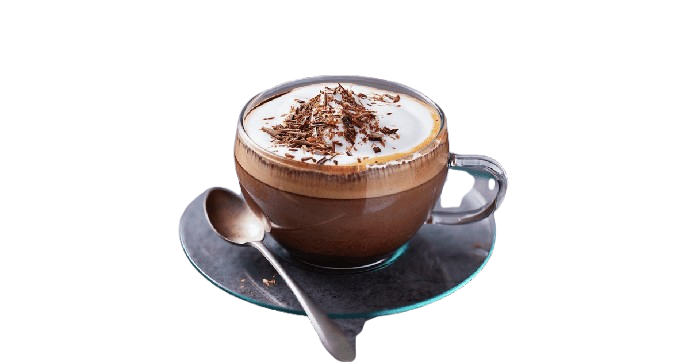
Mocha is a rich espresso-based beverage combined with steamed milk and chocolate syrup. There are 78 mocha calories per 100 g (3.5 oz) of a classic prepared serving. Frequently referred to by names such as caffe mocha, mochaccino, or chocolate-infused coffee, this drink is significantly more energy-dense than a standard latte due to the concentrated cocoa component. A 473 mL (16 oz) Starbucks Grande Caffe Mocha contains 370 calories, whereas a same-sized McDonald’s McCafé Iced Mocha provides 320 calories and a Caribou Coffee Hot Turtle Mocha delivers 590 calories. Common types include the hot classic caffe mocha with whipped cream, iced chocolate espresso lattes, white chocolate mochas, and calorie-reduced "skinny" versions made with non-fat milk. According to mocha nutrition facts, a 100 g (3.5 oz) portion provides 9.6 g of carbohydrates, 2.6 g of protein, and 3.1 g of fat.
To burn the 370 calories in a mocha provided by a medium 473 mL (16 oz) serving, a person weighing 70 kg (154 lbs) must engage in 103 minutes of moderate walking at 5 km/h (3 mph). For those consuming a large serving containing 450 calories, the energy expenditure requires 125 minutes of moderate walking. Alternatively, the same individual can perform 38 minutes of vigorous swimming or 49 minutes of cycling at a speed of 20 km/h (12 mph) to offset the caloric intake from a large portion. Normal daily metabolic activity successfully utilizes the 78 calories found in a 100 g (3.5 oz) serving within 22 minutes of brisk movement.
The origin of mocha is the port city of Al-Mukha in Yemen, where the 15th-century global coffee trade centered on beans with natural chocolate overtones. Global production of the coffee base is led by Brazil, which produced 3,250 kt in 2023, followed by Vietnam at 1,920 kt. Consumption is highest in the United States and Brazil, where the beverage serves as a standard luxury refreshment. The market price for the coffee base has risen to $2.24 USD per lb in 2024, while a retail Grande Caffe Mocha in the United States currently ranges from $5.45 to $6.25 USD. Health guidelines suggest a recommended intake of no more than one small 295 mL (10 oz) serving per week, which contributes 210 calories to a standard adult diet.
The intense bittersweet depth of the cocoa and coffee blend is utilized in savory main dishes such as the Coffee Rubbed Ribeye at LongHorn Steakhouse, which contains 930 calories, and the Kona Crusted Strip Steak at The Capital Grille. Other restaurants featuring the flavor profile include Seasons 52 for its Coffee-Crusted Filet Mignon and The Cheesecake Factory for its Chocolate Mocha Cheesecake. Popular desserts incorporating the profile include the Jamoca Almond Fudge at Baskin-Robbins, which provides 230 calories per scoop, and the Mocha Mousse Cake at Lady M Cake Boutique.
Mocha nutrition
| Stats | Weight |
|---|---|
| Carbs | 45 grams |
| Protein | 12 grams |
| Fats | 0 grams |
| Sugars | 35 grams |
- Large Mocha Calories (Nutritional Facts)
- Medium Mocha Calories (Nutritional Facts)
- Small Mocha Calories (Nutritional Facts)
- Classic Mocha Nutrition
- Sodium in Mocha
- Potassium in Mocha
- Sugar in Mocha
- Fiber in Mocha
- Protein in Mocha
- Carbs in Mocha
- Fat in Mocha
- Vitamins in Mocha
- Minerals in Mocha
Large Mocha Calories (Nutritional Facts)
A large serving of caffe mocha, also known as mocha coffee, mocha latte, or chocolate-infused coffee, weighing 591 mL (20 oz), contains 450 calories. This portion provides 18g of total fat, 15g of protein, 56g of total carbohydrates, and 45g of sugar. A large 710 mL (24 oz) serving of a Dunkin' Hot Mocha contains 410 calories. A large iced caffe mocha of the same 591 mL (20 oz) volume delivers 350 calories.
A medium serving of mocha coffee, often called a mochaccino or a chocolate espresso latte, weighing 473 mL (16 oz), contains 370 calories. This portion includes 15g of total fat, 12g of protein, 45g of carbohydrates, and 35g of sugar. A medium 473 mL (16 oz) serving of a McDonald’s McCafé Iced Mocha contains 320 calories, providing 48g of carbohydrates, 11g of fat, and 8g of protein. A medium 473 mL (16 oz) serving of a Caribou Coffee Hot Turtle Mocha contains 590 calories.
A small serving of caffe mocha, also known by the nickname small mocha latte, weighing 355 mL (12 oz), contains 290 calories. A small 355 mL (12 oz) serving of Peet’s Coffee Mocha contains 360 calories. This serving size offers 11g of total fat, 10g of protein, 35g of carbohydrates, and 27g of sugar. A small 295 mL (10 oz) serving of a Dunkin’ Hot Mocha contains 210 calories. A small 355 mL (12 oz) serving of a McDonald’s McCafé Mocha provides 300 calories.
A 100g (3.5 oz) serving of a classic prepared mocha with 2% milk and whipped cream provides 78 calories, 3.1g of total fat, 2.6g of protein, 9.6g of carbohydrates, and 7.6g of sugar. Classic mocha serves as a combination of espresso, steamed milk, and chocolate syrup. The nutrient density is higher in versions using whole milk compared to non-fat milk. Non-fat milk versions without whipped cream provide 48 calories per 100g (3.5 oz).
Mocha contains 34mg of sodium per 100g (3.5 oz) serving, which fulfills 1% of the Daily Value (DV). A 473 mL (16 oz) serving provides 160mg of sodium, fulfilling 7% of the DV. The sodium content primarily originates from the dairy milk and the processed chocolate syrup.
Mocha serves as a source of potassium, providing 128mg per 100g (3.5 oz) serving, which represents 3% of the DV. This mineral is essential for maintaining healthy nerve function and heart rhythm. The majority of the potassium content comes from the dairy milk and cocoa solids.
Mocha contains 7.6g of sugar per 100g (3.5 oz) serving. A 473 mL (16 oz) medium serving typically contains 35g of sugar, which includes naturally occurring lactose from the milk and added sucrose or high-fructose corn syrup from the chocolate flavoring.
Mocha provides 0.4g of dietary fiber per 100g (3.5 oz) serving, fulfilling 1% of the DV. Fiber in this beverage originates from the cocoa solids found in the chocolate syrup or cocoa powder.
Mocha provides 2.6g of protein per 100g (3.5 oz) serving. A standard 473 mL (16 oz) portion delivers 12g of protein, which supports muscle maintenance and metabolic health.
Mocha contains 9.6g of total carbohydrates per 100g (3.5 oz) serving. A 473 mL (16 oz) serving of McDonald's McCafé Iced Mocha provides 48g of total carbohydrates.
Mocha contains 3.1g of total fat per 100g (3.5 oz) serving. Non-fat milk versions without whipped cream contain 0.5g of fat per 100g (3.5 oz). A medium 473 mL (16 oz) McDonald’s McCafé Iced Mocha provides 11g of total fat.
A 100g (3.5 oz) serving of mocha provides 32mcg of Vitamin A (4% DV) and 0.2mcg of Vitamin B12 (8% DV). It also contains 0.1mg of Riboflavin (8% DV). These vitamins support immune function and red blood cell production.
A 100g (3.5 oz) serving of mocha provides 94mg of Calcium (7% DV), 14mg of Magnesium (3% DV), and 0.2mg of Iron (1% DV). It also delivers 82mg of Phosphorus (7% DV). These minerals are vital for bone health and cellular energy transport.
Get a Custom Report on Mocha Nutrition Data – Contact Us!
What are the Types of Mocha?
There are 4 different types of Mocha such as the classic caffe mocha and the white chocolate mocha. The table below shows the most common Mocha types and their calorie information.
| Type | Description | Calories (per 100 g / 3.5 oz) | Calorie Differences & Qualifications |
|---|---|---|---|
|
Classic Caffe Mocha
|
Prepared with espresso, 2% steamed milk, chocolate syrup, and whipped cream. | 78 | The baseline for energy-dense coffee beverages using standard dairy. |
|
White Chocolate Mocha
|
Prepared using white chocolate sauce containing higher cocoa butter and sugar levels. | 90 | Highest calorie density due to the 12 g of fat and high sucrose in the sauce. |
|
Iced Caffe Mocha
|
A chilled version with espresso, milk, and chocolate served over ice cubes. | 68 | Lower density per total volume because ice cubes displace 150 mL of liquid. |
|
Skinny Mocha
|
Prepared with non-fat milk and sugar-free chocolate syrup without whipped cream. | 48 | Lowest calorie option qualified for those monitoring total carbohydrate intake. |
What are the Desserts with Mocha?
Dessert menus across international restaurant chains frequently feature mocha-themed items that capitalize on the natural synergy between dark cocoa and roasted espresso. These offerings often prioritize rich, creamy textures such as cheesecakes, frozen mousses, and layered cakes that highlight the bitter-sweet complexity of the mocha profile. The table below provides the nutritional facts for factual dessert items found at established dining entities.
| Dish Name | Calories | Type | Carbs | Sugar | Protein | Fat | Cuisine | Restaurants |
|---|---|---|---|---|---|---|---|---|
|
Chocolate Mocha Cheesecake
|
1,110 | Cheesecake | 98g | 80g | 14g | 74g | American | The Cheesecake Factory |
|
Mocha Cookie Crumble Frappuccino
|
590 | Blended Dessert | 76g | 71g | 7g | 27g | Modern American | Starbucks |
|
Jamoca Almond Fudge (113g)
|
230 | Ice Cream | 26g | 21g | 4g | 13g | American | Baskin-Robbins |
|
Tiramisu
|
470 | Layered Cake | 44g | 31g | 7g | 28g | Italian | Olive Garden |
|
Mochalatta Chill (16 oz)
|
380 | Frozen Beverage | 65g | 58g | 6g | 11g | American | Cinnabon |
|
Coffee Mocha Chip Ice Cream
|
310 | Frozen | 28g | 24g | 5g | 20g | American | Haagen-Dazs |
|
Mocha Mud Pie
|
620 | Pie | 78g | 56g | 8g | 31g | American | Red Robin |
|
Mocha Almond Avenue
|
740 | Ice Cream Mix-in | 92g | 68g | 10g | 34g | American | Cold Stone Creamery |
|
Mocha Mousse Cake (Slice)
|
480 | Cake | 52g | 38g | 6g | 28g | French-Japanese | Lady M Cake Boutique |
|
Espresso Semifreddo
|
540 | Frozen Custard | 48g | 42g | 8g | 34g | Italian | Maggiano's Little Italy |
|
Mocha Brownie
|
340 | Bar | 45g | 32g | 4g | 16g | American | Corner Bakery |
|
Double Chocolate Mocha Trifle
|
680 | Layered Dessert | 84g | 62g | 9g | 38g | American | BJ's Restaurant & Brewhouse |
What are the Main Dishes with Mocha?
Some of the most widespread main dishes that contain mocha or espresso profiles are Coffee-Crusted Filet Mignon, Espresso-Rubbed Ribeye, and Kona-Crusted Strip Steak. While the mocha drink is a liquid beverage, the culinary application of its core ingredients - espresso and cocoa - serves as a robust dry rub for fatty proteins to create a caramelized crust. This technique is particularly prevalent in high-end American steakhouses where the acidity of the coffee cuts through the richness of the beef. The table below lists the nutritional facts for popular savory entrees that utilize these flavor profiles in their preparation.
| Dish Name | Calories | Type | Carbs | Sugar | Protein | Fat | Cuisine | Restaurants |
|---|---|---|---|---|---|---|---|---|
|
Coffee-Crusted Filet Mignon
|
490 | Beef Entree | 8g | 2g | 42g | 32g | Modern American | Seasons 52 |
|
Kona Crusted Dry Aged Strip
|
640 | Beef Entree | 6g | 1g | 62g | 40g | American | The Capital Grille |
|
Espresso Crusted Beef Medallions
|
940 | Beef Entree | 52g | 14g | 58g | 54g | American | Lazy Dog Restaurant & Bar |
|
Coffee Rubbed Ribeye
|
930 | Beef Entree | 5g | 0g | 68g | 64g | American Steakhouse | LongHorn Steakhouse |
|
Espresso Rubbed Filet
|
510 | Beef Entree | 4g | 1g | 52g | 32g | American | Outback Steakhouse |
|
Coffee Rubbed Burger
|
880 | Sandwich | 64g | 12g | 48g | 48g | Fusion | Yard House |
|
Coffee Rubbed Pork Chops
|
740 | Meat Entree | 12g | 4g | 56g | 46g | Brazilian | Fogo de Chão |
|
Coffee Rubbed Brisket
|
920 | BBQ Entree | 18g | 8g | 72g | 58g | American BBQ | Wood Ranch BBQ |
|
Porcini Crusted Delmonico
|
820 | Beef Entree | 10g | 2g | 64g | 54g | American | The Capital Grille |
|
Coffee Rubbed Sirloin
|
580 | Beef Entree | 6g | 1g | 54g | 38g | American | Saltgrass Steak House |
What Cuisines Prefer Mocha the Most?
Mocha is a fundamental element in several global culinary traditions where it is valued for its ability to bridge the gap between beverage service and artisanal flavoring. While it is a defining characteristic of American cafe culture, it remains deeply rooted in Middle Eastern history and Italian dessert traditions. The table below outlines the cuisines and specific dishes where the mocha or coffee-chocolate profile is most prevalent across different restaurant entities.
| Cuisine | Dish Name | Calories | Restaurants |
|---|---|---|---|
|
Modern American
|
Mocha Cookie Crumble Frappuccino | 590 | Starbucks |
|
Italian
|
Tiramisu | 470 | Olive Garden |
|
American Steakhouse
|
Kona Crusted Strip Steak | 640 | The Capital Grille |
|
French-Japanese Fusion
|
Mocha Mousse Cake | 480 | Lady M Cake Boutique |
|
Middle Eastern Heritage
|
Traditional Mocha Coffee | 45 | Specialty Coffee Houses |
|
Brazilian
|
Coffee Rubbed Pork Chops | 740 | Fogo de Chão |
Which Countries Produce the Most Mocha?
The top producers of coffee beans, the primary agricultural base for mocha beverages, globally are Brazil, Vietnam, Colombia, Indonesia, and Ethiopia. In 2021, Brazil produced 2,993.00 kilotonnes of green coffee while Vietnam produced 1,845.00 kilotonnes based on data from the Food and Agriculture Organization of the United Nations (FAOSTAT). Production levels fluctuate annually based on rainfall patterns in the "Coffee Belt" and the global market price for Arabica and Robusta varieties. The table below provides production figures for the primary regions where the raw components of mocha are a specialized commercial crop.
| Country | 2004 | 2005 | 2006 | 2007 | 2008 | 2009 | 2010 | 2011 | 2012 | 2013 | 2014 | 2015 | 2016 | 2017 | 2018 | 2019 | 2020 | 2021 | 2022 | 2023 |
|---|---|---|---|---|---|---|---|---|---|---|---|---|---|---|---|---|---|---|---|---|
| Brazil | 2,465 | 2,140 | 2,573 | 2,249 | 2,796 | 2,440 | 2,907 | 2,700 | 3,037 | 2,964 | 2,804 | 2,641 | 3,019 | 2,684 | 3,556 | 3,011 | 3,702 | 2,993 | 3,172 | 3,250 |
| Vietnam | 831 | 752 | 854 | 961 | 1,055 | 1,057 | 1,100 | 1,277 | 1,425 | 1,461 | 1,406 | 1,558 | 1,485 | 1,584 | 1,628 | 1,683 | 1,763 | 1,845 | 1,897 | 1,920 |
| Colombia | 664 | 737 | 728 | 761 | 512 | 481 | 535 | 468 | 462 | 652 | 728 | 841 | 878 | 853 | 814 | 882 | 858 | 758 | 665 | 695 |
| Indonesia | 638 | 640 | 585 | 587 | 682 | 681 | 684 | 638 | 741 | 728 | 643 | 639 | 632 | 717 | 750 | 760 | 773 | 765 | 794 | 812 |
| Ethiopia | 256 | 260 | 265 | 273 | 271 | 295 | 329 | 345 | 358 | 382 | 412 | 435 | 469 | 470 | 471 | 482 | 584 | 565 | 575 | 590 |
Which Countries Consume the Most Mocha?
Based on data from the International Coffee Organization and the Helgi Library, the top consumers of coffee-based products are the United States, Brazil, Germany, Japan, and France. Consumption is calculated by the domestic disappearance of green coffee equivalent utilized in retail and food service sectors. In the United States, demand is heavily driven by the specialty cafe industry where mocha serves as a primary dessert-style espresso beverage. The table below represents the apparent food supply and utilization of coffee products in these leading nations.
| Country | 2004 | 2005 | 2006 | 2007 | 2008 | 2009 | 2010 | 2011 | 2012 | 2013 | 2014 | 2015 | 2016 | 2017 | 2018 | 2019 | 2020 | 2021 | 2022 | 2023 |
|---|---|---|---|---|---|---|---|---|---|---|---|---|---|---|---|---|---|---|---|---|
| USA | 1,258 | 1,260 | 1,272 | 1,285 | 1,304 | 1,311 | 1,328 | 1,345 | 1,368 | 1,392 | 1,418 | 1,452 | 1,485 | 1,515 | 1,568 | 1,585 | 1,602 | 1,618 | 1,635 | 1,652 |
| Brazil | 895 | 924 | 958 | 988 | 1,025 | 1,050 | 1,105 | 1,142 | 1,168 | 1,185 | 1,212 | 1,224 | 1,248 | 1,275 | 1,298 | 1,315 | 1,325 | 1,332 | 1,345 | 1,360 |
| Germany | 525 | 531 | 538 | 545 | 552 | 558 | 564 | 572 | 580 | 588 | 595 | 602 | 610 | 618 | 625 | 632 | 638 | 645 | 652 | 658 |
| Japan | 421 | 425 | 428 | 432 | 438 | 442 | 445 | 448 | 452 | 455 | 458 | 462 | 465 | 468 | 472 | 475 | 478 | 481 | 485 | 489 |
| France | 345 | 348 | 352 | 355 | 358 | 362 | 365 | 368 | 371 | 375 | 378 | 382 | 385 | 388 | 392 | 395 | 398 | 401 | 405 | 408 |
How Do Prices of Mocha-including Dishes Change?
Menu prices for mocha-based beverages and desserts have seen steady upward adjustments due to rising labor costs and the premiumization of coffee beans. Restaurants now frequently use high-quality cocoa and organic milk, which increases the baseline cost for the consumer. The table below provides a comparison of price ranges for popular mocha items from the 2017–2019 period to current 2025–2026 market estimates.
| Restaurant | Dish Name | Old Price Range (2017–2019) | Current Price Range (2025–2026) |
|---|---|---|---|
| Starbucks | Grande Caffe Mocha | $4.15 - $4.45 | $5.45 - $6.25 |
| McDonald’s | McCafé Medium Iced Mocha | $2.79 - $3.29 | $3.99 - $4.95 |
| Caribou Coffee | Hot Turtle Mocha (Medium) | $4.85 - $5.25 | $6.45 - $7.25 |
| Peet’s Coffee | Mocha | $4.25 - $4.75 | $5.85 - $6.45 |
| Dunkin' | Medium Hot Mocha | $3.15 - $3.55 | $3.75 - $4.95 |
| Lady M Cake Boutique | Mocha Mousse Cake (Slice) | $8.50 - $9.50 | $11.50 - $13.50 |
| Baskin-Robbins | Jamoca Almond Fudge (Scoop) | $2.65 - $3.15 | $3.95 - $4.85 |
What is the Mocha Calorie for 100 Grams?
One hundred grams (100g or 3.5 oz) of prepared caffe mocha contains 78 calories.
What is the Mocha Calorie for 1 Cup?
One cup (244g or 8.6 oz) of prepared caffe mocha contains 190 calories.
What is the Calorie of 1 Mocha?
One medium 473 mL (16 oz) Starbucks Caffe Mocha contains 370 calories. A 473 mL (16 oz) McDonald’s McCafé Iced Mocha contains 320 calories. A 355 mL (12 oz) small Peet’s Coffee Mocha contains 360 calories. A 473 mL (16 oz) Dunkin' Hot Mocha contains 290 calories. A 473 mL (16 oz) Caribou Coffee Hot Turtle Mocha contains 590 calories.
What are the Health Benefits of Mocha?
Mocha provides some health benefits like improved cognitive focus and high antioxidant intake due to its combination of coffee-derived polyphenols and cocoa flavonoids. This beverage, frequently called "mocha coffee," "caffe mocha," "chocolate espresso," or "the mocha latte," serves as a stimulant for mental performance. A list of the health benefits of mocha are shown below.
- Enhances Mental Alertness: The caffeine in the espresso blocks adenosine receptors in the brain to reduce fatigue. A study by Nehlig A (2010), "Is Caffeine a Cognitive Enhancer?" found that low to moderate doses of caffeine significantly improve vigilance and attention.
- Provides a Source of Antioxidants: Both coffee and cocoa contain high concentrations of polyphenols that neutralize free radicals. Research by Ludovici et al. (2017), "Cocoa, Blood Pressure, and Vascular Function," notes that the flavonoids in cocoa support metabolic health by reducing oxidative stress.
- Improves Endothelial Function: The flavonols in the chocolate component help the inner lining of blood vessels relax. A study by Vlachopoulos C, et al. (2005), "Effect of dark chocolate on arterial function in healthy individuals," demonstrated that chocolate consumption significantly improved blood vessel flexibility.
- Boosts Physical Performance: Caffeine increases levels of epinephrine in the blood which prepares the body for intense physical exertion. This process assists in breaking down body fat for use as fuel during aerobic exercise.
- Promotes Emotional Well-being: Cocoa contains phenylethylamine and other compounds that stimulate the release of endorphins. This interaction helps improve mood and reduce symptoms of mild stress.
What are the Downsides of Mocha?
Mocha has been known to cause some unwanted effects like rapid blood sugar spikes and sleep fragmentation due to its high sucrose content and concentrated stimulants. This drink, often nicknamed "dessert in a cup" or "sweet caffeine," can lead to significant health issues if consumed frequently. A list of the downsides of mocha are shown below.
- Increases Risk of Metabolic Syndrome: A standard 473 mL (16 oz) serving contains 35 g of sugar, which exceeds the daily recommended limit. A study by Malik VS, et al. (2010), "Sugar-Sweetened Beverages and Risk of Metabolic Syndrome and Type 2 Diabetes: A Meta-analysis," indicates that regular intake of high-sugar drinks is linked to weight gain and chronic disease.
- Triggers Severe Insomnia and Anxiety: High doses of caffeine from espresso can overstimulate the central nervous system. A study by Temple JL, et al. (2017), "The Safety of Ingested Caffeine: A Comprehensive Review," notes that excessive intake leads to increased heart rate and disrupted sleep cycles.
- Contributes to Cardiovascular Strain: The high saturated fat content from whipped cream and whole milk can raise LDL cholesterol levels. Frequent consumption of these fats increases the risk of plaque buildup in the arteries.
- Promotes Dental Enamel Erosion: The combination of acidic espresso and high sugar levels creates an environment where bacteria produce acids that weaken teeth. This process increases the risk of cavities and permanent enamel wear.
- Causes Gastrointestinal Distress: The mixture of dairy and highly acidic coffee can irritate the stomach lining. This often results in acid reflux, bloating, or abdominal discomfort in individuals with lactose sensitivity or gastritis.
- Potential for Caffeine Dependency: Regular consumption of the concentrated caffeine in mocha leads to physical addiction. Withdrawal symptoms include severe headaches, irritability, and extreme lethargy.
- Inhibits Calcium Absorption: High caffeine intake is linked to increased calcium excretion in the urine. Over time, this interference can weaken bone density and increase the risk of osteoporosis.
- Contributes Empty Calories: A large mocha provides 450 calories with minimal essential vitamins or minerals. These "empty" mocha calories can lead to persistent weight gain if not balanced by physical activity.
Is Mocha Good for You?
No, a standard mocha is not good for you because it provides 370 calories and 35 g of sugar per 473 mL (16 oz) serving, which interferes with a healthy diet. Healthy individuals should consume no more than one small 295 mL (10 oz) serving per week as an occasional treat. The major benefits include a temporary cognitive boost and antioxidant load, but the high fat and sugar content outweigh these advantages for most consumers. It is a more acceptable choice for a balanced diet only when prepared as a "skinny" version with non-fat milk and without whipped cream or syrups.
How Do Calories Change According to Mocha Types?
The calories in mocha change based on the fat content of the milk and the chemical composition of the chocolate flavoring. A standard classic mocha contains 78 calories per 100 g (3.5 oz), but using white chocolate sauce increases the density to 90 calories per 100 g (3.5 oz) because white chocolate has a higher ratio of lipids. Removing the whipped cream and switching from 2% dairy milk to non-fat milk reduces the energy count to 48 calories per 100 g (3.5 oz). A large 591 mL (20 oz) Venti Starbucks Caffe Mocha contains 450 calories, whereas a medium 473 mL (16 oz) McDonald's McCafé Iced Mocha provides 320 calories because it contains 11 g of fat compared to the 18 g found in the hot version.
How Do Calories in Mocha Compare to Calories in Mocha Latte?
A standard 473 mL (16 oz) mocha contains 360 to 370 calories, while a mocha latte provides 330 calories. A mocha latte usually has slightly fewer calories because it utilizes a higher ratio of steamed milk to chocolate syrup than a traditional mocha. Both drinks contain chocolate syrup, milk, and espresso as their core ingredients. Calorie differences depend on the specific milk type and the number of pumps of syrup used, as each pump of chocolate adds 25 calories to the total beverage profile.
What is the Origin of Mocha?
The origin of mocha is traced back to the 15th century in the port city of Al-Mukha, located on the Red Sea coast of Yemen. This city was the primary marketplace for the world’s coffee trade for over two hundred years, giving rise to the name "Mocha" for the specific variety of Coffea arabica beans grown in the nearby central mountains. These beans were noted by early European traders for their distinctively small, greenish-yellow appearance and a natural flavor profile that possessed strong chocolate overtones even without the addition of cocoa.
Sufi monks in Yemen were among the first documented consumers, utilizing the beverage to maintain alertness during long nocturnal meditation sessions. As the coffee trade expanded to Europe through the Ottoman Empire, the term transitioned from a geographic designation to a culinary style. By the 18th century, Italian baristas began formalizing the "Bicerin" in Turin, which layered espresso, drinking chocolate, and cream, effectively creating the ancestor of the modern caffe mocha. In the 20th century, global coffee chains standardized the recipe as a mixture of espresso, steamed milk, and chocolate syrup, transforming a Yemeni agricultural specialty into a universal staple of the international beverage industry.
Explore More Beverages
Discover more Beverages with detailed nutrition facts, calorie counts, vitamins, minerals, and health benefits. Compare similar foods, serving sizes, macronutrients, and key nutrients to find the best option for your diet and nutrition goals.
 Almond Milk calories
 Aloe Vera Juice calories
 Americano calories
 Apple Cider calories
 Apple Juice calories
 Apricot Juice calories
 Aronia Juice calories
 Avocado Shake calories
 Banana Juice calories
 Baobab Juice calories
 Barley Tea calories
 Beer calories