Calories and Nutritions in Oat Milk
Oat milk is a dairy alternative essential to barista culture and plant-based baking within American and Swedish culinary practices. A standard single-serve carton of Oat milk (240g) supplies 96 oat milk calories, while a carton of unsweetened plain refrigerated oat milk (240g) provides 115 calories. A single-serve carton of Oatly Inc. Oatmilk (240g) contains 120 calories in oat milk, while a carton of Kirkland Oat Milk (240g) supplies 120 calories.
An examination of oat milk nutrition facts shows a profile high in carbohydrates with moderate lipids and low protein, as a large 360g serving of regular oat milk contains 21g of carbohydrates, 5.4g of fat, and just 0.7g of protein. Oat milk is a source of beta-glucan, a soluble fiber recognized for aiding cholesterol regulation. A study by Onning, G., et al. (1999), "Consumption of oat milk for 5 weeks lowers serum cholesterol and LDL cholesterol in free-living men with moderate hypercholesterolemia," verified that daily consumption lowered total cholesterol and LDL markers in subjects. The caloric load originates primarily from the enzymatic conversion of oat starch into maltose, creating a rapid energy source. Fortified options offer substantial micronutrients, providing 432mg of calcium (32% DV) per 360g serving. Vitamin D presence is significant, supplying 2.7mcg per large serving to assist bone health.
The top suppliers of oat milk include Sweden, the United States, and Germany, with Sweden driving industry standards through companies like Oatly. Top consumers of oat milk are the United States, the United Kingdom, and Germany. The United States and Sweden use oat milk to create essentials like Oat Milk Lattes and Oatmeal. Rising global interest and logistical challenges have pushed retail values higher, as the cost of a standard 64oz carton climbed from $3.00 in the early 2010s to between $4.50 and $6.00 in 2024. This price increase corresponds with wider economic data, with the Producer Price Index for oats settling at 250.009 in 2024 following a spike in 2022. Restaurant pricing demonstrates this financial shift, as a Latte with Oat Milk at Starbucks rose from $4.95 in 2019 to between $5.25 and $7.50 in 2024.
The nutrient composition emphasizes advantages for bone strength via elevated levels of calcium and Vitamin D, delivering 432mg of calcium per 360g serving, making it beneficial for bone integrity and metabolic function. Dietitians advise consuming 240ml of oat milk daily to manage fiber intake alongside energy consumption, as this amount provides 96 calories, which can be burned doing 12 minutes of jogging or 15 minutes of brisk walking.
Oat Milk nutrition
| Stats | Weight |
|---|---|
| Carbs | 5.1 grams |
| Protein | 0.797 grams |
| Fats | 2.75 grams |
| Sugars | 0 grams |
- Large Oat Milk Calories (Nutritional Facts)
- Medium Oat Milk Calories (Nutritional Facts)
- Small Oat Milk Calories (Nutritional Facts)
- Raw Oat Milk Nutrition
- Sodium in Oat Milk
- Potassium in Oat Milk
- Sugar in Oat Milk
- Fiber in Oat Milk
- Protein in Oat Milk
- Carbs in Oat Milk
- Fat in Oat Milk
- Vitamins in Oat Milk
- Minerals in Oat Milk
Large Oat Milk Calories (Nutritional Facts)
A large serving of Oat milk (360g or 12oz) contains 144 calories, 0.7g of protein, 5.4g of fat, 21g of carbohydrates, 4.3g of fiber, 0g of sugar, and 0mg of sodium. A large serving of unsweetened plain refrigerated oat milk (360g or 12oz) provides 173 calories, 2.9g of protein, 9.7g of fat, 18.4g of carbohydrates, 0g of fiber, 0g of sugar, and 151mg of sodium.
A medium portion of Oat milk (240g or 8oz) provides 96 calories, 0.5g of protein, 3.6g of fat, 14g of carbohydrates, 2.9g of fiber, 0g of sugar, and 0mg of sodium. A medium portion of unsweetened plain refrigerated oat milk (240g or 8oz) supplies 115 calories, 1.9g of protein, 6.5g of fat, 12.2g of carbohydrates, 0g of fiber, 0g of sugar, and 101mg of sodium.
A small cup of Oat milk (180g or 6oz) contains 72 calories, 0.4g of protein, 2.7g of fat, 10.4g of carbohydrates, 2.2g of fiber, 0g of sugar, and 0mg of sodium. A small cup of unsweetened plain refrigerated oat milk (180g or 6oz) provides 86 calories, 1.4g of protein, 4.9g of fat, 9.2g of carbohydrates, 0g of fiber, 0g of sugar, and 76mg of sodium.
A cup of regular oat milk (243g or 8oz) supplies 130 calories, 4g of protein, 5g of fat, 19g of carbohydrates, 2g of fiber, 6g of sugar, and 120mg of sodium.
A large serving of unsweetened plain refrigerated oat milk (360g or 12oz) contains 151mg of sodium (7% DV). A medium portion of unsweetened plain refrigerated oat milk (240g or 8oz) has 101mg of sodium (5% DV). A small cup of unsweetened plain refrigerated oat milk (180g or 6oz) contains 76mg of sodium (4% DV). A cup of regular oat milk (243g or 8oz) supplies 120mg of sodium (5% DV).
A large serving of unsweetened plain refrigerated oat milk (360g or 12oz) provides 534mg of potassium (11% DV). A medium portion of unsweetened plain refrigerated oat milk (240g or 8oz) has 356mg of potassium (8% DV). A small cup of unsweetened plain refrigerated oat milk (180g or 6oz) contains 267mg of potassium (6% DV). A cup of regular oat milk (243g or 8oz) supplies 100mg of potassium (2% DV).
A cup of regular oat milk (243g or 8oz) contains 6g of sugar.
A large serving of Oat milk (360g or 12oz) provides 4.3g of dietary fiber (15% DV). A medium portion of Oat milk (240g or 8oz) has 2.9g of fiber (10% DV). A small cup of Oat milk (180g or 6oz) contains 2.2g of fiber (8% DV). A cup of regular oat milk (243g or 8oz) supplies 2g of fiber (7% DV).
A large serving of Oat milk (360g or 12oz) provides 0.7g of protein (1% DV), while a large serving of unsweetened plain refrigerated oat milk (360g or 12oz) contains 2.9g of protein (6% DV). A medium portion of Oat milk (240g or 8oz) has 0.5g of protein (1% DV), whereas a medium portion of unsweetened plain refrigerated oat milk (240g or 8oz) supplies 1.9g of protein (4% DV). A small cup of Oat milk (180g or 6oz) contains 0.4g of protein (1% DV), and a small cup of unsweetened plain refrigerated oat milk (180g or 6oz) provides 1.4g of protein (3% DV). A cup of regular oat milk (243g or 8oz) supplies 4g of protein (8% DV).
A large serving of Oat milk (360g or 12oz) contains 21g of carbohydrates (7% DV), while a large serving of unsweetened plain refrigerated oat milk (360g or 12oz) provides 18.4g of carbohydrates (6% DV). A medium portion of Oat milk (240g or 8oz) has 14g of carbohydrates (5% DV), whereas a medium portion of unsweetened plain refrigerated oat milk (240g or 8oz) supplies 12.2g of carbohydrates (4% DV). A small cup of Oat milk (180g or 6oz) contains 10.4g of carbohydrates (3% DV), and a small cup of unsweetened plain refrigerated oat milk (180g or 6oz) provides 9.2g of carbohydrates (3% DV). A cup of regular oat milk (243g or 8oz) provides 19g of carbohydrates (7% DV).
A large serving of Oat milk (360g or 12oz) contains 5.4g of total fat (7% DV), while a large serving of unsweetened plain refrigerated oat milk (360g or 12oz) provides 9.7g of total fat (14% DV). A medium portion of Oat milk (240g or 8oz) has 3.6g of total fat (5% DV), whereas a medium portion of unsweetened plain refrigerated oat milk (240g or 8oz) supplies 6.5g of total fat (10% DV). A small cup of Oat milk (180g or 6oz) contains 2.7g of total fat (3% DV), and a small cup of unsweetened plain refrigerated oat milk (180g or 6oz) provides 4.9g of total fat (7% DV). A cup of regular oat milk (243g or 8oz) provides 5g of total fat (6% DV).
A large serving of Oat milk (360g or 12oz) provides 2.7mcg of Vitamin D (14% DV). A large serving of unsweetened plain refrigerated oat milk (360g or 12oz) contains 6.1mcg of Vitamin D (32% DV). A medium portion of Oat milk (240g or 8oz) has 1.8mcg of Vitamin D (10% DV), whereas a medium portion of unsweetened plain refrigerated oat milk (240g or 8oz) supplies 4.1mcg of Vitamin D (22% DV). A small cup of Oat milk (180g or 6oz) contains 1.4mcg of Vitamin D (7% DV), and a small cup of unsweetened plain refrigerated oat milk (180g or 6oz) provides 3.1mcg of Vitamin D (16% DV).
A large serving of Oat milk (360g or 12oz) provides 432mg of calcium (32% DV). A large serving of unsweetened plain refrigerated oat milk (360g or 12oz) contains 535mg of calcium (40% DV), 0.94mg of iron (4% DV), and 321mg of phosphorus (25% DV). A medium portion of Oat milk (240g or 8oz) has 288mg of calcium (22% DV). A medium portion of unsweetened plain refrigerated oat milk (240g or 8oz) supplies 356mg of calcium (26% DV), 0.62mg of iron (2% DV), and 214mg of phosphorus (17% DV). A small cup of Oat milk (180g or 6oz) contains 216mg of calcium (16% DV). A cup of regular oat milk (243g or 8oz) supplies 300mg of calcium (23% DV), 0.75mg of iron (4% DV), and 200mg of phosphorus (16% DV).
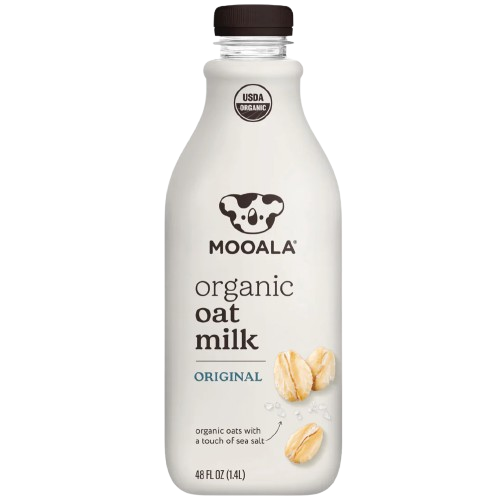
Get a Custom Report on Oat Milk Nutrition Data – Contact Us!
What are the Types of Oat Milks?
The types of Oat Milk include Unsweetened, Original Sweetened, Barista Blend, Chocolate, and Vanilla. The table below outlines the nutritional differences across these specific categories.
| Type | Description | Calories (Per 240ml) | Calorie Qualifications |
|---|---|---|---|
|
Unsweetened Oat Milk
|
Oats and water with no added sugars. | 90 | The absence of added sugars results in the lowest caloric density. |
|
Original Sweetened Oat Milk
|
Contains added cane sugar or enzymatic sugars. | 120 | Added sweeteners increase the energy load. |
|
Barista Blend Oat Milk
|
Includes higher levels of vegetable oil. | 140 | Added fats for foaming create a higher calorie count. |
|
Chocolate Oat Milk
|
Features cocoa powder and sweeteners. | 150 | The addition of cocoa solids and sugar results in the highest energy load. |
|
Vanilla Oat Milk
|
Incorporates natural vanilla flavor and sugar. | 130 | Flavoring agents and extra sugar raise the calorie count. |
What are the Desserts with Oat Milk?
Oat milk serves as a creamy, neutral base for vegan desserts, particularly in frozen treats and puddings where a dairy-like texture is desired. The table below presents selected sweet items made with this plant-based extract.
| Dish Name | Calories (Estimate) | Type of Dish | Carbs (g) (Estimate) | Sugar (g) (Estimate) | Protein (g) (Estimate) | Fat (g) (Estimate) | Cuisine | Restaurants |
|---|---|---|---|---|---|---|---|---|
|
Chocolate Oat Shake
|
450 | Smoothie/Shake | 65 | 45 | 4 | 18 | American Vegan | Next Level Burger (Portland, OR) |
|
Oat Milk Soft Serve
|
180 | Frozen Dessert | 32 | 22 | 2 | 6 | American | 16 Handles (New York, NY) |
|
Oatmilk Honey Latte
|
270 | Beverage/Dessert | 42 | 30 | 3 | 10 | American Cafe | Starbucks (Seattle, WA) |
|
Vegan Oat Milk Donut
|
320 | Pastry | 38 | 18 | 4 | 16 | Artisan Bakery | Doughnut Plant (New York, NY) |
|
Chia Seed Pudding
|
260 | Pudding | 28 | 12 | 6 | 14 | Health Food | First Watch (Bradenton, FL) |
|
Oat Milk Gelato
|
210 | Frozen Dessert | 35 | 25 | 2 | 8 | Italian Vegan | Amorino (New York, NY) |
|
Matcha Oat Latte
|
160 | Beverage | 22 | 12 | 2 | 6 | Japanese Fusion | Cha Cha Matcha (New York, NY) |
|
Golden Milk Latte
|
150 | Beverage | 18 | 10 | 2 | 7 | Ayurvedic | Cafe Gratitude (Los Angeles, CA) |
|
Berry Oat Smoothie
|
340 | Smoothie | 60 | 42 | 4 | 5 | American | Jamba Juice (Emeryville, CA) |
|
Pumpkin Spice Oat Latte
|
290 | Beverage | 48 | 40 | 3 | 9 | American Cafe | Peet's Coffee (Berkeley, CA) |
What are the Main Dishes with Oat Milk?
Oat milk functions as a thickener and cream substitute in savory vegan dishes, adding body to soups and sauces without the sweetness of coconut milk. The list below outlines recipes that include this ingredient.
| Dish Name | Calories (Estimate) | Type of Dish | Carbs (g) (Estimate) | Sugar (g) (Estimate) | Protein (g) (Estimate) | Fat (g) (Estimate) | Cuisine | Restaurants |
|---|---|---|---|---|---|---|---|---|
|
Creamy Mushroom Soup
|
280 | Soup | 25 | 4 | 6 | 18 | Vegan American | True Food Kitchen (Phoenix, AZ) |
|
Vegan Mac and Cheese
|
540 | Pasta Entree | 75 | 6 | 14 | 20 | American Comfort | Planta (Miami, FL) |
|
Creamy Tomato Soup
|
290 | Soup | 32 | 12 | 5 | 14 | American | Panera Bread (St. Louis, MO) |
|
Savory Oatmeal
|
340 | Breakfast Bowl | 55 | 2 | 10 | 8 | Health Food | Pret A Manger (New York, NY) |
|
Vegan Alfredo Pasta
|
620 | Pasta Entree | 80 | 4 | 12 | 24 | Italian American | Double Zero (New York, NY) |
|
Corn Chowder
|
350 | Soup | 45 | 8 | 6 | 15 | American | Veggie Grill (Santa Monica, CA) |
|
Vegan Mashed Potatoes
|
250 | Side Dish | 35 | 2 | 4 | 10 | American | The Chicago Diner (Chicago, IL) |
|
Green Curry
|
420 | Curry Entree | 45 | 12 | 15 | 18 | Thai Fusion | Real Thai (San Francisco, CA) |
|
Vegan Biscuits and Gravy
|
590 | Breakfast Entree | 65 | 5 | 10 | 32 | Southern Vegan | Spiral Diner (Dallas, TX) |
|
Creamy Polenta
|
290 | Side Dish | 40 | 2 | 6 | 10 | Italian | Crossroads Kitchen (Los Angeles, CA) |
|
Vegan Clam Chowder
|
330 | Soup | 38 | 5 | 8 | 14 | American Seafood | Ivar's (Seattle, WA) |
|
Oat Milk Risotto
|
490 | Rice Entree | 65 | 2 | 10 | 18 | Italian | Civico 1845 (San Diego, CA) |
|
Vegan Pot Pie
|
570 | Baked Entree | 55 | 6 | 12 | 28 | American | Modern Love (Omaha, NE) |
|
Creamy Grits
|
360 | Breakfast Side | 48 | 1 | 6 | 15 | Southern | The Grit (Athens, GA) |
What Cuisines Prefer Oat Milk the Most?
Oat milk functions as a foundational element in American, Swedish, and Vegan culinary traditions. The table that follows identifies food cultures that rely heavily on this plant-based extract.
| Cuisine | Dish | Types of Oat Milk Use | Calories (Estimate) | Restaurant(s) |
|---|---|---|---|---|
|
American
|
Oat Milk Latte | Coffee Creamer | 270 | Starbucks (Seattle, WA) |
|
Swedish
|
Oatmeal (Gröt) | Liquid Base | 340 | Fika (New York, NY) |
|
Vegan American
|
Mac and Cheese | Cheese Sauce Base | 540 | Planta (Miami, FL) |
|
British
|
Tea with Milk | Dairy Substitute | 45 | Pret A Manger (New York, NY) |
|
German
|
Muesli | Soaking Liquid | 320 | The Butcher's Daughter (Venice, CA) |
|
Australian
|
Flat White | Microfoam Base | 180 | Bluestone Lane (New York, NY) |
|
Italian Vegan
|
Gelato | Frozen Base | 210 | Amorino (New York, NY) |
|
Southern American
|
Biscuits and Gravy | Gravy Liquid | 590 | Spiral Diner (Dallas, TX) |
|
Health Food
|
Chia Pudding | Soaking Liquid | 260 | First Watch (Bradenton, FL) |
|
Japanese Fusion
|
Matcha Latte | Liquid Base | 160 | Cha Cha Matcha (New York, NY) |
|
Thai Fusion
|
Green Curry | Coconut Sub | 420 | Real Thai (San Francisco, CA) |
|
Artisan Bakery
|
Vegan Donut | Batter Liquid | 320 | Doughnut Plant (New York, NY) |
|
Ayurvedic
|
Golden Milk | Carrier Liquid | 150 | Cafe Gratitude (Los Angeles, CA) |
|
American Fast Food
|
Shake | Frozen Base | 450 | Next Level Burger (Portland, OR) |
|
French Vegan
|
Crepes | Batter Liquid | 220 | Crepeville (Sacramento, CA) |
Which Countries Produce the Most Oat Milk?
Sweden, the United States, and Germany dominate the manufacturing sectors for oat milk due to established processing infrastructure and high domestic demand. Sweden leads innovation and export volumes through the Oatly brand. The United States maintains massive production facilities to supply brands like Planet Oat and Chobani. Germany produces significant quantities of organic oat beverages for the European market. The United Kingdom contributes to production with domestic brands like Minor Figures. Canada utilizes its vast oat agriculture to supply raw materials and finished goods. The table below shows the estimated production of processed oat beverages (in Million Liters) for the top producing nations over the last two decades.
| Country | 2003 | 2008 | 2013 | 2018 | 2019 | 2020 | 2021 | 2022 |
|---|---|---|---|---|---|---|---|---|
| Sweden | 15 | 25 | 45 | 80 | 95 | 110 | 125 | 140 |
| United States | 5 | 10 | 20 | 60 | 100 | 180 | 250 | 320 |
| Germany | 8 | 15 | 30 | 50 | 65 | 80 | 95 | 110 |
| United Kingdom | 2 | 5 | 12 | 35 | 50 | 70 | 90 | 105 |
| Canada | 3 | 6 | 15 | 25 | 35 | 45 | 55 | 65 |
| Finland | 4 | 8 | 15 | 22 | 28 | 35 | 40 | 45 |
| Australia | 1 | 3 | 8 | 18 | 25 | 35 | 45 | 55 |
| France | 2 | 5 | 10 | 15 | 20 | 25 | 30 | 35 |
Which Countries Consume the Most Oat Milk?
The United States, the United Kingdom, and Germany consume the highest volumes of oat milk, driven by the rapid adoption of plant-based diets and coffee culture. The United States represents the largest market, where the beverage rivals almond milk in sales. The United Kingdom utilizes the liquid extensively in tea and coffee shops. Germany absorbs a large portion of the European supply. Sweden maintains high per capita consumption as the home market of the product. The table below shows the estimated consumption volumes of oat milk for key markets over the last two decades.
| Country | 2003 | 2008 | 2013 | 2018 | 2019 | 2020 | 2021 | 2022 |
|---|---|---|---|---|---|---|---|---|
| United States | 4 | 8 | 18 | 55 | 90 | 170 | 240 | 310 |
| United Kingdom | 2 | 4 | 10 | 30 | 45 | 65 | 85 | 100 |
| Germany | 6 | 12 | 25 | 45 | 60 | 75 | 90 | 105 |
| Sweden | 12 | 20 | 35 | 60 | 70 | 80 | 90 | 100 |
| Canada | 2 | 5 | 12 | 20 | 30 | 40 | 50 | 60 |
| Australia | 1 | 2 | 6 | 15 | 22 | 30 | 40 | 50 |
| Netherlands | 1 | 3 | 8 | 12 | 15 | 18 | 22 | 25 |
| China | 0.5 | 1 | 5 | 15 | 25 | 40 | 60 | 80 |
How Do Prices of Oat Milk-Including Dishes Change?
Restaurant costs for oat-based beverages and desserts have increased, reflecting the broader inflation of labor and ingredients. The table below illustrates price adjustments for selected items at well-known establishments and retail outlets.
| Brand/Restaurant | Dish | Old Price (Year) | Current Price (2024/2025) |
|---|---|---|---|
| Starbucks | Latte with Oat Milk (Grande) | $4.95 (2019) | $5.25 - $7.50 |
| 16 Handles | Oat Milk Soft Serve (per oz) | $6.59 (2018) | $8.50 - $9.99 |
| Oatly (Retail) | Original Oatmilk (64oz Carton) | $3.99 (2017) | $5.09 - $6.99 |
| Doughnut Plant | Cherry Granola | $3.50 (2018) | $4.50 - $5.75 |
| Peet's Coffee | Pumpkin Spice Oat Latte | $5.25 (2018) | $6.10 - $8.25 |
| Peet's Coffee | Cold Brew Oat Latte (Original) | $4.50 (2018) | $5.25 - $6.30 |
| Peet's Coffee | Cold Brew Oat Latte (Horchata) | $5.25 (2018) | $5.90 - $6.95 |
What is the Oat Milk Calorie for 100 Grams?
A 100g serving of Oat milk contains 40 calories, while a 100g serving of unsweetened plain refrigerated oat milk provides 48 calories.
What is the Oat Milk Calorie for 1 KG?
One liter (1000g) of Oat milk contains 400 calories, while one liter (1000g) of unsweetened plain refrigerated oat milk provides 480 calories.
What is the Calorie of 1 Oat Milk?
A standard single-serve carton of Oat milk (240g or 8oz) contains 96 calories, while a carton of unsweetened plain refrigerated oat milk (240g or 8oz) provides 115 calories. Market formulations yield distinct caloric figures, as a single-serve carton of Oatly Inc. Oatmilk (240g) contains 120 calories. A carton of Kirkland Oat Milk (240g) provides 120 calories, whereas a serving of Oatly! The Original Oat-Milk (330ml) supplies 172 calories.
How Many Calories in Oat Milk Per Cup?
A cup of Regular Oat Milk (243g) contains 130 calories, while a cup of Original Organic Oat Milk (240g) provides 91 calories. A cup of Planet Oat Original Oatmilk (240g) supplies 91 calories.
What are the Health Benefits of Oat Milk?
Oat milk functions as a rich source of beta-glucan, a soluble fiber known to support cardiovascular health and regulate blood sugar levels. The beverage provides essential nutrients that aid in cholesterol management and digestive efficiency.
- Supports Cardiovascular Health: Cardiovascular health improves through the consumption of beta-glucan, which binds to cholesterol-rich bile acids in the intestine and promotes excretion. A study by Onning, G., et al. (1999), "Consumption of oat milk for 5 weeks lowers serum cholesterol and LDL cholesterol in free-living men with moderate hypercholesterolemia," confirmed that daily intake of oat milk reduced total cholesterol and LDL levels in participants.
- Strengthens Bone Density: Bone density strengthens due to the commercial fortification of the liquid with calcium and Vitamin D, mimicking the profile of dairy milk. Research by Weaver, C. M., et al. (2011), "Calcium plus vitamin D supplementation and bone health," established that fortified plant beverages effectively support skeletal maintenance when consumed regularly.
- Promotes Satiety: Satiety and weight management benefit from the viscosity of oat fiber, which delays gastric emptying and reduces appetite. A study by Rebello, C. J., et al. (2016), "The role of meal viscosity and oat β-glucan characteristics in human appetite control: a randomized crossover trial," demonstrated that oat-based liquids increased feelings of fullness compared to control beverages.
What are the Downsides of Oat Milk?
Oat milk remains safe for general consumption, yet specific nutritional drawbacks exist regarding sugar content and potential gluten contamination. Nutritionists recommend limiting intake to 240ml daily and choosing unsweetened soy milk as a higher-protein alternative to mitigate potential blood sugar spikes. The following list details specific negative health implications.
- Elevates Blood Glucose: The beverage often contains maltose, a sugar resulting from the enzymatic breakdown of oat starch, which possesses a high glycemic index. A study by Imamura, F., et al. (2015), "Consumption of sugar sweetened beverages, artificially sweetened beverages, and fruit juice and incidence of type 2 diabetes," found that frequent consumption of beverages with high glycemic loads correlates with metabolic risks.
- Risks Gluten Contamination: Cross-contamination with wheat during processing poses a risk for individuals with Celiac disease unless the product bears a certified gluten-free label. Research by Comino, I., et al. (2011), "Diversity in oat potential immunogenicity: basis for the selection of oat varieties with no toxicity in coeliac disease," noted that commercial oats frequently contain traces of gluten sufficient to trigger immune responses in sensitive subjects.
Is Oat Milk Good for You?
Yes, oat milk is good for health because the beverages provide a substantial amount of soluble fiber and fortified micronutrients that support heart health, bone density, and digestive function. Cardiovascular systems benefit from the beta-glucan content which actively lowers LDL cholesterol as explored by Onning, G., et al. (1999), "Consumption of oat milk for 5 weeks lowers serum cholesterol and LDL cholesterol in free-living men with moderate hypercholesterolemia." Skeletal health improves through the absorption of added calcium and Vitamin D as detailed in the study by Weaver, C. M., et al. (2016), "Calcium plus vitamin D supplementation and bone health." Digestive efficiency increases due to the presence of prebiotic fibers that support gut microbiome balance as confirmed by the study from Rebello, C. J., et al. (2014), "The role of meal viscosity and oat β-glucan characteristics in human appetite control: a randomized crossover trial."
Is Oat Milk Lactose Free?
Yes, oat milk is naturally lactose-free because the beverage derives entirely from plant matter and contains no dairy components. Dietitians suggest a consumption rate of 240ml daily for individuals transitioning away from cow's milk. A study by Szilagyi, A., & Ishayek, N. (2018), "Lactose Intolerance, Dairy Avoidance, and Treatment Options," confirmed that plant-based alternatives like oat milk eliminate the gastrointestinal distress associated with lactase deficiency. Research by Mäkinen, O. E., et al. (2016), "Foods for Special Dietary Needs: Non-dairy Plant-based Milk Substitutes and Fermented Dairy-type Products," identified oat milk as a suitable nutritional substitute that matches the viscosity and mouthfeel of dairy without the lactose. Further evidence by Sethi, S., et al. (2016), "Plant-based milk alternatives an emerging segment of functional beverages: a review," highlighted that oat milk serves as a functional beverage for lactose-intolerant populations due to the hypoallergenic nature of the grain.
How Does Calorie Change According to Oat Milk Types?
Calorie levels change mainly depending on fat content and the amount of added sweeteners used in production. Barista blends contain the highest calorie count per serving due to the addition of rapeseed or sunflower oil required to achieve a creamy texture for steaming. Chocolate and flavored varieties also present elevated calorie figures caused by the inclusion of cane sugar to mask the earthy taste of the oats. Unsweetened versions offer the lowest caloric density, though the natural carbohydrates from the grain still provide more energy than unsweetened almond milk.
What are the Ingredients in Oat Milk?
Oat milk consists primarily of water and oats, with commercial varieties adding enzymes, vegetable oils, and vitamins to improve texture and nutritional value. The enzymatic process breaks down oat starch into maltose, creating a naturally sweet flavor without added sugar in some versions. Manufacturers add rapeseed or sunflower oil to emulsify the liquid and provide a creamy mouthfeel similar to cow's milk. Fortification ingredients typically include calcium carbonate, tricalcium phosphate, Vitamin D2, Vitamin B12, and Riboflavin to match the micronutrient profile of dairy. Sea salt is often included to enhance flavor balance.
Is Oat Milk Plant-Based?
Yes, oat milk is plant-based because the beverage derives exclusively from whole grain oats and water. The production process involves soaking, blending, and straining the grains, ensuring no animal byproducts enter the final liquid. Certification labels such as "Vegan" and "Non-Dairy" on commercial packaging confirm the absence of animal ingredients.
What is the Origin of Oat Milk?
The invention of oat milk occurred in Sweden during the early 1990s. Food scientist Rickard Öste developed the enzymatic process to liquefy oats while working at Lund University, aiming to create a sustainable lactose-free alternative for the dairy-heavy Swedish population. Öste founded Oatly in 1994, introducing the beverage to the European market. The product remained a niche item until the mid-2010s when a strategic rebranding and entry into the United States coffee market propelled the drink to global popularity.
Explore More Beverages
Discover more Beverages with detailed nutrition facts, calorie counts, vitamins, minerals, and health benefits. Compare similar foods, serving sizes, macronutrients, and key nutrients to find the best option for your diet and nutrition goals.
 Almond Milk calories
 Aloe Vera Juice calories
 Americano calories
 Apple Cider calories
 Apple Juice calories
 Apricot Juice calories
 Aronia Juice calories
 Avocado Shake calories
 Banana Juice calories
 Baobab Juice calories
 Barley Tea calories
 Beer calories