Calories and Nutritions in Papaya Juice
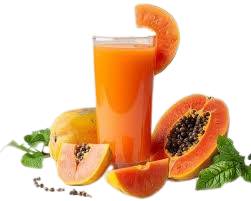
Papaya juice is a vibrant tropical beverage extracted from the Carica papaya fruit that is a staple in Southeast Asian, Latin American, and Caribbean cuisines. The papaya juice calories for a standard 100 g serving are 48 calories. A small one-cup (240 g) serving of unsweetened juice contains 115 calories, while a medium (355 g) serving provides 170 calories and a large (473 g) serving contains 227 calories. This nutritional profile includes 0.6 g of fat, 1.1 g of protein, and 25.9 g of carbohydrates per cup. It is a rich source of Vitamin C (68% DV), Vitamin A, and folate. The proteolytic enzymes in this beverage, often called "fruit of the angels juice" or "pawpaw nectar," are linked to antioxidant and digestive benefits (Mehdipour S, et al. 2006 "Antioxidant potentials of Carica papaya juice in vitro and in vivo").
The main types of papaya juice are raw fresh-pressed, commercial nectar, and papaya shakes prepared with dairy. As a refreshing beverage, it is consumed daily in many tropical regions to aid metabolic function. A 240 g serving of the raw version (115 calories) fits easily into a standard diet. Burning these 115 calories is achieved through 32 minutes of moderate walking at 5 km/h (3 mph) for an individual weighing 70 kg. To expend the 214 calories from a papaya shake made with milk, 24 minutes of vigorous swimming or 30 minutes of cycling at 20 km/h (12 mph) is necessary.
Papaya juice and its fresh pulp are essential ingredients in several popular main dishes. It provides the base for Som Tum (Thai Papaya Salad) at Thai Kitchen and creates tropical marinades for Steak Tacos at Chipotle. It is used in savory glazes for Pork Tenderloin at Seasons 52 and as a vibrant salsa for Grilled Salmon at Bonefish Grill. In desserts, its musky sweetness makes it the primary base for the signature Papaya Cream at Fogo de Chão, tropical fruit smoothies at Jamba, and specialty fruit-based cheesecakes at The Cheesecake Factory.
The origin of papaya juice is indigenous to southern Mexico and Central America, where it was cultivated by the Mayan and Aztec civilizations. Today, global production of the raw fruit is led by India, which produced 5,407 kt in 2022, followed by Brazil at 1,411 kt. The United States is a significant consumer market, utilizing a fruit supply of 255 kt in 2022. The price of papaya products has risen due to international logistics and inflation. A 1 L bottle of papaya nectar in the US that cost $1.15 in 2005 now retails for as high as $2.35 in 2024.
Papaya Juice nutrition
| Stats | Weight |
|---|---|
| Carbs | 38.3 grams |
| Protein | 1.7 grams |
| Fats | 0 grams |
| Sugars | 27.8 grams |
- Large Papaya Juice Calories (Nutritional Facts)
- Medium Papaya Juice Calories (Nutritional Facts)
- Small Papaya Juice Calories (Nutritional Facts)
- Papaya Shake Calories (Nutritional Facts)
- Fresh Papaya Juice Calories (Nutritional Facts)
- Sodium in Papaya Juice
- Potassium in Papaya Juice
- Sugar in Papaya Juice
- Fiber in Papaya Juice
- Protein in Papaya Juice
- Carbs in Papaya Juice
- Fat in Papaya Juice
- Vitamins in Papaya Juice
- Minerals in Papaya Juice
Large Papaya Juice Calories (Nutritional Facts)
A large serving of unsweetened papaya juice, weighing 473 g (16 fl oz), contains 227 calories. This serving size provides 1.2 g of fat, 2.2 g of protein, 51.1 g of carbohydrates, and 37.0 g of sugar.
A medium serving of unsweetened papaya juice, weighing 355 g (12 fl oz), contains 170 calories. This portion offers 0.9 g of fat, 1.7 g of protein, 38.3 g of carbohydrates, and 27.8 g of sugar.
A small serving of unsweetened papaya juice, considered one cup weighing 240 g (8.5 oz), contains 115 calories. This serving size includes 0.6 g of fat, 1.1 g of protein, 25.9 g of carbohydrates, and 18.8 g of sugar.
A papaya shake prepared with 240 g (8.5 oz) of fresh fruit and whole milk contains 214 calories. This beverage provides 8.1 g of fat, 8.4 g of protein, 28.5 g of carbohydrates, and 26.2 g of sugar.
Freshly squeezed papaya juice contains 48 calories per 100 g (3.5 oz). This raw liquid retains the natural enzymes of the Carica papaya fruit.
Papaya juice contains 3 mg of sodium per 100 g (3.5 oz) serving, which contributes 0% of the Daily Value (DV).
Papaya juice provides 182 mg of potassium per 100 g (3.5 oz) serving, representing 4% of the DV. This mineral helps support healthy nerve and muscle function.
Papaya juice contains 7.8 g of sugar per 100 g (3.5 oz) serving. These are naturally occurring sugars found within the fresh fruit.
Papaya juice contains 0.8 g of dietary fiber per 100 g (3.5 oz) serving as most of the fibrous pulp is removed during the extraction process.
Papaya juice provides 0.5 g of protein per 100 g (3.5 oz) serving.
Papaya juice contains 10.8 g of total carbohydrates per 100 g (3.5 oz) serving.
Papaya juice contains 0.3 g of total fat per 100 g (3.5 oz) serving.
A 100 g (3.5 oz) serving of papaya juice is an excellent source of Vitamin C, providing 60.9 mg (68% DV). It also offers 47 mcg of Vitamin A (5% DV) and 10 mcg of Folate (3% DV).
A 100 g (3.5 oz) serving of papaya juice provides 10 mg of Magnesium (2% DV) and 20 mg of Calcium (2% DV). These minerals support bone health and metabolic processes.
Get a Custom Report on Papaya Juice Nutrition Data – Contact Us!
What are the Types of Papaya Juice?
There are 4 different types of papaya juice such as raw fresh juice and commercial papaya nectar. The table below shows the most common papaya juice types and their calorie information.
| Type | Description | Calories (per 8 oz / 240 g) | Calorie Differences & Qualifications |
|---|---|---|---|
|
Raw Fresh Papaya Juice
|
Juice extracted directly from ripe raw papayas with no additives. | 115 | This is the standard for natural enzymes and provides 25.9 g of carbohydrates. |
|
Commercial Papaya Nectar
|
A processed blend of papaya pulp, water, and added sweeteners. | 140 | Higher in calories due to the addition of cane sugar or high fructose corn syrup. |
|
Papaya Shake (with Whole Milk)
|
A blended beverage made with fresh papaya, milk, and sugar. | 214 | Significant calorie increase due to 8.1 g of fat and 8.4 g of protein from the milk. |
|
Light Papaya Juice
|
A diluted version of papaya juice using water and non-nutritive sweeteners. | 90 | Lower in calories as it contains a higher water ratio and fewer fruit solids. |
What are the Desserts with Papaya Juice?
Papaya juice serves as a vibrant and naturally sweet base for many tropical confections, ranging from frozen treats to creamy puddings. Its distinct musky sweetness and orange hue are utilized by pastry chefs to add exotic flair to traditional dessert formats. The table below lists several popular desserts that incorporate papaya juice or its concentrated purée alongside their nutritional estimates and the establishments where variations of these items are found.
| Dish Name | Calories (per serving) | Type of Dish | Carbs (g) | Sugar (g) | Protein (g) | Fat (g) | Cuisine | Restaurants |
|---|---|---|---|---|---|---|---|---|
|
Papaya Mousse
|
210 | Custard | 28g | 22g | 4g | 10g | Brazilian | Fogo de Chão |
|
Tropical Papaya Smoothie
|
280 (454g/16oz) | Beverage | 62g | 55g | 2g | 1g | Modern | Jamba |
|
Papaya Sorbet
|
150 (115g/4oz) | Frozen | 38g | 34g | 0g | 0g | French | Salt & Straw |
|
Papaya Cheesecake
|
840 (slice) | Cake | 78g | 52g | 12g | 56g | American | The Cheesecake Factory |
|
Papaya Lime Popsicles
|
45 (one) | Frozen | 12g | 10g | 0g | 0g | Modern | Whole Foods Market |
|
Papaya Gelato
|
190 (120g/4.2oz) | Frozen | 32g | 28g | 3g | 6g | Italian | Eataly |
|
Papaya Tapioca Pudding
|
230 | Pudding | 45g | 32g | 3g | 5g | Asian Fusion | Thai Kitchen |
|
Papaya & Mango Tart
|
320 | Pastry | 42g | 26g | 4g | 16g | European | Whole Foods Market |
|
Papaya Fruit Parfait
|
180 | Fruit Dish | 35g | 28g | 6g | 3g | American | Au Bon Pain |
|
Papaya Shaved Ice
|
120 | Frozen | 31g | 29g | 0g | 0g | Hawaiian | Matsumoto Shaved Ice |
What are the Main Dishes with Papaya Juice?
Some of the most widespread main dishes that contain papaya juice are Som Tum, Grilled Salmon with Papaya Salsa, and Papaya Glazed Chicken Wings. The table below lists the calorie information, macro-nutrient distribution, and cuisine types for these popular savory preparations found in various restaurant chains.
| Dish Name | Calories | Type | Carbs | Sugar | Protein | Fat | Cuisine | Restaurants |
|---|---|---|---|---|---|---|---|---|
|
Som Tum (Thai Papaya Salad)
|
160 | Salad | 35g | 22g | 5g | 2g | Thai | Thai Kitchen |
|
Grilled Salmon (with Papaya Salsa)
|
480 | Seafood | 15g | 10g | 42g | 28g | Fusion | Bonefish Grill |
|
Papaya Glazed Chicken Wings
|
620 | Poultry | 24g | 18g | 45g | 38g | Caribbean | Bahama Breeze |
|
Papaya Glazed Pork Tenderloin
|
520 | Pork | 28g | 22g | 42g | 25g | American | Seasons 52 |
|
Tropical Shrimp Skewers
|
310 | Seafood | 18g | 12g | 32g | 12g | Fusion | Yard House |
|
Papaya Braised Beef Short Ribs
|
850 | Beef | 22g | 15g | 55g | 62g | Brazilian | Fogo de Chão |
|
Chilled Papaya Gazpacho
|
140 | Soup | 22g | 16g | 2g | 6g | Spanish | Seasons 52 |
|
Seared Papaya Steak
|
310 | Entree | 38g | 28g | 4g | 16g | Vegan | Crossroads Kitchen |
|
Papaya-Lime Marinated Steak Tacos
|
410 | Tacos | 32g | 6g | 28g | 18g | Mexican | Chipotle |
|
Sweet & Sour Pork (Papaya Base)
|
620 | Entree | 65g | 32g | 28g | 28g | Chinese Fusion | Panda Express |
|
Papaya Poke Bowl
|
420 | Entree | 65g | 12g | 15g | 10g | Hawaiian Fusion | Veggie Grill |
|
Tropical Grilled Chicken
|
450 | Poultry | 32g | 24g | 38g | 18g | Fusion | Cheesecake Factory |
What Cuisines Prefer Papaya Juice the Most?
Papaya juice is a central ingredient in cuisines from tropical regions where the fruit grows year-round, specifically within Southeast Asian, Latin American, and Caribbean culinary traditions. In Thailand, the juice is used both as a refreshing standalone beverage and as a base for the spicy, acidic dressing of traditional salads. Brazilian cuisine frequently incorporates the juice into creamy mousses and breakfast shakes. The table below outlines the cuisines that most frequently utilize papaya juice in their traditional or modern fusion menus.
| Cuisine | Dish Name | Calories (per serving) | Restaurants |
|---|---|---|---|
|
Thai
|
Som Tum (Papaya Salad) | 160 | Thai Kitchen |
|
Brazilian
|
Papaya Mousse | 210 | Fogo de Chão |
|
Mexican
|
Papaya Agua Fresca | 130 | Chipotle |
|
Caribbean
|
Glazed Chicken Wings | 620 | Bahama Breeze |
|
American Fusion
|
Grilled Salmon with Salsa | 480 | Bonefish Grill |
|
Modern Healthy
|
Tropical Fruit Smoothie | 280 | Jamba |
|
Indian
|
Papaya Fruit Shake | 240 | Saffron Indian Kitchen |
Which Countries Produce the Most Papaya Juice?
The top producers of papayas globally are India, Brazil, Indonesia, Nigeria, and Mexico. In 2022, India produced 5,407.00 kilotonnes of papayas, while Brazil produced 1,411.00 kilotonnes based on data from FAOSTAT. Because international databases track the raw material required for juice manufacturing, the table below provides production figures for the total "Papayas" category.
| Country | 2004 | 2005 | 2006 | 2007 | 2008 | 2009 | 2010 | 2011 | 2012 | 2013 | 2014 | 2015 | 2016 | 2017 | 2018 | 2019 | 2020 | 2021 | 2022 | 2023 |
|---|---|---|---|---|---|---|---|---|---|---|---|---|---|---|---|---|---|---|---|---|
| India | 2,120 | 2,150 | 2,210 | 2,450 | 2,820 | 3,120 | 3,580 | 3,850 | 4,220 | 4,560 | 4,820 | 5,020 | 5,120 | 5,280 | 5,340 | 5,390 | 5,420 | 5,410 | 5,407 | 5,425 |
| Brazil | 1,420 | 1,450 | 1,480 | 1,510 | 1,550 | 1,580 | 1,620 | 1,650 | 1,680 | 1,710 | 1,690 | 1,650 | 1,610 | 1,580 | 1,520 | 1,480 | 1,450 | 1,420 | 1,411 | 1,405 |
| Indonesia | 610 | 625 | 640 | 660 | 680 | 710 | 740 | 780 | 820 | 850 | 885 | 920 | 950 | 980 | 1,020 | 1,050 | 1,080 | 1,110 | 1,145 | 1,180 |
| Nigeria | 710 | 725 | 740 | 755 | 770 | 785 | 800 | 815 | 830 | 845 | 860 | 875 | 890 | 905 | 920 | 935 | 945 | 955 | 960 | 970 |
| Mexico | 850 | 840 | 820 | 810 | 790 | 815 | 840 | 865 | 890 | 915 | 940 | 965 | 985 | 1,010 | 1,035 | 1,060 | 1,085 | 1,110 | 1,125 | 1,140 |
Which Countries Consume the Most Papaya Juice?
Based on data from FAOSTAT and Statista Market Insights, the top consumers of papayas and their processed juices are India, Brazil, Mexico, Indonesia, and the United States. Consumption is exceptionally high in India and Brazil, where fresh papaya juice and shakes are traditional dietary staples. In the United States, consumption has increased due to the popularity of tropical fruit blends and the growth of the Hispanic food market. The table below represents the apparent food supply of papayas available for human consumption.
| Country | 2004 | 2005 | 2006 | 2007 | 2008 | 2009 | 2010 | 2011 | 2012 | 2013 | 2014 | 2015 | 2016 | 2017 | 2018 | 2019 | 2020 | 2021 | 2022 | 2023 |
|---|---|---|---|---|---|---|---|---|---|---|---|---|---|---|---|---|---|---|---|---|
| India | 2,050 | 2,080 | 2,140 | 2,350 | 2,710 | 3,010 | 3,450 | 3,720 | 4,080 | 4,410 | 4,650 | 4,850 | 4,950 | 5,110 | 5,180 | 5,220 | 5,250 | 5,240 | 5,235 | 5,250 |
| Brazil | 1,280 | 1,310 | 1,340 | 1,360 | 1,400 | 1,420 | 1,460 | 1,490 | 1,510 | 1,540 | 1,520 | 1,480 | 1,450 | 1,420 | 1,370 | 1,330 | 1,305 | 1,278 | 1,270 | 1,265 |
| Mexico | 720 | 710 | 690 | 685 | 665 | 685 | 710 | 730 | 750 | 775 | 795 | 815 | 835 | 855 | 875 | 895 | 915 | 940 | 952 | 965 |
| Indonesia | 580 | 595 | 610 | 630 | 650 | 680 | 710 | 745 | 785 | 815 | 845 | 880 | 910 | 940 | 975 | 1,005 | 1,035 | 1,065 | 1,100 | 1,135 |
| USA | 110 | 115 | 122 | 130 | 138 | 145 | 155 | 162 | 171 | 178 | 185 | 194 | 205 | 212 | 225 | 232 | 240 | 248 | 255 | 262 |
How Do Prices of Papaya Juice-including Dishes Change?
Menu prices for dishes and beverages that incorporate papaya juice or its fresh pulp have seen significant increases over the past decade. This change reflects the rising cost of importing tropical fruit and the higher operational overhead in the casual dining and health-food sectors. Establishments have adjusted pricing to account for the premium nature of fresh-pressed tropical juices and the labor required for specialized preparation. The table below lists verified price ranges for specific menu items that feature papaya juice or its parent fruit across major United States restaurant chains.
| Restaurant | Dish Name (Papaya Component) | Old Price (2015–2017) | Current Price (2025–2026) |
|---|---|---|---|
| Jamba | Mango-a-go-go (Smoothie with papaya juice) | $5.25 - $5.95 | $8.75 - $10.25 |
| Fogo de Chão | Papaya Cream (Dessert) | $8.50 - $9.75 | $12.50 - $14.50 |
| Thai Kitchen | Som Tum (Green papaya salad) | $8.95 - $10.50 | $13.50 - $16.50 |
| Bonefish Grill | Grilled Salmon (With papaya salsa) | $18.90 - $20.50 | $26.90 - $29.90 |
| Bahama Breeze | Coconut Shrimp (With papaya-mango sauce) | $10.49 - $11.99 | $14.49 - $17.25 |
| Smoothie King | Pineapple Surf (Smoothie with papaya) | $5.99 - $6.75 | $8.79 - $10.79 |
What is the Papaya Juice Calorie for 100 Grams?
One hundred grams (3.5 oz) of unsweetened papaya juice contains 48 calories.
What is the Papaya Juice Calorie for 200 Grams?
Two hundred grams (7 oz) of unsweetened papaya juice contains 96 calories.
What is the Papaya Juice Calorie for 1 KG?
One kilogram (35.3 oz) of unsweetened papaya juice contains 480 calories.
What is the Calorie of 1 Papaya Juice?
A 284 mL (9.6 fl oz) can of Goya Papaya Nectar contains 140 calories. A 240 mL (8.1 fl oz) bottle of Looza Papaya Juice contains 140 calories. A 340 mL (11.5 fl oz) can of Kern's Papaya Nectar contains 200 calories.
What are the Health Benefits of Papaya Juice?
Papaya juice provides some health benefits like aiding digestion and strengthening the immune system due to its high concentration of papain and Vitamin C. This liquid, frequently called "fruit of the angels juice" or "pawpaw nectar," is a nutrient-rich beverage derived from the tropical Carica papaya. A list of the health benefits of papaya juice are shown below.
- Aids Digestive Health: Papaya juice contains papain, a proteolytic enzyme that breaks down tough protein fibers. Murali M, et al. (2012), "Phytochemical analysis and antimicrobial activity of Carica papaya," highlights the role of these enzymes in supporting gastrointestinal function.
- Boosts Immune Response: A single 100 g (3.5 oz) serving provides 60.9 mg of Vitamin C, fulfilling 68% of the Daily Value (DV). This high concentration supports white blood cell production and protects against cellular damage.
- Reduces Oxidative Stress: The juice is rich in antioxidants that neutralize free radicals. Mehdipour S, et al. (2006), "Antioxidant potentials of Carica papaya juice in vitro and in vivo," confirmed the significant antioxidant capacity of the fruit extract.
- Promotes Eye Health: The presence of Vitamin A (5% DV) and carotenoids such as beta-carotene protects the corneas and may reduce the risk of macular degeneration.
- Supports Heart Function: Potassium (182 mg per 100 g) helps manage blood pressure levels and counteracts the effects of sodium.
- Enhances Skin Radiance: Vitamin C and lycopene in the juice aid in collagen synthesis and protect the skin from ultraviolet radiation damage.
- Anti-inflammatory Properties: The enzymes papain and chymopapain help reduce systemic inflammation, potentially benefiting individuals with joint pain or asthma.
- Supports Wound Healing: Vitamin C and Vitamin A are essential for tissue repair and the maintenance of healthy skin barriers.
What are the Downsides of Papaya Juice?
Papaya juice has been known to cause some unwanted effects like allergic reactions and potential digestive upset due to its latex content and high enzyme activity. A list of the downsides of papaya juice are shown below.
- Latex-Fruit Allergy: Individuals with a latex allergy may experience cross-reactivity with papaya juice, leading to symptoms such as itching, hives, or swelling.
- Uterine Contractions: Juice made from unripe papayas contains high levels of latex and papain, which can stimulate uterine contractions and is contraindicated during pregnancy.
- Digestive Distress: Excessive consumption of the papain enzyme can lead to irritation of the esophagus or an upset stomach in sensitive individuals.
- High Sugar Content in Nectars: Commercial papaya nectars often contain added corn syrup or cane sugar, which increases the glycemic load and caloric density compared to fresh juice.
Is Papaya Juice Good for You?
Yes, papaya juice is good for you because it provides a concentrated source of proteolytic enzymes and essential vitamins that support metabolic and immune health. Most healthy adults should consume 240 mL (8 oz) per day to achieve its digestive benefits without excessive sugar intake. The key benefits include the optimization of protein digestion through papain and the provision of 68% of the DV for Vitamin C per 100 g (3.5 oz).
How Do Calories Change According to Papaya Juice Types?
The calories in papaya juice change based on the addition of dairy products and supplemental sweeteners. Raw fresh papaya juice contains 48 calories per 100 g (3.5 oz), while the addition of whole milk and sugar in a papaya shake increases the density to 89 calories per 100 g (3.5 oz). Commercial papaya nectars provide 58 calories per 100 g (3.5 oz) because they are often concentrated and then diluted with sugar water. Light versions reduce the energy content by 25% compared to the raw version by limiting the amount of papaya pulp used per serving.
What is the Origin of Papaya Juice?
The origin of papaya juice is directly tied to the native regions of the Carica papaya plant, which is indigenous to southern Mexico and Central America. Indigenous populations in these areas were the first to consume the fruit and utilize its liquid for both nutritional and medicinal purposes, recognizing early on that the juice aided in the digestion of heavy proteins. Historical records indicate that the Mayans and Aztecs valued the fruit highly, often referring to the tree as the "Tree of Life."
As global exploration expanded, Spanish and Portuguese explorers discovered the fruit in the 16th century and introduced it to other tropical regions. The Spaniards brought papaya seeds to the Philippines in 1550, which eventually led to the fruit becoming a staple across Southeast Asia. By the 19th century, papaya was being cultivated in Hawaii and Florida, where commercial juicing techniques were refined to produce the filtered nectars found in modern grocery stores. Today, the practice of juicing papayas is a global industry, with India and Brazil serving as the largest producers, ensuring that the juice is available for both fresh consumption and as a key component in the international food service sector.
Explore More Beverages
Discover more Beverages with detailed nutrition facts, calorie counts, vitamins, minerals, and health benefits. Compare similar foods, serving sizes, macronutrients, and key nutrients to find the best option for your diet and nutrition goals.
 Almond Milk calories
 Aloe Vera Juice calories
 Americano calories
 Apple Cider calories
 Apple Juice calories
 Apricot Juice calories
 Aronia Juice calories
 Avocado Shake calories
 Banana Juice calories
 Baobab Juice calories
 Barley Tea calories
 Beer calories