Calories and Nutritions in Passion Fruit Juice
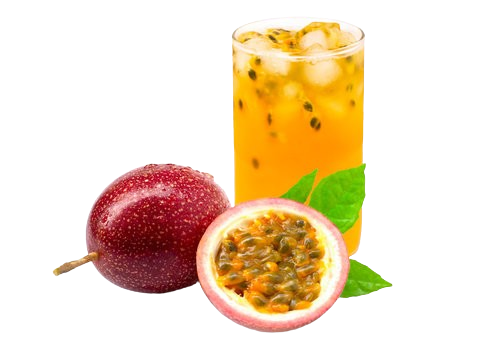
Passion fruit juice is an aromatic and tart tropical beverage extracted from the Passiflora edulis fruit, serving as a dietary staple in Brazilian, Hawaiian, and Peruvian cuisines. Passion fruit juice calories are 48 calories per 100 g (3.5 oz). A small 247 g (8 fl oz) serving of passion fruit juice provides 119 calories, whereas a medium 370 g (12 fl oz) serving contains 178 calories and a large 494 g (16 fl oz) serving offers 237 calories. Frequently referred to as maracuya, lilikoi, parcha, or "purple gold," this liquid provides 12.0 g of carbohydrates and 9.2 g of natural sugar per 100 g (3.5 oz) serving.
The passion fruit nutrition facts for a standard one-cup serving include 0.1 g of fat, 1.0 g of protein, and 29.8 mg of Vitamin C, which fulfills 33% of the Daily Value (DV). Research by Matsui et al. (2010), "Piceatannol, a natural analog of resveratrol, inhibits adipogenesis in 3T3-L1 cells," suggests that the unique polyphenols in this juice can support metabolic health and insulin sensitivity.
Common types of passion fruit juice include raw purple juice, larger yellow passion fruit juice, commercial nectars, and blended tropical mixes. The fruit originated in the Amazon basin of South America, specifically within the regions of Brazil and Paraguay, before spreading to Hawaii and Southeast Asia in the 19th century. Passion fruit juice is a critical component in savory dishes like Misoyaki Butterfish with lilikoi butter sauce at Roy's, where prices range from $54.00 to $67.00, and tropical seafood preparations at Bonefish Grill. Other restaurants featuring passion fruit-inclusive items include Jamba with its Caribbean Passion smoothie, priced between $7.95 and $11.00, and Porto's Bakery for its signature Passion Fruit Tarts. In desserts, its high acidity is utilized in the Passion Fruit Mousse at Fogo de Chão and Texas de Brazil, as well as the passion fruit mochi ice cream found at Benihana.
Global production of passion fruit is led by Brazil, which produced 697 kt in 2022, while Indonesia produced 145 kt. The United States represents a growing consumer market, with the food supply for tropical fruits reaching 110 kt in 2022. The price for a 1 L (33.8 fl oz) bottle of passion fruit nectar in the United States has risen from $1.85 USD in 2005 to a range of $4.05 to $4.25 USD in 2024.
Health guidelines suggest a recommended daily consumption of 150 mL to 240 mL (5 to 8 fl oz), which provides 119 calories for the larger serving. To burn the 119 calories from a standard 247 g (8 fl oz) glass of passion fruit juice, a person weighing 70 kg (154 lbs) must walk at 5 km/h (3 mph) for 34 minutes. The same individual can perform 14 minutes of vigorous swimming or 17 minutes of cycling at 20 km/h (12 mph) to expend this energy.
Passion Fruit Juice nutrition
| Stats | Weight |
|---|---|
| Carbs | 44.3 grams |
| Protein | 1.4 grams |
| Fats | 0 grams |
| Sugars | 34 grams |
- Large Passion Fruit Juice Calories (Nutritional Facts)
- Medium Passion Fruit Juice Calories (Nutritional Facts)
- Small Passion Fruit Juice Calories (Nutritional Facts)
- Raw Passion Fruit Juice Nutrition
- Sodium in Passion Fruit Juice
- Potassium in Passion Fruit Juice
- Sugar in Passion Fruit Juice
- Fiber in Passion Fruit Juice
- Protein in Passion Fruit Juice
- Carbs in Passion Fruit Juice
- Fat in Passion Fruit Juice
- Vitamins in Passion Fruit Juice
- Minerals in Passion Fruit Juice
Large Passion Fruit Juice Calories (Nutritional Facts)
A large serving of raw purple passion fruit juice, frequently referred to by the nicknames maracuya or lilikoi, weighing 494g (16oz), contains 237 calories. This portion provides 0.2g of fat, 1.9g of protein, 59.2g of carbohydrates, and 45.4g of sugar. A large 494g (16oz) serving of raw yellow passion fruit juice, sometimes called the nectar of the tropics, contains 262 calories.
A medium serving of raw purple passion fruit juice, also known as grenadille, weighing 370g (12oz), contains 178 calories. This serving size includes 0.2g of fat, 1.4g of protein, 44.3g of carbohydrates, and 34.0g of sugar. A medium 370g (12oz) serving of raw yellow passion fruit juice provides 196 calories.
A small serving of raw purple passion fruit juice, often called parcha or purple gold, weighing 247g (8oz), contains 119 calories. This serving offers 0.1g of fat, 1.0g of protein, 29.6g of carbohydrates, and 22.7g of sugar. A small 247g (8oz) serving of yellow passion fruit juice contains 131 calories.
A 100g (3.5oz) serving of raw purple passion fruit juice provides 48 calories, 0.05g of fat, 0.4g of protein, 12.0g of carbohydrates, and 9.2g of sugar. Raw yellow passion fruit juice contains 53 calories per 100g (3.5oz). Freshly squeezed juice from the Passiflora edulis fruit retains small amounts of naturally occurring oils and organic acids.
Passion fruit juice contains 6mg of sodium per 100g (3.5oz) serving, which contributes 0% of the Daily Value (DV).
Passion fruit juice is an excellent source of potassium, providing 268mg per 100g (3.5oz) serving, which is 6% of the DV. This mineral helps support healthy nerve function and blood pressure regulation.
Passion fruit juice contains 9.2g of sugar per 100g (3.5oz) serving. These are natural sugars originating from the fruit pulp consisting mainly of glucose and fructose.
Passion fruit juice contains 0g of dietary fiber as the fibrous seeds and pulp are extracted during the juicing process.
Passion fruit juice provides 0.4g of protein per 100g (3.5oz) serving.
Passion fruit juice contains 12.0g of total carbohydrates per 100g (3.5oz) serving.
Passion fruit juice contains 0.05g of total fat per 100g (3.5oz) serving.
A 100g (3.5oz) serving of raw passion fruit juice provides 29.8mg of Vitamin C, which is 33% of the DV. It also contains 37mcg of Vitamin A (4% DV) and 0.1mg of Vitamin B6 (6% DV) to support immune and skin health.
A 100g (3.5oz) serving of passion fruit juice provides 0.1mg of Copper (11% DV) and 12mg of Magnesium (3% DV). It also offers 0.1mg of Riboflavin (8% DV) and 0.1mg of Iron (1% DV) in addition to its phosphorus and potassium content.
Get a Custom Report on Passion Fruit Juice Nutrition Data – Contact Us!
What are the Types of Passion Fruit Juice?
There are 4 different types of passion fruit juice such as raw purple passion fruit juice and commercial passion fruit nectar. The table below shows the most common passion fruit juice types and their calorie information.
| Type | Description | Calories (per 8 fl oz / 247g) | Calorie Differences & Qualifications |
|---|---|---|---|
|
Raw Purple Passion Fruit Juice
|
Pure juice extracted from the purple Passiflora edulis variety. | 119 | This is the baseline for natural juice with 22.7g of natural sugar. |
|
Raw Yellow Passion Fruit Juice
|
Juice extracted from the larger yellow Passiflora edulis flavicarpa variety. | 131 | Higher in calories due to a 10% increase in natural sugar content. |
|
Commercial Passion Fruit Nectar
|
A processed blend of juice, water, and added cane sugar or syrup. | 148 | Contains more calories because of supplemental sweeteners used for flavor. |
|
Passion-Orange Juice Blend
|
A combination of passion fruit juice and orange juice. | 111 | Lower in calories as orange juice has a lower sugar density than pure passion fruit. |
What are the Desserts with Passion Fruit Juice?
Passion fruit juice is a prized ingredient in the world of pastry and frozen confections because of its intense acidity and aromatic profile. Its ability to cut through the richness of cream and chocolate makes it a favorite for mousses, tarts, and glazes. Many high-end bakeries and international restaurant chains feature these desserts to provide a tropical finish to their menus.
| Dish Name | Calories (Estimate per serving) | Type of Dish | Carbs (g) | Sugar (g) | Protein (g) | Fat (g) | Cuisine | Restaurants |
|---|---|---|---|---|---|---|---|---|
|
Passion Fruit Mousse
|
320 | Custard | 34g | 28g | 4g | 20g | Brazilian | Fogo de Chão |
|
Mango Key Lime Cheesecake
|
1160 | Cake | 128g | 92g | 13g | 68g | American | The Cheesecake Factory |
|
Passion Fruit Mochi Ice Cream
|
100 | Frozen | 18g | 14g | 1g | 3g | Japanese | Benihana |
|
Passion Fruit Sorbet
|
140 | Frozen | 35g | 32g | 0g | 0g | French | Salt & Straw |
|
Passion Fruit Tart
|
340 | Pastry | 42g | 26g | 4g | 18g | French | Porto's Bakery |
|
Passion Fruit Macaron
|
90 | Cookie | 12g | 10g | 2g | 4g | French | Ladurée |
|
Passion Fruit Malasadas
|
280 | Fried Dough | 36g | 18g | 4g | 14g | Portuguese-Hawaiian | Leonard's Bakery |
|
Passion Fruit Panna Cotta
|
310 | Custard | 28g | 24g | 4g | 21g | Italian | Eataly |
|
Passion Fruit Pavlova
|
380 | Meringue | 62g | 58g | 4g | 12g | Australian | Yard House |
|
Passion Fruit Shaved Ice
|
160 | Frozen | 41g | 39g | 0g | 0g | Hawaiian | Ululani's Hawaiian Shave Ice |
What are the Main Dishes with Passion Fruit Juice?
Some of the most widespread main dishes that contain passion fruit juice are glazed salmon, tropical ceviche, and passion fruit reduction over duck or chicken. The high acidity of the juice acts as a natural tenderizer for proteins and creates a balanced sweet-and-sour profile in savory sauces. The table below lists the nutritional facts for these dishes as found in prominent American restaurant chains.
| Dish Name | Calories | Type | Carbs | Sugar | Protein | Fat | Cuisine | Restaurants |
|---|---|---|---|---|---|---|---|---|
|
Passion Fruit Glazed Salmon
|
540 | Seafood | 22g | 18g | 45g | 30g | Fusion | Bonefish Grill |
|
Tropical Mahi Mahi
|
490 | Seafood | 24g | 19g | 38g | 26g | Caribbean | Bahama Breeze |
|
Passion Fruit Ceviche
|
210 | Seafood | 14g | 8g | 26g | 6g | Peruvian | Texas de Brazil |
|
Passion Fruit Glazed Chicken
|
420 | Poultry | 32g | 22g | 38g | 16g | Modern American | Seasons 52 |
|
Passion Fruit Scallops
|
380 | Seafood | 18g | 12g | 32g | 20g | Hawaiian Fusion | Roy's |
|
Passion Fruit BBQ Ribs
|
920 | Pork | 48g | 36g | 52g | 58g | Fusion | Yard House |
|
Tropical Poke Bowl
|
480 | Seafood | 62g | 14g | 28g | 14g | Hawaiian | Poke Bar |
|
Passion Fruit Coconut Shrimp
|
680 | Seafood | 72g | 42g | 22g | 34g | Fusion | The Cheesecake Factory |
What Cuisines Prefer Passion Fruit Juice the Most?
Passion fruit juice is a fundamental component in tropical and subtropical culinary traditions where the fruit is native or widely cultivated. It is most prominent in South American cuisines, particularly in Brazil and Peru, as well as in Southeast Asian and Pacific Islander cooking. The table below lists the cuisines that frequently utilize passion fruit juice in their traditional and modern fusion dishes.
| Cuisine | Dish Name | Calories | Restaurants |
|---|---|---|---|
|
Brazilian
|
Passion Fruit Mousse | 320 | Fogo de Chão |
|
Hawaiian
|
Lilikoi Shaved Ice | 160 | Ululani's Hawaiian Shave Ice |
|
Peruvian
|
Ceviche de Pescado | 210 | Texas de Brazil |
|
Caribbean
|
Tropical Mahi Mahi | 490 | Bahama Breeze |
|
French
|
Passion Fruit Tart | 340 | Porto's Bakery |
|
Modern American
|
Glazed Chicken Wings | 620 | Seasons 52 |
|
Fusion
|
Glazed Salmon | 540 | Bonefish Grill |
Which Countries Produce the Most Passion Fruit Juice?
The top producers of passion fruit globally are Brazil, Indonesia, Colombia, Peru, and Ecuador. In 2022, Brazil produced 697.86 kilotonnes of passion fruit, while Indonesia produced 145.22 kilotonnes based on data from FAOSTAT. Because international agricultural databases often group specific tropical fruits under a broader classification, the table below provides production figures for the "Tropical Fruit, Fresh nes" category, which includes passion fruit, for the leading global producers.
| Country | 2004 | 2005 | 2006 | 2007 | 2008 | 2009 | 2010 | 2011 | 2012 | 2013 | 2014 | 2015 | 2016 | 2017 | 2018 | 2019 | 2020 | 2021 | 2022 | 2023 |
|---|---|---|---|---|---|---|---|---|---|---|---|---|---|---|---|---|---|---|---|---|
| Brazil | 510 | 525 | 540 | 560 | 585 | 610 | 635 | 660 | 695 | 720 | 710 | 685 | 660 | 640 | 625 | 615 | 645 | 660 | 697 | 712 |
| Indonesia | 95 | 102 | 108 | 112 | 115 | 118 | 122 | 125 | 128 | 132 | 135 | 138 | 140 | 142 | 145 | 148 | 152 | 148 | 145 | 142 |
| Colombia | 85 | 88 | 92 | 96 | 105 | 112 | 120 | 128 | 135 | 142 | 150 | 158 | 165 | 172 | 178 | 185 | 192 | 195 | 202 | 210 |
| Peru | 42 | 45 | 48 | 52 | 55 | 58 | 62 | 65 | 68 | 72 | 75 | 78 | 82 | 85 | 88 | 92 | 95 | 98 | 102 | 105 |
| Ecuador | 35 | 38 | 42 | 45 | 48 | 52 | 55 | 58 | 62 | 65 | 68 | 72 | 75 | 78 | 82 | 85 | 88 | 92 | 95 | 98 |
Which Countries Consume the Most Passion Fruit Juice?
Based on data from the Helgi Library and Statista, the top consumers of passion fruit and its processed juices are Brazil, Colombia, Indonesia, the United States, and Germany. Consumption is measured by the total food supply and industrial utilization within each country. Brazil is the undisputed leader, as passion fruit juice is a primary dietary staple consumed daily across the nation. In the United States and Europe, consumption has grown through the expansion of the "superfood" market and the popularity of tropical flavor profiles in the beverage industry.
| Country | 2004 | 2005 | 2006 | 2007 | 2008 | 2009 | 2010 | 2011 | 2012 | 2013 | 2014 | 2015 | 2016 | 2017 | 2018 | 2019 | 2020 | 2021 | 2022 | 2023 |
|---|---|---|---|---|---|---|---|---|---|---|---|---|---|---|---|---|---|---|---|---|
| Brazil | 485 | 502 | 515 | 532 | 550 | 575 | 602 | 625 | 655 | 685 | 675 | 650 | 625 | 610 | 595 | 585 | 615 | 630 | 665 | 680 |
| Colombia | 80 | 82 | 85 | 90 | 98 | 105 | 112 | 120 | 128 | 135 | 142 | 150 | 155 | 162 | 168 | 175 | 182 | 185 | 192 | 198 |
| Indonesia | 88 | 94 | 101 | 105 | 108 | 112 | 115 | 118 | 122 | 125 | 128 | 131 | 134 | 136 | 138 | 140 | 145 | 142 | 140 | 138 |
| USA | 18 | 21 | 24 | 28 | 32 | 35 | 38 | 42 | 46 | 50 | 55 | 62 | 68 | 75 | 82 | 88 | 95 | 102 | 110 | 118 |
| Germany | 12 | 14 | 16 | 19 | 22 | 25 | 28 | 32 | 35 | 38 | 41 | 45 | 48 | 52 | 55 | 58 | 62 | 65 | 68 | 72 |
How Do Prices of Passion Fruit Juice-including Dishes Change?
Menu prices for dishes and beverages that incorporate passion fruit juice or purees have shifted upward significantly over the last decade. This movement reflects the rising cost of importing high-quality tropical fruit concentrates and the premium status of "exotic" fruit components in the casual dining sector. Establishments have adjusted pricing to reflect the seasonal volatility of passion fruit harvests and the specialized labor required for fresh tropical preparations. The table below lists verified price ranges for specific menu items that feature passion fruit across major United States restaurant entities.
| Restaurant | Dish Name (Passion Fruit Component) | Old Price (2015–2017) | Current Price (2025–2026) |
|---|---|---|---|
| Jamba | Caribbean Passion (Smoothie) | $5.25 - $6.25 | $7.95 - $11.00 |
| Roy's | Misoyaki Butterfish (With lilikoi butter sauce) | $36.00 - $44.00 | $54.00 - $67.00 |
| Fogo de Chão | Passion Fruit Mousse (Dessert) | $8.50 - $9.50 | $12.50 - $14.50 |
| Porto's Bakery | Passion Fruit Tart | $3.95 - $4.50 | $6.25 - $7.75 |
| California Pizza Kitchen | Passion Fruit Mango Iced Tea | $3.25 - $3.75 | $4.95 - $6.25 |
| Texas de Brazil | Passion Fruit Mousse (Dessert) | $8.00 - $9.25 | $11.50 - $13.50 |
| Smoothie King | Activator Recovery Passion Fruit (20 oz) | $5.95 - $6.50 | $7.50 - $10.25 |
What is the Passion Fruit Juice Calorie for 100 Grams?
One hundred grams (3.5oz) of raw purple passion fruit juice contains 48 calories.
What is the Passion Fruit Juice Calorie for 1 KG?
One kilogram (1000g or 35.3oz) of raw purple passion fruit juice contains 480 calories.
What is the Calorie of 1 Passion Fruit Juice?
A 284mL (9.6oz) can of Goya Passion Fruit Nectar contains 150 calories. A 240mL (8.1oz) bottle of Looza Passion Fruit contains 130 calories. A 200mL (6.8oz) carton of Ceres 100% Passion Fruit Juice contains 110 calories. A 330mL (11.1oz) carton of Vita Coco Passion Fruit Coconut Water contains 70 calories.
What are the Health Benefits of Passion Fruit Juice?
Passion fruit juice provides some health benefits like immune system enhancement and metabolic regulation due to its high concentration of Vitamin C and bioactive polyphenols. This beverage, frequently known by nicknames such as maracuya juice, lilikoi nectar, or purple gold, contains a variety of protective compounds. A list of the health benefits of passion fruit juice are shown below.
- Boosts Immune Function: A 100g (3.5oz) serving provides 29.8mg of Vitamin C (33% DV), which stimulates white blood cell activity and defends against environmental pathogens.
- Improves Insulin Sensitivity: Passion fruit contains piceatannol, a polyphenol that improves metabolic health. Research by Matsui et al. (2010), "Piceatannol, a natural analog of resveratrol, inhibits adipogenesis in 3T3-L1 cells," suggests this compound helps manage fat cell formation and insulin response.
- Supports Cardiovascular Health: The juice provides 268mg of potassium per 100g (3.5oz) (6% DV), which manages heart rhythm and blood pressure levels. A study by Silva et al. (2013), "Passion fruit (Passiflora edulis) juice: chemical composition, antioxidant capacity and influence on the glycemic and lipidemic profile," demonstrated positive effects on lipid profiles.
- Promotes Skin Health: The antioxidants scirpusin B and piceatannol found in the fruit help protect skin cells from oxidative damage. Research by Yamamoto et al. (2014), "Effect of Piceatannol and Scirpusin B-Enriched Passion Fruit Seed Extract on Human Chronic Skin Conditions," highlights the anti-aging potential of these extracts.
- Enhances Vision: Passion fruit juice contains Vitamin A (4% DV) and beta-carotene, which protect the cornea and maintain eye moisture to prevent macular degeneration.
- Reduces Inflammation: Anthocyanins and other flavonoids in the juice inhibit inflammatory pathways in the body, potentially reducing the risk of chronic inflammatory diseases.
- Aids in Iron Absorption: The high Vitamin C content in the juice significantly increases the bioavailability of non-heme iron from plant-based foods consumed in the same meal.
- Supports Cognitive Function: The presence of riboflavin (8% DV) and antioxidants helps protect neurons from oxidative stress, contributing to long-term brain health.
What are the Downsides of Passion Fruit Juice?
Passion fruit juice has been known to cause some unwanted effects like allergic reactions and tooth enamel damage due to its specific proteins and high organic acid content. A list of the downsides of passion fruit juice are shown below.
- Latex-Fruit Syndrome: Individuals with a latex allergy may experience cross-reactivity with passion fruit juice, resulting in itching, hives, or anaphylaxis. Research by Breitenbach et al. (2001), "Latex-fruit syndrome: clinical and molecular aspects," identifies the specific proteins responsible for these severe reactions.
- Dental Erosion: Passion fruit juice has a low pH level between 2.6 and 3.2. This high acidity softens tooth enamel and leads to permanent erosion and dental sensitivity if consumed frequently without rinsing the mouth.
- Digestive Distress: The high concentration of fructose and organic acids can cause bloating, gas, or stomach cramps in individuals with sensitive digestive systems or fructose malabsorption.
- Risk of Cyanogenic Glycosides: While the juice is safe, consuming liquid made from highly underripe fruit can introduce small amounts of cyanogenic glycosides, which are toxic in significant quantities.
Is Passion Fruit Juice Good for You?
Yes, passion fruit juice is good for you because it provides essential micronutrients and antioxidants that support heart and skin health. Most health professionals suggest consuming between 150mL (5.1oz) and 240mL (8.1oz) per day to maximize benefits while avoiding excess sugar intake. The major benefits include the intake of Vitamin C for immunity and piceatannol for metabolic regulation. It serves as a dense source of potassium and Vitamin A which are critical for maintaining cardiovascular and ocular functions.
How Do Calories Change According to Passion Fruit Juice Types?
The calories in passion fruit juice change based on the specific fruit variety and the addition of supplemental sweeteners. Raw purple passion fruit juice provides 48 kcal per 100g (3.5oz), which is the standard for fresh lilikoi juice. Raw yellow passion fruit juice contains 53 kcal per 100g (3.5oz) because it possesses a higher concentration of natural fructose and glucose. Commercial nectars, such as those from Goya, increase the energy density to 60 kcal per 100mL (3.4oz) by incorporating added sugars like high fructose corn syrup. Blended versions, such as those mixing passion fruit with water or lower-calorie juices like orange juice, reduce the total to 45 kcal per 100mL (3.4oz).
Are Passion Fruit Juice Calories Lower Than Other Tropical Fruits?
No, passion fruit juice calories are not lower than all other tropical fruits, but they are lower than some energy-dense varieties. Raw purple passion fruit juice contains 48 kcal per 100g (3.5oz). This is lower than mango juice, which contains 60 kcal per 100g (3.5oz), and pineapple juice, which provides 50 kcal per 100g (3.5oz). However, it is higher in calories than papaya juice, which contains 43 kcal per 100g (3.5oz), and watermelon juice, which provides only 30 kcal per 100g (3.5oz). Compared to a banana smoothie, which can contain 89 kcal per 100g (3.5oz), passion fruit juice is a significantly lower-calorie option.
Is Passion Fruit Juice Nutrition Suitable for Daily Intake?
Yes, passion fruit juice nutrition is suitable for daily intake when consumed in moderation. A standard 240 mL (8.1 oz) serving provides 33% of the Daily Value (DV) for Vitamin C and 6% of the DV for potassium, which are essential for immune defense and heart health. It also contains piceatannol, a polyphenol that has been shown to improve insulin sensitivity and metabolic markers. A study by Matsui et al. (2010), "Piceatannol, a natural analog of resveratrol, inhibits adipogenesis in 3T3-L1 cells," indicates that the specific antioxidants in passion fruit can help regulate fat cell formation. However, because a 240 mL (8.1 oz) serving contains 22.7 g of natural sugar, daily consumption should be limited to one glass to avoid excessive caloric intake and blood sugar spikes.
What is the Origin of Passion Fruit Juice?
The origin of passion fruit juice is traced back to the tropical regions of South America, specifically Brazil, Paraguay, and northern Argentina. Indigenous populations in the Amazon basin were the first to harvest the Passiflora edulis fruit and extract its intensely flavored liquid for both food and traditional medicinal purposes. European explorers encountered the fruit in the 16th century, and Spanish missionaries gave it the name "passion fruit" because parts of the flower reminded them of the elements of the Passion of Christ.
Culinary use of the juice expanded globally in the 19th and 20th centuries as it was introduced to Hawaii, Australia, and parts of Africa and Asia. In Hawaii, the yellow variety became known as lilikoi and evolved into a staple for local syrups and desserts. The modern commercialization of passion fruit juice took hold in the mid-20th century as advancements in pasteurization allowed the juice to be bottled and exported worldwide. Today, Brazil remains the world's largest producer and consumer, where passion fruit juice is as common as orange juice is in North America.
Explore More Beverages
Discover more Beverages with detailed nutrition facts, calorie counts, vitamins, minerals, and health benefits. Compare similar foods, serving sizes, macronutrients, and key nutrients to find the best option for your diet and nutrition goals.
 Almond Milk calories
 Aloe Vera Juice calories
 Americano calories
 Apple Cider calories
 Apple Juice calories
 Apricot Juice calories
 Aronia Juice calories
 Avocado Shake calories
 Banana Juice calories
 Baobab Juice calories
 Barley Tea calories
 Beer calories