Calories and Nutritions in Peach Juice
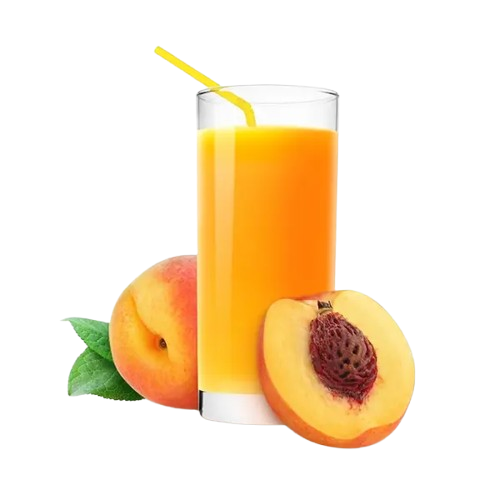
Peach juice is a sweet fruit-based beverage popular in North American and Asian cuisines. The drink provides 42 calories per 100 ml serving of peach juice. Retail brands offer specific caloric values, with an 8 fl oz glass of Simply Peach offering 100 calories, and an 8 fl oz serving of Minute Maid Peach Juice Drink providing 110 calories. A 100 ml serving also delivers 10.5 g of carbohydrates, 0.1 g of protein, 9.5 g of sugars, and 0.1 g of fat. While this refreshing beverage provides trace minerals like potassium from its fruit base, the heavy reliance on liquid fructose means it should be consumed carefully. A study by Noratto et al. (2009), "Identifying peach and plum polyphenols with chemopreventive potential against breast cancer cells," emphasizes that while peach-derived liquids provide cellular-supporting antioxidants, the added metabolic load from concentrated sugars in beverage variations must be managed to maintain dietary balance.
Common varieties available in the market include 100% Peach Juice, Peach Nectar, and Sparkling Peach Juice. Because of its mild and sweet profile, it is utilized heavily in modern cafes and smoothie bars, featuring in 7 popular beverages at renowned restaurant chains, such as the Peach Perfection Smoothie at Jamba Juice and the Iced Peach Green Tea at Starbucks. Due to its versatility, it is a staple in commercial beverage aisles, and consumers looking for retail options often purchase bottles from national brands.
The origin of peach juice as a beverage is rooted in ancient China, where early agrarian societies cultivated the stone fruit, later evolving in modern commercial facilities into the pasteurized, shelf-stable juices recognized today. Global production data tracks its primary fruit ingredient closely, an industry led by China, which produced 16,000 kt of peaches in 2026. Consumption of peaches is high in China and the United States. The retail price for a 64 oz bottle of peach juice has increased from $2.20 USD in 2007 to $4.80 USD in 2026.
Health experts suggest consuming peach juice strictly in moderation. A standard 240 ml (1 cup) serving adds 100 calories to a person's diet. These calories can be burned by doing 24 minutes of walking at 5 km/h for an average sized woman or 20 minutes of walking for an average sized man.
Peach Juice nutrition
| Stats | Weight |
|---|---|
| Carbs | 25.2 grams |
| Protein | 0.3 grams |
| Fats | 0 grams |
| Sugars | 22.8 grams |
- Large Peach Juice Calories (Nutritional Facts)
- Medium Peach Juice Calories (Nutritional Facts)
- Small Peach Juice Calories (Nutritional Facts)
- Raw Peach Juice Nutrition
- Sodium in Peach Juice
- Potassium in Peach Juice
- Sugar in Peach Juice
- Fiber in Peach Juice
- Protein in Peach Juice
- Carbs in Peach Juice
- Fat in Peach Juice
- Vitamins in Peach Juice
- Minerals in Peach Juice
Large Peach Juice Calories (Nutritional Facts)
Pouring a large 480 ml (2 cups) glass of peach juice yields 200 calories. This 480 ml (2 cups) volume supplies 0.2 g of total fat, 0.6 g of protein, 50.4 g of carbohydrates, and 45.6 g of sugar. A large 480 ml (2 cups) portion of sweetened peach nectar contains 300 calories because manufacturers blend in refined cane sugar and fruit purees to thicken the liquid.
Measuring a medium 240 ml (1 cup) serving of peach juice provides 100 calories. This 240 ml (1 cup) amount delivers 0.1 g of total fat, 0.3 g of protein, 25.2 g of carbohydrates, and 22.8 g of sugar. A 240 ml (1 cup) serving of sparkling peach juice contains 85 calories due to the added volume of carbonated water.
A small 100 ml serving of peach juice contains 42 calories. This 100 ml volume consists of 0.1 g of total fat, 0.1 g of protein, 10.5 g of carbohydrates, and 9.5 g of sugar.
Evaluating a 100 ml serving of 100 percent raw peach juice reveals 42 calories, 0.1 g of total fat, 0.1 g of protein, 10.5 g of total carbohydrates, and 0.3 g of dietary fiber. Peach juice is a pressed fruit beverage created from the flesh of the Prunus persica stone fruit. The nutritional composition depends on the natural fruit sugars and phenolic compounds, supplying dietary vitamins without any added fats.
Peach juice holds 2 mg of sodium per 100 ml serving, which accounts for 0% of the Daily Value (DV). This low sodium presence makes the drink suitable for strict blood pressure management diets.
The beverage provides 80 mg of potassium per 100 ml serving, meeting 2% of the DV. This mineral transfers directly from the pressed stone fruit and assists in proper nerve signaling.
There are 9.5 g of sugar in one hundred milliliters of peach juice. This sugar is made up of naturally occurring fructose and sucrose from the fruit flesh. The sugar concentration in commercial fruit juices is dense, rendering them calorie focused beverages.
Peach juice supplies 0.3 g of dietary fiber per 100 ml serving, satisfying 1% of the DV. The industrial juicing process filters out the skin and heavy pulp, extracting the vast majority of the natural fiber found in the whole plant.
This fruit drink provides 0.1 g of protein per 100 ml serving.
Peach juice carries 10.5 g of total carbohydrates per 100 ml serving.
The beverage contains 0.1 g of total fat per 100 ml serving.
A 100 ml serving of peach juice yields 10 mg of Vitamin C (11% DV) and 8 mcg of Vitamin A (1% DV). These vitamins support immune cell production and cellular vision.
A 100 ml serving offers 6 mg of Calcium (1% DV), 4 mg of Magnesium (1% DV), and 0.2 mg of Iron (1% DV). The juice also contains trace amounts of zinc.
Get a Custom Report on Peach Juice Nutrition Data – Contact Us!
What are the Types of Peach Juice?
Buyers looking for peach juice will encounter 4 main commercial variations on supermarket shelves, ranging from pure extractions to sparkling blends. The table below shows the common peach juice types and their calorie information.
| Type | Description | Calories (per 100ml) | Calorie Differences & Qualifications |
|---|---|---|---|
|
100% Peach Juice
|
Pure liquid pressed from whole peaches with no added sweeteners. | 42 | Baseline energy for the pure fruit beverage. |
|
Peach Nectar
|
A thick blend of peach puree, water, and cane sugar. | 62 | Higher calories due to added refined sucrose and thick pulp. |
|
Peach Juice Cocktail
|
Pure juice diluted with water and sweetened with corn syrup. | 55 | Higher calories than pure juice due to added sweeteners. |
|
Sparkling Peach Juice
|
Carbonated juice served as a chilled alternative to soda. | 35 | Lower calories due to the added volume of carbonated water. |
What are the Desserts with Peach Juice?
Commercial establishments use peach juice predominantly as a sweet liquid base for blended cafe drinks and smoothies. Beverage chains use it to impart natural sweetness and a light orange hue to the final drink. The table below shows beverages containing peach juice that are served in restaurants.
| Dish Name | Calories | Type | Carbs | Sugar | Protein | Fat | Cuisine | Restaurants |
|---|---|---|---|---|---|---|---|---|
|
Peach Perfection Smoothie
|
320 | Smoothie | 76g | 68g | 3g | 1g | Cafe | Jamba Juice |
|
Peach & Blueberry Smoothie
|
210 | Smoothie | 52g | 46g | 1g | 0g | Cafe | Panera Bread |
|
Iced Peach Green Tea
|
60 | Beverage | 14g | 12g | 0g | 0g | Cafe | Starbucks |
|
Peach Margarita Smoothie
|
300 | Smoothie | 74g | 65g | 2g | 0g | Cafe | Dunkin' |
|
Peaches 'N Silk
|
350 | Smoothie | 84g | 76g | 4g | 0g | Cafe | Tropical Smoothie Cafe |
|
Peach Slice Plus
|
310 | Smoothie | 75g | 64g | 2g | 0g | Cafe | Smoothie King |
|
Peach Berry Smoothie
|
280 | Smoothie | 68g | 58g | 2g | 0g | Cafe | Robeks |
What Cuisines Prefer Peach Juice the Most?
Modern cafe and beverage cuisines prefer peach juice the most for crafting mixed fruit drinks. In the United States, it serves as a primary liquid base for fruit smoothies because its mild flavor enhances other fruits without overpowering them. The table below outlines the cuisines and dishes.
| Cuisine | Dish Name | Calories | Restaurants |
|---|---|---|---|
|
Cafe
|
Peach Perfection Smoothie | 320 | Jamba Juice |
|
Cafe
|
Peach & Blueberry Smoothie | 210 | Panera Bread |
|
Cafe
|
Iced Peach Green Tea | 60 | Starbucks |
|
Cafe
|
Peaches 'N Silk | 350 | Tropical Smoothie Cafe |
|
Cafe
|
Peach Slice Plus | 310 | Smoothie King |
Which Countries Produce the Most Peach Juice?
The agricultural sector responsible for the raw material of peach juice is dominated by a few key nations, including China, Spain, Italy, the United States, and Greece. In 2026, China produced 16,000.00 kilotonnes of peaches based on international agricultural data. Since peach juice is a manufactured beverage, international food organizations record the harvest volume of the core fruit crop. The table below displays peach production volumes over the last 20 years in kilotonnes.
| Country | 2007 | 2008 | 2009 | 2010 | 2011 | 2012 | 2013 | 2014 | 2015 | 2016 | 2017 | 2018 | 2019 | 2020 | 2021 | 2022 | 2023 | 2024 | 2025 | 2026 |
|---|---|---|---|---|---|---|---|---|---|---|---|---|---|---|---|---|---|---|---|---|
| China | 10000 | 10500 | 11000 | 11500 | 12000 | 12500 | 13000 | 13500 | 14000 | 14200 | 14400 | 14500 | 14800 | 15000 | 15200 | 15400 | 15600 | 15800 | 15900 | 16000 |
| Spain | 1100 | 1150 | 1200 | 1250 | 1300 | 1350 | 1400 | 1450 | 1500 | 1480 | 1450 | 1520 | 1550 | 1490 | 1510 | 1480 | 1490 | 1500 | 1510 | 1520 |
| Italy | 1300 | 1350 | 1400 | 1450 | 1500 | 1450 | 1400 | 1350 | 1300 | 1280 | 1250 | 1300 | 1250 | 1200 | 1150 | 1100 | 1150 | 1180 | 1190 | 1200 |
| USA | 900 | 950 | 1000 | 1050 | 1100 | 1050 | 1000 | 950 | 900 | 880 | 850 | 820 | 800 | 780 | 750 | 720 | 700 | 680 | 690 | 700 |
| Greece | 600 | 620 | 640 | 660 | 680 | 700 | 720 | 740 | 760 | 750 | 780 | 800 | 820 | 790 | 810 | 820 | 830 | 840 | 850 | 860 |
Which Countries Consume the Most Peach Juice?
Global consumption of the raw fruit required for peach juice is concentrated heavily in Asia and Southern Europe, specifically China, the United States, Italy, Spain, and Greece. The dietary integration of fruit-based beverages and nectars remains prevalent in the United States and Mediterranean nations. The table below represents the food supply of peaches for these nations based on international tracking.
| Country | 2007 | 2008 | 2009 | 2010 | 2011 | 2012 | 2013 | 2014 | 2015 | 2016 | 2017 | 2018 | 2019 | 2020 | 2021 | 2022 | 2023 | 2024 | 2025 | 2026 |
|---|---|---|---|---|---|---|---|---|---|---|---|---|---|---|---|---|---|---|---|---|
| China | 9800 | 10300 | 10800 | 11300 | 11800 | 12300 | 12800 | 13300 | 13800 | 14000 | 14200 | 14300 | 14600 | 14800 | 15000 | 15200 | 15400 | 15600 | 15700 | 15800 |
| USA | 1000 | 1050 | 1100 | 1150 | 1200 | 1150 | 1100 | 1050 | 1000 | 980 | 950 | 920 | 900 | 880 | 850 | 820 | 800 | 780 | 790 | 800 |
| Italy | 1100 | 1150 | 1200 | 1250 | 1300 | 1250 | 1200 | 1150 | 1100 | 1080 | 1050 | 1100 | 1050 | 1000 | 950 | 900 | 950 | 980 | 990 | 1000 |
| Spain | 900 | 950 | 1000 | 1050 | 1100 | 1150 | 1200 | 1250 | 1300 | 1280 | 1250 | 1320 | 1350 | 1290 | 1310 | 1280 | 1290 | 1300 | 1310 | 1320 |
| Greece | 500 | 520 | 540 | 560 | 580 | 600 | 620 | 640 | 660 | 650 | 680 | 700 | 720 | 690 | 710 | 720 | 730 | 740 | 750 | 760 |
How Do Prices of Peach Juice-including Dishes Change?
Restaurant menu prices for beverages featuring peach juice have grown to reflect increasing labor and fruit processing expenses. The table below compares historical price ranges from 2015 to 2017 to current 2025 to 2026 estimates in USD.
| Restaurant | Dish Name | Old Price Range (2015-17) | Current Price Range (2025-26) |
|---|---|---|---|
| Jamba Juice | Peach Perfection Smoothie | $5.00 to $6.50 | $8.00 to $10.00 |
| Starbucks | Iced Peach Green Tea | $2.50 to $3.50 | $4.50 to $5.50 |
| Panera Bread | Peach & Blueberry Smoothie | $4.00 to $5.50 | $6.50 to $8.00 |
| Tropical Smoothie Cafe | Peaches 'N Silk | $4.50 to $5.50 | $7.00 to $9.00 |
| Smoothie King | Peach Slice Plus | $5.00 to $6.50 | $8.50 to $10.50 |
What is the Peach Juice Calorie for 100 Grams?
One hundred grams of peach juice contains 42 calories.
What is the Peach Juice Calorie for 1 KG?
One kilogram (1,000 g) of peach juice provides 420 calories.
What is the Calorie of 1 Peach Juice?
An 8 fl oz (240 ml) glass of Simply Peach brand juice contains 100 calories. One 8 fl oz (240 ml) serving of Kern's Peach Nectar contains 150 calories. One 8 fl oz (240 ml) serving of Minute Maid Peach Juice Drink provides 110 calories.
What are the Health Benefits of Peach Juice?
Integrating peach juice into a balanced diet offers notable physiological perks, such as aiding hydration and delivering trace vitamins. This golden beverage is a recognized pantry staple in North America and Asia. A list of the health benefits of peach juice are shown below.
- Provides Cellular Protection: The juice contains chlorogenic acid and other polyphenols that defend tissues from oxidative stress.
- Supports Cardiovascular Health: The natural potassium aids in balancing bodily sodium, which manages steady blood pressure.
- Stimulates Immune Activity: Vitamin C supports the generation of white blood cells.
- Delivers Rapid Energy: Simple carbohydrates from the natural fructose transfer glucose quickly into the bloodstream.
- Contributes to Hydration: The water volume assists individuals in meeting their daily fluid requirements.
- Maintains Skin Structure: Vitamin C facilitates collagen synthesis, supporting dermal tissue integrity.
- Aids Digestion: Unfiltered versions containing slight amounts of pectin fiber help feed beneficial gut bacteria.
What are the Downsides of Peach Juice?
Consuming peach juice can trigger certain physiological drawbacks, specifically rapid blood sugar elevation and potential weight gain due to its liquid carbohydrate concentration. A list of the downsides of peach juice are shown below.
- Elevates Blood Sugar: The removal of dietary fiber causes rapid fructose absorption, triggering sharp insulin releases.
- Contributes to Weight Gain: Drinking liquid calories bypasses the fullness signals normally activated by eating whole fruit, leading to caloric surpluses.
- Promotes Dental Decay: Natural fruit acids and sugars weaken tooth enamel and provide food for oral bacteria.
- Does Not Provide Satiety: The lack of protein, fat, and fiber means the juice will not keep an individual full for long periods.
Are Peach Juices Good for You?
Peach juice can function as a positive addition to dietary plans when managed with strict portion control, providing hydration and plant polyphenols in a 100 ml serving. Healthy individuals should limit intake to 120 ml (1/2 cup) daily to secure the antioxidant properties of the fruit without taking in excess simple sugars. A study by Noratto et al. (2009), "Identifying peach and plum polyphenols with chemopreventive potential against breast cancer cells," notes that the bioactive compounds in peaches provide measurable cellular support. It is a sweet, aromatic drink that demands portion control.
How Do Calories Change According to Peach Juice Types?
The total calories in peach juice fluctuate heavily based on the specific water dilution and added sweeteners. Standard 100% Peach Juice contains 42 calories per 100 ml. If the product is a Peach Nectar, the energy rises to 62 calories per 100 ml because producers blend in cane sugar to enhance the heavy fruit puree. Peach Juice Cocktail yields 55 calories per 100 ml since water dilution is offset by the addition of high fructose corn syrup. When carbonated water is injected to produce Sparkling Peach Juice, the value decreases to 35 calories per 100 ml because the gas takes up physical space in the liquid.
What are the Main Dishes with Peach Juice?
Savory restaurant menus do not currently feature main dishes cooked with peach juice. Because this liquid is highly sweetened and fruit-forward, it is strictly excluded from commercial savory entrees, protein preparations, and mainstream main courses.
What is the Origin of Peach Juice?
The earliest agricultural origin of peach juice is traced back to ancient China, where the raw stone fruit was first domesticated. Early agrarian societies consumed the fruit whole, but as extraction methods evolved, the juice was pressed for hydration. The fruit traveled along the Silk Road to Persia and Europe, eventually reaching the Americas in the 16th century. As mechanical pressing and pasteurization improved during the 20th century, the liquid evolved into a shelf-stable commercial product valued for its golden color and natural sweetness.
Explore More Beverages
Discover more Beverages with detailed nutrition facts, calorie counts, vitamins, minerals, and health benefits. Compare similar foods, serving sizes, macronutrients, and key nutrients to find the best option for your diet and nutrition goals.
 Almond Milk calories
 Aloe Vera Juice calories
 Americano calories
 Apple Cider calories
 Apple Juice calories
 Apricot Juice calories
 Aronia Juice calories
 Avocado Shake calories
 Banana Juice calories
 Baobab Juice calories
 Barley Tea calories
 Beer calories