Calories and Nutritions in Rice Milk
Rice milk is used as a hypoallergenic alternative in dairy-free diets and a base for horchata and smoothies in Mexican and Vegan American cuisines. A single-serve carton of unsweetened Rice milk (240g) contains 113 rice milk calories, while a single serve box of organic whole plant-based rice milk (240g) provides 170 calories. A cup of fresh raw rice milk (240ml) offers 140 calories while a cup of Better Than Milk Rice Milk (240ml) contains 150 calories. A serving of OKF Rice Milk (6 fl oz) provides 72 calories, while a 100ml serving of Macro Rice Milk supplies 55 calories.
An assessment of the rice milk nutrition label reveals a carbohydrate-rich beverage with minimal protein and fat. A single-serve carton of unsweetened rice milk (240g) provides 22g of carbohydrates, 0.7g of protein, and 2.3g of fat. Rice milk acts as a source of rapid metabolic fuel due to the enzymatic conversion of rice starch into simple sugars. Research by Atkinson, F. S., et al. (2008), "International tables of glycemic index and glycemic load values: 2008," established that rice-based beverages possess a high glycemic index, ensuring efficient glycogen replenishment for athletes post-exercise. The energy content stems mainly from these carbohydrates, establishing the drink as an immediate energy source rather than a muscle-building supplement. Micronutrient density is high in fortified versions, offering 424mg of calcium (33% DV) per 360g serving. Vitamin B12 levels are substantial, providing 2.26mcg per 360g or 12oz serving to support nerve function.
Global output of rice milk relies heavily on the agricultural yields of the United States, Thailand, and Italy, with the United States leading innovation in shelf-stable packaging. This production meets demand in major markets where the United States, the United Kingdom, and Germany consume vast volumes of the hypoallergenic beverage. Culinary practices in Mexico, the United States, and Japan rely on this ingredient to prepare staples such as Horchata, Vegan Mac and Cheese, and Mochi. Escalating global demand and rising grain costs have driven retail costs upward, as the price for a standard 32oz carton rose from $2.50 in the early 2010s to between $4.50 and $6.00 in 2024. This inflation aligns with broader market indicators, with the Producer Price Index for head rice rising to 305.690 in 2024. Menu pricing at eateries reflects this economic upward trend, as a glass of Horchata at Guelaguetza increased from $3.50 in 2015 to between $5.50 and $7.00 in 2024.
The rice milk nutrition facts highlight benefits for skeletal health through high concentrations of calcium and phosphorus, providing 424mg of calcium and 201mg of phosphorus per 360g serving. This nutrient profile aids bone maintenance and supports metabolic processes. Nutritionists recommend drinking 240ml per day to avoid overloading the system with simple carbohydrates, as this portion contains 113 calories, an energy load that requires 21 minutes of raking leaves or 16 minutes of moving furniture to burn.
Rice Milk nutrition
| Stats | Weight |
|---|---|
| Carbs | 22 grams |
| Protein | 0.7 grams |
| Fats | 0 grams |
| Sugars | 12.7 grams |
- Large Rice Milk Calories (Nutritional Facts)
- Medium Rice Milk Calories (Nutritional Facts)
- Small Rice Milk Calories (Nutritional Facts)
- Raw Rice Milk Nutrition
- Sodium in Rice Milk
- Potassium in Rice Milk
- Sugar in Rice Milk
- Fiber in Rice Milk
- Protein in Rice Milk
- Carbs in Rice Milk
- Fat in Rice Milk
- Vitamins in Rice Milk
- Minerals in Rice Milk
Large Rice Milk Calories (Nutritional Facts)
A large serving of unsweetened rice milk (360g or 12oz) contains 170 calories, 1g of protein, 3.5g of fat, 33g of carbohydrates, 1.1g of fiber, 19g of sugar, and 140mg of sodium. A large serving of organic whole plant-based rice milk (360g or 12oz) provides 255 calories, 0g of protein, 12g of fat, 37.5g of carbohydrates, 1.4g of fiber, 16.5g of sugar, and 119mg of sodium.
A medium portion of unsweetened rice milk (240g or 8oz) provides 113 calories, 0.7g of protein, 2.3g of fat, 22g of carbohydrates, 0.7g of fiber, 12.7g of sugar, and 94mg of sodium. A medium portion of organic whole plant-based rice milk (240g or 8oz) supplies 170 calories, 0g of protein, 8g of fat, 25g of carbohydrates, 1g of fiber, 11g of sugar, and 79mg of sodium.
A small cup of unsweetened rice milk (180g or 6oz) contains 85 calories, 0.5g of protein, 1.7g of fat, 16.5g of carbohydrates, 0.5g of fiber, 9.5g of sugar, and 70mg of sodium. A small cup of organic whole plant-based rice milk (180g or 6oz) provides 128 calories, 0g of protein, 6g of fat, 19g of carbohydrates, 0.7g of fiber, 8g of sugar, and 59mg of sodium.
A cup of fresh raw rice milk (240g or 8oz) supplies 140 calories, 2g of protein, 1.5g of fat, 28g of carbohydrates, 1g of fiber, 1g of sugar, and 10mg of sodium.
A large serving of unsweetened rice milk (360g or 12oz) contains 140mg of sodium (6% DV), while a large serving of organic whole plant-based rice milk (360g or 12oz) provides 119mg of sodium (5% DV). A medium portion of unsweetened rice milk (240g or 8oz) has 94mg of sodium (4% DV), whereas a medium portion of organic whole plant-based rice milk (240g or 8oz) supplies 79mg of sodium (3% DV). A small cup of unsweetened rice milk (180g or 6oz) contains 70mg of sodium (3% DV), and a small cup of organic whole plant-based rice milk (180g or 6oz) provides 59mg of sodium (2% DV). A cup of fresh raw rice milk (240g or 8oz) supplies 10mg of sodium (0% DV).
A large serving of unsweetened rice milk (360g or 12oz) provides 97mg of potassium (2% DV), while a large serving of organic whole plant-based rice milk (360g or 12oz) contains 61mg of potassium (2% DV). A medium portion of unsweetened rice milk (240g or 8oz) has 65mg of potassium (1% DV), whereas a medium portion of organic whole plant-based rice milk (240g or 8oz) supplies 41mg of potassium (1% DV). A small cup of unsweetened rice milk (180g or 6oz) contains 49mg of potassium (1% DV), and a small cup of organic whole plant-based rice milk (180g or 6oz) provides 31mg of potassium (1% DV). A cup of fresh raw rice milk (240g or 8oz) supplies 110mg of potassium (2% DV).
A large serving of unsweetened rice milk (360g or 12oz) contains 19g of sugar, while a large serving of organic whole plant-based rice milk (360g or 12oz) provides 16.5g of sugar. A medium portion of unsweetened rice milk (240g or 8oz) has 12.7g of sugar, whereas a medium portion of organic whole plant-based rice milk (240g or 8oz) supplies 11g of sugar. A small cup of unsweetened rice milk (180g or 6oz) contains 9.5g of sugar, and a small cup of organic whole plant-based rice milk (180g or 6oz) provides 8g of sugar. A cup of fresh raw rice milk (240g or 8oz) provides 1g of sugar.
A large serving of unsweetened rice milk (360g or 12oz) provides 1.1g of dietary fiber (4% DV), while a large serving of organic whole plant-based rice milk (360g or 12oz) contains 1.4g of fiber (5% DV). A medium portion of unsweetened rice milk (240g or 8oz) has 0.7g of fiber (3% DV), whereas a medium portion of organic whole plant-based rice milk (240g or 8oz) supplies 1g of fiber (3% DV). A small cup of unsweetened rice milk (180g or 6oz) contains 0.5g of fiber (2% DV), and a small cup of organic whole plant-based rice milk (180g or 6oz) provides 0.7g of fiber (2% DV). A cup of fresh raw rice milk (240g or 8oz) supplies 1g of fiber (4% DV).
A large serving of unsweetened rice milk (360g or 12oz) provides 1g of protein (2% DV), while a large serving of organic whole plant-based rice milk (360g or 12oz) contains 0g of protein (0% DV). A medium portion of unsweetened rice milk (240g or 8oz) has 0.7g of protein (1% DV), whereas a medium portion of organic whole plant-based rice milk (240g or 8oz) supplies 0g of protein (0% DV). A small cup of unsweetened rice milk (180g or 6oz) contains 0.5g of protein (1% DV), and a small cup of organic whole plant-based rice milk (180g or 6oz) provides 0g of protein (0% DV). A cup of fresh raw rice milk (240g or 8oz) supplies 2g of protein (4% DV).
A large serving of unsweetened rice milk (360g or 12oz) contains 33g of carbohydrates (12% DV), while a large serving of organic whole plant-based rice milk (360g or 12oz) provides 37.5g of carbohydrates (14% DV). A medium portion of unsweetened rice milk (240g or 8oz) has 22g of carbohydrates (8% DV), whereas a medium portion of organic whole plant-based rice milk (240g or 8oz) supplies 25g of carbohydrates (9% DV). A small cup of unsweetened rice milk (180g or 6oz) contains 16.5g of carbohydrates (6% DV), and a small cup of organic whole plant-based rice milk (180g or 6oz) provides 19g of carbohydrates (7% DV). A cup of fresh raw rice milk (240g or 8oz) provides 28g of carbohydrates (10% DV).
A large serving of unsweetened rice milk (360g or 12oz) contains 3.5g of total fat (4% DV), while a large serving of organic whole plant-based rice milk (360g or 12oz) provides 12g of total fat (15% DV). A medium portion of unsweetened rice milk (240g or 8oz) has 2.3g of total fat (3% DV), whereas a medium portion of organic whole plant-based rice milk (240g or 8oz) supplies 8g of total fat (10% DV). A small cup of unsweetened rice milk (180g or 6oz) contains 1.7g of total fat (2% DV), and a small cup of organic whole plant-based rice milk (180g or 6oz) provides 6g of total fat (8% DV). A cup of fresh raw rice milk (240g or 8oz) provides 1.5g of total fat (2% DV).
A large serving of unsweetened rice milk (360g or 12oz) provides 2.26mcg of Vitamin B12 (94% DV) and 226mcg of Vitamin A (25% DV). A large serving of organic whole plant-based rice milk (360g or 12oz) contains 7.2mcg of Vitamin D (36% DV). A medium portion of unsweetened Rice milk (240g or 8oz) has 1.51mcg of Vitamin B12 (63% DV), whereas a medium portion of organic whole plant-based rice milk (240g or 8oz) supplies 4.8mcg of Vitamin D (24% DV). A small cup of unsweetened Rice milk (180g or 6oz) contains 1.13mcg of Vitamin B12 (47% DV), and a small cup of organic whole plant-based rice milk (180g or 6oz) provides 3.6mcg of Vitamin D (18% DV).
A large serving of unsweetened rice milk (360g or 12oz) provides 424mg of calcium (33% DV), 0.72mg of iron (4% DV), and 201mg of phosphorus (16% DV). A large serving of organic whole plant-based rice milk (360g or 12oz) contains 479mg of calcium (38% DV), 0.15mg of iron (2% DV), and 256mg of phosphorus (21% DV). A medium portion of unsweetened rice milk (240g or 8oz) has 283mg of calcium (22% DV), whereas a medium portion of organic whole plant-based rice milk (240g or 8oz) supplies 319mg of calcium (25% DV). A small cup of unsweetened rice milk (180g or 6oz) contains 212mg of calcium (16% DV), and a small cup of organic whole plant-based rice milk (180g or 6oz) provides 239mg of calcium (19% DV).
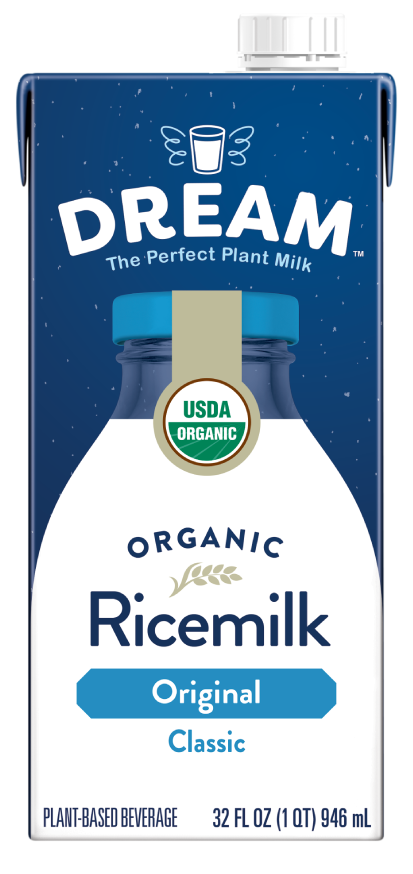
Get a Custom Report on Rice Milk Nutrition Data – Contact Us!
What are the Types of Rice Milks?
The types of Rice Milk include Unsweetened, Original Sweetened, Vanilla, Chocolate, and Protein-Fortified. The table below outlines the nutritional differences across these specific categories.
| Type | Description | Calories (Per 240ml) | Calorie Qualifications |
|---|---|---|---|
|
Unsweetened Rice Milk
|
Filtered water and brown rice. | 113 | The natural enzymatic sugars provide a moderate calorie count without additives. |
|
Original Rice Milk
|
Sweetened with sugarcane or oils. | 130 | Added sweeteners and oils increase the caloric density. |
|
Vanilla Rice Milk
|
Infused with natural vanilla flavor. | 140 | Flavoring agents and extra sugar raise the energy load. |
|
Chocolate Rice Milk
|
Blended with cocoa and sweeteners. | 160 | The addition of cocoa solids and sugar results in the highest calorie profile. |
|
Protein-Fortified Rice Milk
|
Enriched with pea or chickpea protein. | 120 | Added protein isolates slightly alter the caloric density while improving satiety. |
|
Brown Rice Milk
|
Made from whole grain brown rice. | 120 | The inclusion of the bran layer provides a similar calorie count to white rice versions but with more nutrients. |
What are Desserts with Rice Milk?
Rice milk serves as a naturally sweet, thin liquid base for puddings and frozen treats, allowing for a lighter texture than coconut or soy milk. The ingredient functions exceptionally well in recipes requiring a neutral flavor profile. The table below highlights selected desserts made using this grain-based extract.
| Dish Name | Calories (Estimate) | Type of Dish | Carbs (g) (Estimate) | Sugar (g) (Estimate) | Protein (g) (Estimate) | Fat (g) (Estimate) | Cuisine | Restaurants |
|---|---|---|---|---|---|---|---|---|
|
Horchata
|
240 | Beverage/Dessert | 45 | 35 | 2 | 6 | Mexican | Guelaguetza (Los Angeles, CA) |
|
Coconut Rice Pudding
|
320 | Pudding | 55 | 28 | 4 | 12 | Vegan American | Rice to Riches (New York, NY) |
|
Vegan Vanilla Shake
|
450 | Frozen Dessert | 75 | 55 | 2 | 14 | American Vegan | Next Level Burger (Portland, OR) |
|
Mochi Ice Cream (Vegan)
|
180 | Frozen Dessert | 35 | 22 | 2 | 5 | Japanese Fusion | Mochidoki (New York, NY) |
|
Chia Seed Parfait
|
260 | Pudding | 32 | 14 | 6 | 10 | Health Food | First Watch (Bradenton, FL) |
|
Rice Milk Gelato
|
210 | Frozen Dessert | 38 | 25 | 1 | 6 | Italian Vegan | Amorino (New York, NY) |
|
Vegan French Toast
|
420 | Breakfast/Dessert | 65 | 24 | 8 | 12 | American Brunch | The Butcher's Daughter (Venice, CA) |
|
Mango Sticky Rice (Sub)
|
480 | Dessert | 85 | 45 | 5 | 10 | Thai | Pok Pok (Portland, OR - Closed/Historical ref) |
|
Golden Milk
|
150 | Beverage | 22 | 14 | 1 | 5 | Ayurvedic | Cafe Gratitude (Los Angeles, CA) |
|
Vegan Churros (Dip)
|
380 | Pastry | 50 | 25 | 4 | 18 | Mexican | Churros Calientes (Los Angeles, CA) |
|
Berry Rice Smoothie
|
290 | Smoothie | 60 | 45 | 2 | 2 | American | Smoothie King (Dallas, TX) |
|
Matcha Latte (Iced)
|
160 | Beverage | 28 | 18 | 1 | 3 | Japanese American | Cha Cha Matcha (New York, NY) |
|
Cinnamon Rice Milk
|
140 | Beverage | 26 | 16 | 1 | 2 | Mexican | L&L Hawaiian Barbecue (Honolulu, HI) |
|
Vegan Crepes
|
220 | Pastry | 30 | 12 | 4 | 8 | French | Crepeville (Sacramento, CA) |
|
Pumpkin Spice Latte
|
280 | Beverage | 45 | 38 | 2 | 8 | American Cafe | Peet's Coffee (Berkeley, CA) |
What are the Main Dishes with Rice Milk?
Rice milk functions as a light, neutral binder in savory vegan cooking, particularly in soups and white sauces where a lack of nut flavor is desired. The liquid thickens slightly when heated, making the ingredient suitable for béchamel and creamy bases. The list below outlines recipes that include this ingredient.
| Dish Name | Calories (Estimate) | Type of Dish | Carbs (g) (Estimate) | Sugar (g) (Estimate) | Protein (g) (Estimate) | Fat (g) (Estimate) | Cuisine | Restaurants |
|---|---|---|---|---|---|---|---|---|
|
Vegan Mac and Cheese
|
520 | Pasta Entree | 75 | 6 | 14 | 18 | American Comfort | Planta (Miami, FL) |
|
Creamy Tomato Soup
|
280 | Soup | 35 | 12 | 4 | 10 | American | Panera Bread (St. Louis, MO) |
|
Vegan Alfredo Pasta
|
610 | Pasta Entree | 80 | 4 | 12 | 22 | Italian American | Double Zero (New York, NY) |
|
Corn Chowder
|
340 | Soup | 45 | 8 | 6 | 14 | American | Veggie Grill (Santa Monica, CA) |
|
Savory Oatmeal
|
310 | Breakfast Bowl | 55 | 2 | 8 | 6 | Health Food | Pret A Manger (New York, NY) |
|
Vegan Mashed Potatoes
|
240 | Side Dish | 35 | 2 | 4 | 8 | American | The Chicago Diner (Chicago, IL) |
|
Cream of Mushroom Soup
|
260 | Soup | 22 | 4 | 5 | 16 | Vegan American | True Food Kitchen (Phoenix, AZ) |
|
Vegan Biscuits and Gravy
|
580 | Breakfast Entree | 65 | 5 | 10 | 32 | Southern Vegan | Spiral Diner (Dallas, TX) |
|
Green Curry (Light)
|
420 | Curry Entree | 45 | 12 | 15 | 18 | Thai Fusion | Real Thai (San Francisco, CA) |
|
Vegan Lasagna
|
550 | Pasta Entree | 60 | 8 | 18 | 20 | Italian Vegan | Crossroads Kitchen (Los Angeles, CA) |
|
Creamy Polenta
|
290 | Side Dish | 40 | 2 | 6 | 10 | Italian | Bottiglia Cucina & Enoteca (Henderson, NV) |
|
Vegan Clam Chowder
|
320 | Soup | 38 | 5 | 8 | 14 | American Seafood | Ivar's (Seattle, WA) |
|
Rice Milk Risotto
|
480 | Rice Entree | 65 | 2 | 10 | 16 | Italian | Civico 1845 (San Diego, CA) |
|
Vegan Pot Pie
|
560 | Baked Entree | 55 | 6 | 12 | 28 | American | Modern Love (Omaha, NE) |
|
Creamy Grits
|
350 | Breakfast Side | 48 | 1 | 6 | 14 | Southern | The Grit (Athens, GA) |
What Cuisines Prefer Rice Milk the Most?
Rice milk functions as a foundational element in Mexican, Vegan American, and Japanese culinary traditions. The table that follows identifies food cultures that rely heavily on this grain-based extract.
| Cuisine | Dish | Types of Rice Milk Use | Calories (Estimate) | Restaurant(s) |
|---|---|---|---|---|
|
Mexican
|
Horchata | Beverage Base | 240 | Guelaguetza (Los Angeles, CA) |
|
Vegan American
|
Mac and Cheese | Sauce Base | 520 | Planta (Miami, FL) |
|
Japanese
|
Mochi | Dough Hydration | 180 | Mochidoki (New York, NY) |
|
Spanish
|
Horchata de Chufa | Beverage Base | 220 | Despaña (New York, NY) |
|
Thai
|
Mango Sticky Rice | Sweet Sauce | 480 | Pok Pok (Portland, OR) |
|
Italian Vegan
|
Risotto | Cream Substitute | 480 | Civico 1845 (San Diego, CA) |
|
Southern American
|
Biscuits and Gravy | Gravy Liquid | 580 | Spiral Diner (Dallas, TX) |
|
Health Food
|
Chia Pudding | Soaking Liquid | 260 | First Watch (Bradenton, FL) |
|
French Vegan
|
Crepes | Batter Liquid | 220 | Crepeville (Sacramento, CA) |
|
Ayurvedic
|
Golden Milk | Carrier Liquid | 150 | Cafe Gratitude (Los Angeles, CA) |
|
American Cafe
|
Latte | Dairy Alternative | 140 | Peet's Coffee (Berkeley, CA) |
|
Korean
|
Sikhye | Fermented Drink | 120 | Cho Dang Gol (New York, NY) |
|
Chinese
|
Congee | Thinning Agent | 210 | Congee Village (New York, NY) |
|
Peruvian
|
Arroz con Leche | Pudding Base | 320 | La Mar (San Francisco, CA) |
|
Indian Vegan
|
Kheer | Pudding Base | 350 | Vatan (New York, NY) |
Which Countries Produce the Most Rice Milk?
The United States, Thailand, and Italy dominate the manufacturing sectors for rice milk due to robust rice agriculture and advanced food processing technologies. The United States leads innovation in shelf-stable packaging and flavored varieties through brands like Rice Dream. Thailand utilizes massive domestic rice yields to produce beverages for export across Asia and Europe. Italy contributes significantly to the European market, leveraging the rice production of the Po Valley. The table below shows the estimated production of processed rice beverages (in Million Liters) for the top producing nations over the last two decades.
| Country | 2003 | 2008 | 2013 | 2018 | 2019 | 2020 | 2021 | 2022 |
|---|---|---|---|---|---|---|---|---|
| United States | 45 | 60 | 85 | 110 | 115 | 120 | 125 | 130 |
| Thailand | 20 | 35 | 55 | 70 | 75 | 78 | 82 | 85 |
| Italy | 15 | 25 | 40 | 55 | 58 | 60 | 62 | 65 |
| Spain | 10 | 15 | 25 | 35 | 38 | 40 | 42 | 45 |
| Germany | 5 | 10 | 20 | 30 | 32 | 35 | 38 | 40 |
| Japan | 8 | 12 | 18 | 25 | 26 | 28 | 30 | 32 |
| United Kingdom | 4 | 8 | 15 | 22 | 24 | 26 | 28 | 30 |
| France | 3 | 7 | 12 | 18 | 20 | 22 | 24 | 26 |
Which Countries Consume the Most Rice Milk?
The United States, the United Kingdom, and Germany consume the highest volumes of rice milk, driven by the demand for hypoallergenic dairy alternatives. The United States represents the largest single market, where the beverage serves as a standard option in coffee shops and grocery stores. The United Kingdom utilizes the liquid extensively in tea and cereal consumption among lactose-intolerant populations. Germany favors organic rice drinks as part of a broader shift toward plant-based nutrition. The table below shows the estimated consumption volumes of rice milk for key markets over the last two decades.
| Country | 2003 | 2008 | 2013 | 2018 | 2019 | 2020 | 2021 | 2022 |
|---|---|---|---|---|---|---|---|---|
| United States | 40 | 55 | 80 | 100 | 105 | 110 | 115 | 118 |
| United Kingdom | 5 | 10 | 25 | 40 | 42 | 45 | 48 | 50 |
| Germany | 4 | 8 | 22 | 35 | 38 | 42 | 45 | 48 |
| Canada | 3 | 6 | 15 | 25 | 27 | 29 | 31 | 33 |
| Spain | 8 | 12 | 20 | 28 | 30 | 32 | 34 | 36 |
| France | 2 | 5 | 12 | 20 | 22 | 24 | 26 | 28 |
| Italy | 2 | 4 | 10 | 18 | 20 | 22 | 24 | 26 |
| Australia | 1 | 3 | 8 | 15 | 16 | 18 | 19 | 20 |
How Do Prices of Rice Milk-Including Dishes Change?
Restaurant costs for rice-based beverages and desserts have increased, reflecting the broader inflation of labor and ingredients. The table below illustrates price adjustments for selected items at well-known establishments and retail outlets.
| Brand/Restaurant | Dish | Old Price (Year) | Current Price (2024/2025) |
|---|---|---|---|
| Guelaguetza | Horchata (Glass) | $3.50 (2015) | $5.50 - $7.00 |
| Rice to Riches | Rice Pudding (Solo) | $7.50 (2014) | $11.25 - $12.50 |
| Rice Dream (Retail) | Original Rice Drink (32oz Carton) | $4.29 (2013) | $5.49 - $9.99 |
| Next Level Burger | Vegan Vanilla Shake (Rice/Soy Base) | $6.00 (2017) | $6.95 - $10.95 |
| Peet’s Coffee | Cold Brew Oat Latte (Horchata) | $5.00 (2017) | $6.90 - $6.95 |
What is the Rice Milk Calorie for 100 Grams?
A 100g serving of unsweetened rice milk contains 47 calories, while a 100g serving of organic whole plant-based rice milk provides 71 calories. A 100g serving of fresh raw rice milk supplies 58 calories.
What is the Rice Milk Calorie for 1 KG?
One liter (1000g) of unsweetened rice milk contains 470 calories, while one liter (1000g) of organic whole plant-based rice milk provides 710 calories. One liter (1000g) of fresh raw rice milk supplies 580 calories.
What is the Calorie of 1 Rice Milk?
A single-serve carton of unsweetened rice milk (240g or 8oz) contains 113 calories, while a carton of organic whole plant-based rice milk (240g or 8oz) provides 170 calories. Market formulations yield distinct caloric figures, as a cup of Better Than Milk Rice Milk (240ml) contains 150 calories. A serving of Okf Rice Milk (6 fl oz) provides 72 calories, whereas a portion of Macro Rice Milk (100ml) supplies 55 calories.
What are the Health Benefits of Rice Milk?
Rice milk is a hypoallergenic beverage suitable for individuals with lactose intolerance, soy allergies, or nut sensitivities. Rice milk provides a rapid source of energy due to the high carbohydrate content derived from the natural starch of the grain.
- Supports Hypoallergenic Diets: The beverage lacks common allergens such as casein, whey, and nut proteins, making the liquid safe for sensitive immune systems. A study by Vanga, S. K., & Raghavan, V. (2018), "How well do plant based alternatives fare nutritionally compared to cow’s milk?," confirmed that rice milk serves as the most viable alternative for patients with multiple food allergies due to the absence of reactive proteins.
- Provides Rapid Energy: The breakdown of rice starch yields simple sugars that the body absorbs quickly for immediate metabolic fuel. Research by Atkinson, F. S., et al. (2008), "International tables of glycemic index and glycemic load values: 2008," established that rice-based beverages possess a high glycemic index, ensuring efficient glycogen replenishment for athletes post-exercise.
- Enhances Bone Strength: Manufacturers fortify the liquid with calcium and Vitamin D to mimic the nutritional profile of dairy. A study by Shkembi, B., et al. (2021), " Calcium Absorption from Food Products: Food Matrix Effects," demonstrated that calcium-fortified plant beverages maintain bone mineral density effectively when consumed regularly.
What are the Downsides of Rice Milk?
Rice milk remains safe for most populations, yet specific nutritional drawbacks exist regarding sugar content and trace mineral contamination. Nutritionists recommend limiting intake to 240ml daily and choosing unsweetened soy milk as a higher-protein alternative to mitigate potential blood sugar spikes. The following list details specific negative health implications.
- Contains Inorganic Arsenic: The rice plant naturally absorbs arsenic from soil and water, which concentrates in the grain and resulting milk. A study by Hojsak, I., et al. (2015), "Arsenic in rice: a cause for concern," advised that infants and young children should avoid exclusive consumption of rice drinks to prevent excessive exposure to this heavy metal.
- Elevates Blood Glucose: The beverage possesses a high glycemic load due to the enzymatic conversion of starches into sugars during processing. Research by Hu, E. A., et al. (2012), "White rice consumption and risk of type 2 diabetes: meta-analysis and systematic review," found that high intake of rapidly digested rice products correlates with an increased risk of insulin resistance.
- Lacks Protein Content: The liquid offers negligible protein compared to cow or soy milk, failing to support muscle repair independently. A study by Singhal, S., et al. (2017), "A Comparison of the Nutritional Value of Cow's Milk and Nondairy Beverages," noted that rice milk contains the lowest protein concentration among popular plant-based alternatives, necessitating dietary supplementation.
Is Rice Milk Good for You?
Yes, rice milk is good for health because the beverages provide a safe, digestible option for individuals with severe food allergies and offer fortified micronutrients supporting skeletal health. Digestive health benefits from the absence of lactose and allergenic proteins which prevents gastrointestinal distress as explored by Vanga, S. K., & Raghavan, V. (2018), "How well do plant based alternatives fare nutritionally compared to cow’s milk?." Cardiovascular function remains stable due to the naturally low fat and cholesterol-free profile of the grain as detailed in the study by Mäkinen, O. E., et al. (2016), "Foods for Special Dietary Needs: Non-dairy Plant-based Milk Substitutes and Fermented Dairy-type Products." Immune defense strengthens through the addition of Vitamin B12 and Vitamin D in commercial formulas as confirmed by the study from Abbaspour, N., et al. (2014), "Review on iron and its importance for human health."
Is Rice Milk Good for Your Stomach?
Yes, rice milk is good for the stomach due to the hypoallergenic nature of the grain and the absence of fermentable sugars that cause bloating. The beverage ranks as a low-residue food, meaning the body digests the liquid almost entirely with minimal waste. Dietitians suggest a consumption rate of 240ml daily to avoid overloading the system with simple carbohydrates. A study by Misselwitz, B., et al. (2019), "Update on lactose malabsorption and intolerance," confirmed that lactose-free beverages like rice milk prevent the abdominal pain and diarrhea associated with dairy consumption. Research by Gibson, P. R., & Shepherd, S. J. (2010), "Evidence-based dietary management of functional gastrointestinal symptoms: The FODMAP approach," identified rice milk as a Low-FODMAP food suitable for managing Irritable Bowel Syndrome (IBS). Further evidence by Vanga, S. K., & Raghavan, V. (2018), "How well do plant based alternatives fare nutritionally compared to cow’s milk?," highlighted the high digestibility score of rice proteins, reducing the risk of gastric irritation.
How Does Calorie Change According to Rice Milk Types?
Calorie levels change mainly due to added sweeteners and flavor components. Chocolate rice milk ranks highest per serving because added sugar offsets cocoa bitterness. Unsweetened rice milk sits at the lower end, though natural starch conversion results in a higher carbohydrate level than almond or hemp milk. Protein-enhanced options fall in the middle, offering extra macronutrients with a balanced calorie range.
Is Rice Milk a Low-Calorie Alternative to Regular Milk?
No, rice milk is not a low-calorie alternative to regular milk when compared to skim or almond milk, as the beverage contains a high concentration of carbohydrates derived from the grain. A standard cup of unsweetened rice milk contains 113 calories, which exceeds the 83 calories found in non-fat dairy milk. The enzymatic hydrolysis process used to create the milk converts rice starch into sugar, resulting in a calorie density comparable to 2% cow's milk.
Can Rice Milk be Used in Smoothies?
Yes, rice milk can be used in smoothies as a lightweight liquid base that adds natural sweetness without the thickness of yogurt or bananas. The high carbohydrate content aids in masking the bitterness of leafy greens like kale or spinach.
What is the Origin of Rice Milk?
The concept of rice milk dates back centuries to the creation of Horchata in North Africa and Spain, though the original version utilized tiger nuts before evolving into the rice-based Horchata de Arroz in Mexico. Commercial rice milk as a dairy alternative emerged in the United States during the early 1980s. Robert Nissenbaum founded Rice Dream in California in 1982, pioneering the enzymatic process that creates the naturally sweet, shelf-stable beverage found in supermarkets today. The product gained widespread popularity in the 1990s as awareness of lactose intolerance and soy allergies increased, establishing the liquid as a staple in the growing plant-based market.
Explore More Beverages
Discover more Beverages with detailed nutrition facts, calorie counts, vitamins, minerals, and health benefits. Compare similar foods, serving sizes, macronutrients, and key nutrients to find the best option for your diet and nutrition goals.
 Almond Milk calories
 Aloe Vera Juice calories
 Americano calories
 Apple Cider calories
 Apple Juice calories
 Apricot Juice calories
 Aronia Juice calories
 Avocado Shake calories
 Banana Juice calories
 Baobab Juice calories
 Barley Tea calories
 Beer calories