Calories and Nutritions in Rooibos Tea
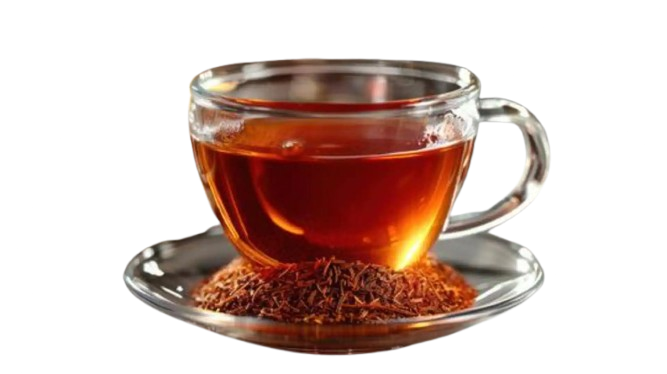
Rooibos tea is a hydrating low-calorie caffeine-free beverage derived from the leaves of the Aspalathus linearis plant. A large 480ml serving of rooibos tea contains just 4 calories. A standard 240ml serving of unsweetened rooibos tea provides 2 calories and a concentrated 60ml red espresso shot contains 1 calorie. The addition of dairy increases its calorie content, with a 16 oz rooibos latte with whole milk delivering 220 calories.
An evaluation of rooibos tea nutrition facts indicates a calorie-free profile providing only 0.5g of carbohydrates and 0g of fat per 16 oz portion. Research by Persson, I. A., et al. (2010) confirms that these compounds inhibit angiotensin-converting enzymes, helping to regulate blood pressure and vascular tension. The energy content is essentially zero in brewed preparations, making the beverage an ideal hydration option for weight management.
Worldwide supply of rooibos tea is entirely dependent on the agricultural output of South Africa, specifically the Cederberg region of the Western Cape. This supply caters to international markets, where Germany, Japan, and the Netherlands consume significant quantities of this herbal resource. Within South African, American, and Japanese cuisines, the ingredient functions as a primary component in beverages, desserts like Rooibos Malva Pudding, and savory marinades for smoked meats. Wholesale prices for Rooibos tea fluctuated drastically over the last two decades, spiking during drought years before stabilizing around $8.00 to $10.00 per kilogram in 2024. Demand continues to grow globally, driven by the health benefits of this caffeine-free herbal alternative. Restaurants and cafes mirror this trend, as a Rooibos Tea Latte at Starbucks increased from $3.95 in 2014 to between $5.45 and $6.25 in 2024.
Nutrition experts recommend drinking 2-4 cups of rooibos tea per day to optimize antioxidant intake and support heart health. This minimal energy load of rooibos tea requires less than 2 minutes of walking. Despite the low energy profile, those susceptible to hormonal fluctuations should watch their intake due to the presence of phytoestrogens in the leaves.
Rooibos Tea nutrition
| Stats | Weight |
|---|---|
| Carbs | 0.6 grams |
| Protein | 0 grams |
| Fats | 0 grams |
| Sugars | 0 grams |
- Large Rooibos Tea Calories (Nutritional Facts)
- Medium Rooibos Tea Calories (Nutritional Facts)
- Small Rooibos Tea Calories (Nutritional Facts)
- Unsweetened Rooibos Tea Calories (Nutritional Facts)
- Raw Rooibos Tea Nutrition
- Sodium in Rooibos Tea
- Potassium in Rooibos Tea
- Sugar in Rooibos Tea
- Fiber in Rooibos Tea
- Protein in Rooibos Tea
- Carbs in Rooibos Tea
- Fat in Rooibos Tea
- Vitamins in Rooibos Tea
- Minerals in Rooibos Tea
Large Rooibos Tea Calories (Nutritional Facts)
A large serving of brewed rooibos tea (480ml or 16oz) contains 4 calories, 0g of protein, 0g of fat, 1g of carbohydrates, 0g of fiber, 0g of sugar, and 12mg of sodium. A large serving of rooibos latte with whole milk (480ml or 16oz) provides 220 calories, 10g of protein, 11g of fat, 18g of carbohydrates, 0g of fiber, 16g of sugar, and 130mg of sodium.
A medium portion of brewed rooibos tea (300ml or 10oz) provides 2 calories, 0g of protein, 0g of fat, 0.6g of carbohydrates, 0g of fiber, 0g of sugar, and 8mg of sodium. A medium portion of sweetened rooibos iced tea (300ml or 10oz) supplies 90 calories, 0g of protein, 0g of fat, 23g of carbohydrates, 0g of fiber, 22g of sugar, and 15mg of sodium.
A small cup of brewed rooibos tea (180ml or 6oz) contains 1 calorie, 0g of protein, 0g of fat, 0.4g of carbohydrates, 0g of fiber, 0g of sugar, and 4mg of sodium. A small cup of vanilla rooibos tea with honey (180ml or 6oz) provides 65 calories, 0g of protein, 0g of fat, 17g of carbohydrates, 0g of fiber, 16g of sugar, and 5mg of sodium.
A serving of unsweetened rooibos tea (240ml or 8oz) provides 2 calories, 0g of protein, 0g of fat, 0.5g of carbohydrates, 0g of fiber, 0g of sugar, and 6mg of sodium. A serving of unsweetened red espresso (60ml or 2oz) contains 1 calorie, 0g of protein, 0g of fat, 0.2g of carbohydrates, 0g of fiber, 0g of sugar, and 2mg of sodium.
A cup of fresh brewed rooibos tea (240ml) supplies 2 calories, 0g of protein, 0g of fat, 0.5g of carbohydrates, 0g of fiber, 0g of sugar, and 6mg of sodium. A cup of bottled unsweetened rooibos tea (240ml) contains 0 calories, 0g of protein, 0g of fat, 0g of carbohydrates, 0g of fiber, 0g of sugar, and 10mg of sodium.
A large serving of brewed rooibos tea (480ml or 16oz) contains 12mg of sodium (1% DV), while a large serving of rooibos latte (480ml or 16oz) provides 130mg of sodium (6% DV). A medium portion of brewed rooibos tea (300ml or 10oz) has 8mg of sodium (0% DV), whereas a medium portion of sweetened rooibos iced tea (300ml or 10oz) supplies 15mg of sodium (1% DV). A small cup of brewed rooibos tea (180ml or 6oz) contains 4mg of sodium (0% DV), and a small cup of vanilla rooibos tea with honey (180ml or 6oz) provides 5mg of sodium (0% DV). A serving of unsweetened rooibos tea (240ml or 8oz) supplies 6mg of sodium (0% DV), while a serving of unsweetened red espresso (60ml or 2oz) contains 2mg of sodium (0% DV). A cup of fresh brewed rooibos tea (240ml) contains 6mg of sodium (0% DV), whereas a cup of bottled unsweetened rooibos tea (240ml) supplies 10mg of sodium (0% DV).
A large serving of brewed rooibos tea (480ml or 16oz) contains 14mg of potassium (0% DV), while a large serving of rooibos latte (480ml or 16oz) provides 450mg of potassium (10% DV). A medium portion of brewed rooibos tea (300ml or 10oz) has 9mg of potassium (0% DV), whereas a medium portion of sweetened rooibos iced tea (300ml or 10oz) supplies 15mg of potassium (0% DV). A small cup of brewed rooibos tea (180ml or 6oz) contains 5mg of potassium (0% DV), and a small cup of vanilla rooibos tea with honey (180ml or 6oz) provides 6mg of potassium (0% DV). A serving of unsweetened rooibos tea (240ml or 8oz) supplies 7mg of potassium (0% DV), while a serving of unsweetened red espresso (60ml or 2oz) contains 2mg of potassium (0% DV). A cup of fresh brewed rooibos tea (240ml) contains 7mg of potassium (0% DV), whereas a cup of bottled unsweetened rooibos tea (240ml) supplies 5mg of potassium (0% DV).
A large serving of brewed rooibos tea (480ml or 16oz) contains 0g of sugar, while a large serving of rooibos latte (480ml or 16oz) provides 16g of sugar. A medium portion of brewed rooibos tea (300ml or 10oz) has 0g of sugar, whereas a medium portion of sweetened rooibos iced tea (300ml or 10oz) supplies 22g of sugar. A small cup of brewed rooibos tea (180ml or 6oz) contains 0g of sugar, and a small cup of vanilla rooibos tea with honey (180ml or 6oz) provides 16g of sugar. A serving of unsweetened rooibos tea (240ml or 8oz) supplies 0g of sugar, while a serving of unsweetened red espresso (60ml or 2oz) contains 0g of sugar. A cup of fresh brewed rooibos tea (240ml) contains 0g of sugar, whereas a cup of bottled unsweetened rooibos tea (240ml) supplies 0g of sugar.
A large serving of brewed rooibos tea (480ml or 16oz) provides 0g of dietary fiber (0% DV), while a large serving of rooibos latte (480ml or 16oz) contains 0g of fiber (0% DV). A medium portion of brewed rooibos tea (300ml or 10oz) has 0g of fiber (0% DV), whereas a medium portion of sweetened rooibos iced tea (300ml or 10oz) supplies 0g of fiber (0% DV). A small cup of brewed rooibos tea (180ml or 6oz) contains 0g of fiber (0% DV), and a small cup of vanilla rooibos tea with honey (180ml or 6oz) provides 0g of fiber (0% DV). A serving of unsweetened rooibos tea (240ml or 8oz) supplies 0g of fiber (0% DV), while a serving of unsweetened red espresso (60ml or 2oz) contains 0g of fiber (0% DV). A cup of fresh brewed rooibos tea (240ml) contains 0g of fiber (0% DV), whereas a cup of bottled unsweetened rooibos tea (240ml) supplies 0g of fiber (0% DV).
A large serving of brewed rooibos tea (480ml or 16oz) provides 0g of protein (0% DV), while a large serving of rooibos latte (480ml or 16oz) contains 10g of protein (20% DV). A medium portion of brewed rooibos tea (300ml or 10oz) has 0g of protein (0% DV), whereas a medium portion of sweetened rooibos iced tea (300ml or 10oz) supplies 0g of protein (0% DV). A small cup of brewed rooibos tea (180ml or 6oz) contains 0g of protein (0% DV), and a small cup of vanilla rooibos tea with honey (180ml or 6oz) provides 0g of protein (0% DV). A serving of unsweetened rooibos tea (240ml or 8oz) supplies 0g of protein (0% DV), while a serving of unsweetened red espresso (60ml or 2oz) contains 0g of protein (0% DV). A cup of fresh brewed rooibos tea (240ml) contains 0g of protein (0% DV), whereas a cup of bottled unsweetened rooibos tea (240ml) supplies 0g of protein (0% DV).
A large serving of brewed rooibos tea (480ml or 16oz) contains 1g of carbohydrates (0% DV), while a large serving of rooibos latte (480ml or 16oz) provides 18g of carbohydrates (7% DV). A medium portion of brewed rooibos tea (300ml or 10oz) has 0.6g of carbohydrates (0% DV), whereas a medium portion of sweetened rooibos iced tea (300ml or 10oz) supplies 23g of carbohydrates (8% DV). A small cup of brewed rooibos tea (180ml or 6oz) contains 0.4g of carbohydrates (0% DV), and a small cup of vanilla rooibos tea with honey (180ml or 6oz) provides 17g of carbohydrates (6% DV). A serving of unsweetened rooibos tea (240ml or 8oz) supplies 0.5g of carbohydrates (0% DV), while a serving of unsweetened red espresso (60ml or 2oz) contains 0.2g of carbohydrates (0% DV). A cup of fresh brewed rooibos tea (240ml) contains 0.5g of carbohydrates (0% DV), whereas a cup of bottled unsweetened rooibos tea (240ml) supplies 0g of carbohydrates (0% DV).
A large serving of brewed rooibos tea (480ml or 16oz) contains 0g of total fat (0% DV), while a large serving of rooibos latte (480ml or 16oz) provides 11g of total fat (14% DV). A medium portion of brewed rooibos tea (300ml or 10oz) has 0g of total fat (0% DV), whereas a medium portion of sweetened rooibos iced tea (300ml or 10oz) supplies 0g of total fat (0% DV). A small cup of brewed rooibos tea (180ml or 6oz) contains 0g of total fat (0% DV), and a small cup of vanilla rooibos tea with honey (180ml or 6oz) provides 0g of total fat (0% DV). A serving of unsweetened rooibos tea (240ml or 8oz) supplies 0g of total fat (0% DV), while a serving of unsweetened red espresso (60ml or 2oz) contains 0g of total fat (0% DV). A cup of fresh brewed rooibos tea (240ml) contains 0g of total fat (0% DV), whereas a cup of bottled unsweetened rooibos tea (240ml) supplies 0g of total fat (0% DV).
A large serving of brewed rooibos tea (480ml or 16oz) provides 0mg of Vitamin C (0% DV), while a large serving of rooibos latte (480ml or 16oz) contains 2.4mcg of Vitamin D (12% DV) and 180mcg of Vitamin A (20% DV). A medium portion of brewed rooibos tea (300ml or 10oz) has 0mg of Vitamin C (0% DV), whereas a medium portion of sweetened rooibos iced tea (300ml or 10oz) supplies 0mg of Vitamin C (0% DV). A small cup of brewed rooibos tea (180ml or 6oz) contains 0mg of Vitamin C (0% DV), and a small cup of vanilla rooibos tea with honey (180ml or 6oz) provides 0mg of Vitamin C (0% DV). A serving of unsweetened rooibos tea (240ml or 8oz) supplies 0mg of Vitamin C (0% DV), while a serving of unsweetened red espresso (60ml or 2oz) contains 0mg of Vitamin C (0% DV). A cup of fresh brewed rooibos tea (240ml) contains 0mg of Vitamin C (0% DV), whereas a cup of bottled unsweetened rooibos tea (240ml) supplies 0mg of Vitamin C (0% DV).
A large serving of brewed rooibos tea (480ml or 16oz) provides 0.16mg of copper (18% DV) and 0.44mg of fluoride (11% DV), while a large serving of rooibos latte (480ml or 16oz) contains 390mg of calcium (30% DV). A medium portion of brewed rooibos tea (300ml or 10oz) has 0.1mg of copper (11% DV), whereas a medium portion of sweetened rooibos iced tea (300ml or 10oz) supplies 0.1mg of copper (11% DV). A small cup of brewed rooibos tea (180ml or 6oz) contains 0.06mg of copper (7% DV), and a small cup of vanilla rooibos tea with honey (180ml or 6oz) provides 0.06mg of copper (7% DV). A serving of unsweetened rooibos tea (240ml or 8oz) supplies 0.07mg of copper (8% DV) and 0.22mg of fluoride (6% DV), while a serving of unsweetened red espresso (60ml or 2oz) contains 0.02mg of copper (2% DV). A cup of fresh brewed rooibos tea (240ml) contains 0.07mg of copper (8% DV), whereas a cup of bottled unsweetened rooibos tea (240ml) supplies 0mg of copper (0% DV).
Get a Custom Report on Rooibos Tea Nutrition Data – Contact Us!
What are the Types of Rooibos Teas?
The types of Rooibos Teas include Red, Green, Flavored, and Espresso varieties. The table below outlines the nutritional distinctions among these forms.
| Type | Description | Calories (Per 240ml) | Calorie Qualifications |
|---|---|---|---|
|
Red Rooibos
|
Traditional fermented leaves. | 2 | The oxidation process creates a rich flavor with negligible energy content. |
|
Green Rooibos
|
Unfermented, dried leaves. | 2 | The lack of fermentation preserves more antioxidants while maintaining a low caloric profile. |
|
Flavored Rooibos
|
Blended with vanilla or fruit. | 5 | Added natural flavorings or fruit pieces contribute a minimal amount of carbohydrates. |
|
Rooibos Espresso
|
Concentrated ground tea. | 4 | The high-pressure extraction increases density but keeps calories low without additives. |
|
Rooibos Latte
|
Mixed with steamed milk. | 120 | The addition of milk and sweeteners significantly increases the energy load. |
|
Iced Rooibos
|
Chilled, often sweetened. | 90 | Added sugars or syrups create a higher caloric density compared to hot infusions. |
What are Desserts With Rooibos Tea?
Rooibos tea functions as a unique flavoring agent in confectionery, imparting earthy, vanilla, and nutty notes to sweet treats. The herbal infusion serves as a liquid base for custards, a poaching liquid for fruits, and an aromatic addition to baked goods. Prominent dessert options featuring this herbal element are presented below.
| Dish Name | Calories (Estimate) | Type of Dish | Carbs (g) (Estimate) | Sugar (g) (Estimate) | Protein (g) (Estimate) | Fat (g) (Estimate) | Cuisine | Restaurants |
|---|---|---|---|---|---|---|---|---|
|
Rooibos Panna Cotta
|
320 | Custard Dessert | 25 | 18 | 4 | 22 | Italian-Fusion | The Modern (New York, NY) |
|
Red Tea Gelato
|
180 | Frozen Dessert | 28 | 24 | 3 | 7 | Italian | Amorino (Various Locations) |
|
Rooibos Malva Pudding
|
450 | Sponge Cake | 65 | 40 | 5 | 18 | South African | Kaia Wine Bar (New York, NY) |
|
Vanilla Rooibos Cupcake
|
350 | Cake | 45 | 30 | 3 | 16 | American | Sprinkles Cupcakes |
|
Rooibos Poached Pears
|
160 | Fruit Dessert | 40 | 32 | 1 | 0 | French | Le Bernardin (New York, NY) |
|
Red Espresso Tiramisu
|
420 | Layered Cake | 35 | 22 | 6 | 28 | Italian | Eataly (Various Locations) |
|
Rooibos Infused Macarons
|
90 | Cookie | 15 | 12 | 2 | 4 | French | Ladurée (New York, NY) |
|
Honeybush & Rooibos Sorbet
|
120 | Frozen Dessert | 30 | 28 | 0 | 0 | American | Jeni's Splendid Ice Creams |
|
Rooibos Caramel Tart
|
380 | Pie/Tart | 50 | 35 | 4 | 18 | South African | 10 Degrees South (Atlanta, GA) |
|
Red Velvet Rooibos Cake
|
400 | Cake | 55 | 38 | 5 | 18 | American | The Cheesecake Factory (National) |
|
Rooibos Creme Brulee
|
380 | Custard Dessert | 22 | 18 | 4 | 30 | French | Bouchon Bakery (Yountville, CA) |
|
Peach Rooibos Popsicle
|
80 | Frozen Dessert | 20 | 18 | 0 | 0 | American | The Hyppo (Florida Locations) |
|
Rooibos Milk Tart
|
310 | Pie/Tart | 35 | 20 | 6 | 14 | South African | Panera Bread |
|
Rooibos Chocolate Truffles
|
90 | Confectionery | 8 | 6 | 1 | 6 | Belgian | Neuhaus Chocolates (New York, NY) |
|
Red Tea Shortbread
|
140 | Cookie | 18 | 8 | 2 | 8 | British | The Tea Lounge (Various Locations) |
What are the Main Dishes With Rooibos Tea?
The herbal infusion serves as a tenderizer and aromatic base in savory culinary applications, particularly within smoking processes and marinades. The natural tannins break down muscle fibers in game meats, while the earthy flavor complements rich stews and glazes. Notable savory recipes that make use of this infusion are enumerated below.
| Dish Name | Calories (Estimate) | Type of Dish | Carbs (g) (Estimate) | Sugar (g) (Estimate) | Protein (g) (Estimate) | Fat (g) (Estimate) | Cuisine | Restaurants |
|---|---|---|---|---|---|---|---|---|
|
Rooibos Smoked Salmon
|
220 | Seafood Entree | 2 | 0 | 25 | 12 | American | The Oceanaire (Various Locations) |
|
Red Tea Braised Short Ribs
|
650 | Braised Entree | 15 | 8 | 45 | 45 | American | Houston's |
|
Rooibos Glazed Chicken
|
450 | Roasted Entree | 12 | 8 | 35 | 25 | South African | Nando's PERi-PERi |
|
Tea-Smoked Duck Breast
|
380 | Roasted Entree | 5 | 2 | 28 | 28 | Chinese-Fusion | Nobu |
|
Rooibos Marinated Pork Chops
|
500 | Grilled Entree | 8 | 4 | 40 | 32 | American | LongHorn Steakhouse |
|
Butternut Squash Soup (Rooibos)
|
250 | Soup Entree | 35 | 12 | 4 | 10 | American | Panera Bread |
|
Rooibos Risotto
|
400 | Rice Entree | 55 | 2 | 8 | 15 | Italian | North Italia |
|
Red Tea Vegetable Curry
|
320 | Stew Entree | 40 | 8 | 10 | 12 | Indian-Fusion | True Food Kitchen |
|
Rooibos BBQ Ribs
|
800 | Grilled Entree | 45 | 35 | 50 | 45 | American | Famous Dave's |
|
Rooibos Poached Halibut
|
280 | Seafood Entree | 2 | 0 | 30 | 15 | American | Legal Sea Foods |
|
Venison with Rooibos Jus
|
350 | Game Entree | 5 | 3 | 45 | 12 | New American | The Gramercy Tavern (New York, NY) |
|
Rooibos Lentil Stew
|
280 | Vegan Entree | 40 | 4 | 15 | 5 | Mediterranean | CAVA |
|
Tea-Brined Turkey
|
320 | Roasted Entree | 4 | 2 | 40 | 14 | American | Boston Market |
|
Rooibos Vinaigrette Salad
|
180 | Salad Entree | 12 | 8 | 2 | 14 | American | Sweetgreen |
|
Red Tea Ramen Broth
|
450 | Noodle Soup | 50 | 4 | 15 | 18 | Japanese-Fusion | Momofuku Noodle Bar (New York, NY) |
What Cuisines Prefer Rooibos Tea the Most?
Rooibos tea functions as a staple beverage and ingredient in South African and health-conscious Western culinary traditions. The following chart highlights gastronomic cultures that extensively utilize this herbal commodity.
| Cuisine | Dish | Types of Rooibos Tea Use | Calories (Estimate) | Restaurant(s) |
|---|---|---|---|---|
|
South African
|
Malva Pudding | Baking Ingredient | 450 | Kaia Wine Bar (New York, NY) |
|
American
|
Red Tea Latte | Beverage Base | 190 | Starbucks |
|
French
|
Rooibos Macaron | Flavor Infusion | 90 | Ladurée (New York, NY) |
|
Japanese
|
Rooibos Milk Tea | Beverage Base | 150 | Ippodo Tea (New York, NY) |
|
British
|
Earl Grey Rooibos | Tea Blend | 5 | The Plaza (New York, NY) |
|
Australian
|
Red Espresso | Coffee Alternative | 10 | Bluestone Lane |
|
German
|
Fruit Rooibos | Herbal Blend | 5 | Cafe Sabarsky (New York, NY) |
|
Indian
|
Rooibos Chai | Spiced Blend | 120 | Dishoom |
|
Chinese
|
Red Tea Jelly | Dessert Component | 80 | Ten Ren's Tea Time (National) |
|
Vegan/Health
|
Rooibos Smoothie | Liquid Base | 220 | Jamba Juice |
|
Italian
|
Rooibos Gelato | Frozen Dessert | 180 | Amorino (Various Locations) |
|
Portuguese
|
Rooibos Marinade | Meat Tenderizer | 450 | Nando's PERi-PERi |
|
Dutch
|
Rooibos Cookies | Baking Ingredient | 140 | Breads Bakery (New York, NY) |
|
Mexican
|
Agua de Rooibos | Chilled Beverage | 90 | La Monarca Bakery (Los Angeles, CA) |
|
Thai
|
Rooibos Iced Tea | Sweetened Beverage | 140 | Arun's Thai Restaurant (Chicago, IL) |
Which Countries Produce the Most Rooibos Teas?
The top producers of Rooibos tea are South Africa, which maintains a global monopoly on the commercial cultivation of Aspalathus linearis. The unique microclimate of the Cederberg region in the Western Cape supports the growth of this fynbos plant. Attempts to cultivate the crop in other nations like Australia and the United States failed to produce viable yields. The table below shows the annual production volume of Rooibos tea in South Africa over the last two decades.
| Country | 2003 | 2008 | 2013 | 2018 | 2019 | 2020 | 2021 | 2022 | 2023 |
|---|---|---|---|---|---|---|---|---|---|
| South Africa | 10,500 | 12,000 | 11,500 | 14,000 | 15,500 | 16,000 | 16,500 | 17,000 | 17,500 |
Which Countries Consume the Most Rooibos Teas?
The top consumers of Rooibos tea are South Africa, Germany, and Japan. Domestic usage in South Africa accounts for approximately half of the total annual crop. Germany functions as the primary export destination and distribution hub for the European Union. Japan and the Netherlands also import significant quantities due to the rising popularity of caffeine-free herbal infusions. The table below shows the estimated consumption and export volumes for Rooibos tea in key markets.
| Country | 2003 | 2008 | 2013 | 2018 | 2019 | 2020 | 2021 | 2022 | 2023 |
|---|---|---|---|---|---|---|---|---|---|
| South Africa | 4,500 | 5,500 | 5,000 | 6,500 | 7,000 | 7,200 | 7,500 | 7,800 | 8,000 |
| Germany | 2,800 | 3,200 | 3,500 | 4,000 | 4,200 | 4,400 | 4,500 | 4,600 | 4,700 |
| Japan | 800 | 1,200 | 1,500 | 2,000 | 2,100 | 2,200 | 2,300 | 2,400 | 2,500 |
| Netherlands | 600 | 800 | 1,000 | 1,200 | 1,300 | 1,400 | 1,450 | 1,500 | 1,550 |
| United Kingdom | 400 | 600 | 800 | 900 | 950 | 1,000 | 1,050 | 1,100 | 1,150 |
| United States | 300 | 500 | 700 | 850 | 900 | 950 | 1,000 | 1,050 | 1,100 |
| China | 50 | 100 | 200 | 300 | 350 | 400 | 450 | 500 | 550 |
| France | 150 | 250 | 350 | 400 | 420 | 440 | 460 | 480 | 500 |
How Do Prices of Rooibos Tea-Including Dishes Change?
Menu prices for Rooibos-based beverages and desserts have risen, reflecting higher import costs and general inflation. The table below illustrates price adjustments for selected items at well-known establishments.
| Brand/Restaurant | Dish | Old Price (Year) | Current Price (2024/2025) |
|---|---|---|---|
| Numi | Rooibos (1 box) | $3.49 (2012) | $4.29 - $7.99 |
| Anna Marie’s Teas | Red Velvet (Rooibos) | $5.25 (2013) | $6.50 - $9.50 |
| The Coffee Bean & Tea Leaf | African Sunrise Tea Latte | $8.75 (2011) | $12.70 - $14.99 |
| Beans Teas and Other Things | Rooibos Vanilla Chai Tea - 3 oz | $4.50 (2015) | $6.00 - $10.00 |
What is the Rooibos Tea Calorie for 100 Grams?
A 100g serving of brewed rooibos tea contains 1 calorie, while the same quantity of a rooibos latte with whole milk provides 46 calories. A 100g serving of sweetened rooibos iced tea supplies 30 calories, whereas a 100g portion of loose leaf rooibos tea provides 0 calories.
What is the Rooibos Tea Calorie for 1 KG?
One kilogram (1000g) of brewed rooibos tea contains 10 calories, whereas a kilogram of rooibos latte with whole milk provides 460 calories. One kilogram (1000g) of sweetened rooibos iced tea supplies 300 calories, while a kilogram of raw dry rooibos leaves provides 0 calories.
What is the Calorie of 1 Rooibos Tea?
A single cup of brewed rooibos tea (240ml) contains 2 calories, while a bottle of BOS Organic Rooibos Iced Tea (355ml) provides 70 calories. A serving of Starbucks Rooibos Tea Latte (473ml) supplies 190 calories, whereas a tea bag of Numi Organic Rooibos (2g) contains 0 calories.
What are the Health Benefits of Rooibos Tea?
Rooibos tea functions as a potent source of antioxidants and minerals that support physiological stability without the presence of caffeine. The herbal infusion aids in regulating blood pressure and protecting cellular structures from oxidative damage. The following points delineate these positive attributes.
- Supports Cardiovascular Health: The beverage inhibits angiotensin-converting enzymes (ACE), which helps regulate blood pressure and vascular tension. A study by Persson, I. A., et al. (2010), "Effects of green tea, black tea and Rooibos tea on angiotensin-converting enzyme and nitric oxide in healthy volunteers," confirmed that consumption significantly inhibits ACE activity, promoting heart health.
- Protects Liver Function: Antioxidants such as aspalathin and nothofagin present in the leaves reduce oxidative stress within hepatic tissues. Research by Ulicná, O., et al. (2006), "Hepatoprotective effect of rooibos tea (Aspalathus linearis) on CCl4-induced liver damage in rats," established that the tea minimizes tissue damage and fibrosis in the liver.
- Enhances Cellular Defense: The high polyphenol content neutralizes free radicals, preventing cellular mutation and inflammation. A study by Joubert, E., & de Beer, D. (2011), "Rooibos (Aspalathus linearis) beyond the farm gate: From herbal tea to potential phytopharmaceutical," detailed how these compounds strengthen the immune system and reduce oxidative stress markers.
What are the Downsides of Rooibos Tea?
Rooibos tea remains safe for most populations, yet specific biological interactions occur. Nutritionists suggest limiting intake to three cups daily and choosing Honeybush tea as a non-estrogenic alternative to mitigate risks. The table below shows potential adverse effects associated with high consumption.
- Increases Estrogenic Activity: The tea contains compounds that mimic estrogen, potentially affecting individuals with hormone-sensitive conditions. A study by Shimamura, N., et al. (2006), "Estrogenic activity of rooibos tea extracts," found that certain components bind to estrogen receptors, which may influence hormonal balance.
- Interacts with Drug Metabolism: Specific antioxidants in the herb can modulate the activity of cytochrome P450 enzymes, altering how the liver processes medications. Research by Matsuda, H., et al. (2007), "Effects of rooibos tea extracts on CYP enzymes," indicated that high concentrations might interfere with the metabolism of certain pharmaceutical drugs.
Are Rooibos Teas Good for You?
Yes, rooibos teas are good for health because the infusion provides antioxidants that support cardiovascular stability, liver function, and cellular integrity. Heart health improves through the inhibition of angiotensin-converting enzymes which regulate blood pressure as explored by Persson, I. A., et al. (2010), "Effects of green tea, black tea and Rooibos tea on angiotensin-converting enzyme." Liver health benefits from the reduction of oxidative stress within hepatic tissues as confirmed by Ulicná, O., et al. (2006), "Hepatoprotective effect of rooibos tea." Cellular health strengthens through the presence of aspalathin which neutralizes free radicals as detailed in the study by Joubert, E., & de Beer, D. (2011), "Rooibos (Aspalathus linearis) beyond the farm gate."
How Do Calories Change According to Rooibos Tea Types?
Energy content varies based on the processing method and added ingredients. Rooibos Lattes contain the highest caloric load due to the addition of milk and sweeteners, often exceeding 120 calories per serving. Plain Red or Green Rooibos infusions present the lowest profile with approximately 2 calories per cup, maintaining a negligible energy footprint suitable for fasting or weight management.
Does Rooibos Tea Have Caffeine?
No, rooibos tea does not contain caffeine. The plant Aspalathus linearis naturally lacks the stimulant found in Camellia sinensis or coffee beans. Rooibos tea caffeine levels remain at zero regardless of the fermentation process used to produce red or green varieties. This absence makes the beverage an ideal choice for individuals sensitive to stimulants or seeking a relaxing evening drink. Rooibos tea caffeine content analysis confirms that the herbal infusion provides a hydrating experience without disrupting sleep patterns or causing jitters.
How Much Rooibos Tea Should I Drink a Day?
Drinking six cups of rooibos tea daily provides the optimal concentration of antioxidants necessary to support heart health and reduce oxidative stress. Research by Marnewick, J. L., et al. (2011), "Effects of Rooibos (Aspalathus linearis) on oxidative stress and biochemical parameters in adults at risk for cardiovascular disease," established that this specific volume increases the total polyphenol capacity in the blood plasma. Ingesting this amount over six weeks results in measurable improvements in lipid profiles and redox status in adults at risk for cardiovascular disease.
What is the Origin of Rooibos Tea?
The Aspalathus linearis plant originated in the Cederberg region of the Western Cape in South Africa, where the indigenous Khoisan people harvested the leaves for medicinal ailments. Early inhabitants climbed the mountains to cut the needle-like leaves, which were then bruised with hammers and left to ferment in the sun before drying. European botanist Carl Thunberg documented the plant in 1772, but commercialization only began in 1904 when Benjamin Ginsberg, a Russian immigrant, recognized the marketing potential of the "Mountain Tea." Dr. Annique Theron later popularized the health benefits in 1968 after discovering the soothing effects of the infusion on allergic reactions in infants. Global exports surged in the late 20th century as the caffeine-free status appealed to international health markets.
Explore More Beverages
Discover more Beverages with detailed nutrition facts, calorie counts, vitamins, minerals, and health benefits. Compare similar foods, serving sizes, macronutrients, and key nutrients to find the best option for your diet and nutrition goals.
 Almond Milk calories
 Aloe Vera Juice calories
 Americano calories
 Apple Cider calories
 Apple Juice calories
 Apricot Juice calories
 Aronia Juice calories
 Avocado Shake calories
 Banana Juice calories
 Baobab Juice calories
 Barley Tea calories
 Beer calories