Calories and Nutritions in Sapodilla Juice
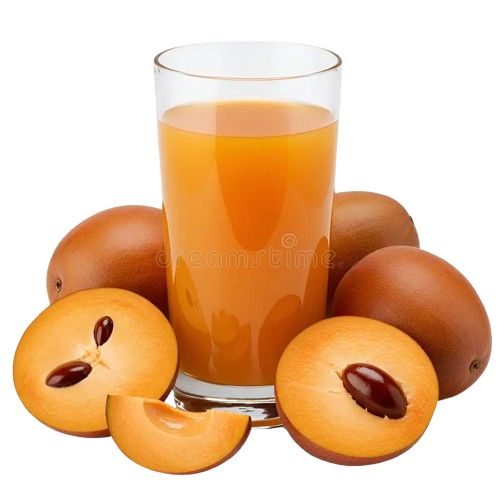
Sapodilla juice is a creamy, sweet fruit beverage featuring a distinct caramel and pear flavor profile, heavily utilized in Indian and Caribbean cuisines. The drink provides 83 calories per 100 ml serving of sapodilla juice, while a 1 cup (240 ml) glass of pure sapodilla juice yields 199 calories. A 100 ml volume delivers 20 g of carbohydrates (7% RDA), 0.4 g of protein (1% RDA), 16 g of sugars, 0.5 g of fiber (2% RDA), and 1.1 g of fat (1% RDA). Brimming with Vitamin C at 14.7 mg (16% RDA) and potassium at 193 mg (4% RDA), the liquid offers clear nutritional value, though the simple sugars require mindful dietary planning. A study on sapodilla's health benefits by Yahia et al. (2011) shows that the fruit contains phenolic compounds that defend cells from oxidative stress, though the added metabolic load from natural sugars in beverage variations must be balanced within daily caloric limits.
Shoppers frequently spot multiple forms of the sapodilla drink on specialty grocery shelves, such as 100% Sapodilla Juice, Chikoo Shake, and Sapodilla Nectar. Because of its comforting texture, it functions prominently in commercial Indian cafes and regional diners, highlighted in 5 recognized desserts at established restaurants, including the Chikoo Milkshake at Saravanaa Bhavan and the Naseberry Ice Cream at Golden Krust.
The start of sapodilla juice as a commercial beverage originates from Mexico and Central America, where early agrarian societies cultivated the tree, later evolving into the pasteurized liquids and milkshakes distributed globally today. Agricultural tracking organizations monitor the core fruit ingredient, classifying the harvest within the tropical fruits industry led by India, which yielded 10,900 kt in 2026. The food supply data indicates heavy consumption of these fruits across India and Indonesia. The average global export cost for a kilogram of raw tropical fruits has grown from $0.45 USD in 2007 to $1.25 USD in 2026.
Nutritionists recommend drinking sapodilla juice with strict portion control. A medium 240 ml (1 cup) glass of sapodilla juice adds 199 calories, which can be burned by engaging in 22 minutes of swimming at a steady pace for an average sized woman or 18 minutes of moderate bicycling for an average sized man.
Sapodilla Juice nutrition
| Stats | Weight |
|---|---|
| Carbs | 48 grams |
| Protein | 0.9 grams |
| Fats | 0 grams |
| Sugars | 38 grams |
- Large Sapodilla Juice Calories (Nutritional Facts)
- Medium Sapodilla Juice Calories (Nutritional Facts)
- Small Sapodilla Juice Calories (Nutritional Facts)
- Raw Sapodilla Juice Nutrition
- Sodium in Sapodilla Juice
- Potassium in Sapodilla Juice
- Sugar in Sapodilla Juice
- Fiber in Sapodilla Juice
- Protein in Sapodilla Juice
- Carbs in Sapodilla Juice
- Fat in Sapodilla Juice
- Vitamins in Sapodilla Juice
- Minerals in Sapodilla Juice
Large Sapodilla Juice Calories (Nutritional Facts)
Sapodilla juice contains 398 calories in a large 480 ml (2 cups) serving. This 480 ml (2 cups) volume delivers 5.2 g of total fat, 1.9 g of protein, 96 g of carbohydrates, and 76 g of sugar. A large 480 ml (2 cups) glass of sweetened chikoo shake holds 480 calories because local vendors blend the fruit with whole milk and refined cane sugar.
Sapodilla juice yields 199 calories when poured into a medium 240 ml (1 cup) glass. This 240 ml (1 cup) amount supplies 2.6 g of total fat, 0.9 g of protein, 48 g of carbohydrates, and 38 g of sugar. A 240 ml (1 cup) serving of a sapodilla juice and water blend provides 120 calories due to the added physical volume of plain water.
Sapodilla juice introduces 83 calories to a diet within a small 100 ml tasting portion. This 100 ml volume consists of 1.1 g of total fat, 0.4 g of protein, 20 g of carbohydrates, and 16 g of sugar.
Sapodilla juice provides 83 calories, 1.1 g of total fat, 0.4 g of protein, 20 g of total carbohydrates, and 0.5 g of dietary fiber per 100 ml of the raw liquid. The nutritional composition of this pressed Manilkara zapota beverage relies heavily on natural fructose and sucrose, supplying essential micronutrients like Vitamin C and copper with a very low amount of plant fats.
Sapodilla juice holds 12 mg of sodium per 100 ml serving, which accounts for 0% of the Daily Value (DV). This low sodium presence makes the brown drink safe for strict blood pressure management diets.
Sapodilla juice supplies 193 mg of potassium per 100 ml serving, meeting 4% of the DV. This mineral transfers directly from the pressed fruit flesh and assists in proper muscle contraction and fluid balance.
Sapodilla juice contains 16 g of sugar per one hundred milliliters. This sugar is made up of naturally occurring fructose and sucrose from the fruit flesh, rendering pure commercial extracts quite high in natural sweetness compared to other fruit juices.
Sapodilla juice yields 0.5 g of dietary fiber per 100 ml serving, satisfying 2% of the DV. The industrial juicing process filters out the skin and black seeds, extracting the vast majority of the natural 5.3 g of fiber found in the whole plant.
Sapodilla juice gives 0.4 g of protein per 100 ml serving.
Sapodilla juice carries 20 g of total carbohydrates per 100 ml serving.
Sapodilla juice contains 1.1 g of total fat per 100 ml serving.
Sapodilla juice offers 14.7 mg of Vitamin C (16% DV) and 60 IU of Vitamin A (1% DV) in a 100 ml serving. These vitamins support regular immune cell production and skin elasticity.
Sapodilla juice features 21 mg of Calcium (2% DV), 12 mg of Magnesium (3% DV), and 0.8 mg of Iron (4% DV) per 100 ml. The juice also contains 0.08 mg of Copper, fulfilling 9% of the DV.
Get a Custom Report on Sapodilla Juice Nutrition Data – Contact Us!
What are the Types of Sapodilla Juice?
Consumers looking for sapodilla juice will find 3 distinct commercial variations available in specialty markets and Asian grocery stores. The table below shows the common sapodilla juice types and their calorie information.
| Type | Description | Calories (per 100ml) | Calorie Differences & Qualifications |
|---|---|---|---|
|
100% Sapodilla Juice
|
Pure liquid pressed from fresh brown sapodillas with no added sweeteners. | 83 | Baseline energy for the pure fruit beverage. |
|
Chikoo Shake
|
A popular Indian beverage blending sapodilla pulp with whole milk and sugar. | 115 | Higher calories due to added dairy fats and refined sucrose. |
|
Sapodilla Nectar
|
Pure juice diluted with water and sweetened with cane sugar. | 65 | Lower calories due to the added volume of water offsetting the thick pulp. |
What are the Desserts with Sapodilla Juice?
Pastry chefs use sapodilla juice and puree to flavor bright tropical sweets like ice creams and milkshakes. Culinary professionals rely on it to impart a natural caramel and pear flavor and a light brown hue to the final dish. The table below shows desserts and beverages containing sapodilla juice that are served in restaurants.
| Dish Name | Calories | Type | Carbs | Sugar | Protein | Fat | Cuisine | Restaurants |
|---|---|---|---|---|---|---|---|---|
|
Chikoo Milkshake
|
320 | Beverage | 45g | 38g | 8g | 12g | Indian | Saravanaa Bhavan |
|
Naseberry Ice Cream (Seasonal)
|
280 | Frozen | 32g | 26g | 4g | 16g | Caribbean | Golden Krust |
|
Chikoo Kulfi
|
340 | Frozen | 38g | 30g | 6g | 18g | Indian | Dishoom |
|
Sapodilla Pudding
|
290 | Pudding | 42g | 32g | 4g | 10g | Contemporary | The Spice Route |
|
Chiku Sorbet (Seasonal)
|
180 | Frozen | 44g | 38g | 1g | 0g | Indian Fusion | Rooh |
What Cuisines Prefer Sapodilla Juice the Most?
Indian, Caribbean, and Mexican culinary traditions rely heavily on sapodilla juice to flavor beverages and sweeten frozen desserts. In India, the fruit is widely known as chikoo and is a staple ingredient for milkshakes in local cafes. Caribbean restaurants use the naseberry to flavor traditional seasonal ice creams. The table below outlines the cuisines and dishes.
| Cuisine | Dish Name | Calories | Restaurants |
|---|---|---|---|
|
Indian
|
Chikoo Milkshake | 320 | Saravanaa Bhavan |
|
Caribbean
|
Naseberry Ice Cream (Seasonal) | 280 | Golden Krust |
|
Indian
|
Chikoo Kulfi | 340 | Dishoom |
|
Contemporary
|
Sapodilla Pudding | 290 | The Spice Route |
|
Indian Fusion
|
Chiku Sorbet (Seasonal) | 180 | Rooh |
Which Countries Produce the Most Sapodilla Juice?
India, Indonesia, the Philippines, Thailand, and Vietnam lead the global cultivation of tropical fruits, which is the agricultural category encompassing sapodilla juice. In 2026, India produced 10,900.00 kilotonnes of tropical fruits based on international agricultural data. Since sapodilla juice is a manufactured beverage derived from cultivated plants, international food organizations record the harvest volume under the broader tropical fruit crop. The table below displays fresh tropical fruit production volumes over the last 20 years in kilotonnes.
| Country | 2007 | 2008 | 2009 | 2010 | 2011 | 2012 | 2013 | 2014 | 2015 | 2016 | 2017 | 2018 | 2019 | 2020 | 2021 | 2022 | 2023 | 2024 | 2025 | 2026 |
|---|---|---|---|---|---|---|---|---|---|---|---|---|---|---|---|---|---|---|---|---|
| India | 6200 | 6400 | 6700 | 7000 | 7300 | 7600 | 7900 | 8200 | 8500 | 8800 | 9100 | 9400 | 9600 | 9800 | 10000 | 10200 | 10400 | 10600 | 10800 | 10900 |
| Indonesia | 1600 | 1700 | 1800 | 1900 | 2000 | 2150 | 2300 | 2400 | 2550 | 2700 | 2800 | 2900 | 2950 | 3000 | 3050 | 3100 | 3150 | 3200 | 3250 | 3300 |
| Philippines | 2700 | 2800 | 2900 | 3000 | 3100 | 3200 | 3300 | 3400 | 3450 | 3500 | 3550 | 3600 | 3650 | 3700 | 3750 | 3800 | 3850 | 3900 | 3950 | 4000 |
| Thailand | 850 | 900 | 950 | 1000 | 1050 | 1100 | 1150 | 1200 | 1250 | 1300 | 1350 | 1400 | 1450 | 1500 | 1550 | 1600 | 1650 | 1700 | 1750 | 1800 |
| Vietnam | 750 | 800 | 850 | 900 | 950 | 1000 | 1050 | 1100 | 1150 | 1200 | 1250 | 1300 | 1350 | 1400 | 1450 | 1500 | 1550 | 1600 | 1650 | 1700 |
Which Countries Consume the Most Sapodilla Juice?
The highest dietary intake of tropical fruits, generating the supply for sapodilla juice, happens in India, Indonesia, the Philippines, Thailand, and Vietnam. The dietary integration of sweet fruit beverages remains highly prevalent in these nations, with South Asia maintaining a massive intake of the actual fruit juice through milkshakes and street vendor drinks. The table below represents the food supply of these crops for these nations based on international tracking.
| Country | 2007 | 2008 | 2009 | 2010 | 2011 | 2012 | 2013 | 2014 | 2015 | 2016 | 2017 | 2018 | 2019 | 2020 | 2021 | 2022 | 2023 | 2024 | 2025 | 2026 |
|---|---|---|---|---|---|---|---|---|---|---|---|---|---|---|---|---|---|---|---|---|
| India | 6100 | 6300 | 6600 | 6900 | 7200 | 7500 | 7800 | 8100 | 8400 | 8700 | 9000 | 9300 | 9500 | 9700 | 9900 | 10100 | 10300 | 10500 | 10700 | 10800 |
| Indonesia | 1450 | 1550 | 1650 | 1750 | 1850 | 1950 | 2050 | 2150 | 2250 | 2350 | 2450 | 2550 | 2650 | 2750 | 2850 | 2950 | 3050 | 3150 | 3250 | 3350 |
| Philippines | 2650 | 2750 | 2850 | 2950 | 3050 | 3150 | 3250 | 3350 | 3400 | 3450 | 3500 | 3550 | 3600 | 3650 | 3700 | 3750 | 3800 | 3850 | 3900 | 3950 |
| Thailand | 800 | 850 | 900 | 950 | 1000 | 1050 | 1100 | 1150 | 1200 | 1250 | 1300 | 1350 | 1400 | 1450 | 1500 | 1550 | 1600 | 1650 | 1700 | 1750 |
| Vietnam | 700 | 750 | 800 | 850 | 900 | 950 | 1000 | 1050 | 1100 | 1150 | 1200 | 1250 | 1300 | 1350 | 1400 | 1450 | 1500 | 1550 | 1600 | 1650 |
How Do Prices of Sapodilla Juice-including Dishes Change?
Dining establishments charging for sapodilla juice infused dishes and beverages have raised prices to match inflation in food sourcing and dairy ingredients. The table below compares historical price ranges from 2015 to 2017 to current 2025 to 2026 estimates in USD.
| Restaurant | Dish Name | Old Price Range (2015-17) | Current Price Range (2025-26) |
|---|---|---|---|
| Saravanaa Bhavan | Chikoo Milkshake | $4.50 to $6.00 | $7.00 to $9.50 |
| Golden Krust | Naseberry Ice Cream (Seasonal) | $3.50 to $5.00 | $5.50 to $7.50 |
| Dishoom | Chikoo Kulfi | $6.00 to $8.00 | $9.00 to $12.00 |
| The Spice Route | Sapodilla Pudding | $8.00 to $10.00 | $12.00 to $15.00 |
| Rooh | Chiku Sorbet (Seasonal) | $9.00 to $11.00 | $13.00 to $16.00 |
What is the Sapodilla Juice Calorie for 100 Grams?
Sapodilla juice contains 83 calories per one hundred grams.
What is the Sapodilla Juice Calorie for 1 KG?
Sapodilla juice provides 830 calories in one kilogram (1,000 g).
What is the Calorie of 1 Sapodilla Juice?
Sapodilla juice commercial products vary in energy density. A 1 cup (240 ml) serving of Sapodilla Juice from Kuii contains 110 calories, derived from 27 g of carbs, 0 g of fat, and 0 g of protein.
What are the Health Benefits of Sapodilla Juice?
Sapodilla juice delivers physiological perks, such as bolstering the immune system and providing rapid energy due to its Vitamin C and natural sugar content. This caramel colored liquid is a recognized pantry staple in Indian and Caribbean households. A list of the health benefits of sapodilla juice are shown below.
- Stimulates Immune Activity: The Vitamin C content actively supports the generation of white blood cells to combat infections.
- Provides Cellular Protection: The juice contains tannins and phenolic compounds that defend tissues from oxidative stress.
- Supports Bone Health: The natural calcium and copper help maintain skeletal strength and prevent bone density loss.
- Delivers Rapid Energy: Simple carbohydrates from the natural sucrose transfer glucose quickly into the bloodstream.
- Contributes to Hydration: The high water volume assists individuals in meeting daily fluid requirements.
- Supports Healthy Blood Pressure: The potassium content aids in balancing bodily sodium levels.
What are the Downsides of Sapodilla Juice?
Sapodilla juice can trigger certain physiological drawbacks, specifically rapid blood sugar elevation and weight gain due to its high carbohydrate concentration. A list of the downsides of sapodilla juice are shown below.
- Elevates Blood Sugar: Drinking juice instead of eating the whole fruit reduces fiber intake and causes a faster rise in blood sugar.
- Contributes to Weight Gain: Drinking liquid calories bypasses the fullness signals normally activated by eating whole fruit, leading to caloric surpluses over time.
- Promotes Dental Decay: Natural fruit sugars weaken tooth enamel and provide food for oral bacteria.
- Causes Throat Irritation: Extracts made from unripe sapodilla contain high amounts of latex and tannins, leading to an itchy or scratchy throat.
Are Sapodilla Juices Good for You?
Yes, sapodilla juices are a beneficial dietary choice when managed with strict portion control, providing hydration and a solid dose of copper and Vitamin C in a 100 ml serving. Healthy individuals should limit intake to 120 ml (0.5 cup) daily to secure the antioxidant properties of the fruit without taking in excess simple sugars. A study on sapodilla's health benefits by Yahia et al. (2011) shows that the fruit contains phenolic compounds that defend cells from oxidative stress. It is a sweet, functional drink requiring careful portioning.
How Do Calories Change According to Sapodilla Juice Types?
Sapodilla juice energy values fluctuate based on milk additions and liquid dilution. Standard 100% Sapodilla Juice contains 83 calories per 100 ml. If the product is a Chikoo Shake, the energy rises to 115 calories per 100 ml because producers blend the fruit with milk and cane sugar to create a rich, creamy beverage. A Sapodilla Nectar yields 65 calories per 100 ml since water dilution lowers the overall density of the natural fruit carbohydrates.
What are the Main Dishes with Sapodilla Juice?
Savory restaurant menus do not currently feature main dishes cooked with sapodilla juice. Because this liquid possesses a highly distinct brown sugar, cinnamon, and pear sweetness, it is strictly excluded from commercial savory entrees, protein preparations, and main courses.
What is the Origin of Sapodilla Juice?
The botanical origins of sapodilla juice trace back to Mexico, Central America, and the Caribbean, where the Manilkara zapota tree grows natively in warm climates. Early indigenous societies consumed the fruit whole and used the tree's sap to create an early form of chewing gum called chicle. Spanish colonizers transported the seeds to the Philippines, where it became known as chico. From there, the plant spread rapidly to India and Southeast Asia. As modern blending and pressing techniques evolved, local populations began mixing the sweet flesh with milk and water, creating the thick, caramel-flavored beverages consumed globally today.
Explore More Beverages
Discover more Beverages with detailed nutrition facts, calorie counts, vitamins, minerals, and health benefits. Compare similar foods, serving sizes, macronutrients, and key nutrients to find the best option for your diet and nutrition goals.
 Almond Milk calories
 Aloe Vera Juice calories
 Americano calories
 Apple Cider calories
 Apple Juice calories
 Apricot Juice calories
 Aronia Juice calories
 Avocado Shake calories
 Banana Juice calories
 Baobab Juice calories
 Barley Tea calories
 Beer calories