Calories and Nutritions in Soy Milk
Soy milk is a staple drink in East Asia and a popular dairy substitute in Western coffee shops. A 486ml glass of generic unsweetened soy milk contains 160 calories, while a 180g serving supplies 59 calories. A cup of unsweetened soy milk (243ml) contains 80 calories whereas a cup of original organic soy milk (240ml) provides 101 calories. A 200ml serving of Sofit Soya Milk contains 141 calories, while a 100ml serving of Community Co Soy Milk offers 62 calories. A 150ml serving of Milklab Soy Milk provides 94 calories.
A review of the soy milk nutrition facts reveals a protein-rich drink with balanced fats and carbohydrates, as 486ml of unsweetened soy milk provides 13.9g of protein, 7.8g of fat, and 8.5g of carbohydrates. Soy milk is a potent source of plant sterols which actively reduce low-density lipoprotein cholesterol in the bloodstream. A meta-analysis by Anderson, J. W., et al. (1995), "Meta-analysis of the effects of soy protein intake on serum lipids," demonstrated that regular consumption of soy protein significantly decreases serum cholesterol concentrations. The energy content stems mainly from protein and healthy fats, establishing the drink as a muscle-supporting supplement rather than just a hydration source. Fortified versions offer a rich concentration of vitamins and minerals, delivering 602.6mg of calcium (46% DV) per 486g (16oz) along with 5.8mcg of Vitamin D to aid in bone preservation.
Agricultural harvests in China, Thailand, and Vietnam drive the worldwide manufacturing of this legume-based drink, with China leading global soy milk production due to immense domestic demand. This production meets demand in major markets where China and Southeast Asian nations consume vast volumes of the beverage as a daily staple. Culinary practices in East Asia and the West rely on this ingredient to prepare staples such as Doujiang, Kongguksu, and Vegan Mac and Cheese. Rising international consumption and fluctuating raw material prices caused retail values to increase, as the price for a 64oz carton rose from $2.50 in the early 2010s to between $3.99 and $5.50 in 2024. This inflation aligns with broader market indicators, with the Producer Price Index for soybeans reaching 186.841 in 2024. Restaurant prices mirror this inflation, as a signature Tofu Pudding at Meet Fresh increased from $6.50 in 2017 to between $9.25 and $13.20 in 2024.
Dietitians suggest a daily intake of 240ml of soy milk to ensure satiety without excessive caloric intake, as an unsweetened cup contains 80 calories, an amount that requires 15 minutes of gardening to burn. Individuals monitoring salt intake should check processed varieties, as a 16 oz serving of chocolate soy milk contains 257.6mg of sodium compared to only 12mg in fresh raw versions.
Soy Milk nutrition
| Stats | Weight |
|---|---|
| Carbs | 3 grams |
| Protein | 2.78 grams |
| Fats | 1.96 grams |
| Sugars | 0 grams |
- Large Soy Milk Calories (Nutritional Facts)
- Medium Soy Milk Calories (Nutritional Facts)
- Small Soy Milk Calories (Nutritional Facts)
- Soy Milk with Cereal Calories (Nutritional Facts)
- Raw Soy Milk Nutrition
- Sodium in Soy Milk
- Potassium in Soy Milk
- Sugar in Soy Milk
- Fiber in Soy Milk
- Protein in Soy Milk
- Carbs in Soy Milk
- Fat in Soy Milk
- Vitamins in Soy Milk
- Minerals in Soy Milk
Large Soy Milk Calories (Nutritional Facts)
A large glass of unsweetened soy milk (486g or 16oz) contains 160 calories, 13.9g of protein, 7.8g of fat, 8.5g of carbohydrates, 2.4g of fiber, 2g of sugar, and 179.8mg of sodium. A large glass of original organic soy milk (480g or 16oz) provides 202 calories, 14g of protein, 8g of fat, 16g of carbohydrates, 3.8g of fiber, 12g of sugar, and 148.8mg of sodium. A large glass of unfortified vanilla soy milk (486g or 16oz) supplies 108 calories, 6.54g of protein, 3.5g of fat, 12.56g of carbohydrates, 1.2g of fiber, 7.98g of sugar, and 102mg of sodium. A large glass of chocolate soy milk (486g or 16oz) contains 306 calories, 11g of protein, 7.4g of fat, 48.4g of carbohydrates, 1.94g of fiber, 38.2g of sugar, and 257.6mg of sodium.
A medium portion of unsweetened soy milk (243g or 8oz) provides 80 calories, 6.95g of protein, 3.9g of fat, 4.25g of carbohydrates, 1.2g of fiber, 1g of sugar, and 89.9mg of sodium. A medium portion of original organic soy milk (240g or 8oz) supplies 101 calories, 7g of protein, 4g of fat, 8g of carbohydrates, 1.9g of fiber, 6g of sugar, and 74.4mg of sodium. A medium portion of unfortified vanilla soy milk (243g or 8oz) contains 54 calories, 3.27g of protein, 1.75g of fat, 6.28g of carbohydrates, 0.6g of fiber, 3.99g of sugar, and 51mg of sodium. A medium portion of chocolate soy milk (243g or 8oz) provides 153 calories, 5.5g of protein, 3.7g of fat, 24.2g of carbohydrates, 0.97g of fiber, 19.1g of sugar, and 128.8mg of sodium.
A small cup of unsweetened soy milk (180g or 6oz) contains 59 calories, 5.1g of protein, 2.9g of fat, 3.1g of carbohydrates, 0.9g of fiber, 0.7g of sugar, and 66.6mg of sodium. A small cup of original organic soy milk (180g or 6oz) provides 76 calories, 5.25g of protein, 3g of fat, 6g of carbohydrates, 1.4g of fiber, 4.5g of sugar, and 55.8mg of sodium. A small cup of unfortified vanilla soy milk (180g or 6oz) supplies 40 calories, 2.4g of protein, 1.3g of fat, 4.65g of carbohydrates, 0.44g of fiber, 2.95g of sugar, and 37.7mg of sodium. A small cup of chocolate soy milk (180g or 6oz) contains 113 calories, 4.1g of protein, 2.7g of fat, 17.9g of carbohydrates, 0.7g of fiber, 14.1g of sugar, and 95.4mg of sodium.
A bowl containing 30g of cornflakes and a medium portion of unsweetened soy milk (243g or 8oz) provides 193 calories, 8.95g of protein, 3.9g of fat, 28.25g of carbohydrates, 2.2g of fiber, 4g of sugar, and 290mg of sodium. A bowl containing 30g of cornflakes and a medium portion of original organic soy milk (240g or 8oz) supplies 214 calories, 9g of protein, 4g of fat, 32g of carbohydrates, 2.9g of fiber, 9g of sugar, and 274mg of sodium.
A cup of fresh raw soy milk (243g or 8oz) supplies 105 calories, 8g of protein, 4g of fat, 9g of carbohydrates, 2g of fiber, 1g of sugar, and 12mg of sodium. A liter (1000g) of fresh raw soy milk contains 432 calories, 32.9g of protein, 16.4g of fat, 37g of carbohydrates, 8.2g of fiber, 4.1g of sugar, and 49mg of sodium.
A large glass of unsweetened soy milk (486g or 16oz) contains 179.8mg of sodium (7% DV), while a large glass of original organic soy milk (480g or 16oz) provides 148.8mg of sodium (6% DV). A medium portion of chocolate soy milk (243g or 8oz) has 128.8mg of sodium (5% DV), whereas a medium portion of unfortified vanilla soy milk (243g or 8oz) supplies 51mg of sodium (2% DV). A small cup of unsweetened soy milk (180g or 6oz) contains 66.6mg of sodium (3% DV), and a small cup of original organic soy milk (180g or 6oz) provides 55.8mg of sodium (2% DV).
A large glass of unsweetened soy milk (486g or 16oz) provides 583.2mg of potassium (12% DV), while a large glass of original organic soy milk (480g or 16oz) contains 662.4mg of potassium (14% DV). A medium portion of chocolate soy milk (243g or 8oz) has 347.5mg of potassium (7% DV), whereas a medium portion of unfortified vanilla soy milk (243g or 8oz) supplies 118mg of potassium (2% DV). A small cup of unsweetened soy milk (180g or 6oz) contains 216mg of potassium (4% DV), and a small cup of original organic soy milk (180g or 6oz) provides 248.4mg of potassium (5% DV).
A large glass of chocolate soy milk (486g or 16oz) contains 38.2g of sugar, while a large glass of original organic soy milk (480g or 16oz) provides 12g of sugar. A medium portion of unfortified vanilla soy milk (243g or 8oz) has 3.99g of sugar, whereas a medium portion of unsweetened soy milk (243g or 8oz) supplies 1g of sugar. A small cup of chocolate soy milk (180g or 6oz) contains 14.1g of sugar, and a small cup of original organic soy milk (180g or 6oz) provides 4.5g of sugar.
A large glass of original organic soy milk (480g or 16oz) provides 3.8g of dietary fiber (14% DV), while a large glass of unsweetened soy milk (486g or 16oz) contains 2.4g of fiber (9% DV). A medium portion of chocolate soy milk (243g or 8oz) has 0.97g of fiber (3% DV), whereas a medium portion of unfortified vanilla soy milk (243g or 8oz) supplies 0.6g of fiber (2% DV). A small cup of original organic soy milk (180g or 6oz) contains 1.4g of fiber (5% DV), and a small cup of unsweetened soy milk (180g or 6oz) provides 0.9g of fiber (3% DV).
A large glass of original organic soy milk (480g or 16oz) provides 14g of protein (28% DV), while a large glass of unsweetened soy milk (486g or 16oz) contains 13.9g of protein (28% DV). A medium portion of chocolate soy milk (243g or 8oz) has 5.5g of protein (11% DV), whereas a medium portion of unfortified vanilla soy milk (243g or 8oz) supplies 3.27g of protein (6% DV). A small cup of original organic soy milk (180g or 6oz) contains 5.25g of protein (10% DV), and a small cup of unsweetened soy milk (180g or 6oz) provides 5.1g of protein (10% DV).
A large glass of chocolate soy milk (486g or 16oz) contains 48.4g of carbohydrates (18% DV), while a large glass of original organic soy milk (480g or 16oz) provides 16g of carbohydrates (6% DV). A medium portion of unsweetened soy milk (243g or 8oz) has 4.25g of carbohydrates (1.5% DV), whereas a medium portion of unfortified vanilla soy milk (243g or 8oz) supplies 6.28g of carbohydrates (2% DV). A small cup of chocolate soy milk (180g or 6oz) contains 17.9g of carbohydrates (6% DV), and a small cup of original organic soy milk (180g or 6oz) provides 6g of carbohydrates (2% DV).
A large glass of original organic soy milk (480g or 16oz) contains 8g of total fat (10% DV), while a large glass of unsweetened soy milk (486g or 16oz) provides 7.8g of total fat (10% DV). A medium portion of chocolate soy milk (243g or 8oz) has 3.7g of total fat (5% DV), whereas a medium portion of unfortified vanilla soy milk (243g or 8oz) supplies 1.75g of total fat (2% DV). A small cup of original organic soy milk (180g or 6oz) contains 3g of total fat (4% DV), and a small cup of unsweetened soy milk (180g or 6oz) provides 2.9g of total fat (4% DV).
A large glass of unsweetened soy milk (486g or 16oz) provides 5.8mcg of Vitamin D (29% DV). A medium portion of unfortified vanilla soy milk (243g or 8oz) has 0mcg of Vitamin D (0% DV) and 0mg of Vitamin C (0% DV). A medium portion of chocolate soy milk (243g or 8oz) supplies 4.1mg of Vitamin C (5% DV).
A large glass of unsweetened soy milk (486g or 16oz) provides 602.6mg of calcium (46% DV), 2.2mg of iron (12% DV), and 155.5mg of phosphorus (12% DV). A medium portion of original organic soy milk (240g or 8oz) contains 300mg of calcium (23% DV), 1.1mg of iron (6% DV), and 79.2mg of phosphorus (6% DV). A medium portion of unfortified vanilla soy milk (243g or 8oz) has 25mg of calcium (2% DV) and 0.64mg of iron (3% DV). A medium portion of chocolate soy milk (243g or 8oz) supplies 60.8mg of calcium (5% DV) and 1.2mg of iron (6% DV).
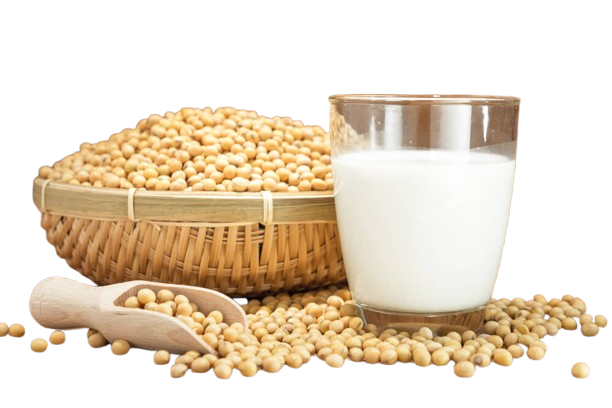
Get a Custom Report on Soy Milk Nutrition Data – Contact Us!
What are the Types of Soy Milks?
The types of Soy Milk are Unsweetened, Original, Vanilla, Chocolate, and Light/Low-Fat. The table below outlines the nutritional differences across these specific categories.
| Type | Description | Calories (Per 240ml) | Calorie Qualifications |
|---|---|---|---|
|
Unsweetened Soy Milk
|
Filtered water and soybeans. | 80 | The absence of added sugar keeps the energy density moderate. |
|
Original Soy Milk
|
Sweetened with cane sugar. | 110 | Added sweeteners increase the caloric load significantly. |
|
Vanilla Soy Milk
|
Infused with vanilla and sugar. | 100 | Flavorings and sugar result in a higher calorie count than unsweetened. |
|
Chocolate Soy Milk
|
Blended with cocoa and sugar. | 150 | Cocoa solids and high sugar content yield the highest calorie figure. |
|
Light Soy Milk
|
Fat-reduced formulation. | 70 | Removal of fat lowers the overall calorie count. |
|
Organic Soy Milk
|
Made from non-GMO beans. | 100 | Similar calorie profile to original but produced without synthetic pesticides. |
What are the Desserts With Soy Milk?
Soy milk serves as a rich, creamy base for traditional Asian desserts and modern vegan treats, providing a texture similar to dairy without the lactose. The table below highlights selected desserts made using this legume-based extract.
| Dish Name | Calories (Estimate) | Type of Dish | Carbs (g) (Estimate) | Sugar (g) (Estimate) | Protein (g) (Estimate) | Fat (g) (Estimate) | Cuisine | Restaurants |
|---|---|---|---|---|---|---|---|---|
|
Douhua (Tofu Pudding)
|
180 | Pudding | 25 | 15 | 8 | 4 | Chinese | Meet Fresh (Arcadia, CA) |
|
Soy Milk Soft Serve
|
160 | Frozen Dessert | 28 | 20 | 4 | 5 | Japanese | SomiSomi (Los Angeles, CA) |
|
Vegan Chocolate Mousse
|
250 | Pudding | 30 | 22 | 6 | 12 | Vegan American | Crossroads Kitchen (Los Angeles, CA) |
|
Soy Milk Tart
|
290 | Pastry | 35 | 18 | 5 | 14 | Hong Kong | Kee Wah Bakery (Los Angeles, CA) |
|
Matcha Soy Pudding
|
210 | Pudding | 28 | 18 | 6 | 6 | Japanese | Cha Cha Matcha (New York, NY) |
|
Vegan Cheesecake
|
420 | Cake | 45 | 28 | 8 | 24 | American Vegan | The Chicago Diner (Chicago, IL) |
|
Mango Pomelo Sago
|
280 | Dessert Soup | 50 | 35 | 5 | 6 | Hong Kong | Hui Lau Shan (Closed/Historical Ref) |
|
Soy Milk Donuts
|
260 | Pastry | 32 | 16 | 4 | 12 | American | Voodoo Doughnut (Portland, OR) |
|
Black Sesame Soy Latte
|
180 | Beverage | 22 | 14 | 7 | 6 | Korean | Caffebene (New York, NY) |
|
Vegan Flan
|
230 | Custard | 38 | 28 | 5 | 6 | Mexican Vegan | Gracias Madre (West Hollywood, CA) |
|
Soy Milk Parfait
|
240 | Layered Dessert | 35 | 20 | 9 | 5 | Health Food | Paris Baguette (New York, NY) |
|
Tau Fu Fah (Warm)
|
150 | Pudding | 22 | 12 | 7 | 3 | Malaysian | PappaRich (Flushing, NY) |
|
Vegan Gelato
|
200 | Frozen Dessert | 30 | 24 | 4 | 7 | Italian Vegan | Amorino (New York, NY) |
|
Soy Milk Pancakes
|
350 | Breakfast/Dessert | 55 | 12 | 10 | 8 | American | IHOP |
|
Red Bean Soy Soup
|
220 | Dessert Soup | 40 | 25 | 8 | 2 | Korean | Cho Dang Gol (New York, NY) |
What are the Main Dishes With Soy Milk?
Soy milk functions as a savory broth base in East Asian cuisines and a cream substitute in Western vegan cooking. The list below outlines recipes that include soy milk.
| Dish Name | Calories (Estimate) | Type of Dish | Carbs (g) (Estimate) | Sugar (g) (Estimate) | Protein (g) (Estimate) | Fat (g) (Estimate) | Cuisine | Restaurants |
|---|---|---|---|---|---|---|---|---|
|
Kongguksu (Cold Noodle)
|
450 | Noodle Soup | 75 | 4 | 20 | 8 | Korean | Hangawi (New York, NY) |
|
Tonyu Nabe (Soy Hot Pot)
|
550 | Soup/Stew | 45 | 6 | 35 | 25 | Japanese | Shabu-Tatsu (New York, NY) |
|
Vegan Carbonara
|
580 | Pasta Entree | 70 | 3 | 18 | 22 | Italian Vegan | Pura Vita (West Hollywood, CA) |
|
Savory Soy Milk Soup
|
220 | Breakfast Soup | 15 | 2 | 12 | 10 | Chinese | Yong He Dou Jiang (San Gabriel, CA) |
|
Tantanmen (Soy Broth)
|
650 | Ramen | 65 | 5 | 25 | 30 | Japanese | Ippudo (New York, NY) |
|
Vegan Clam Chowder
|
320 | Soup | 35 | 4 | 10 | 14 | American | Ivar's (Seattle, WA) |
|
Creamy Vegan Polenta
|
280 | Side Dish | 38 | 2 | 8 | 9 | Italian | Bottiglia Cucina & Enoteca (Henderson, NV) |
|
Soy Milk Risotto
|
490 | Rice Entree | 60 | 2 | 12 | 18 | Italian Vegan | Civico 1845 (San Diego, CA) |
|
Vegan Mac and Cheese
|
510 | Pasta Entree | 68 | 5 | 16 | 18 | American Comfort | Planta (Miami, FL) |
|
Laksa (Soy Base)
|
580 | Noodle Soup | 55 | 8 | 22 | 28 | Malaysian | Mamak (New York, NY) |
|
Creamy Mushroom Pasta
|
540 | Pasta Entree | 72 | 3 | 15 | 20 | American | True Food Kitchen (Phoenix, AZ) |
|
Vegan Corn Chowder
|
310 | Soup | 40 | 6 | 8 | 12 | American | Veggie Grill (Santa Monica, CA) |
|
Soy Milk Ramen
|
520 | Ramen | 60 | 4 | 20 | 18 | Japanese | Rakkan Ramen (Los Angeles, CA) |
|
Vegan Bechamel Lasagna
|
560 | Pasta Entree | 58 | 6 | 20 | 24 | Italian Vegan | Crossroads Kitchen (Los Angeles, CA) |
|
Creamy Tomato Bisque
|
250 | Soup | 28 | 10 | 6 | 12 | American | Panera Bread (St. Louis, MO) |
What Cuisines Prefer Soy Milk the Most?
East Asian cuisines rely heavily on soy milk as a traditional breakfast staple and soup base, while Western vegan cuisines utilize the liquid as a direct dairy replacement. The table that follows identifies food cultures that rely heavily on this legume-based extract.
| Cuisine | Dish | Types of Soy Milk Use | Calories (Estimate) | Restaurant(s) |
|---|---|---|---|---|
|
Chinese
|
Doujiang (Warm Soup) | Breakfast Beverage | 120 | Yong He Dou Jiang (San Gabriel, CA) |
|
Korean
|
Kongguksu | Cold Broth | 450 | Hangawi (New York, NY) |
|
Japanese
|
Tonyu Nabe | Hot Pot Broth | 550 | Shabu-Tatsu (New York, NY) |
|
Vegan American
|
Mac and Cheese | Sauce Base | 510 | Planta (Miami, FL) |
|
Hong Kong
|
Tofu Pudding | Dessert Base | 180 | Meet Fresh (Arcadia, CA) |
|
Taiwanese
|
Soy Milk Tea | Beverage Base | 220 | Yi Fang Taiwan Fruit Tea (New York, NY) |
|
Malaysian
|
Tau Fu Fah | Dessert Pudding | 150 | PappaRich (Flushing, NY) |
|
Italian Vegan
|
Carbonara | Cream Substitute | 580 | Pura Vita (West Hollywood, CA) |
|
Vietnamese
|
Sua Dau Nanh | Beverage | 140 | Bambu (San Jose, CA) |
|
American Cafe
|
Soy Latte | Dairy Alternative | 150 | Starbucks (Seattle, WA) |
|
Thai
|
Soy Milk Custard | Dessert Base | 210 | Pok Pok (Portland, OR - Historical) |
|
Health Food
|
Protein Smoothie | Liquid Base | 280 | Smoothie King (Dallas, TX) |
|
French Vegan
|
Quiche Batter | Egg/Milk Sub | 320 | Le Pain Quotidien (New York, NY) |
|
Southern Vegan
|
Biscuits and Gravy | Gravy Liquid | 520 | Spiral Diner (Dallas, TX) |
|
Japanese Ramen
|
Tantanmen | Broth Creamer | 650 | Ippudo (New York, NY) |
Which Countries Produce the Most Soy Milk?
The top producers of Soy Milk are China, Thailand, and Vietnam, followed by the United States and Japan. China leads global production due to the immense domestic demand for traditional breakfast soy beverages. Thailand and Vietnam contribute significantly to the global supply through large-scale export brands like Vitasoy and Lactasoy. The United States maintains a strong market presence through brands like Silk, utilizing its vast domestic soybean agriculture. The table below shows the estimated production of processed soy beverages (in Million Liters) for the top producing nations over the last two decades.
| Country | 2004 | 2009 | 2014 | 2019 | 2020 | 2021 | 2022 | 2023 | 2024 |
|---|---|---|---|---|---|---|---|---|---|
| China | 5000 | 7500 | 9200 | 11000 | 11500 | 12000 | 12500 | 13000 | 13500 |
| Thailand | 800 | 1200 | 1800 | 2200 | 2300 | 2400 | 2500 | 2600 | 2700 |
| Vietnam | 300 | 600 | 1000 | 1400 | 1500 | 1600 | 1700 | 1800 | 1900 |
| United States | 600 | 1100 | 1500 | 1300 | 1250 | 1200 | 1150 | 1100 | 1050 |
| Japan | 500 | 700 | 900 | 1100 | 1150 | 1200 | 1250 | 1300 | 1350 |
| South Korea | 200 | 350 | 500 | 600 | 620 | 640 | 660 | 680 | 700 |
| Brazil | 150 | 300 | 500 | 600 | 610 | 620 | 630 | 640 | 650 |
| Malaysia | 100 | 200 | 350 | 450 | 470 | 490 | 510 | 530 | 550 |
Which Countries Consume the Most Soy Milk?
The top consumers of Soy Milk are China and Southeast Asian nations, specifically Thailand and Vietnam, where the drink serves as a daily staple. China represents the largest single market, utilizing the beverage as a traditional breakfast item. Thailand and Vietnam exhibit high per capita consumption rates due to the prevalence of shelf-stable soy drinks. The United States utilizes the liquid primarily as a dairy alternative in coffee and cereal, though consumption has declined slightly in favor of almond and oat milks. The table below shows the estimated consumption volumes of soy milk for key markets over the last two decades.
| Country | 2004 | 2009 | 2014 | 2019 | 2020 | 2021 | 2022 | 2023 | 2024 |
|---|---|---|---|---|---|---|---|---|---|
| China | 4900 | 7400 | 9100 | 10900 | 11400 | 11900 | 12400 | 12900 | 13400 |
| Thailand | 750 | 1150 | 1750 | 2150 | 2250 | 2350 | 2450 | 2550 | 2650 |
| Vietnam | 280 | 580 | 980 | 1380 | 1480 | 1580 | 1680 | 1780 | 1880 |
| Japan | 480 | 680 | 880 | 1080 | 1130 | 1180 | 1230 | 1280 | 1330 |
| United States | 580 | 1050 | 1450 | 1250 | 1200 | 1150 | 1100 | 1050 | 1000 |
| South Korea | 190 | 340 | 490 | 590 | 610 | 630 | 650 | 670 | 690 |
| Brazil | 140 | 290 | 490 | 590 | 600 | 610 | 620 | 630 | 640 |
| Malaysia | 90 | 190 | 340 | 440 | 460 | 480 | 500 | 520 | 540 |
How Do Prices of Soy Milk-Including Dishes Change?
Restaurant and retail store prices for soy-based beverages and desserts have increased, reflecting the broader inflation of labor and ingredients. The table below illustrates price adjustments for selected items at well-known establishments and retail outlets.
| Brand/Restaurant | Dish | Old Price | Current Price Range (2024/2025) |
|---|---|---|---|
| Silk | Original Soy Milk (64oz Carton) | $2.99 (2012) | $3.97 - $5.49 |
| Meet Fresh | Tofu Pudding (Signature) | $6.50 (2017) | $9.25 - $13.20 |
| Whole Foods Market | 365 Organic Soy Milk (64oz) | $0.99 (2013) | $1.99 - $2.79 |
What is the Soy Milk Calorie for 100 Grams?
A 100g serving of unsweetened soy milk contains 33 calories, while a 100g serving of original organic soy milk provides 42 calories. A 100g serving of unfortified vanilla soy milk supplies 22 calories. A 100g serving of chocolate soy milk contains 63 calories.
What is the Soy Milk Calorie for 1 KG?
One liter (1000g) of unsweetened soy milk contains 330 calories, while one liter (1000g) of original organic soy milk provides 420 calories. One liter (1000g) of unfortified vanilla soy milk supplies 220 calories. One liter (1000g) of chocolate soy milk contains 630 calories.
What is the Calorie of 1 Soy Milk?
A single-serve carton of unsweetened soy milk (243g) contains 80 calories, while a carton of original organic soy milk (240g) provides 101 calories. A cup of unfortified vanilla soy milk (243g) supplies 54 calories, and a serving of chocolate soy milk (243g) contains 153 calories. Different products have different calories, as a 200ml serving of Sofit Soya Milk contains 141 calories, while a 250ml portion of Farm Fresh Soy Milk provides 146 calories. A 150ml serving of Milklab Soy Milk supplies 94 calories, whereas a 100ml portion of Community Co Soy Milk contains 62 calories.
What are the Health Benefits of Soy Milk?
Soy milk functions as a nutritionally complete plant-based beverage that offers a rich profile of proteins and isoflavones. The liquid supports cardiovascular function and skeletal integrity through its unique phytochemical composition.
- Lowers Cholesterol Levels: The beverage contains soy protein which actively reduces low-density lipoprotein (LDL) cholesterol in the bloodstream. A meta-analysis by Anderson, J. W., et al. (1995), "Meta-analysis of the effects of soy protein intake on serum lipids," demonstrated that regular consumption of soy protein significantly decreases serum cholesterol concentrations, thereby reducing the risk of coronary heart disease.
- Alleviates Menopausal Symptoms: The liquid provides a high concentration of isoflavones, specifically genistein and daidzein, which mimic the activity of estrogen in the body. Research by Taku, K., et al. (2012), "Extracted or synthesized soybean isoflavones reduce menopausal hot flash frequency and severity," confirmed that soy isoflavone supplements and beverages effectively reduce the frequency and severity of hot flashes in postmenopausal women.
- Supports Bone Health: Manufacturers fortify the drink with calcium and Vitamin D, while the natural isoflavones assist in preserving bone mineral density. A study by Ma, D. F., et al. (2008), "Soy isoflavone intake inhibits bone resorption and stimulates bone formation in menopausal women," established that soy intake prevents bone loss and stimulates bone formation, offering protection against osteoporosis.
What are the Downsides of Soy Milk?
Soy milk presents specific health challenges regarding allergenic potential and hormonal interference in susceptible individuals. Nutritionists recommend limiting intake to 240ml to 480ml daily and choosing unsweetened almond milk or oat milk as alternatives for individuals with specific sensitivities.
- Triggers Allergic Reactions: The beverage ranks as one of the "Big Eight" allergens, causing severe immune responses in sensitive populations. A study by Savage, J. H., et al. (2010), "The natural history of soy allergy," noted that while many children outgrow the allergy, soy remains a potent trigger for anaphylaxis and gastrointestinal distress in allergic adults.
- Interferes with Thyroid Function: The liquid contains goitrogens which can inhibit iodine uptake and suppress thyroid function when iodine intake is low. Research by Doerge, D. R., & Sheehan, D. M. (2002), "Goitrogenic and estrogenic activity of soy isoflavones," indicated that excessive soy consumption might exacerbate hypothyroidism in individuals with compromised thyroid health or iodine deficiency.
- Contains Antinutrients: The raw bean contains phytic acid which binds to minerals like calcium, iron, and zinc, reducing their absorption rates. A study by Gibson, R. S., et al. (2010), "A review of phytate, iron, zinc, and calcium absorption," highlighted that high phytate levels in unfermented soy products can impair the bioavailability of essential micronutrients.
Is Soy Milk Good for You?
Yes, soy milk is good for health because the beverages offer the only plant-based protein source that contains all nine essential amino acids required for human nutrition. Heart health improves through the reduction of saturated fat intake and the cholesterol-lowering effects of soy protein as detailed in the study by Jenkins, D. J., et al. (2002), "Effects of high- and low-isoflavone soyfoods on blood lipids." Digestive health benefits from the absence of lactose which prevents the gastrointestinal distress associated with dairy milk as explored by Misselwitz, B., et al. (2019), "Update on lactose malabsorption and intolerance." Muscle maintenance receives support from the high biological value of soy protein which stimulates muscle protein synthesis effectively as confirmed by the study from Tang, J. E., et al. (2009), "Ingestion of whey hydrolysate, casein, or soy protein isolate: effects on mixed muscle protein synthesis at rest and following resistance exercise in young men."
Is Soy Milk Suitable for a Low-Calorie Diet?
Yes, soy milk is suitable for a low-calorie diet due to its high protein content which promotes satiety and increases the thermic effect of food. Dietitians suggest a consumption rate of 240ml daily to maximize satiety without exceeding caloric limits. A study by Neacsu, M., et al. (2014), "Appetite control and biomarkers of satiety with vegetarian (soy) and meat-based high-protein diets for weight loss in obese men," found that soy protein diets control appetite and support weight loss as effectively as meat-based diets. Research by Allison, D. B., et al. (2003), "A novel soy-based meal replacement formula for weight loss among obese individuals: a randomized controlled clinical trial," demonstrated that individuals consuming soy-based liquid replacements achieved significant reductions in body mass and fat composition. Further evidence by Velasquez, M. T., & Bhathena, S. J. (2007), "Role of dietary soy protein in obesity," established that soy protein intake correlates with reduced body weight and fat mass through the modulation of lipid metabolism.
How Does Calorie Change According to Soy Milk Types?
Calorie levels change mainly due to the addition of cane sugar and the manipulation of fat content. Chocolate soy milk ranks highest per serving because manufacturers add significant amounts of sugar to mask the bitterness of cocoa and the natural beany flavor. Unsweetened soy milk sits at the lower end of the standard range, though "Light" versions reduce calories further by removing some of the natural soybean oil. Flavored varieties like vanilla fall in the middle range, dependent entirely on the sweetener dosage used by the specific brand.
Is Soy Milk Better Than Almond Milk for Those Tracking Calories?
No, soy milk is not better than almond milk for those strictly tracking calories because almond milk contains significantly fewer calories per serving. A cup of unsweetened almond milk provides approximately 30 to 40 calories, whereas a cup of unsweetened soy milk contains roughly 80 calories. The higher calorie count in soy milk stems from its substantial protein and fat content, which offers greater nutritional density but a higher energy cost compared to the water-heavy composition of almond milk.
What is the Origin of Soy Milk?
The beverage originated in China during the Han Dynasty, where legend attributes the invention to Liu An for medicinal purposes around 164 BC. Written records of "doufujiang" first appeared in the 14th century, describing the liquid as a byproduct of tofu production rather than a standalone drink. Widespread consumption as a breakfast beverage began in the late 19th century in China before spreading to Japan and Korea. The product entered the United States market in the early 20th century, initially as a specialty health food for Seventh-day Adventists before gaining mainstream popularity in the 1980s as a lactose-free alternative.
Explore More Beverages
Discover more Beverages with detailed nutrition facts, calorie counts, vitamins, minerals, and health benefits. Compare similar foods, serving sizes, macronutrients, and key nutrients to find the best option for your diet and nutrition goals.
 Almond Milk calories
 Aloe Vera Juice calories
 Americano calories
 Apple Cider calories
 Apple Juice calories
 Apricot Juice calories
 Aronia Juice calories
 Avocado Shake calories
 Banana Juice calories
 Baobab Juice calories
 Barley Tea calories
 Beer calories