Calories and Nutritions in Tomato Juice
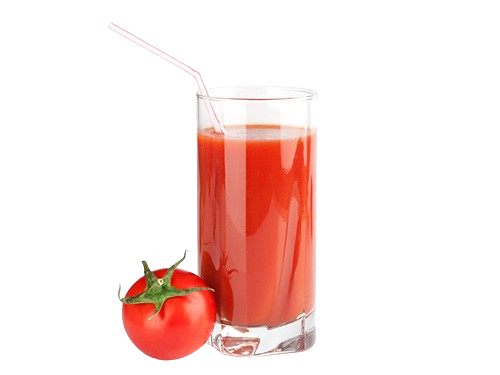
Tomato juice is a savory and nutrient-dense beverage extracted from the Solanum lycopersicum fruit, serving as a staple in Mediterranean, Mexican, and American cuisines. Calories in tomato juice are 17 calories per 100 g (3.5 oz). A small 227 g (8 oz) serving provides 39 calories, whereas a large 454 g (16 oz) serving offers 77 calories. In addition to the energy content, the tomato juice nutrition profile for a 100 g (3.5 oz) portion includes 70.1 mg of Vitamin C (78% DV), 229 mg of potassium (5% DV), and 11 mg of magnesium (3% DV). Research by Teramoto T, et al. (2019), "Tomato juice intake for six months reduces blood pressure in untreated Japanese individuals," found that regular consumption significantly decreases both systolic and diastolic blood pressure levels.
Frequently referred to by nicknames like "red gold," "liquid lycopene," or "savory fruit nectar," tomato juice beverage originated in 1917 at the French Lick Springs Hotel in Indiana before becoming a global commercial success. Common types include unsalted pure juice, salted commercial varieties, 100% vegetable blends like V8, and premium organic juices. While standard unsalted juice contains 17 calories per 100 g (3.5 oz), organic varieties such as Lakewood Organic Pure Tomato Juice provide 29 calories per 100 mL (3.4 fl oz) due to a higher concentration of natural fruit solids and fiber.
Tomato juice is a foundational component in savory main dishes such as the Manhattan Clam Chowder at Legal Sea Foods, which contains 160 calories, and Chicken Cacciatore at Maggiano's Little Italy, providing 480 calories per serving. In desserts, its natural moisture is utilized for the Tomato Soup Cake, which offers 350 calories per serving, and savory-sweet treats like Tomato Juice Gelato found at Grom. Other restaurant entities featuring tomato-based items include Chili's for its Tortilla Soup and Le Pain Quotidien for its Shakshuka.
Global production of the tomato is led by China, which produced 68,241 kt of tomatoes in 2022, followed by India at 20,694 kt and Turkey at 13,000 kt. Consumption of tomato juice remains very high in the United States and Mediterranean countries where it is used as both a drink and a culinary base. The price for a 46 fl oz (1.36 L) bottle of 100% tomato juice in the United States has risen from $1.95 USD in 2005 to $4.35 USD in 2024. Health guidelines suggest a recommended daily intake of 240 mL (8.1 oz), which contributes 41 calories to a standard adult diet.
To burn the 39 calories provided by a small 227 g (8 oz) serving of tomato juice, a person weighing 70 kg (154 lbs) must engage in 11 minutes of moderate walking at 5 km/h (3 mph). For those consuming a large 454 g (16 oz) serving containing 77 calories, the energy expenditure requires 22 minutes of walking. Alternatively, the same individual can perform 10 minutes of cycling at 20 km/h (12 mph) or 8 minutes of vigorous swimming to offset the caloric intake from a large 16 oz portion.
Tomato Juice nutrition
| Stats | Weight |
|---|---|
| Carbs | 4.32 grams |
| Protein | 0.859 grams |
| Fats | 0.288 grams |
| Sugars | 0 grams |
- Large Tomato Juice Calories (Nutritional Facts)
- Medium Tomato Juice Calories (Nutritional Facts)
- Small Tomato Juice Calories (Nutritional Facts)
- Fresh Tomato Juice Calories (Nutritional Facts)
- Raw Tomato Juice Nutrition
- Sodium in Tomato Juice
- Potassium in Tomato Juice
- Sugar in Tomato Juice
- Fiber in Tomato Juice
- Protein in Tomato Juice
- Carbs in Tomato Juice
- Fat in Tomato Juice
- Vitamins in Tomato Juice
- Minerals in Tomato Juice
Large Tomato Juice Calories (Nutritional Facts)
A large serving of salted tomato juice, weighing 454 g (16 oz), contains 77 calories. This serving size provides 0.2 g of fat, 3.4 g of protein, 15.9 g of carbohydrates, and 11.8 g of sugar.
A medium serving of salted tomato juice, weighing 340 g (12 oz), contains 58 calories. This portion includes 0.2 g of fat, 2.6 g of protein, 11.9 g of carbohydrates, and 8.8 g of sugar.
A small serving of salted tomato juice, weighing 227 g (8 oz), contains 39 calories. This serving offers 0.1 g of fat, 1.7 g of protein, 7.9 g of carbohydrates, and 5.9 g of sugar.
Freshly squeezed raw tomato juice provides 18 calories per 100 g (3.5 oz). A one-cup serving of fresh raw tomato juice, weighing 243 g (8.1 oz), contains 44 calories.
A 100 g (3.5 oz) serving of raw unsalted tomato juice provides 18 calories, 0.1 g of fat, 0.9 g of protein, 3.9 g of carbohydrates, 2.6 g of sugar, and 0.4 g of dietary fiber. Raw tomato juice is a rich source of lycopene, providing 4567 mcg per 100 g (3.5 oz) to support heart health.
Canned salted tomato juice contains 220 mg of sodium per 100 g (3.5 oz) serving, which contributes 10% of the Daily Value (DV). Unsalted tomato juice contains 10 mg of sodium per 100 g (3.5 oz) serving, representing 0% of the DV.
Tomato juice provides 229 mg of potassium per 100 g (3.5 oz) serving, which is 5% of the DV. This mineral supports healthy nerve transmission and cardiovascular function.
Tomato juice contains 2.6 g of sugar per 100 g (3.5 oz) serving. These are naturally occurring sugars originating from the tomato fruit.
Tomato juice provides 0.4 g of dietary fiber per 100 g (3.5 oz) serving.
Tomato juice provides 0.8 g of protein per 100 g (3.5 oz) serving.
Tomato juice provides 3.5 g of total carbohydrates per 100 g (3.5 oz) serving.
Tomato juice contains 0.1 g of fat per 100 g (3.5 oz) serving.
A 100 g (3.5 oz) serving of tomato juice is an excellent source of Vitamin C, providing 70.1 mg (78% DV) for supporting immune health. It also contains 22 mcg of Vitamin A (2% DV) and 0.1 mg of Vitamin B6 (6% DV).
Tomato juice provides 11 mg of Magnesium (3% DV) and 0.4 mg of Iron (2% DV) per 100 g (3.5 oz) serving. It also contains 0.1 mg of Copper (11% DV) and 24 mg of Phosphorus (2% DV).
Get a Custom Report on Tomato Juice Nutrition Data – Contact Us!
What are the Types of Tomato Juice?
There are 4 different types of tomato juice such as unsalted pure juice and salted vegetable blends. The table below shows the most common tomato juice types and their calorie information.
| Type | Description | Calories (per 240 mL / 8.1 oz) | Calorie Differences & Qualifications |
|---|---|---|---|
|
Unsalted Pure Tomato Juice
|
Raw or pasteurized juice with no added sodium or seasonings. | 41 | This is the standard for low-sodium diets and provides 2.6 g of natural sugar. |
|
Salted Commercial Tomato Juice
|
Standard bottled juice with added salt for flavor preservation. | 45 | Higher in sodium but maintains a similar energy profile to unsalted versions. |
|
100% Vegetable Blend (V8)
|
A mixture of tomato juice with carrot, celery, and beet extracts. | 45 | Contains the same calories as pure juice but offers a broader range of phytonutrients. |
|
Artisanal/Organic Pure Juice
|
Cold-pressed juice often containing more suspended fruit solids. | 70 | Higher in calories because it retains more pulp and concentrated fruit sugars. |
What are the Main Dishes with Tomato Juice?
Some of the most widespread main dishes that contain tomato juice are Manhattan Clam Chowder, Tortilla Soup, and Chicken Cacciatore. Tomato juice provides a lighter consistency than puree or paste, making it an ideal base for seafood broths and savory stews that require a balanced acidity. The table below lists the nutritional facts for several popular savory dishes that feature tomato juice as a primary liquid component or marinade base.
| Dish Name | Calories | Type | Carbs | Sugar | Protein | Fat | Cuisine | Restaurants |
|---|---|---|---|---|---|---|---|---|
|
Manhattan Clam Chowder
|
160 | Soup | 22g | 6g | 12g | 3g | American | Grand Central Oyster Bar |
|
Tortilla Soup
|
310 | Soup | 28g | 8g | 18g | 15g | Mexican | Chili's |
|
Chicken Cacciatore
|
480 | Entree | 18g | 9g | 42g | 26g | Italian-American | Maggiano's Little Italy |
|
Cioppino
|
520 | Seafood | 24g | 7g | 48g | 24g | Italian-American | The Cheesecake Factory |
|
Swiss Steak
|
340 | Entree | 12g | 4g | 38g | 16g | American | Cracker Barrel |
|
Chicken Tikka Masala
|
510 | Curry | 14g | 8g | 32g | 36g | Indian | Saffron |
|
Shakshuka
|
320 | Entree | 15g | 9g | 14g | 22g | Mediterranean | Le Pain Quotidien |
|
Stuffed Cabbage Rolls
|
410 | Entree | 38g | 12g | 24g | 18g | Eastern European | Old Warsaw |
|
Spanish Rice
|
210 | Side | 42g | 2g | 4g | 3g | Mexican | Chipotle |
|
Sweet and Sour Chicken
|
540 | Entree | 68g | 34g | 28g | 18g | Chinese-American | Panda Express |
What are the Desserts with Tomato Juice?
Tomato juice provides a unique savory sweetness and natural moisture to unconventional baked goods and chilled confections. Many heritage American recipes utilize the juice to achieve a rich texture in spice-heavy cakes, while modern artisanal shops use it to create refreshing fruit-forward frozen treats. These desserts are found in contemporary wellness cafes and specialized dessert bars.
| Dish Name | Calories (Estimate per serving) | Type of Dish | Carbs (g) | Sugar (g) | Protein (g) | Fat (g) | Cuisine | Restaurants |
|---|---|---|---|---|---|---|---|---|
|
Tomato Soup Cake
|
350 | Cake | 52g | 34g | 4g | 15g | American | The Grey |
|
Tomato Spice Cake
|
380 | Cake | 58g | 38g | 5g | 16g | American | Heirloom Cafe |
|
Spiced Tomato Popsicles
|
45 | Frozen | 11g | 9g | 0g | 0g | Modern | GoodPop |
|
Bloody Mary Sorbet
|
120 | Frozen | 28g | 24g | 1g | 0g | Artisanal | Salt & Straw |
|
Sweet Tomato Jam Tart
|
310 | Pastry | 42g | 22g | 4g | 14g | French | Tartine Bakery |
|
Tomato Juice Gelato
|
180 | Frozen | 34g | 28g | 3g | 4g | Italian | Grom |
|
Tomato and Basil Panna Cotta
|
290 | Custard | 22g | 18g | 6g | 20g | Modern Italian | Osteria Mozza |
|
Spiced Tomato Macarons
|
90 | Cookie | 12g | 10g | 2g | 4g | French | Ladurée |
What Cuisines Prefer Tomato Juice the Most?
Tomato juice serves as a primary acidic and flavoring component in numerous global culinary traditions, ranging from the spice-rich dishes of India to the seafood-centric recipes of the American coasts. It is valued for its ability to carry heat and enhance the umami profile of vegetables and proteins. The table below displays the cuisines and specific dishes that feature tomato juice most prominently.
| Cuisine | Dish Name | Calories | Restaurants |
|---|---|---|---|
|
Mexican
|
Sopa de Tortilla | 310 | Chuy's |
|
American
|
Manhattan Clam Chowder | 160 | Legal Sea Foods |
|
Indian
|
Chicken Tikka Masala | 510 | Tiffin Wallah |
|
Italian-American
|
Chicken Cacciatore | 480 | Olive Garden |
|
Mediterranean
|
Shakshuka | 320 | Le Pain Quotidien |
|
Chinese-American
|
Sweet and Sour Chicken | 540 | Panda Express |
Which Countries Produce the Most Tomato Juice?
The top producers of tomatoes, the primary raw material for tomato juice, globally are China, India, Turkey, the United States, and Italy. In 2022, China produced 68,241.81 kilotonnes of tomatoes, while India produced 20,694.00 kilotonnes based on data from FAOSTAT. Since international trade databases track the raw fruit utilized for juice, paste, and fresh consumption, the table below displays the production figures for the "Tomatoes" category for the leading global producers.
| Country | 2005 | 2006 | 2007 | 2008 | 2009 | 2010 | 2011 | 2012 | 2013 | 2014 | 2015 | 2016 | 2017 | 2018 | 2019 | 2020 | 2021 | 2022 | 2023 | 2024 |
|---|---|---|---|---|---|---|---|---|---|---|---|---|---|---|---|---|---|---|---|---|
| China | 31,644 | 32,580 | 33,650 | 35,880 | 38,420 | 41,200 | 44,550 | 48,120 | 50,550 | 52,480 | 54,120 | 56,880 | 59,520 | 61,420 | 62,850 | 64,880 | 67,630 | 68,241 | 69,550 | 71,200 |
| India | 7,600 | 8,240 | 8,650 | 9,120 | 11,250 | 12,480 | 14,210 | 16,850 | 18,220 | 18,740 | 16,380 | 18,730 | 20,710 | 19,010 | 19,000 | 20,570 | 21,180 | 20,694 | 20,850 | 21,450 |
| Turkey | 9,450 | 9,850 | 9,920 | 10,980 | 10,750 | 10,050 | 11,000 | 11,350 | 11,820 | 11,850 | 12,610 | 12,600 | 12,750 | 12,150 | 12,420 | 13,200 | 13,090 | 13,000 | 13,450 | 13,880 |
| USA | 11,020 | 11,150 | 11,540 | 11,350 | 12,850 | 11,520 | 11,250 | 12,240 | 11,450 | 13,050 | 12,480 | 11,750 | 10,850 | 10,480 | 10,250 | 10,420 | 10,350 | 10,220 | 10,050 | 10,380 |
| Italy | 6,210 | 5,850 | 6,020 | 5,980 | 6,850 | 6,010 | 5,950 | 5,120 | 5,210 | 5,620 | 6,420 | 6,400 | 6,010 | 5,800 | 5,780 | 6,250 | 6,050 | 6,140 | 5,880 | 6,220 |
Which Countries Consume the Most Tomato Juice?
Based on data from FAOSTAT and Statista Market Insights, the top consumers of tomato products and their juices are China, the United States, India, Turkey, and Italy. Consumption is measured by the total utilization of tomatoes in the food supply, including fresh juice, canned varieties, and sauces. In the United States, tomato juice consumption is driven by the breakfast beverage market and the popularity of savory cocktails. In the Mediterranean region, the utilization remains high due to the foundational role of tomatoes in nearly every savory culinary preparation.
| Country | 2005 | 2007 | 2009 | 2011 | 2013 | 2015 | 2017 | 2019 | 2021 | 2023 | 2024 |
|---|---|---|---|---|---|---|---|---|---|---|---|
| China | 28,150 | 30,220 | 34,450 | 40,110 | 45,550 | 48,820 | 53,120 | 56,250 | 60,450 | 62,150 | 63,850 |
| USA | 11,850 | 12,120 | 13,420 | 11,850 | 12,050 | 13,150 | 11,480 | 10,850 | 10,720 | 10,550 | 10,820 |
| India | 7,120 | 8,240 | 10,850 | 13,650 | 17,450 | 15,880 | 19,950 | 18,450 | 20,550 | 20,120 | 20,740 |
| Turkey | 8,850 | 9,150 | 9,820 | 10,250 | 10,950 | 11,820 | 11,920 | 11,650 | 12,450 | 12,850 | 13,110 |
| Italy | 5,820 | 5,650 | 6,320 | 5,740 | 5,020 | 6,150 | 5,880 | 5,550 | 5,850 | 5,620 | 5,950 |
How Do Prices of Tomato Juice-including Dishes Change?
Menu prices for dishes and beverages that incorporate tomato juice have undergone substantial adjustments over the last decade. This movement reflects the rising operational costs in the casual dining sector and the higher price of fresh-pressed vegetable components. Establishments specializing in seafood and brunch items have modified their pricing to account for the premium nature of specialized vegetable bases used in soups and savory drinks. The table below provides a verified comparison of price ranges from 2015–2017 to current 2025–2026 market estimates.
| Restaurant | Dish Name (Tomato Juice/Base Component) | Old Price (2015–2017) | Current Price (2025–2026) |
|---|---|---|---|
| Legal Sea Foods | Manhattan Clam Chowder (Bowl) | $6.95 - $8.50 | $10.95 - $12.95 |
| Chili's | Chicken Tortilla Soup (Bowl) | $4.95 - $5.95 | $7.49 - $9.25 |
| Maggiano's Little Italy | Chicken Cacciatore | $17.50 - $19.95 | $24.95 - $28.50 |
| Le Pain Quotidien | Shakshuka with Feta | $11.50 - $13.50 | $16.50 - $19.25 |
| Bonefish Grill | Signature Bloody Mary | $7.00 - $8.50 | $10.50 - $12.50 |
| Outback Steakhouse | Bloomin' Mary | $8.50 - $9.75 | $11.95 - $13.50 |
| Applebee's | Tomato Basil Soup (Bowl) | $4.25 - $5.25 | $6.49 - $7.99 |
| Panera Bread | Creamy Tomato Soup (Bowl) | $5.19 - $6.25 | $7.99 - $9.49 |
What is the Tomato Juice Calorie for 100 Grams?
One hundred grams (3.5 oz) of tomato juice contains 17 calories.
What is the Tomato Juice Calorie for 1 KG?
One kilogram (1,000 g or 35.3 oz) of tomato juice contains 170 calories.
What is the Tomato Juice Calorie for 100ml?
One hundred milliliters (3.4 oz) of tomato juice contains 18 calories.
What is the Tomato Juice Calorie for 1 Liter?
One liter (1,000 mL or 33.8 oz) of tomato juice contains 180 calories.
What is the Calorie of 1 Tomato Juice?
A 163 mL (5.5 oz) can of Campbell's Tomato Juice contains 30 calories. A 240 mL (8.1 oz) bottle of Lakewood Organic Pure Tomato Juice contains 70 calories. A 240 mL (8.1 oz) bottle of V8 Original 100% Vegetable Juice contains 45 calories.
What are the Health Benefits of Tomato Juice?
Tomato juice provides some health benefits like reducing blood pressure and protecting against oxidative stress due to its high concentration of lycopene and essential micronutrients. This liquid, frequently referred to by nicknames such as "red gold," "liquid lycopene," or "savory fruit nectar," serves as a cornerstone of the Mediterranean diet. A list of the health benefits of tomato juice are shown below.
- Supports Cardiovascular Health: Lycopene reduces the oxidation of LDL cholesterol and prevents arterial hardening. Ried K, et al. (2011), "Protective effect of lycopene on serum cholesterol and blood pressure: Meta-analysis of intervention trials," confirmed that high lycopene intake significantly improves lipid profiles.
- Lowers Blood Pressure: The high potassium and GABA content in tomatoes help relax blood vessels. Teramoto T, et al. (2019), "Tomato juice intake for six months reduces blood pressure in untreated Japanese individuals," demonstrated a clinical decrease in both systolic and diastolic blood pressure among study participants.
- Potent Antioxidant Activity: Tomato juice neutralizes free radicals that contribute to chronic disease. Rao AV, et al. (2000), "Lycopene as a antioxidant of the human body: a review," highlights how this specific carotenoid is the most efficient singlet oxygen quencher among biological carotenoids.
- Enhances Immune Function: A 100 g (3.5 oz) serving provides 70.1 mg of Vitamin C, fulfilling 78% of the Daily Value (DV) to support white blood cell production.
- Promotes Eye Health: The juice contains lutein and zeaxanthin which protect the eyes from blue light damage and reduce the risk of age-related macular degeneration.
- Improves Bone Density: Research indicates that the antioxidants in tomato juice help reduce bone resorption markers in postmenopausal women.
- Protects Skin Integrity: Beta-carotene and lycopene in the juice act as an internal sunblock, increasing the skin's resistance to ultraviolet radiation damage.
- Supports Weight Management: Being low in energy density with only 17 calories per 100 g (3.5 oz), it serves as a filling, high-nutrient beverage that can replace high-calorie sodas.
What are the Downsides of Tomato Juice?
Tomato juice has been known to cause some unwanted effects like acid reflux and sodium-related water retention due to its high citric acid levels and the added salt found in commercial varieties. A list of the downsides of tomato juice are shown below.
- High Sodium Intake: Many commercial tomato juices contain 220 mg of sodium or more per 100 g (3.5 oz), which can lead to hypertension and fluid retention. Ried K, et al. (2011), "Protective effect of lycopene on serum cholesterol and blood pressure: Meta-analysis of intervention trials," notes that the benefits of tomato products are often mitigated by high salt additions.
- Triggers Acid Reflux: The natural acidity of the Solanum lycopersicum fruit can irritate the esophageal lining and trigger heartburn in individuals with gastroesophageal reflux disease (GERD).
- Risk of Lycopenodermia: Consuming excessive quantities of tomato juice can cause a harmless but noticeable orange-red tint to the skin due to the accumulation of carotenoids in the dermis.
Is Tomato Juice Good for You?
Yes, tomato juice is good for you because it delivers one of the most bioavailable forms of lycopene and 78% of the Daily Value for Vitamin C in every 100 g (3.5 oz). Healthy adults should consume 240 mL (8.1 oz) per day to obtain cardiovascular benefits without exceeding recommended sodium limits. The major benefits include the protection of the heart through cholesterol management and the strengthening of the immune system. It is a superior choice for individuals seeking a savory, low-sugar alternative to fruit juices that provides significant antioxidant protection.
How Do Calories Change According to Tomato Juice Types?
The calories in tomato juice change based on the density of the fruit solids and the inclusion of secondary vegetable juices. Standard unsalted tomato juice contains 17 calories per 100 g (3.5 oz), leading to 41 calories in a standard cup. Commercial blends like V8, which incorporate sweeter vegetables such as carrots and beets, maintain an energy density of 18 calories per 100 mL (3.4 oz). The most significant change occurs in premium organic varieties like Lakewood, which provide 29 calories per 100 mL (3.4 oz) because they are less filtered and contain a higher concentration of the tomato's natural sugars and fiber.
Is Tomato Juice High in Protein?
No, tomato juice is not high in protein, as it provides only 1.7 g of protein per 240 mL (8.1 oz) serving. While this protein value is higher than the 0.3 g found in an equivalent serving of apple juice or the 0.5 g in grape juice, it is lower than the 2.3 g of protein provided by carrot juice. Compared to animal-based beverages like whole milk, which contains 8 g of protein per cup, tomato juice is considered a low-protein food.
Is Tomato Juice a Good Option for a Low-Carb Diet?
Yes, tomato juice is a good option for a low-carb diet as it provides only 8.6g of total carbohydrates per 240 mL (8.1 oz) serving. This carbohydrate value is significantly lower than that of common fruit juices, such as orange juice which contains 26g or apple juice which provides 28g for the same volume. While it contains 6.3g of natural sugar, it offers a savory profile that reduces the likelihood of insulin spikes compared to high-fructose beverages. For individuals strictly following a ketogenic protocol, celery juice or cucumber juice remain lower-carb alternatives, but tomato juice fits within a daily allowance of 20g to 50g of net carbohydrates when consumed in moderation.
What is the Origin of Tomato Juice?
The origin of tomato juice as a commercial beverage dates back to 1917 at the French Lick Springs Hotel in southern Indiana. Chef Louis Perrin created the drink when he ran out of orange juice for guests and needed an immediate substitute for a breakfast starter. He utilized squeezed tomatoes from the hotel kitchen, blending them with a touch of sugar and his secret seasoning to create a refreshing appetizer.
The success of the drink led to its rapid adoption across the United States, and by the 1920s, it became a popular non-alcoholic option during the Prohibition era. The canning industry further popularized the juice in the 1930s, marketing it as a convenient source of vitamins and minerals. Today, the juice remains a global staple, particularly within the airline industry and the health and wellness sector, due to its high lycopene content and unique savory flavor profile.
Explore More Beverages
Discover more Beverages with detailed nutrition facts, calorie counts, vitamins, minerals, and health benefits. Compare similar foods, serving sizes, macronutrients, and key nutrients to find the best option for your diet and nutrition goals.
 Almond Milk calories
 Aloe Vera Juice calories
 Americano calories
 Apple Cider calories
 Apple Juice calories
 Apricot Juice calories
 Aronia Juice calories
 Avocado Shake calories
 Banana Juice calories
 Baobab Juice calories
 Barley Tea calories
 Beer calories