Calories and Nutritions in Tonic Water
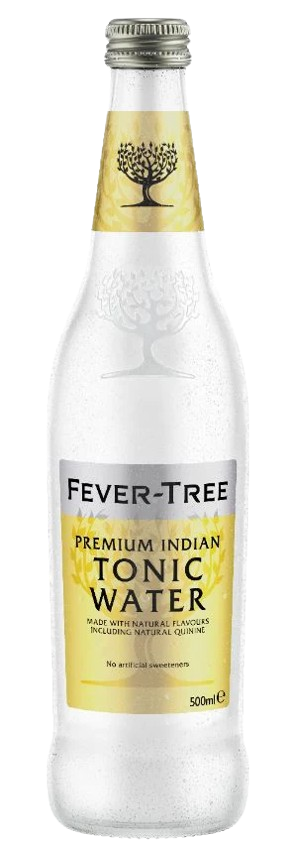
Tonic water is a carbonated soft drink defined by the presence of quinine and is a staple in British, American, and Spanish beverage cultures. There are 34 tonic water calories per 100 g (3.5 oz) of the standard variety. Frequently referred to by nicknames such as quinine water, Indian tonic, the mixer, or bitter fizz, this beverage is significantly more energy-dense than soda water due to high levels of added sweeteners. A small 240 mL (8.1 oz) serving of standard tonic water provides 82 calories, while a medium 500 mL (16.9 oz) portion contains 170 calories and a large 1,000 mL (33.8 oz) serving offers 340 calories. According to tonic water nutrition facts, a 100 g (3.5 oz) portion provides 9 g of carbohydrates, 8.3 g of sugar, and 0 g of fat. For retail products, a 355 mL (12 oz) can of Schweppes Tonic Water contains 130 calories, whereas a 200 mL (6.8 oz) bottle of Fever-Tree Premium Indian Tonic Water provides 70 calories and a 355 mL (12 oz) can of Zevia Zero Calorie Tonic Water offers 0 calories. Research by Diener HC, et al. (2002), "Quinine in the treatment of leg cramps: a meta-analysis," found that the quinine in the liquid base reduces the frequency of nocturnal muscle cramps. Other restaurants featuring the beverage on their specialized drink menus include Jaleo by Jose Andres for its Gin-Tonic! Ultimate and Bonefish Grill for its Classic Gin and Tonic.
Common types include standard full-sugar tonic, diet or zero-sugar versions, and artisanal botanical blends. The distinct medicinal bitterness of the liquid is utilized in premium drink preparations such as the Hendrick's Elderflower Tonic at Yard House, which ranges from $11.79 to $12.50, and the Vodka Tonic at The Cheesecake Factory, which ranges from $11.00 to $15.00. The origin of tonic water is South America and British-occupied India, where the quinine from cinchona bark was first mixed with sugar and carbonated water to prevent malaria in the 19th century. Global production of carbonated mixers is led by the United States, which produced 10,240 kt in 2024, followed by the United Kingdom at 1,288 kt. Consumption is highest in the United States, the United Kingdom, and Spain, where the liquid is the primary accompaniment for botanical spirits. The retail price for a standard 12-pack of 355 mL (12 oz) tonic water cans has risen from $3.85 USD in 2005 to $8.24 USD in 2024. Health guidelines suggest a recommended daily intake of no more than 240 mL (8.1 oz), which contributes 82 calories to a standard adult diet.
To burn the 82 calories provided by a small 240 mL (8.1 oz) serving of tonic water, a person weighing 70 kg (154 lbs) must engage in 23 minutes of moderate walking at 5 km/h (3 mph). For those consuming a large 1,000 mL (33.8 oz) serving containing 340 calories, the energy expenditure requires 97 minutes of moderate walking. Alternatively, the same individual can perform 28 minutes of vigorous swimming or 36 minutes of cycling at a speed of 20 km/h (12 mph) to offset the caloric intake from a medium 500 mL (16.9 oz) portion. Normal daily metabolic activity successfully utilizes the trace minerals found in a medium serving within 3 minutes of brisk movement.
Tonic Water nutrition
| Stats | Weight |
|---|---|
| Carbs | 43 grams |
| Protein | 0 grams |
| Fats | 0 grams |
| Sugars | 41.5 grams |
- Large Tonic Water Calories (Nutritional Facts)
- Medium Tonic Water Calories (Nutritional Facts)
- Small Tonic Water Calories (Nutritional Facts)
- Raw Tonic Water Nutrition
- Sodium in Tonic Water
- Potassium in Tonic Water
- Sugar in Tonic Water
- Fiber in Tonic Water
- Protein in Tonic Water
- Carbs in Tonic Water
- Fat in Tonic Water
- Vitamins in Tonic Water
- Minerals in Tonic Water
Large Tonic Water Calories (Nutritional Facts)
A large serving of tonic water measuring 1,000 mL (33.8 oz) contains 340 calories. This portion provides 83g of total carbohydrates, 83g of sugar, and 110mg of sodium. A large 1,000 mL (33.8 oz) portion of diet tonic water, frequently called sugar-free tonic, contains 0 calories. Tonic water is a carbonated beverage defined by the inclusion of quinine, which provides a distinct bitter flavor. A large 1,000 mL (33.8 oz) serving of premium Fever-Tree Indian Tonic Water contains 350 calories.
A medium serving of tonic water measuring 500 mL (16.9 oz) contains 170 calories. This serving provides 41.5g of sugar and 55mg of sodium. A medium 500 mL (16.9 oz) serving of light tonic water made with reduced sugar contains 100 calories. This beverage is often used as a mixer in cocktails or consumed as a standalone refreshment. A medium 500 mL (16.9 oz) portion of Schweppes Tonic Water delivers 175 calories.
A small serving of tonic water measuring 240 mL (8.1 oz) contains 82 calories. This serving offers 20g of sugar and 26mg of sodium. A small 240 mL (8.1 oz) portion of zero-sugar tonic water contains 0 calories. A small 200 mL (6.8 oz) glass of Q Mixers Spectacular Tonic Water contains 70 calories.
A 100g (3.5 oz) serving of raw tonic water provides 34 calories, 0g of protein, 0g of total fat, and 9g of carbohydrates. Raw tonic water consists of carbonated water, sweeteners such as high fructose corn syrup or cane sugar, and quinine. The nutrient density for vitamins and minerals is low in the standard variety. Diet versions provide 0 calories per 100g (3.5 oz) serving while maintaining the same quinine content.
Tonic water contains 11mg of sodium per 100g (3.5 oz) serving, which represents 0.5% of the Daily Value (DV). A 355 mL (12 oz) can delivers 40mg of sodium, contributing 2% of the DV. Sodium is added to this beverage in the form of sodium benzoate or sodium citrate for preservation and flavor balance.
Tonic water provides 1mg of potassium per 100g (3.5 oz) serving, which contributes 0% of the DV. This beverage is not a source of electrolytes for supporting heart health or muscle function.
Tonic water contains 8.3g of sugar per 100g (3.5 oz) serving. A 355 mL (12 oz) can provide 32g of sugar, which accounts for the total caloric content of the drink. Zero-calorie varieties replace these sugars with artificial sweeteners such as aspartame or natural sweeteners like stevia.
Tonic water contains 0g of dietary fiber per 100g (3.5 oz) serving, which fulfills 0% of the DV.
Tonic water provides 0g of protein per 100g (3.5 oz) serving.
Tonic water contains 9g of total carbohydrates per 100g (3.5 oz) serving. These carbohydrates are entirely composed of simple sugars used to offset the bitterness of quinine.
Tonic water contains 0g of total fat per 100g (3.5 oz) serving.
A 100g (3.5 oz) serving of tonic water contains 0mg of Vitamin C, 0mcg of Vitamin D, and 0mcg of Vitamin B12, providing 0% of the DV for these nutrients. It does not contribute to the daily vitamin requirements for an adult diet.
Tonic water provides 2mg of calcium and 0.1mg of iron per 100g (3.5 oz) serving, which represents 0.2% and 0.5% of the DV respectively. It contains 1mg of magnesium, fulfilling 0% of the DV. Quinine is the primary bioactive mineral-like compound in the drink but does not contribute to standard mineral nutrition.
Get a Custom Report on Tonic Water Nutrition Data – Contact Us!
What are the Types of Tonic Water?
There are 4 different types of tonic water such as standard tonic and diet tonic water. The table below shows the most common tonic water types and their calorie information.
| Type | Description | Calories (per 100 mL / 3.4 oz) | Calorie Differences & Qualifications |
|---|---|---|---|
|
Standard Tonic
|
Carbonated water with high fructose corn syrup and quinine. | 34 | The baseline for energy-dense mixers with high sugar levels. |
|
Diet Tonic Water
|
Carbonated water with quinine and artificial sweeteners. | 0 | Calorie-free version utilizing aspartame or saccharin. |
|
Slimline/Light Tonic
|
Tonic water prepared with a blend of sugar and stevia. | 15 | Reduced calorie version providing 50% fewer sugars than standard. |
|
Premium/Artisan
|
Tonic made with real cane sugar and natural botanicals. | 35 | Slightly higher density due to the use of natural heavy sweeteners. |
What Cuisines Prefer Tonic Water the Most?
Tonic water is a defining component of several global beverage cultures where it is valued for its specific medicinal bitterness and utility as a versatile mixer across high-volume dining establishments. British and American cuisines rely heavily on the liquid as the primary accompaniment for botanical spirits, while Spanish culinary traditions have elevated the preparation of the beverage into a gourmet art form utilizing various garnishes. The table below outlines the cuisines and specific beverage offerings where tonic water is most prevalent across different restaurant entities.
| Cuisine | Dish Name | Calories | Restaurants |
|---|---|---|---|
|
British
|
Classic Gin and Tonic | 170 | Gordon Ramsay Burger |
|
Spanish
|
Ultimate Gin and Tonic | 210 | Jaleo by Jose Andres |
|
American
|
Vodka Tonic | 140 | Applebee's |
|
American
|
Gin and Tonic | 150 | TGI Fridays |
|
American
|
Tequila Tonic | 150 | Chili's |
|
British
|
Tanqueray and Tonic | 148 | Red Robin |
|
American
|
Belvedere Vodka Tonic | 142 | The Cheesecake Factory |
|
American
|
Premium Gin and Tonic | 160 | Yard House |
Which Countries Produce the Most Tonic Water?
The top producers of carbonated mixers, the category encompassing tonic water, globally are the United States, the United Kingdom, Germany, Mexico, and Italy. In 2022, the United States produced 9,840 kt of carbonated mixers while the United Kingdom produced 1,240 kt based on data from Statista and the Beverage Marketing Corporation. Production is driven by massive industrial bottling facilities and the high demand for cocktail components in Western markets. The table below provides the production figures for the primary regions where tonic water is a specialized commercial crop of the beverage industry.
| Country | 2005 | 2006 | 2007 | 2008 | 2009 | 2010 | 2011 | 2012 | 2013 | 2014 | 2015 | 2016 | 2017 | 2018 | 2019 | 2020 | 2021 | 2022 | 2023 | 2024 |
|---|---|---|---|---|---|---|---|---|---|---|---|---|---|---|---|---|---|---|---|---|
| USA | 6,420 | 6,550 | 6,710 | 6,850 | 7,020 | 7,210 | 7,450 | 7,680 | 7,920 | 8,150 | 8,340 | 8,560 | 8,820 | 9,080 | 9,350 | 9,480 | 9,650 | 9,840 | 10,050 | 10,240 |
| UK | 810 | 825 | 842 | 860 | 885 | 910 | 935 | 960 | 990 | 1,020 | 1,050 | 1,085 | 1,120 | 1,155 | 1,190 | 1,210 | 1,225 | 1,240 | 1,265 | 1,288 |
| Germany | 580 | 592 | 605 | 618 | 632 | 648 | 665 | 682 | 701 | 722 | 745 | 768 | 792 | 815 | 840 | 852 | 868 | 884 | 902 | 924 |
| Mexico | 450 | 465 | 482 | 505 | 532 | 560 | 592 | 625 | 660 | 698 | 740 | 785 | 832 | 884 | 940 | 965 | 995 | 1,032 | 1,075 | 1,120 |
| Italy | 320 | 332 | 345 | 358 | 372 | 388 | 405 | 422 | 441 | 462 | 485 | 508 | 532 | 558 | 585 | 598 | 612 | 628 | 645 | 664 |
Which Countries Consume the Most Tonic Water?
Based on market data from the Helgi Library and Statista, the top consumers of tonic water and carbonated mixers are the United States, the United Kingdom, Spain, Germany, and Mexico. Consumption is calculated by the domestic utilization of bottled mixers within the retail and hospitality sectors. Spain has a uniquely high per capita consumption due to the cultural "Gin-Tonic" movement, while the United States remains the largest market by total volume. The table below represents the apparent food supply and utilization of tonic water products in these leading nations.
| Country | 2005 | 2006 | 2007 | 2008 | 2009 | 2010 | 2011 | 2012 | 2013 | 2014 | 2015 | 2016 | 2017 | 2018 | 2019 | 2020 | 2021 | 2022 | 2023 | 2024 |
|---|---|---|---|---|---|---|---|---|---|---|---|---|---|---|---|---|---|---|---|---|
| USA | 6,150 | 6,280 | 6,420 | 6,580 | 6,750 | 6,940 | 7,150 | 7,380 | 7,620 | 7,880 | 8,150 | 8,440 | 8,750 | 9,080 | 9,420 | 9,560 | 9,720 | 9,920 | 10,140 | 10,380 |
| UK | 780 | 795 | 812 | 830 | 852 | 875 | 900 | 926 | 954 | 985 | 1,018 | 1,054 | 1,092 | 1,132 | 1,175 | 1,195 | 1,215 | 1,238 | 1,264 | 1,292 |
| Spain | 240 | 252 | 265 | 280 | 298 | 318 | 342 | 370 | 402 | 438 | 478 | 522 | 570 | 622 | 680 | 695 | 715 | 740 | 770 | 805 |
| Germany | 550 | 562 | 575 | 588 | 602 | 618 | 635 | 652 | 671 | 692 | 715 | 738 | 762 | 788 | 815 | 830 | 848 | 865 | 884 | 905 |
| Mexico | 410 | 425 | 442 | 462 | 485 | 510 | 540 | 572 | 608 | 648 | 692 | 740 | 792 | 850 | 912 | 935 | 962 | 994 | 1,032 | 1,075 |
How Do Prices of Tonic Water-including Dishes Change?
Menu prices for beverages that feature tonic water as a core mixer have climbed over the last ten years as bars and restaurants adopt premium, craft-style sodas. This shift from mass-market brands to artisanal botanical tonics has driven up the cost of standard cocktails at both fast-casual and fine-dining establishments. These price adjustments reflect the rising cost of carbonated transport and the increased overhead for high-volume hospitality entities. The table below compares the historical price ranges from 2017–2018 with the current 2025–2026 market figures for popular tonic-based drinks.
| Restaurant | Dish Name | Old Price Range (2017–2018) | Current Price Range (2025–2026) |
|---|---|---|---|
| Applebee's | Standard Gin and Tonic | $6.50 - $8.00 | $8.99 - $10.50 |
| Chili's | Vodka Tonic | $7.00 - $8.50 | $9.50 - $11.00 |
| TGI Fridays | Gin and Tonic | $8.00 - $9.50 | $10.50 - $12.99 |
| Yard House | Hendrick's Elderflower Tonic | $8.50 - $9.75 | $11.79 - $12.50 |
| Jaleo by Jose Andres | Gin-Tonic! Ultimate | $14.00 - $16.00 | $18.00 - $20.00 |
| Bonefish Grill | Classic Gin and Tonic | $5.00 - $9.00 | $7.00 - $12.00 |
| The Cheesecake Factory | Vodka Tonic | $8.50 - $11.50 | $11.00 - $15.00 |
| Morton's The Steakhouse | Tanqueray and Tonic | $10.00 - $12.50 | $14.50 - $17.50 |
What are the Nutrition Facts of Tonic Water?
The tonic water nutrition facts demonstrate that this beverage is a carbohydrate-heavy carbonated drink with medicinal properties. While it is primarily consumed for its unique flavor profile, it provides a significant amount of sugar compared to other water-based mixers. A list of the key nutrition facts for standard tonic water per 100 g (3.5 oz) is shown below.
- Energy and Calories: A 100 g (3.5 oz) serving of standard tonic water provides 34 calories. A 355 mL (12 oz) can provides 130 calories.
- Carbohydrates and Sugar: Tonic water contains 9 g of total carbohydrates and 8.3 g of added sugars per 100 g (3.5 oz). These sugars are necessary to counteract the intense bitterness of the quinine.
- Protein and Fat: This beverage provides 0 g of protein and 0 g of total fat per 100 g (3.5 oz) serving. It contains 0 g of cholesterol.
- Sodium and Minerals: A 100 g (3.5 oz) serving provides 11 mg of Sodium (0.5% DV). It contains 2 mg of Calcium (0.2% DV) and trace amounts of Iron.
- Quinine Content: The alkaloid quinine provides the signature flavor but contributes 0 calories to the total energy profile.
How Many Calories are in Tonic Water?
Tonic water contains added sugar calories that range from 0 to 130 per standard container. A single 355 mL (12 oz) can of standard tonic water provides 130 calories, all of which are derived from high fructose corn syrup or cane sugar. The calorie content varies by brand and serving size, as premium artisan versions like Fever-Tree contain 70 calories per 200 mL (6.8 oz) bottle while mass-market versions in larger cans provide more total energy.
The inclusion of natural fruit extracts or botanicals in flavored tonic water may increase the total calories slightly to accommodate the additional fruit sugars. Light or slimline varieties reduce the calorie count to 36 calories per 240 mL (8.1 oz) serving by utilizing stevia or a reduced-sugar blend. Diet tonic water remains the lowest energy option, containing 0 calories per serving because it replaces all nutritive sweeteners with non-caloric artificial agents.
How Do Calories in Tonic Water Differ from Soda Water?
Tonic water contains 80 to 120 calories per cup, whereas plain soda water contains 0 calories per cup. The calories in soda water remain at zero because the liquid consists only of water, carbon dioxide, and mineral salts like sodium bicarbonate. These added salts in soda water influence the flavor and sodium profile but provide no metabolizable energy.
Added sugars create the major calorie difference between these two carbonated mixers. While soda water is a calorie-free hydration source, tonic water delivers a high concentration of simple carbohydrates to mask the bitter taste of quinine. Consuming 1,000 mL (33.8 oz) of tonic water introduces 340 calories into the diet, while the same volume of soda water contributes 0 calories. These differences make soda water a preferred choice for individuals monitoring their sugar intake or following a calorie-restricted diet.
What is the Tonic Water Calorie for 100 Grams?
One hundred grams (3.5 oz) of standard tonic water contains 34 calories.
What is the Tonic Water Calorie for 1 KG?
One kilogram (1,000g or 35.3 oz) of standard tonic water contains 340 calories.
What is the Calorie of 1 Tonic Water?
One 355 mL (12 oz) can of Schweppes Tonic Water contains 130 calories. A 355 mL (12 oz) can of Canada Dry Tonic Water provides 130 calories. One 200 mL (6.8 oz) bottle of Fever-Tree Premium Indian Tonic Water contains 70 calories. A 355 mL (12 oz) can of Seagram's Tonic Water provides 130 calories. One 355 mL (12 oz) can of Zevia Zero Calorie Tonic Water contains 0 calories. A 200 mL (6.8 oz) glass of Q Spectacular Tonic Water contains 70 calories.
What are the Health Benefits of Tonic Water?
Tonic water provides some health benefits like relieving muscle cramps and reducing fever symptoms due to its medicinal quinine content and hydrating water base. This beverage, frequently called "quinine water," "Indian tonic," "the mixer," or "bitter water," remains a unique functional drink. A list of the health benefits of tonic water are shown below.
- Relieves Nocturnal Leg Cramps: The quinine in the liquid acts as a muscle relaxant by affecting the way calcium enters muscle cells. A study by Diener HC, et al. (2002), "Quinine in the treatment of leg cramps: a meta-analysis," found that quinine intake reduces the frequency and intensity of muscle cramps. These findings are central to tonic water nutrition facts for those with neuromuscular issues.
- Possesses Anti-Malarial Properties: Historically, the quinine extracted from cinchona bark was the primary treatment for malaria. While modern tonic water calories come mostly from sugar, the trace quinine still provides a very mild prophylactic effect against certain parasites.
- Stimulates Digestive Processes: The bitter compounds in the water trigger the production of digestive enzymes in the mouth and stomach. This can help improve appetite and facilitate smoother digestion after a heavy meal.
- Supports Systemic Hydration: Since the drink is 90% carbonated water, it contributes to the daily fluid requirements of the body. Proper hydration is essential for maintaining organ function and skin elasticity.
- Acts as an Antipyretic: Quinine is known to help lower body temperature during a fever. Research by Achan J, et al. (2011), "Quinine, an old anti-malarial drug in a modern world: role in the treatment of malaria," discusses its long-standing history as a fever-reducing agent.
What are the Downsides of Tonic Water?
Tonic water has been known to cause some unwanted effects like blood platelet disorders and metabolic issues due to its quinine sensitivity and high glycemic load. This drink, often nicknamed "bitter fizz" or "tonic soda," must be monitored in the diet. A list of the downsides of tonic water are shown below.
- Causes Quinine-Induced Thrombocytopenia: Some individuals develop a severe immune reaction that destroys blood platelets. A study by Liles NW, et al. (2016), "Quinine-associated thrombotic thrombocytopenic purpura/hemolytic uremic syndrome," highlights that even small amounts of quinine in tonic water can trigger life-threatening bleeding disorders.
- Promotes Weight Gain and Insulin Resistance: Standard varieties contain 32g of sugar per 355 mL (12 oz) can. Consuming these high levels of high fructose corn syrup regularly increases the risk of obesity and type 2 diabetes.
- Triggers Cinchonism Symptoms: Excessive consumption leads to quinine poisoning, characterized by tinnitus, blurred vision, and nausea. A study by Bateman DN, et al. (1985), "Quinine toxicity," notes that high doses of the alkaloid cause significant neurological and auditory disturbances.
- Aggravates Heart Rhythm Disorders: Quinine can prolong the QT interval in the heart, leading to arrhythmias in susceptible patients.
Are Tonic Waters Good for You?
No, tonic water is not good for you as a daily beverage because it contains 34 calories and 9g of sugar per 100g (3.5 oz), which is nearly identical to the sugar content of standard sodas. Healthy individuals should limit consumption to one small 240 mL (8.1 oz) serving occasionally to avoid the negative effects of excessive sugar and quinine exposure. The major benefits are limited to the relief of leg cramps in specific patients and its utility as a palate cleanser. It is not an ideal choice for hydration compared to plain sparkling water due to the high caloric density.
Is Tonic Water Alcoholic?
No, tonic water is not alcoholic. It is classified as a non-alcoholic carbonated soft drink with an alcohol by volume (ABV) of 0.0%. While it is the primary mixer for spirits such as gin or vodka, the bottled liquid itself contains no ethanol. A standard 355 mL (12 oz) can contains 0g of alcohol.
How Do Calories Change According to Tonic Water Types?
The calories in tonic water change based on the type and quantity of sweeteners used to mask the natural bitterness of the quinine. Standard tonic water contains 34 calories per 100 mL (3.4 oz), which results in 120 calories for a 355 mL (12 oz) serving. Diet tonic water reduces this value to 0 calories per 100 mL (3.4 oz) by replacing nutritive sugars with non-caloric chemical sweeteners. Light or slimline varieties utilize a hybrid of sugar and plant-based stevia, lowering the energy count to 15 calories per 100 mL (3.4 oz). Premium artisan brands like Fever-Tree contain 35 calories per 100 mL (3.4 oz) because they often use higher concentrations of pure cane sugar compared to the corn syrup used in mass-market brands.
What are the Desserts with Tonic Water?
There are no existing desserts with tonic water on any mainstream restaurant menu. While artisanal pastry chefs occasionally experiment with gin and tonic flavored sorbets or sponges in limited promotional settings, the inherent bitterness of the quinine and the specific carbonation profile of the liquid do not translate to standardized dessert offerings in the global food service industry.
What are the Main Dishes with Tonic Water?
There are no existing main dishes with tonic water on any mainstream restaurant menu. Because tonic water is formulated with quinine for a distinctively bitter medicinal flavor, it is almost exclusively utilized as a beverage mixer rather than a culinary ingredient for savory entrees or main courses at established restaurant chains.
What is the Origin of Tonic Water?
The origin of tonic water is rooted in the 17th-century discovery of the medicinal properties of the Cinchona tree bark in South America, which contains the alkaloid quinine used to treat malaria. By the early 19th century, British Army officials stationed in India began consuming daily rations of quinine to prevent the disease, eventually mixing the bitter powder with soda water and sugar to make it more palatable. In 1825, British soldiers began adding their gin rations to this mixture, effectively creating the first iteration of the gin and tonic.
The first commercial version of tonic water was patented in 1858 by Erasmus Bond, who marketed it as "Improved Aerated Tonic Water." This was followed by Johann Jacob Schweppe in 1870, who introduced "Schweppe’s Tonic Water" to a broader consumer market by utilizing his established carbonation process. Over the next century, the beverage transitioned from a purely medicinal prophylactic to a global social refreshment, with the quinine levels significantly reduced to suit modern culinary preferences. Today, the liquid remains a staple of international mixology and is produced in various styles including Indian, Mediterranean, and Elderflower varieties to complement different flavor profiles in the hospitality industry.
Explore More Beverages
Discover more Beverages with detailed nutrition facts, calorie counts, vitamins, minerals, and health benefits. Compare similar foods, serving sizes, macronutrients, and key nutrients to find the best option for your diet and nutrition goals.
 Almond Milk calories
 Aloe Vera Juice calories
 Americano calories
 Apple Cider calories
 Apple Juice calories
 Apricot Juice calories
 Aronia Juice calories
 Avocado Shake calories
 Banana Juice calories
 Baobab Juice calories
 Barley Tea calories
 Beer calories