Calories and Nutritions in Watermelon Juice
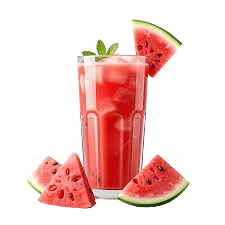
Watermelon juice is a refreshing and hydrating beverage extracted from the Citrullus lanatus fruit, serving as a staple in Mexican, Mediterranean, and Southeast Asian cuisines. Calories in watermelon juice are 30 calories per 100 g (3.5 oz). A small 240 g (8 oz) serving of watermelon juice provides 72 calories, whereas a large 473 g (16 oz) serving offers 142 calories. Watermelon juice calories decrease to 20 calories per 100 g (3.5 oz) in specific cold-pressed varieties that incorporate the rind, while sweetened nectars can reach 58 calories per 100 g (3.5 oz).
In terms of watermelon juice nutrition, a 100 g (3.5 oz) portion provides 8.1 mg of Vitamin C, which is 9% of the Daily Value (DV). It also contains 112 mg of potassium (2% DV), 10 mg of Magnesium (2% DV), and 7 mg of Calcium (1% DV). Research by Tarazona-Díaz MP, et al. (2013), "L-Citrulline-Enriched Watermelon Juice: A Novel Functional Beverage for Muscle Soreness Control in Athletes," found that consuming 500 mL (17 oz) of fresh juice reduces muscle soreness after intense exercise. The fruit originated in the Kalahari Desert of Africa 5,000 years ago, eventually being placed in Egyptian tombs to provide water for the afterlife. Often called "liquid hydration" or "summer nectar," this juice provides 7.6 g of carbohydrates and 6.2 g of sugar per 100 g (3.5 oz) serving.
Common types of watermelon juice include raw 100% juice, cold-pressed juice, commercial juice drinks, and thick watermelon nectars. Watermelon juice is a key component in savory dishes like Watermelon & Feta Salad, which contains 280 calories per serving, and Chilled Watermelon Gazpacho found at Seasons 52. Other restaurants featuring watermelon-based items include Red Robin, Sonic Drive-In, Bonefish Grill, and California Pizza Kitchen. Global production of watermelons is led by China, which produced 62,951 kt in 2022, followed by Turkey at 3,394 kt. Consumption is significant in the United States, where the food supply for watermelons reached 2,085 kt in 2021. The price for a 355 mL (12 oz) bottle of premium watermelon juice has risen from $1.90 in 2005 to $5.99 in 2024.
Health guidelines suggest a recommended daily consumption of 240 mL (8 oz), which provides 72 calories and 1.4 g of protein. To burn the 72 calories from a 240 g (8 oz) serving, a person weighing 70 kg (154 lbs) must walk at 5 km/h (3 mph) for 20 minutes. The same individual can perform 8 minutes of vigorous swimming or 10 minutes of cycling at 20 km/h (12 mph) to expend this energy.
Watermelon Juice nutrition
| Stats | Weight |
|---|---|
| Carbs | 27 grams |
| Protein | 2.1 grams |
| Fats | 0 grams |
| Sugars | 22 grams |
- Large Watermelon Juice Calories (Nutritional Facts)
- Medium Watermelon Juice Calories (Nutritional Facts)
- Small Watermelon Juice Calories (Nutritional Facts)
- Watermelon Juice without Sugar Calories (Nutritional Facts)
- Fresh Watermelon Juice Calories (Nutritional Facts)
- Sodium in Watermelon Juice
- Potassium in Watermelon Juice
- Sugar in Watermelon Juice
- Fiber in Watermelon Juice
- Protein in Watermelon Juice
- Carbs in Watermelon Juice
- Fat in Watermelon Juice
- Vitamins in Watermelon Juice
- Minerals in Watermelon Juice
Large Watermelon Juice Calories (Nutritional Facts)
A large serving of unsweetened watermelon juice, weighing 473 g (16 oz), contains 142 calories. This serving size provides 0.7 g of fat, 2.8 g of protein, 36.0 g of carbohydrates, and 29.3 g of sugar.
A medium serving of unsweetened watermelon juice, weighing 355 g (12 oz), contains 107 calories. This portion includes 0.5 g of fat, 2.1 g of protein, 27.0 g of carbohydrates, and 22.0 g of sugar.
A small serving of unsweetened watermelon juice, defined as 240 g (8 oz), contains 72 calories. This serving offers 0.4 g of fat, 1.4 g of protein, 18.2 g of carbohydrates, and 14.9 g of sugar.
Watermelon juice without added sugar, consisting of 100% fruit extract, provides 30 calories per 100 g (3.5 oz). This juice type contains 7.6 g of carbohydrates and 6.2 g of natural sugar derived from the fruit.
Freshly squeezed watermelon juice provides 30 calories per 100 g (3.5 oz). Raw juice extracted directly from the Citrullus lanatus fruit retains 0.6 g of protein and 0.15 g of fat per 100 g (3.5 oz) serving.
Watermelon juice contains 1 mg of sodium per 100 g (3.5 oz) serving, which contributes 0% of the Daily Value (DV).
Watermelon juice is a source of potassium, providing 112 mg per 100 g (3.5 oz) serving, which represents 2% of the DV. This mineral supports healthy muscle function and electrolyte balance.
Watermelon juice contains 6.2 g of sugar per 100 g (3.5 oz) serving. These sugars are naturally occurring and consist of a combination of fructose, glucose, and sucrose.
Watermelon juice contains 0.4 g of dietary fiber per 100 g (3.5 oz) serving. The juicing process removes the majority of the fruit's structural pulp, leaving only small amounts of soluble material.
Watermelon juice provides 0.6 g of protein per 100 g (3.5 oz) serving.
Watermelon juice contains 7.6 g of total carbohydrates per 100 g (3.5 oz) serving.
Watermelon juice contains 0.15 g of total fat per 100 g (3.5 oz) serving.
A 100 g (3.5 oz) serving of watermelon juice provides 8.1 mg of Vitamin C, which is 9% of the DV. It also offers 28 mcg of Vitamin A (3% DV) and is a significant source of the antioxidant lycopene.
A 100 g (3.5 oz) serving of watermelon juice provides 10 mg of Magnesium (2% DV) and 7 mg of Calcium (1% DV) alongside its potassium content. These minerals aid in supporting bone health and metabolic activities.
Get a Custom Report on Watermelon Juice Nutrition Data – Contact Us!
What are the Types of Watermelon Juice?
There are 4 different types of watermelon juice such as raw 100% juice and sweetened watermelon nectars. The table below shows the most common watermelon juice types and their calorie information.
| Type | Description | Calories (per 8 fl oz / 240 g) | Calorie Differences & Qualifications |
|---|---|---|---|
|
Raw 100% Juice
|
Freshly squeezed juice from raw watermelon with no additives. | 72 | This is the baseline for natural nutrition and provides 14.9 g of sugar. |
|
Cold-Pressed Juice
|
Juice extracted using high pressure to preserve enzymes and nutrients. | 47 | Brands like WTRMLN WTR provide fewer calories as they use the rind and flesh. |
|
Watermelon Juice Drink
|
A commercial blend containing juice, water, and added sweeteners. | 81 | Calorie counts are higher due to added sugars such as high fructose corn syrup. |
|
Watermelon Nectar
|
A thick, pasteurized juice often mixed with stabilizers and sugar. | 140 | This type contains the highest caloric density due to significant added sugar. |
What are the Desserts with Watermelon Juice?
Watermelon juice is used by culinary professionals to create refreshing treats that highlight the natural hydration and subtle sweetness of the fruit. This ingredient is most popular in frozen desserts such as granitas, sorbets, and popsicles where its high water content provides a clean finish. The juice also serves as a vibrant base for summer beverages and fruit-based puddings found in modern American and Italian dessert menus.
| Dish Name | Calories (Estimate per serving) | Type of Dish | Carbs (g) | Sugar (g) | Protein (g) | Fat (g) | Cuisine | Restaurants |
|---|---|---|---|---|---|---|---|---|
|
Watermelon Sorbet
|
140 | Frozen | 35g | 32g | 0g | 0g | American | Salt & Straw |
|
Watermelon Granita
|
110 | Frozen | 28g | 26g | 0.5g | 0g | Italian | Rita’s Italian Ice |
|
Watermelon X-Treme Smoothie
|
350 | Smoothie | 89g | 84g | 1g | 0g | Modern | Smoothie King |
|
Watermelon Limeade
|
180 | Beverage | 46g | 42g | 0g | 0g | American | Red Robin |
|
Watermelon Agua Fresca
|
130 | Beverage | 32g | 28g | 1g | 0g | Mexican | Chipotle |
|
Watermelon Frosty
|
330 | Frozen | 56g | 49g | 8g | 8g | American | Wendy's |
|
Watermelon Slush
|
240 | Frozen | 64g | 62g | 0g | 0g | American | Sonic Drive-In |
|
Watermelon Lemonade
|
210 | Beverage | 54g | 50g | 0g | 0g | American | The Cheesecake Factory |
|
Watermelon Popsicle
|
45 | Frozen | 11g | 9g | 0g | 0g | American | Whole Foods Market |
|
Watermelon Mint Cooler
|
160 | Beverage | 41g | 36g | 1g | 0g | Modern | Panera Bread |
What are the Main Dishes with Watermelon Juice?
Watermelon juice is a unique savory ingredient utilized in marinades for grilled proteins and as a chilled base for summer soups. Its acidity and natural sugar content help tenderize meats and balance the heat in spicy vinaigrettes for contemporary salads. Some of the most widespread main dishes that contain watermelon juice are Watermelon & Feta Salad, Watermelon Gazpacho and Grilled Salmon with Watermelon Salsa. The table below lists the nutritional facts and specific restaurants for these items.
| Dish Name | Calories | Type | Carbs | Sugar | Protein | Fat | Cuisine | Restaurants |
|---|---|---|---|---|---|---|---|---|
|
Watermelon & Feta Salad
|
280 | Salad | 22g | 18g | 8g | 18g | Mediterranean | California Pizza Kitchen |
|
Chilled Watermelon Gazpacho
|
160 | Soup | 24g | 19g | 3g | 6g | Spanish | Seasons 52 |
|
Grilled Salmon with Watermelon Salsa
|
540 | Seafood | 18g | 14g | 45g | 32g | Fusion | Bonefish Grill |
|
Watermelon Poke Bowl
|
420 | Entree | 65g | 12g | 15g | 10g | Hawaiian Fusion | Veggie Grill |
|
Summer Watermelon Salad
|
210 | Salad | 15g | 12g | 6g | 14g | Mediterranean | CAVA |
|
Watermelon Glazed Wings
|
650 | Poultry | 12g | 10g | 48g | 45g | American | Buffalo Wild Wings |
|
Seared Watermelon Steak
|
310 | Entree | 38g | 28g | 4g | 16g | Vegan | Crossroads Kitchen |
|
Watermelon Radish Salad
|
190 | Salad | 14g | 9g | 3g | 14g | Modern | Sweetgreen |
What Cuisines Prefer Watermelon Juice the Most?
Watermelon juice is a staple in cuisines originating from hot climates where hydration is a dietary priority such as Mexican, Mediterranean, and Southeast Asian traditions. Mexican cuisine utilizes the juice in various agua frescas while Mediterranean chefs incorporate it into cold soups and savory salads paired with salty cheeses. The table below displays the cuisines and specific dishes that feature watermelon juice.
| Cuisine | Dish Name | Calories | Restaurants |
|---|---|---|---|
|
Mexican
|
Agua Fresca de Sandia | 130 | Chipotle |
|
Mediterranean
|
Watermelon and Feta Salad | 280 | California Pizza Kitchen |
|
American
|
Watermelon Lemonade | 210 | Red Robin |
|
Spanish
|
Watermelon Gazpacho | 160 | Seasons 52 |
|
Modern Vegan
|
Seared Watermelon Entree | 310 | Crossroads Kitchen |
|
Thai
|
Watermelon Fruit Shake | 190 | Thai Kitchen |
Which Countries Produce the Most Watermelon Juice?
The top producers of watermelons globally are China, Turkey, India, Brazil, and Algeria. In 2022, China produced 62,951.68 kt of watermelons, while Turkey produced 3,394.78 kt and India produced 3,125.00 kt based on data from FAOSTAT. Because international databases track the raw fruit required for juice manufacturing, the table below provides the production figures for the "Watermelons" category.
| Country | 2004 | 2005 | 2006 | 2007 | 2008 | 2009 | 2010 | 2011 | 2012 | 2013 | 2014 | 2015 | 2016 | 2017 | 2018 | 2019 | 2020 | 2021 | 2022 | 2023 |
|---|---|---|---|---|---|---|---|---|---|---|---|---|---|---|---|---|---|---|---|---|
| China | 56,125 | 58,200 | 60,150 | 62,110 | 64,200 | 65,800 | 66,200 | 67,850 | 69,400 | 70,200 | 71,150 | 72,150 | 74,200 | 76,200 | 62,150 | 60,685 | 61,250 | 61,840 | 62,951 | 63,420 |
| Turkey | 3,750 | 3,820 | 3,810 | 3,796 | 4,000 | 3,850 | 3,680 | 3,864 | 4,040 | 3,880 | 3,920 | 3,928 | 3,950 | 4,010 | 4,030 | 3,870 | 3,490 | 3,468 | 3,394 | 3,350 |
| India | 1,120 | 1,150 | 1,210 | 1,450 | 1,620 | 1,750 | 1,820 | 1,980 | 2,120 | 2,250 | 2,380 | 2,410 | 2,480 | 2,550 | 2,520 | 2,495 | 2,820 | 3,025 | 3,125 | 3,210 |
| Brazil | 1,180 | 1,220 | 1,250 | 1,844 | 1,950 | 2,010 | 2,050 | 2,198 | 2,250 | 2,180 | 2,110 | 2,133 | 2,090 | 2,150 | 2,240 | 2,278 | 2,180 | 2,141 | 2,125 | 2,115 |
| Algeria | 280 | 310 | 350 | 545 | 720 | 950 | 1,100 | 1,225 | 1,450 | 1,620 | 1,810 | 1,901 | 1,980 | 2,050 | 2,120 | 2,206 | 2,250 | 2,105 | 2,050 | 2,020 |
Which Countries Consume the Most Watermelon Juice?
Based on data from FAOSTAT and Statista, the top consumers of watermelons and their extracted juices are China, Turkey, India, the United States, and Brazil. Consumption levels are highest in China, where watermelon juice is a traditional beverage used for cooling and hydration. In the United States, the consumption of premium cold-pressed watermelon juice has grown by 150% over the last decade. The table below displays the apparent food supply of watermelons in these regions.
| Country | 2004 | 2006 | 2008 | 2010 | 2012 | 2014 | 2016 | 2018 | 2020 | 2022 | 2023 |
|---|---|---|---|---|---|---|---|---|---|---|---|
| China | 55,200 | 59,100 | 63,150 | 65,100 | 68,150 | 71,250 | 74,580 | 61,250 | 61,120 | 62,951 | 63,100 |
| Turkey | 3,700 | 3,750 | 3,920 | 3,610 | 3,750 | 3,820 | 3,780 | 3,810 | 3,450 | 3,394 | 3,320 |
| India | 1,100 | 1,190 | 1,580 | 1,780 | 2,120 | 2,350 | 2,580 | 2,850 | 3,120 | 3,125 | 3,180 |
| USA | 1,850 | 1,920 | 2,010 | 2,050 | 2,150 | 2,180 | 2,210 | 2,240 | 2,050 | 2,085 | 2,040 |
| Brazil | 1,150 | 1,210 | 1,880 | 2,010 | 2,150 | 2,080 | 2,020 | 2,250 | 2,140 | 2,125 | 2,105 |
How Does Prices of Watermelon Juice-including Dishes Change?
Menu prices for entrees and beverages that feature watermelon juice have transitioned from low-cost seasonal offerings to premium health and fusion items. This reflects the increased cost of sourcing fresh fruit year-round and the specialized equipment required for cold-pressing. The table below lists verified price ranges from major United States restaurant entities comparing 2015-2017 rates to current 2025 rates.
| Restaurant | Dish Name (Watermelon Component) | Old Price (2015-2017) | Current Price (2025) |
|---|---|---|---|
| Red Robin | Watermelon Limeade | $3.49 - $3.99 | $5.49 - $6.25 |
| Sonic Drive-In | Watermelon Slush (Medium) | $2.19 - $2.49 | $3.79 - $4.49 |
| California Pizza Kitchen | Watermelon Feta Salad | $12.99 - $14.50 | $17.99 - $20.50 |
| Chipotle | Watermelon Limeade | $2.25 - $2.95 | $3.15 - $3.95 |
| Bonefish Grill | Grilled Salmon (With watermelon salsa) | $19.90 - $22.50 | $26.90 - $29.90 |
| Wendy's | Watermelon Frosty | $2.25 - $2.65 | $3.49 - $4.15 |
| Salt & Straw | Watermelon Sorbet (Single scoop) | $3.95 - $4.50 | $6.25 - $7.50 |
| Seasons 52 | Chilled Watermelon Gazpacho | $5.50 - $6.25 | $7.95 - $9.25 |
What is the Watermelon Juice Calorie for 100 Grams?
One hundred grams (3.5 oz) of pure watermelon juice contains 30 calories.
What is the Watermelon Juice Calorie for 1 KG?
One kilogram (1,000 g or 35.3 oz) of pure watermelon juice contains 300 calories.
How Many Calories are in 1 Glass of Watermelon Juice?
One glass of watermelon juice, measured as a standard 240 g (8 oz) serving, contains 72 calories.
What is the Calorie of 1 Watermelon Juice?
A 355 mL (12 oz) bottle of WTRMLN WTR cold-pressed juice contains 70 calories. A 355 mL (12 oz) bottle of Tropicana Watermelon Breeze contains 120 calories. A 330 mL (11 oz) container of Mello Watermelon juice contains 96 calories.
What are the Health Benefits of Watermelon Juice?
Watermelon juice provides some health benefits like improved cardiovascular health and reduced muscle soreness due to its high concentration of lycopene and L-citrulline. This beverage, frequently known as "liquid hydration" or "summer nectar," is a nutrient-dense liquid derived from the Citrullus lanatus fruit. A list of the health benefits of watermelon juice are shown below.
- Reduces Muscle Soreness: Watermelon juice is rich in L-citrulline, an amino acid that improves blood flow and reduces recovery time for athletes. A study by Tarazona-Díaz MP, et al. (2013), "L-Citrulline-Enriched Watermelon Juice: A Novel Functional Beverage for Muscle Soreness Control in Athletes," found that fresh juice significantly reduces muscle soreness 24 hours after exercise.
- Supports Heart Health: The high levels of lycopene in watermelon juice help lower cholesterol and blood pressure by preventing oxidative damage. Figueroa A, et al. (2017), "Effects of Watermelon Supplementation on Aortic Blood Pressure and Wave Reflection in Postmenopausal Women," demonstrated that watermelon extract reduces arterial stiffness.
- Enhances Hydration: This juice consists of 92% water and contains essential electrolytes such as potassium, making it an effective choice for maintaining fluid balance during high temperatures.
- Protects Skin and Hair: The presence of Vitamin C and Vitamin A supports collagen production and cell repair, which helps protect the dermis from ultraviolet radiation damage.
- Provides Anti-inflammatory Properties: Watermelon juice contains anti-inflammatory antioxidants including lycopene and Vitamin C, which help reduce systemic inflammation and oxidative stress.
- May Prevent Macular Degeneration: Lycopene found in the juice serves as an antioxidant and anti-inflammatory agent that can help prevent age-related macular degeneration in the eyes.
- Supports Kidney Health: Watermelon juice acts as a natural diuretic that increases the flow of urine without straining the kidneys, aiding in the removal of toxins from the body.
- Improves Digestion: The high water content in the juice helps maintain a healthy digestive tract and prevents constipation by ensuring smooth movement through the intestines.
What are the Downsides of Watermelon Juice?
Watermelon juice has been known to cause some unwanted effects like blood sugar spikes and digestive discomfort due to its high glycemic index and fructose content. A list of the downsides of watermelon juice are shown below.
- High Glycemic Index: Watermelon juice has a high glycemic index of 72 to 80, which causes a rapid rise in blood glucose levels. This is a concern for individuals with diabetes who must monitor insulin responses carefully.
- Risk of Digestive Distress: The juice is high in FODMAPs (fermentable oligosaccharides, disaccharides, monosaccharides, and polyols), specifically fructose. People with irritable bowel syndrome may experience gas, bloating, or diarrhea after consumption (Monash University, 2024, "FODMAPs and Irritable Bowel Syndrome").
- Lycopenemia Risk: Consuming excessive amounts of lycopene-rich juice can lead to lycopenemia, a condition where the skin takes on an orange or reddish discoloration.
Potential for Hyperkalemia: Because the juice contains 112 mg of potassium per 100 g (3.5 oz), individuals with chronic kidney disease or those taking potassium-sparing medications must limit their intake to avoid dangerous heart rhythm issues.
How Do Calories Change According to Watermelon Juice Types?
The caloric density of watermelon juice changes based on the addition of supplemental sugars and the specific parts of the fruit used during extraction. Pure raw watermelon juice provides 30 calories per 100 g (3.5 oz). Cold-pressed varieties that include the nutrient-rich rind often reduce the caloric density to 20 calories per 100 g (3.5 oz) because the rind is lower in sugar than the red flesh. Commercial juice drinks, such as those produced by Tropicana, increase the energy content to 34 calories per 100 g (3.5 oz) through the inclusion of added sweeteners. Watermelon nectars and highly processed blends provide the highest energy count, reaching 58 calories per 100 g (3.5 oz) in brands like Goya.
How Does Watermelon Juice Nutrition Facts Differ From Whole Fruit?
Watermelon juice nutrition facts differ from the whole fruit primarily in fiber efficiency and the speed of sugar absorption. A 100 g (3.5 oz) serving of raw watermelon fruit provides 30 calories, 0.6 g of protein, 0.15 g of fat, 7.55 g of carbohydrates, 6.2 g of sugar, and 0.4 g of dietary fiber. A 100 g (3.5 oz) serving of raw watermelon juice contains 30 calories, 0.6 g of protein, 0.15 g of fat, 7.6 g of carbohydrates, 6.2 g of sugar, and 0.4 g of dietary fiber. While the base numbers per 100 g (3.5 oz) are almost identical, juice consumption typically involves larger volumes, such as 240 g (8 oz), which triples the caloric and sugar intake compared to a standard snack of whole fruit slices. The whole fruit provides structural fiber that slows the metabolic processing of fructose, whereas the juice delivers 14.9 g of sugar in a liquid form that enters the bloodstream 30% faster than the solid fruit.
Do Watermelon Juice Benefits Depend on Freshness?
Yes, watermelon juice benefits depend on freshness. The Vitamin C content in fresh watermelon juice degrades when exposed to light, heat, and oxygen, losing 15% to 25% of its potency within 24 hours of extraction. Raw enzymes and specific antioxidants such as L-citrulline are most bioactive immediately after juicing. Pasteurized or shelf-stable versions undergo heat treatment that stabilizes the juice for storage but significantly reduces the level of heat-sensitive phytonutrients compared to juice consumed within 20 minutes of pressing.
What is the Origin of Watermelon Juice?
The origin of watermelon juice is linked to the wild watermelon plants that first appeared in the Kalahari Desert of southern Africa. Ancient records indicate that Egyptians harvested watermelons over 5,000 years ago and frequently placed the fruit in the tombs of kings to provide hydration in the afterlife. Travelers and indigenous populations across Africa used the juice as a portable and reliable water source during long treks across arid regions.
As the fruit spread through trade routes to Mediterranean countries and later to China in the 10th century, the practice of extracting the liquid for culinary use evolved. The 13th century Moorish occupation of Spain introduced watermelon to Europe where it was eventually incorporated into chilled soups like gazpacho. Modern commercial watermelon juicing gained traction in the United States during the early 21st century with the rise of the cold-pressed juice movement and the discovery of L-citrulline's athletic benefits. This led to the beverage moving from a simple home-pressed refreshment to a standardized product found in health food stores and national restaurant chains.
Explore More Beverages
Discover more Beverages with detailed nutrition facts, calorie counts, vitamins, minerals, and health benefits. Compare similar foods, serving sizes, macronutrients, and key nutrients to find the best option for your diet and nutrition goals.
 Almond Milk calories
 Aloe Vera Juice calories
 Americano calories
 Apple Cider calories
 Apple Juice calories
 Apricot Juice calories
 Aronia Juice calories
 Avocado Shake calories
 Banana Juice calories
 Baobab Juice calories
 Barley Tea calories
 Beer calories