Calories and Nutritions in Blue Cheese Dressing
Blue cheese dressing is a creamy and pungent condiment consisting of fermented cheese crumbles blended into a mayonnaise or buttermilk base. There are 484 calories in blue cheese dressing per 100 g (3.5 oz). Also referred to as bleu cheese dressing, Roquefort sauce, or chunky blue dip, blue cheese provides 4.8 g of total carbohydrates and 1.4 g of protein per 100 g serving. A small 15 g (1 tbsp) portion contains 73 calories while a cup of blue cheese (245 g) offers 1,186 calories. Retail products vary in energy density, with a 30 g (2 tbsp) serving of Ken’s Steak House Chunky Blue Cheese containing 130 kcal, Kraft Chunky Blue Cheese provides 120 kcal, and Marzetti Ultimate Blue Cheese Dressing contains 140 kcal.
When it comes to the broader blue cheese dressing nutrition profile, a 100 g (3.5 oz) portion provides 86 mcg of Vitamin K (72% DV), 37 mg of Calcium (3% DV), and 74 mg of Phosphorus (6% DV). Because it contains 51.1 g of fat and only 4.8 g of total carbohydrates per 100 g (3.5 oz), blue cheese dressing is a highly suitable choice for the keto diet. It is important to note that most commercial and restaurant varieties contain egg yolks used as an emulsifier in the mayonnaise base, making it unsuitable for individuals with egg allergies or those following a vegan protocol. Research by Maresz K. (2015), "Proper Calcium Use: Vitamin K2 as a Promoter of Bone and Cardiovascular Health," highlights how the menaquinone in fermented cheeses helps maintain heart health by preventing arterial calcification. Common types available include the standard regular version, light varieties at 86 kcal, and fat-free versions containing 115 kcal per 100 g (3.5 oz).
The bold flavor of blue cheese dressing is utilized in savory main dishes such as the Buffalo Chicken Sandwich at Hooters, priced from $12.49 to $14.62 USD, and the Vegan Cobb Salad at The Cheesecake Factory, which ranges from $20.95 to $22.50 USD. American steakhouses like the Outback Steakhouse feature Blue Cheese Pecan Chopped Side Salad, priced from $6.99 to $7.99 USD, and LongHorn Steakhouse has the blue cheese crusted filet on the menu. Blue-veined cheeses originated in European caves over a thousand years ago, but the creamy dressing format was developed in the United States during the early 1920s and achieved cultural icon status at the Anchor Bar in 1964.
Global production of the raw blue cheese material is led by France, which produced 218 kt in 2022, followed by Italy at 94 kt. Consumption of the finished dressing is highest in the United States, where the product is synonymous with sporting event appetizers and classic wedge salads. The price for a 16 fl oz (473 mL) bottle of blue cheese dressing in the United States has risen from $2.75 USD in 2005 to $5.45 USD in 2024.
Health guidelines suggest a recommended daily limit of 30 g (2 tbsp), which contributes 146 kcal to a standard adult diet while providing 192 mg of sodium. To burn the 146 blue cheese dressing calories provided by a standard 30 g (2 tbsp) serving, a person weighing 70 kg (154 lbs) must perform 41 minutes of moderate walking at 5 km/h (3 mph).
Blue Cheese Dressing nutrition
| Stats | Weight |
|---|---|
| Carbs | 1.3 grams |
| Protein | 0.4 grams |
| Fats | 0 grams |
| Sugars | 1 grams |
- Large Blue Cheese Dressing Calories (Nutritional Facts)
- Medium Blue Cheese Dressing Calories (Nutritional Facts)
- Small Blue Cheese Dressing Calories (Nutritional Facts)
- Raw Blue Cheese Dressing Nutrition
- Sodium in Blue Cheese Dressing
- Potassium in Blue Cheese Dressing
- Sugar in Blue Cheese Dressing
- Fiber in Blue Cheese Dressing
- Protein in Blue Cheese Dressing
- Carbs in Blue Cheese Dressing
- Fat in Blue Cheese Dressing
- Vitamins in Blue Cheese Dressing
- Minerals in Blue Cheese Dressing
Large Blue Cheese Dressing Calories (Nutritional Facts)
A large serving of regular blue cheese dressing, also known as Roquefort dressing, weighing 245g (1 cup), contains 1186 calories. This portion provides 125.2g of fat, 11.8g of carbohydrates, 8.6g of sugar, and 3.4g of protein. A large serving of fat-free blue cheese dressing weighing 245g (1 cup) contains 282 calories.
A medium serving of regular blue cheese dressing weighing 28g (1 oz) contains 136 calories. This serving size includes 14.3g of fat, 1.3g of carbohydrates, 1.0g of sugar, and 0.4g of protein. A medium serving of fat-free blue cheese dressing weighing 28g (1 oz) provides 32 calories.
A small serving of regular blue cheese dressing weighing 5g (1 tsp) contains 24 calories. This portion offers 2.6g of fat, 0.2g of carbohydrates, and 0.07g of protein. A small serving of fat-free blue cheese dressing weighing 5g (1 tsp) contains 6 calories.
A 100g (3.5oz) serving of regular commercial blue cheese dressing provides 484 calories, 51.1g of fat, 1.4g of protein, 4.8g of carbohydrates, 3.5g of sugar, and 0.4g of dietary fiber. Raw blue cheese dressing varieties that utilize unpasteurized blue cheese crumbles maintain the same energy density as standard commercial varieties but differ in enzymatic activity. Light blue cheese dressing provides 86 calories per 100g (3.5oz).
Blue cheese dressing contains 642mg of sodium per 100g (3.5oz) serving, which contributes 28% of the Daily Value (DV). A 15g (1 tbsp) serving contains 96mg of sodium, representing 4% of the DV.
Blue cheese dressing provides 88mg of potassium per 100g (3.5oz) serving, which is 2% of the DV. This mineral helps support healthy muscle contractions and nerve signals.
Blue cheese dressing contains 3.5g of sugar per 100g (3.5oz) serving. These are sugars added during the manufacturing process to balance the tanginess of the vinegar and fermented cheese.
Blue cheese dressing contains 0.4g of dietary fiber per 100g (3.5oz) serving, which comes from the thickeners and seasonings used in the recipe.
Blue cheese dressing provides 1.4g of protein per 100g (3.5oz) serving.
Blue cheese dressing contains 4.8g of total carbohydrates per 100g (3.5oz) serving.
Blue cheese dressing contains 51.1g of total fat per 100g (3.5oz) serving, consisting of 8.3g of saturated fat, 13g of monounsaturated fat, and 28g of polyunsaturated fat.
A 100g (3.5oz) serving of blue cheese dressing provides 86mcg of Vitamin K, fulfilling 72% of the DV. It also offers 4.3mg of Vitamin E (29% DV) and 0.27mcg of Vitamin B12 (11% DV) to support a healthy diet.
Blue cheese dressing provides 37mg of Calcium (3% DV) and 74mg of Phosphorus (6% DV) per 100g (3.5oz) serving. This portion also contains 0.21mg of Zinc (2% DV) and 8mg of Magnesium (2% DV).
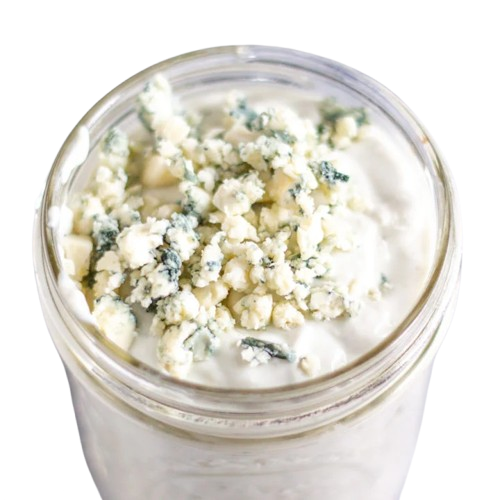
Get a Custom Report on Blue Cheese Dressing Nutrition Data – Contact Us!
What are the Types of Blue Cheese Dressing?
There are 5 different types of blue cheese dressing such as regular commercial and fat-free varieties. The table below shows the most common blue cheese dressing types and their calorie information.
| Type | Description | Calories (per 100g / 3.5oz) | Calorie Differences & Qualifications |
|---|---|---|---|
|
Regular Commercial
|
Standard oil-based dressing with blue cheese chunks. | 484 | This is the baseline energy density for full-fat versions. |
|
Light Blue Cheese
|
Reduced-oil version using water and thickeners. | 86 | Provides 82% fewer calories by limiting the vegetable oil content. |
|
Fat-Free Blue Cheese
|
Made without oil, using corn syrup and starch for body. | 115 | Lower in fat but significantly higher in added sugars (12g per 100g). |
|
Buttermilk Blue Cheese
|
A thinner version using cultured buttermilk as a base. | 202 | Contains fewer calories than regular but more than light versions. |
|
Low Calorie
|
Specifically formulated with sugar substitutes and less fat. | 99 | Aimed at weight management while maintaining a creamy texture. |
What are the Main Dishes with Blue Cheese Dressing?
Some of the most widespread main dishes that contain blue cheese dressing are Buffalo Chicken Salad, California Cobb Salad and Blackened Blue Steak. This creamy and pungent condiment is a staple in American pub culture and steakhouses, where it acts as a cooling agent for spicy poultry and a rich topping for grilled meats. The table below lists the nutritional facts for several popular savory entrees that feature blue cheese dressing as a primary component or essential pairing.
| Dish Name | Calories | Type | Carbs | Sugar | Protein | Fat | Cuisine | Restaurants |
|---|---|---|---|---|---|---|---|---|
|
Buffalo Chicken Salad
|
1020 | Salad | 89g | 12g | 58g | 48g | American | Chili's |
|
California Cobb Salad
|
910 | Salad | 22g | 8g | 52g | 68g | American | The Cheesecake Factory |
|
Traditional Wings with Blue Cheese
|
970 | Appetizer/Entree | 12g | 2g | 82g | 64g | American | Buffalo Wild Wings |
|
Blackened Blue Steak Salad
|
780 | Entree | 15g | 4g | 62g | 54g | American | Outback Steakhouse |
|
Buffalo Chicken Wrap
|
760 | Sandwich | 68g | 4g | 32g | 40g | American | Hooters |
|
Steakhouse Salad with Blue Cheese
|
920 | Salad | 8g | 2g | 68g | 70g | Steakhouse | LongHorn Steakhouse |
|
Buffalo Chicken Pizza (Slice)
|
320 | Pizza | 34g | 3g | 14g | 15g | American | Domino's |
|
Grilled Salmon with Blue Cheese
|
540 | Seafood | 5g | 1g | 45g | 38g | Fusion | Bonefish Grill |
|
Buffalo Chicken Mac and Cheese
|
840 | Pasta | 72g | 10g | 42g | 45g | American | Applebee's |
|
Black & Blue Burger
|
880 | Burger | 52g | 12g | 45g | 58g | American | TGI Fridays |
|
Cobb Salad with Blue Cheese
|
800 | Salad | 32g | 8g | 38g | 42g | American | Chick-fil-A |
|
Blue Cheese Crusted Filet
|
810 | Beef Entree | 15g | 5g | 62g | 54g | Steakhouse | Ruth's Chris Steak House |
What are the Desserts with Blue Cheese Dressing?
Blue cheese dressing and the sharp fermented cheese used in its production are increasingly featured in experimental and modern fusion desserts where they provide a salty and earthy contrast to sweet fruits. While the liquid dressing form is less common than the cheese crumbles, the flavor profile is utilized in frozen treats and sophisticated pastries that pair the dairy richness with honey or balsamic reductions. These items are often featured as specialty offerings in artisanal dessert bars and contemporary bistros across the United States.
| Dish Name | Calories (Estimate per serving) | Type of Dish | Carbs (g) | Sugar (g) | Protein (g) | Fat (g) | Cuisine | Restaurants |
|---|---|---|---|---|---|---|---|---|
|
Honey Blue Cheese Ice Cream
|
280 (113g/4 oz) | Frozen | 32g | 28g | 4g | 16g | Modern American | Salt & Straw |
|
Pear and Blue Cheese Tart
|
340 (one) | Pastry | 42g | 26g | 4g | 18g | French Fusion | Porto's Bakery |
|
Blue Cheese Cheesecake
|
450 (slice) | Cake | 38g | 28g | 8g | 32g | Modern American | Found in specialized bistros |
|
Dark Chocolate Blue Cheese Truffles
|
90 (one) | Confection | 10g | 8g | 1g | 6g | Belgian | Godiva |
|
Fig and Blue Cheese Galette
|
310 | Pastry | 45g | 22g | 5g | 14g | European | Whole Foods Market |
|
Blue Cheese Macarons
|
90 (one) | Cookie | 12g | 10g | 2g | 4g | French | Ladurée |
|
Blue Cheese and Walnut Shortbread
|
180 | Snack | 24g | 14g | 3g | 9g | Modern | Niche artisanal shops |
|
Port Wine and Blue Cheese Custard
|
320 | Custard | 22g | 18g | 6g | 24g | Fusion | High-end French bistros |
|
Blue Cheese Panna Cotta
|
310 | Custard | 28g | 24g | 4g | 21g | Italian Fusion | Eataly |
|
Strawberry Blue Cheese Crostata
|
350 | Pastry | 48g | 32g | 5g | 16g | Modern American | Found in contemporary cafes |
What Cuisines Prefer Blue Cheese Dressing the Most?
The preference for blue cheese dressing is most heavily concentrated in North American culinary traditions where it is used as a universal dip and salad topping. While the foundational blue cheeses originate from Europe, specifically France and Italy, the transformation of these cheeses into a pourable creamy dressing is a modern American development. The table below displays the cuisines and specific dishes where blue cheese dressing and its flavor profile are most prevalent.
| Cuisine | Dish Name | Calories | Restaurants |
|---|---|---|---|
|
American
|
Buffalo Chicken Salad | 1020 | Chili's |
|
Steakhouse
|
Blackened Blue Steak | 780 | Outback Steakhouse |
|
French Fusion
|
Pear and Blue Cheese Tart | 340 | Porto's Bakery |
|
Italian Fusion
|
Blue Cheese Panna Cotta | 310 | Eataly |
|
Modern American
|
Honey Blue Cheese Ice Cream | 280 | Salt & Straw |
|
Pub Culture
|
Traditional Buffalo Wings | 970 | Buffalo Wild Wings |
Which Countries Produce the Most Blue Cheese Dressing?
The top producers of blue-veined cheese, the essential flavor component of blue cheese dressing, globally are France, Italy, Germany, the United States, and Denmark. In 2021, France produced 215.40 kilotonnes of blue-veined cheese, while Italy produced 92.15 kilotonnes based on data from FAOSTAT. Since international agricultural databases track the raw cheese commodity rather than the blended dressing, the table below provides production figures for the "Cheese, blue-veined" category, which serves as the primary base for industrial dressing manufacturing.
| Country | 2004 | 2005 | 2006 | 2007 | 2008 | 2009 | 2010 | 2011 | 2012 | 2013 | 2014 | 2015 | 2016 | 2017 | 2018 | 2019 | 2020 | 2021 | 2022 | 2023 |
|---|---|---|---|---|---|---|---|---|---|---|---|---|---|---|---|---|---|---|---|---|
| France | 195 | 198 | 202 | 205 | 208 | 210 | 212 | 215 | 218 | 220 | 222 | 224 | 210 | 215 | 218 | 220 | 212 | 215 | 218 | 220 |
| Italy | 78 | 80 | 82 | 84 | 85 | 87 | 88 | 90 | 92 | 94 | 95 | 98 | 92 | 94 | 96 | 98 | 90 | 92 | 94 | 96 |
| Germany | 35 | 36 | 37 | 38 | 39 | 40 | 41 | 42 | 43 | 44 | 45 | 46 | 40 | 42 | 44 | 46 | 42 | 44 | 45 | 46 |
| USA | 28 | 29 | 30 | 31 | 32 | 33 | 34 | 35 | 36 | 37 | 38 | 40 | 34 | 36 | 38 | 40 | 35 | 37 | 38 | 39 |
| Denmark | 22 | 22 | 23 | 23 | 24 | 24 | 25 | 25 | 26 | 27 | 28 | 29 | 24 | 25 | 26 | 27 | 25 | 26 | 27 | 28 |
Which Countries Consume the Most Blue Cheese Dressing?
Based on data from the Helgi Library and market consumption indices, the top consumers of blue cheese products and creamy condiments are the United States, France, the United Kingdom, Germany, and Canada. Consumption is measured by the total domestic utilization of prepared dressings and the raw cheese used in food service. In the United States, blue cheese dressing is a foundational element of the "Buffalo" flavor profile, with consumption peaking during sporting events and within the casual dining sector. The table below displays the apparent food supply of prepared creamy blue cheese dressings and associated raw materials in these nations.
| Country | 2004 | 2005 | 2006 | 2007 | 2008 | 2009 | 2010 | 2011 | 2012 | 2013 | 2014 | 2015 | 2016 | 2017 | 2018 | 2019 | 2020 | 2021 | 2022 | 2023 |
|---|---|---|---|---|---|---|---|---|---|---|---|---|---|---|---|---|---|---|---|---|
| USA | 110 | 115 | 120 | 125 | 132 | 140 | 148 | 155 | 162 | 170 | 178 | 185 | 192 | 201 | 210 | 218 | 195 | 205 | 215 | 225 |
| France | 145 | 148 | 152 | 155 | 158 | 160 | 162 | 165 | 168 | 170 | 172 | 175 | 160 | 165 | 168 | 170 | 162 | 165 | 168 | 170 |
| UK | 32 | 33 | 34 | 35 | 36 | 38 | 40 | 42 | 45 | 48 | 51 | 54 | 56 | 59 | 62 | 65 | 58 | 62 | 65 | 68 |
| Germany | 42 | 44 | 46 | 48 | 50 | 52 | 55 | 58 | 62 | 65 | 68 | 72 | 65 | 68 | 72 | 75 | 68 | 72 | 75 | 78 |
| Canada | 18 | 19 | 20 | 21 | 22 | 24 | 25 | 27 | 28 | 30 | 32 | 34 | 35 | 38 | 40 | 42 | 38 | 41 | 44 | 47 |
How Do Prices of Blue Cheese Dressing-including Dishes Change?
Menu prices for dishes that incorporate blue cheese dressing have undergone substantial adjustments over the last decade due to the rising costs of aged dairy products and kitchen labor. Restaurants have modified their pricing to account for the premium status of chunky blue cheese compared to standard vinaigrettes. These changes are particularly evident in national steakhouse chains and pub-style eateries where the condiment is a core menu element. The table below provides a verified comparison of price ranges from 2015–2017 to current 2025–2026 market rates for specific menu items.
| Restaurant | Dish Name (Blue Cheese Component) | Old Price (2015–2017) | Current Price (2025–2026) |
|---|---|---|---|
| Outback Steakhouse | Blue Cheese Pecan Chopped Side Salad | $3.99 - $4.99 | $6.99 - $7.99 |
| Hooters | Buffalo Chicken Sandwich (With blue cheese) | $9.50 - $11.25 | $12.49 - $14.62 |
| The Cheesecake Factory | Vegan Cobb Salad (With blue cheese) | $14.50 - $16.50 | $20.95 - $22.50 |
| Buffalo Wild Wings | Traditional Wings (With blue cheese dip) | $11.49 - $12.99 | $17.49 - $18.99 |
| Wingstop | Blue Cheese Dip (4 oz) | $0.79 - $0.99 | $1.49 - $1.99 |
| LongHorn Steakhouse | Blue Cheese Crusted Filet (6 oz) | $21.95 - $23.50 | $28.45 - $31.95 |
| Chili's | Boneless Wings (With blue cheese dip) | $9.25 - $10.50 | $13.25 - $15.50 |
| Balthazar | Braised Short Ribs (With blue cheese) | $28.00 - $32.00 | $42.00 - $43.00 |
What is the Blue Cheese Dressing Calorie for 100 Grams?
One hundred grams (3.5oz) of regular commercial blue cheese dressing contains 484 calories.
What is the Blue Cheese Dressing Calorie for 1 KG?
One kilogram (1,000g or 35.3oz) of regular commercial blue cheese dressing contains 4840 calories.
How Many Calories in Blue Cheese Dressing 1 Tbsp?
A 15g (1 tbsp) serving of blue cheese dressing contains 73 calories.
What is the Calorie of 1 Blue Cheese Dressing?
A 30g (2 tbsp) serving of Ken’s Steak House Chunky Blue Cheese contains 130 calories. A 30g (2 tbsp) serving of Wish-Bone Chunky Blue Cheese contains 110 calories. A 30g (2 tbsp) serving of Marzetti Ultimate Blue Cheese Dressing contains 140 calories. A 30g (2 tbsp) serving of Kraft Chunky Blue Cheese provides 120 calories.
What are the Health Benefits of Blue Cheese Dressing?
Blue cheese dressing provides some health benefits like strengthening bone mineral density and improving gut health due to its fermented dairy base and high vitamin K content. This condiment, frequently referred to as bleu cheese dressing, Roquefort sauce, or chunky blue dip, contains bioactive compounds produced during the cheese ripening process. A list of the health benefits of blue cheese dressing are shown below.
- Supports Bone Health: The dressing provides 37mg of Calcium and 74mg of Phosphorus per 100g (3.5oz). These minerals work alongside Vitamin K to maintain skeletal integrity. A study by Poudel A, et al. (2022), "Dairy Product Consumption and Bone Mineral Density: A Systematic Review and Meta-Analysis," confirmed that dairy intake is positively correlated with bone strength.
- Promotes Heart Health: Blue cheese contains Vitamin K2 (menaquinone), which prevents calcium from depositing in the arteries. Research by Maresz K. (2015), "Proper Calcium Use: Vitamin K2 as a Promoter of Bone and Cardiovascular Health," highlights K2 as a critical factor in reducing arterial stiffness.
- Improves Gut Microbiota: The mold used in blue cheese, Penicillium roqueforti, acts as a probiotic that supports a healthy digestive system. These microorganisms help balance intestinal flora and improve immune response.
- Enhances Nutrient Absorption: The high fat content (51.1g per 100g) is essential for absorbing fat-soluble vitamins A, D, E, and K from the vegetables in a salad.
- Provides Anti-Inflammatory Effects: Fermented cheeses contain peptides that inhibit inflammatory enzymes. This can reduce the risk of chronic cardiovascular diseases and improve joint health.
- Boosts Satiety: The combination of protein and healthy fats signals the brain to feel full. Consuming a small 30g (2 tbsp) serving can prevent overeating during a meal.
- Source of Vitamin B12: A 100g (3.5oz) serving provides 0.27mcg of B12 (11% DV), which is necessary for red blood cell formation and neurological function.
- Rich in Selenium: This trace mineral acts as an antioxidant, protecting cells from oxidative damage and supporting thyroid function.
What are the Downsides of Blue Cheese Dressing?
Blue cheese dressing has been known to cause some unwanted effects like elevated blood pressure and migraine triggers due to its high sodium concentration and tyramine content. A list of the downsides of blue cheese dressing are shown below.
- Extreme Sodium Levels: With 642mg of sodium per 100g (3.5oz), this dressing contributes 28% of the daily limit. Excessive salt intake is a primary driver of hypertension. A study by Graudal NA, et al. (2011), "Effects of low sodium diet versus high sodium diet on blood pressure, renin, aldosterone, catecholamines, cholesterols, and triglyceride," details the impact of sodium on vascular tension.
- High Caloric Density: Regular varieties contain 484 calories per 100g (3.5oz). Consuming large portions regularly leads to a caloric surplus and weight gain.
- Migraine Induction: Aged cheeses are high in tyramine, a compound known to trigger headaches in sensitive individuals. Research by D'Andrea G, et al. (2012), "The role of tyrosine metabolism in the pathogenesis of chronic migraine," links aged dairy products to increased migraine frequency.
- Allergen Concerns: The dressing contains dairy, eggs, and mold, which are common allergens. Individuals with mold sensitivities or lactose intolerance may experience severe gastrointestinal or respiratory distress.
Is Blue Cheese Dressing Good for You?
Yes, blue cheese dressing is good for you when consumed in controlled amounts because it delivers heart-healthy Vitamin K2 and bone-strengthening minerals. Healthy individuals should consume 30g (2 tbsp) of blue cheese dressing per day to maximize flavor and nutrient absorption without excessive sodium intake. The major benefits include the anti-inflammatory properties of fermented cheese and the ability to increase the bioavailability of nutrients in raw vegetables. It is a dense source of energy that supports metabolic health when paired with a fiber-rich diet.
Is Blue Cheese Dressing Keto?
Yes, blue cheese dressing is keto because it is high in fats and very low in net carbohydrates. A 100g (3.5oz) serving contains 51.1g of fat and only 4.8g of total carbohydrates, which fits the macronutrient ratios required for nutritional ketosis. Most of the energy in this dressing comes from lipids, with 13g of monounsaturated fats and 28g of polyunsaturated fats. It provides the high-fat intake needed by keto followers while remaining below the daily carbohydrate threshold of 20g to 50g.
How Do Calories Change According to Blue Cheese Dressing Types?
The calories in blue cheese dressing change based on the primary liquid base and the percentage of fat used in the recipe. Regular commercial dressing contains 484 calories per 100g (3.5oz) because it is composed of 51.1g of fat. Light varieties drop the calorie count to 86 per 100g (3.5oz) by replacing a large portion of the oil with water and modified food starch. Fat-free versions contain 115 calories per 100g (3.5oz), which is higher than light versions because they utilize more carbohydrates and sugars to compensate for the loss of flavor from fats. Buttermilk-based varieties offer a middle ground at 202 calories as the lower-fat dairy base reduces the total lipid concentration compared to mayonnaise-based alternatives.
Does Blue Cheese Dressing Contain Eggs?
Yes, blue cheese dressing typically contains egg because the primary base for most commercial and restaurant varieties is mayonnaise. Mayonnaise is an emulsion created using egg yolks, which provide the creamy texture and stability required to hold the oil and vinegar together. Because of this ingredient, blue cheese dressing is not suitable for individuals with egg allergies or those following a strict vegan diet. People following a low-cholesterol protocol should be aware that the presence of egg yolks adds to the total dietary cholesterol of the condiment.
What is the Origin of Blue Cheese Dressing?
The origin of blue cheese dressing is inextricably linked to the history of blue-veined cheeses like Roquefort, Gorgonzola, and Stilton, which date back over a thousand years to European caves where specific molds naturally fermented sheep or cow milk. However, the specific creation of a creamy, pourable blue cheese dressing took place in the United States during the early 20th century. Historical culinary records suggest that the dressing emerged in the 1920s and 1930s as a sophisticated alternative to standard vinaigrettes, appearing in cookbooks like Edith Barber's "The Daily Menu Cookbook" as a mixture of Roquefort cheese, mayonnaise, and cream.
The dressing gained massive popularity during the 1950s and 1960s as it became a standard offering in American steakhouses, often paired with the iconic iceberg wedge salad. The definitive cultural moment for blue cheese dressing occurred in 1964 at the Anchor Bar in Buffalo, New York, when Teressa Bellissimo served deep-fried chicken wings with a side of blue cheese dressing and celery sticks to cool the heat of the spicy sauce. This pairing transformed blue cheese dressing from a high-end steakhouse luxury into a global pub food staple. Today, the dressing remains a multi-million dollar industry in the United States, with brands like Hidden Valley and Ken's producing shelf-stable versions for the mass market.
Explore More Condiments & Sauces
Discover more Condiments & Sauces with detailed nutrition facts, calorie counts, vitamins, minerals, and health benefits. Compare similar foods, serving sizes, macronutrients, and key nutrients to find the best option for your diet and nutrition goals.
 Agave calories
 Aioli calories
 Apple Butter calories
 Avocado Oil calories
 Baking Powder calories
 Balsamic Vinaigrette calories
 Barbeque Sauce calories
 Bearnaise Sauce calories
 Brown Rice Syrup calories
 Caesar Dressing calories
 Canola Oil calories
 Chili Oil calories