Calories and Nutritions in Caesar Dressing
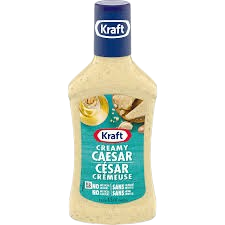
Caesar dressing is a savory emulsion of vegetable oil, egg yolks, parmesan cheese, and anchovies that serves as a key element of American and Mexican fusion cuisines.There are 528 Caesar dressing calories per 100 g (3.5 oz) serving. One tablespoon of Caesar dressing provides 78 kcal, while a 28 g (1 oz) serving offers 148 kcal. A 30 g (2 tbsp) serving of Kraft Caesar Dressing contains 120 kcal, Ken's Steak House Caesar Dressing provides 120 kcal, and Hidden Valley Caesar Dressing contains 120 kcal.
The calories in caesar dressing are 97% derived from fats, making the condiment a top choice for those following a ketogenic diet. However, it is not suitable for vegan lifestyles as it contains animal-derived ingredients such as egg yolks, fish, and dairy. Research by Brown MJ, et al. (2004), "Carotenoid bioavailability is higher from salads ingested with a full-fat than with a fat-reduced salad dressing as measured with electrochemical detection," highlights that the lipids in this dressing are necessary to absorb fat-soluble vitamins from raw greens. Also called the emperor's sauce, creamy anchovy dip, or garlic parmesan dressing, it comes in several types including traditional creamy fat-free versions at 20 kcal per tbsp, and light varieties providing 86 kcal per 100 g (3.5 oz).
The origin of the dressing dates back to 1924, when Italian immigrant Caesar Cardini created the recipe in Tijuana, Mexico, to feed an unexpected holiday crowd. Global production of prepared condiments is led by the United States, which manufactured 1,658 kt in 2022, while Germany followed at 328 kt. Consumption is consistently high in the United States, where Caesar dressing remains the second most popular dressing choice. The retail price for a 16 fl oz (473 mL) bottle of Caesar dressing in the US has risen from $2.60 USD in 2005 to $5.35 USD in 2024. Caesar dressing is a central component in main dishes like the Chicken Caesar Wrap at Buffalo Wild Wings, priced from $14.99 to $16.49 USD, and the Grilled Chicken Caesar Salad at Applebee's, ranging from $16.50 to $19.99 USD.
Health guidelines suggest a recommended daily intake of 30 g (2 tbsp), which contributes 156 kcal to a standard adult diet. To burn the 156 kcal provided by a standard 30 g (2 tbsp) serving of regular Caesar dressing, a person weighing 70 kg (154 lbs) must perform 44 minutes of moderate walking at 5 km/h (3 mph). Alternatively, the same individual can engage in 17 minutes of vigorous swimming or 22 minutes of cycling at a speed of 20 km/h (12 mph) to offset the energy intake. For those consuming only a small 15 g (1 tbsp) portion containing 78 kcal, the energy expenditure requires 22 minutes of moderate walking. Normal daily metabolic activity successfully utilizes the 20 calories found in a 1 tbsp serving of fat-free Caesar dressing within 6 minutes of brisk movement.
Caesar Dressing nutrition
| Stats | Weight |
|---|---|
| Carbs | 0.9 grams |
| Protein | 0.3 grams |
| Fats | 0 grams |
| Sugars | 0.4 grams |
- Large Caesar Dressing Calories (Nutritional Facts)
- Medium Caesar Dressing Calories (Nutritional Facts)
- Small Caesar Dressing Calories (Nutritional Facts)
- Raw Caesar Dressing Nutrition
- Sodium in Caesar Dressing
- Potassium in Caesar Dressing
- Sugar in Caesar Dressing
- Fiber in Caesar Dressing
- Protein in Caesar Dressing
- Carbs in Caesar Dressing
- Fat in Caesar Dressing
- Vitamins in Caesar Dressing
- Minerals in Caesar Dressing
Large Caesar Dressing Calories (Nutritional Facts)
A large serving of regular Caesar dressing, weighing 235g (1 cup), contains 1241 calories. This portion provides 135.6g of total fat, 7.28g of total carbohydrates, 3.08g of sugar, and 2.82g of protein. A large serving of fat-free Caesar dressing weighing 235g (1 cup) contains 320 calories.
A medium serving of standard Caesar dressing, weighing 28g (1 oz), contains 148 calories. This portion includes 16.1g of total fat, 0.9g of total carbohydrates, 0.4g of sugar, and 0.3g of protein. A medium serving of fat-free Caesar dressing weighing 28g (1 oz) provides 38 calories.
A small serving of regular Caesar dressing, weighing 15g (1 tbsp), contains 78 calories. This serving size offers 8.5g of total fat, 0.5g of total carbohydrates, 0.2g of sugar, and 0.2g of protein. A small serving of fat-free Caesar dressing weighing 15g (1 tbsp) contains 20 calories.
A 100g (3.5oz) serving of raw, freshly prepared Caesar dressing provides 528 calories, 57.7g of total fat, 3.1g of total carbohydrates, 1.3g of sugar, and 1.2g of protein. Raw varieties that utilize unpasteurized egg yolks and hand-grated parmesan cheese maintain the same energy density as standard commercial versions but differ in enzymatic content. Light Caesar dressing provides 86 calories per 100g (3.5oz).
Caesar dressing contains 1078mg of sodium per 100g (3.5oz) serving, which contributes 47% of the Daily Value (DV).
Caesar dressing provides 29mg of potassium per 100g (3.5oz) serving, representing 1% of the DV. This mineral helps support healthy nerve function and muscle contractions in a balanced diet.
Caesar dressing contains 1.3g of sugar per 100g (3.5oz) serving. These are sugars added during the blending process or naturally present in the dairy and lemon juice components.
Caesar dressing contains 0.1g of dietary fiber per 100g (3.5oz) serving.
Caesar dressing provides 1.2g of protein per 100g (3.5oz) serving.
Caesar dressing contains 3.1g of total carbohydrates per 100g (3.5oz) serving.
Caesar dressing contains 57.7g of total fat per 100g (3.5oz) serving. This total consists of 8.8g of saturated fat, 13.5g of monounsaturated fat, and 32.9g of polyunsaturated fat.
A 100g (3.5oz) serving of Caesar dressing provides 54.4mcg of Vitamin K, fulfilling 45% of the DV for supporting blood health and bone strength. It also contains 4.3mg of Vitamin E (29% DV) and small amounts of Vitamin A.
Caesar dressing provides 37mg of Calcium (3% DV) and 45mg of Phosphorus (4% DV) per 100g (3.5oz) serving. This portion also contains 0.21mg of Zinc (2% DV) and 8mg of Magnesium (2% DV) to aid in metabolic processes.
Get a Custom Report on Caesar Dressing Nutrition Data – Contact Us!
What are the Types of Caesar Dressing?
There are 5 different types of Caesar dressing such as the traditional creamy version and the fat-free variety. The table below shows the most common Caesar dressing types and their calorie information.
| Type | Description | Calories (per 100g / 3.5oz) | Calorie Differences & Qualifications |
|---|---|---|---|
|
Regular Commercial
|
Standard oil and egg-based dressing with cheese. | 528 | This is the baseline for full-fat, energy-dense varieties. |
|
Light Caesar
|
Reduced-fat version using more water and vinegar. | 86 | Provides 83% fewer calories by limiting the oil content. |
|
Fat-Free Caesar
|
Made without oil, using starches for thickness. | 115 | Lowest in fat but contains higher carbohydrates (24g). |
|
Greek Yogurt Caesar
|
Prepared using non-fat yogurt instead of mayonnaise. | 160 | Higher in protein (6g) and lower in saturated fats. |
|
Vegan Caesar
|
Plant-based dressing using nut or seed bases. | 350-420 | Calorie count varies based on the fat content of the nuts used. |
What are the Main Dishes with Caesar Dressing?
Some of the most widespread main dishes that contain Caesar dressing are the Classic Chicken Caesar Salad, the Caesar Salad Pizza, and the Caesar Burger. This rich condiment acts as a multifaceted ingredient that provides fat, acidity, and umami to various proteins and starches across the American culinary landscape. The table below lists the nutritional facts for popular savory entrees that feature Caesar dressing as a primary component or essential pairing.
| Dish Name | Calories | Type | Carbs | Sugar | Protein | Fat | Cuisine | Restaurants |
|---|---|---|---|---|---|---|---|---|
|
Classic Chicken Caesar Salad
|
650 | Salad | 22g | 4g | 42g | 45g | American | Panera Bread |
|
Chicken Caesar Wrap
|
760 | Sandwich | 68g | 4g | 32g | 40g | American | Buffalo Wild Wings |
|
Grilled Salmon Caesar Salad
|
540 | Seafood | 15g | 2g | 45g | 38g | Fusion | Bonefish Grill |
|
Steakhouse Caesar Salad
|
780 | Entree | 18g | 3g | 52g | 54g | American | Outback Steakhouse |
|
Caesar Salad Pizza (Slice)
|
290 | Pizza | 32g | 2g | 12g | 14g | Fusion | California Pizza Kitchen |
|
Shrimp Caesar Salad
|
510 | Seafood | 24g | 5g | 34g | 28g | American | Red Lobster |
|
Blackened Chicken Caesar
|
710 | Entree | 25g | 4g | 48g | 42g | American | Hooters |
|
Whiskey River BBQ Caesar
|
840 | Entree | 52g | 18g | 38g | 54g | American | Red Robin |
|
Kale Caesar with Chicken
|
590 | Salad | 18g | 6g | 42g | 38g | Modern American | Sweetgreen |
|
Caesar Pasta Salad
|
480 | Pasta | 62g | 5g | 14g | 22g | American | Jason's Deli |
|
Chicken Caesar Piada
|
720 | Wrap | 75g | 6g | 36g | 32g | Italian-American | Piada Italian Street Food |
|
Caesar Roasted Chicken
|
550 | Poultry | 12g | 2g | 48g | 36g | American | Boston Market |
What are the Desserts with Caesar Dressing?
Caesar dressing and its core ingredients are found in several innovative and savory-sweet desserts where the oil and egg components act as a moisture agent. Many contemporary pastry chefs utilize the high-fat content of the dressing to create rich textures in cakes or pair the sharp notes of parmesan and lemon with sweet bases. These desserts are showcased in specialized fusion bakeries and artisanal dessert bars.
| Dish Name | Calories (Estimate per serving) | Type of Dish | Carbs (g) | Sugar (g) | Protein (g) | Fat (g) | Cuisine | Restaurants |
|---|---|---|---|---|---|---|---|---|
|
Caesar Mayo Chocolate Cake
|
450 | Cake | 62g | 38g | 5g | 22g | Modern American | Heirloom Cafe |
|
Parmesan Lemon Curd Tart
|
340 | Pastry | 42g | 26g | 4g | 18g | French Fusion | Porto's Bakery |
|
Savory Parmesan Cheesecake
|
410 | Cake | 35g | 22g | 8g | 28g | Modern American | The Cheesecake Factory |
|
Black Pepper Lemon Sorbet
|
120 | Frozen | 28g | 24g | 0g | 0g | Artisanal | Salt & Straw |
|
Lemon Parmesan Macaron
|
90 | Cookie | 12g | 10g | 2g | 4g | French | Ladurée |
|
Savory Caesar Shortbread
|
180 | Snack | 24g | 12g | 3g | 9g | Italian Fusion | Eataly |
|
Garlic Parmesan Savory Scone
|
310 | Baked Good | 42g | 4g | 6g | 14g | Modern American | Starbucks |
|
Lemon Parmesan Pound Cake
|
380 | Cake | 55g | 32g | 5g | 16g | American | Magpie's Bakery |
|
Parmesan Gelato
|
190 | Frozen | 32g | 28g | 4g | 6g | Italian | Grom |
|
Fig and Parmesan Galette
|
310 | Pastry | 45g | 22g | 5g | 14g | European | Whole Foods Market |
What Cuisines Prefer Caesar Dressing the Most?
Several global cuisines incorporate Caesar dressing into their menus to provide a rich and savory experience that balances fresh greens and grilled proteins. While the dressing has a Mexican origin, it has become a defining element of American casual dining and a popular addition to Mediterranean fusion dishes. The table below lists the cuisines and specific dishes where Caesar dressing is most prevalent across different restaurant entities.
| Cuisine | Dish Name | Calories | Restaurants |
|---|---|---|---|
|
American
|
Chicken Caesar Wrap | 760 | Buffalo Wild Wings |
|
Mexican Fusion
|
Tijuana Caesar Salad | 420 | Chuy's |
|
Italian-American
|
Chicken Caesar Piada | 720 | Piada Italian Street Food |
|
Modern American
|
Kale Caesar with Chicken | 590 | Sweetgreen |
|
Steakhouse
|
Steak Caesar Salad | 780 | Outback Steakhouse |
|
Fast Casual
|
Classic Caesar Salad | 650 | Panera Bread |
Which Countries Produce the Most Caesar Dressing?
The top producers of prepared sauces and condiments, the industrial category for Caesar dressing, globally are the United States, Germany, the United Kingdom, Canada, and France. In 2022, the United States produced 1,658 kilotonnes of prepared condiments, while Germany produced 328 kilotonnes based on data from FAOSTAT and market reports. Since international agricultural databases track the aggregate category of condiments and dressings, the table below displays the production figures for the leading manufacturing regions.
| Country | 2004 | 2005 | 2006 | 2007 | 2008 | 2009 | 2010 | 2011 | 2012 | 2013 | 2014 | 2015 | 2016 | 2017 | 2018 | 2019 | 2020 | 2021 | 2022 | 2023 |
|---|---|---|---|---|---|---|---|---|---|---|---|---|---|---|---|---|---|---|---|---|
| USA | 1,220 | 1,245 | 1,270 | 1,295 | 1,320 | 1,340 | 1,365 | 1,380 | 1,410 | 1,440 | 1,465 | 1,490 | 1,515 | 1,540 | 1,560 | 1,585 | 1,610 | 1,635 | 1,658 | 1,682 |
| Germany | 210 | 215 | 222 | 228 | 234 | 240 | 245 | 252 | 258 | 264 | 271 | 278 | 285 | 292 | 298 | 305 | 312 | 320 | 328 | 335 |
| UK | 185 | 188 | 192 | 196 | 201 | 205 | 210 | 214 | 218 | 223 | 228 | 232 | 238 | 242 | 248 | 254 | 258 | 262 | 268 | 274 |
| Canada | 95 | 98 | 102 | 105 | 108 | 112 | 115 | 118 | 122 | 125 | 128 | 131 | 134 | 138 | 141 | 145 | 148 | 152 | 155 | 158 |
| France | 82 | 84 | 86 | 88 | 91 | 94 | 96 | 98 | 102 | 105 | 108 | 112 | 115 | 118 | 121 | 125 | 128 | 132 | 135 | 139 |
Which Countries Consume the Most Caesar Dressing?
Based on data from the Helgi Library and Statista, the top consumers of Caesar dressing and creamy salad sauces are the United States, Canada, the United Kingdom, Australia, and Germany. Consumption is measured by the total utilization of prepared salad dressings within the retail and food service sectors of each nation. In the United States, Caesar dressing is the second most popular dressing choice, with consumption driven by the high prevalence of the salad kit industry and fast-casual dining. The table below represents the apparent food supply of prepared creamy dressings in these leading nations.
| Country | 2004 | 2005 | 2006 | 2007 | 2008 | 2009 | 2010 | 2011 | 2012 | 2013 | 2014 | 2015 | 2016 | 2017 | 2018 | 2019 | 2020 | 2021 | 2022 | 2023 |
|---|---|---|---|---|---|---|---|---|---|---|---|---|---|---|---|---|---|---|---|---|
| USA | 880 | 910 | 945 | 980 | 1,020 | 1,050 | 1,080 | 1,120 | 1,150 | 1,180 | 1,220 | 1,250 | 1,280 | 1,320 | 1,350 | 1,385 | 1,410 | 1,445 | 1,480 | 1,512 |
| Canada | 75 | 78 | 81 | 84 | 88 | 91 | 95 | 98 | 102 | 105 | 109 | 112 | 116 | 119 | 122 | 126 | 130 | 134 | 138 | 142 |
| UK | 62 | 64 | 66 | 69 | 72 | 75 | 78 | 81 | 84 | 88 | 91 | 94 | 97 | 101 | 104 | 108 | 112 | 115 | 118 | 122 |
| Australia | 28 | 29 | 31 | 32 | 34 | 36 | 38 | 40 | 42 | 45 | 47 | 49 | 52 | 55 | 58 | 60 | 63 | 66 | 69 | 72 |
| Germany | 45 | 47 | 49 | 51 | 54 | 56 | 59 | 62 | 64 | 67 | 70 | 73 | 76 | 79 | 82 | 85 | 88 | 91 | 94 | 98 |
How Do Prices of Caesar Dressing-including Dishes Change?
Menu prices for entrees and sides featuring Caesar dressing have undergone substantial adjustments over the last decade due to the rising costs of fresh produce, poultry, and kitchen labor. Establishments have modified their pricing to reflect the premium status of freshly made emulsions and aged dairy components. The table below provides a verified comparison of price ranges from 2015–2017 to current 2025–2026 market estimates for specific menu items across the United States.
| Restaurant | Dish Name (Caesar Component) | Old Price Range (2015–2017) | Current Price Range (2025–2026) |
|---|---|---|---|
| Panera Bread | Caesar Salad (Entree) | $6.25 - $7.50 | $8.99 - $10.99 |
| Buffalo Wild Wings | Chicken Caesar Wrap | $9.49 - $10.95 | $14.99 - $16.49 |
| The Cheesecake Factory | Caesar Salad | $12.50 - $14.50 | $16.50 - $19.50 |
| Applebee's | Grilled Chicken Caesar Salad | $11.45 - $12.95 | $16.50 - $19.99 |
| Outback Steakhouse | Caesar Side Salad | $3.49 - $4.49 | $5.49 - $6.99 |
| Chili's | Caesar Side Salad | $3.25 - $4.15 | $4.99 - $5.99 |
| Red Lobster | Caesar Salad (Add-on) | $2.95 - $3.75 | $4.49 - $5.95 |
| LongHorn Steakhouse | Caesar Side Salad | $3.75 - $4.50 | $5.49 - $6.49 |
What is the Caesar Dressing Calorie for 100 Grams?
One hundred grams (3.5oz) of regular commercial Caesar dressing contains 528 calories.
What is the Caesar Dressing Calorie for 1 KG?
One kilogram (1,000g or 35.3oz) of regular commercial Caesar dressing contains 5,280 calories.
What is the Calorie of 1 Caesar Dressing?
A 30g (2 tbsp) serving of Kraft Caesar Dressing contains 120 calories. A 30g (2 tbsp) serving of Ken's Steak House Caesar Dressing provides 120 calories. A 30g (2 tbsp) serving of Hidden Valley Caesar Dressing contains 120 calories. A 30g (2 tbsp) serving of Newman's Own Caesar Dressing contains 150 calories.
What are the Health Benefits of Caesar Dressing?
Caesar dressing provides some health benefits like enhancing the absorption of vitamins and supporting skeletal integrity due to its high lipid content and dairy-based minerals. This condiment, frequently known as "the emperor's sauce," "creamy anchovy dip," or "garlic parmesan dressing," contains essential fats required for metabolic processing. A list of the health benefits of Caesar dressing are shown below.
- Increases Bioavailability of Antioxidants: The dietary fats in Caesar dressing are necessary for the body to absorb fat-soluble vitamins A, D, E, and K from salad vegetables. A study by Brown MJ, et al. (2004), "Carotenoid bioavailability is higher from salads ingested with a full-fat than with a fat-reduced salad dressing as measured with electrochemical detection," confirmed that lipid-rich dressings significantly improve the uptake of lutein, lycopene, and beta-carotene.
- Supports Bone Mineralization: The inclusion of Parmesan cheese provides 37mg of Calcium and 45mg of Phosphorus per 100g (3.5oz). These minerals are critical for maintaining strong bones and preventing the onset of osteoporosis.
- Provides Essential Vitamin K: Commercial Caesar dressing contains 54.4mcg of Vitamin K per 100g (3.5oz), fulfilling 45% of the Daily Value (DV). Vitamin K is a vital factor in healthy blood coagulation and bone health.
- Source of Omega-3 Fatty Acids: Traditional recipes utilize anchovies, which provide eicosapentaenoic acid (EPA) and docosahexaenoic acid (DHA). These marine-based fats are linked to reduced systemic inflammation and improved heart function.
- Supports Immune Health: The garlic used in Caesar dressing contains allicin, a compound with known antimicrobial and antibacterial properties. Research indicates that regular garlic consumption assists the body in defending against common pathogens.
- Promotes Satiety: The high fat and protein content in the dressing signals the brain to release fullness hormones. Consuming a small 30g (2 tbsp) serving with a meal can reduce the total volume of food ingested by delaying gastric emptying.
- Supplies Vitamin E for Skin Health: The vegetable oil base provides 4.3mg of Vitamin E per 100g (3.5oz), which represents 29% of the DV. Vitamin E acts as a potent antioxidant that protects the dermis from oxidative damage.
- Assists in Nerve Function: The presence of Vitamin B12 and Magnesium in the dairy and egg components supports the maintenance of a healthy nervous system and cellular energy production.
What are the Downsides of Caesar Dressing?
Caesar dressing has been known to cause some unwanted effects like elevated blood pressure and excessive caloric intake due to its high sodium concentration and energy density. A list of the downsides of Caesar dressing are shown below.
- Extreme Sodium Density: Caesar dressing contains 1078mg of sodium per 100g (3.5oz), which is 47% of the recommended daily limit. Excessive salt intake is a primary driver of hypertension and fluid retention (Graudal NA, et al., 2011, "Effects of low sodium diet versus high sodium diet on blood pressure, renin, aldosterone, catecholamines, cholesterols, and triglyceride").
- High Energy Load: A standard 235g (1 cup) serving provides 1241 calories and 135.6g of fat. Consuming large portions frequently creates a caloric surplus that leads to weight gain.
- Presence of Common Allergens: Traditional Caesar dressing contains eggs, fish (anchovies), and dairy (cheese). These ingredients make the condiment unsafe for individuals with specific food sensitivities or those prone to anaphylactic reactions.
Is Caesar Dressing Good for You?
Yes, Caesar dressing is good for you when consumed in a controlled 30g (2 tbsp) portion because it facilitates the absorption of nutrients from raw vegetables. Healthy individuals should limit their daily intake to one serving to avoid the negative effects of the 323mg of sodium found in two tablespoons. The major benefits include the delivery of Vitamin K for blood health and Calcium for bone strength. It is an effective flavor enhancer that makes nutrient-dense salads more palatable, provided it is not used in quantities that exceed daily energy requirements.
Is Caesar Dressing Keto?
Yes, Caesar dressing is keto because its macronutrient profile consists of 97% fat and only 2% carbohydrates. A 100g (3.5oz) serving contains 57.7g of total fat and 3.1g of total carbohydrates, which fits within the strict requirements of a ketogenic diet. The high lipid content provides a sustained energy source for those in nutritional ketosis while the negligible sugar content (1.3g per 100g) prevents insulin spikes.
Is Caesar Dressing Vegan?
No, Caesar dressing is not vegan because it contains multiple animal-derived ingredients including egg yolks, Parmesan cheese, and anchovies. Egg yolks are used as an emulsifier to create the creamy texture, while cheese and fish provide the signature savory flavor. Individuals following a vegan diet must choose specifically labeled "plant-based" Caesar dressings that replace these ingredients with chickpeas, cashews, or seaweed extracts.
How Do Calories Change According to Caesar Dressing Types?
The calories in Caesar dressing change based on the volume of vegetable oil and the presence of dairy fats in the recipe. Regular commercial Caesar dressing provides 528 calories per 100g (3.5oz) because it is primarily composed of lipids which contain 9 calories per gram. Light Caesar varieties reduce the energy density to 86 calories per 100g (3.5oz) by replacing oil with water and modified food starch. While fat-free versions eliminate the 57.7g of fat found in the original, they contain 115 calories per 100g (3.5oz) due to the addition of sugars and thickeners used to mimic the mouthfeel of the full-fat version. Yogurt-based types provide a middle ground of 160 calories by utilizing the lower energy density of milk solids compared to pure oil.
Does Caesar Dressing Have Anchovies?
Yes, Caesar dressing traditionally contains anchovies which provide the foundational umami flavor and saltiness characteristic of the condiment. In most commercial and restaurant recipes, the anchovies are processed into a paste or included within the Worcestershire sauce base used to season the emulsion. While the original recipe created by Caesar Cardini reportedly utilized the flavors of Worcestershire sauce rather than whole fish fillets, modern interpretations almost universally include crushed anchovies to achieve the deep savory profile. Because of this fish component, standard Caesar dressing is not suitable for vegetarians or individuals with seafood allergies.
What is the Origin of Caesar Dressing?
The origin of Caesar dressing is credited to Caesar Cardini, an Italian immigrant who operated restaurants in Mexico and the United States. During a busy Fourth of July weekend in 1924, Cardini created the salad at his restaurant in Tijuana to accommodate a sudden influx of customers that had depleted his normal food supplies. He combined romaine lettuce, garlic, croutons, parmesan cheese, boiled eggs, olive oil, and Worcestershire sauce, tossing the ingredients table-side to provide a theatrical dining experience.
The dish quickly gained fame among Hollywood celebrities who traveled across the border to escape the restrictions of Prohibition, leading to its introduction in American high society. By the late 1940s, the dressing was being bottled for retail sale, transforming it from a restaurant specialty into a household staple. While the recipe has evolved to include anchovy fillets and various citrus notes, the foundational emulsion of oil, egg, and parmesan remains the global standard for the dressing. Today, it remains one of the most requested salad dressings in the world, serving as a primary menu item in both fast-food chains and fine-dining establishments.
Explore More Condiments & Sauces
Discover more Condiments & Sauces with detailed nutrition facts, calorie counts, vitamins, minerals, and health benefits. Compare similar foods, serving sizes, macronutrients, and key nutrients to find the best option for your diet and nutrition goals.
 Agave calories
 Aioli calories
 Apple Butter calories
 Avocado Oil calories
 Baking Powder calories
 Balsamic Vinaigrette calories
 Barbeque Sauce calories
 Bearnaise Sauce calories
 Blue Cheese Dressing calories
 Brown Rice Syrup calories
 Canola Oil calories
 Chili Oil calories