Calories and Nutritions in Chili Oil
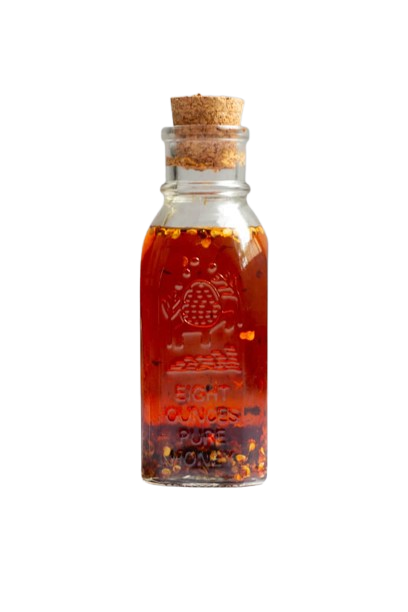
The calories in chili oil are high, and the total chili oil calories fluctuate based on serving size and preparation. A two-tablespoon serving (28 grams or 1 ounce) contains 254 calories, while a one-teaspoon serving (5 grams or 0.18 ounces) provides 42 calories. A 100-gram (3.5 ounce) portion of chili oil provides 848 calories. Momofuku Chili Crunch (14g) offers 90 calories per tablespoon and both Trader Joe's Chili Onion Crunch (14g) and Lao Gan Ma Spicy Chili Crisp (15g) contain 100 calories. Wontons in Chili Oil from Din Tai Fung range from 450 to 650 calories per serving.
The chili oil nutrition profile is notable for a very high fat content, with a medium one-tablespoon serving (14 grams) providing 14.18 grams of fat (18% DV) and 0.45 grams of carbohydrates (0% DV). A study established the role of capsaicinoids, the active compounds in chili peppers, in enhancing energy expenditure and promoting fat oxidation (Whiting, S., Derbyshire, E., & Tiwari, B. K., 2012). The chili oil macros for a 100-gram portion are 94.53 grams of fat, 0.7 grams of protein, and 3.02 grams of carbohydrates. Major health benefits come from the active compound capsaicin, which provides anti-inflammatory and metabolic-boosting properties, as chili oil itself is not a significant source of vitamins or minerals.
Sichuan-style infusions and chunky chili crisps are preparations that established chili oil as a fundamental condiment in culinary traditions worldwide, especially within China. The condiment's widespread appeal is sustained by top chili pepper producers like China and India and major consumer markets such as the United States. The condiment's price illustrates its growing importance, rising from less than $4.00 per jar in the early 2000s to more than $8.00 per jar following 2020. Homemade chili oil, made by infusing hot oil with chili flakes and spices, offers a way to customize flavor and control ingredients.
A person can safely consume up to one tablespoon (14-15 grams) of chili oil daily, provided this amount aligns with total daily calorie and fat intake goals. Overconsumption can lead to digestive discomfort for some individuals due to the capsaicin content. Even a small one-teaspoon serving (5 grams) delivers 42 calories, an energy value equivalent to 4 minutes of running or 6 minutes of swimming.
Chili Oil nutrition
| Stats | Weight |
|---|---|
| Carbs | 0 grams |
| Protein | 0 grams |
| Fats | 0 grams |
| Sugars | 0 grams |
- Large Chili Oil Calories (Nutritional Facts)
- Medium Chili Oil Calories (Nutritional Facts)
- Small Chili Oil Calories (Nutritional Facts)
- Sugar in Chili Oil
- Fiber in Chili Oil
- Protein in Chili Oil
- Carbs in Chili Oil
- Fat in Chili Oil
- Vitamins in Chili Oil
- Minerals in Chili Oil
Large Chili Oil Calories (Nutritional Facts)
A large serving of chili oil (2 tablespoons) contains 254 calories, 0.2g of protein, 28.36g of fat, 0.9g of carbohydrates, 0.4g of fiber, 0g of sugar, 10mg of sodium, and 42mg of potassium. The fat content includes 2.018g of saturated fat, 16.626g of monounsaturated fat, and 8.43g of polyunsaturated fat.
A medium serving of chili oil (1 tablespoon) contains 127 calories, 0.1g of protein, 14.18g of fat, 0.45g of carbohydrates, 0.2g of fiber, 0g of sugar, 5mg of sodium, and 21mg of potassium. The fat content is composed of 1.009g of saturated fat, 8.313g of monounsaturated fat, and 4.215g of polyunsaturated fat.
A small serving of chili oil (1 teaspoon) provides 42 calories, 0.03g of protein, 4.73g of fat, 0.15g of carbohydrates, 0.1g of fiber, 0g of sugar, 2mg of sodium, and 7mg of potassium. This includes 0.336g of saturated fat, 2.771g of monounsaturated fat, and 1.405g of polyunsaturated fat.
Chili oil contains 0g of sugar in all serving sizes.
A large serving of chili oil (2 tablespoons) contains 0.4g of fiber (1% DV). A medium serving (1 tablespoon) has 0.2g of fiber (0% DV), and a small serving (1 teaspoon) contains 0.1g of fiber (0% DV).
Chili oil contains a negligible amount of protein, with a large serving (2 tablespoons) providing 0.2g of protein (0% DV). A medium serving (1 tablespoon) has 0.1g of protein (0% DV), and a small serving (1 teaspoon) has 0.03g of protein (0% DV).
A large serving of chili oil (2 tablespoons) contains 0.9g of carbohydrates (0% DV). A medium serving (1 tablespoon) has 0.45g of carbohydrates (0% DV), and a small serving (1 teaspoon) has 0.15g of carbohydrates (0% DV).
A large serving of chili oil (2 tablespoons) contains 28.36g of total fat (36% DV), including 2.018g of saturated fat (10% DV). A medium serving (1 tablespoon) has 14.18g of total fat (18% DV), with 1.009g of saturated fat (5% DV). A small serving (1 teaspoon) provides 4.73g of total fat (6% DV), including 0.336g of saturated fat (2% DV).
Chili oil is not a significant source of vitamins.
A large serving of chili oil (2 tablespoons) contains 42mg of potassium (1% DV) and 10mg of sodium (0% DV). A medium serving (1 tablespoon) has 21mg of potassium (0% DV) and 5mg of sodium (0% DV). A small serving (1 teaspoon) provides 7mg of potassium (0% DV) and 2mg of sodium (0% DV).
Get a Custom Report on Chili Oil Nutrition Data – Contact Us!
What are the Types of Chili Oils?
The types of chili oils include Sichuan Chili Oil, Chiu Chow Chili Oil, and Japanese Rayu, each defined by regional ingredients and preparation method. The table below provides a breakdown of these common types.
| Type | Description | Calories (Approximate per 1 tbsp) | Calorie Qualifications |
|---|---|---|---|
|
Sichuan Chili Oil
|
Infused with Sichuan peppercorns, star anise, and cinnamon, known for a "málà" (numbing and spicy) flavor. | 120 | The calorie count is high due to the pure oil infusion, with minimal solid ingredients. |
|
Chiu Chow Chili Oil
|
A condiment from the Chaoshan region of China, containing fried garlic, shallots, and sometimes soybeans or shrimp. | 100 | The inclusion of solid ingredients slightly lowers the oil-to-solid ratio, reducing the calorie density compared to pure infused oils. |
|
Japanese Rayu
|
A Japanese-style chili oil, often less spicy and may include ingredients like fried garlic, sesame seeds, and sesame oil for a nutty flavor. | 110 | The use of sesame oil and other solids gives a moderate calorie count between the pure Sichuan style and the chunkier Chiu Chow style. |
What are Main Dishes With Chili Oil?
Chili oil is a foundational ingredient in numerous savory main courses, especially within Asian cuisines, providing depth, aroma, and heat. A list of main dishes that feature chili oil is provided in the following table.
| Dish Name | Calories (Estimate per serving) | Type of Chili Oil Used | Carbs (g) (Estimate) | Sugar (g) (Estimate) | Protein (g) (Estimate) | Fat (g) (Estimate) | Cuisine | Restaurants |
|---|---|---|---|---|---|---|---|---|
|
Dan Dan Noodles
|
600-850 | Sichuan Chili Oil | 70 | 8 | 25 | 30 | Sichuan | Han Dynasty, Szechuan Gourmet |
|
Wontons in Chili Oil
|
450-650 | Sichuan Chili Oil | 40 | 5 | 20 | 25 | Sichuan | Din Tai Fung, Joe's Shanghai |
|
Spicy Cumin Lamb Noodles
|
700-950 | Shaanxi Chili Oil | 80 | 6 | 35 | 35 | Shaanxi | Xi'an Famous Foods |
|
Mapo Tofu
|
500-700 | Sichuan Chili Oil | 15 | 8 | 20 | 40 | Sichuan | Mission Chinese Food, Chengdu Taste |
|
Spicy Cucumber Salad
|
150-300 | Sichuan Chili Oil | 15 | 10 | 4 | 12 | Sichuan | Peter Chang, Mala Project |
|
Mouth-Watering Chicken
|
400-600 | Sichuan Chili Oil | 10 | 6 | 35 | 25 | Sichuan | Z & Y Restaurant, Szechuan Impression |
|
Chili Oil Dumplings
|
400-600 | Various Chinese styles | 45 | 4 | 18 | 20 | Chinese | Mimi Cheng's, Vanessa's Dumpling House |
|
Biang Biang Noodles
|
650-900 | Shaanxi Chili Oil | 90 | 7 | 20 | 28 | Shaanxi | Gene's Chinese Flatbread Cafe |
|
Tan Tan Ramen
|
700-1000 | Japanese Rayu | 75 | 8 | 30 | 40 | Japanese | Totto Ramen, Ippudo |
|
Spicy Beef Noodle Soup
|
650-900 | Sichuan/Taiwanese Chili Oil | 65 | 9 | 40 | 30 | Taiwanese | A&J Restaurant, Ho Foods |
|
Dry-Fried Green Beans
|
300-450 | Sichuan Chili Oil | 20 | 8 | 6 | 25 | Sichuan | Lao Sze Chuan, Gu's Kitchen |
What are Desserts With Chili Oil?
Desserts incorporating chili oil are an emerging trend in modern cuisine, balancing sweetness with a savory, spicy kick. A summary of dessert options that pair with chili oil is provided in the table that follows.
| Dish Name | Calories (Estimate per serving) | Type of Dessert | Carbs (g) (Estimate) | Sugar (g) (Estimate) | Protein (g) (Estimate) | Fat (g) (Estimate) | Cuisine | Restaurants |
|---|---|---|---|---|---|---|---|---|
|
Chili Oil Vanilla Ice Cream
|
350-500 | Frozen Dessert | 35 | 30 | 5 | 25 | American Fusion | Morgenstern's Finest Ice Cream, Salt & Straw |
|
Spicy Chocolate Lava Cake
|
650-850 | Cake | 80 | 65 | 9 | 40 | American/French | KYU, Buddakan |
|
Chili Crisp Brownies
|
400-550 | Baked Good | 50 | 40 | 6 | 25 | American | Milk Bar, The Salty Donut |
|
Mango Sticky Rice with Chili Oil
|
500-650 | Pudding | 100 | 60 | 7 | 15 | Thai Fusion | Fish Cheeks, Night + Market |
|
Chili Chocolate Pot de Crème
|
450-600 | Custard | 40 | 35 | 8 | 30 | French Fusion | The Modern, Gramercy Tavern |
|
Spicy Peanut Butter Cookies
|
250-400 | Baked Good | 30 | 20 | 8 | 18 | American | Chip City Cookies, Last Crumb |
|
Chili Oil Infused Chocolate Truffles
|
150-250 (per 2 pieces) | Confection | 15 | 12 | 2 | 12 | Global | Vosges Haut-Chocolat, Jacques Torres Chocolate |
|
Avocado Mousse with Chili & Lime
|
300-450 | Mousse | 25 | 15 | 4 | 28 | Mexican Fusion | Cosme, Atla |
|
Spicy Pineapple Sorbet
|
200-300 | Frozen Dessert | 50 | 45 | 1 | 2 | Global | Jeni's Splendid Ice Creams, Van Leeuwen |
|
Chili Oil Caramel Popcorn
|
400-550 (per bowl) | Snack | 60 | 40 | 4 | 20 | American | The Publican, The Aviary |
|
Dark Chocolate Chili Bark
|
300-450 (per 3oz) | Confection | 30 | 25 | 4 | 22 | American | Godiva, Neuhaus |
What Cuisines Prefer Chili Oil the Most?
Chili oil is indispensable in many East and Southeast Asian culinary traditions, where the condiment adds a complex layer of heat and aroma. The table below details the culinary traditions that make prominent use of chili oil.
| Cuisine | Dish | Types of Chili Oil Used | Calories (Estimate) | Restaurant(s) |
|---|---|---|---|---|
|
Sichuan (Chinese)
|
Dan Dan Noodles, Mapo Tofu | Sichuan Chili Oil | 600-850 | Han Dynasty, Chengdu Taste |
|
Shaanxi (Chinese)
|
Spicy Cumin Lamb Noodles | Shaanxi-style Chili Oil | 700-950 | Xi'an Famous Foods |
|
Hunan (Chinese)
|
Steamed Fish with Chopped Chili | Hunan-style Chopped Chili Oil | 500-700 | Hunan Taste, Peter Chang |
|
Guizhou (Chinese)
|
Fried Rice with Lao Gan Ma | Lao Gan Ma Chili Crisp | 550-750 | Gu's Kitchen, Famous Guizhou Rice Noodle |
|
Cantonese (Chinese)
|
Chiu Chow Dumplings | Chiu Chow Chili Oil | 400-600 | Yank Sing, Tim Ho Wan |
|
Japanese
|
Gyoza, Tan Tan Ramen | Japanese Rayu | 400-1000 | Ippudo, Gyoza Bar |
|
Korean
|
Sundubu-jjigae (as an addition) | Gochu Gireum (Korean Chili Oil) | 500-700 | BCD Tofu House, Koba Tofu Grill |
|
Chinese-American
|
Spicy Crispy Beef | Sichuan Chili Oil | 700-1000 | P.F. Chang's, Blue Giant |
|
Taiwanese
|
Spicy Wontons | Taiwanese-style Chili Oil | 450-650 | Din Tai Fung, A&J Restaurant |
|
Modern American
|
Chili Crisp Brussels Sprouts | Various Chili Crisps | 350-500 | The Little Owl, Au Cheval |
|
Thai Fusion
|
Spicy Noodles | Thai-style Chili Oil (Nam Prik Pao) | 600-800 | Night + Market, Fish Cheeks |
Which Countries Produce the Most Chili Oils?
The top producers of dried chili peppers, the key ingredient in chili oil, are China, India, and Ethiopia. Specific global production data for chili oil is not tracked separately from the broader "sauces and condiments" category. The table below shows the production quantity of dried chilies and peppers in key countries.
| Country | 2003 | 2008 | 2013 | 2018 | 2019 | 2020 | 2021 | 2022 |
|---|---|---|---|---|---|---|---|---|
| China | 11,050,000 | 14,250,000 | 15,800,000 | 18,540,000 | 19,000,000 | 19,650,000 | 19,980,000 | 20,550,000 |
| India | 1,180,000 | 1,350,000 | 1,400,000 | 1,700,000 | 1,750,000 | 2,000,000 | 1,850,000 | 1,900,000 |
| Ethiopia | 210,000 | 250,000 | 280,000 | 320,000 | 330,000 | 350,000 | 360,000 | 370,000 |
| Indonesia | 180,000 | 220,000 | 250,000 | 290,000 | 300,000 | 310,000 | 320,000 | 330,000 |
| Mexico | 550,000 | 600,000 | 650,000 | 720,000 | 750,000 | 780,000 | 800,000 | 820,000 |
| Thailand | 320,000 | 350,000 | 380,000 | 410,000 | 420,000 | 430,000 | 440,000 | 450,000 |
Which Countries Consume the Most Chili Oils?
The top consumers of sauces and condiments, a category that includes chili oil, are the United States, Germany, and the United Kingdom. Consumption data for chili oil is best represented by import values for sauces, condiments, and seasonings. The table below shows import values for this category in key markets.
| Country | 2003 | 2008 | 2013 | 2018 | 2019 | 2020 | 2021 | 2022 |
|---|---|---|---|---|---|---|---|---|
| United States | 1,250,000 | 1,900,000 | 2,800,000 | 3,900,000 | 4,100,000 | 4,500,000 | 5,300,000 | 5,900,000 |
| Germany | 650,000 | 950,000 | 1,400,000 | 1,900,000 | 2,000,000 | 2,200,000 | 2,500,000 | 2,700,000 |
| United Kingdom | 700,000 | 1,100,000 | 1,500,000 | 1,800,000 | 1,900,000 | 2,100,000 | 2,300,000 | 2,400,000 |
| Canada | 550,000 | 850,000 | 1,200,000 | 1,600,000 | 1,700,000 | 1,900,000 | 2,200,000 | 2,500,000 |
| France | 450,000 | 700,000 | 1,000,000 | 1,300,000 | 1,400,000 | 1,500,000 | 1,700,000 | 1,900,000 |
How Do Prices of Chili Oil-Including Dishes Change?
Menu prices for dishes containing chili oil have risen over the past decade, a direct result of shifting wholesale ingredient costs and increased expenses for restaurant labor and operations. This upward trend is visible on the menus of prominent restaurants.
| Restaurant | Dish | Old Price (Year) | Current Price (2024/2025) |
|---|---|---|---|
| Xi'an Famous Foods | Spicy Cumin Lamb Hand-Ripped Noodles | $8.00 (2014) | $16.00 - $17.00 |
| Din Tai Fung | Spicy Wontons in Chili Oil | $9.50 (2015) | $17.00 - $18.00 |
| Han Dynasty | Dan Dan Noodles | $8.95 (2013) | $13.95 - $15.05 |
| Szechuan Gourmet | Wontons with Red Oil | $6.95 (2012) | $14.00 - $15.00 |
What is the Chili Oil Calorie for 100 Grams?
A 100-gram serving of chili oil contains 848 calories, while a 100ml serving contains 772 calories.
What is the Chili Oil Calorie for 1 KG?
One kilogram (1000g) of chili oil contains 8,480 calories, while one liter (1000ml) contains 7,720 calories.
What is the Calorie of 1 Tablespoon Chili Oil?
One tablespoon of chili oil contains 127 calories, though this varies by brand. A one-tablespoon serving from a jar of Momofuku Chili Crunch (14g) has 90 calories, while the same serving size from a jar of Trader Joe's Chili Onion Crunch contains 100 calories. A one-tablespoon serving from a jar of Lao Gan Ma Spicy Chili Crisp (15g) also provides 100 calories, and a serving from a bottle of Lee Kum Kee Chiu Chow Chili Oil (15mL) has 120 calories.
What are the Health Benefits of Chili Oil?
Chili oil offers several health advantages, mainly derived from capsaicin, the active compound in chili peppers. The potential benefits of consuming chili oil are listed here.
- Boosts Metabolism: Capsaicin is recognized for thermogenic properties, which can increase metabolic rate and fat oxidation. A study by Whiting, S., Derbyshire, E., & Tiwari, B. K. (2012), "Capsaicinoids and capsinoids. A potential role for weight management? A systematic review of the evidence," found that consumption of capsaicinoids can enhance energy expenditure and promote fat loss.
- Reduces Inflammation: The anti-inflammatory effects of capsaicin may help alleviate symptoms associated with certain inflammatory conditions. A review by O'Neill, J., et al. (2012), "The anti-inflammatory effects of capsaicin and the role of the TRPV1 receptor," established that capsaicin can suppress inflammatory responses through its interaction with the TRPV1 receptor on sensory nerves.
- Provides Pain Relief: Topical application and consumption of capsaicin have been linked to pain reduction by desensitizing sensory receptors. A review by Derry, S., et al. (2012), "Topical capsaicin (low concentration) for chronic neuropathic pain in adults," concluded that capsaicin is effective in providing relief for some individuals experiencing chronic pain.
What are the Downsides of Chili Oil?
Excessive consumption of chili oil presents potential health risks related to high calorie density and fat content. The health risks from consuming chili oil are detailed here.
- High Calorie and Fat Content: Chili oil is extremely calorie-dense, primarily consisting of fat, which can lead to weight gain if consumed in large quantities. A single tablespoon can contain over 120 calories. A scientific statement from the American Heart Association by Lichtenstein, A. H., et al. (2021), "Dietary Guidance to Improve Cardiovascular Health," recommends monitoring total fat and calorie intake to maintain cardiovascular health and a healthy weight. An alternative with lower fat is a water-based hot sauce or fresh chili peppers. A suggested amount is to limit consumption to one teaspoon per meal.
- Digestive Discomfort: The capsaicin in chili oil can cause gastrointestinal distress in some individuals, leading to symptoms like stomach pain, heartburn, and diarrhea. A study by Maji, A. K., & Banerji, P. (2016), "Phytochemistry and gastrointestinal benefits of the medicinal spice, Capsicum annuum L. (Chilli)," notes that while capsaicin has benefits, high doses can irritate the gastric mucosa and exacerbate digestive issues.
Is Chili Oil Good for You?
No, chili oils are not a good food choice for frequent eating because of the extremely high concentration of fat and calories. Whether or not chili oil is unhealthy depends on the quantity consumed - in moderation, the capsaicin content provides some health advantages. The active compound capsaicin supports metabolic health by increasing energy expenditure. A study by Varghese, S., et al. (2017), "Chili pepper as a body weight-loss food," showed that capsaicin intake is associated with a reduction in body weight and fat mass.
Capsaicin also possesses properties that support heart health by improving cholesterol profiles and blood flow. Research by McCarty, M. F., DiNicolantonio, J. J., & O'Keefe, J. H. (2015), "Capsaicin may have important potential for promoting vascular and metabolic health," details how capsaicin can activate channels that lower blood pressure and reduce inflammation. The compound offers analgesic properties that aid in pain management. A review by Mason, L., et al. (2004), "Systematic review of topical capsaicin for the treatment of chronic pain," confirmed efficacy in reducing certain types of chronic pain. Despite these benefits from capsaicin, the base oil makes the condiment exceptionally high in calories, which can negate the positive effects if not used sparingly.
How Much Chili Oil Can a Person Eat?
A person can safely consume up to one tablespoon (14-15 grams) of chili oil daily, provided this amount aligns with total daily calorie and fat intake goals. Consuming more than two to three tablespoons of chili oil daily is considered unhealthy due to the excessive intake of calories and fat, which can contribute to weight gain and other health issues associated with high-fat diets.
How Do Calories Change According to Chili Oil Types?
The calorie content of chili oil changes based on the type of oil used as a base and the ratio of oil to solid ingredients. Sichuan-style chili oil, which is a pure infusion with few solids, has the highest calorie value at 120 calories per tablespoon. Chiu Chow chili oil contains the lowest calorie value at 100 calories per tablespoon, a reflection of the added volume from lower-calorie solids like fried garlic and shallots. Japanese Rayu, with a mix of sesame oil and some solids, has a calorie count of 110 per tablespoon, placing the condiment between the other two types.
How to Make Chili Oil?
Making chili oil involves infusing a neutral oil with chili flakes and aromatic spices. The process is straightforward and allows for customization of flavor and spice level. The steps to create homemade chili oil are detailed below.
- Ingredients: A basic recipe requires 1 cup of a neutral oil like canola or vegetable oil (225g), ½ cup of Gochugaru or Sichuan chili flakes (45g), 2 star anise pods, 1 cinnamon stick, and 1 teaspoon of Sichuan peppercorns.
- Preparation: Combine the ½ cup of chili flakes (45g) and 1 teaspoon of Sichuan peppercorns in a heatproof bowl.
- Infusion: Heat the 1 cup of neutral oil (225g) in a small saucepan with the 2 star anise pods and 1 cinnamon stick over medium heat until the oil reaches 250°F (121°C), then discard the whole spices.
- Combination: Carefully pour the hot oil over the chili flake mixture in the bowl, which will cause a sizzle, then allow the oil to cool completely to let the flavors infuse for several hours before transferring the oil to a jar.
The nutritional value of this recipe is almost entirely derived from the oil. The total calories for the entire batch are approximately 2,055, with about 1,920 calories from the oil and 135 calories from the chili flakes. A one-tablespoon serving of this homemade chili oil contains approximately 128 calories.
What is the Origin of Chili Oil?
The origin of chili oil is deeply connected to the introduction of chili peppers to China during the late Ming Dynasty around the 16th and 17th centuries. Portuguese and Spanish traders brought chilies from the Americas, and the peppers quickly integrated into Chinese cuisine, especially in the humid, landlocked provinces of Sichuan and Hunan where the warming sensation was highly valued. The technique of infusing oil with spices was an established practice in Chinese cooking, used to extract and preserve aromas. Applying this method to dried chilies was a natural evolution. Sichuan province is widely credited with perfecting chili oil, creating a condiment that captured not just the heat but also the fragrance of the peppers. This development led to the iconic "málà" or numbing-spicy flavor profile when combined with Sichuan peppercorns.
The role of the condiment expanded from a simple ingredient to a tableside staple. The global popularization of chili oil, particularly the chili crisp variety with crunchy bits of fried chili and garlic, was massively accelerated by the brand Lao Gan Ma, founded in Guizhou, China, by Tao Huabi in the 1990s. The creation by Tao Huabi transformed the simple infused oil into a multi-textured, umami-rich condiment that became a pantry essential worldwide.
Explore More Condiments & Sauces
Discover more Condiments & Sauces with detailed nutrition facts, calorie counts, vitamins, minerals, and health benefits. Compare similar foods, serving sizes, macronutrients, and key nutrients to find the best option for your diet and nutrition goals.
 Agave calories
 Aioli calories
 Apple Butter calories
 Avocado Oil calories
 Baking Powder calories
 Balsamic Vinaigrette calories
 Barbeque Sauce calories
 Bearnaise Sauce calories
 Blue Cheese Dressing calories
 Brown Rice Syrup calories
 Caesar Dressing calories
 Canola Oil calories