Calories and Nutritions in Fish Sauce
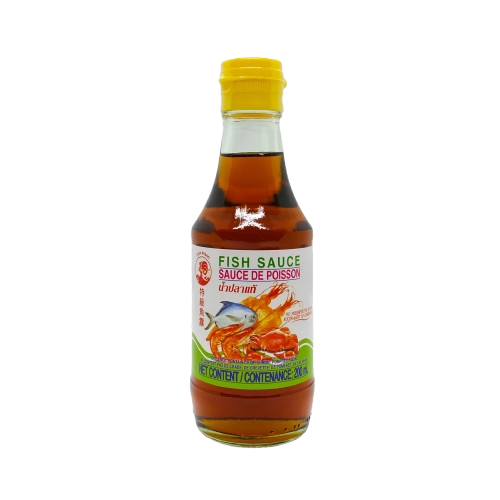
Fish sauce is a pungent amber-colored liquid condiment produced by fermenting fish (often anchovies) with salt for several months. The calories in fish sauce are low due to the absence of fats and significant carbohydrates, though some varieties contain added sugar. A 1 cup serving of fish sauce (240g) contains 84 calories, whereas a single tablespoon (18g) supplies 6.3 calories. Fish sauce calories vary depending on the formulation, as Premium Pure Fish Sauce provides 83 calories per 100g, significantly higher than the 35 calories found in the standard diluted variety.
Fish sauce nutrition facts reveal a profile consisting primarily of sodium and amino acids, with negligible fats and fibers. A single tablespoon (18g) offers 1410mg of sodium (61% DV) and 0.9g of protein (2% DV) while containing 0.7g of sugar. The liquid serves as a source of essential micronutrients, delivering 0.14mg of iron (1% DV) and 7.74mg of calcium (1% DV). Research highlights its potential health impacts, such as the study by Yongsawatdigul, J., et al. (2007), "Acceleration of Thai fish sauce fermentation using proteinases and bacterial starter cultures," which documents the breakdown of proteins into bioavailable amino acids. Common types include Premium Pure Fish Sauce, Standard Fish Sauce, and Seasoned Fish Sauce.
Due to the extreme sodium content, nutritionists recommend consuming fish sauce in strict moderation. A sensible daily limit is one teaspoon (6.3 calories), serving as a seasoning agent rather than a primary food source. Burning the 6.3 calories from a single tablespoon (18g) of Fish Sauce requires activities like 1 minute of rowing, 2 minutes of stair climbing, or 3 minutes of dancing.
Fish sauce appears extensively in Southeast Asian cuisine, seasoning everything from soups to stir-fries. It is essential for Pad Thai at Lotus of Siam and serves as the primary seasoning for Pho Bo at Pho 79. It also flavors the Ike's Fish Sauce Wings at Pok Pok. The ingredient originated in the Mekong region and is primarily produced and consumed in Vietnam, Thailand, and the Philippines. The price of the base ingredient has risen noticeably over the last two decades, with the Producer Price Index for unprocessed and prepared seafood increasing from 322.0 in 2015 to 424.346 in 2024, while global market rates for premium bottles ranged from $2.50 to $9.00.
Fish Sauce nutrition
| Stats | Weight |
|---|---|
| Carbs | 4.4 grams |
| Protein | 6 grams |
| Fats | 0 grams |
| Sugars | 4.4 grams |
- Large Fish Sauce Calories (Nutritional Facts)
- Medium Fish Sauce Calories (Nutritional Facts)
- Small Fish Sauce Calories (Nutritional Facts)
- Raw Fish Sauce Nutrition
- Sodium in Fish Sauce
- Potassium in Fish Sauce
- Sugar in Fish Sauce
- Fiber in Fish Sauce
- Protein in Fish Sauce
- Carbs in Fish Sauce
- Fat in Fish Sauce
- Vitamins in Fish Sauce
- Minerals in Fish Sauce
Large Fish Sauce Calories (Nutritional Facts)
A large serving of Fish Sauce (240g or 1 cup) contains 84 calories, 12.1g of protein (24% DV), 0g of fat (0% DV), 8.7g of carbohydrates (3% DV), 0g of fiber (0% DV), 8.7g of sugar, and 18800mg of sodium (817% DV).
A medium portion of Fish Sauce (120g or 0.5 cup) provides 42 calories, 6g of protein (12% DV), 0g of fat (0% DV), 4.4g of carbohydrates (2% DV), 0g of fiber (0% DV), 4.4g of sugar, and 9400mg of sodium (409% DV).
A small serving of Fish Sauce (60g or 0.25 cup) contains 21 calories, 3g of protein (6% DV), 0g of fat (0% DV), 2.2g of carbohydrates (1% DV), 0g of fiber (0% DV), 2.2g of sugar, and 4700mg of sodium (204% DV).
A single tablespoon of Fish Sauce (18g) contains 6.3 calories, 0.9g of protein (2% DV), 0g of total fat (0% DV), 0.7g of total carbohydrate (0% DV), 0g of dietary fiber (0% DV), 0.7g of total sugars, and 1410mg of sodium (61% DV). The liquid provides 0.72mcg of Vitamin A (0% DV), 0.09mg of Vitamin C (0% DV), 0.14mg of iron (1% DV), 7.74mg of calcium (1% DV), and 51.8mg of potassium (1% DV).
A large serving of Fish Sauce (240g or 1 cup) contains 18800mg of sodium (817% DV). A medium portion of Fish Sauce (120g or 0.5 cup) has 9400mg of sodium (409% DV). A small serving of Fish Sauce (60g or 0.25 cup) contains 4700mg of sodium (204% DV). A single tablespoon of Fish Sauce (18g) provides 1410mg of sodium (61% DV).
A large serving of Fish Sauce (240g or 1 cup) provides 690mg of potassium (15% DV). A medium portion of Fish Sauce (120g or 0.5 cup) has 345mg of potassium (7% DV). A small serving of Fish Sauce (60g or 0.25 cup) contains 172mg of potassium (4% DV). A single tablespoon of Fish Sauce (18g) supplies 51.8mg of potassium (1% DV).
A large serving of Fish Sauce (240g or 1 cup) contains 8.7g of sugar. A medium portion of Fish Sauce (120g or 0.5 cup) has 4.4g of sugar. A small serving of Fish Sauce (60g or 0.25 cup) contains 2.2g of sugar. A single tablespoon of Fish Sauce (18g) provides 0.7g of sugar.
A large serving of Fish Sauce (240g or 1 cup) provides 0g of dietary fiber (0% DV). A medium portion of Fish Sauce (120g or 0.5 cup) has 0g of fiber (0% DV). A small serving of Fish Sauce (60g or 0.25 cup) contains 0g of fiber (0% DV). A single tablespoon of Fish Sauce (18g) supplies 0g of fiber (0% DV).
A large serving of Fish Sauce (240g or 1 cup) provides 12.1g of protein (24% DV). A medium portion of Fish Sauce (120g or 0.5 cup) has 6g of protein (12% DV). A small serving of Fish Sauce (60g or 0.25 cup) contains 3g of protein (6% DV). A single tablespoon of Fish Sauce (18g) supplies 0.9g of protein (2% DV).
A large serving of Fish Sauce (240g or 1 cup) contains 8.7g of carbohydrates (3% DV). A medium portion of Fish Sauce (120g or 0.5 cup) has 4.4g of carbohydrates (2% DV). A small serving of Fish Sauce (60g or 0.25 cup) contains 2.2g of carbohydrates (1% DV). A single tablespoon of Fish Sauce (18g) provides 0.7g of carbohydrates (0% DV).
A large serving of Fish Sauce (240g or 1 cup) contains 0g of total fat (0% DV). A medium portion of Fish Sauce (120g or 0.5 cup) has 0g of total fat (0% DV). A small serving of Fish Sauce (60g or 0.25 cup) contains 0g of total fat (0% DV). A single tablespoon of Fish Sauce (18g) provides 0g of total fat (0% DV).
A large serving of Fish Sauce (240g or 1 cup) provides 9.6mcg of Vitamin A (1% DV) and 1.2mg of Vitamin C (1% DV). A medium portion of Fish Sauce (120g or 0.5 cup) has 4.8mcg of Vitamin A (1% DV). A small serving of Fish Sauce (60g or 0.25 cup) contains 2.4mcg of Vitamin A (0% DV). A single tablespoon of Fish Sauce (18g) supplies 0.72mcg of Vitamin A (0% DV) and 0.09mg of Vitamin C (0% DV).
A large serving of Fish Sauce (240g or 1 cup) provides 103mg of calcium (8% DV), 1.86mg of iron (10% DV), 420mg of magnesium (100% DV), and 16.8mg of phosphorus (1% DV). A medium portion of Fish Sauce (120g or 0.5 cup) has 51.5mg of calcium (4% DV). A small serving of Fish Sauce (60g or 0.25 cup) contains 25.8mg of calcium (2% DV). A single tablespoon of Fish Sauce (18g) provides 7.74mg of calcium (1% DV) and 0.14mg of iron (1% DV).
Get a Custom Report on Fish Sauce Nutrition Data – Contact Us!
What are the Types of Fish Sauces?
The types of Fish Sauces include Premium Pure Fish Sauce, Standard Fish Sauce, and Seasoned Fish Sauce. The table below outlines the nutritional differences.
| Type | Description | Calories (Per 100g) | Calorie Qualifications |
|---|---|---|---|
|
Premium Pure Fish Sauce
|
First-press extract containing only anchovies and salt. | 83 | The high concentration of dissolved fish protein results in greater energy density. |
|
Standard Fish Sauce
|
Second-press extract often diluted with water and salt. | 35 | The dilution with water reduces the protein content and overall caloric load. |
|
Seasoned Fish Sauce
|
Blend of fish sauce with added sugar, lime, and garlic. | 120 | The addition of sugar significantly increases the carbohydrate and calorie count. |
What are Desserts With Fish Sauce?
Fish sauce functions primarily as a savory umami agent, yet specific Southeast Asian culinary traditions utilize the condiment to heighten the sweetness of fruits and fusion confections. The high salinity contrasts with sugar and palm syrup to create a complex flavor profile similar to salted caramel. Mamuang Nam Pla Wan, a popular Thai snack of tart green mangoes dipped in a sweet fish sauce glaze, exemplifies this application. Modern fusion chefs also incorporate the ingredient into ice creams and chocolates to add depth. The list below enumerates sweet dishes and fruit-based snacks that utilize this liquid as a key component.
| Dish Name | Calories | Type of Fish Sauce | Carbs (g) | Sugar (g) | Protein (g) | Fat (g) | Cuisine | Restaurants |
|---|---|---|---|---|---|---|---|---|
|
Mamuang Nam Pla Wan
|
220 | Seasoned Fish Sauce | 45 | 38 | 2 | 1 | Thai | Amphai Northern Thai (Chicago, IL) |
|
Ma Hor (Galloping Horses)
|
180 | Premium Pure Fish Sauce | 25 | 18 | 8 | 6 | Thai | Night + Market (Los Angeles, CA) |
|
Fish Sauce Caramel Ice Cream
|
320 | Premium Pure Fish Sauce | 35 | 28 | 5 | 18 | Fusion | Salt & Straw |
|
Rojak
|
350 | Thick Fish/Shrimp Sauce | 55 | 40 | 6 | 12 | Malaysian | Mamak (International) |
|
Santol with Nam Pla Wan
|
150 | Seasoned Fish Sauce | 32 | 25 | 1 | 0 | Thai | Sapp Coffee Shop (Los Angeles, CA) |
|
Green Apple with Jeow
|
110 | Seasoned Fish Sauce | 26 | 20 | 1 | 0 | Laotian | Thip Khao (Washington, DC) |
|
Fish Sauce Caramel Popcorn
|
280 | Premium Pure Fish Sauce | 38 | 22 | 2 | 14 | Fusion | Pok Pok (Recipes/Retail) |
|
Sticky Rice with Dried Fish
|
420 | Standard Fish Sauce | 65 | 12 | 10 | 8 | Thai | Ruen Pair (Los Angeles, CA) |
|
Salted Caramel Brownie
|
450 | Premium Pure Fish Sauce | 58 | 42 | 5 | 22 | Fusion | Republic of Pie (Los Angeles, CA) |
|
Guava with Chili Salt
|
90 | Seasoned Fish Sauce | 22 | 15 | 1 | 0 | Vietnamese | Bambu |
|
Pineapple with Nam Pla
|
100 | Seasoned Fish Sauce | 24 | 18 | 1 | 0 | Thai | Jitlada (Los Angeles, CA) |
|
Miang Kham
|
160 | Seasoned Fish Sauce | 20 | 12 | 4 | 5 | Thai | Lers Ros (San Francisco, CA) |
|
Sweet Pork Condiment
|
310 | Standard Fish Sauce | 15 | 12 | 25 | 18 | Thai | SriPraPhai (New York, NY) |
|
Fried Bananas (Pisang Goreng)
|
290 | Seasoned Fish Sauce (Dip) | 42 | 18 | 2 | 14 | Indonesian | Simpang Asia (Los Angeles, CA) |
|
Watermelon with Fish Sauce
|
80 | Premium Pure Fish Sauce | 20 | 16 | 1 | 0 | Southern US/Fusion | State Bird Provisions (San Francisco, CA) |
What are the Main Dishes With Fish Sauce?
Fish sauce serves as the fundamental seasoning agent in Southeast Asian gastronomy, providing the necessary salt content and umami depth to broths, stir-fries, and marinades. The liquid cures meats in dishes like Vietnamese Grilled Pork and seasons complex curries in Thai cuisine. The list below details distinct savory recipes that incorporate this ingredient.
| Dish Name | Calories | Type of Fish Sauce | Carbs (g) | Sugar (g) | Protein (g) | Fat (g) | Cuisine | Restaurants |
|---|---|---|---|---|---|---|---|---|
|
Pad Thai
|
850 | Standard Fish Sauce | 82 | 18 | 25 | 40 | Thai | Lotus of Siam (Las Vegas, NV) |
|
Pho Bo (Beef Noodle Soup)
|
450 | Premium Pure Fish Sauce | 65 | 4 | 35 | 12 | Vietnamese | Pho 79 (Garden Grove, CA) |
|
Bun Cha (Grilled Pork)
|
600 | Seasoned Fish Sauce | 75 | 15 | 30 | 22 | Vietnamese | Hanoi House (New York, NY) |
|
Green Papaya Salad
|
220 | Premium Pure Fish Sauce | 25 | 12 | 5 | 8 | Thai | Somtum Der (New York, NY) |
|
Green Curry
|
620 | Standard Fish Sauce | 18 | 8 | 28 | 45 | Thai | Kin Khao (San Francisco, CA) |
|
Pad Kra Pao
|
520 | Standard Fish Sauce | 12 | 4 | 35 | 32 | Thai | Lers Ros (San Francisco, CA) |
|
Shaking Beef (Bo Luc Lac)
|
580 | Seasoned Fish Sauce | 14 | 6 | 42 | 38 | Vietnamese | The Slanted Door (San Francisco, CA) |
|
Larb Gai
|
280 | Premium Pure Fish Sauce | 10 | 2 | 28 | 12 | Laotian | Thip Khao (Washington, DC) |
|
Crying Tiger Beef
|
450 | Seasoned Fish Sauce | 8 | 4 | 45 | 25 | Thai | Jitlada (Los Angeles, CA) |
|
Panang Curry
|
650 | Standard Fish Sauce | 22 | 10 | 30 | 48 | Thai | Ayada Thai (New York, NY) |
|
Cha Ca La Vong
|
540 | Seasoned Fish Sauce | 45 | 5 | 32 | 24 | Vietnamese | Bun Cha Ca Hoang Yen (Houston, TX) |
|
Khao Soi
|
680 | Standard Fish Sauce | 55 | 6 | 32 | 38 | Thai | Pig and Khao (New York, NY) |
|
Lemongrass Chicken
|
410 | Premium Pure Fish Sauce | 8 | 4 | 38 | 22 | Vietnamese | Miss Saigon (San Francisco, CA) |
What Cuisines Do Prefer Fish Sauce Most?
Southeast Asian culinary traditions utilize fish sauce as a ubiquitous table condiment and cooking ingredient, functioning similarly to salt or soy sauce in other cultures. The liquid appears in marinades, dipping sauces, and soups across Vietnam, Thailand, and the Philippines. The table below outlines the specific culinary traditions that utilize this extract.
| Cuisine | Dish | Types of Fish Sauce | Calories (Estimate) | Restaurant(s) |
|---|---|---|---|---|
|
Thai Cuisine
|
Pad Thai | Standard Fish Sauce | 850 | Lotus of Siam (Las Vegas, NV) |
|
Vietnamese Cuisine
|
Pho | Premium Pure Fish Sauce | 450 | Pho 79 (Garden Grove, CA) |
|
Laotian Cuisine
|
Larb | Unfiltered Fish Sauce (Padaek) | 280 | Thip Khao (Washington, DC) |
|
Cambodian Cuisine
|
Amok | Fermented Fish Paste (Prahok) | 520 | Phnom Penh Noodle Shack (Long Beach, CA) |
|
Burmese Cuisine
|
Mohinga | Standard Fish Sauce | 480 | Burma Superstar (San Francisco, CA) |
|
Korean Cuisine
|
Kimchi | Anchovy Fish Sauce (Myeolchi-aekjeot) | 45 | K-Town BBQ (Los Angeles, CA) |
|
Malaysian Cuisine
|
Laksa | Fermented Anchovy Sauce (Budu) | 650 | Laksa House (New York, NY) |
|
Indonesian Cuisine
|
Nasi Goreng | Fish Sauce (Kecap Ikan) | 720 | Simpang Asia (Los Angeles, CA) |
|
Southern Chinese
|
Steamed Fish | Fish Sauce (Yu Lu) | 320 | Hop Kee (New York, NY) |
|
Japanese Cuisine
|
Shottsuru Nabe | Fish Sauce (Shottsuru) | 410 | Ootoya (New York, NY) |
|
Italian Cuisine
|
Pasta con Colatura | Anchovy Essence (Colatura di Alici) | 480 | Eataly (National) |
|
Singaporean Cuisine
|
Hainanese Chicken Rice | Standard Fish Sauce | 620 | Tian Tian (International) |
|
Hmong Cuisine
|
Papaya Salad | Fermented Fish Sauce | 210 | Hmong Kitchen (St. Paul, MN) |
|
Fusion Cuisine
|
Fish Sauce Wings | Seasoned Fish Sauce | 780 | Pok Pok (Recipes/Retail) |
Which Countries Produce the Most Fish Sauces?
Vietnam is the leading manufacturer of fish sauce, producing millions of liters annually from the island of Phu Quoc and coastal factories to meet global demand. Thailand ranks as the second-largest producer, focusing heavily on export markets in the West and supplying industrial kitchens. China and the Philippines also contribute substantial volumes to the global supply chain, though domestic usage absorbs a large portion of the output. The table below shows the estimated production of fish sauce in million liters for the top producing nations over the last two decades.
| Country | 2004 | 2009 | 2014 | 2019 | 2020 | 2021 | 2022 | 2023 |
|---|---|---|---|---|---|---|---|---|
| Vietnam | 180 | 210 | 240 | 270 | 275 | 260 | 280 | 290 |
| Thailand | 190 | 200 | 215 | 225 | 230 | 220 | 235 | 240 |
| China | 80 | 100 | 120 | 140 | 145 | 150 | 155 | 160 |
| Philippines | 60 | 70 | 85 | 95 | 98 | 100 | 105 | 110 |
| Myanmar | 40 | 45 | 50 | 55 | 52 | 48 | 50 | 52 |
| Cambodia | 20 | 25 | 30 | 35 | 36 | 37 | 38 | 40 |
| Malaysia | 15 | 18 | 22 | 25 | 26 | 27 | 28 | 29 |
| Japan | 10 | 12 | 14 | 16 | 16 | 17 | 17 | 18 |
Which Countries Consume the Most Fish Sauces?
Vietnam absorbs the largest volume of fish sauce per capita, with the liquid seasoning appearing in dipping sauces, marinades, and broths daily. Thailand and the Philippines maintain high consumption rates driven by domestic culinary traditions that rely on the extract for salt content. The United States and Japan represent the fastest-growing import markets due to the rising popularity of Southeast Asian cuisine. The table below shows the domestic consumption of fish sauce in million liters for key markets over the last two decades.
| Country | 2004 | 2009 | 2014 | 2019 | 2020 | 2021 | 2022 | 2023 |
|---|---|---|---|---|---|---|---|---|
| Vietnam | 170 | 195 | 220 | 250 | 255 | 240 | 260 | 270 |
| Thailand | 150 | 165 | 180 | 190 | 195 | 185 | 195 | 200 |
| Philippines | 55 | 65 | 80 | 90 | 92 | 95 | 98 | 102 |
| China | 40 | 60 | 85 | 110 | 115 | 120 | 125 | 130 |
| United States | 25 | 35 | 50 | 65 | 75 | 80 | 85 | 90 |
| Myanmar | 38 | 42 | 48 | 52 | 50 | 46 | 48 | 50 |
| Cambodia | 18 | 22 | 28 | 32 | 33 | 34 | 35 | 36 |
| Japan | 12 | 15 | 20 | 25 | 26 | 28 | 30 | 32 |
How Do Prices of Fish Sauce-Including Dishes Change?
Restaurant costs for dishes seasoned with fish sauce surged due to rising ingredient and operational expenses. The table below illustrates price adjustments for selected items at well-known establishments.
| Brand/Restaurant | Dish | Old Price (Year) | Current Price (2024/2025) |
|---|---|---|---|
| Lotus of Siam | Pad Thai | $11.95 (2014) | $18.95 - $21.00 |
| Pho 79 | Pho Tai (Beef) | $7.50 (2013) | $13.50 - $17.50 |
| Pok Pok (Recipes/Pop-ups) | Ike's Fish Sauce Wings | $14.00 (2015) | $15.00 - $22.00 |
| Jitlada | Crying Tiger Beef | $16.95 (2014) | $21.95 - $26.95 |
| Kin Khao | Green Curry | $12.00 (2016) | $14.50 - $18.00 |
What is the Fish Sauce Calorie for 100 Grams?
A 100g serving of Fish Sauce provides 35 calories.
What is the Fish Sauce Calorie for 1 KG?
One kilogram (1000g) of Fish Sauce supplies 350 calories.
What is the Calorie of 1 Fish Sauce?
A single tablespoon of Fish Sauce (18g) contains 6.3 calories, while a single teaspoon of Fish Sauce (6g) provides 2 calories. Retail brands offer distinct energy profiles, as a serving of Ka-Me Fish Sauce (5g) contains 5 calories. A serving of Three Crabs Fish Sauce (15g) provides 16 calories, whereas a serving of Vitasia Thai Style Fish Sauce (15g) supplies 10 calories.
What are the Health Benefits of Fish Sauce?
Fish sauce functions as a source of essential amino acids and minerals derived from the fermentation of anchovies, supporting physiological systems when consumed in moderation. The liquid aids in protein synthesis and provides micronutrients lacking in grain-heavy diets.
- Provides Essential Amino Acids: The fermentation process hydrolyzes fish proteins into free amino acids essential for muscle repair and enzymatic function. Research by Yongsawatdigul, J., et al. (2007), " Acceleration of Thai fish sauce fermentation using proteinases and bacterial starter cultures," documented the extensive breakdown of proteins into free amino acids and peptides over the fermentation period.
- Enhances Iron Absorption: The condiment serves as a vehicle for iron fortification to combat anemia in populations dependent on rice. A study by Fidler, M. C., et al. (2003), "Iron absorption from fish sauce and soy sauce fortified with sodium iron EDTA," confirmed that fortified fish sauce improves iron status and hemoglobin concentrations.
- Supports Digestive Health: Fermented foods contain enzymes and bacteria that aid in the breakdown of macronutrients. Research by Lopetcharat, K., et al. (2001), "Fish sauce products and manufacturing: a review," highlighted the presence of beneficial proteolytic enzymes generated during the long fermentation period.
What are the Downsides of Fish Sauce?
Fish sauce poses risks regarding extreme sodium content and histamine levels when consumed in excess. Nutritionists advise limiting intake to one teaspoon (6g) per day and choosing Coconut Aminos as a lower-sodium alternative to mitigate potential risks. The table below shows specific negative health implications.
- Elevates Blood Pressure: The extremely high sodium concentration strains the cardiovascular system and exacerbates hypertension. Research by He, F. J., et al. (2013), "Effect of lower salt intake on blood pressure and risk of cardiovascular disease," established a direct link between high sodium intake and the risk of stroke and heart disease.
- Contains Histamines: Fermentation produces biogenic amines which trigger allergic reactions or headaches in sensitive individuals. A study by Tsai, Y. H., et al. (2006), "Histamine contents of fermented fish products in Taiwan," detected high concentrations of histamine in commercial samples, posing potential health risks for susceptible consumers.
- Risks Kidney Strain: Excessive salt intake burdens renal function and accelerates the progression of kidney damage. Research by Boero, R., et al. (2002), "Salt intake and kidney disease," noted that high sodium consumption correlates with increased glomerular pressure and renal injury.
Are Fish Sauces Good for You?
Yes, fish sauces are good for health because the fermentation process creates bioavailable amino acids and the liquid provides essential minerals like iron and iodine, though consumption requires strict moderation. Cardiovascular health benefits from the bioactive peptides which may exhibit antihypertensive properties as explored by Ichimura, T., et al. (2009), "Antihypertensive effect of enzymatic hydrolysate of collagen and its application to fish sauce." Digestive health improves through the presence of fermented enzymes which aid in protein breakdown as confirmed by Lopetcharat, K., et al. (2001), "Fish sauce products and manufacturing: a review." Nutrient absorption enhances due to the presence of minerals like iron which support oxygen transport as detailed in the study by Fidler, M. C., et al. (2003), "Iron absorption from fish sauce and soy sauce fortified with sodium iron EDTA."
How Does Calorie Change According to Fish Sauce Types?
Energy values fluctuate based on the protein concentration and the addition of sugar or water. Premium Pure Fish Sauce contains the highest energy load per 100g due to the dense concentration of dissolved fish proteins and lack of dilution. Seasoned Fish Sauce offers a variable profile as added sugar increases the caloric count despite lower protein levels compared to the pure variety. Standard Fish Sauce provides the lowest caloric density per serving because manufacturers dilute the extract with water and salt, reducing the total nutrient mass per volume.
What is the Origin of Fish Sauce?
Ancient civilizations in the Mediterranean and East Asia independently developed fermented fish condiments to preserve protein surpluses. The Roman Empire produced "garum" around the 1st century AD, a prized liquid made from salted fish intestines that functioned identically to modern fish sauce. Chinese records from the Zhou Dynasty mention a fermented fish paste called "ge" which utilized soybeans as a fermentation starter, eventually evolving into soy sauce. The modern liquid condiment, known as "nam pla" in Thailand and "nuoc mam" in Vietnam, evolved within the Mekong region as a byproduct of salting freshwater and marine fish to survive monsoonal seasons. Commercial production expanded significantly in the 20th century, establishing the ingredient as a global staple.
Explore More Condiments & Sauces
Discover more Condiments & Sauces with detailed nutrition facts, calorie counts, vitamins, minerals, and health benefits. Compare similar foods, serving sizes, macronutrients, and key nutrients to find the best option for your diet and nutrition goals.
 Agave calories
 Aioli calories
 Apple Butter calories
 Avocado Oil calories
 Baking Powder calories
 Balsamic Vinaigrette calories
 Barbeque Sauce calories
 Bearnaise Sauce calories
 Blue Cheese Dressing calories
 Brown Rice Syrup calories
 Caesar Dressing calories
 Canola Oil calories