Calories and Nutritions in Hoisin Sauce
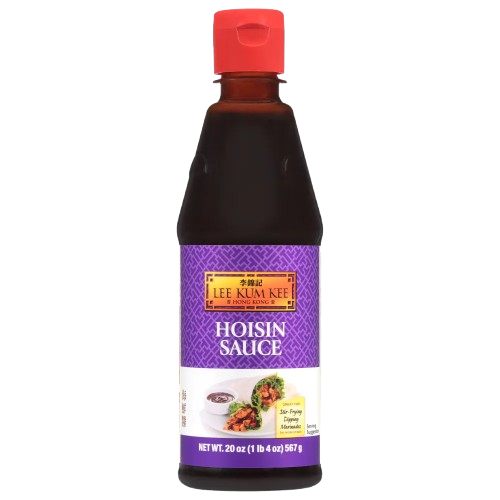
Hoisin sauce is a thick, fragrant condiment made from fermented soybean paste, garlic, vinegar, and spices. Hoisin sauce is a high calorie sauce widely used in Cantonese cuisine. A standard cup of hoisin sauce (260g) supplies 540 calories. A large serving of hoisin sauce consisting of 1/2 cup (130g) contains 270 calories, while a small serving of 1 tablespoon of hoisin sauce (16g) provides 35 calories. A serving of Lee Kum Kee Hoisin Sauce (36g) provides 100 calories, while a serving of Dynasty Hoisin Sauce (30g) contains 70 calories.
An examination of Hoisin sauce nutrition facts reveals a carbohydrate-dense food source with significant sodium content. A 1/2 cup portion of hoisin sauce supplies 1378mg of sodium (60% DV), along with 55.9g of carbohydrates, 3.9g of dietary fiber, 5.2g of protein and 7.8g of fat. Research by Tan, K. W., et al. (2019), "Salt and sugar content of sauces," identifies Asian sauces as significant sources of hidden sodium and sugar that contribute to diet-related health risks. The caloric load in hoisin sauce derives mainly from added sugars (44.2g of sugar per ½ cup) confirming that this sauce contains substantial amounts of sweeteners. Hoisin sauce contains significantly more calories but less sodium than soy sauce per unit of weight, making the condiment a "red light" food for frequent use due to the high density of added sugars and sodium. Micronutrient intake is minimal, offering small amounts of iron and calcium.
International distribution of hoisin sauce relies on the manufacturing output of major producers, with China and the United States leading commercial production. This supply caters to specific international markets, where the United States imported significant quantities of Asian condiments in 2023. Across Cantonese and Vietnamese culinary traditions, the ingredient functions as a primary component in Peking Duck, pho dipping sauces, and barbecue glazes. The thick texture creates a rich glaze that adheres well to roasted meats. Increasing global demand has pushed retail costs higher, with the price of a 20-ounce bottle rising from $2.99 in 2010 to between $4.48 and $6.99 by 2024.
Hoisin sauce is valued as a flavorful condiment featuring savory depth from fermented soybeans. This nutritional profile aids in enhancing appetite but poses risks due to high sodium and sugar levels. Dietitians recommend limiting intake to one teaspoon (6g) per meal to avoid excessive sodium consumption, as excessive intake may lead to water retention or blood pressure spikes. The sauce is high in added sugars, as a single serving contains substantial amounts of sucrose and fructose. A ½ cup serving of hoisin sauce contains 270 calories, an energy load that requires 30 minutes of cycling or 75 minutes of walking to metabolize.
Hoisin Sauce nutrition
| Stats | Weight |
|---|---|
| Carbs | 27.9 grams |
| Protein | 2.6 grams |
| Fats | 0 grams |
| Sugars | 22.1 grams |
- Large Hoisin Sauce Calories (Nutritional Facts)
- Medium Hoisin Sauce Calories (Nutritional Facts)
- Small Hoisin Sauce Calories (Nutritional Facts)
- Raw Hoisin Sauce Nutrition
- Sodium in Hoisin Sauce
- Potassium in Hoisin Sauce
- Sugar in Hoisin Sauce
- Fiber in Hoisin Sauce
- Protein in Hoisin Sauce
- Carbs in Hoisin Sauce
- Fat in Hoisin Sauce
- Vitamins in Hoisin Sauce
- Minerals in Hoisin Sauce
Large Hoisin Sauce Calories (Nutritional Facts)
A large serving consisting of 1/2 cup of hoisin sauce (130g) contains 270 calories, 5.2g of protein, 7.8g of fat, 55.9g of carbohydrates, 3.9g of fiber, 44.2g of sugar, and 1378mg of sodium.
A medium serving of 1/4 cup of hoisin sauce (65g) provides 135 calories, 2.6g of protein, 3.9g of fat, 27.9g of carbohydrates, 1.9g of fiber, 22.1g of sugar, and 689mg of sodium.
A small serving of 1 tablespoon of hoisin sauce (16g) contains 35 calories, 0.7g of protein, 1g of fat, 7.3g of carbohydrates, 0.5g of fiber, 5.8g of sugar, and 180mg of sodium.
A standard cup of hoisin sauce (260g) supplies 540 calories, 10.4g of protein, 15.6g of fat, 111.8g of carbohydrates, 7.8g of fiber, 88.4g of sugar, and 2756mg of sodium.
A large serving consisting of 1/2 cup of hoisin sauce (130g) contains 1378mg of sodium (60% DV). A medium serving of 1/4 cup of hoisin sauce (65g) has 689mg of sodium (30% DV). A small serving of 1 tablespoon of hoisin sauce (16g) contains 180mg of sodium (8% DV). A standard cup of hoisin sauce (260g) supplies 2756mg of sodium (120% DV).
A large serving consisting of 1/2 cup of hoisin sauce (130g) contains 195mg of potassium (4% DV). A medium serving of 1/4 cup of hoisin sauce (65g) has 97.5mg of potassium (2% DV). A small serving of 1 tablespoon of hoisin sauce (16g) contains 25.5mg of potassium (0% DV). A standard cup of hoisin sauce (260g) supplies 390mg of potassium (8% DV).
A large serving consisting of 1/2 cup of hoisin sauce (130g) contains 44.2g of sugar. A medium serving of 1/4 cup of hoisin sauce (65g) has 22.1g of sugar. A small serving of 1 tablespoon of hoisin sauce (16g) contains 5.8g of sugar. A standard cup of hoisin sauce (260g) supplies 88.4g of sugar.
A large serving consisting of 1/2 cup of hoisin sauce (130g) provides 3.9g of dietary fiber (14% DV). A medium serving of 1/4 cup of hoisin sauce (65g) has 1.9g of fiber (7% DV). A small serving of 1 tablespoon of hoisin sauce (16g) contains 0.5g of fiber (2% DV). A standard cup of hoisin sauce (260g) supplies 7.8g of fiber (28% DV).
A large serving consisting of 1/2 cup of hoisin sauce (130g) provides 5.2g of protein (10% DV). A medium serving of 1/4 cup of hoisin sauce (65g) has 2.6g of protein (5% DV). A small serving of 1 tablespoon of hoisin sauce (16g) contains 0.7g of protein (1% DV). A standard cup of hoisin sauce (260g) supplies 10.4g of protein (21% DV).
A large serving consisting of 1/2 cup of hoisin sauce (130g) contains 55.9g of carbohydrates (20% DV). A medium serving of 1/4 cup of hoisin sauce (65g) has 27.9g of carbohydrates (10% DV). A small serving of 1 tablespoon of hoisin sauce (16g) contains 7.3g of carbohydrates (3% DV). A standard cup of hoisin sauce (260g) supplies 111.8g of carbohydrates (41% DV).
A large serving consisting of 1/2 cup of hoisin sauce (130g) contains 7.8g of total fat (10% DV). A medium serving of 1/4 cup of hoisin sauce (65g) has 3.9g of total fat (5% DV). A small serving of 1 tablespoon of hoisin sauce (16g) contains 1g of total fat (1% DV). A standard cup of hoisin sauce (260g) supplies 15.6g of total fat (20% DV).
A large serving consisting of 1/2 cup of hoisin sauce (130g) provides 0mg of Vitamin C (0% DV) and 0IU of Vitamin A (0% DV). A medium serving of 1/4 cup of hoisin sauce (65g) has 0mg of Vitamin C (0% DV). A small serving of 1 tablespoon of hoisin sauce (16g) contains 0mg of Vitamin C (0% DV). A standard cup of hoisin sauce (260g) supplies 0mg of Vitamin C (0% DV).
A large serving consisting of 1/2 cup of hoisin sauce (130g) provides 1.3mg of iron (7% DV) and 26mg of calcium (2% DV). A medium serving of 1/4 cup of hoisin sauce (65g) has 0.65mg of iron (4% DV) and 13mg of calcium (1% DV). A small serving of 1 tablespoon of hoisin sauce (16g) contains 0.17mg of iron (1% DV) and 3.4mg of calcium (0% DV). A standard cup of hoisin sauce (260g) supplies 2.6mg of iron (14% DV) and 52mg of calcium (4% DV).
Get a Custom Report on Hoisin Sauce Nutrition Data – Contact Us!
What are the Types of Hoisin Sauces?
The types of Hoisin Sauces are Regular, Gluten-Free, Low-Sodium, and Vegetarian. The chart below delineates the nutritional variances among these formulations.
| Type | Description | Calories (Per 100g) | Calorie Qualifications |
|---|---|---|---|
|
Regular Hoisin Sauce
|
Traditional recipe with wheat, soy, and sugar. | 208 | The calorie count reflects the high sugar and starch content used for thickening. |
|
Gluten-Free Hoisin Sauce
|
Made with gluten-free soy sauce or tamari. | 215 | The substitution of wheat often requires additional thickeners, slightly increasing caloric density. |
|
Low-Sodium Hoisin Sauce
|
Formulated with potassium chloride or less salt. | 195 | The reduction in salt often coincides with a slight reduction in sugar, lowering the overall calorie count. |
|
Vegetarian Hoisin Sauce
|
Excludes any potential seafood extracts (rare in modern hoisin). | 208 | The nutritional profile remains identical to regular hoisin as most modern versions are already plant-based. |
What are the Main Dishes With Hoisin Sauce?
Hoisin sauce functions as a critical glaze, marinade, and dipping sauce in Chinese and Vietnamese savory cooking. The thick consistency allows the sauce to adhere to roasted meats and noodles. Preparations incorporating the condiment are detailed here.
| Dish Name | Calories (Estimate) | Type of Dish | Carbs (g) (Estimate) | Sugar (g) (Estimate) | Protein (g) (Estimate) | Fat (g) (Estimate) | Cuisine | Restaurants |
|---|---|---|---|---|---|---|---|---|
|
Peking Duck (with Pancakes)
|
650 | Poultry Entree | 45 | 15 | 35 | 38 | Chinese | Peking Gourmet Inn (Falls Church, VA) |
|
Mu Shu Pork
|
550 | Meat Entree | 35 | 12 | 30 | 32 | Chinese | Joe's Shanghai (New York, NY) |
|
Char Siu (BBQ Pork)
|
480 | Meat Entree | 25 | 18 | 40 | 25 | Chinese | Nom Wah Tea Parlor (New York, NY) |
|
Pho (with Dipping Sauce)
|
450 | Soup Entree | 65 | 8 | 25 | 10 | Vietnamese | Pho 79 (Garden Grove, CA) |
|
Hoisin Glazed Salmon
|
420 | Fish Entree | 15 | 10 | 35 | 22 | Fusion | Roy's (Various Locations) |
|
Mongolian Beef
|
580 | Meat Entree | 30 | 14 | 35 | 35 | Chinese | P.F. Chang's |
|
Vietnamese Summer Rolls
|
180 | Appetizer | 25 | 4 | 8 | 2 | Vietnamese | Brodard Restaurant (Fountain Valley, CA) |
|
Hoisin Chicken Stir-Fry
|
400 | Poultry Entree | 20 | 10 | 30 | 18 | Chinese | Panda Express |
|
Spare Ribs with Hoisin
|
700 | Meat Entree | 25 | 15 | 45 | 45 | Chinese | Hop Kee (New York, NY) |
|
Lettuce Wraps
|
320 | Appetizer | 15 | 8 | 20 | 18 | Chinese | P.F. Chang's |
What are Desserts With Hoisin Sauce?
Hoisin sauce rarely appears in traditional desserts but features in modern fusion confectioneries that blend sweet and savory profiles. Chefs utilize the sauce in chocolate pairings and spiced caramels to add depth and umami. The following list shows sweet courses utilizing this condiment.
| Dish Name | Calories (Estimate) | Type of Dish | Carbs (g) (Estimate) | Sugar (g) (Estimate) | Protein (g) (Estimate) | Fat (g) (Estimate) | Cuisine | Restaurants |
|---|---|---|---|---|---|---|---|---|
|
Hoisin Chocolate Truffles
|
120 | Confectionery | 12 | 10 | 1 | 8 | Fusion | Vosges Haut-Chocolat (Chicago, IL) |
|
Hoisin Caramel Sauce
|
60 | Topping (Tbsp) | 15 | 14 | 0 | 0 | Fusion | Salt & Straw (Portland, OR) |
|
Five Spice Hoisin Brownies
|
350 | Baked Dessert | 45 | 30 | 4 | 18 | Fusion | Mission Chinese Food (San Francisco, CA) |
|
Hoisin Glazed Pecans
|
180 | Sweet Snack | 10 | 8 | 3 | 16 | Modern American | Union Square Cafe (New York, NY) |
|
Spicy Hoisin Ice Cream
|
250 | Frozen Dairy | 28 | 25 | 4 | 14 | Experimental | Humphry Slocombe (San Francisco, CA) |
|
Hoisin Peanut Butter Cookies
|
220 | Cookie | 25 | 15 | 5 | 12 | Fusion | Momofuku Milk Bar (New York, NY) |
|
Chocolate Hoisin Cake
|
400 | Cake | 55 | 35 | 5 | 20 | Fusion | Spice Market (New York, NY) |
|
Hoisin Apple Tart
|
320 | Pastry | 40 | 22 | 3 | 15 | Fusion | Morimoto (Philadelphia, PA) |
|
Sesame Hoisin Brittle
|
150 | Candy | 20 | 18 | 2 | 8 | Modern Asian | Myers + Chang (Boston, MA) |
|
Hoisin Poached Pears
|
180 | Fruit Dessert | 35 | 28 | 1 | 0 | Fusion | The Slanted Door (San Francisco, CA) |
What Cuisines Prefer Hoisin Sauce the Most?
Hoisin sauce serves as a foundational ingredient in Cantonese and Vietnamese culinary traditions. The table below outlines food cultures where the condiment serves as a staple.
| Cuisine | Dish | Types of Hoisin Use | Calories (Estimate) | Restaurant(s) |
|---|---|---|---|---|
|
Cantonese
|
Peking Duck | Dipping/Spread | 650 | Peking Gourmet Inn (Falls Church, VA) |
|
Vietnamese
|
Pho | Dipping/Soup Add-in | 450 | Pho 79 (Garden Grove, CA) |
|
American Chinese
|
Mu Shu Pork | Stir-fry Sauce | 550 | Joe's Shanghai (New York, NY) |
|
Hong Kong BBQ
|
Char Siu | Marinade/Glaze | 480 | Nom Wah Tea Parlor (New York, NY) |
|
Vietnamese
|
Goi Cuon (Summer Rolls) | Dipping Sauce | 180 | Brodard Restaurant (Fountain Valley, CA) |
|
Sichuan (Fusion)
|
Spicy Hoisin Noodles | Sauce Base | 400 | Han Dynasty (Philadelphia, PA) |
|
Thai (Fusion)
|
Hoisin Chicken | Stir-fry | 420 | Lotus of Siam (Las Vegas, NV) |
|
Asian Fusion
|
Glazed Ribs | Marinade | 700 | Morimoto (Philadelphia, PA) |
|
Modern American
|
Hoisin Burger | Condiment | 650 | Umami Burger |
|
Vegan Asian
|
Tofu Stir-fry | Sauce Base | 320 | The Slanted Door (San Francisco, CA) |
Which Countries Produce the Most Hoisin Sauces?
China and the United States dominate the global production of hoisin sauce, driven by major manufacturers like Lee Kum Kee and Huy Fong Foods. These nations manage the vast majority of the global supply to meet domestic and export demand. Vietnam and Thailand also maintain substantial output levels for local consumption and regional trade. The table below presents the estimated production value of Asian sauces, which includes hoisin sauce, for the top producing nations over the last two decades.
| Country | 2003 | 2008 | 2013 | 2018 | 2019 | 2020 | 2021 | 2022 | 2023 |
|---|---|---|---|---|---|---|---|---|---|
| China | 2,500 | 4,200 | 6,800 | 9,500 | 10,200 | 10,800 | 11,500 | 12,200 | 13,000 |
| United States | 850 | 1,200 | 1,800 | 2,500 | 2,650 | 2,800 | 3,000 | 3,200 | 3,400 |
| Japan | 1,200 | 1,500 | 1,800 | 2,100 | 2,150 | 2,200 | 2,250 | 2,300 | 2,350 |
| Vietnam | 150 | 250 | 450 | 750 | 820 | 900 | 980 | 1,100 | 1,250 |
| Thailand | 200 | 350 | 550 | 850 | 900 | 950 | 1,000 | 1,100 | 1,200 |
| South Korea | 450 | 600 | 800 | 1,100 | 1,150 | 1,200 | 1,250 | 1,300 | 1,350 |
| Malaysia | 120 | 180 | 280 | 450 | 480 | 520 | 560 | 600 | 650 |
| Indonesia | 100 | 150 | 250 | 400 | 430 | 460 | 500 | 540 | 580 |
Which Countries Consume the Most Hoisin Sauces?
Consumption of hoisin sauce concentrates heavily in China and Vietnam, where it is a daily staple. The domestic markets absorb nearly all local production, utilizing the condiment in cooking and as a table sauce. The United States and Canada also function as major consumers due to the popularity of Asian cuisine. The table below shows the estimated consumption values and import demand for Asian condiments in key markets.
| Country | 2003 | 2008 | 2013 | 2018 | 2019 | 2020 | 2021 | 2022 | 2023 |
|---|---|---|---|---|---|---|---|---|---|
| China | 2,200 | 3,800 | 6,200 | 8,800 | 9,400 | 10,000 | 10,600 | 11,200 | 11,800 |
| United States | 450 | 650 | 950 | 1,400 | 1,550 | 1,700 | 1,850 | 2,000 | 2,200 |
| Vietnam | 140 | 240 | 420 | 700 | 780 | 850 | 920 | 1,050 | 1,150 |
| Canada | 85 | 120 | 180 | 280 | 310 | 340 | 370 | 400 | 430 |
| Australia | 65 | 95 | 140 | 220 | 240 | 260 | 280 | 300 | 320 |
| United Kingdom | 75 | 110 | 160 | 250 | 270 | 290 | 310 | 330 | 350 |
| Germany | 55 | 85 | 130 | 200 | 220 | 240 | 260 | 280 | 300 |
| France | 60 | 90 | 135 | 210 | 230 | 250 | 270 | 290 | 310 |
How Do Prices of Hoisin Sauce-Including Dishes Change?
Restaurant menu pricing for dishes containing hoisin sauce has increased, reflecting the rising procurement costs of the condiment and main ingredients. The table below displays the price changes for specific menu items and products at well-known restaurants.
| Brand/Restaurant | Dish | Old Price (Year) | Current Price (2024/2025) |
|---|---|---|---|
| Peking Gourmet Inn (Falls Church, VA) | Peking Duck (Whole) | $35.00 (2005) | $68.00 - $79.00 |
| Pho 79 (Garden Grove, CA) | Pho Dac Biet (Large) | $7.50 (2010) | $13.50 - $17.50 |
| Joe's Shanghai (New York, NY) | Mu Shu Pork | $10.95 (2010) | $18.95 - $23.95 |
| Lee Kum Kee | Hoisin Sauce (20 oz Bottle) | $2.99 (2010) | $4.48 - $6.99 |
| P.F. Chang's (Lynnwood, WA) | Mongolian Beef | $14.95 (2010) | $20.99 - $26.79 |
| Nom Wah Tea Parlor (New York, NY) | Roast Pork Bun | $2.80 (2010) | $3.75 - $5.65 |
What is the Hoisin Sauce Calorie for 100 Grams?
A 100g serving of hoisin sauce contains 208 calories, while the same quantity of low-sodium hoisin sauce provides 195 calories.
What is the Hoisin Sauce Calorie for 1 KG?
One kilogram (1000g) of hoisin sauce contains 2,080 calories, whereas a kilogram of low-sodium hoisin sauce provides 1,950 calories.
What is the Calorie of 1 Hoisin Sauce?
A single tablespoon of hoisin sauce (16g) contains 35 calories. Retail offerings present distinct energy values, as a serving of Lee Kum Kee Hoisin Sauce (36g) provides 100 calories, while a serving of Dynasty Hoisin Sauce (30g) contains 70 calories.
What are the Health Benefits of Hoisin Sauce?
Hoisin sauce offers specific physiological benefits derived from the fermented soybean and garlic components. The condiment serves as a source of probiotics and antioxidant compounds. The specific advantages are detailed below.
- Supports Gut Health: Hoisin sauce contains fermented soybean paste, which may introduce beneficial bacteria to the digestive tract. A study by Kim, H., et al. (2014), "Biological activities of fermented soybean paste," found that fermented soy products exhibit probiotic properties that enhance gut microbiota diversity.
- Provides Antioxidant Protection: The inclusion of garlic and spices contributes antioxidant compounds like allicin. Research by Bayan, L., et al. (2014), "Garlic: a review of potential therapeutic effects," confirmed that garlic consumption reduces oxidative stress and supports cellular health.
- Enhances Nutrient Absorption: The savory profile stimulates saliva and gastric juice production, aiding digestion. A study by Mennella, J. A., et al. (2004), "Flavor programming during infancy," suggests that complex savory flavors can improve appetite regulation and digestive readiness.
What are the Downsides of Hoisin Sauce?
Hoisin sauce poses risks for specific populations due to the high concentration of sodium and added sugars. Key risks associated with consumption are listed here.
- Elevates Blood Pressure: The high sodium content causes water retention and increases cardiovascular strain. A study by Grillo, A., et al. (2019), "Sodium intake and hypertension," established a direct correlation between high sodium consumption and elevated blood pressure levels.
- Increases Metabolic Risk: The substantial amount of added sugar contributes to insulin resistance. Research by Stanhope, K. L. (2016), "Sugar consumption, metabolic disease and obesity," notes that frequent intake of high-sugar condiments correlates with metabolic dysregulation.
Is Hoisin Sauce Good for You?
No, hoisin sauce is not considered good for health when consumed in large quantities due to the high density of sodium and added sugars. The high sugar content promotes caloric surplus and metabolic stress, a detriment highlighted by Malik, V. S., et al. (2010), "Sugar-sweetened beverages and risk of metabolic syndrome and type 2 diabetes." Cardiovascular health suffers from the excessive sodium, which stiffens blood vessels as detailed in the study by He, F. J., & MacGregor, G. A. (2010), "Reducing population salt intake worldwide." The fermented soy base offers minor benefits, but the processing often negates the probiotic potential as explored by Marco, M. L., et al. (2017), "Health benefits of fermented foods." A safer alternative for consumers monitoring sodium is a homemade paste using miso and five-spice powder. A suggested daily amount involves limiting consumption to one teaspoon (6g) to maintain dietary balance.
How Do Calories Change According to Hoisin Sauce Types?
Caloric density shifts slightly between standard and specialized formulations of hoisin sauce. Gluten-Free Hoisin Sauce contains the highest energy load at approximately 215 calories per 100 grams due to alternative thickeners. Regular Hoisin Sauce presents a standard profile at 208 calories per 100 grams. Low-Sodium Hoisin Sauce offers the lowest profile at 195 calories per 100 grams, providing a marginally lighter option for calorie-conscious diners.
How Does Hoisin Sauce Compare to Soy Sauce in Terms of Calories and Sodium?
Hoisin sauce contains significantly more calories but less sodium than soy sauce per unit of weight. Hoisin sauce provides approximately 208 calories and 1060mg of sodium per 100g, whereas soy sauce supplies roughly 53 calories and 5490mg of sodium per 100g. A study by Tan, K. W., et al. (2019), "Salt and sugar content of sauces," confirms that hoisin sauce functions as a high-sugar condiment, while soy sauce acts as a high-sodium seasoning. The thick, paste-like consistency of hoisin results from added starch and sugar, contributing to the higher caloric density compared to the liquid, saline nature of soy sauce. Consumers seeking lower sodium should prefer hoisin, while those managing calories should prefer soy sauce.
Does Hoisin Sauce Have Sugar?
Yes, hoisin sauce contains a substantial amount of sugar, which serves as a primary ingredient alongside fermented soybean paste. The sugar content typically ranges from 20 to 40 grams per 100 grams, depending on the brand. A nutritional analysis by the USDA confirms that commercial hoisin sauce averages 23.5 grams of sugar per 100 grams. The sweetness balances the salty and umami elements of the soybeans and garlic, creating the signature glaze used for barbecue and dipping. This high sugar concentration classifies the condiment as an energy-dense food that requires moderation for individuals managing blood glucose.
Is Hoisin Sauce a Healthy Condiment to Include in Meals?
No, hoisin sauce is not considered a healthy condiment for frequent consumption due to the high density of added sugars and sodium. While the sauce adds significant flavor, a single tablespoon contains nearly 6 grams of sugar and 180mg of sodium. A study by Sahar, S., et al. (2019), "Sodium content in sauces—a major contributor of sodium intake in Malaysia: a cross-sectional survey," identified Asian sauces, including hoisin, as significant sources of "hidden" sodium and sugar that contribute to diet-related non-communicable diseases. The caloric density can easily contribute to an energy surplus if not measured strictly. Occasional use as a glaze or dipping sauce fits within a balanced diet, but reliance on the sauce for flavor adds excessive empty calories.
What is the Origin of Hoisin Sauce?
Hoisin sauce originated in the Guangdong province of China, developed by Cantonese cooks seeking a savory accompaniment for seafood. The name "hoisin" translates to "seafood" in Cantonese, although the sauce contains no seafood ingredients in modern recipes. Historically, the sauce may have included dried oysters or fish, but the recipe evolved to rely on fermented soybean paste, garlic, vinegar, and chili. The condiment spread to Vietnam and other Southeast Asian regions through trade and migration, becoming a staple in pho and barbecue dishes.
Explore More Condiments & Sauces
Discover more Condiments & Sauces with detailed nutrition facts, calorie counts, vitamins, minerals, and health benefits. Compare similar foods, serving sizes, macronutrients, and key nutrients to find the best option for your diet and nutrition goals.
 Agave calories
 Aioli calories
 Apple Butter calories
 Avocado Oil calories
 Baking Powder calories
 Balsamic Vinaigrette calories
 Barbeque Sauce calories
 Bearnaise Sauce calories
 Blue Cheese Dressing calories
 Brown Rice Syrup calories
 Caesar Dressing calories
 Canola Oil calories