Calories and Nutritions in Hollandaise
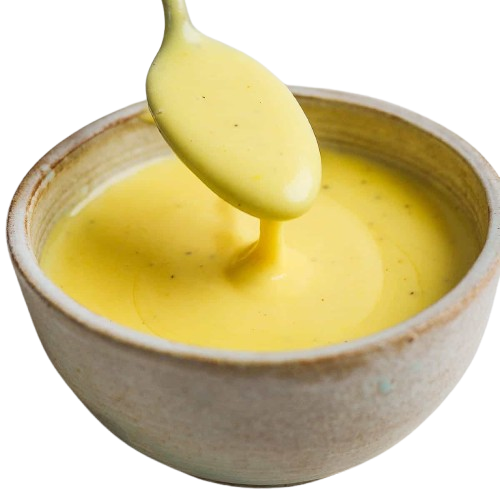
Hollandaise sauce is a classic French emulsion of egg yolk, melted butter, and lemon juice. Hollandaise is a tangy and rich sauce with a high calorie profile, driven almost entirely by fat. A single cup of Hollandaise (257g) contains 1295 calories and a single-serving packet (25g) has 126 calories. Energy values differ dramatically from versions made from powdered mixes, as a prepared serving of Knorr Hollandaise Sauce Mix contains only 15 calories.
A nutritional assessment of hollandaise shows a profile composed almost entirely of fat, with high levels of cholesterol and saturated fat. A single tablespoon of Hollandaise (16g) offers 8.7g of total fat and 65.4mg of cholesterol. The sauce is a source of fat-soluble vitamins and delivers 24.3mg of choline from the egg yolks. Scientific research explores the cognitive benefits of choline, such as the work by Poly, C., et al. (2011), which investigates the nutrient's role in brain health. Market types include Classic Hollandaise and Hollandaise from a Mix.
Given the extreme caloric density and saturated fat content, dietitians recommend consuming the sauce in very small amounts. A suggested consumption size is a single tablespoon of Hollandaise (81 calories) which can be burned doing 7 minutes of circuit training, 9 minutes of vigorous CrossFit, or 14 minutes of power yoga.
Hollandaise appears famously in French and American brunch cuisine. The sauce is the essential topping for Eggs Benedict at Sarabeth's and the key component of Steak Oscar at Morton's The Steakhouse. The ingredient originated in 17th-century France and is now consumed globally, with its price closely tied to the volatile butter market. The Producer Price Index for butter surged from 147.2 in 2015 to 205.768 in 2024, while retail prices for a standard hollandaise mix rose from $1.48 to a range of $2.12 to $2.49 during a similar period.
Hollandaise nutrition
| Stats | Weight |
|---|---|
| Carbs | 2 grams |
| Protein | 6 grams |
| Fats | 0 grams |
| Sugars | 0.49 grams |
- Large Hollandaise Calories (Nutritional Facts)
- Medium Hollandaise Calories (Nutritional Facts)
- Small Hollandaise Calories (Nutritional Facts)
- Raw Hollandaise Nutrition
- Sodium in Hollandaise
- Potassium in Hollandaise
- Sugar in Hollandaise
- Fiber in Hollandaise
- Protein in Hollandaise
- Carbs in Hollandaise
- Fat in Hollandaise
- Vitamins in Hollandaise
- Minerals in Hollandaise
Large Hollandaise Calories (Nutritional Facts)
A large serving of hollandaise sauce (257g or 1 cup) contains 1295 calories, 12g of protein (24% DV), 139.3g of fat (179% DV), 3.9g of carbohydrates (1% DV), 0g of fiber (0% DV), 0.98g of sugar, and 997.2mg of sodium (42% DV).
A medium portion of hollandaise sauce (128.5g or 0.5 cup) provides 648 calories, 6g of protein (12% DV), 69.7g of fat (90% DV), 2g of carbohydrates (1% DV), 0g of fiber (0% DV), 0.49g of sugar, and 499mg of sodium (21% DV).
A small serving of hollandaise sauce (16g or 1 tablespoon) contains 81 calories, 0.75g of protein (1% DV), 8.7g of fat (11% DV), 0.24g of carbohydrates (0% DV), 0g of fiber (0% DV), 0.06g of sugar, and 62.1mg of sodium (3% DV).
A standard retail container of raw, ready-to-serve hollandaise sauce (227g or 8oz) contains 1144 calories, 10.7g of protein (21% DV), 123g of total fat (158% DV), 3.4g of total carbohydrates (1% DV), 0g of dietary fiber (0% DV), 0.86g of total sugars, and 881mg of sodium (38% DV). A single-serving packet of hollandaise sauce (25g or 0.9oz) contains 126 calories, 1.2g of protein (2% DV), 13.6g of total fat (18% DV), 0.4g of total carbohydrates (0% DV), 0g of dietary fiber (0% DV), 0.1g of total sugars, and 97mg of sodium (4% DV).
A large serving of hollandaise sauce (257g) contains 997.2mg of sodium (42% DV). A medium portion (128.5g) has 499mg of sodium (21% DV). A small serving (16g) contains 62.1mg of sodium (3% DV).
A large serving of hollandaise sauce (257g) provides 131.1mg of potassium (3% DV). A medium portion (128.5g) has 65.6mg of potassium (1% DV). A small serving (16g) contains 8.2mg of potassium (0% DV).
A large serving of hollandaise sauce (257g) contains 0.98g of sugar. A medium portion (128.5g) has 0.49g of sugar. A small serving of hollandaise sauce (16g) contains 0.06g of sugar.
A large serving of hollandaise sauce (257g) provides 0g of dietary fiber (0% DV). A medium portion (128.5g) has 0g of dietary fiber (0% DV). A small serving (16g) contains 0g of dietary fiber (0% DV).
A large serving of hollandaise sauce (257g) provides 12g of protein (24% DV). A medium portion (128.5g) has 6g of protein (12% DV). A small serving (16g) contains 0.75g of protein (1% DV).
A large serving of hollandaise sauce (257g) contains 3.9g of carbohydrates (1% DV). A medium portion (128.5g) has 2g of carbohydrates (1% DV). A small serving (16g) provides 0.24g of carbohydrates (0% DV).
A large serving of hollandaise sauce (257g) contains 139.3g of total fat (179% DV). A medium portion (128.5g) has 69.7g of total fat (90% DV). A small serving of hollandaise sauce (16g) provides 8.7g of total fat (11% DV).
A large serving of hollandaise sauce (257g) provides 8mg of Vitamin C (9% DV) and 3.6mcg of Vitamin D (18% DV). A medium portion (128.5g) has 4mg of Vitamin C (4% DV) and 1.8mcg of Vitamin D (9% DV). A one-tablespoon serving of hollandaise sauce (16g) provides 0.5mg of Vitamin C (1% DV) and 0.22mcg of Vitamin D (1% DV).
A large serving of hollandaise sauce (257g) provides 1.9mg of iron (10% DV), 123.4mg of calcium (9% DV), and 300.7mg of phosphorus (24% DV). A medium portion (128.5g) has 0.95mg of iron (5% DV), 61.7mg of calcium (5% DV), and 150.4mg of phosphorus (12% DV). A single tablespoon of hollandaise sauce (16g) contains 0.12mg of iron (1% DV), 7.7mg of calcium (1% DV), and 18.7mg of phosphorus (1% DV).
Get a Custom Report on Hollandaise Nutrition Data – Contact Us!
What are the Types of Hollandaise?
The types of Hollandaise include Classic Hollandaise and Hollandaise from a Mix. Nutritional differences between the main varieties are presented in the following summary.
| Type | Description | Calories (Per 100g) | Calorie Qualifications |
|---|---|---|---|
|
Classic Hollandaise
|
The traditional sauce emulsified from egg yolk, melted butter, and lemon juice. | 504 | The immense quantity of butterfat makes this one of the most energy-dense sauces in classic cuisine. |
|
Hollandaise from a Mix
|
A sauce prepared from a powder containing starches, flavorings, and milk solids. | 107 | The lack of butter and egg yolks and reliance on starches dramatically reduces the caloric load. |
What are the Main Dishes with Hollandaise?
Hollandaise is a foundational "mother sauce" in French cuisine, famous as the topping for poached eggs and vegetables. The rich, creamy sauce adds a luxurious texture and tangy flavor to brunch staples and elegant vegetable dishes. A breakdown of specific savory dishes that include this sauce is shown in the list that follows.
| Dish Name | Calories (Estimate) | Type of Dish | Carbs (g) (Estimate) | Sugar (g) (Estimate) | Protein (g) (Estimate) | Fat (g) (Estimate) | Cuisine | Restaurants |
|---|---|---|---|---|---|---|---|---|
|
Eggs Benedict
|
750 | Breakfast Entree | 30 | 4 | 28 | 58 | American/French | Sarabeth's (New York, NY) |
|
Asparagus with Hollandaise
|
250 | Vegetable Side | 8 | 4 | 6 | 22 | French | Balthazar (New York, NY) |
|
Eggs Royale (with Salmon)
|
720 | Breakfast Entree | 30 | 4 | 35 | 55 | Modern American | The Cheesecake Factory (National) |
|
Steak Oscar
|
950 | Beef Entree | 10 | 2 | 65 | 72 | Classic American | Morton's The Steakhouse |
|
Artichoke with Hollandaise
|
310 | Vegetable Appetizer | 15 | 2 | 8 | 26 | French | Local French bistros |
|
Crab Cakes Benedict
|
810 | Seafood Entree | 35 | 5 | 38 | 62 | American | Brennan's (New Orleans, LA) |
|
Poached Salmon with Hollandaise
|
650 | Seafood Entree | 2 | 1 | 45 | 50 | French | Le Bernardin (New York, NY) |
|
Eggs Florentine (with Spinach)
|
680 | Breakfast Entree | 32 | 5 | 26 | 52 | American/French | IHOP |
|
Broccoli with Hollandaise
|
220 | Vegetable Side | 10 | 4 | 5 | 18 | American | Family-style restaurants |
What Cuisines Prefer Hollandaise the Most?
Cuisines that prefer hollandaise the most are French and American, where the sauce is a celebrated component of classic brunch and fine dining. The sauce functions as one of the five "mother sauces" of French gastronomy, forming the base for derivatives like Béarnaise. The use of the sauce in several culinary contexts is displayed in the table below.
| Cuisine | Dish | Types of Hollandaise | Calories (Estimate) | Restaurant(s) |
|---|---|---|---|---|
|
Classic French
|
Poached Salmon with Hollandaise | Classic Hollandaise | 650 | Le Bernardin |
|
American Brunch
|
Eggs Benedict | Classic Hollandaise | 750 | Sarabeth's |
|
American Steakhouse
|
Steak Oscar | Classic Hollandaise | 950 | Morton's The Steakhouse |
|
New American
|
Crab Cakes Benedict | Classic Hollandaise | 810 | Brennan's |
|
French Bistro
|
Asparagus with Hollandaise | Classic Hollandaise | 250 | Balthazar |
|
American Diner
|
Eggs Florentine | Mix-based Hollandaise | 680 | IHOP |
Which Countries Produce the Most Hollandaise?
The top producers of the key ingredients for hollandaise, specifically butter and eggs, are the United States, India, and the European Union. France remains the cultural home of hollandaise, though global production data for the finished sauce is not centrally tracked. The table below shows the production volumes in thousand metric tonnes for butter for key nations over the last two decades.
| Country/Region | 2003 | 2008 | 2013 | 2018 | 2019 | 2020 | 2021 | 2022 |
|---|---|---|---|---|---|---|---|---|
| India | 2,450 | 3,100 | 4,400 | 5,500 | 5,800 | 6,100 | 6,350 | 6,600 |
| European Union | 2,050 | 2,030 | 2,150 | 2,380 | 2,350 | 2,400 | 2,380 | 2,350 |
| United States | 560 | 720 | 840 | 890 | 910 | 965 | 930 | 945 |
| New Zealand | 460 | 440 | 510 | 525 | 515 | 510 | 505 | 495 |
| Russia | 280 | 260 | 240 | 265 | 270 | 275 | 280 | 285 |
| Pakistan | 580 | 640 | 710 | 760 | 775 | 790 | 805 | 820 |
| Mexico | 160 | 180 | 210 | 240 | 250 | 260 | 265 | 270 |
Which Countries Consume the Most Hollandaise?
The top consumers of hollandaise and the butter essential to the recipe are the European Union, India, and the United States. Consumption is driven by the popularity of brunch in North America and the extensive use of butter in European and South Asian cooking. The table below shows the consumption volumes of butter for key markets, reflecting trends relevant to hollandaise.
| Country/Region | 2003 | 2008 | 2013 | 2018 | 2019 | 2020 | 2021 | 2022 |
|---|---|---|---|---|---|---|---|---|
| India | 2,400 | 3,050 | 4,350 | 5,450 | 5,750 | 6,050 | 6,300 | 6,550 |
| European Union | 1,950 | 1,900 | 2,050 | 2,100 | 2,080 | 2,150 | 2,100 | 2,050 |
| United States | 540 | 680 | 790 | 850 | 880 | 920 | 900 | 915 |
| Russia | 350 | 340 | 360 | 380 | 385 | 390 | 395 | 400 |
| Pakistan | 570 | 630 | 700 | 750 | 765 | 780 | 795 | 810 |
| China | 60 | 90 | 150 | 200 | 210 | 220 | 230 | 240 |
How Do Prices of Hollandaise-Including Dishes Change?
The cost of restaurant menu items and retail products made with hollandaise has grown, reflecting the higher cost of sourcing butter, eggs, and other ingredients. The table that follows shows price changes for specific items.
| Brand/Restaurant/Retailer | Item | Old Price | Current Price (2024/2025) |
|---|---|---|---|
| Sarabeth's (New York, NY) | Classic Eggs Benedict | $19.50 (2014) | $28.00 - $30.00 |
| The Cheesecake Factory | Eggs Benedict with Canadian Bacon | $13.95 (2015) | $17.95 - $22.50 |
| Morton's The Steakhouse | Morton’s Classic Filet Oscar (8oz.) | $52.00 (2013, Add-on) | $62.00 - $65.00 (Add-on) |
| Knorr / Walmart | Hollandaise Sauce Mix (0.9oz) | $1.48 (2015) | $1.82 - $2.49 |
| McCormick / Kroger | Hollandaise Sauce Mix (1.25oz) | $1.99 (2016) | $1.19 - $3.49 |
What is the Hollandaise Calorie for 100 Grams?
A 100g serving of classic hollandaise sauce contains 504 calories. A hollandaise sauce prepared from a powdered mix contains 107 calories per 100g.
What is the Hollandaise Calorie for 1 KG?
One kilogram (1000g) of classic hollandaise sauce supplies 5040 calories. One kilogram of hollandaise sauce prepared from a mix supplies 1070 calories.
What is the Calorie of 1 Hollandaise?
Retail brands offer distinct energy profiles, as 1 tablespoon of Gold Gourmet Hollandaise sauce contains 74 calories. A two-tablespoon serving of Knorr Hollandaise sauce provides 137 calories, whereas a serving of Maille Hollandaise (15g) supplies 72 calories. A single tablespoon of classic hollandaise sauce (16g) contains 81 calories, while a single teaspoon (5g) provides 27 calories.
What are the Health Benefits of Hollandaise?
Hollandaise provides some nutritional value derived from the egg yolks and butter used in the preparation. The sauce offers specific wellness advantages, which are outlined below.
- Supports Brain Health: Egg yolks are a concentrated source of choline, an essential nutrient vital for brain development, memory, and neurotransmitter function. A study by Poly, C., et al. (2011), "The relation of dietary choline to cognitive performance and white-matter hyperintensity in the Framingham Offspring Cohort," linked higher choline intake to better cognitive performance.
- Enhances Bone Health: The sauce contains Vitamin D from both egg yolks and butter, a fat-soluble vitamin crucial for calcium absorption and bone mineralization. Research by Holick, M. F. (2007), "Vitamin D deficiency," established the critical role of Vitamin D in preventing bone diseases like rickets and osteomalacia.
- Provides Fat-Soluble Vitamins: Butter and egg yolks supply Vitamin A, which is important for vision, immune function, and cellular communication. A review by Dawson, M. I. (2000), "The importance of vitamin A in nutrition," details the physiological functions of Vitamin A and the consequences of deficiency.
What are the Downsides of Hollandaise?
Hollandaise poses significant risks regarding high saturated fat, cholesterol, and calorie content. Nutritionists advise limiting intake to a single teaspoon and choosing a yogurt-based lemon-dill sauce as a healthier alternative to mitigate potential risks. Potential health drawbacks are associated with the sauce, as detailed in the following points.
- Increases LDL Cholesterol: The sauce is extremely high in saturated fat and dietary cholesterol from butter and egg yolks, which can elevate low-density lipoprotein (LDL) cholesterol levels. A presidential advisory from the American Heart Association by Sacks, F. M., et al. (2017), "Dietary Fats and Cardiovascular Disease," strongly recommended replacing saturated fats with unsaturated fats to reduce cardiovascular disease risk.
- High Caloric Density: The immense amount of butter makes hollandaise one of the most calorie-dense sauces, which can easily lead to a surplus of energy and contribute to weight gain. Research by Mozaffarian, D., et al. (2011), "Changes in Diet and Lifestyle and Long-Term Weight Gain in Women and Men," identified high-fat foods as a key contributor to gradual weight gain over time.
- Risk of Foodborne Illness: Traditional hollandaise uses raw or lightly cooked egg yolks, which carries a risk of Salmonella contamination if the eggs are not pasteurized. A report by the Centers for Disease Control and Prevention (CDC) continuously identifies raw or undercooked eggs as a primary source of Salmonella outbreaks.
Is Hollandaise Good for You?
No, hollandaise is not considered good for health when consumed regularly due to the extremely high content of saturated fat, cholesterol, and calories. The primary health concern relates to cardiovascular risk, as the high intake of saturated fat from butter elevates LDL cholesterol, a conclusion strongly supported by the American Heart Association (Sacks, F. M., et al., 2017) in "Dietary Fats and Cardiovascular Disease." However, when consumed in very strict moderation, the sauce provides some beneficial nutrients. Brain health may receive support from the choline in egg yolks, a nutrient linked to better cognitive function as explored by Poly, C., et al. (2011) in "The relation of dietary choline to cognitive performance and white-matter hyperintensity in the Framingham Offspring Cohort." The Vitamin D content also aids in calcium absorption for bone health, a function detailed by Holick, M. F. (2007) in the review "Vitamin D deficiency."
How Does Calorie Change According to Hollandaise Types?
Energy content changes dramatically between the two main hollandaise preparations based on the ingredients. Classic Hollandaise contains the highest energy load per 100g by a significant margin, as the recipe consists almost entirely of high-fat butter and egg yolks. Hollandaise prepared from a commercial mix offers the lowest caloric density, as these products replace butter and eggs with modified food starch, maltodextrin, and powdered milk, resulting in a much lower fat and calorie count.
What are the Desserts with Hollandaise?
Hollandaise is exclusively a savory sauce and is not used in desserts due to the pronounced flavors of egg yolk, butter, and lemon. A distant culinary relative, sabayon (or zabaglione), is a light custard made from egg yolks, sugar, and wine, which is served as a dessert sauce over fruit or cake.
What is the Origin of Hollandaise?
The origin of hollandaise sauce is a subject of culinary debate, but the sauce is widely believed to have been created in France. The name "sauce hollandaise" translates to "Dutch sauce," which may reference a similar Dutch recipe for melted butter or an attempt by French chefs to replicate a sauce they encountered in Holland. The first documented recipe appears in a French cookbook from 1651, "Le Cuisinier François" by François Pierre de la Varenne. The sauce gained immense popularity in the 19th century under the influence of chef Auguste Escoffier, who codified the recipe and designated hollandaise as one of the five foundational mother sauces of French cuisine. The sauce became internationally famous as the essential topping for Eggs Benedict, a dish invented in New York City in the 1890s.
Explore More Condiments & Sauces
Discover more Condiments & Sauces with detailed nutrition facts, calorie counts, vitamins, minerals, and health benefits. Compare similar foods, serving sizes, macronutrients, and key nutrients to find the best option for your diet and nutrition goals.
 Agave calories
 Aioli calories
 Apple Butter calories
 Avocado Oil calories
 Baking Powder calories
 Balsamic Vinaigrette calories
 Barbeque Sauce calories
 Bearnaise Sauce calories
 Blue Cheese Dressing calories
 Brown Rice Syrup calories
 Caesar Dressing calories
 Canola Oil calories