Calories and Nutritions in Honey
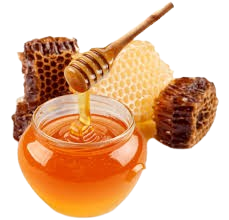
Honey is a sweet amber-colored liquid produced by bees from the nectar of flowering plants. The caloric content in honey is high, with a 1 cup serving containing 1,031 calories. A single tablespoon of honey (21g) supplies 64 calories. Energy values vary slightly by floral source as Clover Honey provides 304 calories per 100g and Raw Manuka Honey offers a slightly lower density at 286 calories per 100g.
A nutritional analysis of honey reveals a composition primarily of fructose and glucose, with a single tablespoon (21g) offering 17g of total carbohydrate and 17g of sugar. The sweetener lacks significant micronutrients delivering negligible amounts of vitamins and minerals such as 1mg of sodium and 11mg of potassium. Research highlights its medicinal properties such as the study by Mandal, M. D., & Mandal, S. (2011), "Honey: its medicinal property and antibacterial activity," which examines its efficacy in wound healing and bacterial inhibition. Market varieties typically encompass Clover Honey, Manuka Honey, and Buckwheat Honey.
Given the high sugar content, nutritionists recommend consuming this sweetener in moderation. A reasonable daily allowance consists of one tablespoon (64 calories), functioning as a flavor enhancer rather than a primary food source. Burning the 64 calories from a single tablespoon (21g) of honey requires activities like 6 minutes of jumping rope, 16 minutes of vacuuming, or 7 minutes of stair climbing.
Honey appears frequently in global cuisines acting as a glaze and sweetener. It is essential for the Baklava at Hellas Restaurant and serves as a key ingredient in the Honey Walnut Shrimp at Panda Express. It also glazes the Bone-In Half Ham at The Honey Baked Ham Company. Honey has been around since ancient times, with cave paintings in Spain dating back to 8,000 BC and is primarily produced and consumed in China, Turkey, and the United States. Economic factors have influenced the cost of this pantry staple with the Producer Price Index for confectionery materials rising from 162.7 in 2015 to 314.407 in 2024 while retail prices for a standard pound increased from $4.10 to $7.85 over the last two decades.
Honey nutrition
| Stats | Weight |
|---|---|
| Carbs | 139 grams |
| Protein | 0.5 grams |
| Fats | 0 grams |
| Sugars | 139 grams |
- Large Honey Calories (Nutritional Facts)
- Medium Honey Calories (Nutritional Facts)
- Small Honey Calories (Nutritional Facts)
- Raw Honey Nutrition
- Sodium in Honey
- Potassium in Honey
- Sugar in Honey
- Fiber in Honey
- Protein in Honey
- Carbs in Honey
- Fat in Honey
- Vitamins in Honey
- Minerals in Honey
Large Honey Calories (Nutritional Facts)
A large serving of Clover Honey (339g or 1 cup) contains 1031 calories, 1g of protein (2% DV), 0g of fat (0% DV), 279g of carbohydrates (101% DV), 0.7g of fiber (2% DV), 278g of sugar, and 14mg of sodium (1% DV). A large serving of Raw Manuka Honey (339g or 1 cup) provides 969 calories, 0g of protein (0% DV), 0g of fat (0% DV), 274g of carbohydrates (100% DV), 0g of fiber (0% DV), 258g of sugar, and 20mg of sodium (1% DV).
A medium portion of Clover Honey (169.5g or 0.5 cup) provides 515.5 calories, 0.5g of protein (1% DV), 0g of fat (0% DV), 139.5g of carbohydrates (51% DV), 0.35g of fiber (1% DV), 139g of sugar, and 7mg of sodium (0% DV). A medium portion of Raw Manuka Honey (169.5g or 0.5 cup) supplies 484.5 calories, 0g of protein (0% DV), 0g of fat (0% DV), 137g of carbohydrates (50% DV), 0g of fiber (0% DV), 129g of sugar, and 10mg of sodium (0% DV).
A small serving of Clover Honey (21g or 1 tbsp) contains 64 calories, 0g of protein (0% DV), 0g of fat (0% DV), 17.3g of carbohydrates (6% DV), 0g of fiber (0% DV), 17.2g of sugar, and 1mg of sodium (0% DV). A small serving of Raw Manuka Honey (21g or 1 tbsp) provides 60 calories, 0g of protein (0% DV), 0g of fat (0% DV), 17g of carbohydrates (6% DV), 0g of fiber (0% DV), 16g of sugar, and 1.2mg of sodium (0% DV).
A single packet of Raw Honey (14g) contains 43 calories, 0g of protein (0% DV), 0g of total fat (0% DV), 11.5g of total carbohydrate (4% DV), 0g of dietary fiber (0% DV), 11.4g of total sugars (23% DV), and 0.5mg of sodium (0% DV). The sweetener provides 0mg of Vitamin C (0% DV), 0mg of iron (0% DV), 0.7mg of calcium (0% DV), and 7mg of potassium (0% DV).
A large serving of Clover Honey (339g or 1 cup) contains 14mg of sodium (1% DV), while a large serving of Raw Manuka Honey (339g or 1 cup) provides 20mg of sodium (1% DV). A medium portion of Clover Honey (169.5g or 0.5 cup) has 7mg of sodium (0% DV), whereas a medium portion of Raw Manuka Honey (169.5g or 0.5 cup) supplies 10mg of sodium (0% DV). A small serving of Clover Honey (21g or 1 tbsp) contains 1mg of sodium (0% DV), and a small serving of Raw Manuka Honey (21g or 1 tbsp) provides 1.2mg of sodium (0% DV). A single packet of Raw Honey (14g) contains 0.5mg of sodium (0% DV).
A large serving of Clover Honey (339g or 1 cup) provides 176mg of potassium (4% DV), while a large serving of Raw Manuka Honey (339g or 1 cup) contains 161mg of potassium (3% DV). A medium portion of Clover Honey (169.5g or 0.5 cup) has 88mg of potassium (2% DV), whereas a medium portion of Raw Manuka Honey (169.5g or 0.5 cup) supplies 80.5mg of potassium (2% DV). A small serving of Clover Honey (21g or 1 tbsp) contains 11mg of potassium (0% DV), and a small serving of Raw Manuka Honey (21g or 1 tbsp) provides 10mg of potassium (0% DV). A single packet of Raw Honey (14g) contains 7mg of potassium (0% DV).
A large serving of Clover Honey (339g or 1 cup) contains 278g of sugar, while a large serving of Raw Manuka Honey (339g or 1 cup) provides 258g of sugar. A medium portion of Clover Honey (169.5g or 0.5 cup) has 139g of sugar, whereas a medium portion of Raw Manuka Honey (169.5g or 0.5 cup) supplies 129g of sugar. A small serving of Clover Honey (21g or 1 tbsp) contains 17.2g of sugar, and a small serving of Raw Manuka Honey (21g or 1 tbsp) provides 16g of sugar. A single packet of Raw Honey (14g) contains 11.4g of sugar.
A large serving of Clover Honey (339g or 1 cup) provides 0.7g of dietary fiber (2% DV), while a large serving of Raw Manuka Honey (339g or 1 cup) contains 0g of fiber (0% DV). A medium portion of Clover Honey (169.5g or 0.5 cup) has 0.35g of fiber (1% DV), whereas a medium portion of Raw Manuka Honey (169.5g or 0.5 cup) supplies 0g of fiber (0% DV). A small serving of Clover Honey (21g or 1 tbsp) contains 0.04g of fiber (0% DV), and a small serving of Raw Manuka Honey (21g or 1 tbsp) provides 0g of fiber (0% DV). A single packet of Raw Honey (14g) contains 0g of fiber (0% DV).
A large serving of Clover Honey (339g or 1 cup) provides 1g of protein (2% DV), while a large serving of Raw Manuka Honey (339g or 1 cup) contains 0g of protein (0% DV). A medium portion of Clover Honey (169.5g or 0.5 cup) has 0.5g of protein (1% DV), whereas a medium portion of Raw Manuka Honey (169.5g or 0.5 cup) supplies 0g of protein (0% DV). A small serving of Clover Honey (21g or 1 tbsp) contains 0.06g of protein (0% DV), and a small serving of Raw Manuka Honey (21g or 1 tbsp) provides 0g of protein (0% DV). A single packet of Raw Honey (14g) contains 0g of protein (0% DV).
A large serving of Clover Honey (339g or 1 cup) contains 279g of carbohydrates (101% DV), while a large serving of Raw Manuka Honey (339g or 1 cup) provides 274g of carbohydrates (100% DV). A medium portion of Clover Honey (169.5g or 0.5 cup) has 139.5g of carbohydrates (51% DV), whereas a medium portion of Raw Manuka Honey (169.5g or 0.5 cup) supplies 137g of carbohydrates (50% DV). A small serving of Clover Honey (21g or 1 tbsp) contains 17.3g of carbohydrates (6% DV), and a small serving of Raw Manuka Honey (21g or 1 tbsp) provides 17g of carbohydrates (6% DV). A single packet of Raw Honey (14g) contains 11.5g of carbohydrates (4% DV).
A large serving of Clover Honey (339g or 1 cup) contains 0g of total fat (0% DV), while a large serving of Raw Manuka Honey (339g or 1 cup) provides 0g of total fat (0% DV). A medium portion of Clover Honey (169.5g or 0.5 cup) has 0g of total fat (0% DV), whereas a medium portion of Raw Manuka Honey (169.5g or 0.5 cup) supplies 0g of total fat (0% DV). A small serving of Clover Honey (21g or 1 tbsp) contains 0g of total fat (0% DV), and a small serving of Raw Manuka Honey (21g or 1 tbsp) provides 0g of total fat (0% DV). A single packet of Raw Honey (14g) contains 0g of total fat (0% DV).
A large serving of Clover Honey (339g or 1 cup) provides 1.7mg of Vitamin C (2% DV) and 0.1mg of Vitamin B6 (6% DV). A large serving of Raw Manuka Honey (339g or 1 cup) contains 0mg of Vitamin C (0% DV) and 0mg of Vitamin B6 (0% DV). A medium portion of Clover Honey (169.5g or 0.5 cup) has 0.85mg of Vitamin C (1% DV), whereas a medium portion of Raw Manuka Honey (169.5g or 0.5 cup) supplies 0mg of Vitamin C (0% DV). A small serving of Clover Honey (21g or 1 tbsp) contains 0.1mg of Vitamin C (0% DV), and a small serving of Raw Manuka Honey (21g or 1 tbsp) provides 0mg of Vitamin C (0% DV). A single packet of Raw Honey (14g) contains 0mg of Vitamin C (0% DV).
A large serving of Clover Honey (339g or 1 cup) provides 20mg of calcium (2% DV) and 1.4mg of iron (8% DV). A large serving of Raw Manuka Honey (339g or 1 cup) contains 0mg of calcium (0% DV) and 0mg of iron (0% DV). A medium portion of Clover Honey (169.5g or 0.5 cup) has 10mg of calcium (1% DV), whereas a medium portion of Raw Manuka Honey (169.5g or 0.5 cup) supplies 0mg of calcium (0% DV). A small serving of Clover Honey (21g or 1 tbsp) contains 1.2mg of calcium (0% DV), and a small serving of Raw Manuka Honey (21g or 1 tbsp) provides 0mg of calcium (0% DV). A single packet of Raw Honey (14g) contains 0.7mg of calcium (0% DV).
Get a Custom Report on Honey Nutrition Data – Contact Us!
What are the Types of Honey?
The types of Honeys include Clover Honey, Manuka Honey, and Buckwheat Honey. The table below details the nutritional distinctions.
| Type | Description | Calories (Per 100g) | Calorie Qualifications |
|---|---|---|---|
|
Clover Honey
|
Mild, light-colored honey derived from clover nectar. | 304 | The high fructose and glucose content results in a standard energy density. |
|
Manuka Honey
|
Dark, potent honey from the Manuka bush in New Zealand. | 286 | The unique chemical composition results in a slightly lower caloric count per volume. |
|
Buckwheat Honey
|
Robust, dark honey produced from buckwheat flowers. | 302 | The dense mineral content and lower water activity maintain a high caloric load. |
What are Desserts With Honey?
Honey functions as a humectant in baking, retaining moisture and imparting a distinct floral aroma that refined sugar lacks. Bakers utilize the syrup to soak pastries, glaze cakes, and sweeten fried doughs. The sweetener appears extensively in Mediterranean and Middle Eastern confectionery like Baklava and Loukoumades. The following list identifies sweet treats and snacks that feature this syrup as a primary ingredient.
| Dish Name | Calories | Type of Honey | Carbs (g) | Sugar (g) | Protein (g) | Fat (g) | Cuisine | Restaurants |
|---|---|---|---|---|---|---|---|---|
|
Baklava
|
350 | Clover Honey | 45 | 28 | 6 | 18 | Greek/Turkish | Hellas Restaurant (Tarpon Springs, FL) |
|
Medovik (Honey Cake)
|
420 | Buckwheat Honey | 55 | 35 | 5 | 22 | Russian | Mari Vanna (New York, NY) |
|
Loukoumades
|
280 | Thyme Honey | 38 | 22 | 4 | 12 | Greek | Kiki's (New York, NY) |
|
Sopapillas
|
310 | Clover Honey | 32 | 15 | 5 | 18 | Mexican | Casa Bonita (Lakewood, CO) |
|
Honey Toast
|
550 | Raw Honey | 75 | 42 | 8 | 24 | Japanese | Up 2 You Cafe (San Diego, CA) |
|
Fried Bananas
|
240 | Wildflower Honey | 48 | 28 | 2 | 6 | Asian Fusion | P.F. Chang's |
|
Honey Bun
|
380 | Clover Honey | 42 | 24 | 4 | 20 | American | Tastykake (National Retail) |
|
Pasteli (Sesame Bar)
|
180 | Raw Honey | 15 | 12 | 6 | 10 | Greek | Titan Foods (Astoria, NY) |
|
Honey Lavender Ice Cream
|
260 | Lavender Honey | 32 | 25 | 4 | 14 | American | Salt & Straw |
|
Castella Cake
|
210 | Clover Honey | 35 | 18 | 5 | 4 | Japanese | Minamoto Kitchoan (National) |
|
Honey Walnut Rugelach
|
150 | Clover Honey | 18 | 10 | 2 | 8 | Jewish | Zabar's (New York, NY) |
|
Teiglach
|
220 | Honey Syrup | 38 | 25 | 3 | 8 | Jewish | Weiss Bakery (Brooklyn, NY) |
|
Yakgwa (Honey Cookie)
|
140 | Rice/Honey Syrup | 22 | 12 | 1 | 5 | Korean | H Mart Bakery (National) |
|
Honey Ricotta Cheesecake
|
480 | Orange Blossom Honey | 35 | 28 | 12 | 32 | Italian | L'Artusi (New York, NY) |
|
Greek Yogurt w/ Honey
|
180 | Thyme Honey | 12 | 15 | 15 | 0 | Greek | Fage (National Retail) |
What are the Main Dishes With Honey?
Honey serves as a glazing and caramelizing agent in savory sauces, particularly in Asian and Southern American cuisines. The liquid promotes browning on roasted meats and balances the heat in spicy marinades. Chefs incorporate the sweetener into glazes for ham and sticky sauces for shrimp. The list below specifies unique savory recipes that integrate this ingredient.
| Dish Name | Calories | Type of Honey | Carbs (g) | Sugar (g) | Protein (g) | Fat (g) | Cuisine | Restaurants |
|---|---|---|---|---|---|---|---|---|
|
Honey Walnut Shrimp
|
720 | Clover Honey | 45 | 15 | 22 | 48 | Chinese-American | Panda Express |
|
Honey Glazed Ham
|
420 | Clover Honey | 18 | 14 | 35 | 18 | American | The Honey Baked Ham Company |
|
Honey Garlic Chicken
|
580 | Wildflower Honey | 42 | 28 | 45 | 18 | Chinese-American | P.F. Chang's |
|
Honey BBQ Ribs
|
950 | Clover Honey | 45 | 35 | 65 | 58 | BBQ | Famous Dave's |
|
Hot Honey Pizza
|
320 | Infused Chili Honey | 38 | 8 | 14 | 12 | American | Roberta's (Brooklyn, NY) |
|
Honey Sriracha Wings
|
780 | Clover Honey | 12 | 18 | 45 | 55 | American | Buffalo Wild Wings |
|
Honey Balsamic Salmon
|
620 | Raw Honey | 18 | 12 | 42 | 38 | American | Bonefish Grill |
|
Fried Chicken w/ Honey
|
850 | Clover Honey | 55 | 15 | 40 | 45 | Southern | Tupelo Honey (National) |
|
Honey Mustard Chicken
|
520 | Clover Honey | 25 | 18 | 35 | 22 | American | Cheddar's Scratch Kitchen (National) |
|
Duck à l'Orange
|
650 | Orange Blossom Honey | 18 | 14 | 38 | 48 | French | Bouchon Bistro (Las Vegas, NV) |
|
Honey Pecan Fried Chicken
|
920 | Clover Honey | 48 | 22 | 42 | 58 | Southern | Lo-Lo's Chicken & Waffles (National) |
|
Char Siu (BBQ Pork)
|
550 | Maltose/Honey | 28 | 16 | 35 | 24 | Chinese | Sam Woo BBQ (Los Angeles, CA) |
|
Honey Butter Croissant
|
310 | Honey Butter | 32 | 12 | 5 | 18 | American | Texas Roadhouse |
|
Grilled Peaches w/ Honey
|
180 | Raw Honey | 25 | 20 | 2 | 8 | American | Seasons 52 |
|
Honey Cured Bacon
|
120 | Clover Honey | 2 | 2 | 8 | 9 | American | First Watch |
What Cuisines Do Prefer Honey Most?
Mediterranean and Middle Eastern culinary traditions utilize honey as a foundational pantry item, dating back to ancient times. The syrup functions as a key component in soaking pastries and glazing roasted meats. American Southern cuisine also favors the ingredient for sweetening biscuits and barbecue sauces. The table below highlights the particular culinary heritages that make use of this sweetener.
| Cuisine | Dish | Types of Honey | Calories (Estimate) | Restaurant(s) |
|---|---|---|---|---|
|
Greek Cuisine
|
Baklava | Thyme Honey | 350 | Hellas Restaurant (Tarpon Springs, FL) |
|
Turkish Cuisine
|
Lokma | Flower Honey | 280 | Gulluoglu (International) |
|
American Southern
|
Honey Glazed Ham | Clover Honey | 420 | The Honey Baked Ham Company |
|
Chinese-American
|
Honey Walnut Shrimp | Clover Honey | 720 | Panda Express |
|
Russian Cuisine
|
Medovik | Buckwheat Honey | 420 | Mari Vanna (New York, NY) |
|
French Cuisine
|
Duck Breast w/ Honey | Lavender Honey | 650 | Le Bernardin (New York, NY) |
|
Italian Cuisine
|
Struffoli | Orange Blossom Honey | 220 | Ferrara Bakery (New York, NY) |
|
Korean Cuisine
|
Honey Butter Chips | Acacia Honey | 160 | H Mart (National Retail) |
|
Moroccan Cuisine
|
Lamb Tagine | Wildflower Honey | 580 | Mourad (San Francisco, CA) |
|
Spanish Cuisine
|
Berenjenas con Miel | Cane Honey/Honey | 310 | Boqueria (New York, NY) |
|
Ethiopian Cuisine
|
Tej (Honey Wine) | Raw Honey | 180 | Demera (Chicago, IL) |
|
Jewish Cuisine
|
Apples and Honey | Clover Honey | 120 | Katz's Delicatessen (New York, NY) |
|
Japanese Cuisine
|
Honey Toast | Raw Honey | 550 | Up 2 You Cafe (San Diego, CA) |
|
Mexican Cuisine
|
Sopapillas | Clover Honey | 310 | Casa Bonita (Lakewood, CO) |
|
New Zealand
|
Hokey Pokey Ice Cream | Manuka Honey | 260 | Giapo (Auckland/International) |
Which Countries Produce the Most Honeys?
China is the leading manufacturer of honey, leveraging vast floral resources and a massive beekeeping industry to supply global demand. Turkey ranks as a significant producer, specializing in pine and flower honeys for domestic consumption and export to Europe. The United States and Iran also contribute substantial volumes to the supply chain, supporting both industrial food processing and the raw honey market. The table below shows the estimated production of honey in thousand metric tonnes for the top producing nations over the last two decades.
| Country | 2004 | 2009 | 2014 | 2019 | 2020 | 2021 | 2022 | 2023 |
|---|---|---|---|---|---|---|---|---|
| China | 280 | 380 | 460 | 445 | 458 | 486 | 462 | 472 |
| Turkey | 70 | 80 | 100 | 109 | 104 | 96 | 118 | 115 |
| Iran | 30 | 40 | 60 | 75 | 80 | 77 | 80 | 82 |
| Argentina | 80 | 60 | 65 | 78 | 74 | 71 | 70 | 73 |
| Ukraine | 50 | 65 | 70 | 70 | 68 | 65 | 60 | 62 |
| United States | 80 | 65 | 75 | 70 | 68 | 57 | 58 | 63 |
| India | 50 | 55 | 60 | 65 | 62 | 66 | 70 | 71 |
| Russia | 50 | 52 | 68 | 64 | 66 | 65 | 64 | 65 |
Which Countries Consume the Most Honeys?
China absorbs the largest volume of honey, utilizing the sweetener in traditional medicine, cooking, and beverages. The United States maintains high consumption rates driven by the demand for natural sweeteners in processed foods and direct table use. The European Union, particularly Germany, utilizes the ingredient extensively in baking and breakfast spreads. The table below shows the domestic consumption of honey in thousand metric tonnes for key markets over the last two decades.
| Country/Region | 2004 | 2009 | 2014 | 2019 | 2020 | 2021 | 2022 | 2023 |
|---|---|---|---|---|---|---|---|---|
| China | 250 | 320 | 350 | 362 | 370 | 380 | 390 | 400 |
| United States | 180 | 190 | 210 | 212 | 220 | 230 | 240 | 250 |
| European Union | 300 | 320 | 350 | 360 | 365 | 370 | 375 | 380 |
| Turkey | 60 | 70 | 90 | 103 | 105 | 100 | 110 | 112 |
| Germany | 80 | 85 | 85 | 86 | 88 | 90 | 92 | 94 |
| Japan | 40 | 45 | 50 | 52 | 50 | 51 | 52 | 53 |
| United Kingdom | 30 | 35 | 40 | 45 | 48 | 50 | 52 | 54 |
| Russia | 45 | 50 | 60 | 55 | 58 | 60 | 62 | 64 |
How Do Prices of Honey-Including Dishes Change?
Menu prices for items containing honey have risen as a result of escalating ingredient, workforce, and facility costs. The table below illustrates price adjustments for selected items at well-known establishments.
| Brand/Restaurant | Dish | Old Price (Year) | Current Price (2024/2025) |
|---|---|---|---|
| Panda Express | Honey Walnut Shrimp (Plate) | $6.99 (2010) | $10.90 - $13.40 |
| Buffalo Wild Wings | Honey BBQ Wings (10 count) | $9.99 (2014) | $15.99 - $19.99 |
| Cracker Barrel | Fried Chicken w/ Honey | $14.99 (2013) | $16.99 - $19.62 |
| Bonefish Grill | Cedar Plank Old-Fashioned Salmon | $23.90 (2015) | $26.00 - $29.90 |
| Starbucks | Honey Citrus Mint Tea (Grande) | $3.45 (2016) | $4.25 - $5.75 |
What is the Honey Calorie for 100 Grams?
A 100g serving of Clover Honey provides 304 calories, while a 100g serving of Raw Manuka Honey supplies 286 calories.
What is the Honey Calorie for 1 KG?
One kilogram (1000g) of Clover Honey supplies 3040 calories, whereas one kilogram (1000g) of Raw Manuka Honey provides 2860 calories.
What is the Calorie of 1 Honey?
A single tablespoon of Clover Honey (21g) contains 64 calories, while a single packet of Raw Honey (14g) provides 43 calories. Retail brands offer distinct energy profiles, as a serving of Nature Nate's Raw & Unfiltered Honey (21g) contains 60 calories. A serving of Wedderspoon Raw Manuka Honey (21g) provides 60 calories, whereas a serving of Mike's Hot Honey (21g) supplies 70 calories.
What are the Health Benefits of Honey?
Honey functions as a natural source of antioxidants and antimicrobial compounds derived from the enzymatic activity of bees. The viscous liquid aids in wound healing and soothes respiratory irritation due to its unique chemical composition. The points below emphasize these specific health rewards.
- Promotes Wound Healing: The acidic pH and hydrogen peroxide content create an environment that inhibits bacterial growth and accelerates tissue regeneration. Research by Mandal, M. D., & Mandal, S. (2011), "Honey: its medicinal property and antibacterial activity," confirmed that clinical application of honey effectively sterilizes infected wounds and stimulates healing.
- Suppresses Coughs: The thick consistency coats the throat, reducing irritation and the urge to cough, particularly in children. A study by Paul, I. M., et al. (2007), "Effect of honey, dextromethorphan, and no treatment on nocturnal cough and sleep quality for coughing children and their parents," found that buckwheat honey performed better than common cough suppressants in reducing symptom severity.
- Provides Antioxidants: Darker varieties contain high levels of flavonoids and phenolic acids that neutralize harmful free radicals. Research by Gheldof, N., et al. (2002), "Antioxidant capacity of honeys from various floral sources based on the determination of oxygen radical absorbance capacity and inhibition of in vitro lipoprotein oxidation," established a direct correlation between the color of honey and its antioxidant capacity.
What are the Downsides of Honey?
Honey poses risks regarding infant botulism and high sugar content when consumed in excess. Nutritionists advise limiting intake to one tablespoon (21g) per day and choosing Maple Syrup as a lower-fructose alternative to mitigate potential risks. The table below illustrates specific adverse health consequences.
- Risks Infant Botulism: Spores of Clostridium botulinum found in raw honey can colonize the immature digestive tracts of infants under one year old. A study by Arnon, S. S., et al. (1979), "Honey and other environmental risk factors for infant botulism," identified honey as a significant reservoir for these spores, leading to muscle weakness and breathing difficulties in babies.
- Spikes Blood Sugar: The high fructose and glucose content causes rapid elevations in blood glucose levels, posing risks for diabetics. Research by Abdulrhman, M., et al. (2013), "Effects of honey, sucrose and glucose on blood glucose and C-peptide of patients with type 1 diabetes mellitus," noted that while honey has a slightly lower glycemic effect than sucrose, it still significantly raises blood sugar.
- Promotes Weight Gain: The caloric density contributes to a surplus of energy that the body stores as fat if not metabolized. A study by Stanhope, K. L. (2016), "Sugar consumption, metabolic disease and obesity: The state of the controversy," highlighted the role of fructose-containing sweeteners in promoting visceral fat accumulation and metabolic dysregulation.
Is Honey Good for You?
Yes, honey is good for health because the natural enzymes and antioxidants support cardiovascular stability and respiratory function. Cardiovascular health benefits from the presence of flavonoids which improve vasodilation and reduce oxidative stress as explored by Al-Waili, N. S. (2004), "Natural honey lowers plasma glucose, C-reactive protein, homocysteine, and blood lipids in healthy, diabetic, and hyperlipidemic subjects." Respiratory health improves through the demulcent properties that soothe irritated mucous membranes as confirmed by Paul, I. M., et al. (2007), "Effect of honey, dextromethorphan, and no treatment on nocturnal cough and sleep quality for coughing children and their parents." Immune function strengthens due to the antimicrobial activity of hydrogen peroxide and defensin-1 protein found in the matrix as detailed in the study by Mandal, M. D., & Mandal, S. (2011), "Honey: its medicinal property and antibacterial activity."
How Does Calorie Change According to Honey Types?
Caloric content varies based on the floral source and moisture content remaining after the bees cap the honeycomb. Clover Honey contains the highest energy load per 100g due to the efficient conversion of nectar into simple sugars with low moisture. Buckwheat Honey offers a similar profile as the dense nectar produces a thick, sugar-rich syrup. Manuka Honey provides a slightly lower caloric density per serving because the unique thixotropic texture often retains a marginally higher moisture content compared to standard table varieties.
What is the Origin of Honey?
Ancient hunter-gatherers discovered the energy-rich combs of wild bees as early as 8,000 BC, as depicted in cave paintings in Valencia, Spain. The Egyptians domesticated bees around 2,400 BC, utilizing the sweetener for culinary purposes, embalming rituals, and medicinal ointments. The Greeks and Romans revered the substance as "ambrosia" or food of the gods, establishing apiculture as a sophisticated agricultural practice. The introduction of the European honey bee (Apis mellifera) to the Americas in the 17th century expanded production globally. The ingredient remained the primary sweetener in the world until the industrial refinement of sugar cane and beets in the 19th century.
Explore More Condiments & Sauces
Discover more Condiments & Sauces with detailed nutrition facts, calorie counts, vitamins, minerals, and health benefits. Compare similar foods, serving sizes, macronutrients, and key nutrients to find the best option for your diet and nutrition goals.
 Agave calories
 Aioli calories
 Apple Butter calories
 Avocado Oil calories
 Baking Powder calories
 Balsamic Vinaigrette calories
 Barbeque Sauce calories
 Bearnaise Sauce calories
 Blue Cheese Dressing calories
 Brown Rice Syrup calories
 Caesar Dressing calories
 Canola Oil calories