Calories and Nutritions in Kidney Beans
Kidney beans are a nutritious legume with calorie content depending on preparation method, serving size, and whether they are raw, cooked, or canned. A 100g serving of raw kidney beans contains 333 calories, 23.6g protein, 24.9g of fiber, 60g carbohydrates, and less than 1g of fat. It provides 4.5 mg of vitamin C, 2.06 mg of niacin, 143 mg of calcium, 8.2 mg of iron, 140 mg of magnesium, 407 mg of phosphorus, and 1410 mg of potassium. One cup of cooked kidney beans (177 grams) provides 225 calories and 15.3g of protein, while one tablespoon of kidney beans (11 grams) contains 14 calories.
There are different types or classifications of kidney beans including the common red kidney bean, light speckled, red speckled, and the white cannellini bean. Kidney beans are used in many cuisines, including Creole, Indian, Mexican, and Mediterranean cuisines. Among the popular dishes with kidney beans are Red Beans and Rice at Dooky Chase's Restaurant, Chili Con Carne at Wendy's, and Burrito at Chipotle.
The health benefits of kidney beans stem from their rich nutrient profile. These beans provide protein for muscle maintenance, fiber for digestive health, and essential minerals for various bodily functions. Nutritionists recommend consuming at least a half-cup of cooked kidney beans per day, which contains 110 calories. Activities like brisk walking for 25 minutes, playing tennis for 11 minutes, or doing yoga for 30 minutes are recommended to burn off these calories.
Kidney Beans nutrition
| Stats | Weight |
|---|---|
| Carbs | 0 grams |
| Protein | 25 grams |
| Fats | 1.03 grams |
| Sugars | 0 grams |
- Large Cup of Kidney Beans Calories (Nutritional Facts)
- Medium Cup of Kidney Beans Calories (Nutritional Facts)
- Small Cup of Kidney Beans Calories (Nutritional Facts)
- Raw Kidney Beans Calories
- Potassium in Kidney Beans
- Sugar in Kidney Beans
- Fiber in Red Beans
- Protein in Kidney Beans
- Carbs in Kidney Beans
- Fat in Kidney Beans
- Vitamins in Kidney Beans
- Minerals in Kidney Beans
- Calcium in Kidney Beans
Large Cup of Kidney Beans Calories (Nutritional Facts)
One large cup of raw kidney beans (276g) contains 898 calories, 2.2g fat, 165g carbohydrates, 65g protein, 68g fiber, 12.4mg vitamin C, 3880mg potassium, and 1120mg phosphorus.
One medium cup of raw kidney beans (184g) contains 613 calories, 1.53g fat, 110g carbohydrates, 43.4g protein, 45.8g fiber, 8.28mg vitamin C, 2590mg potassium, and 749mg phosphorus.
One small cup of raw kidney beans (100g) contains 333 calories, 0.83g fat, 60g carbohydrates, 23.6g protein, 24.9g fiber, 4.5mg vitamin C, 1410mg potassium, and 407mg phosphorus.
Raw kidney beans contain 333 calories per 100g. Calorie content varies based on bean size and moisture content.
Kidney beans are a rich potassium source. One 100g serving provides 1410mg potassium.
Kidney beans contain a small amount of sugar. One 100g serving contains 2.23g total sugars.
Red kidney beans are high in dietary fiber. One 100g serving provides 24.9g fiber.
Kidney beans are a rich protein source. One 100g serving provides 23.6g protein. A cup of cooked kidney beans provides 15.3g protein.
Kidney beans contain a significant amount of carbohydrates. One 100g serving contains 60g carbohydrates.
Kidney beans are low in fat. One 100g serving contains 0.83g total fat.
A 100g serving of raw kidney beans provides 4.5 mg of vitamin C, 0.529 mg of thiamin, 0.219 mg of riboflavin, 2.06 mg of niacin, 0.78 mg of pantothenic acid, 0.397 mg of vitamin B6, 394 µg of folate, 0 µg of vitamin B12, 0 µg of vitamin A (RAE), 0.22 mg of vitamin E, 0 µg of vitamin D, and 19 µg of vitamin K.
A 100g serving of raw kidney beans contains 143 mg of calcium, 8.2 mg of iron, 140 mg of magnesium, 407 mg of phosphorus, 1410 mg of potassium, 24 mg of sodium, 2.79 mg of zinc, 0.958 mg of copper, 1.02 mg of manganese, and 3.2 µg of selenium.
Kidney beans contain calcium. One 100g serving provides 143mg calcium.
Get a Custom Report on Kidney Beans Nutrition Data – Contact Us!
What are the Types of Kidney Beans?
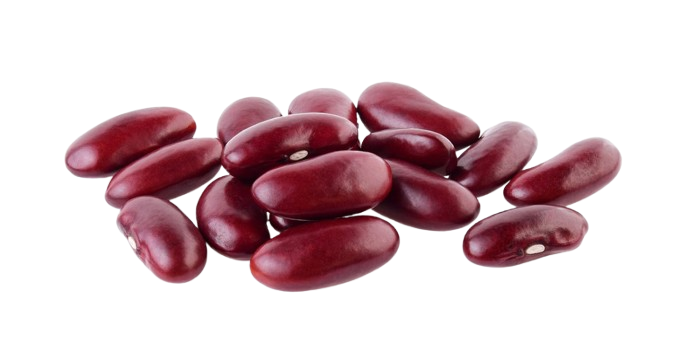
Kidney beans (Phaseolus vulgaris) are named for their kidney-like shape. While there are variations in size and color, the most common types are red kidney beans, light red kidney beans, dark red kidney beans, and white kidney beans. The types of kidney beans and their calorie content are listed below:
| Kidney Bean Type | Calories (per 100g, cooked) | Characteristics |
|---|---|---|
|
Red Kidney Beans (Generic)
|
127 | This represents a mix of light and dark red varieties. Firm texture, robust flavor. |
|
Light Red Kidney Beans
|
127 | Larger, plumper than dark red. Lighter, pinkish-red skin. Milder flavor. |
|
Dark Red Kidney Beans
|
127 | Deeper red color than light red. Slightly more robust flavor. |
|
White Kidney Beans (Cannellini)
|
139 | Creamy white color. Tender texture. Nutty, mild flavor. Technically a different bean variety (Phaseolus vulgaris), but often used interchangeably with kidney beans in recipes. |
|
Canned, Solids and Liquids, Red
|
84 | Low-sodium varieties may have fewer calories. |
|
Canned, Solids and Liquids, White
|
110 | Low-sodium varieties may have fewer calories. |
What are the Main Dishes with Kidney Beans?
The main dishes with kidney beans are listed below:
| Cuisine | Main Dish Name | Description | Calories (Estimate) | Restaurants |
|---|---|---|---|---|
|
American (Southern)
|
Red Beans and Rice | Kidney beans, rice, vegetables, and spices. | 300-600 (per serving) | Dooky Chase's Restaurant (New Orleans, LA) |
|
American (Fast Food)
|
Chili Con Carne | Stew with kidney beans, ground meat, tomatoes, and chili peppers. | 340 (Wendy's large, 12 oz) | Wendy's (multiple locations) |
|
North Indian
|
Rajma Chawal | Kidney beans in a thick gravy, served with rice. | 400-700 (per serving) | Rasika (Washington, D.C.), Saravanaa Bhavan (multiple locations) |
|
Indian/Pakistani
|
Kidney Bean Curry | Kidney beans cooked in a spiced tomato-based sauce. | 300-500 (per serving) | Many Indian and Pakistani restaurants |
|
American
|
Three Bean Salad | Kidney beans, other beans, vegetables, and vinaigrette. | 150-300 (per cup) | Delis and salad bars |
|
Italian
|
Minestrone Soup | Soup with kidney beans, vegetables, and pasta. | 110 (Olive Garden, small bowl) | Olive Garden, and many Italian restaurants |
|
French
|
Cassoulet | Stew with kidney beans, meat, and vegetables. | 500-800+ (per serving) | French bistros and restaurants |
|
Mexican
|
Enchiladas | Kidney beans, meat, and cheese wrapped in tortillas. | 400-800 (for 2) | Chipotle Mexican Grill (multiple locations), and other Mexican restaurants |
|
Mexican
|
Tacos | Kidney beans, meat, and vegetables in a tortilla. | 150-300 (per taco) | Taco Bell (multiple locations), and other Mexican restaurants |
|
Mexican
|
Burritos | Kidney beans, rice, meat, and vegetables wrapped in a large tortilla. | 500-1000+ (per burrito) | Chipotle Mexican Grill (multiple locations), and other Mexican restaurants |
What are the Desserts with Kidney Beans?
Some creative recipes incorporate kidney beans in desserts, as listed below:
| Cuisine | Dessert Name | Description | Calories (Estimate) | Restaurants |
|---|---|---|---|---|
|
Filipino
|
Halo-Halo | Kidney beans, shaved ice, and sweet toppings. | 300-500 (per serving) | Red Ribbon Bakeshop, Goldilocks Bakeshop, Jollibee, Chowking |
|
(Specialty)
|
Red Kidney Bean Brownies | Brownies using cooked kidney beans as a base. | 150-250 (per brownie) | Not commonly found on restaurant menus; may be in specialty bakeries or health-focused cafes. |
|
(Uncommon)
|
Apple Crisp with Kidney Beans | Apples, kidney beans, and a crisp topping. | 250-400 (per serving) | Not commonly found in restaurants. Calorie content depends heavily on the recipe. |
What Cuisines Prefer Kidney Beans the Most?
Kidney beans are used in many cuisines around the world but are more often used in Mexican, Indian, Cajun, and Italian cuisines. These cuisines and their use of kidney beans are highlighted in the table below:
| Cuisine | Restaurants | Main Dishes |
|---|---|---|
|
Mexican
|
Chipotle Mexican Grill, Taco Bell, local Mexican restaurants | Burritos, Tacos, Enchiladas, Chili con Carne (though this is more Tex-Mex), soups, salads |
|
Indian (North Indian)
|
Rasika (Washington, D.C.), Saravanaa Bhavan (multiple locations), many local Indian restaurants | Rajma Chawal (kidney beans in a thick gravy with rice), Kidney Bean Curry, Dal Makhani (often includes kidney beans along with black lentils), various vegetarian curries |
|
Cajun/Creole
|
Dooky Chase's Restaurant (New Orleans), Popeyes Louisiana Kitchen, local Cajun/Creole restaurants | Red Beans and Rice (a classic dish), Gumbo (some variations), Jambalaya (some variations) |
|
Italian
|
Olive Garden (multiple locations), many local Italian restaurants | Minestrone Soup, Pasta e Fagioli (pasta and bean soup - cannellini beans are more common, but kidney beans are sometimes used), salads |
|
American
|
Wendy's (multiple locations), many diners and family restaurants | Chili con Carne, Three Bean Salad, baked beans (some variations), salads |
|
French
|
French bistros and restaurants (more traditional ones) | Cassoulet (a slow-cooked casserole with meat and beans - white beans are more traditional, but kidney beans can be used) |
|
Caribbean
|
Various Caribbean restaurants | Rice and Peas (often made with kidney beans, despite the name), stews, soups |
|
Brazilian
|
Various Brazilian restaurants | Feijoada. |
Which Countries Produce the Most Kidney Beans?
India, Myanmar, Brazil, China, and Tanzania rank as the top producers of kidney beans. India led production in 2019 with 6,460 thousand metric tons, followed by Myanmar with 5,800 thousand metric tons. Brazil produced 2,890 thousand metric tons. The production volumes from 2004 to 2023 are provided in the table below.
| Country | 2004 | 2005 | 2006 | 2007 | 2008 | 2009 | 2010 | 2011 | 2012 | 2013 | 2014 | 2015 | 2016 | 2017 | 2018 | 2019 | 2020 | 2021 | 2022 | 2023 |
|---|---|---|---|---|---|---|---|---|---|---|---|---|---|---|---|---|---|---|---|---|
| India | 3130 | 3830 | 4250 | 3060 | 3670 | 3080 | 3180 | 3870 | 3640 | 4820 | 4040 | 3850 | 5460 | 5950 | 6160 | 6410 | 6220 | 5270 | 6440 | 6543 |
| Myanmar | 1698 | 1956 | 2355 | 2659 | 3064 | 3533 | 3678 | 3830 | 4105 | 4356 | 4703 | 4958 | 5228 | 5580 | 5800 | 4780 | 4870 | 4740 | 4800 | 4974 |
| Brazil | 3361 | 3019 | 3431 | 3169 | 3495 | 3823 | 3241 | 3434 | 2693 | 2938 | 3067 | 2580 | 2688 | 3023 | 2923 | 2890 | 3031 | 2838 | 2985 | 3058 |
| USA | 1147 | 1256 | 1257 | 832 | 1342 | 1366 | 1097 | 1287 | 1076 | 1449 | 1158 | 1161 | 1433 | 1198 | 1312 | 1512 | 1367 | 1137 | 1346 | 884 |
| China | 1583 | 1537 | 1571 | 1584 | 1659 | 1584 | 1496 | 1463 | 1435 | 1383 | 1326 | 1227 | 1191 | 1252 | 1276 | 1353 | 1395 | 1387 | 1366 | 1289 |
| Tanzania | 750 | 780 | 810 | 840 | 870 | 900 | 930 | 960 | 990 | 1020 | 1050 | 1080 | 1110 | 1140 | 1170 | 1180 | 1200 | 1210 | 1220 | 1216 |
| Mexico | 1183 | 1354 | 1466 | 1204 | 1442 | 1362 | 1186 | 1477 | 1204 | 1364 | 1179 | 988 | 1264 | 1077 | 898 | 987 | 1177 | 1259 | 858 | 958 |
| Canada | 491 | 441 | 452 | 311 | 359 | 482 | 507 | 447 | 429 | 558 | 553 | 631 | 842 | 312 | 268 | 333 | 308 | 333 | 318 | 310 |
Which Countries Consume the Most Kidney Beans?
India ranks as the largest consumer of beans, with 5,275 thousand metric tons consumed in 2021. Brazil and Mexico follow, contributing to a total global consumption of 19,707 thousand metric tons in 2021. The consumption volumes from 2004 to 2001 are provided in the table below, in 1000 tonnes.
| Country | 2004 | 2005 | 2006 | 2007 | 2008 | 2009 | 2010 | 2011 | 2012 | 2013 | 2014 | 2015 | 2016 | 2017 | 2018 | 2019 | 2020 | 2021 |
|---|---|---|---|---|---|---|---|---|---|---|---|---|---|---|---|---|---|---|
| India | 3722 | 3609 | 3961 | 3876 | 3554 | 3463 | 3803 | 4142 | 4179 | 4306 | 4594 | 4878 | 5113 | 5375 | 5574 | 5535 | 5629 | 5275 |
| Brazil | 3156 | 3088 | 3020 | 2953 | 2885 | 2817 | 2750 | 2682 | 2615 | 2547 | 2479 | 2412 | 2344 | 2276 | 2209 | 2141 | 2073 | 2006 |
| Mexico | 1092 | 1162 | 1237 | 1111 | 1178 | 1115 | 1077 | 1185 | 1046 | 1117 | 1002 | 977 | 1019 | 987 | 946 | 952 | 988 | 1015 |
| USA | 794 | 832 | 797 | 821 | 857 | 949 | 911 | 916 | 895 | 947 | 967 | 956 | 973 | 983 | 1008 | 969 | 958 | 974 |
| Myanmar | 642 | 687 | 736 | 789 | 847 | 910 | 979 | 1055 | 1138 | 1228 | 1326 | 1433 | 1549 | 1675 | 1811 | 1792 | 1871 | 1955 |
| China | 1548 | 1534 | 1551 | 1551 | 1606 | 1570 | 1495 | 1463 | 1434 | 1382 | 1325 | 1226 | 1190 | 1251 | 1275 | 1352 | 1394 | 1386 |
How Do Prices of Kidney Beans-including Dishes Change?
Rising kidney bean prices impact dish costs, leading to menu adjustments at popular restaurants. At Dooky Chase's Restaurant in New Orleans, a signature serving of Red Beans and Rice cost $11 in 2010 but today, it is priced between $15 and $16. Wendy's Chili used to be $1.99 a decade ago but a small cup of chili at this fast food restaurant now costs $2.99 or more.
| Restaurant | Dish | Old Price | Current Price (2024) |
|---|---|---|---|
| Wendy's | Chili (with kidney beans) | $1.99 (2015) | $2.99 |
| Dooky Chase's | Red Beans and Rice | $8-10 (2010) | $15-16 |
| Chipotle | Burrito (with beans) | $5-7 (2004) | $8-12 |
| Local Indian Restaurant | Rajma Chawal | $6-8 (2004) | $10-14 |
How Does the Price of Kidney Beans Change for the Last 20 Years?
Kidney bean prices have increased over the last 20 years. Data from IndexMundi for U.S. Dark Red Kidney Beans show significant price fluctuations but a clear upward trend from around $1.02/kg in 2004 to $1.77/kg in March 2024. Factors driving this increase include rising global demand for pulses, increased production costs, weather-related supply disruptions, and trade policies. U.S. export prices show a steady increase from 2016 to 2022. The FAO Food Price Index, which tracks broader food categories, further supports the overall upward trend in pulse prices. US Kidney Bean Export Prices (2016-2022)
| Year | Price |
|---|---|
| 2003 | $0.5 |
| 2004 | $0.52 |
| 2005 | $0.55 |
| 2006 | $0.58 |
| 2007 | $0.6 |
| 2008 | $0.65 |
| 2009 | $0.62 |
| 2010 | $0.66 |
| 2011 | $0.72 |
| 2012 | $0.78 |
| 2013 | $0.76 |
| 2014 | $0.79 |
| 2015 | $0.77 |
| 2016 | $0.8 |
| 2017 | $0.85 |
| 2018 | $0.92 |
| 2019 | $0.98 |
| 2020 | $1 |
| 2021 | $1.06 |
| 2022 | $1.2 |
| 2023 | $1.38 |
What are the Kidney Beans Calories for 100 GR?
One 100g serving of raw kidney beans contains 333 calories. A 100g serving of cooked kidney beans contains 127 calories.
What are the Kidney Beans Calories for 1 KG?
One kilogram of raw kidney beans contains 3330 calories.
What are the 1 Cup Kidney Beans Calories?
One cup (approximately 184g) of raw kidney beans contains 613 calories, while 1 cup of cooked kidney beans (177g) contains 225 calories. Calorie count varies based on preparation method.
What are the Calories of 1 Kidney Bean?
One tablespoon of kidney beans (11 grams) contains 14 calories, 0g fat, 2.5g carbohydrates, 0.7g fiber, and 1g protein.
What are the Health Benefits of Kidney Beans?
Kidney beans provide essential nutrients supporting overall health, as shown below:
- Rich in Protein: Kidney beans offer plant-based protein, essential for muscle maintenance, repair, and growth. A cup of cooked kidney beans provides about 15 grams of protein, contributing significantly to daily protein needs (USDA FoodData Central).
- High in Fiber: Kidney beans contain fiber, promoting digestive health and regularity. Studies show high-fiber diets are associated with a reduced risk of chronic diseases like type 2 diabetes and heart disease (Anderson et al., 1994, "Dietary fiber and coronary heart disease").
- Source of Iron: Kidney beans provide iron, necessary for red blood cell production and energy. Iron deficiency leads to fatigue and impaired cognitive function (Abbaspour, Hurrell, and Kelishadi 2014, "Review on iron and its importance for human health").
- Source of Folate: Kidney beans supply folate, important for cell division and DNA synthesis. Adequate folate intake during pregnancy prevents neural tube defects (MRC Vitamin Study Research Group, 1991, "Prevention of neural tube defects: results of the Medical Research Council Vitamin Study").
- Contain Essential Minerals: Kidney beans offer minerals like potassium and magnesium, supporting heart health and nerve function. Potassium helps maintain healthy blood pressure levels (Houston, 2011, "The importance of potassium in managing hypertension").
- Cancer Prevention: Some studies suggest that the high fiber and antioxidant content of beans, including kidney beans, may contribute to a reduced risk of certain cancers, particularly colorectal cancer. A 2015 meta-analysis by Zhu et al. ("Dietary legume consumption reduces risk of colorectal cancer") found an association between higher legume intake and lower colorectal cancer risk. The resistant starch in kidney beans, which ferments in the colon, produces short-chain fatty acids like butyrate, which have shown potential anti-cancer effects in some studies.
- Blood Sugar Control: Kidney beans have a low glycemic index (GI) and are rich in fiber and protein, all of which help to moderate the rise in blood sugar after a meal.
- Weight Management: The combination of protein, fiber, and resistant starch in kidney beans can contribute to feelings of fullness and satiety, which may help with weight management.
What are the Downsides of Kidney Beans?
Kidney beans require proper preparation to ensure safe consumption and here are its downsides:
- Lectin Content: Kidney beans contain lectin, a natural toxin causing vomiting and stomach pains if beans are not cooked properly. Research indicates lectins interfere with nutrient absorption and digestive processes if consumed in high quantities and uncooked (Vasconcelos and Oliveira 2004, "Antinutritional properties of plant lectins").
- Gas: Kidney beans cause gas in some individuals. This results from oligosaccharides, fermentable sugars, that gut bacteria break down, producing gas (Suarez et al., 1999, "Gas production in humans consuming a defined diet").
- Proper Cooking Required: Cooking removes the toxin. Tinned kidney beans are precooked, needing only a rinse before use. Soaking beans for at least 5 hours and discarding the water before cooking reduces lectin content and gas-producing compounds (Paredes et al., 2009, "Effect of traditional processing methods on the nutritional composition and antinutritional factors of Phaseolus vulgaris L. beans").
Are Kidney Beans Good for You?
Yes, kidney beans are a healthy food because they provide protein, fiber, and essential minerals. Nutritionists recommend beans as part of a healthy diet due to their high nutritional value. Kidney beans count as both a protein source and a vegetable. Studies show diets rich in legumes like kidney beans reduce the risk of heart disease, type 2 diabetes, and certain cancers.
How Much Kidney Beans Should I Eat a Day?
Eating kidney beans improves overall health. Nutritionists recommend beans as part of a healthy diet because of their high nutritional value. Eating at least a half-cup of beans per day improves overall health. The U.S. Dietary Guidelines recommend eating 1-3 cups of cooked legumes like kidney beans per week, or about ½ cup most days. One study led by Jaime L Clark and published in January 2021 found that eating 3/4 cup (133 grams) of red kidney beans led to lower blood pressure compared to individuals who consumed rice, 2 hours after consumption.
How Much Kidney Beans Can I Eat a Day at Most?
Eating beans every day is safe. While there are no specific guidelines for an upper limit to kidney bean consumption, individuals need to consider overall dietary patterns. Consuming too many kidney beans in a single day leads to digestive issues due to their high fiber content.
How Does Calorie Change According to Kidney Bean Types?
The calorie differences among kidney bean types are relatively minor when comparing cooked beans. The red kidney bean has 127 calories per 100g (cooked). White kidney beans (cannellini beans) have a slightly higher calorie count at 139 calories per 100g (cooked). Canned kidney beans, including both solids and liquids, have fewer calories per 100g than home-cooked beans, due to the higher water content. Canned Red Kidney Beans have 84 calories per 100g, and Canned White Kidney Beans have 110 calories per 100g. The highest calorie count among the listed types is for cooked white kidney beans (cannellini), and the lowest is for canned red kidney beans.
What is the Origin of Kidney Beans?
Kidney beans, like all common beans (Phaseolus vulgaris), originated in the Americas. The wild ancestor of the common bean is believed to have originated in Peru, and from there, it spread throughout South and Central America, undergoing domestication in multiple locations independently. Archaeological evidence suggests that beans were cultivated in Mexico and Peru as early as 7,000-8,000 years ago.
Kidney beans are a variety of the common bean that was likely developed through selective breeding over centuries by Indigenous peoples of the Americas. The distinctive kidney shape and red color are the result of this selection process. Beans were introduced to Europe by Spanish and Portuguese explorers in the 15th and 16th centuries after their voyages to the New World. From Europe, beans spread to other parts of the world, becoming incorporated into various cuisines.
Red Beans and Rice is a staple of Louisiana Creole cuisine and has roots in African, Caribbean, and European culinary traditions. The dish likely evolved from the practice of enslaved Africans combining beans and rice, ingredients that were often provided as rations. Chili con Carne is a Tex-Mex dish developed in the southwestern United States or northern Mexico, incorporating beans, meat, and chili peppers.
Explore More Seeds
Discover more Seeds with detailed nutrition facts, calorie counts, vitamins, minerals, and health benefits. Compare similar foods, serving sizes, macronutrients, and key nutrients to find the best option for your diet and nutrition goals.
 Lotus Seed calories
 Poppy Seed calories
 Pumpkin Seed calories
 Quinoa calories
 Seeds calories
 Sesame Seeds calories
 Sunflower Seed Flour calories
 Sunflower Seeds calories